Vrångstads Long Dolmen
Five thousand years of stone and sky on a Bohuslan hilltop where ancestors still preside
Understand sacred places, explore living traditions, and learn how to engage respectfully with Pilgrim Map.
Access has not been verified. Check current local guidance before planning a visit.
Tanums kommun, Västra Götaland, Sweden
Visit essentials
A quick read before you go
- Duration
- One to two hours to explore the dolmen and the surrounding Iron Age grave field at a…
- Access
- Located near the village of Bottna in the southwest of Tanum municipality, Vastra Gotaland…
Overview
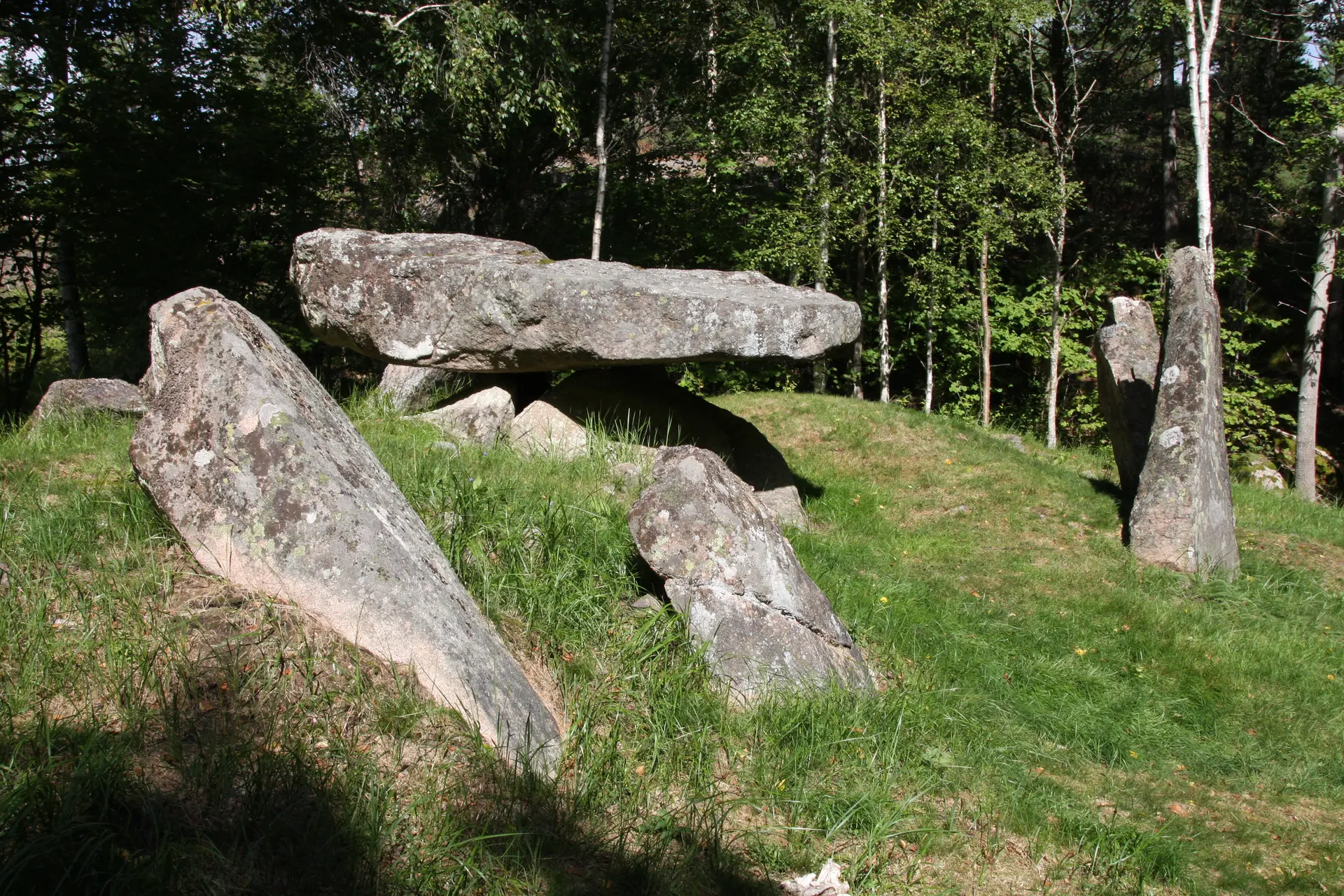
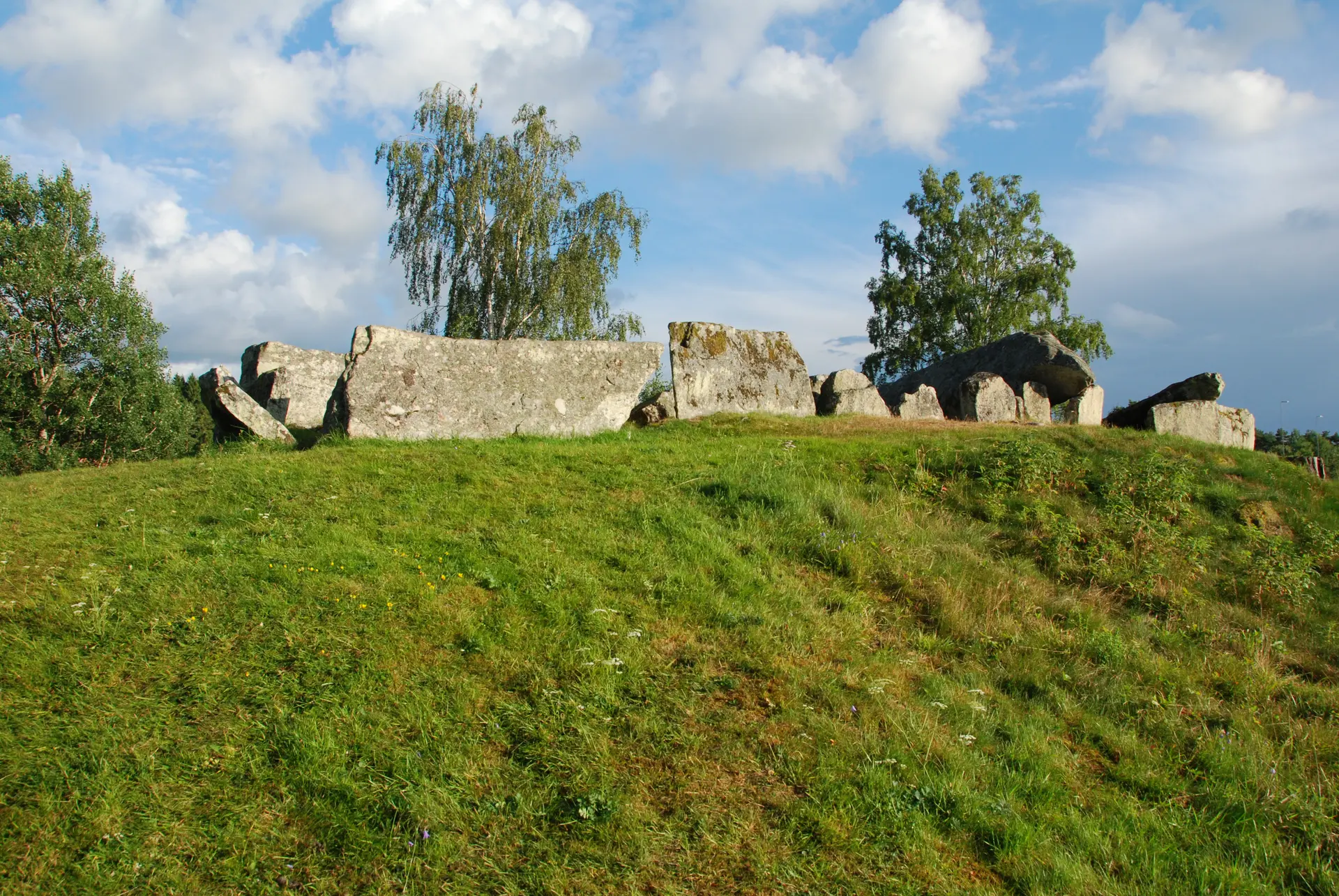
The stones were ancient before the pyramids began. Raised around 3500 to 3000 BCE by Funnel Beaker culture communities, Scandinavia's first farmers, Vrangstads Long Dolmen spans twenty-three meters across a rocky Bohuslan hilltop. Five massive chamber stones support one great capstone, and nine standing menhirs define its perimeter.
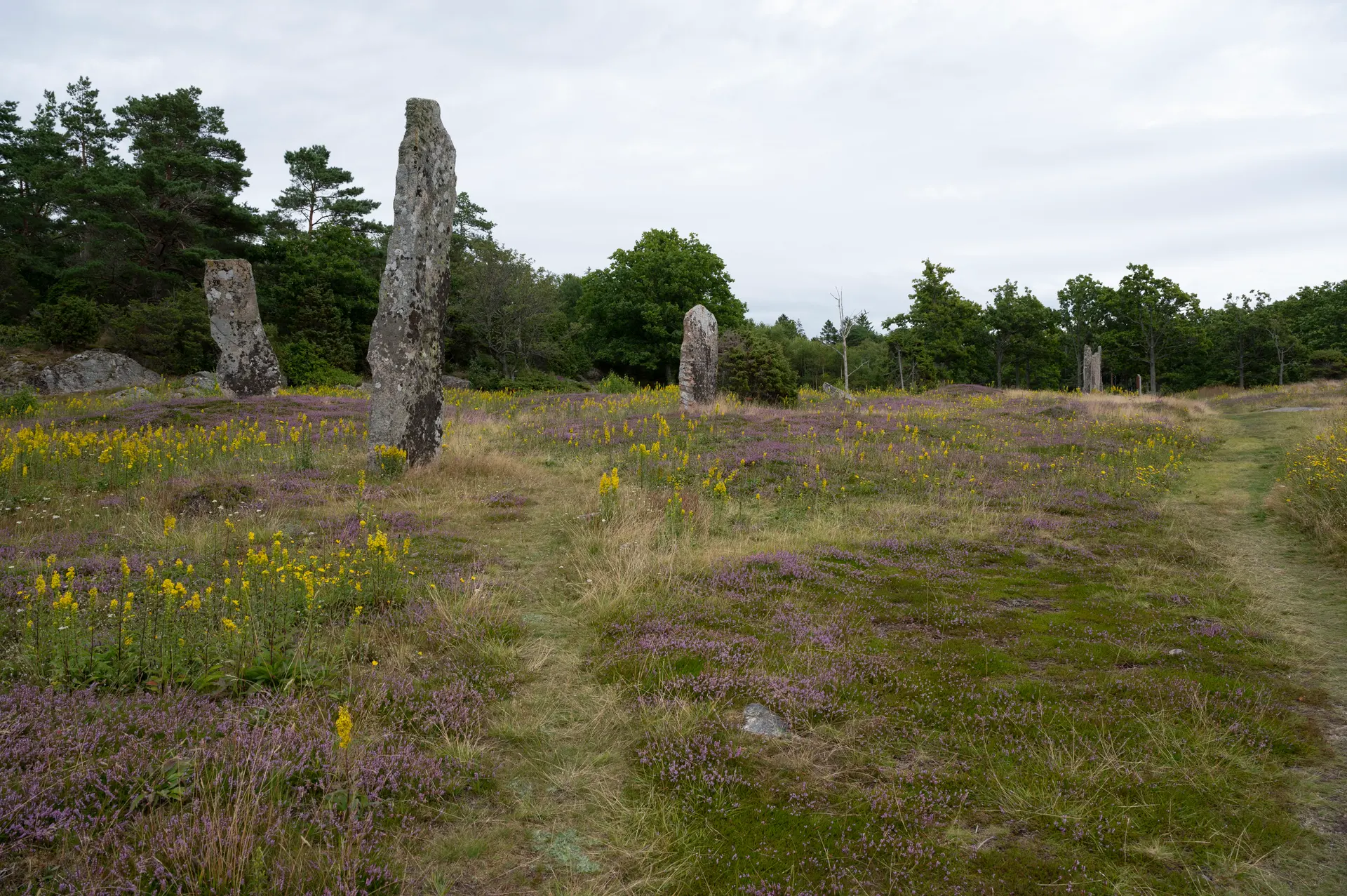
Its distinction lies in the landscape's depth of sacred use. Approximately ninety Iron Age graves from roughly 500 BCE to 500 CE cluster around the Neolithic monument. Separated from its builders by two thousand years or more, later peoples buried their dead beside stones whose original purpose they could not have fully understood. Something about the hilltop called to them as to its builders and to Bronze Age communities who left nearby rock carvings.
No panels, tours, or barriers separate visitor and stone. Wind crosses the exposed granite as it did for the builders; the sky is unchanged. Without restoration or reconstruction, the stones directly connect visitors with people who lived and buried their dead here before writing, metal, or the civilizations that followed.
The dolmen recalibrates time without explaining itself. It endures, asking what, if anything, of our own efforts might last as long.
Why this place is sacred
The hilltop position is the first element. The dolmen sits on exposed rock with views across the surrounding Bohuslan terrain, a landscape of bare granite outcrops, sparse vegetation, and proximity to the sea. The builders chose this prominence deliberately. The monument was designed to command the landscape, to be seen from a distance, to announce the presence of the dead to the living who moved through the terrain below.
The temporal layering intensifies the effect. Neolithic dolmen, Bronze Age rock carvings, Iron Age grave field: three distinct cultures, spanning more than three thousand years, each independently chose this landscape for their most significant acts of commemoration and ritual. Whatever quality they recognized in this place persisted long after the specific beliefs of each culture faded. The stones do not argue for any particular cosmology; they simply bear witness to a recurrent human recognition that this ground is set apart.
The raw, unworked quality of the megaliths adds another dimension. These are not dressed stones, carved with ornament or inscription. They are boulders, selected for size and shape, moved by human muscle and communal will, and placed with a precision that reflects both engineering skill and spiritual intention. Touching the stone, where permitted, is to touch a surface that was already old rock when Neolithic hands first gripped it.
The geological time embedded in the granite dwarfs even the five thousand years of human presence.
The coastal Bohuslan light, shifting across the granite throughout the day, creates a continuously changing visual relationship between the stones and their surroundings. At dawn and dusk, when shadows lengthen and the low-angle light catches the texture of the rock, the monument appears to emerge from the landscape rather than sit upon it.
The long dolmen was a communal burial chamber for Funnel Beaker culture farming communities. The twenty-three-meter structure with its massive chamber stones and capstone held the dead of the community across generations, serving as a physical link between the living and their ancestors. The nine surrounding menhirs may have defined a ritual precinct or processional space around the burial.
The dolmen's meaning shifted with each culture that encountered it. For its builders, it was a living burial site, a place of ongoing relationship with the dead. For the Iron Age communities who created their own grave field nearby, it may have been an ancestral monument of unknown origin that nonetheless sanctified the landscape for burial. For later Scandinavian folk tradition, such massive stones were the work of trolls and giants, beings beyond ordinary human capacity.
For the modern visitor, it stands as one of the best-preserved examples of Nordic megalithic architecture.
Experience and orientation
The approach through the Iron Age grave field establishes the encounter. Walking from the parking area, visitors move among tumuli, stone settings, and individual standing stones, each marking a cremation site or burial from a period roughly contemporaneous with the Roman Empire. These are not small markers; they reshape the terrain, creating a landscape of intentional forms that the body navigates as the mind absorbs their purpose.
The dolmen itself sits apart, on its rocky hilltop approximately five hundred meters from the main grave field. The walk is over uneven terrain, through heather and across exposed granite. The effort is modest but sufficient to create a sense of pilgrimage, of leaving the everyday world behind.
Arriving at the dolmen, the scale becomes personal. The massive stones, some weighing several tons, were raised by communities using no technology beyond human coordination and simple mechanical advantage. Standing beside the capstone, one confronts the reality that these people, with far fewer resources than any contemporary construction crew, chose to invest enormous communal labor in housing their dead. The magnitude of the effort speaks to the magnitude of what death meant to them.
The silence is particular. No traffic, no machinery, no interpretation audio. The wind crosses the hilltop with a sound that has not changed in fifty centuries. Birds call. The granite holds warmth in summer and cold in winter. The experience is elemental: stone, sky, wind, and the slowly dawning awareness that you are standing in a place where people five thousand years ago performed the most important acts their community knew.
Walk through the Iron Age grave field first, allowing the accumulation of burial monuments to establish the site's mortuary character. Then continue to the hilltop dolmen. Approach slowly. Circle the monument before entering its perimeter. Notice the nine menhirs that define its boundary. Stand at the east end and look west along the twenty-three-meter length. If conditions allow, sit with the stones for ten minutes in silence. The monument reveals itself to patience, not to speed.
Context and lineage
No origin stories survive for the dolmen. The Funnel Beaker culture left no written records, and any oral traditions have been lost across five millennia. The site speaks through its physical presence rather than narrative. In Scandinavian folk tradition, massive stones of unknown origin were sometimes attributed to trolls or giants who were said to have thrown or placed the enormous boulders, though whether such legends specifically attached to the Vrangstad dolmen is not documented.
The lineage of use at Vrangstad spans three distinct cultural periods. The Neolithic Funnel Beaker communities built the dolmen for their dead. Bronze Age peoples carved rock art on nearby stone surfaces. Iron Age populations created an extensive grave field surrounding the older monument. Each culture added its own layer to a landscape already marked as sacred, creating a palimpsest of human relationship with death and memorial that extends across more than three thousand years.
Funnel Beaker culture (Trattbagarkultur) communities
The first farming societies in Scandinavia, who constructed the dolmen as a communal burial chamber around 3500-3000 BCE
Christopher Tilley
Archaeologist and author of the comprehensive guide to Swedish dolmens and passage graves, providing scholarly context for monuments like Vrangstad
Traditions and practice
Neolithic burial rites involved the placement of the dead in stone chambers with grave goods including pottery, stone tools, and amber objects. Multiple burials occurred in the same chamber across generations, suggesting the dolmen functioned as a communal house of the dead rather than an individual tomb. The twenty-three-meter length of the monument and the nine surrounding menhirs indicate elaborate ritual procession and memorial practices, though their specific form cannot be reconstructed.
Iron Age communities at the broader site practiced cremation burial, with the dead burned at individual stone locations and their remains collected beneath or beside the standing stone. The diversity of grave forms suggests different social statuses or cultural practices within the same sacred landscape.
The site receives heritage tourists, archaeology enthusiasts, and individual visitors seeking contemplative solitude. Some practitioners of earth-based spirituality visit for seasonal ceremonies, particularly at solstices and equinoxes, though these practices are personal rather than organized. The Vitlycke Museum in Tanum provides broader context for the region's archaeological heritage and serves as an interpretive center for visitors to Vrangstad and other prehistoric sites.
Walk the perimeter of the dolmen, noting the placement of each menhir. Stand at the eastern end and look westward along the monument's full length. Imagine the procession that must have accompanied each burial, the community moving along the twenty-three-meter structure toward the chamber where their dead would join the ancestors already interred.
Sit on the granite hilltop at some distance from the dolmen and allow the full landscape to compose itself. The Iron Age graves below, the dolmen above, the Bohuslan sky overhead. Five thousand years of human presence in a single field of vision. Let the scale of time do its work on your sense of what matters.
Funnel Beaker culture Neolithic burial tradition
HistoricalThe Vrangstads Long Dolmen was constructed by the first farming societies in Scandinavia approximately five thousand years ago. About 525 dolmens and passage graves are known in Sweden, all built during a concentrated period. These were communal burial chambers requiring enormous communal effort, indicating a society organized around shared ritual and ancestral veneration.
The dead were placed in stone chambers formed by massive upright boulders topped with capstones. Multiple burials occurred across generations. Pottery, stone tools, and amber objects accompanied the dead. The twenty-three-meter monument with nine surrounding menhirs suggests formalized ritual procession and memorial practices.
Iron Age grave field tradition
HistoricalThe approximately ninety Iron Age burial monuments at Vrangstad demonstrate that the landscape was recognized as sacred or ancestrally significant for millennia after the dolmen was built. The diversity of grave types, including tumuli, stone settings, stone circles, and menhirs, suggests varied social statuses and burial practices across a period spanning roughly 500 BCE to 500 CE.
Iron Age burial in Bohuslan included cremation and inhumation in various monument forms. The deliberate placement of these later burials near the much older Neolithic dolmen suggests recognition of the site's special character, though the specific beliefs motivating this choice are not recoverable.
Heritage stewardship and archaeological research
ActiveThe Vrangstad site is protected under Swedish cultural heritage law and falls within the broader Tanum municipality landscape recognized by UNESCO for its outstanding prehistoric heritage. Ongoing research, conservation, and public interpretation ensure that the site remains accessible and understood within the frameworks of modern archaeological science.
The Vitlycke Museum serves as the interpretive center for the broader Tanum World Heritage landscape. Archaeological survey and conservation work continue across the region. Public access under Sweden's right to roam (allemansratten) ensures that the site remains freely available to all visitors.
Perspectives and open questions
The Vrangstads Long Dolmen predates written history by three millennia, placing it beyond the reach of any textual tradition. What we know comes from the stones themselves and from the archaeological frameworks through which we interpret them.
Scholarly perspective
Archaeologists classify the Vrangstads Long Dolmen as a Funnel Beaker culture megalithic tomb dating to approximately 3500-3000 BCE. The construction required significant communal labor, indicating a society organized around shared ritual and ancestral veneration. The reuse of the landscape for Iron Age burials suggests cultural continuity or at least recognition of the site's special status across millennia.
The broader Tanum and Bohuslan region is recognized as one of the richest prehistoric landscapes in northern Europe, with the UNESCO inscription of the rock carvings confirming the area's exceptional archaeological significance.
Living and traditional perspectives
No surviving indigenous oral traditions address the Vrangstad dolmen. Scandinavian folk tradition generally attributed megalithic structures to trolls and giants, reflecting the awe these monuments inspired in populations who had lost the knowledge of their human builders. Modern Swedish cultural heritage institutions present the site within a framework of national archaeological patrimony, emphasizing its value as evidence of Scandinavia's earliest farming communities.
Alternative interpretations
Earth-energy and ley-line researchers propose that megalithic sites like Vrangstad were deliberately placed at nodes of telluric energy, with specific stone types and configurations chosen for resonant or energetic properties. Neo-pagan practitioners may view the site as a portal to ancestral realms, particularly at solstices and equinoxes. These interpretations, while not supported by mainstream archaeology, respond to the genuine sense of presence and power that many visitors report at the site.
Open questions
The identity, social organization, and belief systems of the Funnel Beaker people remain largely unknown beyond what can be inferred from material evidence. Why they invested enormous effort in constructing permanent stone tombs during a relatively brief cultural period and then largely ceased the practice is not fully understood.
The relationship between the Neolithic dolmen builders and the Iron Age peoples who later reused the site raises questions about cultural memory and the transmission of sacred landscape knowledge across millennia that current evidence cannot answer.
Plan your visit
Access and arrival
Located near the village of Bottna in the southwest of Tanum municipality, Vastra Gotaland County. Accessible by car from Gothenburg, approximately 150 km north along the E6. Parking area available with Bronze Age rock carvings nearby. The dolmen is approximately 500 meters from the main grave field on a rocky hilltop, requiring a walk over uneven terrain. No public transport directly to the site.
Mobile phone signal may be unreliable at the hilltop; the nearest town with reliable coverage is Bottna. No entrance fee. No facilities at the site.
Accommodation is available in the surrounding towns of Tanumshede, Grebbestad, and Fjallbacka. The Bohuslan coast offers a range of hotels, cabins, and camping options. The area is a popular summer destination, so booking in advance is recommended for July and August.
Respectful visit
No specific dress code. Sturdy walking shoes recommended for the rocky terrain. Weather-appropriate clothing essential as the hilltop site is fully exposed to the elements.
Photography is freely permitted throughout the site.
Do not leave objects at the site. The archaeological monument must be preserved in its current state. Any unauthorized additions, however well-intentioned, compromise the integrity of the protected landscape.
Do not climb on, touch, or lean against the dolmen stones. Do not dig or remove any material from the site. The monument is protected under Swedish cultural heritage law (Kulturmiljolagen). No camping at the site.
The hilltop is exposed and can be bitterly cold and windy, even in summer. There are no facilities at the site itself. The terrain is uneven with exposed rock; sturdy footwear is essential. The monument is protected under Swedish heritage law, and any disturbance of the stones or surrounding ground is a criminal offense.
Current practical details
Address
Hamburgsund, 450 70 Hamburgsund, Sweden
Hours
Hours, fees, and access can change — verify on the official source before you travel. Practical details last checked Jun 2026.
Location
Map loads as you approach this section.
Pilgrim reflections
A portrait of encounter, not a score
Pilgrims describe what they felt, how present they could become, and whether the place would shape a journey. There are no stars and no ranking of traditions.
No reviewed reflections yet
The first pilgrims can help describe the character of being here.
Share a reflection
Available after an account-backed “Been there.” Every reflection is reviewed before publication.
Nearby sacred places
Explore other sacred places in the region. Proximity does not establish access or travel time; check each place’s guidance.


Share a photo
Help visitors recognize Vrångstads Long Dolmen. Every submission is reviewed before publication.