Usa Jingu
Head shrine of 40,000 Hachiman shrines and birthplace of Shinto-Buddhist unity
Understand sacred places, explore living traditions, and learn how to engage respectfully with Pilgrim Map.
Access has not been verified. Check current local guidance before planning a visit.
Usa, Oita Prefecture, Japan
Read the sources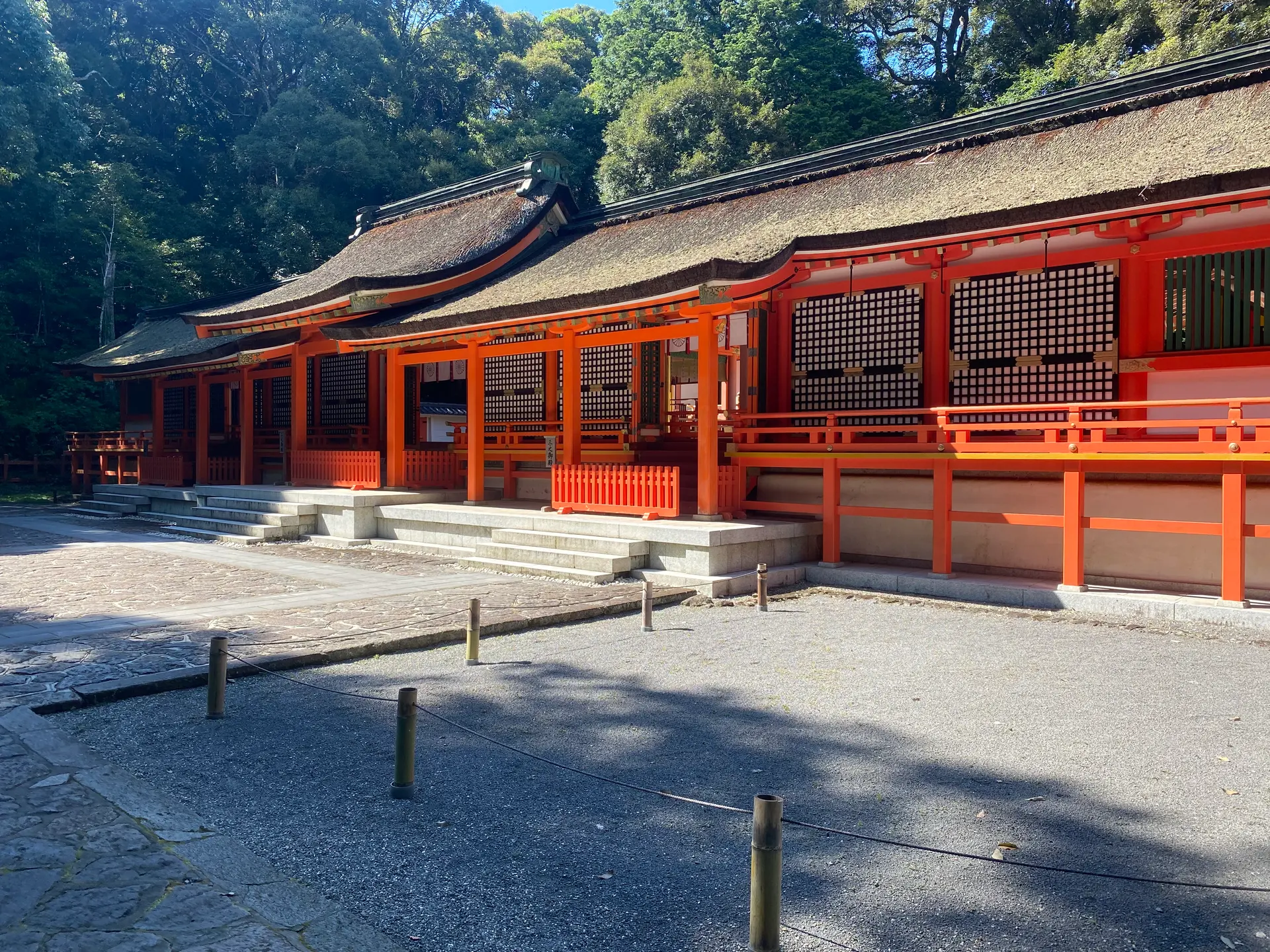
Image of Usa Jingu. Image source · CC-BY-4.0
Visit essentials
A quick read before you go
- Duration
- 1-2 hours to explore the main shrine complex.
- Access
- From Usa Station (JR Nippo Main Line): bus to Usa Hachiman (10 minutes).
Overview
Hachiman, the god of war and divine protector of Japan, first manifested at Usa in 571 CE. Over 40,000 Hachiman shrines across the nation trace their spiritual lineage here. In 749 CE, the deity traveled from Usa to Nara in the first mikoshi procession in Japanese history to participate in the consecration of Tōdai-ji's Great Buddha. This event established shinbutsu-shūgō, the synthesis of Shinto and Buddhism that would define Japanese religion for over a thousand years.
The shrine enshrines Hachiman (identified with the deified Emperor Ōjin), his mother Empress Jingū, and Hime Ōkami (three local goddesses). Its three Hachiman-zukuri main halls are designated National Treasures. The Hōjō-e ceremony in August preserves its syncretic heritage, while the forested slopes of Mount Ogura hold the accumulated sanctity of 1,300 years of worship. Historical oracles from this shrine also shaped Japanese political history.
Why this place is sacred
Usa Jingū's thinness derives from multiple sources of concentrated spiritual power. First, this is the origin point of Hachiman worship—the largest single-deity shrine network in Japan, with over 40,000 affiliated shrines. Every Hachiman shrine in Japan traces its spiritual lineage here, creating a web of devotion that flows back to this source. Second, the shrine is the birthplace of shinbutsu-shūgō, the synthesis of Shinto and Buddhism that defined Japanese religion for over a millennium.
When Hachiman traveled to Tōdai-ji in 749 CE for the Great Buddha's consecration, he became the first Shinto deity to participate in Buddhist ceremony. This event established the pattern of integration that would shape Japanese spiritual life until 1868. Third, the shrine's oracles played decisive roles in Japanese history. When the monk Dōkyō attempted to seize the Imperial throne in 769 CE, claiming a divine oracle supported him, the shrine's true oracle rejected his claim—protecting the Imperial succession.
This demonstration of spiritual authority over political power remains part of the shrine's identity. The mountain geography—Mount Ogura rising behind the shrine—adds natural sacred presence. The Hachiman-zukuri architecture of the three main halls (National Treasures) creates distinctive sacred space. The Hōjō-e ceremony, performed since 720 CE, maintains ritual traditions spanning 1,300 years.
The shrine was established to enshrine Hachiman, the god of war and divine protector who first manifested at Usa in 571 CE.
The shrine's role expanded dramatically in 749 CE when Hachiman participated in the consecration of Tōdai-ji's Great Buddha, establishing Shinto-Buddhist synthesis. Buddhist elements were removed during the Meiji-era separation of religions, but the Hōjō-e ceremony retains Buddhist influence.
Experience and orientation
The experience of Usa Jingū begins with scale—not of crowds but of significance. This is the head shrine of over 40,000 Hachiman shrines, the origin point of Japan's largest single-deity worship network. Every Hachiman shrine in the country flows spiritually from here. The approach to the shrine passes through forested grounds on the slopes of Mount Ogura. The Karamon gate marks formal entry into the sacred precinct.
The three main halls—designated National Treasures—demonstrate Hachiman-zukuri architecture, vermillion-lacquered buildings arranged in distinctive formation. Each hall enshrines different deities: Hachiman (the deified Emperor Ōjin), Empress Jingū (his mother), and Hime Ōkami (three local goddesses). Understanding what happened here in 749 CE adds dimension to the visit. From these grounds, Hachiman departed for Tōdai-ji in the first mikoshi procession—the origin of a tradition that now defines Japanese festivals.
The deity's participation in the Great Buddha's consecration established the synthesis of Shinto and Buddhism that would shape Japanese religion for a millennium. The Hōjō-e ceremony in August (August 1-3) offers rare witness to this syncretic heritage—the ritual release of living creatures to accumulate merit, a Buddhist-influenced practice performed at a Shinto shrine since 720 CE. The shrine's historical role in protecting Imperial succession—rejecting the monk Dōkyō's attempt to seize the throne through false oracle—adds political-spiritual weight to the grounds.
Approach through the forested grounds to appreciate the mountain setting. The three main halls deserve individual attention as National Treasures demonstrating Hachiman-zukuri architecture. Understanding the shrine's role as the origin of both Hachiman worship and Shinto-Buddhist synthesis enriches the experience. If visiting during the Hōjō-e ceremony (August 1-3), witness ritual traditions spanning 1,300 years.
Context and lineage
According to tradition, Hachiman first manifested at Usa in 571 CE, revealing himself as the spirit of Emperor Ōjin. The shrine was formally established in 708-714 CE, with the main sanctuary built on Mount Ogura in 725 CE. The defining moment came in 749 CE when Emperor Shōmu completed the Great Buddha at Tōdai-ji. Hachiman was transported from Usa to Nara in an elaborate procession—the first mikoshi in Japanese history—to participate in the consecration ceremony.
This unprecedented event established Hachiman as a protector of Buddhism and created the template for shinbutsu-shūgō, the synthesis of Shinto and Buddhism that would define Japanese religion for over a thousand years. In 769 CE, the monk Dōkyō claimed an oracle from Usa Jingū supported his attempt to seize the Imperial throne. Wake no Kiyomaro was sent to verify the claim; the shrine's true oracle rejected Dōkyō, protecting the Imperial succession and demonstrating the shrine's spiritual authority over political power.
Usa Jingū leads over 40,000 affiliated Hachiman shrines throughout Japan—the largest network dedicated to a single deity.
Hachiman
The god of war and divine protector, identified with the deified Emperor Ōjin, who first manifested at Usa in 571 CE
Empress Jingū
Mother of Emperor Ōjin, associated with maritime victory, enshrined as the second main deity
Wake no Kiyomaro
The official who received the true oracle rejecting Dōkyō's claim in 769 CE, protecting the Imperial succession
Traditions and practice
The Hōjō-e ceremony (August 1-3) has been performed since 720 CE—the ritual release of living creatures to accumulate merit. This Buddhist-influenced practice at a Shinto shrine reflects the syncretic heritage the shrine established. The first mikoshi procession in Japanese history departed from here in 749 CE.
Daily worship continues. The Hōjō-e ceremony remains the shrine's most significant annual event. The Gokusai festival in spring features elaborate processions. Hatsumode (New Year pilgrimage) draws visitors seeking Hachiman's blessing for victory and protection.
Worship at each of the three main halls to honor the distinct deities. Understanding the shrine's role as origin of both Hachiman worship and Shinto-Buddhist synthesis enriches the practice. If visiting during Hōjō-e (August 1-3), witness ritual traditions spanning 1,300 years.
Shinto
ActiveUsa Jingū is the head shrine of over 40,000 Hachiman shrines—the largest network dedicated to a single deity in Japan. Hachiman, identified with the deified Emperor Ōjin, first manifested here in 571 CE. The shrine pioneered shinbutsu-shūgō (Shinto-Buddhist synthesis) in 749 CE.
Daily worship at the three National Treasure main halls. The Hōjō-e ceremony (August 1-3) preserves syncretic traditions since 720 CE. Prayers for victory, protection, and safe childbirth continue the traditions associated with Hachiman and Empress Jingū.
Buddhism (historical syncretism)
HistoricalUsa Jingū was the birthplace of shinbutsu-shūgō (Shinto-Buddhist syncretism) in Japan. Hachiman's 749 CE journey to participate in Tōdai-ji's Great Buddha consecration established the template for over a thousand years of religious integration.
Formal syncretic practices ended with the Meiji-era separation of religions. The Hōjō-e ceremony retains Buddhist influence.
Perspectives and open questions
Usa Jingū can be experienced as the origin of Hachiman worship, as the birthplace of Shinto-Buddhist synthesis, or as a shrine whose oracles shaped Japanese political history.
Scholarly perspective
Historians recognize Usa Jingū as the origin point of Hachiman worship and a crucial site for understanding the development of Shinto-Buddhist syncretism. The 749 CE journey to Tōdai-ji is documented in historical records and marks a turning point in Japanese religious history. The shrine's oracles played verified roles in political events including the Dōkyō incident of 769 CE. The shrine preserves important examples of Hachiman-zukuri architecture.
Living and traditional perspectives
Within Shinto tradition, Hachiman is a living deity who first revealed himself at Usa and continues to protect Japan. The deity's identification with Emperor Ōjin connects Imperial legitimacy to divine power. The Hōjō-e ceremony genuinely accumulates merit and spiritual benefit. The shrine's oracles represented authentic divine communication that protected Japan from usurpation.
Alternative interpretations
Some visitors approach Usa as a power spot connected to martial energy and protection. The mountain setting adds to perceptions of concentrated spiritual power.
Open questions
The exact process by which Hachiman worship developed and spread remains subject to scholarly investigation. The nature of early syncretic practices before the Meiji separation is not fully documented.
Plan your visit
Access and arrival
From Usa Station (JR Nippo Main Line): bus to Usa Hachiman (10 minutes). About 1.5 hours from Beppu or Ōita City.
Beppu or Ōita City offer extensive hotel options. The shrine can be visited as a day trip from either.
Respectful visit
Modest dress appropriate for shrine visits.
Generally permitted in public areas. Restrictions may apply in certain sacred spaces.
Monetary offerings. Omamori for protection and victory available.
Standard Shinto etiquette. Free entry.
The shrine's remote location in Ōita Prefecture requires planning. Allow time for the journey.
Current practical details
Address
2859 Minamiusa, Usa, Oita 872-0102, Japan
Phone
Hours
Hours, fees, and access can change — verify on the official source before you travel. Practical details last checked Jun 2026.
Location
Map loads as you approach this section.
Pilgrim reflections
A portrait of encounter, not a score
Pilgrims describe what they felt, how present they could become, and whether the place would shape a journey. There are no stars and no ranking of traditions.
No reviewed reflections yet
The first pilgrims can help describe the character of being here.
Share a reflection
Available after an account-backed “Been there.” Every reflection is reviewed before publication.
Nearby sacred places
Explore other sacred places in the region. Proximity does not establish access or travel time; check each place’s guidance.


References
Sources consulted for this page. Source categories describe the publication, not a guarantee that every claim is verified. Traditional accounts and outside interpretations may differ.
- 01Usa Jingū Official Website — Usa JingūofficialOfficial shrine website
- 02JNTO - Usa Jingu — Japan National Tourism OrganizationofficialOfficial Japanese government tourism resource
- 03Usa Hachiman Shrine — Encyclopedia of Shinto, Kokugakuin UniversityacademicAcademic Shinto reference
- 04Usa Shrine - Wikipedia — Wikipedia contributorsencyclopediaComprehensive historical overview
Pilgrim glossary
- Torii
- The traditional Japanese gate marking the entrance to a Shinto sacred area.
- Mikoshi
- A portable Shinto shrine carried during festivals to bring a deity into the community.
Share a photo
Help visitors recognize Usa Jingu. Every submission is reviewed before publication.