Tomb of Sheikh Adi ibn Musafir (Yazidi Temple), Lalish
The wooded valley where Yazidis say the Peacock Angel first touched the earth
Understand sacred places, explore living traditions, and learn how to engage respectfully with Pilgrim Map.
Access has not been verified. Check current local guidance before planning a visit.
Lalsh, Nineveh, Iraq

Visit essentials
A quick read before you go
- Duration
- Half a day for a basic visit; an overnight stay (simple accommodation can be arranged through…
- Access
- Lalish is in the Sheikhan district of the Nineveh Plains, in the Kurdistan Region of Iraq.
Overview
In a tree-sealed fold of the Sheikhan hills about sixty kilometres north of Mosul, Lalish centers on the tomb of Sheikh Adi ibn Musafir, a twelfth-century Sufi mystic whose disciples and descendants joined his teaching with older Kurdish religious strata as Yazidism emerged. For Yazidis, this is not one holy place among many but the holy place, the axis from which the world's sanctity radiates.
Tawûsê Melek, chief of the seven Holy Beings and the most revered figure in Yazidi theology, is said to have set foot here at creation.
Within a few hundred metres of the tomb, Kaniya Sipî, the White Spring, is used to baptise infants, while Zimzim, consciously named in parallel to Mecca's Zamzam, is credited with cures of skin ailments, infertility, and spiritual affliction. Every Yazidi is religiously obliged to visit Lalish once in life, and sacred soil is carried home as small clay tablets called berat.
After the 2014 ISIS genocide on Mount Sinjar, the seven-day October Jashne Cemaiya, or Feast of the Assembly, resumed in force; many returning pilgrims describe Lalish as where they "become Yazidi again."
Why this place is sacred
The valley's thinness rests on convergence. Within a few hundred metres of one another stand the tomb of Sheikh Adi ibn Musafir, the spring of Kaniya Sipî where Yazidi infants receive baptism by sevenfold sprinkling, the spring of Zimzim said to have welled up at Sheikh Adi's prayer, the Silat bridge that pilgrims cross before entering the inner precincts, and shrines to the seven Holy Beings — the Heft Sirr — who form the core of Yazidi cosmology.
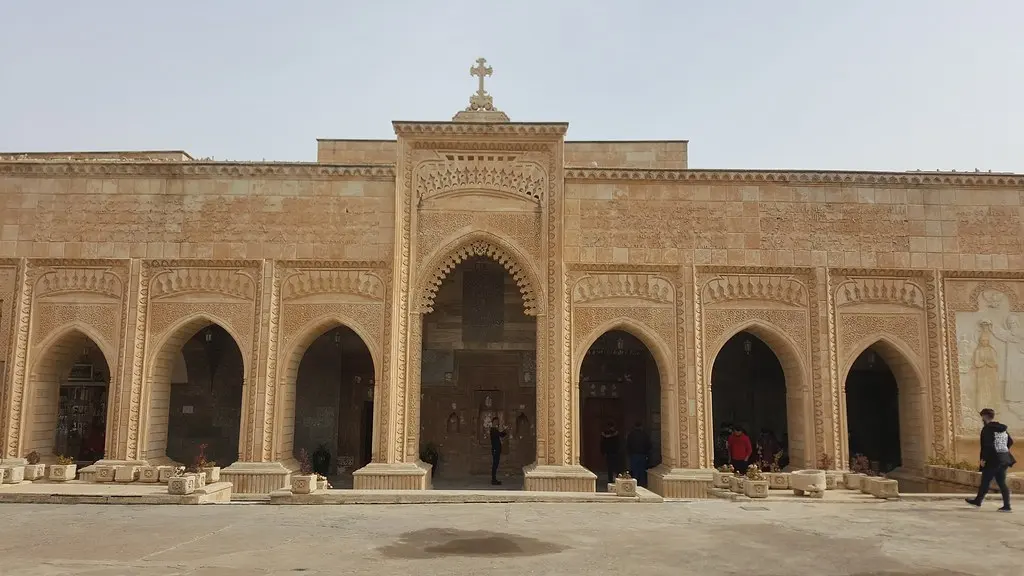
The conical fluted spires of the tomb, rising over the trees in a silhouette that has no exact parallel in regional architecture, are sometimes read as solidified sunlight. At dusk the resident faqirs light oil wicks in niches throughout the valley, and the flickering field of small flames is, for many visitors, the single most enduring image of the place.
Tawûsê Melek, the Peacock Angel chief of the seven Holy Beings, is held to have descended here at the creation; Sheikh Adi's burial in the twelfth century re-anchored a sanctity that Yazidi tradition insists already existed. Since the 2014 genocide, the valley has carried an additional weight — the survival of a tradition that ISIS attempted to erase.
Pilgrims commonly speak of a hush on first entering, of emotional release at the threshold of the tomb, and of communion with ancestors during the Parîsî procession of bronze peacock standards through the lamplit precincts.
The valley appears to have functioned as a Sufi retreat for Sheikh Adi ibn Musafir and his ʿAdawiyya disciples from the early-to-mid twelfth century. His tomb was raised after his death (most commonly dated 1162), and the surrounding shrines accumulated as his teaching was absorbed and transformed within an emerging distinctly Yazidi tradition between the thirteenth and fifteenth centuries.
Whether Lalish was a cult site before Sheikh Adi's arrival — and to what (sun, water, an earlier Iranian dewa) it might have been dedicated — remains an open question; Yazidi tradition holds the valley to be co-eternal with the world, while archaeology has found no firm pre-Adawi stratigraphy. The tomb complex has been damaged and rebuilt across Mongol, Ottoman, and nineteenth-century campaigns against the community; the modern fabric reflects continuous repair by the Yazidi Spiritual Council.
Experience and orientation
Arrival begins above the valley. Vehicles park at the upper village; pilgrims and visitors remove their shoes and walk down a single road shaded by oak and pomegranate. The first threshold is the Silat bridge, beyond which the precincts open out into a series of stone-paved courtyards and stepped paths linking the tomb of Sheikh Adi, the springs of Kaniya Sipî and Zimzim, the shrine of Sheikh Shems, and the various smaller shrines of the Heft Sirr.
Pilgrims drink from Zimzim, cup water from Kaniya Sipî to their faces, and step carefully over — never on — the threshold stone at the entrance to the tomb chamber. Inside the inner sanctuary, pilgrims tie coloured silk knots on a stone column and pray; they may also loosen another pilgrim's knot, an act understood to release that earlier petition into fulfilment.
At dusk, the resident faqirs move through the valley with small flames, kindling the oil wicks set into niches across the complex; the sanctuary acquires a low, drifting light that is impossible to photograph well and difficult to forget. Non-Yazidi visitors who arrive with respect are typically welcomed with tea and bread; caretakers are accustomed to outside guests and quietly correct missteps without rancour.
Coordinate your visit with the Yazidi Spiritual Council or a Kurdistan-based tour operator who can introduce you to the caretakers, indicate which inner chambers are open to non-initiates, and ensure you observe the protocols correctly. A visit without orientation risks crossing thresholds reserved for initiated Yazidis.
Context and lineage
Yazidi tradition holds that Tawûsê Melek, chief of the seven angels created by God to govern the world, descended at Lalish at the beginning of time. The seven Holy Beings consecrated the valley, and the springs Kaniya Sipî and Zimzim opened as signs of the place's sanctity. Sheikh Adi ibn Musafir's withdrawal here in the twelfth century is read not as a founding but as a reaffirmation — the divine light returning to a site that had always borne it.
After his death he was buried in the inner chamber, and over the following two to three centuries his descendants and disciples wove his teaching into an older Kurdish religious substrate. By the fifteenth century, a distinct Yazidi tradition with Lalish at its centre had crystallised.
The ʿAdawiyya order founded by Sheikh Adi gradually transformed into a distinct Yazidi religious tradition between the thirteenth and fifteenth centuries. The community traces its priestly families — sheikhs, pirs, faqirs, kocheks, and qewwals — to the followers gathered at Lalish in those generations.
Sheikh Adi ibn Musafir
Twelfth-century Sufi mystic of the ʿAdawiyya order; buried in the inner tomb chamber. In Yazidi theology he is identified as a manifestation of the light of Tawûsê Melek.
Tawûsê Melek
The Peacock Angel, chief of the seven Holy Beings (Heft Sirr) in Yazidi cosmology. Said to have descended at Lalish at the creation. Yazidis avoid the colour blue out of reverence for him and reject any equation of his name with the Arabic shaytan.
Sheikh Hasan
Great-nephew of Sheikh Adi who, in the late twelfth and early thirteenth centuries, organised the community at Lalish and contributed to the textual and ritual traditions later inherited by Yazidism.
Baba Sheikh and the Mîr
The spiritual head of the Yazidi community (Baba Sheikh) and the hereditary prince (Mîr) jointly oversee Lalish and set protocols for pilgrims and visitors. Their offices have continued through the post-2014 rebuilding.
Traditions and practice
Yazidi ritual at Lalish weaves baptism, ablution, knot-tying, and procession into a continuous cycle. Mor kirin, the baptism of infants and returning pilgrims, is administered with sevenfold immersion or sprinkling of water from Kaniya Sipî. In the tomb chamber, pilgrims tie coloured silk knots on a stone column and make a wish or prayer; loosening another pilgrim's knot is understood as releasing that earlier petition into fulfilment.
The Parîsî, the carrying of the sancak — bronze peacock standards representing Tawûsê Melek — moves slowly through the valley during major assemblies, accompanied by daf and shibab and the chanting of qewls by qewwals. During Jashne Cemaiya in October, a bull is sacrificed at the shrine of Sheikh Shems and communal meals are prepared and served free in the valley's kitchens.
Daily life at Lalish is sustained by the resident faqirs, who light the oil lamps at dusk and maintain the shrines. Year-round pilgrim visits intensify around Cejna Sersalê — the Yazidi New Year, the Red Wednesday of April, marked by fire-lighting and egg-dyeing — and during the October Cemaiya. Communal meals, simat, are prepared in the valley's kitchens and offered free to all who arrive.
Since the 2014 genocide, the pilgrimage has carried a renewed weight; many Yazidis returning from displacement describe the visit as a reaffirmation of identity.
Non-Yazidi visitors may walk most of the valley barefoot, drink from Zimzim, observe ceremonies from designated areas, and accept the hospitality of the caretakers. A short, quiet stay at dusk to watch the oil-wick lighting is the gentlest way to share in the rhythm of the place. The knot-tying and baptismal rites belong to Yazidi initiates and should not be imitated.
Yazidism
ActiveLalish is the single holiest place in Yazidism — where Tawûsê Melek is said to have descended at the creation, where Sheikh Adi ibn Musafir is buried, and where every Yazidi is religiously obliged to make pilgrimage at least once in life. The valley contains the conical-spired tomb of Sheikh Adi, the sacred springs Kaniya Sipî and Zimzim, the Silat bridge, and shrines to the seven Holy Beings (Heft Sirr) who form the core of Yazidi cosmology.
Barefoot circumambulation of the inner sanctuary; tying coloured silk knots on a stone column inside the tomb chamber and loosening another pilgrim's knot to fulfil theirs; baptism (mor kirin) in the waters of Kaniya Sipî for infants and returning pilgrims; drinking and washing in Zimzim; lighting oil wicks at niches throughout the valley at dusk; and the annual seven-day Jashne Cemaiya in October with the sema, the Parîsî procession of bronze peacock standards, the bull sacrifice at the shrine of Sheikh Shems, and qewl chanting led by qewwals.
ʿAdawiyya Sufism (historical)
HistoricalSheikh Adi ibn Musafir, born in the Bekaa Valley and trained in twelfth-century Iraqi Sufism, founded the ʿAdawiyya order and withdrew to Lalish in old age. Mainstream Sunni Sufi affiliation faded within a few generations after his death as his teaching was absorbed into the emerging Yazidi tradition.
Originally dhikr, ascetic retreat, and Qur'anic study in the manner of twelfth-century Iraqi Sufism. These practices were absorbed and transformed within Yazidi liturgy rather than preserved as a separate Sufi lineage at the site.
Perspectives and open questions
Lalish sits at the intersection of three readings: scholarly history that traces a twelfth-century Sufi shaykh's tomb gradually absorbed into a distinct Yazidi tradition, Yazidi tradition that holds the valley co-eternal with the world, and a Western imagination that has repeatedly distorted the community through the 'devil-worshipper' canard. Each reading shapes how visitors arrive and what they are prepared to see.
Scholarly perspective
The academic consensus places Lalish at the centre of an independent monotheistic religion of probable Indo-Iranian roots that absorbed twelfth-century Sufi elements through Sheikh Adi ibn Musafir and his ʿAdawiyya order before crystallising into a distinct Yazidi tradition between the thirteenth and fifteenth centuries. The tomb complex dates structurally to the medieval period with significant post-nineteenth-century rebuilding.
The internal liturgical corpus — the qewls and the disputed Mishefa Reş and Kitêba Cilwe — is treated with caution in Western scholarship, both in dating and in authenticity.
Living and traditional perspectives
From within Yazidism, Lalish is co-eternal with the world. Tawûsê Melek and the seven Holy Beings descended here at the creation; Sheikh Adi's interment merely re-anchored a sanctity that always existed. The site is not 'one of many holy places' but the holy place, the axis from which all others derive — the soil itself, taken home as berat, carries the valley's sanctity outward.
Alternative interpretations
Some nineteenth- and twentieth-century esoteric writers, beginning with Layard and continuing through Mackenzie and the circle around Gurdjieff, speculated about Lalish as a survival of ancient Mesopotamian or even pre-Sumerian solar religion. Yazidis themselves do not endorse this reading; mainstream scholarship treats it as romantic projection while acknowledging that Yazidi cosmology does preserve archaic Indo-Iranian motifs.
Open questions
Whether the valley was a cult site before Sheikh Adi's arrival, and to what it might have been dedicated, is unknown — no firm pre-Adawi stratigraphy exists. The original meaning of the conical fluted spires, which have no exact parallel in regional architecture, is also unresolved. So is the full historical chain by which a Sunni Sufi shaykh came to be identified with Tawûsê Melek in Yazidi theology.
Plan your visit
Access and arrival
Lalish is in the Sheikhan district of the Nineveh Plains, in the Kurdistan Region of Iraq. Most visitors travel by car from Duhok (around 90 minutes) or Erbil (around 3 hours). The final approach is a single road into the valley; vehicles park at the upper village and pilgrims descend on foot.
A KRG-issued visa typically covers entry; foreign visitors are strongly advised to coordinate with the Yazidi Spiritual Council or a Kurdish tour operator who can introduce you to caretakers and clarify which chambers are open to non-initiates. Mobile signal in the valley is variable; the upper village and nearby roads are more reliable.
Simple guest accommodation can be arranged in the upper village through the Yazidi Spiritual Council. Most foreign visitors base themselves in Duhok, where hotels of varying standards line the city centre, and make Lalish a day trip.
Respectful visit
Modest clothing covering shoulders and knees. A head covering for women is appreciated though not strictly required for visitors. Avoid blue.
Outer areas usually permitted; clergy, ceremonies, and inner sanctums require explicit permission. No flash near oil lamps.
Cash donations to the shrine treasury are welcome. Some pilgrims bring olive oil for the lamps.
No shoes anywhere within the sanctuary precincts. Never step on the threshold of Sheikh Adi's tomb. Do not bring or consume lettuce or pork. Do not equate the name of Tawûsê Melek with the Arabic shaytan — this is deeply offensive and historically the source of false 'devil-worshipper' accusations.
Lalish is the sanctuary of a community that suffered genocide in 2014 and that has long endured the false 'devil-worshipper' framing built on a wilful mistranslation of Tawûsê Melek. Do not pronounce his name in connection with the Arabic shaytan. Do not bring lettuce or pork into the valley; both are taboo. Avoid the colour blue in dress out of reverence for the Peacock Angel.
Do not speculate publicly about inner-sanctum rituals you have not been initiated into, and do not photograph clergy or ceremonies without explicit permission. Some inner chambers — particularly around the sacred serpent relief and certain springs — are restricted to initiated Yazidis.
Current practical details
Address
معبد لالش النوراني،، Q8C3+JMC, Lalish, Nineveh Governorate, Iraq
Hours
Hours, fees, and access can change — verify on the official source before you travel. Practical details last checked Jun 2026.
Location
Map loads as you approach this section.
Pilgrim reflections
A portrait of encounter, not a score
Pilgrims describe what they felt, how present they could become, and whether the place would shape a journey. There are no stars and no ranking of traditions.
No reviewed reflections yet
The first pilgrims can help describe the character of being here.
Share a reflection
Available after an account-backed “Been there.” Every reflection is reviewed before publication.
Nearby sacred places
Explore other sacred places in the region. Proximity does not establish access or travel time; check each place’s guidance.



Share a photo
Help visitors recognize Tomb of Sheikh Adi ibn Musafir (Yazidi Temple), Lalish. Every submission is reviewed before publication.