St. Matthew’s Monastey, Mosul, Kurdistan, Iraq
Among the oldest monasteries on earth, clinging to a Mosul mountainside and still living after sixteen centuries
Understand sacred places, explore living traditions, and learn how to engage respectfully with Pilgrim Map.
Access has not been verified. Check current local guidance before planning a visit.
Faf, Nineveh, Iraq
Read the sources
Visit essentials
A quick read before you go
- Duration
- 1-2 hours including the climb and the views.
- Access
- On Mount Alfaf (also called Mount Maqlub), about 20 km northeast of Mosul via Bartella; reached…
Overview
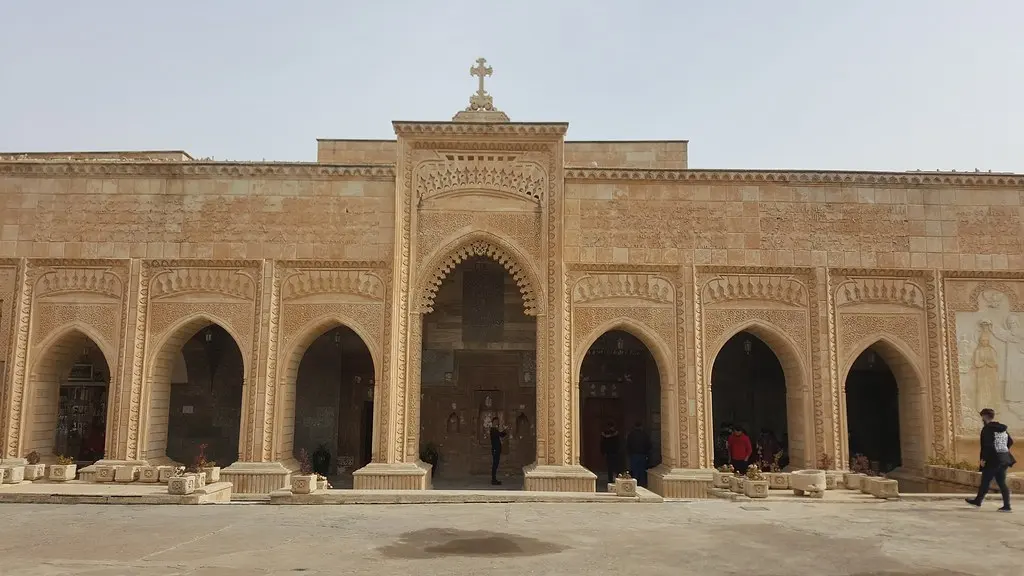
Mar Mattai, the Monastery of Saint Matthew, sits at around 820 meters on the flank of Mount Alfaf, about twenty kilometers northeast of Mosul, overlooking the Nineveh Plains. Founded in 363 AD by Mor Mattai the Hermit, who fled persecution under the emperor Julian with a small band of monks, it is one of the oldest Christian monasteries anywhere and the oldest of the Syriac Orthodox Church. For sixteen centuries it has been a living house of prayer.
It became an episcopal and then a metropolitan see and a great center of monastic scholarship and manuscript production. A fire in 480 AD destroyed part of its celebrated library; conflict and time reduced its manuscripts to a small surviving collection. The monastery also served repeatedly as a place of safety. In 2014, as ISIS halted only a few kilometers short, the monks and bishop remained, the monastery sheltered displaced Christians, and its manuscripts were moved to safety.
The Kurdistan Regional Government later renovated and secured the site.
A winding mountain road climbs to the fortress-like stone complex, where Mor Mattai's tomb is still venerated, monastic prayer is still kept, and a community remains, overlooking a plain that has been Christian for far longer than most of the world's churches have existed.
Why this place is sacred
Mar Mattai's power is the power of duration. Monastic prayer has been kept here, with interruptions, since the fourth century — a thread of continuity that few places on earth can match. The mountain setting reinforces it: a fortress of stone clinging to a steep flank, withdrawn from the world yet commanding a vast view over the plains where Christianity took root early.
And running through its whole history is the role of refuge — the monastery has sheltered the persecuted again and again, most recently in 2014, when monks and bishop held their ground as ISIS advanced. Antiquity, silence, and survival converge here.
A hermitage and monastery founded by Mor Mattai and his monks, which became a major center of Syriac monastic life, learning, and ecclesiastical authority.
Founded 363 AD; rose to an episcopal see in the late fifth century and later a metropolitan see; its library was partly lost to a fire in 480 AD; renovated and secured by the Kurdistan Regional Government after 2014.
Experience and orientation
Visitors describe a stone monastery built almost into the cliff, reached by a winding climb, with terraces and walls that give it the look of a fortress. From its height the Nineveh Plains spread out below, and the sense of antiquity is immediate. Inside are the tomb of Mor Mattai, venerated for sixteen centuries, and a small surviving collection of manuscripts that hints at the great library the monastery once held.
The monastic community is described as welcoming, and the rhythm of monastic prayer continues; the silence and the long view together produce the strongest impressions.
Allow time for the climb and the views before going inside. The tomb of Mor Mattai is the devotional heart; the surviving manuscripts and the terraces overlooking the plains complete the visit. Early morning is the quietest time and gives the clearest views over the Nineveh Plains.
Context and lineage
Mor Mattai fled persecution under the emperor Julian the Apostate, traveling with twenty-five monks, and settled as a hermit on Mount Alfaf, founding the monastery in 363 AD. It grew into a great center of monastic learning and an ecclesiastical seat, first episcopal and later metropolitan. A fire in 480 AD cost it part of its library.
Across the centuries it was damaged and rebuilt many times and served repeatedly as a refuge for Iraq's Christians, a role it filled again in 2014 when ISIS reached the edge of the plains. Syriac tradition also links the monastery to the Behnam and Sarah legend, in which Mor Mattai healed Sarah and converted her and her brother — a story shared with the nearby Mar Behnam Monastery and hagiographic rather than documented.
Syriac Orthodox Christianity, within the early Syriac monastic tradition of Mesopotamia.
Mor Mattai the Hermit
Fourth-century ascetic founder
Saint Behnam and Saint Sarah
Figures of the founding legend
The monastic community and bishop (2014)
Custodians during the ISIS advance
Kurdistan Regional Government
Modern conservator
Traditions and practice
Daily monastic prayer and liturgy; veneration at the tomb of Mor Mattai; and the annual feast of Mor Mattai on 18 September, which gathers Christians of various denominations in pilgrimage.
Monastic life continues with monks and a bishop in residence; pilgrimage and visitation continue through the year and peak at the September feast.
Move with the rhythms of the monastery: keep quiet, observe rather than interrupt, and let the silence and the view do their work. Reflection on endurance, faith under persecution, and the long continuity of Christian presence in Mesopotamia fits the place for visitors of any background.
Syriac Orthodox Christianity
ActiveOne of the oldest Christian monasteries in existence and the oldest of the Syriac Orthodox Church, founded in 363 AD by Mor Mattai the Hermit. A historic center of monastic learning, manuscript production and ecclesiastical authority, and a recurring place of refuge for Iraq's Christians.
Monastic liturgy and prayer; the annual feast of Mor Mattai (18 September), drawing Christians of various denominations; veneration of the saint's tomb.
Perspectives and open questions
Mar Mattai is read as one of the oldest living monasteries on earth and as a recurring sanctuary in times of danger.
Scholarly perspective
Scholars describe a genuinely ancient, fourth-century Syriac Orthodox monastery and historic seat of learning and ecclesiastical authority, repeatedly damaged and rebuilt across its long history; one of the oldest surviving Christian monasteries.
Living and traditional perspectives
Syriac Orthodox Christians venerate it as the foundation of Mor Mattai and a sacred refuge, and its feast unites multiple Christian denominations.
Alternative interpretations
Traditions of miraculous healing are associated with Mor Mattai — above all the healing of Sarah — and with the protective sanctity of the mountain refuge.
Open questions
The historicity of the Behnam, Sarah and Sennacherib founding legend is uncertain, and much of the monastery's earliest fabric and many early manuscripts were lost to fire and conflict.
Plan your visit
Access and arrival
On Mount Alfaf (also called Mount Maqlub), about 20 km northeast of Mosul via Bartella; reached by car or taxi up a winding mountain road, roughly 30-45 minutes from Mosul. The KRG provides security; confirm regional access before traveling.
Mosul and Erbil are the practical bases; Erbil offers the widest accommodation and the most settled access for travelers to the region.
Respectful visit
Modest dress: shoulders and knees covered for men and women.
Generally allowed outside; ask permission before photographing inside the church or buildings.
No entry fee; donations toward upkeep are encouraged, along with candles and prayers.
Respect monastic quiet and any areas closed to visitors; follow the community's guidance.
Current practical details
Address
FCRR+7X8، قريه مير كي، نينوى محافظة، Iraq
Hours
Hours, fees, and access can change — verify on the official source before you travel. Practical details last checked Jun 2026.
Location
Map loads as you approach this section.
Pilgrim reflections
A portrait of encounter, not a score
Pilgrims describe what they felt, how present they could become, and whether the place would shape a journey. There are no stars and no ranking of traditions.
No reviewed reflections yet
The first pilgrims can help describe the character of being here.
Share a reflection
Available after an account-backed “Been there.” Every reflection is reviewed before publication.
Nearby sacred places
Explore other sacred places in the region. Proximity does not establish access or travel time; check each place’s guidance.



References
Sources consulted for this page. Source categories describe the publication, not a guarantee that every claim is verified. Traditional accounts and outside interpretations may differ.
- 01Dayro d'Mor Mattai — Syriac Heritage Project — Syriac Heritage ProjectacademicScholarly Syriac heritage documentation of the monastery's history and significance.
- 02Le Couvent de Mar Matta — Mesopotamia Heritage — Mesopotamia (mesopotamiaheritage.org)academicArchitectural and historical documentation; library and manuscripts.
- 03Mor Mattai Monastery — Wikipedia — Wikipedia contributorsacademicSyriac Orthodox monastery on Mount Alfaf, 20 km NE of Mosul; founded 363 AD by Mor Mattai the Hermit; one of the oldest Christian monasteries; library, feast 18 September, episcopal/metropolitan see.
- 04Mar Mattai Monastery — A Timeless Sanctuary of Faith, History, and Resilience — SyriacPress — SyriacPressacademicFoundation story, library (Bartalli Gospel, 54 illustrations), 480 AD fire, ~224 surviving manuscripts, feast and resilience.
- 05Iraqi Christians, Protecting An Ancient Monastery, Watch Battle Against ISIS — Noema — Noema MagazineSource context2014 ISIS threat; refuge for displaced Christians; manuscripts moved to safety; monks and bishop on the front line.
- 06Oldest Christian monastery safeguarded by Kurdistan Region — Kurdistan24 — Kurdistan24officialKRG renovation and 24-hour security; current safeguarding status.
- 07Mar Mattai Monastery: A Sanctuary in the Mountains — Evendo — EvendoSource contextVisitor info: access via Bartella, coordinates, 820 m elevation, dress code, photography, donations.
Share a photo
Help visitors recognize St. Matthew’s Monastey, Mosul, Kurdistan, Iraq. Every submission is reviewed before publication.