Tomb of Giants and Nuraghe Imbertighe
The most beautiful facade among Sardinia's ancient tombs rises from agricultural fields near Borore
Understand sacred places, explore living traditions, and learn how to engage respectfully with Pilgrim Map.
Access has not been verified. Check current local guidance before planning a visit.
Bòrore/Borore, Nuoro, Italy
Read the sources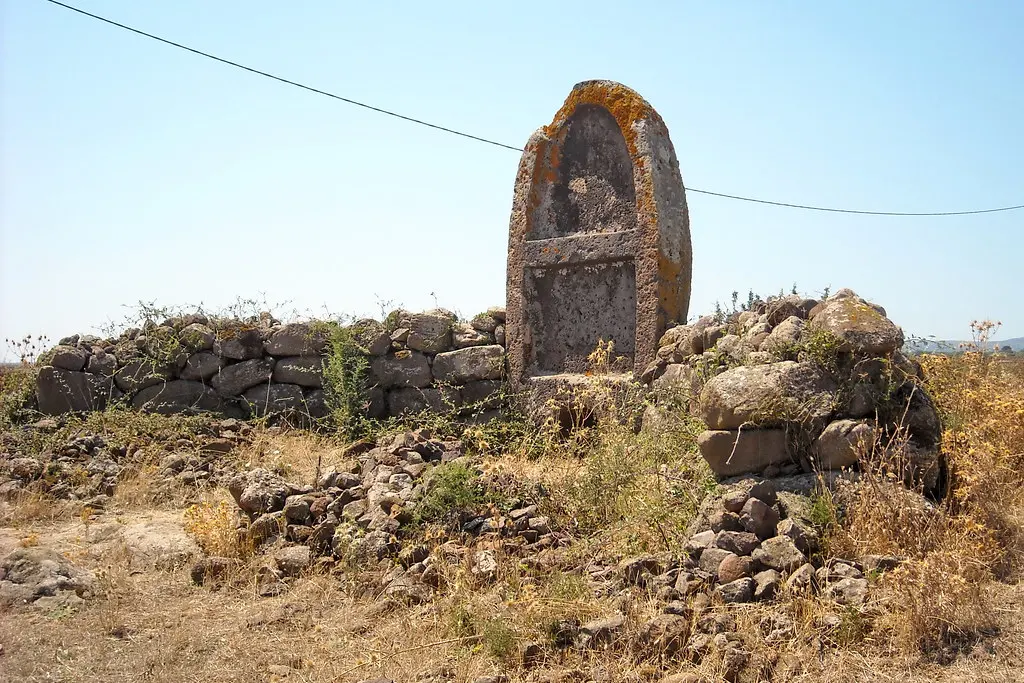
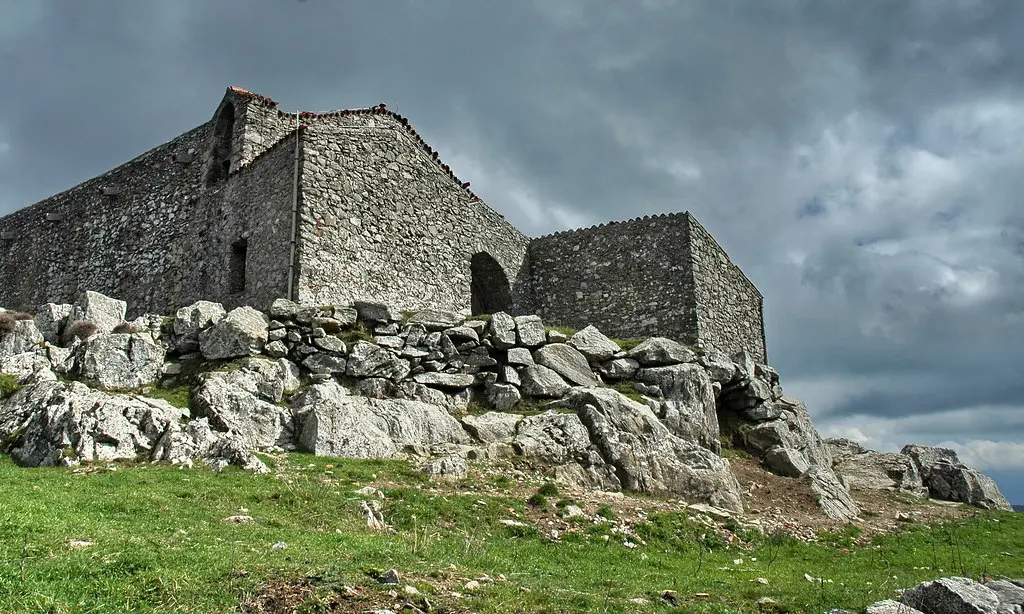
Image of Tomb of Giants and Nuraghe Imbertighe. Image source
Visit essentials
A quick read before you go
- Duration
- 30 minutes to 1 hour including nearby nuraghe.
- Etiquette
- Respect the ancient burial site through careful movement and contemplative behavior.
Overview
Imbertighe's reputation rests not on scale but on the harmony of its carved stele and curved exedra, which Pinza judged exceptionally beautiful. Built during the Middle Bronze Age, approximately 1800-1600 BC, it held the collective remains of the nearby Nuragic community. The name "giants' tomb" comes from Sardinian folklore: peasants attributed such massive monuments to supernatural giants, the mannos, whose bones they imagined within.
The exedra formed a semicircular ceremonial forecourt where funerary rites took place and, according to classical sources, the living slept to seek healing or guidance from ancestors. Its bull's-horn form symbolized fertility and divine power, framing death as transformation rather than an ending. The tomb still rises from agricultural fields two hundred meters from the nuraghe that may have housed its community, preserving the close relationship between living and dead that shaped the monument.
Why this place is sacred
The thinness at Imbertighe manifests in the space between the living and the dead. The Nuragic people who built this tomb did not perceive death as absolute separation. Their practice of incubation—sleeping beside ancestral bones to receive healing or prophetic dreams—assumed that the dead remained accessible, willing and able to assist the living.
The architecture embodies this belief. The curved exedra creates ceremonial space for the living while the long corridor houses the dead. The two spaces connect at the stele, which may have served as a symbolic portal between worlds. The small opening at the base of the stele was too small for bodies; it was sized for spirits.
This is thin place as membrane—not a location where another world briefly appears, but a permanent point of contact designed and maintained through architectural intention. The tomb's beauty, which Pinza recognized, may derive precisely from this clarity of purpose. Every element serves the relationship between living and dead.
The bull's-horn shape of the exedra adds symbolic dimension. Bulls represented fertility, strength, and divine power in Nuragic iconography. The tomb's form suggested not merely death but the cycle through death into new life. The ancestor who entered the tomb in death could emerge in dreams to guide the living, completing a circulation that the architecture made possible.
Four thousand years later, the tomb still stands in its agricultural setting, the fields around it worked by descendants of the communities who built it. The specific practices have ceased, but the connection to ancestral land continues. Something of the original intention—to maintain relationship across the boundary of death—persists in how Sardinians regard these monuments as integral to their heritage.
Built during Middle Bronze Age (1800-1600 BC) as collective burial site for the Nuragic community. The tomb served dual function: housing the dead and providing space for incubation practices where the living sought communion with ancestors.
Used throughout the Nuragic period for collective burial and ritual. Documented by scholars including Lamarmora and Pinza, who recognized its exceptional beauty. Now protected as archaeological site and included in UNESCO tentative list nomination.
Experience and orientation
The approach to Imbertighe leads through agricultural land that has been worked for millennia. Park where the access road permits and walk toward the tomb, which reveals itself gradually—first the curve of the exedra, then the central stele rising above the surrounding stones.
The stele commands attention. This is the element Pinza found most beautiful, and time has not diminished its effect. The arched shape frames the small portal at its base, through which spirits were believed to pass. Notice how the curve echoes the larger curve of the exedra, creating nested forms that draw the eye inward and downward.
Walk the circumference of the exedra, appreciating how the horn-shaped forecourt creates enclosed space. This was where funerary ceremonies took place, where the living gathered to honor their dead. Imagine it filled with mourners, with offerings, with the particular grief and hope that burial rituals must have carried.
The tomb corridor extends behind the stele, a long narrow space that once held the collective remains of the community. The dolmen-type construction with polygonal masonry represents a particular phase of Giants' Tomb development.
Two hundred meters away stands the Nuraghe Imbertighe, which may have housed the community this tomb served. The proximity of dwelling and burial site reflects Nuragic understanding of death as part of daily life rather than something segregated and hidden.
The rural quiet of the setting permits contemplation. No crowds, no commerce—just the ancient tomb in its fields, holding whatever remains of the relationship between Nuragic dead and their descendants.
Leave SS 131 at km 135 exit toward Borore on SP 33. Just past Borore turnoff, take SP 66 toward Sedilo, turn right toward Borore. After 300 meters, turn left onto paved road leading to the site. Free access, outdoor site. Allow 30 minutes to 1 hour including nearby nuraghe.
Context and lineage
The Giants' Tomb of Imbertighe was built during the Middle Bronze Age, approximately 1800-1600 BC, by the Nuragic civilization of Sardinia. Like other Giants' Tombs across the island, it served as a collective burial site where multiple community members were interred together.
The Nuragic practice involved secondary burial: bodies were first exposed to strip flesh from bones, then the skeletal remains were collected and placed in the tomb. This process required time and ritual attention, transforming death into an extended ceremony of transition.
The tomb gained scholarly recognition through the work of Lamarmora and especially Pinza, who declared its facade 'the most beautiful' among the Giants' Tombs known in Sardinia. This assessment has made Imbertighe a reference point for understanding Nuragic funerary architecture.
Nearby stands the Nuraghe Imbertighe, approximately two hundred meters from the tomb. This proximity suggests the tomb served a specific community whose daily life centered on the nuraghe. The dead remained close to the living, part of the community's ongoing life rather than removed to distant burial grounds.
Built by Nuragic civilization (Middle Bronze Age, 1800-1600 BC). Documented by 19th-20th century scholars. Now one of 31 monuments proposed for UNESCO World Heritage as representatives of Nuragic civilization.
The Nuragic Community of Borore
Builders and Users
Pinza
Scholar
Traditions and practice
The Nuragic people practiced secondary burial with funerary rites in the exedra. Incubation—sleeping near tombs to receive healing or prophetic dreams from ancestors—connected living and dead. The bull's-horn architecture symbolized fertility and the cycle of death into new life.
Archaeological appreciation and cultural tourism provide the primary modes of engagement. Some visitors may approach the site contemplatively, honoring its function as a place where the living communed with the dead.
Approach slowly, allowing the tomb to reveal itself gradually. Spend time with the stele that Pinza found beautiful. Walk the curve of the exedra, imagining it filled with mourners. Visit the nearby nuraghe to understand the relationship between dwelling and burial in Nuragic life. Allow the rural quiet to support contemplation.
Nuragic Burial Traditions
HistoricalImbertighe represents collective burial practices and ancestor veneration central to Nuragic society. The tomb served both as repository for the dead and as site for ongoing communion between living and ancestors.
Secondary burial with bones collected after exposure. Funerary rites in the exedra. Incubation sleep to receive ancestral guidance. The bull's-horn architecture symbolized fertility and the cycle of death into rebirth.
Perspectives and open questions
Imbertighe can be understood as an example of exceptional Bronze Age funerary architecture, as evidence of Nuragic ancestor veneration practices, or as a site where the boundary between living and dead was deliberately made permeable.
Scholarly perspective
Scholars recognize Imbertighe as one of the finest examples of Giants' Tomb architecture. Pinza's assessment of its 'most beautiful facade' has made it a reference point for understanding Nuragic burial practices. The dolmen-type construction with polygonal masonry represents a particular developmental phase.
Living and traditional perspectives
Sardinian folklore preserves the name 'tomba dei giganti' reflecting popular attempts to explain massive prehistoric structures. This oral tradition maintained awareness of the tombs' significance across millennia.
Alternative interpretations
Some researchers associate Giants' Tombs with earth energy and healing practices. The bull's-horn shape has attracted interest from those studying sacred geometry and fertility symbolism.
Open questions
The full extent of burial practices at this specific tomb remains partially documented. The relationship between the tomb and the nearby nuraghe invites further research. The specific rituals performed in the exedra are not recorded.
Plan your visit
Access and arrival
Accommodation available in Borore and surrounding towns.
Respectful visit
No specific requirements. Outdoor walking shoes recommended for agricultural terrain.
Photography permitted.
Not appropriate at archaeological sites.
Respect the ancient stonework. Do not remove or disturb any stones or materials.
Rural terrain may present challenges. Outdoor site with no facilities.
Current practical details
Address
Strada di Imbertighe, 08016 Borore NU, Italy
Hours
Hours, fees, and access can change — verify on the official source before you travel. Practical details last checked Jun 2026.
Location
Map loads as you approach this section.
Pilgrim reflections
A portrait of encounter, not a score
Pilgrims describe what they felt, how present they could become, and whether the place would shape a journey. There are no stars and no ranking of traditions.
No reviewed reflections yet
The first pilgrims can help describe the character of being here.
Share a reflection
Available after an account-backed “Been there.” Every reflection is reviewed before publication.
Nearby sacred places
Explore other sacred places in the region. Proximity does not establish access or travel time; check each place’s guidance.
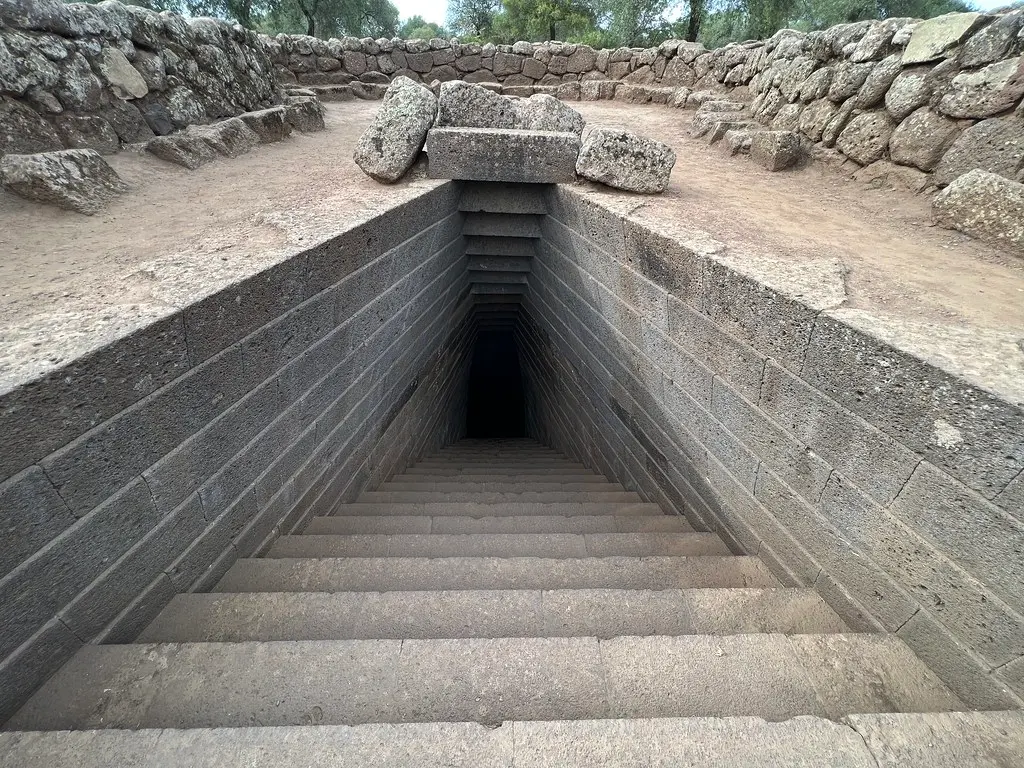
Sacred Well of Saint Christina
Paulle/Paulilatino, Oristano, Italy
17.5 km away
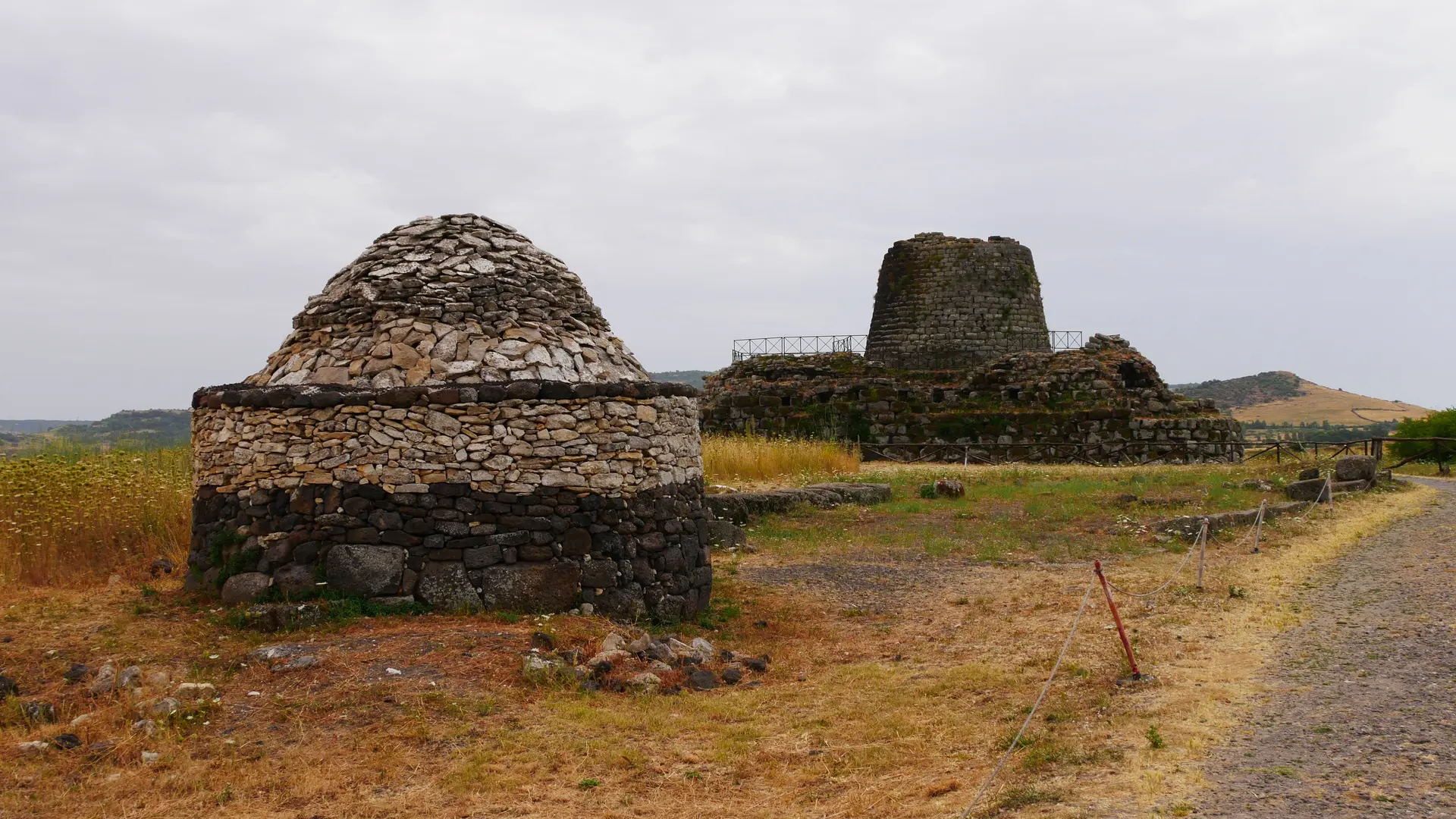
Nuraghe of Saint Constantine, Sa domo de su re (The house of the king)
Turalva/Torralba, Sassari, Italy
30.9 km away
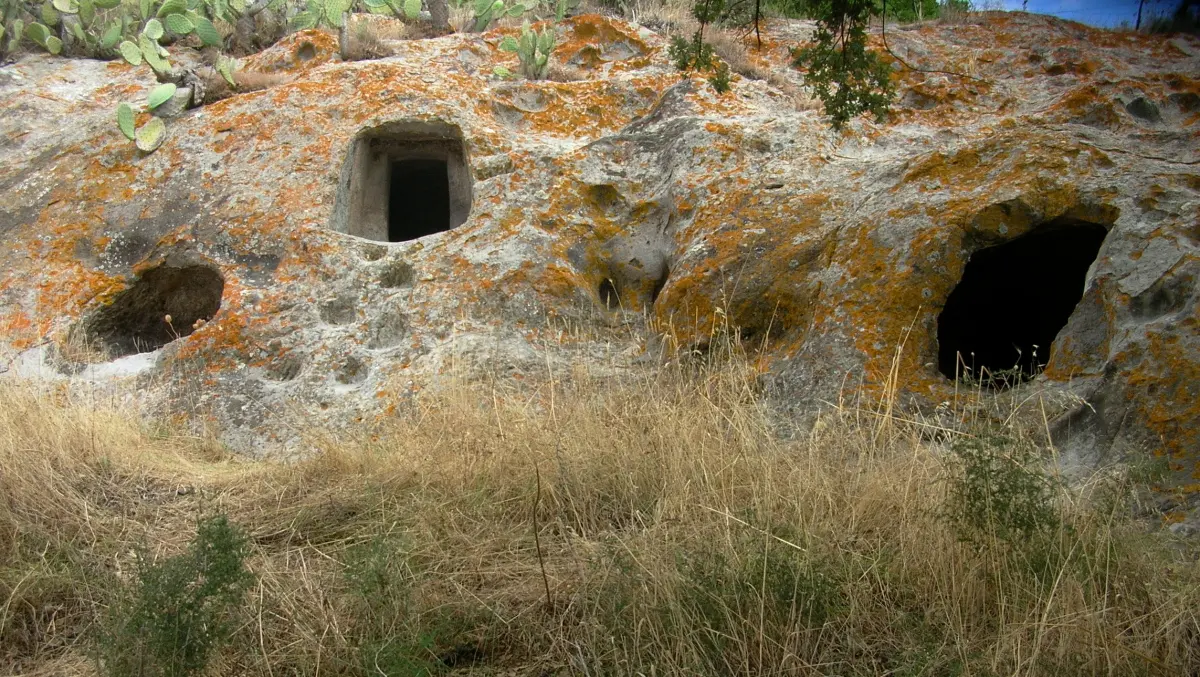
Domus de janas, Sas Concas
Onieri/Oniferi, Nuoro, Italy
31.6 km away
Santuario di Nostra Signora di Gonare
Orani, Nuoro, Italy
33.7 km away
References
Sources consulted for this page. Source categories describe the publication, not a guarantee that every claim is verified. Traditional accounts and outside interpretations may differ.
- 01Giants' tombs of Imbertighe, Perda Longa and Figu e Santu Bainzu — La Sardegna verso l'UnescoSource contextUNESCO candidacy documentation
- 02Tomba di giganti di Imbertighe - IDESE — Italian Ministry of CultureofficialOfficial cultural heritage database
- 03Giants' grave - Wikipedia — Wikipedia contributorsencyclopediaGeneral reference on Giants' Tombs
- 04Giants' Tombs of Sardinia - Archaeology Travel — Archaeology TravelguideArchaeological travel guide
- 05Sardinia Sacred Sites Information — World Pilgrimage GuideguidePilgrimage and sacred sites perspective
Share a photo
Help visitors recognize Tomb of Giants and Nuraghe Imbertighe. Every submission is reviewed before publication.