The Archaeological Park of Alto de los Ídolos
A horseshoe-shaped hill reshaped for the dead, where the tallest statue stands mostly hidden underground
Understand sacred places, explore living traditions, and learn how to engage respectfully with Pilgrim Map.
Access has not been verified. Check current local guidance before planning a visit.
Huila, Huila, Colombia
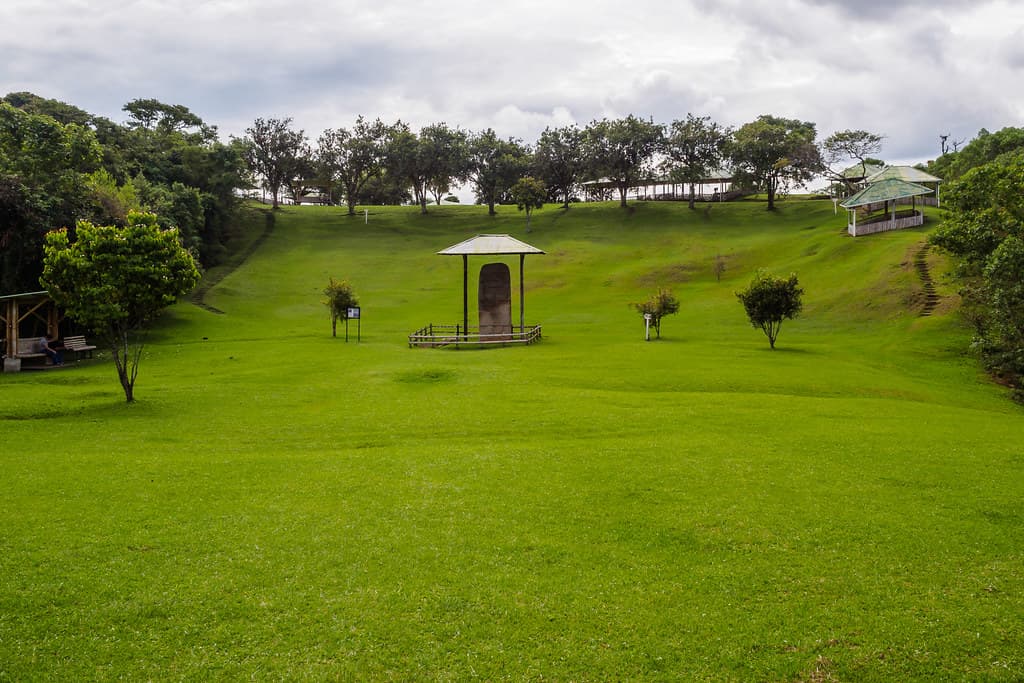
Image of The Archaeological Park of Alto de los Ídolos. Image source
Visit essentials
A quick read before you go
- Duration
- One to two hours.
- Access
- Located in the municipality of Isnos, Huila Department, Colombia, approximately twenty-five…
Overview
The San Agustin people reshaped a natural horseshoe hill near Isnos into a thirteen-hectare burial landscape, leveling its summit and terracing its slopes. Alto de los Idolos is the second most important component of the San Agustin Archaeological Park UNESCO complex, concentrating its sacred program on this single hill.
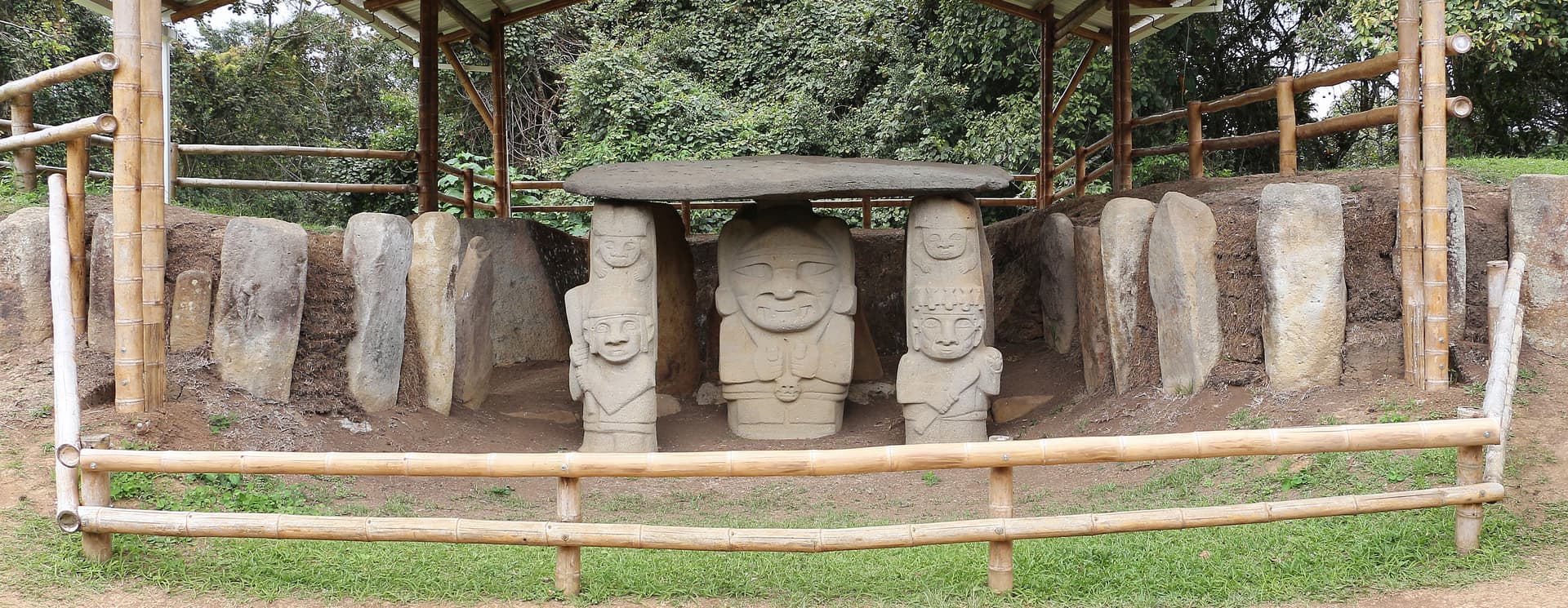
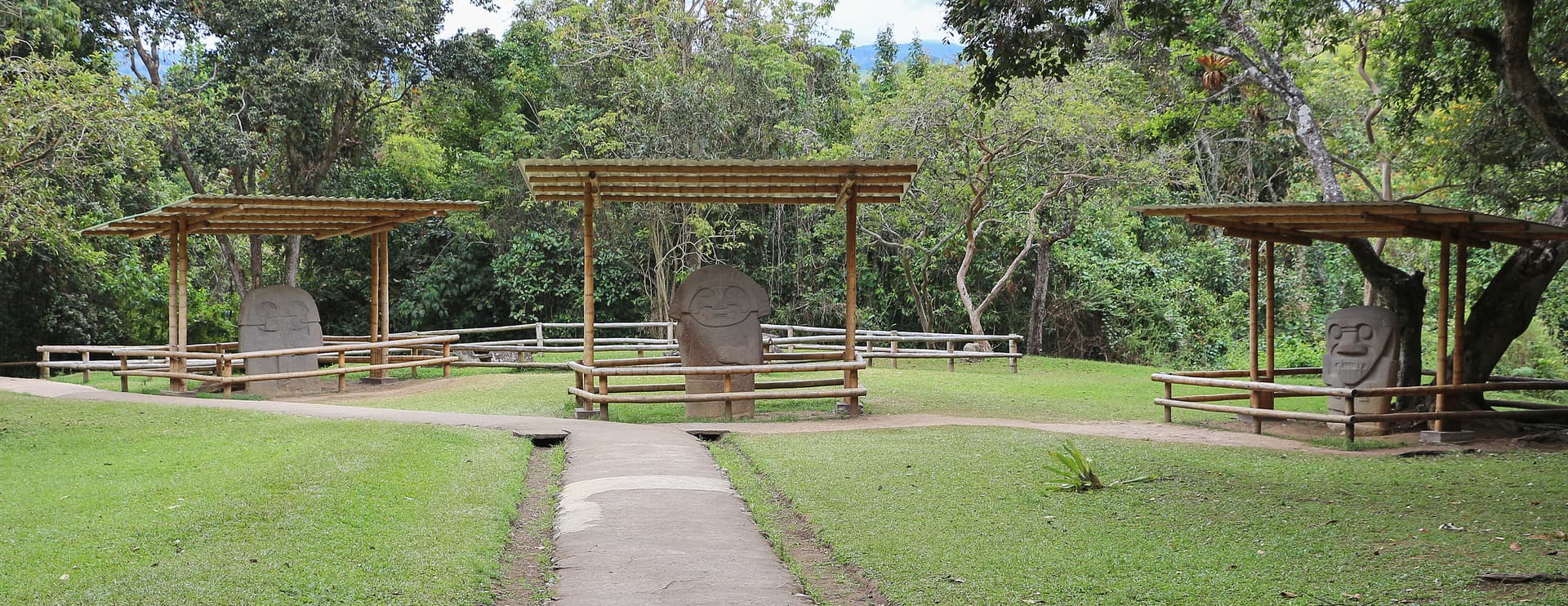
Seven burial mounds contain monolithic sarcophagi carved from single blocks of volcanic stone. Fashioning each coffin with stone tools took days or weeks of labor beyond practical necessity. Twenty-three anthropomorphic and zoomorphic guardians stand among the mounds, with jaguars and crocodiles—the apex predators of land and water—protecting the dead.
The complex's tallest statue measures seven meters, but only four rise above ground; three remain buried. Whether this was intentional or resulted from centuries of accumulated earth is unknown. The effect is that the culture's most monumental expression is mostly invisible, aligned with the dead whose journey the San Agustin people carved into stone for over a thousand years.
Why this place is sacred
The decision to reshape a hill requires collective commitment. This was not one sculptor working alone but a community redirecting its labor from the needs of the living to the needs of the dead. The leveling of the summit, the terracing of the slopes, the carving and transport of stone sarcophagi: each element demanded organized effort sustained over extended periods.
This investment is itself the message. A culture that remakes the landscape for its dead is a culture that considers the dead worthy of landscape-scale effort. The horseshoe shape of the hill, whether chosen for cosmological reasons or simply because it provided a suitable natural form, was recognized and formalized. The San Agustin people worked with the earth rather than against it, finding a shape that served their purposes and enhancing it.
The monolithic sarcophagi represent a specific form of devotion. Each is carved from a single block of stone, hollow enough to receive a body, heavy enough to require multiple people to move. The choice of a single block rather than assembled pieces suggests that integrity mattered: the vessel for the dead could not be a construction of parts but had to be a unified form, carved from the earth's own material.
The jaguars and crocodiles stationed among the mounds introduce wild power into the arrangement. These are not domesticated symbols. The jaguar is the apex predator of the American tropical forest, the being that moves between canopy and forest floor, between the visible and the hidden. The crocodile rules the boundary between water and land, the creature of the threshold. Together they guard the dead with powers that exceed human control, forces stationed at the limits of the known world.
The tallest statue, mostly underground, embodies a principle that the entire site expresses: what matters most is not always visible. The dead are underground. The deepest roots are underground. The statue's greatest mass is underground. The San Agustin people built for a reality that extended below the surface of things.
Alto de los Idolos was constructed as a burial complex for elite members of the San Agustin culture. The natural horseshoe-shaped hill was reshaped into a formal terraced burial landscape. Monolithic sarcophagi held the dead; zoomorphic guardian statues protected them; and the hill itself was transformed into a stage for the ceremonies that accompanied each burial.
The site evolved from natural hill to engineered burial landscape over centuries. The terracing and mound construction represent cumulative work across generations. The tombs and sculptures remain in their original positions, making Alto de los Idolos one of the best-preserved burial complexes in the San Agustin group. Preuss documented the site in 1931. UNESCO inscription in 1995 brought international recognition and conservation standards.
Experience and orientation
The approach to Alto de los Idolos reveals the horseshoe shape of the hill before any individual monument comes into view. The terracing is visible from a distance, the leveled summit creating a profile that reads as deliberately shaped. Nature does not produce flat hilltops in this terrain. Someone made this flat.
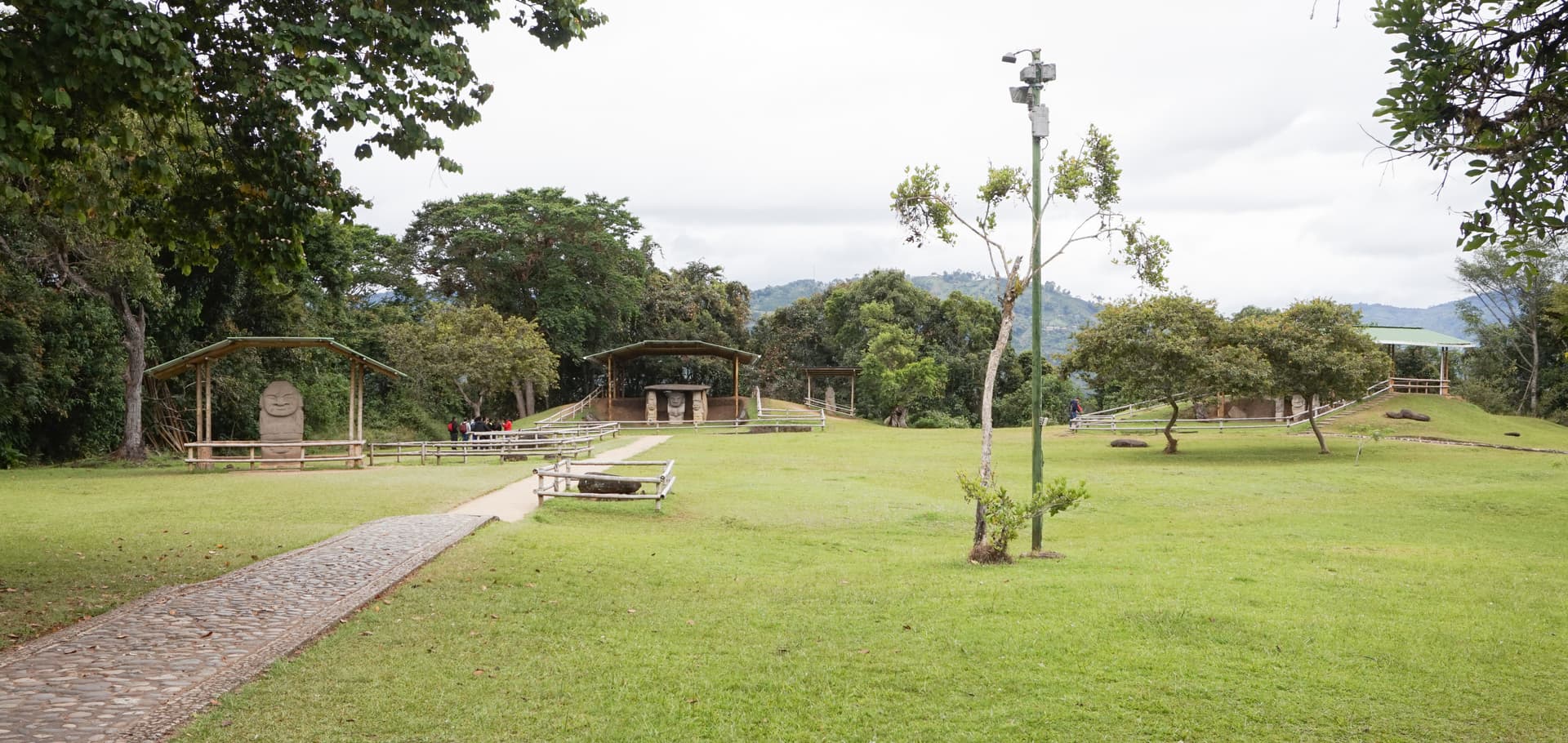
Entering the park, the scale of the engineering becomes apparent. Thirteen hectares of reshaped hillside, the slopes terraced, the summit leveled, the whole form converted into a platform for the dead. Walking the circuit, the visitor traces the amphitheater that the horseshoe shape creates, the sense of enclosure increasing as the terrain curves inward.
The burial mounds are distributed across the terrace, each containing sarcophagi and accompanied by guardian statues. The monolithic sarcophagi invite particular attention. These are single blocks of stone, carved into coffins with the patience that stone tools require. Running your eyes along the smooth interior of a sarcophagus, considering the hours of carving that produced it, conveys more about the San Agustin relationship with death than any interpretive panel.
The zoomorphic guardians, jaguars and crocodiles, introduce a quality of wildness. These are not serene protectors. They are apex predators, their carved features conveying the power and danger of beings that rule at the boundaries of human territory. The dead at Alto de los Idolos are protected by the wild.
The tallest statue requires a moment of recalibration. Four meters of carved stone rise above the ground, impressive in themselves. Then the realization arrives that three more meters continue below the surface. The visible is less than the hidden. The monument's greatest mass is underground, aligned with the dead it was placed to guard.
The horseshoe shape of the hill provides a natural walking circuit. Begin on either arm of the horseshoe and walk toward the center, allowing the terrain to guide the experience. The burial mounds and their sarcophagi are distributed along the route. The tallest statue is a specific destination; ask park staff or consult the site map for its location. The viewpoints from the terrace edge reveal the surrounding landscape and the relationship of the site to the broader valley.
Budget one to two hours.
Context and lineage
The San Agustin people chose a horseshoe-shaped hill near Isnos for one of their most important burial complexes. They leveled the hilltop, terraced the slopes, and over centuries built seven burial mounds containing monolithic sarcophagi carved from single blocks of volcanic stone. Each burial was accompanied by guardian statues, predominantly jaguars and crocodiles, the apex predators of land and water.
The tallest statue in the complex, seven meters tall with most of its mass underground, was placed here as the most monumental expression of the culture's devotion to its dead.
The lineage traces from the unnamed community that reshaped the hill through centuries of burial and carving to the modern era of documentation and conservation. The preservation of tombs and sculptures in their original positions makes Alto de los Idolos particularly valuable for understanding the spatial relationships in San Agustin burial practice.
San Agustin landscape engineers
original builders
The community that reshaped the horseshoe-shaped hill into a formal burial terrace, demonstrating organizational capacity and collective commitment to honoring the dead at a landscape scale.
Konrad Theodor Preuss
archaeologist
Documented the site in 1931, establishing the archaeological record for one of the best-preserved burial complexes in the San Agustin group.
ICANH
conservation steward
Manages the archaeological park, ensuring conservation of the terracing, mounds, sarcophagi, and statues in their original positions.
Traditions and practice
The reshaping of the horseshoe-shaped hill into a formal burial terrace was itself a ceremonial act, a community transforming the earth in service of its dead. The carving of monolithic sarcophagi from single blocks of stone required sustained labor that likely involved ritual. The placement of zoomorphic guardians, jaguars and crocodiles, invoked the powers of the wild to protect the dead. The hilltop setting may have served as a ceremonial amphitheater for community-wide funerary observances.
The park is managed by ICANH with guided and self-guided visits. Educational programs explain the landscape engineering and funerary practices. The combined ticket with San Agustin and Alto de las Piedras allows visitors to experience all three parks over forty-eight hours.
Begin by observing the hill from a distance, before entering the park, to appreciate the scale of the landscape transformation. The natural horseshoe shape and the artificial leveling are most visible from outside. Inside the park, walk the circuit slowly, allowing the amphitheater effect to build. At each burial mound, observe the sarcophagi closely: the smooth interiors, the weight of single-block construction, the care invested in vessels for the dead.
At the zoomorphic guardians, consider their wildness: these are not tame protectors but apex predators. At the tallest statue, stand before the visible four meters and consider the hidden three. The underground mass is not a failure of visibility but a statement about where the deepest reality resides.
San Agustin Landscape Funerary Culture
HistoricalAlto de los Idolos represents the San Agustin culture's most dramatic act of landscape transformation for funerary purposes. The reshaping of a natural hill, the monolithic sarcophagi, and the zoomorphic guardians demonstrate a culture that committed landscape-scale effort to honoring its dead.
Landscape engineering of the horseshoe-shaped hill. Carving of monolithic sarcophagi from single blocks of stone. Placement of jaguar and crocodile guardian statues. Construction of seven burial mounds on the terraced summit.
Archaeological Conservation
ActiveThe preservation of tombs and sculptures in their original positions makes Alto de los Idolos particularly valuable for archaeological understanding. Modern conservation under ICANH and UNESCO protection ensures this integrity continues.
Conservation of original positions, archaeological documentation, guided interpretation, and educational programs.
Perspectives and open questions
Alto de los Idolos invites reflection on the relationship between landscape and sacred purpose, between the visible and the hidden, and between the human capacity to reshape the earth and the earth's own forms.
Scholarly perspective
Archaeologists recognize Alto de los Idolos as the second most important component of the San Agustin UNESCO World Heritage Site. The landscape engineering, converting a natural hill into a formal burial terrace, is studied as evidence of the culture's capacity for large-scale communal projects in service of funerary practice. The monolithic sarcophagi represent a funerary technology found nowhere else in the Americas.
The preservation of sculptures and tombs in their original positions makes the site particularly valuable for understanding spatial relationships in San Agustin burial practice.
Living and traditional perspectives
Local communities regard Alto de los Idolos as one of the most powerful ancestral sites in the region. The jaguar and crocodile imagery resonates with indigenous understandings of animal powers as protectors of the human community. The reshaping of the hill is understood as evidence of the ancestors' devotion and their capacity to work with the earth in service of the sacred.
Alternative interpretations
The horseshoe shape of the hill has attracted attention from researchers studying sacred geometry and landscape alignment. The partial burial of the tallest statue has been interpreted as evidence that the San Agustin culture understood the earth as a living body that received and held sacred objects. The jaguar-crocodile guardian system has been compared to dual-protector traditions in other cultures worldwide.
Open questions
Was the horseshoe shape chosen for cosmological reasons, or was it simply a convenient natural formation enhanced for practical purposes? Was the tallest statue intentionally buried to its current depth, or did earth accumulate over centuries? What ceremonies accompanied the carving and placement of monolithic sarcophagi? What was the relationship between the burials at Alto de los Idolos and those at the main San Agustin site? These questions remain open, the hill keeping its counsel.
Plan your visit
Access and arrival
Located in the municipality of Isnos, Huila Department, Colombia, approximately twenty-five kilometers north of San Agustin town. Accessible by taxi or hired vehicle from Isnos or San Agustin. Some tour operators include Alto de los Idolos in multi-site day tours. Combined ticket with San Agustin Archaeological Park and Alto de las Piedras, valid for forty-eight hours. Verify current prices locally. Mobile phone signal may be intermittent; check locally before relying on it for navigation.
San Agustin town offers the widest range of accommodation. Isnos has basic options. Visitors typically base in San Agustin and visit Alto de los Idolos and Alto de las Piedras as a combined day trip.
Respectful visit
Comfortable walking shoes for the hilly terraced terrain. Sun protection advisable. Weather-appropriate clothing for the highland setting.
Photography is permitted throughout the park. The horseshoe form and terracing photograph well from elevated viewpoints.
Not customary.
Stay on marked paths. Do not touch or climb on statues, sarcophagi, or burial mounds. Do not enter restricted archaeological areas.
The terraced terrain involves elevation changes and uneven ground. Comfortable walking shoes are essential. The highland weather can shift; carry a layer. Do not touch sarcophagi or statues.
Current practical details
Address
Isnos, Huila, Colombia
Hours
Hours, fees, and access can change — verify on the official source before you travel. Practical details last checked Jun 2026.
Location
Map loads as you approach this section.
Pilgrim reflections
A portrait of encounter, not a score
Pilgrims describe what they felt, how present they could become, and whether the place would shape a journey. There are no stars and no ranking of traditions.
No reviewed reflections yet
The first pilgrims can help describe the character of being here.
Share a reflection
Available after an account-backed “Been there.” Every reflection is reviewed before publication.
Nearby sacred places
Explore other sacred places in the region. Proximity does not establish access or travel time; check each place’s guidance.

Share a photo
Help visitors recognize The Archaeological Park of Alto de los Ídolos. Every submission is reviewed before publication.