San Augustin Terrace A
Part ofSan Agustín Archaeological Park
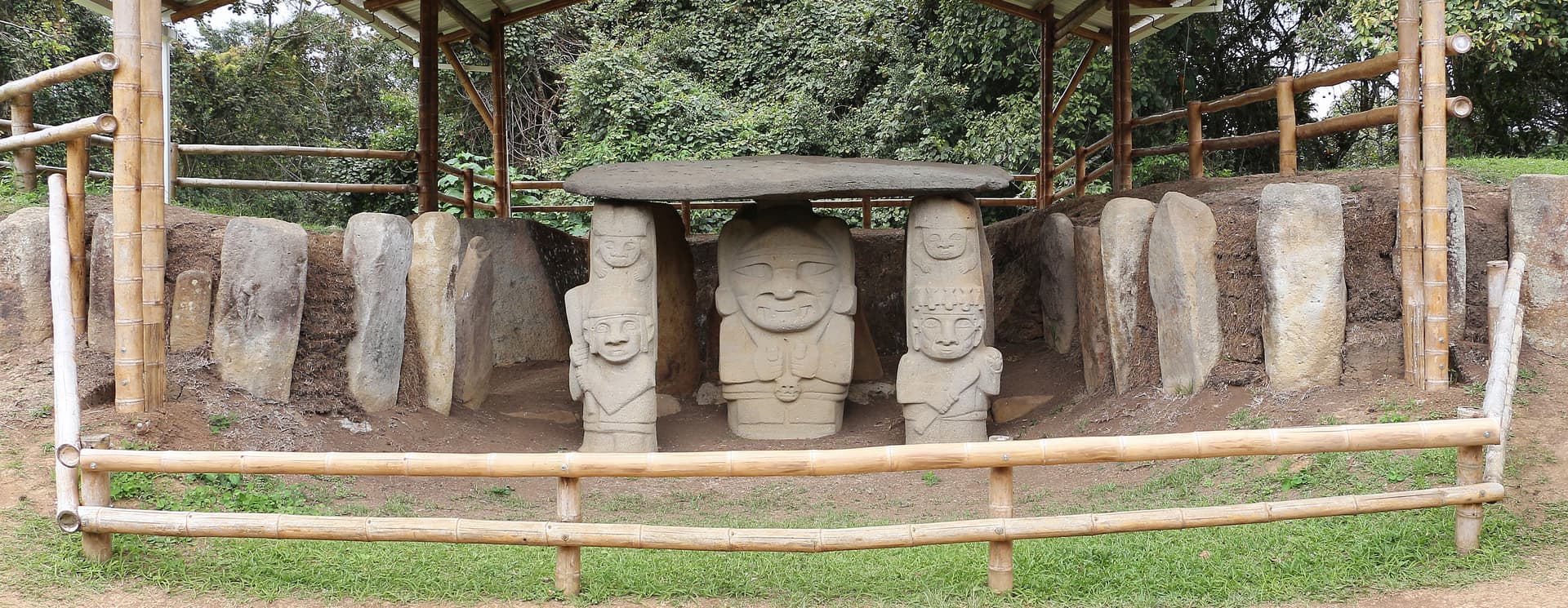
One of the oldest burial mounds in the San Agustin complex, where caryatid warriors still support the ceiling of the dead
Understand sacred places, explore living traditions, and learn how to engage respectfully with Pilgrim Map.
Access has not been verified. Check current local guidance before planning a visit.
Huila, Huila, Colombia

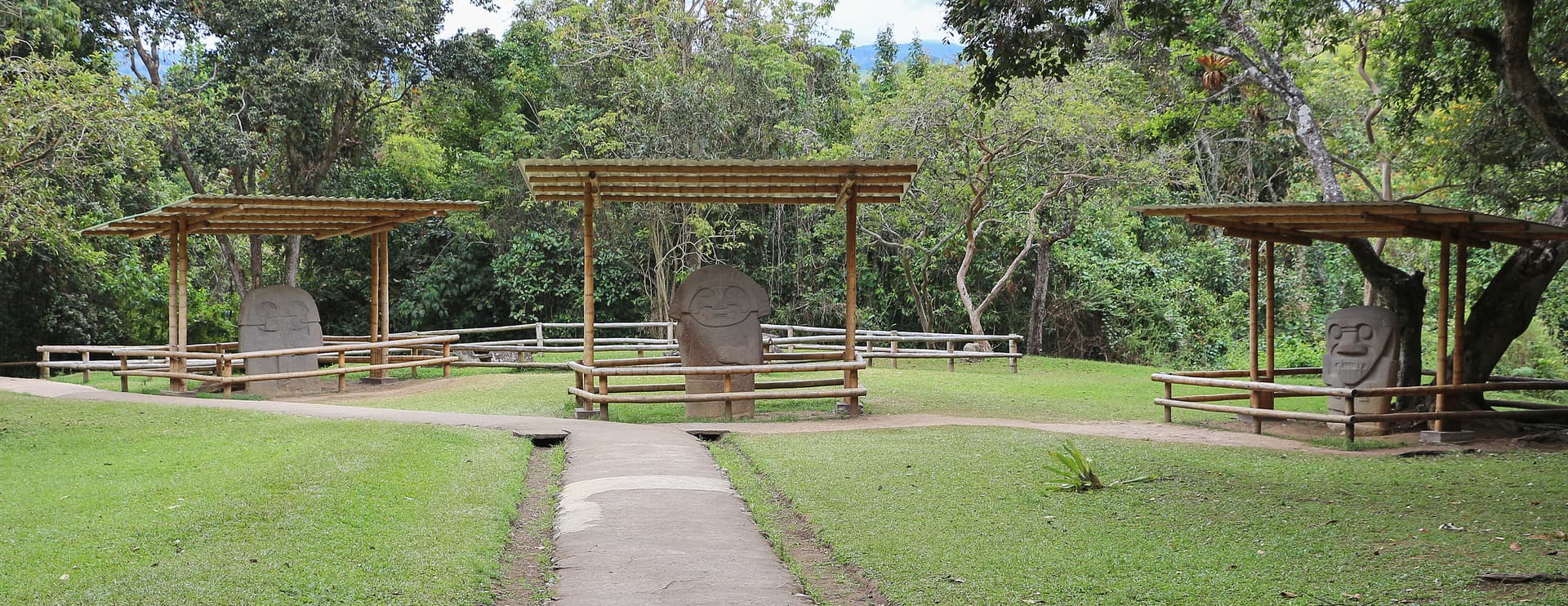
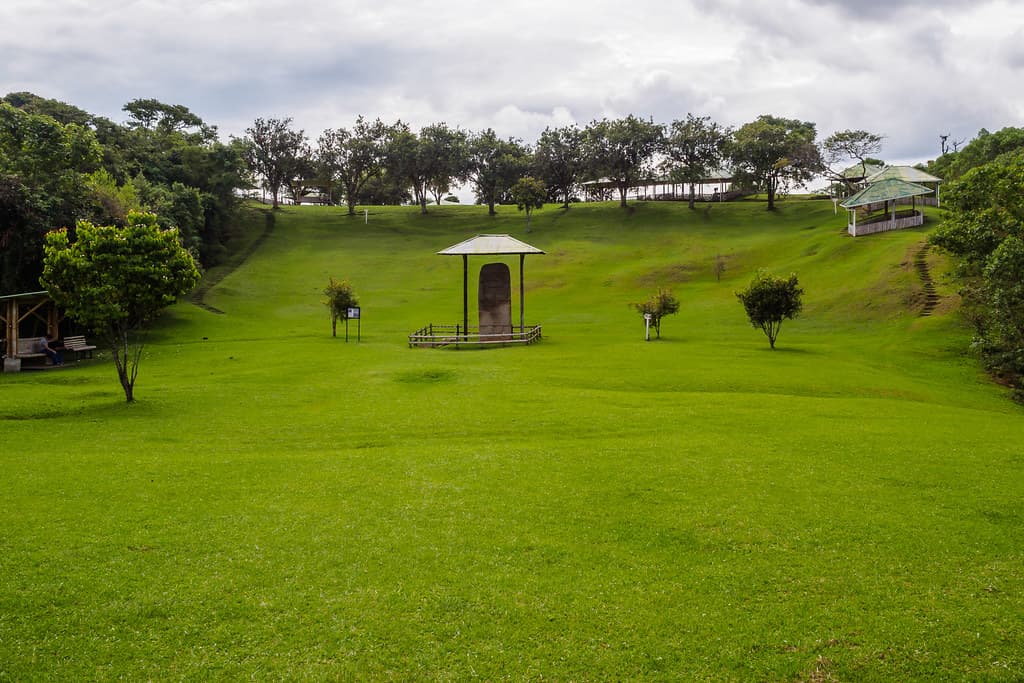
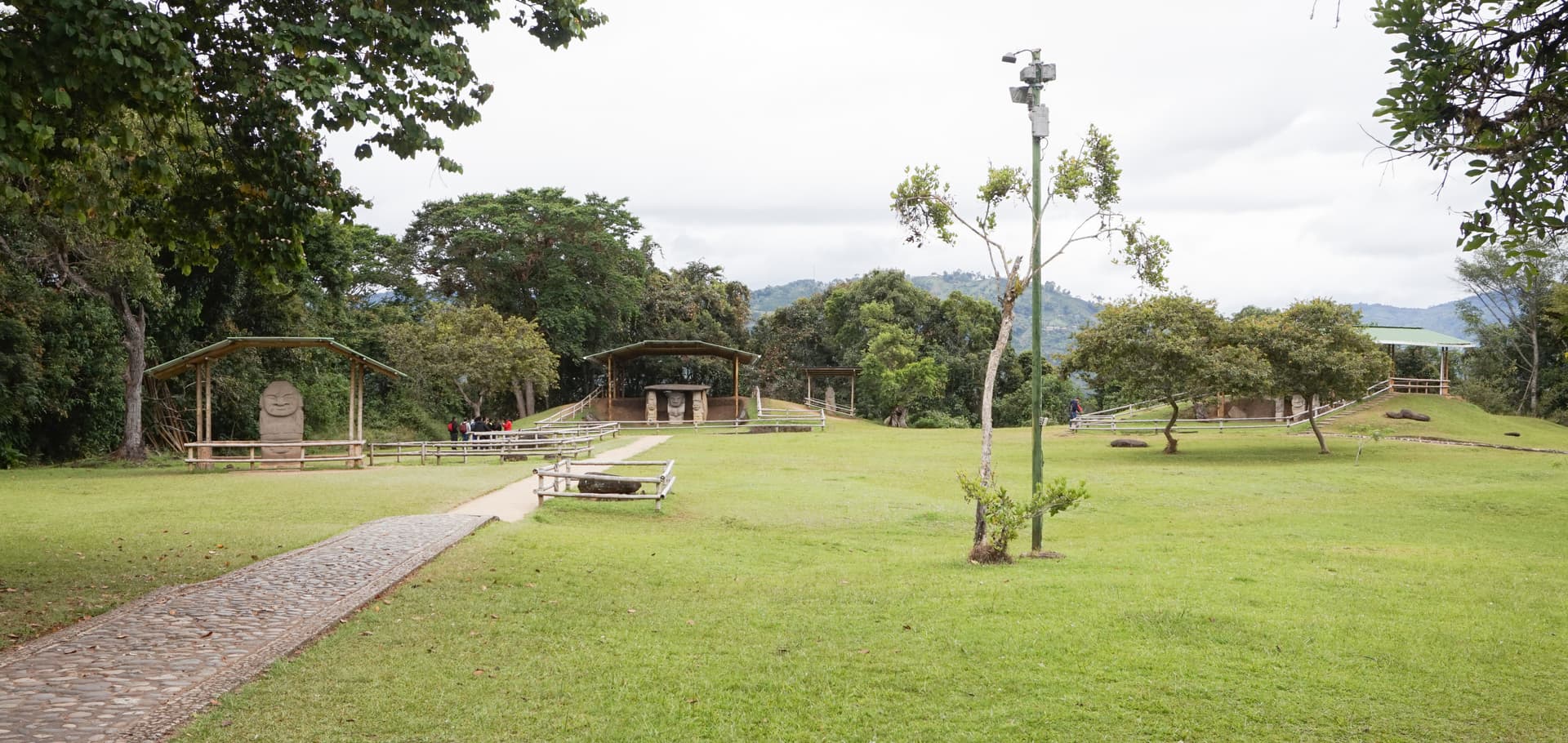
Image of San Augustin Terrace A. Image source · CC-BY-SA-4.0
Visit essentials
A quick read before you go
- Duration
- Twenty to thirty minutes for Mesita A alone.
- Access
- Within San Agustin Archaeological Park, approximately three kilometers from San Agustin town,…
Overview
The warriors are still working. Carved from volcanic stone more than two millennia ago, Mesita A's caryatid figures do not merely guard the dead; they hold them. Their shoulders and heads structurally support tomb ceilings, bearing physical and symbolic weight. Special tiaras mark spiritual authority. Throwing stones and shields are weapons not of earthly war but of defense at the threshold between living and dead.
One of the San Agustin complex's oldest burial sites, Mesita A dates to approximately 300 BCE. Its mound, roughly thirty meters in diameter and four meters high, contains monolithic sarcophagi—massive stone coffins carved from single blocks—for community elites. A feline-faced figure oversees the guardians, a protector of protectors and deity at the boundary between worlds.
Residential evidence beside the mound shows elite families living near their ancestors' tombs. The San Agustin people built a community spanning both worlds, with houses of the living beside houses of the dead through more than a thousand years of continuous use from the third century BCE to the ninth century CE. This was not a modern cemetery visited and left, but shared ground where living and dead sustained each other.
Why this place is sacred
The caryatid arrangement at Mesita A is distinctive in pre-Columbian sculpture. Elsewhere in the San Agustin complex, guardian statues stand beside or before tombs. Here, they hold the tombs up. The warriors' bodies are structural elements: remove them, and the ceiling collapses. This is guardianship expressed as architecture, a statement that the protection of the dead is not ceremonial but load-bearing.
The special tiaras mark these figures as beings of spiritual authority, not ordinary soldiers. Their weapons, the throwing stones and shields, are for a warfare that takes place at a boundary the living cannot see. The feline-faced deity among them adds a hierarchical dimension: the warriors protect the dead, and the deity protects the warriors, a chain of guardianship extending from the human world through the spiritual.
The residential remains adjacent to the mound shift the understanding of the site from a place of the dead to a place where the living and the dead shared ground. The San Agustin people who built their homes beside Mesita A were not visiting their ancestors; they were living with them. The smoke from their fires drifted over the burial mound. The sounds of their daily lives reached the dead.
The dead, in turn, watched over the living through the eyes of their stone guardians.
This arrangement persisted for over twelve hundred years. Generations were born, lived, and died within sight of the burial mound, and each generation added its own dead and its own guardians to the community of the ancestors. The accumulation is itself the point: layer upon layer of devotion, guardian upon guardian, the dead and the living growing together.
Mesita A was established around 300 BCE as a burial site for elite members of the San Agustin community. The caryatid warrior statues served both structural and spiritual functions, supporting tomb ceilings while protecting the dead. The adjacent residential area indicates that the site's purpose was not solely funerary but communal: a place where the living and the dead formed a single community.
The mound grew over more than a thousand years as new burials and new guardian statues were added. The initial construction around 300 BCE established the caryatid arrangement that would become one of Mesita A's defining features. Continued use through the ninth century CE means that the latest additions to the mound came from a community separated by over a millennium from the founders. Each generation's contribution built on the last, creating a palimpsest of devotion.
After the ninth century, the sculptural tradition ceased. Preuss documented the site in 1914, and it was incorporated into the San Agustin Archaeological Park, eventually receiving UNESCO World Heritage protection in 1995.
Experience and orientation
The trail to Mesita A leads through the park's forested terrain, the canopy filtering the highland light into the green-gold quality particular to this elevation. The mound emerges gradually, its mass more substantial than photographs suggest. At thirty meters across and four meters high, it dominates the clearing it occupies.
The caryatid warriors are the first specific feature to register. Their postures communicate effort: these are figures bearing weight, their bodies engaged in the act of support. The tiaras on their heads are carved with precision, their weapons held ready. Whatever threat they were stationed to defend against, they have been defending against it for over two thousand years.
The feline-faced deity among the guardians introduces a different quality. Where the warriors are active and engaged, the deity is watchful. Its feline features, the broad nose, the bared teeth, the forward-facing eyes, combine human consciousness with animal power. In San Agustin iconography, the jaguar represents the earth realm, the domain of human life. A feline-faced deity stationed at a burial mound stands at the intersection of the living and the dead.
The residential remains nearby are easy to overlook but deserve attention. These are traces of the houses where elite families lived, choosing to make their home beside the dead. Consider the daily reality of this: cooking, sleeping, raising children within sight of the mound where generations of ancestors rested under the protection of stone warriors. The boundary between the living and the dead was not a wall to be feared but a threshold to be inhabited.
Mesita A is part of the Mesitas circuit within San Agustin Archaeological Park. It can be reached on foot within the park's trail system. Allow twenty to thirty minutes for Mesita A alone, or visit it as part of the broader circuit including Mesitas B, C, D, and other sites. The caryatid warriors are best viewed from multiple angles. The residential remains may require interpretive signage or a guide to fully appreciate.
Context and lineage
Around 300 BCE, the San Agustin community established one of its first formal burial sites on this ground. The elite of the community, likely rulers or shamans with both political and spiritual authority, were buried in massive stone sarcophagi within a mound that would grow over the following twelve centuries. Each burial was accompanied by newly carved guardian statues, including the distinctive caryatid warriors that physically supported the tomb ceilings.
A feline-faced deity was placed among the guardians, overseeing the arrangement with the authority of the jaguar realm. Nearby, elite families built their residences, choosing to live in the presence of their ancestors.
The lineage at Mesita A spans over twelve hundred years of active funerary use, from approximately 300 BCE through the ninth century CE, followed by silence, followed by modern archaeological recovery. Each generation added to the mound without erasing what came before, creating a continuous record of devotion. The modern lineage of documentation and conservation began with Preuss in 1914 and continues through ICANH management and UNESCO protection.
San Agustin culture elite
original occupants
The rulers, shamans, or spiritual leaders whose burials in monolithic sarcophagi warranted the carving of caryatid warrior guardians and a feline deity. Their names and individual identities are lost.
Konrad Theodor Preuss
archaeologist
German archaeologist who documented Mesita A in 1914 as part of his systematic survey of the San Agustin complex, establishing the archaeological record that informs all subsequent understanding.
Traditions and practice
Elite burial ceremonies involved the placement of the dead in monolithic sarcophagi within the mound, accompanied by the carving and installation of new guardian statues. The caryatid arrangement required significant engineering and artistic effort, suggesting elaborate communal ceremonies at the time of each burial. The feline deity overseeing the arrangement indicates that the ceremonies invoked supernatural protection. Offerings were likely placed with the dead, though specific details of the ritual sequence are unknown.
Mesita A is visited as part of the marked trail through San Agustin Archaeological Park. Interpretive signage explains the archaeological findings and cultural significance. Guided tours are available and can illuminate details that self-guided visitors may miss.
Approach Mesita A with attention to the caryatid warriors' postures. These are not standing figures but working figures: their bodies are engaged in the act of supporting weight. Consider what it means to carve a guardian whose guardianship is structural rather than symbolic. Observe the feline deity separately, noting the difference in quality between the warriors' engagement and the deity's watchfulness.
If the residential remains are visible and marked, consider the choice to live beside the dead: not in fear but in community. Stand near the mound and consider its age. Some of the burials within it are over two thousand three hundred years old. The warriors have been at their posts for all of that time.
San Agustin Elite Burial Culture
HistoricalMesita A represents one of the earliest expressions of the San Agustin funerary tradition, with caryatid warriors serving as both structural and spiritual guardians of the dead. The site's twelve centuries of continuous use demonstrate sustained devotion to ancestral veneration.
Elite burial in monolithic sarcophagi within a communal mound, accompanied by caryatid warrior statues and a feline deity. Residential occupation adjacent to the burial site maintaining the community of living and dead.
Archaeological Conservation
ActiveModern custodianship of Mesita A began with Preuss's 1914 documentation and continues through ICANH management and UNESCO World Heritage protection.
Archaeological investigation, conservation, interpretive signage, and guided tours within the park system.
Perspectives and open questions
Mesita A offers focused engagement with the foundational elements of the San Agustin tradition: the relationship between the living and the dead, the role of supernatural guardianship, and the decision to share ground with one's ancestors.
Scholarly perspective
Archaeologists identify Mesita A as one of the earliest and most important burial sites in the San Agustin complex, providing key evidence for the development of the monumental sculptural tradition. The caryatid warrior figures are recognized as a distinctive artistic and architectural achievement in pre-Columbian America, combining structural function with spiritual guardianship. The co-existence of residential and funerary remains provides important evidence for understanding how the San Agustin culture organized the relationship between the living and the dead.
Living and traditional perspectives
Local communities in the San Agustin region regard the Mesitas as sacred work of ancestors. The warrior guardian imagery resonates with broader indigenous concepts of spiritual protection found across Andean and Amazonian cultures. The feline deity connects to the jaguar symbolism that remains central to indigenous cosmologies throughout South America.
Alternative interpretations
The caryatid arrangement, warriors physically supporting the threshold between the world of the living and the world of the dead, has been interpreted as a sophisticated expression of liminal space. The feline deity connects to jaguar symbolism found across Mesoamerican and South American shamanic traditions, suggesting either cultural exchange or independent development of a common understanding.
Open questions
Who were the elite individuals buried in the monolithic sarcophagi? What specific rituals accompanied the burial ceremonies? Were the caryatid warriors portraits of real individuals or idealized spiritual beings? What was the precise relationship between the residents living near the mound and those buried within it? These questions persist because the San Agustin culture left no text, no oral tradition that survives, only the stone testimony of their devotion to the dead.
Plan your visit
Access and arrival
Within San Agustin Archaeological Park, approximately three kilometers from San Agustin town, Huila Department, Colombia. Accessible from the town by taxi, mototaxi, or on foot. Included in the combined park ticket valid for forty-eight hours. Open eight in the morning to four in the afternoon. Mobile phone signal may be intermittent within the park.
San Agustin town, approximately three kilometers away, offers a range of accommodation from hostels to comfortable hotels.
Respectful visit
Comfortable walking shoes for the park trails. Weather-appropriate clothing for the highland setting.
Photography is permitted. The caryatid warriors and feline deity photograph well from multiple angles.
Not customary.
Stay on marked paths. Do not touch or climb on statues or the burial mound. Part of a UNESCO World Heritage Site.
The mound and statues are protected archaeological features. Do not touch, climb, or sit on any surface. The site is part of a UNESCO World Heritage Site with strict conservation requirements.
Current practical details
Address
calle 5 #23-89, San Agustín, Huila, Colombia
Phone
Hours
Hours, fees, and access can change — verify on the official source before you travel. Practical details last checked Jun 2026.
Location
Map loads as you approach this section.
Pilgrim reflections
A portrait of encounter, not a score
Pilgrims describe what they felt, how present they could become, and whether the place would shape a journey. There are no stars and no ranking of traditions.
No reviewed reflections yet
The first pilgrims can help describe the character of being here.
Share a reflection
Available after an account-backed “Been there.” Every reflection is reviewed before publication.
Nearby sacred places
Explore other sacred places in the region. Proximity does not establish access or travel time; check each place’s guidance.
Share a photo
Help visitors recognize San Augustin Terrace A. Every submission is reviewed before publication.