San Augustin Terrace B
Part ofSan Agustín Archaeological Park
Sixty-three statues encoding a cosmos: where the eagle holds the snake and the maternity mound bridges life and death
Understand sacred places, explore living traditions, and learn how to engage respectfully with Pilgrim Map.
Access has not been verified. Check current local guidance before planning a visit.
Huila, Huila, Colombia
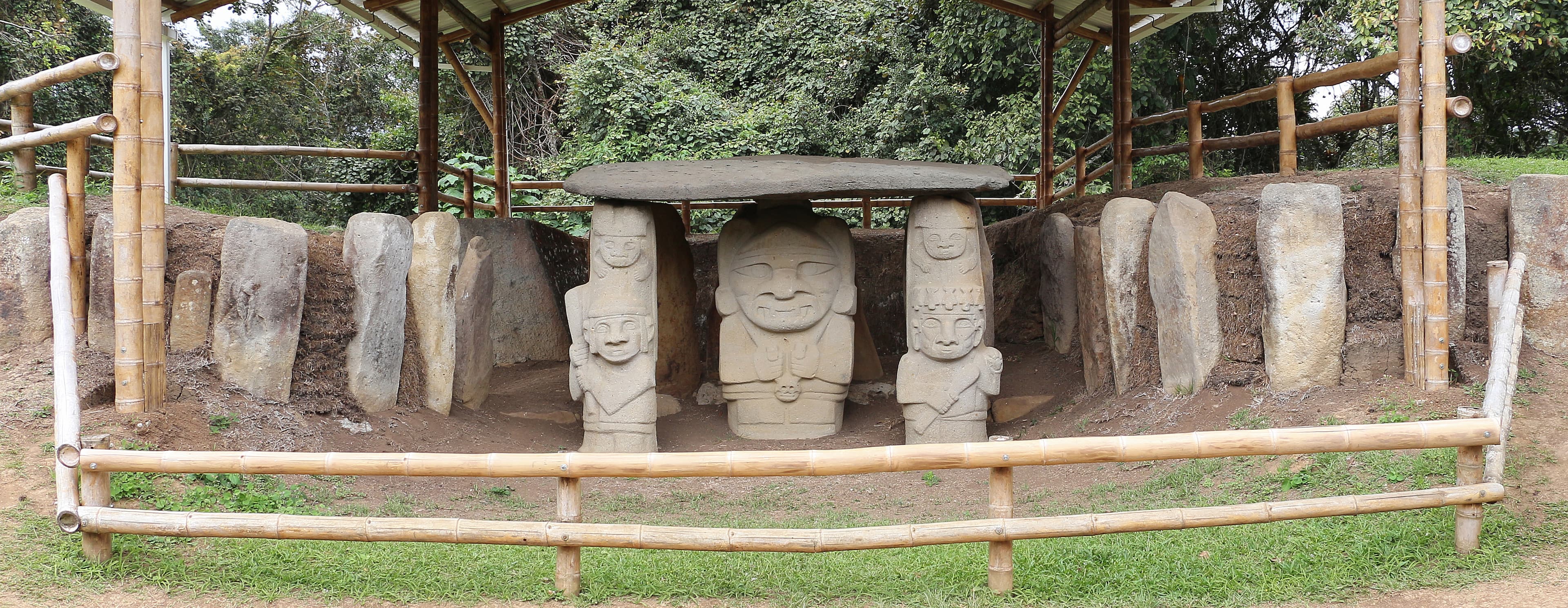
Image of San Augustin Terrace B. Image source · CC-BY-SA-4.0
Visit essentials
A quick read before you go
- Duration
- Thirty to forty-five minutes for Mesita B alone.
- Access
- Within San Agustin Archaeological Park, Huila Department, Colombia.
Overview
Five thousand years ago people lived here; three thousand years later they stopped and began burying their dead. Mesita B changed from a settlement where families ate, slept, and raised children into sacred ground holding the Americas' most elaborate sculptural program.
In 1914 Konrad Theodor Preuss found sixty-three statues across three funerary mounds with over a hundred tombs, the San Agustin complex's highest concentration. These are sixty-three distinct expressions of a shared cosmological language, not repetitive variations.
An eagle grasping a snake structurally connects the upper and lower realms through a power operating in both. In the Maternity Mound, a woman with child between serpentine guardians joins birth with underworld protection: new life enters beneath the guardianship of forces below, embedding birth and death in one web rather than offering sentiment.
A precise iconographic code makes positions legible: six teeth indicate jaguar, four monkey, and none snake. Maintained across eight hundred years of carving, it suggests formal transmission—a school of some kind—preserving cosmic grammar across generations.
Mesita B is both the most elaborate Mesita and a Rosetta Stone of San Agustin culture, making the cosmos's language partly legible while much vocabulary remains beyond reach.
Why this place is sacred
The eagle holding the snake is not a scene. It is a cosmological equation. The power of the sky grasps the power of the underworld, and in that grasp the connection between realms is maintained. This is not metaphor but mechanism: the San Agustin people understood these forces as real, operating, necessary.
The Maternity Mound adds the human dimension. Birth, the entry of new life into the world, occurs under the protection of serpentine forces that represent the underworld. The arrangement does not soften death or sentimentalize birth. It places both within a system of forces that are neither benign nor malign but structural, the conditions of existence.
The teeth system unlocks the reading. Once the visitor knows that six teeth signify jaguar, four signify monkey, and none signify snake, the statues' cosmological positions become clear. The code was not idiosyncratic to a single sculptor. It was maintained across eight centuries, indicating formal transmission. Somewhere in the San Agustin culture, there was a system for teaching the cosmic grammar to those who would carve new guardians for new dead.
This systematization is what makes Mesita B extraordinary. Many cultures have carved images of supernatural beings. Few have developed a consistent, transmissible visual language that encodes the structure of the cosmos with the precision of a notation system. The sixty-three statues at Mesita B do not merely decorate the burial mounds. They diagram the universe.
The one hundred and six tombs beneath the statues ground the cosmic language in human reality. Each tomb held a person who had died. Each statue was carved in response to that death. The cosmological grammar served a human purpose: it told the dead where they were going and assured the living that the dead would be guided there.
Mesita B began as a residential settlement around 3000 BCE and was transformed into a burial site during the first century CE. Over the next eight hundred years, three funerary mounds accumulated over one hundred tombs and sixty-three guardian statues, creating the most elaborate sculptural program in the San Agustin complex.
The five-thousand-year arc from settlement to burial ground to archaeological park traces a progression from the mundane to the sacred to the scholarly. The transformation from residential use to funerary use in the first century CE marked the decisive shift. The subsequent eight centuries of carving produced the systematic iconographic program that makes Mesita B the interpretive key to the San Agustin culture.
After the sculptural tradition ceased in the ninth century, the site entered the long silence that ended with Preuss's 1914 documentation.
Experience and orientation
Of all the sites in the San Agustin complex, Mesita B is the one that reveals the culture's intelligence most clearly. The sheer number of statues, their iconographic diversity, and their systematic organization create a density of meaning that rewards repeat visits.
The eagle-snake composition commands the first encounter. Even without knowledge of San Agustin cosmology, the image communicates: a bird of prey holding a serpent, the sky grasping the earth, the connection between above and below made physical. With knowledge of the cosmological system, the image deepens: this is not a scene from nature but a diagram of how the universe maintains its coherence.
Move from the eagle-snake to the Maternity Mound. The shift from cosmic structure to human experience is deliberate. The woman with child, guarded by serpentine beings, brings the abstract cosmology into the realm of the lived. Birth happens under the protection of underworld forces. The arrangement is not comforting in a modern sense; it is honest: life emerges from and is sustained by forces that also govern death.
The Northwest Mound, with its deity or warrior figure guarded by stacked warriors, introduces hierarchy. Not all the dead receive the same level of protection. The stacking of warriors suggests that some tombs required more guardianship than others, implying social or spiritual stratification among the dead.
Throughout, look at the teeth. Once you know the code, the statues begin to sort themselves into their cosmological positions. The jaguar beings with their six teeth. The monkey beings with four. The snake beings with none. A grammar written in stone, maintained for eight hundred years.
Mesita B is reached via the marked trail within San Agustin Archaeological Park. Allow thirty to forty-five minutes for Mesita B alone. A guided tour is particularly valuable here, as the iconographic program benefits from explanation. If visiting without a guide, spend time with the eagle-snake composition, the Maternity Mound, and the Northwest Mound individually, looking for the teeth patterns that identify each figure's cosmological role.
Context and lineage
Mesita B's ground was first occupied as a settlement approximately five thousand years ago, making it one of the oldest habitation sites in the Upper Magdalena region. Over time, the community began burying their important dead here. By the first century CE, the site had been entirely transformed from settlement to sacred burial ground. Over the next eight hundred years, three major mounds were built and filled with tombs, each accompanied by newly carved guardian statues.
When Preuss arrived in 1914, he found sixty-three statues arranged in a cosmological program that revealed the San Agustin culture's understanding of the universe as a system of interconnected realms guarded by spirit beings.
The lineage at Mesita B spans five thousand years of human presence, from the earliest settlement through eight centuries of systematic sculptural production to the modern era of archaeological study and conservation. The sculptural lineage itself, the formal transmission of the iconographic code across generations of carvers, represents one of the most sustained artistic traditions in the pre-Columbian Americas.
San Agustin master sculptors
original artists
The sculptors who created and maintained the systematic iconographic program over eight centuries, developing the teeth-counting code and the compositional vocabulary of the eagle-snake, maternity, and warrior arrangements.
Konrad Theodor Preuss
archaeologist
German archaeologist who discovered and documented the three funerary mounds and sixty-three statues at Mesita B in 1914, providing the foundational record of the most important single site in the San Agustin complex.
Traditions and practice
The three burial mounds served elite funerary ceremonies over approximately eight hundred years. Each burial was accompanied by carved guardian statues following the systematic iconographic program. The stacked warrior arrangement in the Northwest Mound suggests hierarchical protection for the most important dead. Animal transformation imagery, eagle, jaguar, frog, and snake, represented the three realms of the cosmos. The teeth code ensured consistency across centuries of carving.
Mesita B is the most visited site within San Agustin Archaeological Park and the focus of guided tours. Interpretive signage explains the iconographic program and archaeological findings. The eagle-snake composition and Maternity Mound are the most frequently discussed features.
Begin with the eagle-snake composition and let its cosmological logic settle before moving to the other arrangements. At the Maternity Mound, consider the serpentine guardians not as threatening but as protective, underworld forces that sustain the process of birth. At the Northwest Mound, observe the stacking of warriors and consider what level of importance warranted this degree of protection. Throughout, look for the teeth: six, four, none.
Once the code registers, the sixty-three statues begin to sort themselves into a cosmological map. Consider that the sculptors who carved the latest statues, eight centuries after the first, were still using the same code. Someone taught them. Someone maintained the grammar.
San Agustin Cosmological Sculpture
HistoricalMesita B represents the fullest expression of the San Agustin sculptural tradition, with sixty-three statues encoding a systematic cosmological language. The teeth code, the eagle-snake diagram, and the maternity arrangement reveal a civilization that developed a precise visual grammar for expressing the structure of reality.
Systematic sculptural production following a formal iconographic code, maintained across eight centuries. Elite burial with guardian statues in three large funerary mounds. Animal transformation imagery encoding the three-realm cosmology.
Archaeological Research
ActivePreuss's 1914 documentation of Mesita B established the foundation for all subsequent San Agustin studies. Ongoing research continues to decode the iconographic program.
Systematic documentation, iconographic analysis, conservation, and interpretive programs for visitors.
Perspectives and open questions
Mesita B is the interpretive key to the San Agustin culture. The systematic iconographic program, the teeth code, the eagle-snake cosmological diagram, and the maternity arrangement reveal a civilization of unexpected depth and precision.
Scholarly perspective
Archaeologists consider Mesita B the most artistically and archaeologically significant of the Mesitas. Preuss's discovery of sixty-three statues across three mounds remains the foundation of San Agustin studies. The iconographic program, particularly the teeth symbolism, the eagle-snake composition, and the maternity mound, has been analyzed as evidence of a systematic cosmological language that transcended individual artistic expression. The transformation from residential to funerary use over five thousand years provides key evidence for understanding the evolution of the San Agustin culture.
Living and traditional perspectives
Local indigenous and mestizo communities regard Mesita B's statues as the most powerful expressions of ancestral cosmological knowledge. The eagle-snake imagery resonates with indigenous understandings of the natural world as interconnected realms. The maternity imagery connects to broader Andean and Amazonian traditions of the earth as a nurturing but formidable mother.
Alternative interpretations
The cosmological system encoded in Mesita B's statues parallels shamanic worldviews documented across the Americas. The teeth symbolism has been compared to other indigenous coding systems. The eagle-snake composition has been analyzed alongside serpent-bird imagery found in traditions worldwide, from Mesoamerican Quetzalcoatl to Hindu Garuda, suggesting either independent development or very deep cultural connections.
Open questions
Do the three mounds represent different lineages, different time periods, or different social ranks? What specific ceremonies accompanied the elite burials? Is the maternity figure a deity, an ancestor, or an idealized human? How was the teeth symbolism system transmitted and maintained across eight hundred years of carving? These questions mark the boundary between what the stones reveal and what they keep.
Plan your visit
Access and arrival
Within San Agustin Archaeological Park, Huila Department, Colombia. Same access as the main park. Included in the combined ticket valid for forty-eight hours.
San Agustin town provides the nearest range of accommodation, approximately three kilometers from the park.
Respectful visit
Comfortable walking shoes for the park trails. Weather-appropriate clothing.
Photography permitted. The eagle-snake composition and Maternity Mound are particularly significant.
Not customary.
Stay on marked paths. Do not touch or climb on statues or burial mounds.
The statues are over a millennium old and irreplaceable. Do not touch. The terrain around the mounds may be uneven; watch your footing.
Current practical details
Address
Cra. 13 #6-78, San Agustín, Huila, Colombia
Hours
Hours, fees, and access can change — verify on the official source before you travel. Practical details last checked Jun 2026.
Location
Map loads as you approach this section.
Pilgrim reflections
A portrait of encounter, not a score
Pilgrims describe what they felt, how present they could become, and whether the place would shape a journey. There are no stars and no ranking of traditions.
No reviewed reflections yet
The first pilgrims can help describe the character of being here.
Share a reflection
Available after an account-backed “Been there.” Every reflection is reviewed before publication.
Nearby sacred places
Explore other sacred places in the region. Proximity does not establish access or travel time; check each place’s guidance.

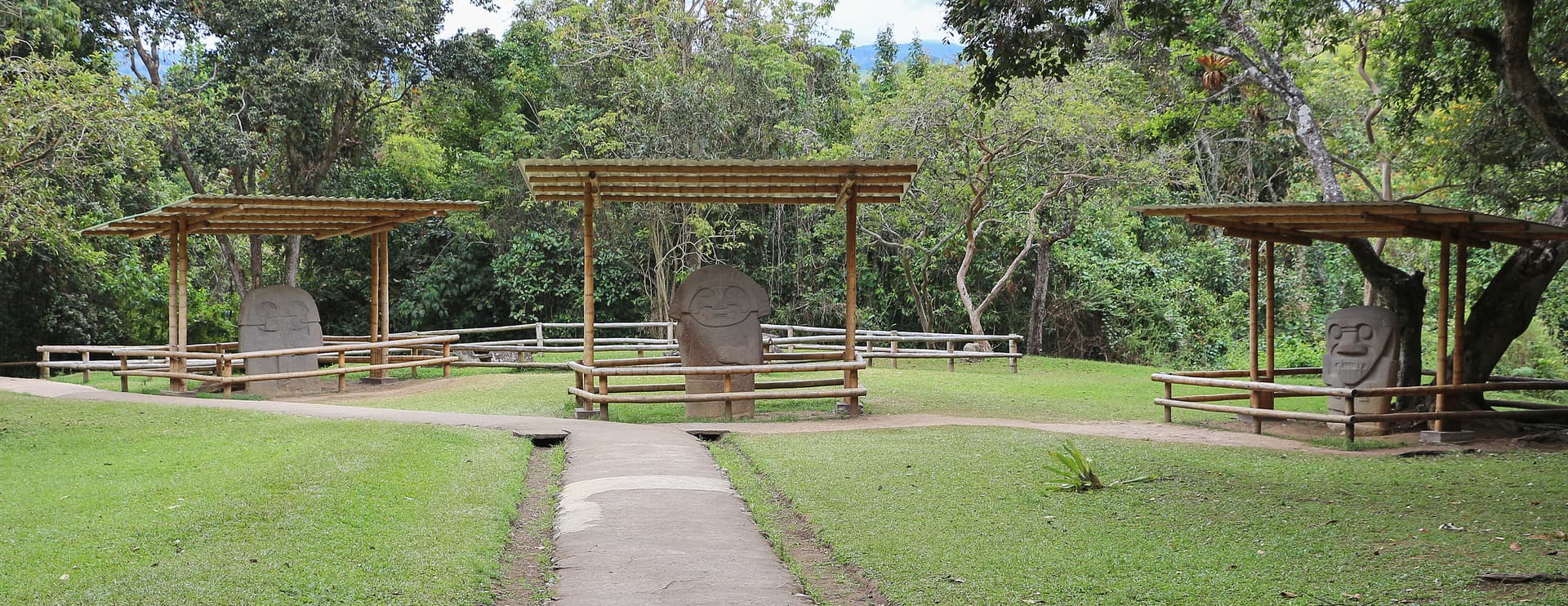
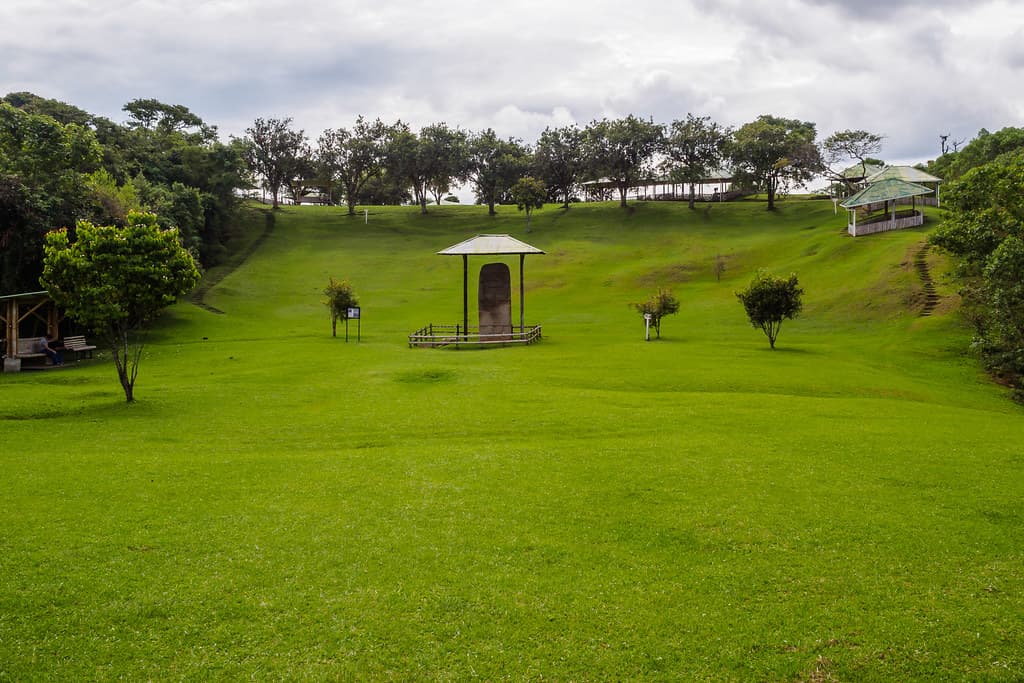
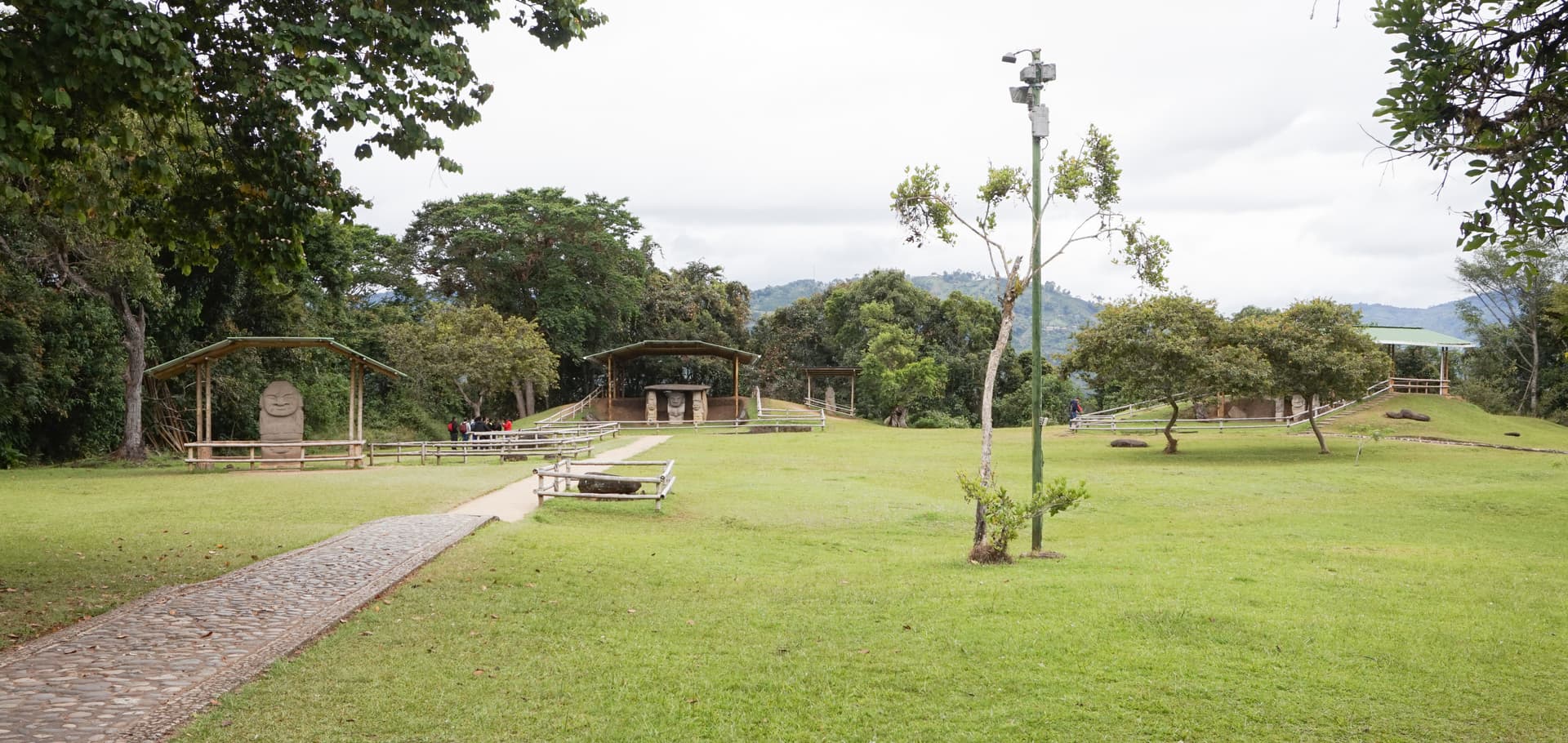
Share a photo
Help visitors recognize San Augustin Terrace B. Every submission is reviewed before publication.