Monastery of St Mary, Zvërnec Island, Albania
A Nyingmapa monastery overlooking a glacial valley where sacred cranes circle three times upon arriving from Tibet
Understand sacred places, explore living traditions, and learn how to engage respectfully with Pilgrim Map.
Access has not been verified. Check current local guidance before planning a visit.
Qendër Vlorë, Vlorë, Albania
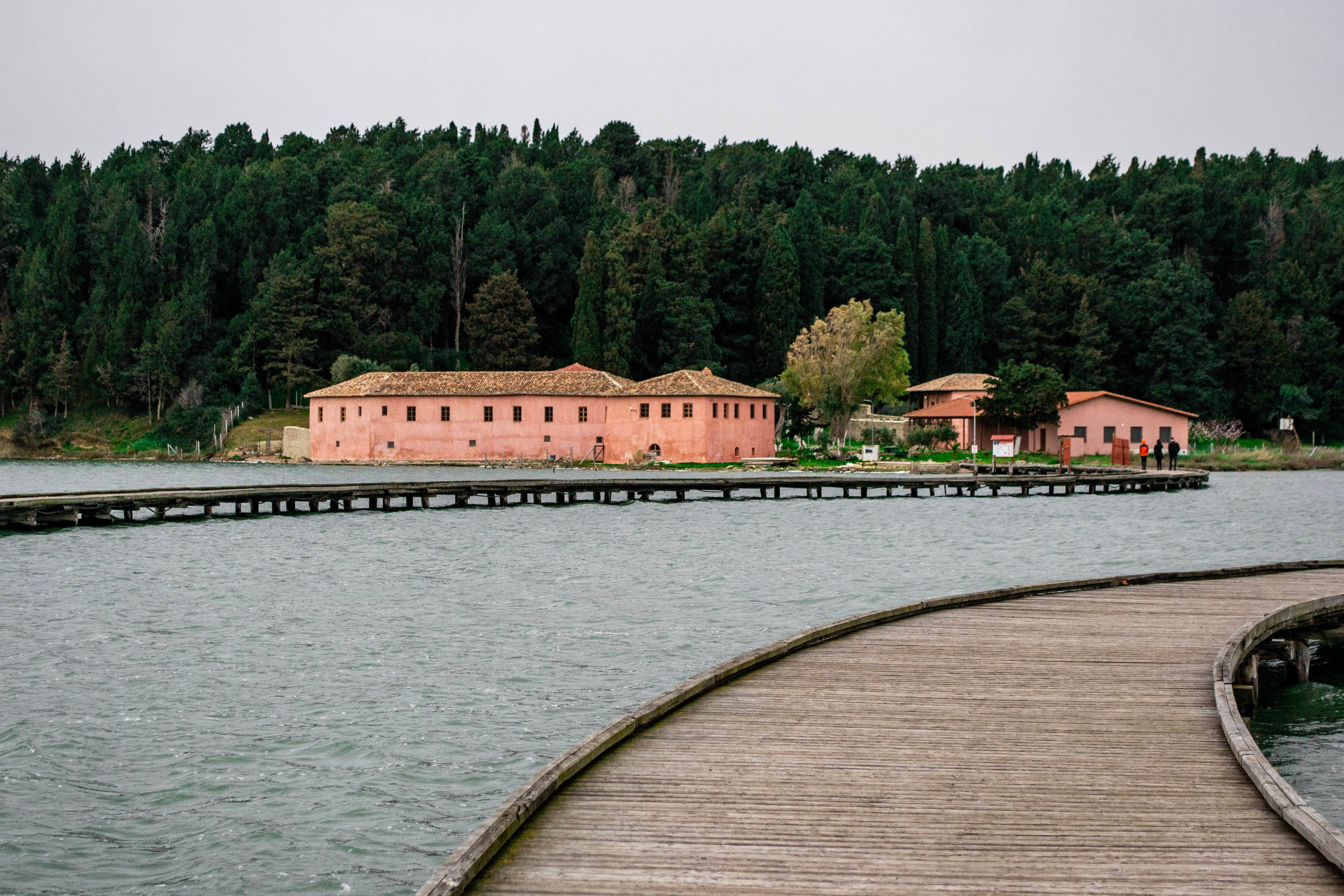
Image of Monastery of St Mary, Zvërnec Island, Albania. Image source · CC-BY-SA-4.0
Visit essentials
A quick read before you go
- Duration
- Half day for the monastery; full day with valley trekking and crane observation
- Access
- 45km from Wangdue Phodrang.
Overview
When Pema Lingpa visited the Phobjikha Valley in the fifteenth century, he looked at the mountains that enclosed the vast glacial basin and told those who were present that one day a descendant of his would build a monastery on the summit and make it famous. A century later, his grandson Gyalse Pema Thinley fulfilled that prophecy, establishing Gangteng Sang Nga Choling — the Summit Temple for the Teaching of the Dharma — in 1613.
The monastery occupies a position of unusual authority over its landscape. The Phobjikha Valley spreads below it in a wide U-shape carved by glaciers, one of the few flat expanses in a country defined by mountains. In winter, this valley receives visitors that no human invitation could summon. Black-necked cranes, migrating from the Tibetan plateau, descend to Phobjikha each November.
By tradition and by observation, they circle the monastery three times upon arrival and three times upon departure — the same number as the Three Jewels of Buddhism, the same motion as a devotee circumambulating a sacred structure.
Gangteng is the main seat of the Pema Lingpa tradition, one of the most important lineages within the Nyingmapa (ancient) school of Tibetan Buddhism.
The monastery is not a relic but a living institution, with monks who study and practice here year-round — except in the deepest winter months of January and February, when the community migrates to lower altitude at Wangdue Phodrang, returning when the cranes return, as though the human and avian communities are bound by the same cycle.
Why this place is sacred
The black-necked cranes do not know Buddhist cosmology. They do not know that three is the number of the Three Jewels, or that circumambulation is a devotional practice, or that their arrival each November has been woven into the religious life of the Phobjikha Valley for centuries. And yet they circle the monastery three times.
This is either coincidence or it is something else, and the quality of Gangteng as a sacred site exists in the space between those two possibilities.
The Bhutanese do not resolve the ambiguity. They hold both the scientific and the sacred accounts of the cranes simultaneously, and this holding — this refusal to reduce the phenomenon to one explanation — is itself a form of spiritual maturity. The cranes are protected by law. The festival held on November 12 celebrates their arrival with masked dances.
And the monastery, perched above the valley they inhabit, serves as the anchor point in a relationship between species that neither side fully controls.
Pema Lingpa's prophecy adds a temporal dimension. The monastery exists because a fifteenth-century treasure revealer saw something in this landscape that called for a particular response. His grandson executed that response. The cranes were already coming. The monastery joined them — another seasonal participant in the valley's rhythms.
Fulfillment of Pema Lingpa's prophecy. Established as the central seat of the Pema Lingpa tradition within the Nyingmapa school.
The monastery has maintained its character since 1613, serving continuously as a center of Nyingmapa study and practice. The Black-Necked Crane Festival, held annually since its inception, has become both a religious celebration and a conservation event, bridging traditional reverence and modern ecology.
Experience and orientation
The drive to Gangteng follows the Trongsa road from Wangdue Phodrang before turning off at Nobding toward the Phobjikha Valley. The road climbs through forest and then opens suddenly onto the valley — a broad, flat expanse that feels impossibly spacious after the narrow mountain roads that precede it. The monastery is visible on its spur, overlooking everything.
Inside, the monastery has the character of a working institution rather than a tourist attraction. Monks in maroon robes move between buildings. The main temple houses sacred objects and murals within the Pema Lingpa tradition. The atmosphere is one of sustained daily practice rather than spectacle.
In November, the valley transforms. Black-necked cranes begin arriving from Tibet, their calls audible across the flat terrain. The November 12 festival features masked dances (cham) performed by monks and laypeople, celebrating the cranes' arrival as both a natural event and a spiritual blessing. Watching the cranes move across the valley floor, with the monastery above and the mountains encircling, is to witness a landscape functioning as a single sacred system.
In deep winter, the monastery empties. Monks and the entire community of approximately 4,500 people migrate to Wangdue Phodrang, returning in spring. This seasonal movement mirrors the cranes' own migration — a parallel that no one planned but everyone recognizes.
If visiting in November, attend the Black-Necked Crane Festival on the 12th. At other times, visit the monastery in the morning and then walk the valley floor. In winter, look for cranes in the fields below the monastery, particularly at dawn and dusk. In any season, stand on the monastery spur and take in the full sweep of the valley — this is the view that Pema Lingpa saw when he made his prophecy.
Context and lineage
Pema Lingpa, the great treasure revealer, visited the Phobjikha Valley and prophesied that one of his descendants would build a monastery on the summit. In 1613, his grandson Gyalse Pema Thinley fulfilled the prophecy, establishing Gangteng Sang Nga Choling as the seat of the Peling (Pema Lingpa) tradition.
The Pema Lingpa tradition within the Nyingmapa school. Pema Lingpa is one of the five great treasure revealers (terton) in the Nyingmapa tradition, and Gangteng is the principal seat of his lineage.
Pema Lingpa
Treasure revealer who prophesied the monastery's founding
Gyalse Pema Thinley
Grandson of Pema Lingpa; built the monastery in 1613
Traditions and practice
Monastic study and practice following the Nyingmapa tradition. Annual tshechu with masked dances. The Black-Necked Crane Festival on November 12, which includes cham (masked dances) performed by monks and laypeople in ornately carved masks representing different deities.
The monastery maintains its educational and practice functions. The crane festival has grown to include conservation awareness alongside its traditional religious character. The seasonal migration of the monastic community to Wangdue Phodrang continues each winter.
Visit during the November crane festival to experience the convergence of Buddhist celebration and natural migration. At other times, walk the valley trails to sense the landscape that Pema Lingpa prophesied would house his lineage. Morning visits to the monastery offer the chance to observe daily monastic practice.
Nyingmapa (Pema Lingpa tradition)
ActiveGangteng is the principal seat of the Pema Lingpa lineage within the Nyingmapa school, making it one of the most important Nyingmapa monasteries in Bhutan.
Monastic education, masked dance festivals, Black-Necked Crane Festival, seasonal community migration
Perspectives and open questions
Gangteng can be understood as a monastery, an ecological site, or a place where prophecy, lineage, and natural phenomena converge in ways that resist simple categorization.
Scholarly perspective
The monastery is recognized as the principal seat of the Pema Lingpa tradition, one of the most important Nyingmapa lineages in Bhutan. The relationship between the monastery and the black-necked cranes has been studied from both ornithological and anthropological perspectives, providing a case study in the integration of conservation and traditional religious practice.
Living and traditional perspectives
The cranes' triple circumambulation of the monastery is understood within the Buddhist tradition as a natural expression of devotion — the birds recognizing and honoring the sacred nature of the site through the instinctive language of their migration pattern. This interpretation does not require the cranes to be conscious of Buddhist symbolism, only that the sacred pervades the natural world in ways that manifest through the behavior of all beings.
Alternative interpretations
Gangteng offers a model for the relationship between spiritual practice and ecological stewardship. The valley's conservation — driven in part by reverence for the cranes as sacred — demonstrates how religious meaning can serve as an effective framework for environmental protection.
Open questions
Why the cranes circle the monastery three times remains genuinely unexplained. Neither ornithological behavior patterns nor Buddhist cosmology fully accounts for this observed phenomenon.
Plan your visit
Access and arrival
45km from Wangdue Phodrang. A diversion road from the Trongsa highway at Nobding leads to the Phobjikha Valley.
Guesthouses in Gangtey village and throughout the Phobjikha Valley. Booking essential during the crane festival.
Respectful visit
Shoulders and knees covered in the monastery. Warm layers for the valley, especially in autumn and winter.
Permitted outside the monastery. Ask permission inside. Do not use flash near the cranes.
Butter lamp offerings welcome at the monastery.
Do not approach cranes too closely | Maintain silence in the monastery | Walk clockwise around religious structures | Do not disturb crane roosting areas
The valley is at 3,000 metres and can be very cold, particularly in winter. Snow covers the area in January and February when the monastery is largely vacant. The cranes are protected — observe from a respectful distance.
Current practical details
Address
GC82+XX3, Zvërnec, Albania
Hours
Hours, fees, and access can change — verify on the official source before you travel. Practical details last checked Jun 2026.
Location
Map loads as you approach this section.
Pilgrim reflections
A portrait of encounter, not a score
Pilgrims describe what they felt, how present they could become, and whether the place would shape a journey. There are no stars and no ranking of traditions.
No reviewed reflections yet
The first pilgrims can help describe the character of being here.
Share a reflection
Available after an account-backed “Been there.” Every reflection is reviewed before publication.
Nearby sacred places
Explore other sacred places in the region. Proximity does not establish access or travel time; check each place’s guidance.

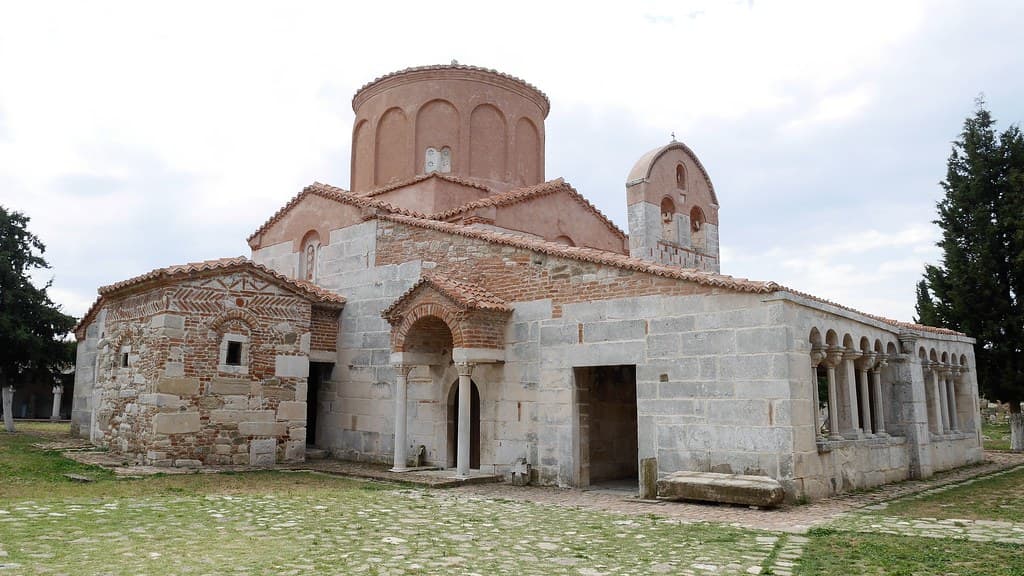


Photo gallery
3 curated photos
Pilgrim glossary
- Dharma
- The teachings of the Buddha; also the universal law underlying them.
Share a photo
Help visitors recognize Monastery of St Mary, Zvërnec Island, Albania. Every submission is reviewed before publication.