St. Winefride’s Well
The well that never went cold, even when faith was forbidden
Holywell, Wales, United Kingdom
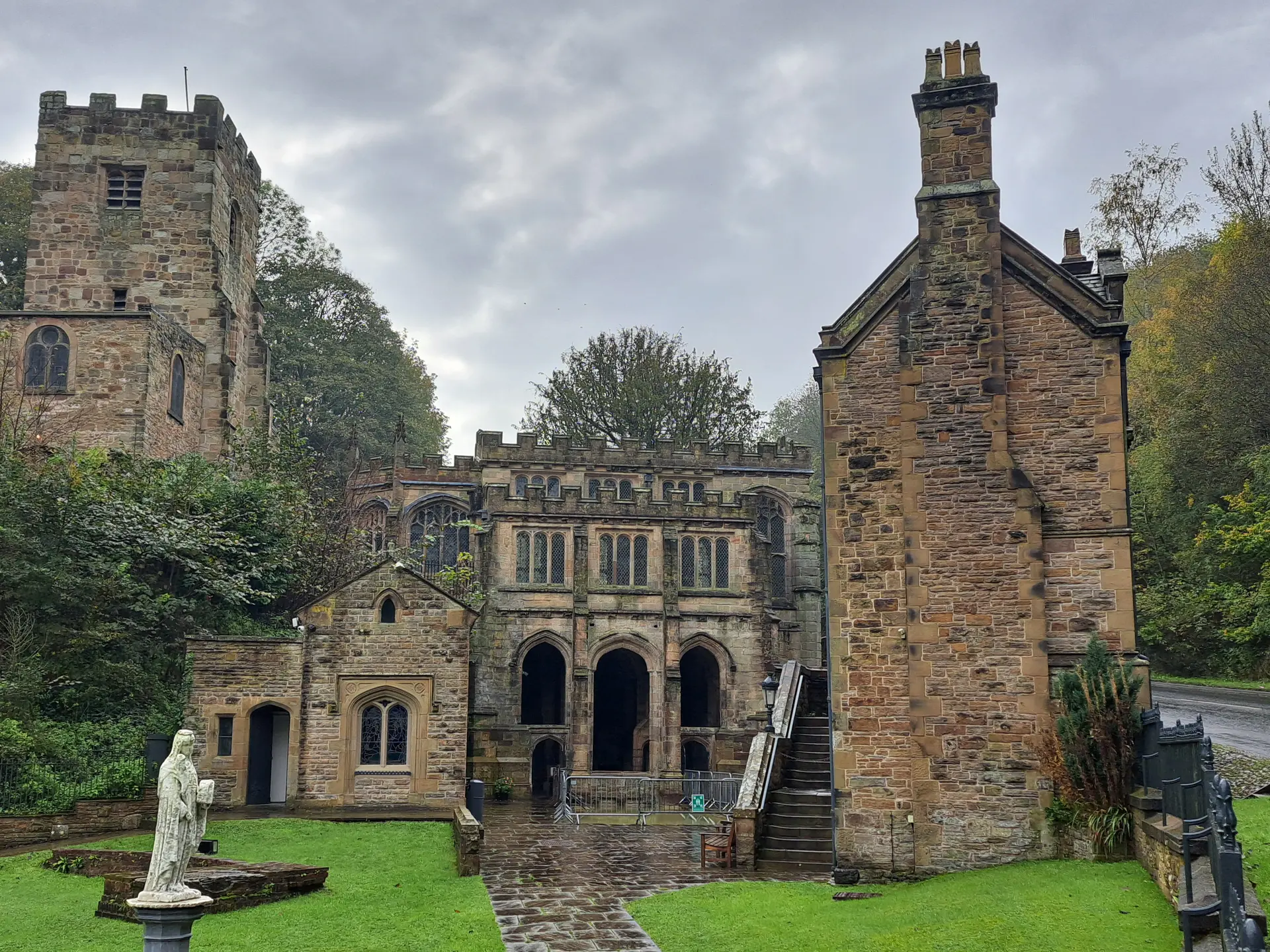
Image of St. Winefride’s Well. Image source · CC-BY-SA-4.0
Featured in this guide
98 Sacred Springs and Holy Wells Around the World
Sacred water, community stories and spring sanctuaries worldwide
Featured in this guide
100 Sacred Sites of Healing and Pilgrimage
100 places of healing devotion, sacred water, and ancient sanctuary traditions
Visit essentials
Before you go
- Access
- Located in Holywell (Treffynnon), Flintshire, North Wales.
- Address
- Plessington House, Greenfield St, Holywell CH8 7PN, UK
- Duration
- Most visitors spend 1-2 hours.
- Etiquette
- Modest dress is expected.
Overview
St. Winefride's Well in Holywell is Britain's only major Catholic shrine to have sustained continuous pilgrimage through the Protestant centuries. Its sacred spring is tied by tradition to Winefride's beheading around 660 AD, Beuno's prayerful restoration of her life, and her later vocation as nun and abbess. The water still rises into Margaret Beaufort's 1500 star-shaped basin, where some 30,000 annual pilgrims seek healing, pass three times through the cold pool in prayer, and kneel on submerged St. Beuno's stone.
Their continuity through Reformation prohibition and centuries of discreet Jesuit ministry is central to the shrine's meaning. In November 2023, the Catholic bishops of England and Wales recognized that living history by elevating the well to National Shrine status.
Why this place is sacred
What makes a place thin? At St. Winefride's Well, the answer begins with persistence. Most sacred sites have interruptions—wars, conquests, reformations that sweep away old devotions and start new ones. This well has flowed without ceasing, and pilgrims have come without ceasing, since the 7th century.
The thinness here is earned through time. Each generation that descended into the cold water added something invisible to the place. Each prayer spoken while kneeling on St. Beuno's stone, each circuit of the pool with rosary beads moving through fingers, each hope for healing whispered in the vaulted chamber—these accumulate. The stone columns around the inner pool bear inscriptions from four centuries of pilgrims, their names and dates carved into rock. Some inscriptions are worn nearly invisible.
Others remain legible. All testify to the same impulse: the desire to leave a mark, to be remembered as having sought something here.
The legend itself contributes to the thinness. Winefride's story is violent and strange—a beheading, a miraculous restoration, a spring arising from blood. The red algae that once stained the rocks around the pool was interpreted as her blood, perpetually renewed. Such stories do not require belief to have power. They create a framework for experience, a way of understanding why this water feels different from other water.
Then there is the Reformation factor. When Henry VIII broke with Rome and Protestant authorities suppressed Catholic worship, St. Winefride's Well became a site of resistance. Pilgrimage continued despite prohibition. Jesuit missionaries arrived in 1590 and maintained a presence for centuries. The faithful who came in those years risked penalty to do so. That risk adds another layer to the site's power. Places where faith persisted against persecution carry a particular charge.
The bathing ritual itself creates thinness through embodiment. This is not a shrine for passive observation. Pilgrims enter the water—cold, around 10°C year-round—and feel it. They pass through the pool three times, praying. They kneel on the stone where Beuno is said to have stood. The body's involvement makes the experience harder to dismiss as mere sentiment.
Finally, there are the documented healings. From medieval accounts to the dramatic 1805 cure of a paralyzed woman named Winefrid White, testimonies have accumulated. Crutches and surgical boots once hung from the walls; some are now in the visitors' centre. Whether one believes these healings were miraculous or not, they represent hope fulfilled—and that hope, repeated countless times over thirteen centuries, makes the place what it is.
The well's origin is the martyrdom of St. Winefride around 660 AD. According to legend, the spring arose where her severed head fell. The site became a place of veneration and healing from earliest times, with documented pilgrimage recorded from at least 1115.
The well was administered by Cistercian monks of Basingwerk Abbey during the Middle Ages. The stunning Well Chapel was built c. 1500, funded by Margaret Beaufort, mother of Henry VII. After the Reformation, Jesuit missionaries maintained Catholic worship from 1590. The site survived suppression through the persistence of local faithful. In November 2023, the Catholic Bishops' Conference of England and Wales elevated the shrine to National Shrine status.
It remains under the care of the Diocese of Wrexham and is co-managed with Cadw (Welsh heritage service).
Healing traditions
Saint's legend and healing pilgrimage
The shrine's telling of Winefride's legend begins with her resistance to Caradog's violence. After he kills her, a spring appears where her head falls. Saint Beuno prays, and Winefride is restored to life. The well's long healing pilgrimage grows from this story of life restored after violence; the shrine also speaks today of hope and healing for survivors of abuse and their families.
Ways to participate
Begin with a quiet prayer at the well or chapel, allowing the story's themes of dignity and restoration to guide your intention. If you wish to bathe, ask the custodians about current arrangements, access, and assistance before entering the water. Remaining beside the well in prayer is a complete way to participate; immersion is optional.
These accounts describe religious traditions and reported experiences. They do not promise a cure or replace medical care.
Experience and orientation
The chapel is built into a hillside, so you descend to reach it. Stone steps lead down to a chamber where the spring emerges into a star-shaped basin, the water clear and cold. Above, the ceiling is an elaborate fan vault, the stonework intricate and well-preserved. Light enters through windows set high in the walls. The effect is of entering a sacred space that has been deliberately crafted to honor what rises from the earth here.
The inner pool is where the spring surfaces. The outer pool, connected by a channel, is where bathing takes place. At scheduled times, those who wish to participate can enter the water. The traditional method is specific: pass three times through the small pool adjacent to the spring while reciting a decade of the Rosary, then move to the outer pool and kneel on St.
Beuno's stone—a submerged rock said to mark where Winefride's uncle stood when he restored her to life. You kneel there for as long as it takes to complete your prayer.
The water is cold—around 10°C regardless of season. The shock of it is part of the experience. Your body responds before your mind can frame a thought. You are not thinking about whether the legend is historically accurate. You are thinking about cold water and the stone beneath your knees and the words of whatever prayer you have chosen.
Beyond bathing, the site offers quieter encounters. The chapel itself is worth contemplation: the vaulting, the stonework, the sense of craft devoted to housing a spring. The columns bear carved inscriptions from centuries of pilgrims. Some are legible; others have worn smooth. Reading them connects you to the stream of seekers who preceded you.
The outer pool is open to the sky, surrounded by more recent construction. Beyond it lies the town of Holywell, ordinary Welsh streets wrapped around this extraordinary place. The juxtaposition matters. This is not a remote hermitage but a shrine embedded in daily life, accessible and mundane in its setting while remaining charged with accumulated meaning.
St. Winefride's Well is located in Holywell (Treffynnon), Flintshire, North Wales. The address is Greenfield Road, Holywell, CH8 7PN. Enter through the visitors' centre, where you can learn about the history and view some of the historical crutches left by healed pilgrims. Descend to the Well Chapel to see the star-shaped basin where the spring rises. If you wish to bathe, check the scheduled bathing times (typically three 30-minute windows daily, not on Sundays).
Bring a swimming costume, a long t-shirt to wear over it, and a towel—these are not provided. Changing cubicles are basic. The traditional bathing ritual involves passing through the pool three times while praying, then kneeling on St. Beuno's stone in the outer pool. Allow 1-2 hours for a visit; add time for bathing. The nearby Basingwerk Abbey (1 mile) can be combined for a fuller pilgrimage experience.
Context and lineage
Around 660 AD, according to tradition, a young Welsh noblewoman named Winefride (Welsh: Gwenfrewi) was living near what is now Holywell. Her uncle, Beuno, was a holy man who had established a church nearby. A local chieftain named Caradog desired Winefride, but she had vowed herself to Christ. When he attempted to seize her and she fled toward her uncle's church, Caradog pursued her and struck off her head with his sword.
Where her head fell, a spring burst from the ground. Beuno emerged from the church, placed her head back on her body, and prayed over her. Winefride was restored to life, bearing for the rest of her days a red scar around her throat where the blade had struck. She became a nun and eventually abbess of a community at Gwytherin, where she died some twenty-two years later.
Caradog, according to the legend, was swallowed by the earth on the spot where he had committed his crime.
The spring that appeared at her martyrdom was found to have healing properties. The stones around it were stained red—later understood to be a rare red algae, but interpreted in legend as her blood perpetually renewed. Pilgrims began coming, and they have not stopped in thirteen centuries.
The oldest written accounts of Winefride date from the 12th century, several hundred years after the events described. However, an 8th-century reliquary fragment found at Gwytherin—the Arch Gwenfrewi, or Winifred's Casket—suggests her veneration began much earlier, possibly within decades of her death.
The well was administered during the Middle Ages by the Cistercian monks of Basingwerk Abbey, founded in 1131 about a mile away. After the Reformation dissolved the monasteries, the Society of Jesus (Jesuits) dispatched missionaries to maintain Catholic worship at the well from 1590. Jesuit presence continued into the 20th century. Today the site is under the care of the Roman Catholic Diocese of Wrexham, with heritage management shared with Cadw, the Welsh Government's historic environment service.
St. Winefride (Gwenfrewi)
Martyr and patron saint of the well
St. Beuno
Winefride's uncle, restorer of her life
Margaret Beaufort
Builder of the Well Chapel
Traditions and practice
The traditional bathing ritual has been practiced for centuries. Pilgrims enter the small pool adjacent to the spring and pass through it three times while reciting one decade of the Rosary (or, for non-Catholics, prayers of their choosing). They then move to the larger outer pool and kneel on St. Beuno's stone—a submerged rock said to mark where Winefride's uncle stood when he restored her to life. They remain kneeling for as long as it takes to complete their prayers.
Historically, pilgrims left votive offerings and testimonials to healing. Crutches and surgical boots discarded by those who believed themselves cured once lined the walls and ceiling of the chapel. A 17th-century account describes 'crutches of the convalescents and other supports for lame and deceased limbs' hanging 'as trophies from the ceiling.' Some of these relics are now displayed in the visitors' centre.
The annual pilgrimage on the feast of Winefride's beheading (June 22, transferred to the nearest Sunday) has been observed since medieval times. It features a procession from St. Winefride's Church to the well, veneration of the saint's relic, and blessing of the sick. On November 3—the chief feast day marking her death—similar observances take place.
Daily bathing continues during scheduled times (typically three 30-minute windows, not on Sundays). Mass is celebrated regularly in the adjacent chapel. Short prayer services with veneration of St. Winefride's relic occur at noon during summer and at 2:30pm on Sundays. The June pilgrimage remains a major annual event, drawing Catholics from across Britain. The November 3 observances continue.
The site's 2023 elevation to National Shrine status has increased its profile within British Catholicism. The diocese promotes the shrine as a place for healing services, retreats, and individual pilgrimage.
Non-Catholic visitors are welcome to observe all practices and may participate in bathing if they approach it respectfully. The physical ritual—entering cold water, circling the pool, kneeling on the stone—does not require specific beliefs to be meaningful. Many visitors find that the act of participating in a 1,300-year tradition creates its own significance regardless of religious affiliation.
Those who prefer not to bathe can still experience the well chapel, observe the spring rising into the star-shaped basin, and contemplate the inscriptions left by centuries of pilgrims.
Roman Catholicism
ActiveSt. Winefride's Well is the most significant Catholic pilgrimage site in Wales and one of the most important in Britain. It holds unique status as the only major British shrine to maintain continuous pilgrimage through the English Reformation, when Catholic worship was forbidden. The site was elevated to National Shrine status in November 2023 by the Catholic Bishops' Conference of England and Wales. The well is associated with healing attributed to St. Winefride's intercession, with documented accounts from medieval times through the 20th century. It is called 'the Lourdes of Wales,' though it predates Lourdes by over a millennium.
The central practice is bathing in the well waters according to the traditional method: passing three times through the small pool adjacent to the spring while reciting a decade of the Rosary, then kneeling on St. Beuno's stone in the outer pool to complete the prayer. Daily Mass is celebrated in the chapel. Veneration of St. Winefride's relic occurs at scheduled times. The annual pilgrimage on the Sunday nearest June 22 features a procession from St. Winefride's Church to the well, veneration of relics, and blessing of the sick. November 3, the saint's chief feast day, also sees special observances.
Perspectives and open questions
St. Winefride's Well invites interpretation from multiple angles: as a documented medieval pilgrimage site, as a place of resistance during the Reformation, as a healing shrine with centuries of testimonies, and as a case study in how sacred places persist through changing circumstances.
Scholarly perspective
Historians note that the earliest written accounts of St. Winefride date from the 12th century—several centuries after the events they describe. This makes the legend difficult to verify historically. However, the discovery of an 8th-century reliquary fragment (the Arch Gwenfrewi) at Gwytherin suggests her veneration began much earlier, possibly within decades of her death.
The Well Chapel built c. 1500 is considered one of the finest examples of Perpendicular Gothic architecture in Wales. Its elaborate fan vaulting and star-shaped pool basin represent significant craft and investment. The site's survival through the Reformation is attributed to its remote location and the persistence of local Catholic communities, maintained by Jesuit missionaries who arrived in 1590 and remained for centuries.
The documented healings are difficult to assess scientifically. A Jesuit priest compiled 17th-century miracle accounts; 18th- and 19th-century accounts were documented by Charles De Smedt; Herbert Thurston updated the record through the early 20th century. The 1805 cure of Winefrid White, a paralyzed woman who walked after bathing, was documented with multiple witnesses and published by Bishop John Milner. Whether these represent supernatural intervention or other factors remains beyond historical method to determine.
Living and traditional perspectives
For Welsh Catholics, St. Winefride is a patron saint of Wales and a symbol of faith's survival through persecution. The well represents unbroken continuity with Celtic Christianity—a living connection to the earliest British church. The healing tradition is considered authentic and ongoing. The 2023 elevation to National Shrine status affirmed what the faithful have long believed: this is holy ground where the saint's intercession is real and available.
The persistence of pilgrimage through the Reformation—when Catholic worship was forbidden and Catholics faced penalties—adds to the site's spiritual significance. The faithful who came in those centuries risked much to do so. Their persistence preserved something that might otherwise have been lost.
Alternative interpretations
The well's constant water temperature and steady flow regardless of drought or flood have attracted those interested in earth energies or pre-Christian sacred sites. The spring's unusual characteristics—temperature stability, unwavering flow—suggest geological factors not fully explained. Some view the site as an example of Christianity incorporating an earlier sacred water place; holy wells were significant in pre-Christian Celtic religion.
The red algae on the stones, whatever its biological explanation, creates a visual reinforcement of the blood legend that adds to the site's atmosphere.
Open questions
Several mysteries remain. Whether a pre-Christian sacred site existed at this location is unknown; no archaeological evidence confirms or refutes this. The precise origins of the pilgrimage tradition before 12th-century documentation are unclear. The mechanism by which the spring maintains constant temperature and flow has not been fully explained scientifically. The historical Winefride—if she existed—left no writings and is known only through hagiography written centuries after her death.
Plan your visit
Access and arrival
Located in Holywell (Treffynnon), Flintshire, North Wales. Address: St Winefride's Well, Greenfield Road, Holywell, Flintshire CH8 7PN. By rail: Flint station is 4 miles away; taxis available. By road: the town is well-signposted; parking available in town. From Chester, approximately 20 miles. From Liverpool, approximately 30 miles.
Holywell offers limited accommodation; more options in nearby Flint, Chester, or along the North Wales coast. The shrine does not provide lodging, but can suggest local options for pilgrims.
Respectful visit
Modest dress throughout. For bathing: swimming costume with a long t-shirt over the top. Changing cubicles are basic. Bring your own towel and warm clothing for afterward.
Permitted in most areas. Do not photograph pilgrims praying or bathing without their consent. Photography may be restricted during services or veneration of relics. Ask if uncertain.
No offerings are required. Donations are welcome and support the shrine's maintenance. The historical tradition of leaving crutches after healing is no longer practiced; historical examples are displayed in the visitors' centre.
Bathing times are limited to scheduled 30-minute windows (typically 11am, 1pm, 3pm; not on Sundays). Check with the shrine for current times. Last admission 30 minutes before closing. Closed Christmas Day and Boxing Day. Good Friday closes at 2pm.
The water is cold—around 10°C year-round. The shock can be intense, especially for those with heart conditions or circulatory issues. If you have health concerns, consult a doctor before bathing. Bathing times are limited to 30-minute windows; arrive early to allow time for changing. Modest swimwear is expected. The site is an active place of Catholic worship; visitors should be respectful of pilgrims engaged in prayer or ritual.
Current practical details
Address
Plessington House, Greenfield St, Holywell CH8 7PN, UK
Phone
Hours
Hours, fees, and access can change — verify on the official source before you travel. Practical details last checked Jun 2026.
Location
Map loads as you approach this section.
Pilgrim reflections
A portrait of encounter, not a score
Pilgrims describe what they felt, how present they could become, and whether the place would shape a journey. There are no stars and no ranking of traditions.
No reviewed reflections yet
The first pilgrims can help describe the character of being here.
Share a reflection
Available after an account-backed “Been there.” Every reflection is reviewed before publication.
Nearby sacred places
Explore other sacred places in the region. Proximity does not establish access or travel time; check each place’s guidance.
References
Sources consulted for this page. Source categories describe the publication, not a guarantee that every claim is verified. Traditional accounts and outside interpretations may differ.
- 01St Winefride's Chapel and Well | Cadw — Cadw (Welsh heritage body)officialOfficial Welsh heritage source
- 02St Winefride's Shrine Official Website — Diocese of WrexhamofficialOfficial Catholic shrine website
- 03St Winefride's Well, Holywell / Treffynnon - British Pilgrimage Trust — British Pilgrimage TrustofficialPilgrimage context and visitor information
- 04Bishops elevate St Winefride's Well to status of national shrine — Catholic Heraldofficial2023 National Shrine elevation
- 05St Winefride's Well - Wikipedia — Wikipedia contributorsencyclopediaComprehensive overview of history, architecture, and pilgrimage
- 06Saint Winifred - Wikipedia — Wikipedia contributorsencyclopediaBiographical information about the saint
- 07Holywell St Winefride's Day — Calendar CustomsacademicFeast day traditions and celebrations
- 08The legend of St Winefride — shrineofficialSupports the attributed account or visitor practice in the healing section; not evidence of clinical efficacy.
- 09A place of healing — shrineofficialSupports the attributed account or visitor practice in the healing section; not evidence of clinical efficacy.
- 10St Winefride's Shrine — visitor informationofficialSupports the attributed account or visitor practice in the healing section; not evidence of clinical efficacy.
Share a photo
Help visitors recognize St. Winefride’s Well. Every submission is reviewed before publication.