Virgin Mary’s Coptic Church in Zeiton (Zeitoun) - Apparition Church
Where the Virgin Mary appeared to millions over three years, visible to all regardless of faith
Understand sacred places, explore living traditions, and learn how to engage respectfully with Pilgrim Map.
Access has not been verified. Check current local guidance before planning a visit.
Cairo, Cairo, Egypt
Visit essentials
A quick read before you go
- Duration
- 1-2 hours for a respectful church visit.
- Access
- Located at 122 Tomanbay Street, El-Zeitoun, Cairo.
Overview
On April 2, 1968, two Muslim bus mechanics saw a luminous woman in white kneeling by the cross atop the Zeitoun church dome. Fearing a suicide attempt, they called police; a custodian then identified the moving, apparently floating figure as the Virgin Mary. For three years, apparitions repeatedly drew Coptic Christians, Catholics, Muslims, skeptics, and officials, with some nights exceeding 250,000 people.
Photographs, Egyptian state television, a Vatican delegation, and President Gamal Abdel Nasser's reported witness form part of the record.
The timing followed Egypt's June 1967 Six-Day War defeat and shattered national morale. Coptic Christians understand Mary's radiance as comfort for her Egyptian children at a church built where tradition says the Holy Family rested during the flight into Egypt.
Why this place is sacred
Zeitoun differs from private-seer apparitions associated with Lourdes, Fatima, and Medjugorje: witnesses across faiths and public life reportedly saw a sustained rather than fleeting phenomenon directly, without chosen intermediaries or transmitted messages. It was photographed hundreds of times, broadcast on Egyptian state television, and witnessed by a Vatican delegation that reported to Pope Paul VI.
The government's General Information and Complaints Department investigated and called it “an undeniable fact”; Coptic Pope Kyrillos VI and Catholic Patriarch Cardinal Stephanos I confirmed it.
Estimates range from hundreds of thousands to millions of witnesses over three years; single nights reportedly reached 250,000, and manifestations lasted up to nine hours. Ibrahim Khalil's c. 1920 vision, the church he built, and the promised fifty-year blessing frame the site's sanctity as announced before it manifested. Coptic tradition adds the Holy Family's rest here: after two thousand years, Mary returned not as a fleeing mother but as a radiant queen comforting the land that sheltered her.
These remain church and witness claims, grounded in the communities that carry them.
The Church of the Virgin Mary at Zeitoun was built as a parish church for the Coptic Orthodox community, following the vision received by Ibrahim Khalil. The apparitions transformed it into a pilgrimage site of international significance. It continues to function both as local parish and as destination for pilgrims from around the world.
The church was built between 1920-1924 on land belonging to the Khalil family, following Ibrahim Khalil's vision. It was consecrated on June 29, 1925. For over forty years, it served as a normal parish church. The apparitions began April 2, 1968, and continued until May 29, 1971. During this period, the church became one of the world's most visited Marian sites. After the apparitions ceased, the church continued as parish and pilgrimage destination.
The Feast of the Transfiguration of the Virgin Mary at Zeitoun was added to the Coptic liturgical calendar in 1969. The 50th anniversary in 2018 drew major celebrations. Additional Marian apparitions have been reported at other Egyptian sites since Zeitoun, though none as extensively documented.
Experience and orientation
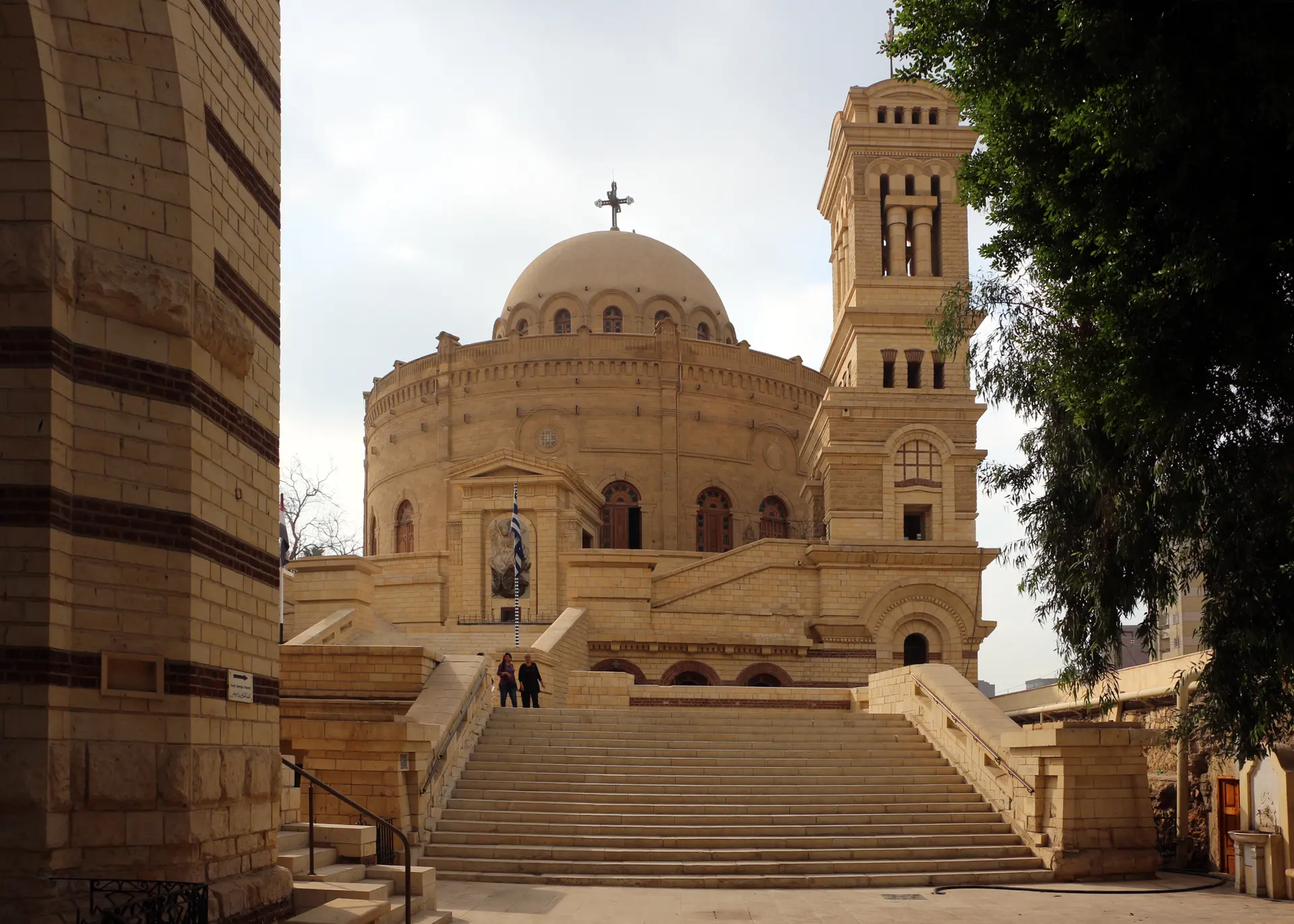
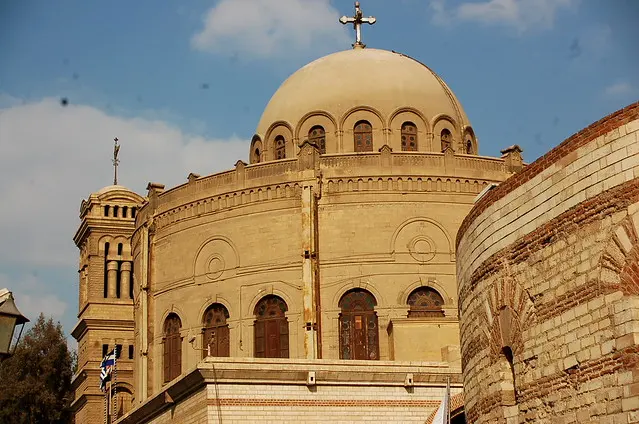
The church stands on a busy Zeitoun corner. Traffic and commerce press against a district that has grown around it since 1925. Italian architect Leomingelli designed the modest church as a miniature of Istanbul's Hagia Sophia, crowned by three domes and a cross above the central one. Witnesses reported Mary kneeling before the cross, moving on the roof, bowing toward crowds, and sometimes holding an olive branch.
In photographs from 1968–1971, ordinary daytime domes appear lit by something witnesses understood as more than electric light.
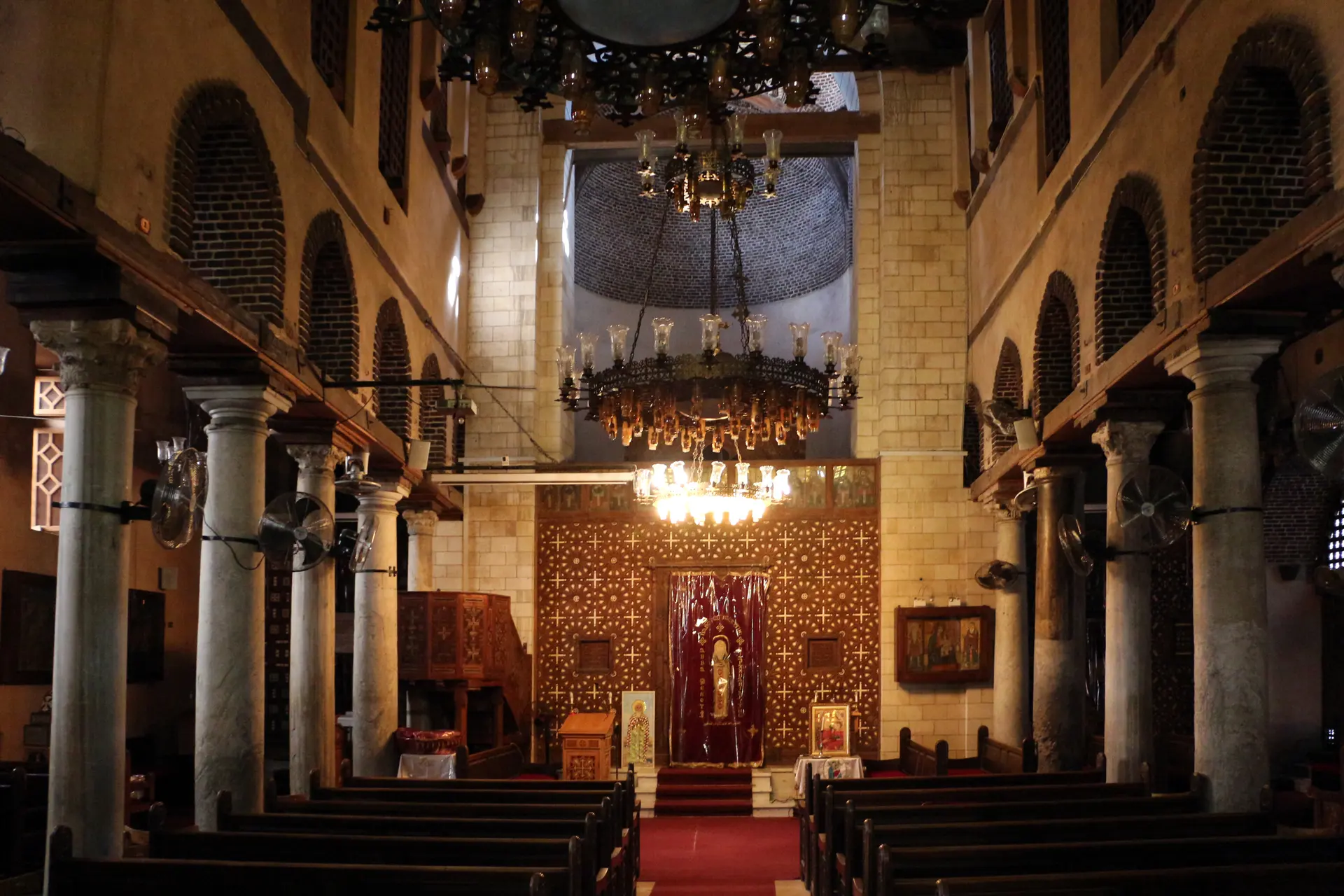
Inside, Coptic icons cover the walls. Egyptian artist Yacoub Fanous painted Christ Pantocrator in the apse and the Virgin with outspread arms on the dome after the apparitions began. An iconostasis divides nave and sanctuary; incense and accumulated devotion shape services.
On April 2, pilgrims from Egypt and the Coptic diaspora gather for liturgies, candlelit vigils, and processions through day and night. For Coptic worshippers, Mary appeared here and remains present to those who pray. On other days, this active parish follows the Coptic Orthodox calendar; its atmosphere ranges from ordinary bustle to hushed devotion, and visitors may enter, observe, and pray as current rules allow.
The Church of the Virgin Mary is located at 122 Tomanbay Street in the Zeitoun district of northeastern Cairo. The church is designed as a miniature replica of the Hagia Sophia with three domes. The central dome, topped by a cross, was where Mary most frequently appeared. The interior follows Coptic Orthodox design with extensive icons, an iconostasis, and altar area. The church is an active parish with regular services. The nearest metro station is Hadayeq El Zeitoun.
Context and lineage
Around 1920, Ibrahim Khalil, a devout Coptic landowner, received a vision from the Virgin Mary. She instructed him to build a church on his land and promised that in fifty years she would bless it in a special way. Khalil built the church, which was consecrated in 1925. For decades, the promise was remembered but its meaning remained unclear.
On April 2, 1968, exactly within the prophesied timeframe, the apparitions began. Two Muslim mechanics saw a woman in white on the church dome. Within hours, crowds gathered. Within days, the phenomenon was international news. For three years, Mary appeared repeatedly, sometimes several times a week, visible to everyone present. The promise to Ibrahim Khalil had been fulfilled beyond what anyone could have imagined.
The Holy Family connection predates the church. Coptic tradition identifies Zeitoun as the twelfth stop on the Holy Family's journey through Egypt during their flight from Herod. Mary was so exhausted that she needed to rest here. The site thus carries double significance: the ancient presence of the fleeing Mother and Child, and the modern return of Mary in glory to comfort her Egyptian children.
The Zeitoun apparitions stand in the tradition of Marian apparitions stretching back centuries, but their public visibility distinguishes them from predecessors. They occurred in the context of Coptic devotion to the Theotokos (God-bearer), which traces to the earliest centuries of Christianity in Egypt. The Holy Family tradition connects the site to Christianity's founding narrative.
Ibrahim Khalil
Pope Kyrillos VI
Farouk Atwa
President Gamal Abdel Nasser
Traditions and practice
Coptic Orthodox liturgy forms the foundation of worship at Zeitoun. The Divine Liturgy follows ancient Alexandrian rites, chanted in Coptic and Arabic. The Theotokia hymns praising Mary are central to daily prayer. The month of Kiahk (roughly December-January) is especially devoted to Mary in Coptic tradition, with extensive hymnody and services.
Marian devotion in Coptic Christianity places the Virgin second only to Christ in veneration. She is the Theotokos, the God-bearer, who carried divine fire without being consumed. Icons of Mary are found throughout Coptic churches, and prayers seeking her intercession are constant. The Zeitoun apparitions intensified this devotion by providing modern, visible confirmation of Mary's continued presence with her people.
Regular Coptic Orthodox services follow the liturgical calendar. The annual feast on April 2nd commemorating the first apparition draws thousands of pilgrims for extended celebrations including liturgies, vigils, and processions. The 50th anniversary in 2018 saw major celebrations attended by faithful from across Egypt and abroad.
Pilgrims visit throughout the year to pray at the church and view the domes where Mary appeared. Some report continued spiritual experiences, though nothing on the scale of the original apparitions. Candles may be lit and donations made. The church welcomes visitors of all faiths, continuing the interfaith character of the original phenomenon.
Visit on or near April 2nd to experience the pilgrimage atmosphere at its most intense. The vigils and celebrations provide context for understanding what this site means to Coptic faithful.
Spend time in prayer or quiet contemplation within the church. The icons, incense, and accumulated devotion create an atmosphere conducive to reflection.
Observe the domes from outside, imagining the crowds that gathered night after night for three years, waiting to see the luminous figure. The physical setting has not changed; only the phenomenon has ceased.
If visiting during regular hours, respect the parish function of the church. This is not merely a historical site but an active place of worship for a living community.
Coptic Orthodox Christianity
ActiveThe Coptic Orthodox Church is one of Christianity's oldest communities, tracing to Saint Mark's founding mission in Alexandria around 42 CE. The Virgin Mary holds supreme veneration second only to Christ. The Zeitoun apparitions are understood as Mary's return to comfort her Egyptian children during national crisis.
Divine Liturgy following ancient Alexandrian rites. Theotokia hymns praising Mary throughout the liturgical year. The month of Kiahk devoted to Mary. A 15-day fast in August preceding the Feast of the Assumption. Veneration of icons with prayers and incense. Annual feast on April 2nd commemorating the first apparition.
Marian Apparition Devotion
ActiveThe Zeitoun apparitions are among the most witnessed and documented Marian apparitions in history. Their public visibility, affecting all present regardless of faith, distinguishes them from apparitions at Lourdes, Fatima, and similar sites. Both Coptic Orthodox and Catholic churches officially recognize the phenomenon.
Pilgrimage to the church. Prayer seeking Mary's intercession. Veneration of icons of Our Lady of Zeitoun. Celebration of the annual feast. Attendance at liturgies and vigils.
Holy Family Pilgrimage
ActiveCoptic tradition identifies Zeitoun as one of the resting places during the Holy Family's flight into Egypt. Mary was so exhausted that she needed to stop here. The church thus commemorates both the ancient presence and the modern apparitions.
Pilgrims may follow the Holy Family route through Egypt, visiting churches and sites marking their journey. Zeitoun is traditionally the 12th stop on this route.
Perspectives and open questions
The Zeitoun apparitions invite multiple readings: as Coptic affirmation of Mary's continued presence, as ecumenical phenomenon witnessed across faith boundaries, as sociological response to national crisis, and as one of history's most documented supernatural events.
Scholarly perspective
Academic studies acknowledge the unique character of the Zeitoun apparitions: their public visibility, their documentation through photography and official investigation, and their recognition by multiple churches. Sociologists Robert Bartholomew and Erich Goode have explored mass psychology factors without dismissing the phenomenon entirely.
Michael P. Carroll proposed that 'lights of uncertain origin' were interpreted as Mary due to cultural conditioning, while researchers John S. Derr and Michael A. Persinger suggested tectonic strain theory, noting seismic activity in the region. These naturalistic explanations remain speculative and do not account for all reported phenomena.
The University of Dayton's Marian Library treats Zeitoun as a significant case of 20th-century Marian phenomena warranting serious study. The documentation, including photographs and official Church investigations, provides unusual evidentiary support for the apparition claims.
Living and traditional perspectives
In Coptic Orthodox understanding, the apparitions are a genuine visitation of the Theotokos to comfort Egypt's Christians. The timing following the 1967 war defeat demonstrates Mary's maternal care for her children in their darkest hour. The fulfilled prophecy given to Ibrahim Khalil shows divine providence working across generations.
The silence of the apparitions carries its own message. Mary did not speak because her presence was sufficient. She came not to deliver verbal communications but to be seen, to console, to bless. Her appearance to all present, regardless of faith, demonstrates the universality of her maternal concern.
The miraculous healings, affecting both Christians and Muslims, confirm the supernatural character of the apparitions. The healings paralleled those at Lourdes in their nature and medical authentication.
Alternative interpretations
Some researchers connect the Zeitoun phenomena to UFO or atmospheric light phenomena. The luminous appearances, the dove-like objects flying in formations, the photographs showing unusual lights have drawn comparisons to unexplained aerial phenomena reported elsewhere.
Skeptics point to social stress following the 1967 war and collective psychology in producing shared interpretations of ambiguous light phenomena. They note that some photographs are blurry or inconsistent, though others show clear images.
Some alternative researchers explore the site's possible energetic properties or its relationship to ley lines and earth energies.
Open questions
Why the apparitions ceased in 1971 remains unexplained. The nature of the luminous dove-like beings that accompanied Mary is not fully understood. Whether phenomena of this type will recur at Zeitoun or elsewhere is unknown. Some sources claim apparitions have occurred at other Egyptian sites since Zeitoun, including Assiut in 2000 and Waraq in 2009, though these are less extensively documented.
Plan your visit
Access and arrival
Located at 122 Tomanbay Street, El-Zeitoun, Cairo. The nearest metro station is Hadayeq El Zeitoun. Cairo International Airport is the nearest international airport. The church is accessible by taxi, Uber, or metro. The neighborhood is busy urban Cairo.
Full range of accommodations throughout Cairo. No lodging at the church itself. Hotels in central Cairo provide convenient access via taxi or metro.
Respectful visit
Modest dress required. Shoulders and knees should be covered. Women may be asked to cover their heads inside the church during services. Avoid shorts, sleeveless tops, and revealing clothing.
Photography may be restricted inside the church, especially during services. Ask permission before photographing. Flash prohibited inside. Exterior and domes can be photographed freely. Do not photograph worshippers without permission.
Candles may be purchased and lit. Donations to the church are welcomed. No expectation of payment for entry.
Do not disrupt services. Certain areas are restricted during liturgy. Maintain silence and reverence. Recording of services may require permission.
The church has active services; avoid disrupting worship. Photography restrictions may apply inside. Modest dress is required. The neighborhood is busy urban Cairo; take normal precautions for city travel.
Current practical details
Address
472P+QFG, Abd El-Latif Shaaban, AZ Zaytoun Al Qebleyah, Zeitoun, Cairo Governorate 4510220, Egypt
Hours
Hours, fees, and access can change — verify on the official source before you travel. Practical details last checked Jun 2026.
Location
Map loads as you approach this section.
Pilgrim reflections
A portrait of encounter, not a score
Pilgrims describe what they felt, how present they could become, and whether the place would shape a journey. There are no stars and no ranking of traditions.
No reviewed reflections yet
The first pilgrims can help describe the character of being here.
Share a reflection
Available after an account-backed “Been there.” Every reflection is reviewed before publication.
Nearby sacred places
Explore other sacred places in the region. Proximity does not establish access or travel time; check each place’s guidance.

Share a photo
Help visitors recognize Virgin Mary’s Coptic Church in Zeiton (Zeitoun) - Apparition Church. Every submission is reviewed before publication.