Shrine of Nabi Shuʿayb, near Kfar Zeitim, not far from Tiberias, Israel
The holiest shrine of the Druze faith, where pilgrims pour oil into a prophet's footprint and seek ancestral blessing
Understand sacred places, explore living traditions, and learn how to engage respectfully with Pilgrim Map.
Access has not been verified. Check current local guidance before planning a visit.
Galil Tachton Regional Council, Northern District, Israel
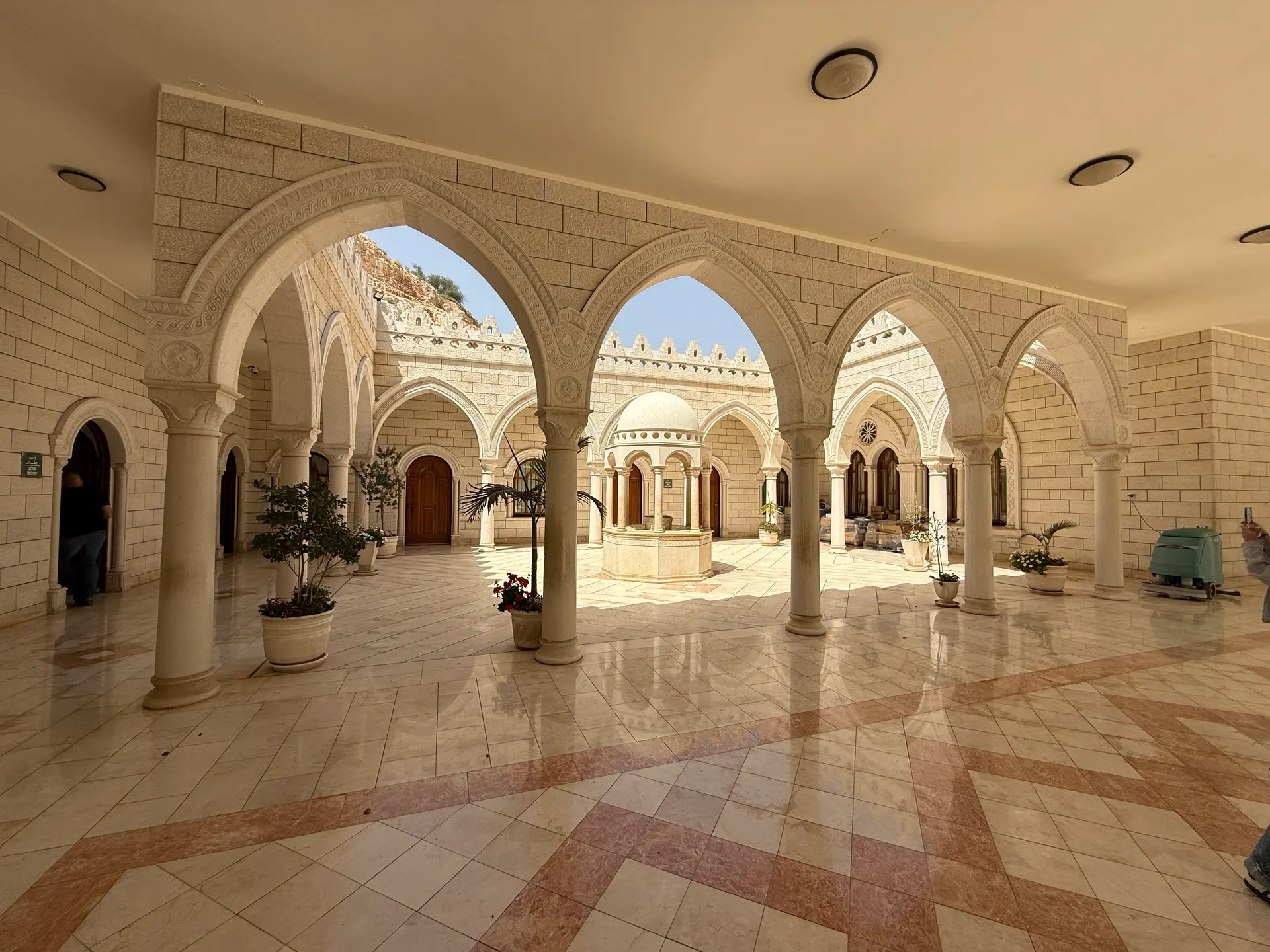
Image of Shrine of Nabi Shuʿayb, near Kfar Zeitim, not far from Tiberias, Israel. Image source · CC-BY-2.5
Visit essentials
A quick read before you go
- Duration
- 45-90 minutes for the shrine complex, including the courtyard, fountain area, and main tomb…
- Access
- Located near Kfar Zeitim, west of Tiberias, in the Lower Galilee.
Overview
Near the Horns of Hattin in the Lower Galilee, the Shrine of Nabi Shu'ayb overlooks valleys and cliffs toward Mount Hermon. For the Druze, this is the burial place of Shu'ayb—Jethro in the Hebrew Bible, Moses' father-in-law and spiritual mentor—and the hidden prophet who communicated directly with God and transmitted divine knowledge to Moses.
The restrained 1880s building houses a tradition reaching back to at least the twelfth century. During the four-day Ziyarat al-Nabi Shu'ayb each April, Druze from across Israel gather as sheikhs in white turbans cross the courtyard, families meet on the hills, and pilgrims perform the da'sa ritual at the footprint believed to be Shu'ayb's. Visitors enter the tomb barefoot under the required grey cape, received within the Druze community's hospitality and religious boundaries.
Why this place is sacred
The Druze principle al-mathal wal-mamthul—“the symbol and the symbolized”—teaches that physical phenomena have spiritual counterparts. The tomb is therefore not merely a memorial but, in Druze understanding, where Shu'ayb's spiritual reality meets the material world. The da'sa makes that intersection tangible as oil moves from the prophet's footprint to a pilgrim's skin.
The Horns of Hattin witnessed the consequential 1187 battle after which Druze tradition places Saladin's dream-led discovery of the tomb. Here sacred geography and military history meet. Galilee valleys, Mount Hermon, and eastern cliffs create an outer vastness deliberately contrasted with the tomb chamber's intimate enclosure.
According to Druze tradition, the site was identified as Shu'ayb's burial place after the Battle of Hattin in 1187, when Saladin experienced a prophetic dream. The shrine was first built to mark and honor the prophet's tomb, serving as the spiritual center of Druze religious life. The first historical reference dates to the 12th century, and the tradition has remained unbroken since.
The older section of the current structure was built in the 1880s under Sheikh Muhanna Tarif, the shaykh al-aql (spiritual leader) of the Druze community. Major renovations followed under his descendant Sheikh Amin Tarif in the 20th century. The Israeli government later provided infrastructure — a paved road, electricity, and water — supporting the site's accessibility. The annual Ziyarat al-Nabi Shu'ayb was recognized as an official Israeli public holiday, formalizing the shrine's status within the national calendar.
Throughout these changes, the core function has remained constant: this is where the Druze come to meet their most revered ancestor.
Experience and orientation
A winding road through the Galilee hills reaches a shrine apart from any town. Valleys, cliffs, and the Horns of Hattin open into view, while a fountain and shade make the courtyard a place to pause. In the tomb chamber, the cool floor, clean lines, restrained decoration, and cenotaph create an interior visitors describe as “simple yet rich.”
During the Ziyarat al-Nabi Shu'ayb on April 25–28, thousands arrive from Mount Carmel, the Galilee, and the Golan Heights. Families picnic across the hillsides while sheikhs in white turbans hold religious discussions; Israeli political leaders, sometimes including the Prime Minister, offer congratulations. The atmosphere is festive and familial, yet inside the crowded tomb each pilgrim's da'sa remains an intimate conversation with the prophet.
If you visit outside the Ziyarat period, you will likely find the shrine quiet and contemplative. Approach without hurry. The courtyard and fountain area invite stillness before entering the tomb chamber. When the gray cape is offered, receive it as part of the experience rather than an inconvenience — it is the site's way of receiving you.
Inside the chamber, observe what happens to your attention. The restrained architecture and the presence of the cenotaph create a focal point that is neither demanding nor empty. You need not perform any ritual; simply being present, barefoot and wrapped, is sufficient.
If you are fortunate enough to visit during the Ziyarat, allow yourself to be absorbed by the communal atmosphere. The Druze are widely known for their hospitality, and the festival is a rare opportunity to witness one of the world's least-known major religious traditions at its fullest expression.
Context and lineage
According to Druze tradition, the night before the Battle of Hattin in 1187, Saladin received a visit from an angel in a dream. The angel promised him victory over the Crusaders on one condition: after the battle, Saladin was to mount his horse and ride westward, and where the horse stopped, he would find the burial site of the Prophet Shu'ayb.
The battle of July 4, 1187, ended in a decisive Muslim victory that effectively ended the Crusader Kingdom of Jerusalem. When Saladin fulfilled the dream's instruction, his horse halted at this spot in the Galilee hills. The Druze built a shrine to mark the location.
This origin story, while not corroborated by Crusades-era chronicles, serves a powerful function. It weaves the Druze faith's holiest site into one of the most significant military events in the region's history, connecting sacred geography with historical destiny.
The Druze have maintained unbroken pilgrimage to this site since at least the 12th century. The shrine's custodianship passed through the Tarif family of sheikhs, who hold the position of shaykh al-aql — the paramount religious authority of the Druze community. During the British Mandate period, custodianship was contested between Druze and Muslim communities, both of whom venerated Shu'ayb. After Israeli independence in 1948, the shrine was placed under Druze administration, where it remains.
The annual Ziyarat became an officially recognized Israeli public holiday, cementing the shrine's dual role as sacred site and expression of communal identity.
Shu'ayb (Jethro)
prophet
The most important prophet in Druze theology, identified with the biblical Jethro, father-in-law and spiritual mentor of Moses. The Druze understand Shu'ayb as the 'hidden and true prophet' who communicated directly with God and transmitted divine knowledge. The community considers themselves his descendants — the 'Children of Jethro.'
Sheikh Muhanna Tarif
historical
The shaykh al-aql (spiritual leader) of the Druze community in Julis who directed the construction of the older section of the current shrine in the 1880s, giving permanent architectural form to centuries of veneration.
Sheikh Amin Tarif
historical
Descendant of Sheikh Muhanna Tarif and the most prominent modern Druze spiritual leader, who oversaw major renovations and expansions of the shrine complex in the 20th century, strengthening its role as the center of Druze religious life.
Saladin (Salah ad-Din)
historical
The Ayyubid sultan whose dream, according to Druze tradition, led to the identification of Shu'ayb's burial site following his victory at the Battle of Hattin in 1187.
Traditions and practice
The da'sa ritual is the shrine's most distinctive practice. Pilgrims pour olive oil into an imprint on the tomb believed to be the prophet's left footprint, then rub the oil over their bodies for blessing and good fortune. The gesture connects the pilgrim physically to the prophet's body through oil and stone — a tactile bridge across centuries.
During the Ziyarat, Druze religious leaders — the al-'uqqal, or initiated members — gather for discussions about matters of faith. These conversations address both spiritual teaching and community governance, reflecting the Druze principle that religion and communal life are inseparable. The content of these discussions remains private, as Druze inner teachings are shared only among the initiated.
Historically, pilgrims also dipped in a nearby spring during festivals, though this practice may have diminished over time.
The Ziyarat al-Nabi Shu'ayb has evolved into both a religious observance and a national event. Israeli political leaders, sometimes including the Prime Minister, attend to congratulate the Druze community. Leaders of other faiths may also be present. The gathering has taken on dimensions of civic identity alongside its spiritual function, particularly given the Druze community's service in the Israeli military and their distinctive position as a loyal minority.
Outside the festival period, the shrine receives regular visitors — Druze coming for prayer, contemplation, and personal blessing. The site functions as a quiet place of worship for much of the year, in contrast to the intensity of the April gathering.
If you visit outside the festival period, allow the shrine's quietness to work on you. The courtyard and fountain area invite sitting and stillness before entering. Inside the tomb chamber, stand or sit in silence. Watch how the light falls on the cenotaph. Notice the quality of silence in a space shaped by centuries of prayer.
If you visit during the Ziyarat, allow yourself to be drawn into the communal energy without attempting to participate in specifically Druze rituals. The festive atmosphere — families, food, conversation — is generous and inclusive. Simply being present as a respectful witness to another tradition's most sacred gathering is itself a meaningful practice.
Druze
ActiveNabi Shu'ayb is the holiest shrine in the Druze faith worldwide. The prophet Shu'ayb, identified with the biblical Jethro, is considered the most important prophet in Druze theology and the ancestor of all Druze people. The shrine holds a status comparable to Mecca for Muslims — it is the spiritual center toward which the entire Druze community orients itself.
The annual Ziyarat al-Nabi Shu'ayb pilgrimage (April 25-28) is the most important Druze religious observance. During the four-day festival, Druze from across Israel gather for mass celebrations, religious discussions among sheikhs, prayer, and communal picnics. The da'sa ritual — pouring olive oil into the prophet's footprint and rubbing it over the body — is the most distinctive devotional practice. Year-round, the shrine receives Druze visitors for prayer and contemplation.
Islam
HistoricalShu'ayb is one of the principal prophets in Islam, mentioned 11 times in the Quran as a prophet sent to the Midianites. The shrine was historically venerated by both Druze and Sunni Muslim communities. The custodianship dispute during the British Mandate period reflected the shared reverence both traditions hold for this prophetic figure.
Muslim veneration at this specific shrine has largely ceased since custodianship was transferred to the Druze community in 1948. Historically, Muslim pilgrims visited the tomb for prayer and blessing alongside Druze pilgrims. A separate shrine near Salt, Jordan, also claims to be Shu'ayb's tomb and receives Muslim visitors.
Perspectives and open questions
The Shrine of Nabi Shu'ayb sits at the intersection of multiple interpretive frameworks: scholarly analysis of Druze sacred space, the Druze community's own esoteric theology, and broader questions about how prophet-tomb veneration functions across Middle Eastern traditions. Each perspective illuminates different dimensions of a site that remains, in some essential ways, closed to outsiders — by deliberate design.
Scholarly perspective
Scholars recognize Nabi Shu'ayb as the most important religious site in the Druze faith and a key marker of communal identity, particularly within the context of the Israeli state. Research on Druze sacred places analyzes the concept of 'sacredness generators' — the theological, historical, and spatial elements that combine to create holiness at specific locations.
The identification of Shu'ayb with the biblical Jethro bridges the Druze tradition to both Jewish and Islamic scriptural narratives, creating a unique interreligious connection point. The Saladin dream narrative, while not corroborated by Crusades-era chronicles, serves an important function in connecting Druze sacred geography to the wider Islamic narrative of the Holy Land.
The custodianship dispute during the British Mandate period — when both Druze and Muslim communities claimed authority over the shrine — reveals how sacred sites can become contested spaces of communal authority. The resolution in favor of the Druze after Israeli independence reflects the broader political dynamics of the region.
Living and traditional perspectives
In Druze understanding, Shu'ayb is the 'hidden and true prophet' who communicated directly with God and transmitted divine knowledge to Moses. He is not merely a prophet but the source of prophetic knowledge itself. The concept of al-mathal wal-mamthul — 'the symbol and the symbolized' — teaches that Shu'ayb embodies the divine principle in the physical world, just as Hamza ben Ali, the first herald of the Druze religion, embodies it in the spiritual realm.
The Druze consider themselves the 'Children of Jethro,' and the tomb represents their deepest spiritual and ancestral connection. The da'sa — the footprint on the tomb — is a tangible sign of the prophet's physical presence that bridges the material and spiritual worlds. The annual Ziyarat is not merely commemoration but active encounter with the prophet's enduring spiritual reality.
The inner dimensions of this theology remain known only to the al-'uqqal — the initiated members of the Druze faith. What is visible to outsiders is only the outer layer of a tradition that is, by design, esoteric.
Alternative interpretations
Some scholars note parallels between Druze veneration of Shu'ayb and broader Middle Eastern traditions of prophet-tomb veneration found in Sunni Islam, Shia Islam, and Jewish pilgrimage practices. The practice of oil-anointing from the footprint connects to ancient Near Eastern traditions of sacred anointing that predate all current Abrahamic religions.
The Druze teaching that Shu'ayb was a 'hidden prophet' who transmitted esoteric knowledge resonates with Gnostic and Sufi traditions of concealed wisdom, suggesting shared roots in the late antique religious culture of the Levant.
Open questions
The inner teachings of the Druze faith associated with Shu'ayb remain known only to initiated members and are not shared publicly. What non-Druze scholars describe is necessarily the outer form of a tradition whose inner meaning is deliberately hidden.
The precise historical basis for the shrine's location — whether there is any pre-12th-century tradition of a tomb at this spot — remains unknown. A competing shrine near Salt in Jordan also claims to house Shu'ayb's tomb, and the question of which site has the older tradition is unresolved.
The relationship between the Saladin dream narrative and historical events remains an open question. The story functions powerfully as sacred narrative regardless of its historical veracity.
Plan your visit
Access and arrival
Located near Kfar Zeitim, west of Tiberias, in the Lower Galilee. Accessible via Route 7717. The Israeli government paved the road leading to the shrine, and parking is available. From Tiberias, drive west toward the Horns of Hattin; the shrine is signposted. The complex includes facilities for pilgrims including hosting rooms and a large picnic area. Specific daily opening hours for non-festival periods are not well documented; visitors should plan to arrive during daylight hours.
Mobile phone signal is generally available in this area of the Galilee.
Tiberias, approximately 15 km east, offers the widest range of accommodation from budget hostels to resort hotels along the Sea of Galilee. The shrine complex includes hosting rooms used primarily during the Ziyarat festival. For a broader experience of the Galilee's sacred landscape, consider basing yourself in Tiberias or Nazareth.
Respectful visit
Modest dress is required for all visitors. The gray cape provided at the entrance covers from head to calf, but wearing appropriate clothing underneath — nothing revealing, shoulders covered, long trousers or skirts — demonstrates respect before the cape is even offered.
Photography policies at the shrine are not explicitly documented in available sources. The exterior, gardens, and courtyard are generally considered appropriate for photography. Inside the tomb chamber, exercise sensitivity — ask permission before photographing, and never photograph worshippers in prayer without consent. During the Ziyarat festival, the public celebrations are generally photogenic and photographable, but inner religious ceremonies should not be documented without explicit permission.
Olive oil is the traditional offering, poured into the da'sa (footprint impression) on the tomb. This is a specifically Druze ritual. Non-Druze visitors need not bring offerings; respectful presence is sufficient.
Remove shoes before entering the main tomb chamber. Wear the provided gray cape. Maintain quiet and reverent behavior. Dress modestly. During the Ziyarat festival, follow directions from shrine custodians. Inner Druze religious ceremonies may be closed to non-Druze visitors.
The inner teachings of the Druze faith are esoteric, known only to initiated members. Do not press Druze hosts for theological explanations they are not free to share. Accept graciously what is offered and respect the boundary around what is not.
The da'sa ritual is a specifically Druze devotional practice. Non-Druze visitors should observe respectfully rather than attempting to participate, unless explicitly invited.
During the Ziyarat festival, the site becomes very crowded. Follow directions from shrine custodians, and be aware that some inner religious ceremonies may be reserved for Druze community members.
Current practical details
Address
Kfar Zeitim, Israel
Hours
Hours, fees, and access can change — verify on the official source before you travel. Practical details last checked Jun 2026.
Location
Map loads as you approach this section.
Pilgrim reflections
A portrait of encounter, not a score
Pilgrims describe what they felt, how present they could become, and whether the place would shape a journey. There are no stars and no ranking of traditions.
No reviewed reflections yet
The first pilgrims can help describe the character of being here.
Share a reflection
Available after an account-backed “Been there.” Every reflection is reviewed before publication.
Nearby sacred places
Explore other sacred places in the region. Proximity does not establish access or travel time; check each place’s guidance.

Magdala Archaeological Park
Migdal, Israel
6.4 km away
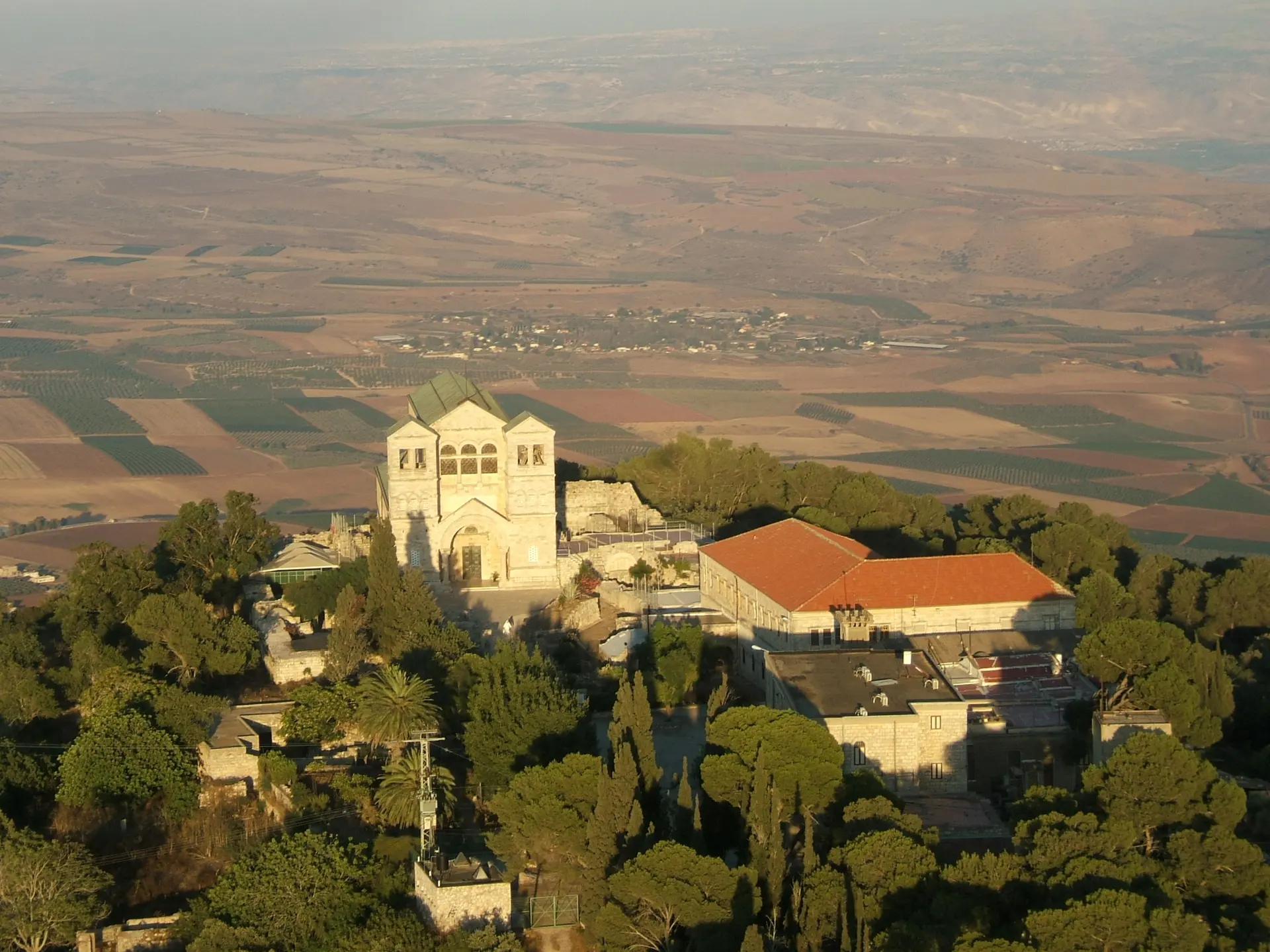
Church of the Transfiguration Mount Tabor
Shibli - Umm el Ghanam, Northern District, Israel
14.3 km away
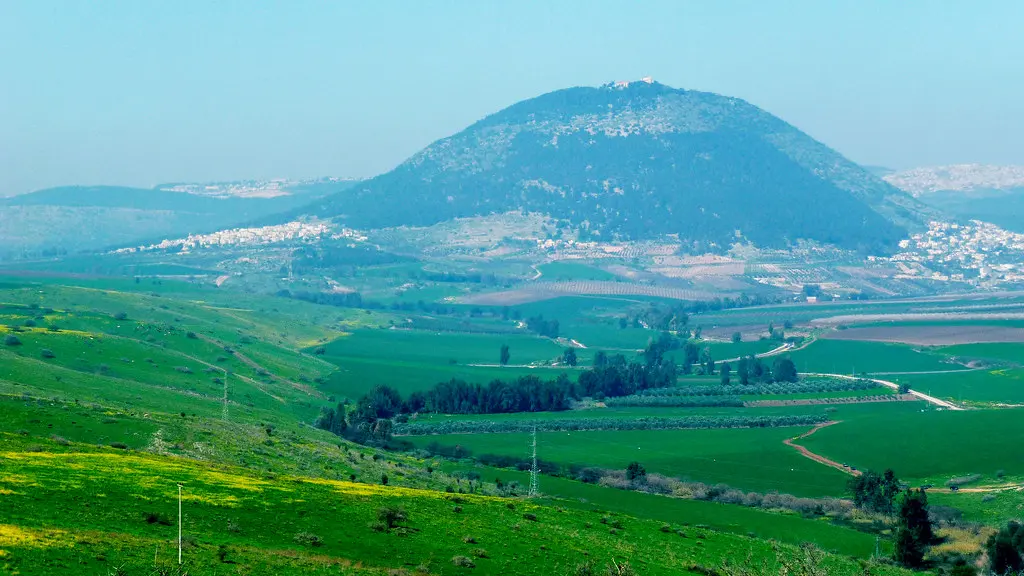
Mt. Tabor
Shibli - Umm el Ghanam, Northern District, Israel
14.3 km away

Mary’s Spring at St Gabriel’s Church
Nazareth, Northern District, Israel
17.7 km away
Share a photo
Help visitors recognize Shrine of Nabi Shuʿayb, near Kfar Zeitim, not far from Tiberias, Israel. Every submission is reviewed before publication.