Santuario Virgen de la Esperanza
Where water drips from stone into a cave shaped by a river, and the Virgin chose not to leave
Understand sacred places, explore living traditions, and learn how to engage respectfully with Pilgrim Map.
Access has not been verified. Check current local guidance before planning a visit.
Calasparra, Murcia, Spain
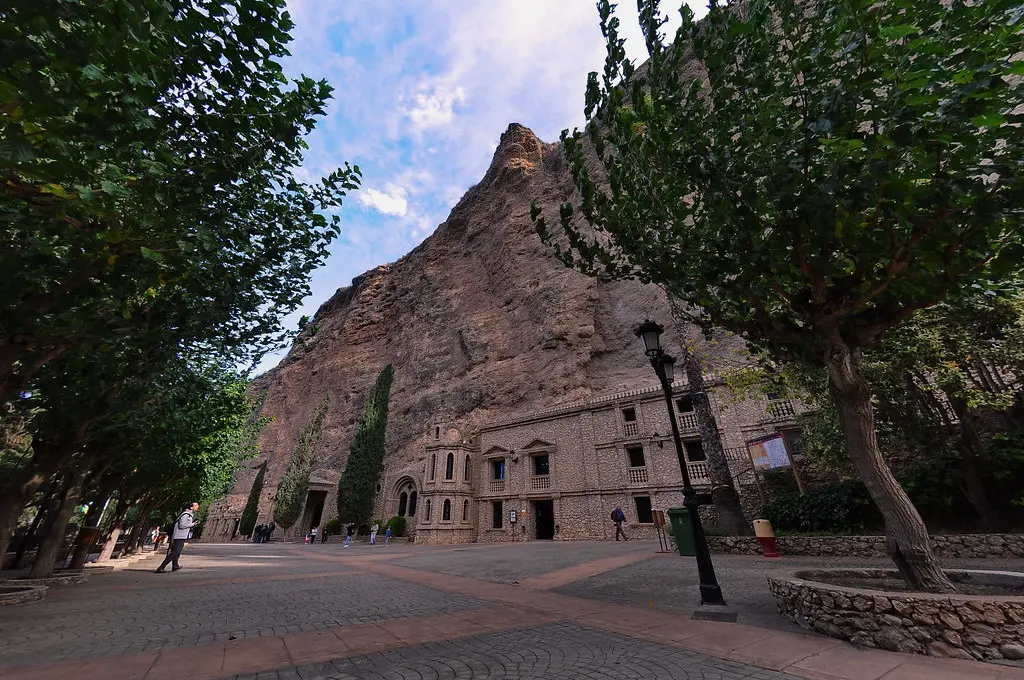
Image of Santuario Virgen de la Esperanza. Image source
Visit essentials
A quick read before you go
- Duration
- One to two hours for the sanctuary, cave chapel, and gardens at a contemplative pace.
- Access
- Located 6 km from the town of Calasparra in the northwestern Region of Murcia.
Overview
The cave was sacred before the statue appeared. Known as La Fuensanta, the Holy Spring, it drew shepherds and villagers to dripping waters before a small carved Virgin was found in its recesses in the early seventeenth century.
When townspeople tried to carry La Pequenita, the Small One, from the cave into a proper church, the statue became immovably heavy. They understood that the Virgin had chosen her dwelling. The sanctuary was therefore built around the cave, its architecture deferring to water-carved stone.
Today it occupies a riverside valley six kilometers from town, preserving a sense of pilgrimage even for drivers. The intimate cave chapel has a ceiling blackened by centuries of votive candles, with water still dripping from natural rock. Two Virgins reside here: La Pequenita, the mysteriously discovered original, and La Grande, a larger statue donated by the widow Juana Sanchez from Mula in 1617.
Together they receive prayers from a community that has called the cave-dwelling Virgin its patroness since 1840.
The Sanctuary of the Virgin of Hope is not monumental. Its power lies in stone, water, accumulated candle smoke, and the statue that refused to leave. For four centuries the faithful have honored not an institution but a presence where earth opens and water descends from rock.
Why this place is sacred
The cave itself is the primary source of the site's numinous quality. Carved by the Segura River over geological time, it opens into the limestone hillside above the waterway, a womb-like enclosure where the boundary between the underground world and the surface becomes permeable. Water seeps through the rock ceiling and falls in drops that have been falling long before any human noticed them, long before anyone called the water holy.
The blackened ceiling tells a different story of time. Centuries of candle smoke have darkened the natural rock to a deep black, inscribing the devotion of countless visitors into the stone itself. Each candle burned here has left its trace, and the cumulative effect is a ceiling that records human presence as legibly as geological strata record the passage of ages. The visual testimony of devotion is written in carbon on limestone.
The position on the banks of the Segura River adds another dimension. The cave sits at the meeting point of three waters: the underground seepage from above, the river flowing past, and the groundwater beneath. In the geography of sacred places, such confluences carry particular significance, as if the concentration of water's life-giving force in a single location generates a field of heightened meaning.
The remoteness matters. Six kilometers from Calasparra, accessible through a river valley, the sanctuary exists in a pocket of landscape separated from daily life. The approach itself functions as a transition, the terrain changing from agricultural to riparian, the sounds shifting from human to natural, until the cave opens before the visitor like an invitation to step from one world into another.
Before the Marian statue was discovered, the cave was venerated as La Fuensanta, the Holy Spring, its waters sought for their healing properties. Municipal authorities had to forbid shepherds from staying in the cave, suggesting it was already a site of popular devotion. The water, not the statue, was the original source of the site's sacred character.
The discovery of La Pequenita in the early seventeenth century provided a Catholic devotional framework for what had been a more diffuse water veneration. The donation of La Grande by Juana Sanchez in 1617 formalized the sanctuary's Marian identity. The declaration of the Virgin as patroness of Calasparra in 1840 institutionalized the community's relationship with the site.
The construction of the camarin and altarpiece in 1892 brought architectural elaboration to a space that had previously been defined almost entirely by its natural form.
Experience and orientation
The approach establishes the quality of the encounter. Leaving Calasparra, the road follows the Segura River through a valley that narrows and quiets. Olive groves and rice paddies give way to riparian vegetation. By the time the sanctuary appears, tucked into the hillside above the river, the accumulated distance from town has accomplished its work of separation.
Entering the cave chapel, the temperature drops. The air is cool and damp, carrying the mineral scent of wet limestone. The ceiling, blackened by candle smoke accumulated over centuries, absorbs the dim light. Water drips from the rock above, each drop audible in the quiet space, each one a reminder that this ceiling is not plaster but living stone through which groundwater is perpetually migrating.
La Pequenita and La Grande occupy the altar in their respective positions, two expressions of the same devotion. The intimacy of the space means that the visitor stands close to the images, close to the blackened rock, close to the dripping water. There is no architectural distance between the visitor and the source of the site's power. The cave does not frame the experience; it is the experience.
Outside, the sanctuary's gardens and riverside areas offer a different register. The Segura flows past, its sound providing a continuous background that connects the enclosed cave to the open landscape. Picnic areas under trees allow visitors to extend their time at the site, letting the contemplative quality of the cave encounter settle into the body through rest and the proximity of moving water.
Enter the cave chapel slowly. Allow your eyes to adjust to the darkness and your senses to register the change in temperature, humidity, and sound. Notice the water before you notice the statues. The dripping from the ceiling is the oldest element of what you are experiencing, far older than any human devotion. After time in the cave, walk to the riverbank and sit with the Segura.
The combination of enclosed cave and open river creates a complete experience of the site's sacred geography.
Context and lineage
A shepherd discovered the small image of the Virgin de la Esperanza, known as La Pequenita, inside the cave in the early seventeenth century. When townspeople attempted to lift the statue and carry it to a church, they found it immovably heavy despite its small size. The miraculous weight was understood as the Virgin's desire to remain in the cave, and the sanctuary was established there rather than in the town.
Before the statue's discovery, the cave was already known as La Fuensanta, the Holy Spring, and the water dripping from its ceiling was venerated for healing properties. The municipal authorities of San Juan had to forbid shepherds from staying in the cave, evidence of its attraction as a place of popular devotion even before the Marian image provided a formal devotional focus.
The site's spiritual lineage reaches from the unnamed people who first recognized the cave's healing waters through the La Fuensanta period, the shepherd's discovery, the formalization of Marian worship, the patroness declaration of 1840, and the construction of the camarin and altarpiece in 1892. The sanctuary now serves as a stage on the Camino del Altiplano, connecting it to the pilgrimage network leading to Caravaca de la Cruz, one of the five Catholic Holy Cities.
The anonymous shepherd
Discoverer of La Pequenita in the cave, establishing the Marian devotion at a site already venerated for its healing waters
Juana Sanchez of Mula
Widow who donated the larger statue (La Grande) to the sanctuary in 1617, formalizing the dual-image devotion that distinguishes this site
Traditions and practice
The annual nighttime pilgrimage from Calasparra to the sanctuary on the evening of September 7, arriving for the feast on September 8, is the oldest and most significant communal practice. Thousands walk through darkness along the river valley, arriving at dawn for the patron saint celebrations. The physical experience of walking through the night, guided by the knowledge that the cave and its Virgin await at the end of the road, transforms the six-kilometer distance into a genuine pilgrimage.
The collection of water dripping from the cave ceiling is a practice that connects to the site's pre-Marian identity as La Fuensanta. Visitors hold their hands or containers beneath the drips, gathering water they consider blessed by its passage through sacred stone. The authorities once tried to regulate this practice; they did not succeed.
Regular Masses are held in the cave chapel, with schedules varying by season: noon on weekdays and 13:00 on Sundays during winter; 13:00 on Sundays and feast days during summer. The patron saint festivals from September 2-8 include the International Folklore Festival and Flamenco Festival alongside religious processions, weaving cultural celebration into devotional practice.
The sanctuary serves as a stopover on the Camino del Altiplano pilgrimage route from Yecla to Caravaca de la Cruz, connecting it to the broader network of Murcian pilgrimage. Year-round individual visits allow for contemplative engagement with the cave chapel outside festival times.
Visit on a weekday outside festival season to experience the cave in its most intimate register. Sit in the chapel without an agenda, allowing the dripping water and blackened ceiling to establish the quality of your attention. If the water tradition speaks to you, hold your palm beneath a drip and receive what the stone offers.
If you can time your visit for September 7-8, join the nighttime walk from Calasparra. The practice of walking through darkness toward a cave of light and water carries transformative potential that no daytime visit can replicate. Bring a flashlight and water, wear comfortable shoes, and let the rhythm of walking establish the inner pace of the experience.
Catholic Marian devotion to the Virgen de la Esperanza
ActiveThe Virgin of Hope has been the patroness of Calasparra since 1840. The sanctuary houses two images venerated together: La Pequenita, discovered by a shepherd in the cave, and La Grande, donated in 1617. The dual-image devotion is distinctive within Iberian Marian tradition, and the annual September pilgrimage is the most significant communal religious practice in the region.
Regular Masses in the cave chapel. The annual nighttime pilgrimage from Calasparra on September 7-8. Patron saint festivals September 2-8 including folklore and flamenco celebrations. Year-round individual devotional visits. Candle lighting in the cave chapel, contributing to the centuries-old patina of the blackened ceiling.
Healing water veneration (La Fuensanta tradition)
ActiveBefore the Marian statue was discovered, the cave was known as La Fuensanta, the Holy Spring. The water dripping from the rock ceiling was venerated for its healing properties, and this tradition continues alongside the Marian devotion. The water veneration may represent the oldest continuous sacred practice at the site.
Visitors collect water dripping from the cave ceiling, considering it blessed by its passage through sacred stone. The practice connects to broader Iberian traditions of healing springs and water sanctuaries. The blackened ceiling bears witness to centuries of candle smoke from the devotional visits of those who came seeking the water's properties.
Camino del Altiplano pilgrimage
ActiveThe sanctuary is a stage stop on the Camino del Altiplano, a 130-kilometer pilgrimage route from Yecla to Caravaca de la Cruz. The route connects the sanctuary to the broader network of pilgrimage paths leading to one of five Catholic Holy Cities, placing the intimate cave devotion within a larger spiritual geography.
Pilgrims walking the Camino del Altiplano pass through Calasparra and visit the sanctuary as part of their journey to Caravaca de la Cruz. The riverside path along the Segura provides a contemplative approach that integrates natural beauty with devotional purpose.
Perspectives and open questions
The Sanctuary of the Virgin of Hope invites interpretation through multiple frames: Catholic Marian devotion, pre-Christian water veneration, and the universal human response to caves as places where the boundary between worlds grows thin.
Scholarly perspective
The sanctuary represents a common pattern in Iberian Marian devotion where natural cave sites with water sources were Christianized through the legendary discovery of miraculous statues. The earlier name La Fuensanta suggests pre-Christian or early Christian veneration of the healing waters before the Marian statue provided a Catholic devotional framework. The cave's formation by the River Segura and its ongoing water seepage connect it to broader traditions of water sanctuaries found throughout the Mediterranean.
The dual-image devotion, with La Pequenita and La Grande venerated together, is relatively unusual and may reflect a compromise between the popular attachment to the original small statue and the institutional desire for a more visually impressive image.
Living and traditional perspectives
The Catholic tradition holds that the Virgin chose this cave as her dwelling, revealed through the shepherd's discovery and confirmed by the statue's miraculous weight. The immovability of La Pequenita is understood as the Virgin's direct communication of her will to remain in the cave rather than be moved to a conventional church.
The devotion has been the spiritual center of Calasparra's communal life since the patroness declaration of 1840, and the annual September pilgrimage is the town's most important collective act of faith.
Alternative interpretations
The cave sanctuary invites interpretation as a sacred womb of the earth, where the meeting of water and stone creates a naturally numinous space. The persistence of healing water traditions from the pre-Marian period suggests the site's spiritual power precedes and perhaps transcends its Catholic framing.
Some visitors experience the cave as a place of elemental earth energy regardless of religious affiliation, drawn by the combination of enclosed stone, dripping water, and centuries of accumulated devotion inscribed in the blackened ceiling.
Open questions
The origin of La Pequenita remains unexplained. Who carved the statue and how it came to be in the cave are questions without answers. Whether the cave was a site of continuous veneration from pre-Christian times through the La Fuensanta period to its current Marian identity, or whether there were gaps in its sacred use, cannot be determined.
Cave paintings in the wider Calasparra area, dating to the Copper and Bronze Ages, raise the question of whether this specific cave was known to prehistoric peoples, though no direct evidence connects those ancient inhabitants to the sanctuary's sacred history.
Plan your visit
Access and arrival
Located 6 km from the town of Calasparra in the northwestern Region of Murcia. Clearly signposted from Calasparra. Accessible by car with ample parking for both cars and coaches. Flat access to the cave chapel accommodates visitors with mobility needs. BBQ and picnic areas along the river. Restaurant and cafeteria on site. Calasparra is approximately 25 km from Caravaca de la Cruz and 75 km from Murcia city. Open 7 days a week from 9:00 until dusk.
Mobile phone signal may be limited in the river valley; verify coverage on arrival. No entrance fee.
Calasparra offers modest accommodation options. The sanctuary itself has picnic and barbecue facilities for day visits. For a wider range of accommodation, Caravaca de la Cruz (25 km) and Murcia city (75 km) provide more options.
Respectful visit
Modest attire appropriate for a Catholic place of worship. The cave environment is cool even in summer, so a light layer is practical as well as respectful.
Photography is generally permitted in the cave chapel and surrounding gardens. Respectful behavior and silence during services are expected. Flash photography should be avoided in the intimate cave space.
Candles can be lit in the cave chapel, contributing to a tradition of flame and smoke that has blackened the ceiling over centuries. Donations are welcomed.
Silence and reverence expected inside the cave chapel, particularly during Mass. Do not disturb the natural rock formations or water features. The dripping water is considered blessed by many visitors; treat the collection of water with appropriate respect.
The cave interior can be cool even in summer; bring a light layer. The approach road may be narrow and winding for those unfamiliar with rural Spanish roads. During the September festival, parking fills early. The sanctuary closes at approximately 14:00 in winter.
Current practical details
Address
Santuario Virgen Esperanza, 30420 Calasparra, Murcia, Spain
Phone
Hours
Hours, fees, and access can change — verify on the official source before you travel. Practical details last checked Jun 2026.
Location
Map loads as you approach this section.
Pilgrim reflections
A portrait of encounter, not a score
Pilgrims describe what they felt, how present they could become, and whether the place would shape a journey. There are no stars and no ranking of traditions.
No reviewed reflections yet
The first pilgrims can help describe the character of being here.
Share a reflection
Available after an account-backed “Been there.” Every reflection is reviewed before publication.
Nearby sacred places
Explore other sacred places in the region. Proximity does not establish access or travel time; check each place’s guidance.
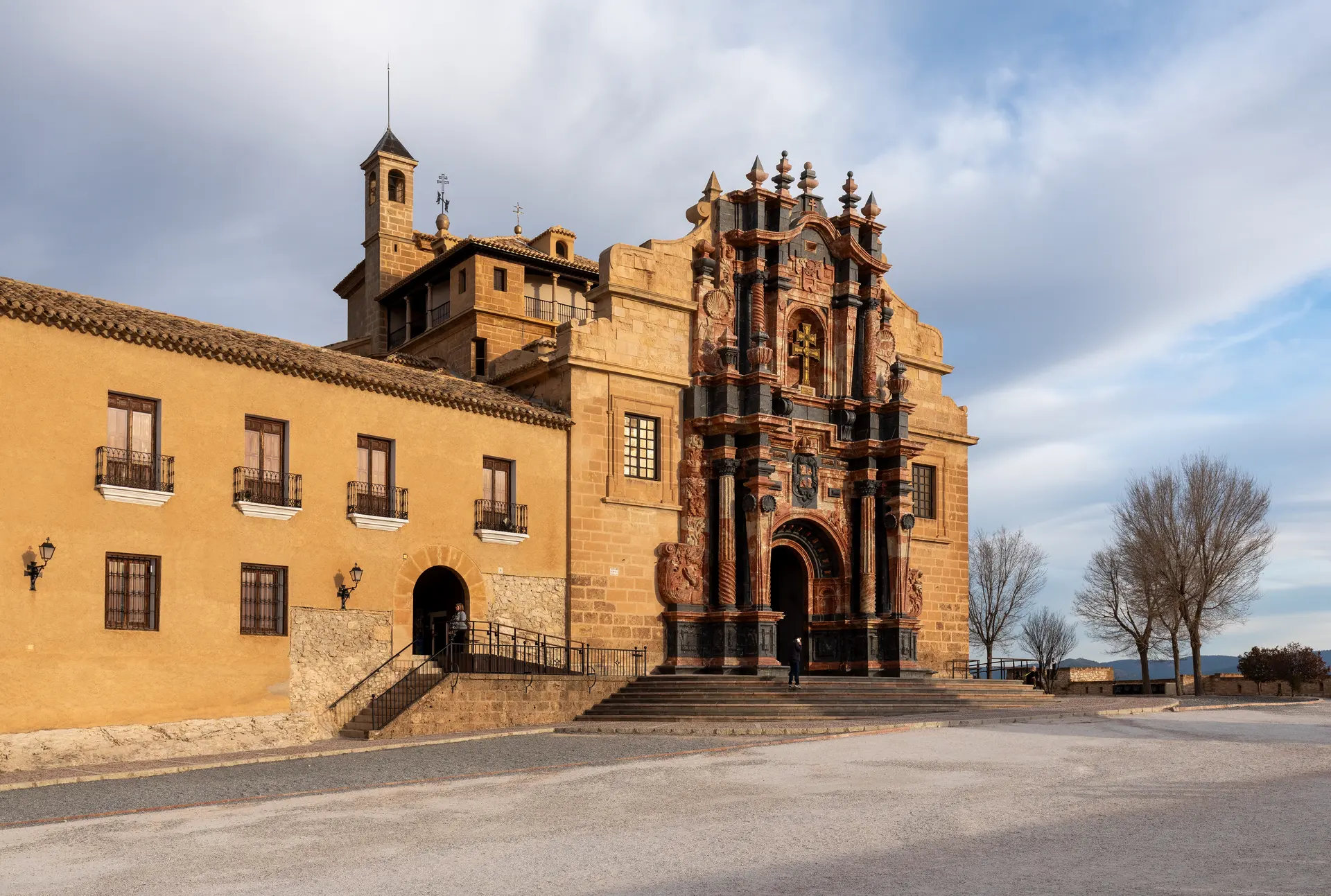


Share a photo
Help visitors recognize Santuario Virgen de la Esperanza. Every submission is reviewed before publication.