Red Hands Cave
Dozens of hands pressed into ochre, spanning centuries
Understand sacred places, explore living traditions, and learn how to engage respectfully with Pilgrim Map.
Access has not been verified. Check current local guidance before planning a visit.
Glenbrook / Blue Mountains, New South Wales, New South Wales, Australia
Read the sources
Visit essentials
A quick read before you go
- Duration
- The 8 km return/loop walk from the Glenbrook causeway car park takes roughly two and a half to…
- Access
- Located in the Blue Labyrinth area of Blue Mountains National Park, near Glenbrook, NSW.
Overview
An unsealed trail deep in the Blue Labyrinth section of Blue Mountains National Park reaches Red Hands Cave, a sandstone overhang bearing one of the Sydney region's more accessible and evocative Aboriginal rock art sites. Its dozens of ochre hand stencils were made by mixing ochre with water and blowing pigment over a hand pressed flat against rock. Estimated at five hundred to sixteen hundred years old, they suggest returns and additions across many generations rather than a single marking.
Darug and Gundungurra people are recognized as traditional custodians of the Country containing the cave, within a broader Blue Mountains landscape also connected to Wiradjuri, Darkinjung, Wanaruah and Dharawal peoples. The cave lies in the Greater Blue Mountains World Heritage Area, inscribed by UNESCO in 2000 for geology and biodiversity rather than Aboriginal cultural significance. Its meaning to custodians therefore remains distinct from the heritage criteria.
For visitors, the shelter is unusually direct: no interpretive theory is required to read a hand pressed against stone as an assertion of presence.
Why this place is sacred
Red Hands Cave does not announce its significance through a legible narrative the way some rock art sites do; there is no widely published, traditional-owner-sourced account of a specific Dreaming story tied to this exact shelter in the material available for this account. What it offers instead is texture: adult hands and children's hands, layered in overlapping washes of red, yellow, and white ochre, evidence of a place returned to across centuries rather than visited once.
That repetition is itself a kind of testimony — a rock face doesn't accumulate hand stencils by accident, and the layering visible today suggests something closer to ongoing practice than isolated ceremony.
Some general travel and community writing describes the shelter as connected to ancestral spirits or a Creator figure, and separately as a site once used for the initiation of young people, but these claims appear only in non-official sources and are not confirmed by an official or traditional-owner statement specific to this location; this account holds them as unverified rather than repeating them as established fact.
What can be said with more confidence is architectural and sensory: the shelter's overhang creates a sheltered, framed viewing space, and the stencils' fading, mineral colors carry a texture unlike anything produced with modern materials.
The hand stencils appear to have functioned as markers of presence, identity, and connection to Country, made by generations of Darug and Gundungurra people pressing their hands to the rock and blowing ochre pigment across them — a practice documented widely across the Blue Mountains region.
Dating places the stencils at roughly 500 to 1,600 years before present. European settlers encountered the site in 1913, and Blue Mountains Shire Council installed protective fencing in the 1930s to guard the art from touch and vandalism. The surrounding area was inscribed as part of the Greater Blue Mountains World Heritage Area by UNESCO in 2000, on the basis of its geology and biodiversity rather than its Aboriginal heritage.
Experience and orientation
Two approaches lead to Red Hands Cave, and the choice between them shapes the character of the visit. The longer route, an 8 km loop beginning at the Glenbrook causeway car park, takes roughly two and a half to three hours and moves through the wider Blue Labyrinth bushland before arriving at the shelter — arriving tired and having earned some sense of remove from the everyday.
The shorter option, a 1 km return walk from a dedicated car park reached via a 13 km unsealed drive past the main park entrance, gets visitors to the same place with a fraction of the walking. Either way, the cave itself is a modest sandstone overhang, protective fencing keeping visitors at a respectful distance from the art panel.
Visitors consistently describe being struck less by scale than by density and variation — the sheer number of stencils, the presence of children's hands among the adult ones, and the faded, mineral palette of red, yellow, and white ochre built up in overlapping layers. The wildflower displays along the track in August and September are frequently mentioned as a bonus rather than the point of the visit.
Choose the short walk if time or fitness is limited; choose the 8 km loop if the walk itself matters to the visit. Either way, bring water and sun protection, and expect no shade at the shelter itself — the fencing means viewing happens from a short distance rather than inside the overhang.
Context and lineage
General travel and community sources describe Darug oral tradition connecting the cave to ancestral spirits or a Creator figure, and separately describe historical use of the shelter in contexts related to the initiation of young people. Neither claim was located in an official NSW National Parks source or a traditional-owner statement specific to this site, so this account records them as reported but unverified rather than as confirmed tradition.
NSW National Parks and Wildlife Service manages the site for heritage protection and public visitation; no confirmed joint-management or formal co-governance agreement specific to Red Hands Cave was located, distinguishing its governance model from more heavily restricted sites like Mutawintji.
Darug (Dharug) people
traditional custodians
Recognized by NSW National Parks as traditional custodians of the northern and eastern Blue Mountains Country encompassing Red Hands Cave, maintaining ongoing spiritual and cultural connection to this Ngurra (Country).
Gundungurra people
traditional custodians
Recognized as traditional custodians of the southern and western Blue Mountains, including areas near Glenbrook, maintaining living cultural and spiritual ties to the region alongside Darug people.
Traditions and practice
Some non-official sources describe the shelter as historically used in ceremonial or initiation contexts, though this is not confirmed in official NPWS or traditional-owner materials reviewed and should be treated as an unverified secondary claim rather than established practice.
No current, publicly documented ceremonial practice at the site was identified. NSW National Parks and Wildlife Service manages the site for heritage protection and public visitation, in consultation with Aboriginal communities connected to the broader Blue Mountains region.
Approach the walk itself as the practice: move at an unhurried pace, arrive at the shelter with attention rather than expectation, and spend longer looking at the stencils than most visitors do before turning back.
Darug (Dharug) cultural tradition
ActiveRed Hands Cave lies within Darug Country in the northern and eastern Blue Mountains; the Darug people are traditional custodians who maintain ongoing spiritual and cultural connection to this Ngurra (Country).
Historical rock art production through ochre hand stencils; some non-official sources describe historical use of the shelter in ceremonial or rite-of-passage contexts, though this is not confirmed by an official or traditional-owner primary source.
Gundungurra cultural tradition
ActiveThe southern and western Blue Mountains, including areas near Glenbrook, fall within Gundungurra Country; Gundungurra people maintain living cultural and spiritual ties to the region.
Historical rock art production and shared custodianship of Blue Mountains heritage sites alongside Darug people.
Perspectives and open questions
Red Hands Cave is read primarily through archaeological dating and Aboriginal custodianship, with a smaller body of unverified community writing offering additional but uncorroborated interpretive claims.
Scholarly perspective
Archaeologists and heritage bodies date the hand stencils to roughly 500 to 1,600 years before present and interpret the layered stencil technique — ochre and water blown over a hand pressed to the rock — as a well-documented Aboriginal rock art practice found across the Blue Mountains region, generally read as markers of presence, identity, and connection to Country rather than purely decorative marks.
Living and traditional perspectives
Darug and Gundungurra people are recognized by NSW National Parks as traditional custodians of the Country encompassing Red Hands Cave. Specific first-person traditional-owner narrative content about this exact site was not located in the sources reviewed, which is treated here as a research gap rather than evidence of an absent tradition.
Alternative interpretations
General travel and community writing sometimes describes the site in terms of ancestral spirits or a Creator-figure narrative, and separately links it to youth initiation practices; these accounts are not sourced to an official traditional-owner statement and are treated here as unverified secondary material rather than confirmed tradition.
Open questions
The precise ceremonial functions and full cultural meaning of the specific stencil arrangement at this shelter are not fully detailed in publicly available official sources, leaving open questions about the exact historical use of the site beyond its role as a rock art gallery.
Plan your visit
Access and arrival
Located in the Blue Labyrinth area of Blue Mountains National Park, near Glenbrook, NSW. No wheelchair access is available on either route. An $8 per-vehicle daily park entry fee applies at the Bruce Road entrance; gate hours vary seasonally, running 8:30am to 7pm October through April and 8:30am to 6pm the rest of the year.
Glenbrook and the wider Blue Mountains townships (including Katoomba and Springwood) offer a full range of accommodation within a short drive of the trailheads.
Respectful visit
No specific dress code applies; standard bushwalking attire — sturdy shoes and sun protection — is recommended, particularly for the longer 8 km loop option.
Flash photography is prohibited at the art panel to protect the ochre pigment from degradation. Standard, non-flash photography of the publicly displayed art appears permitted under official guidance, though visitors should remain mindful this is a living cultural site rather than a neutral backdrop.
No offering practice is documented or invited at this site.
Do not touch the rock art. Dogs are not permitted on the walking track. A vehicle entry fee applies at the Bruce Road park entrance. At least one NPWS alert regarding closed track areas was noted at the time of research, so visitors should check current alerts before travel.
Do not touch the rock art under any circumstance, and do not use flash photography near the panel — both measures protect ochre pigment that has already survived many centuries and would degrade quickly under repeated contact or intense light.
Location
Map loads as you approach this section.
Pilgrim reflections
A portrait of encounter, not a score
Pilgrims describe what they felt, how present they could become, and whether the place would shape a journey. There are no stars and no ranking of traditions.
No reviewed reflections yet
The first pilgrims can help describe the character of being here.
Share a reflection
Available after an account-backed “Been there.” Every reflection is reviewed before publication.
Nearby sacred places
Explore other sacred places in the region. Proximity does not establish access or travel time; check each place’s guidance.

Ku-ring-gai Chase Aboriginal Heritage Walk
Sydney / Ku-ring-gai Chase, New South Wales, New South Wales, Australia
57.0 km away
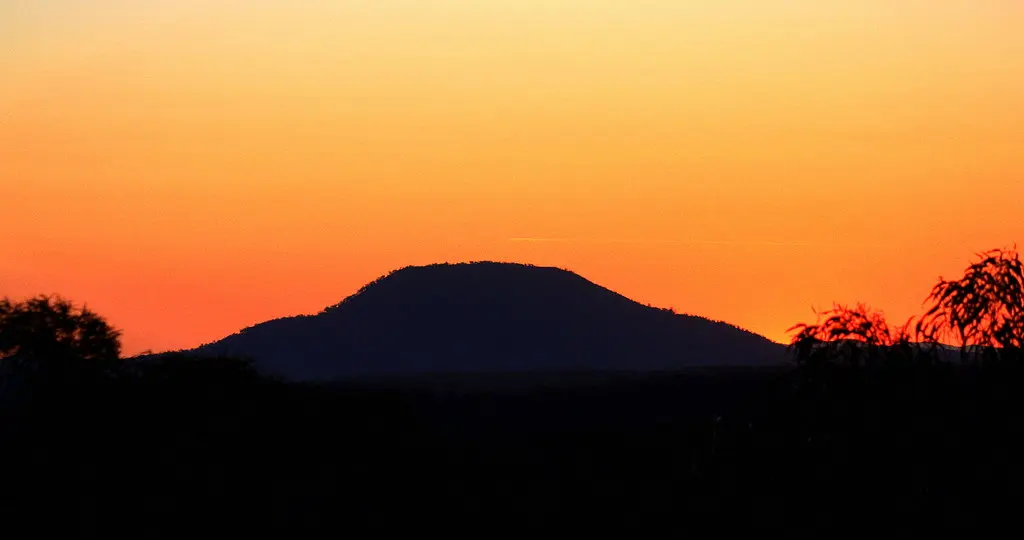
Mount Yengo
Wollombi / Yengo National Park, New South Wales, New South Wales, Australia
103.0 km away
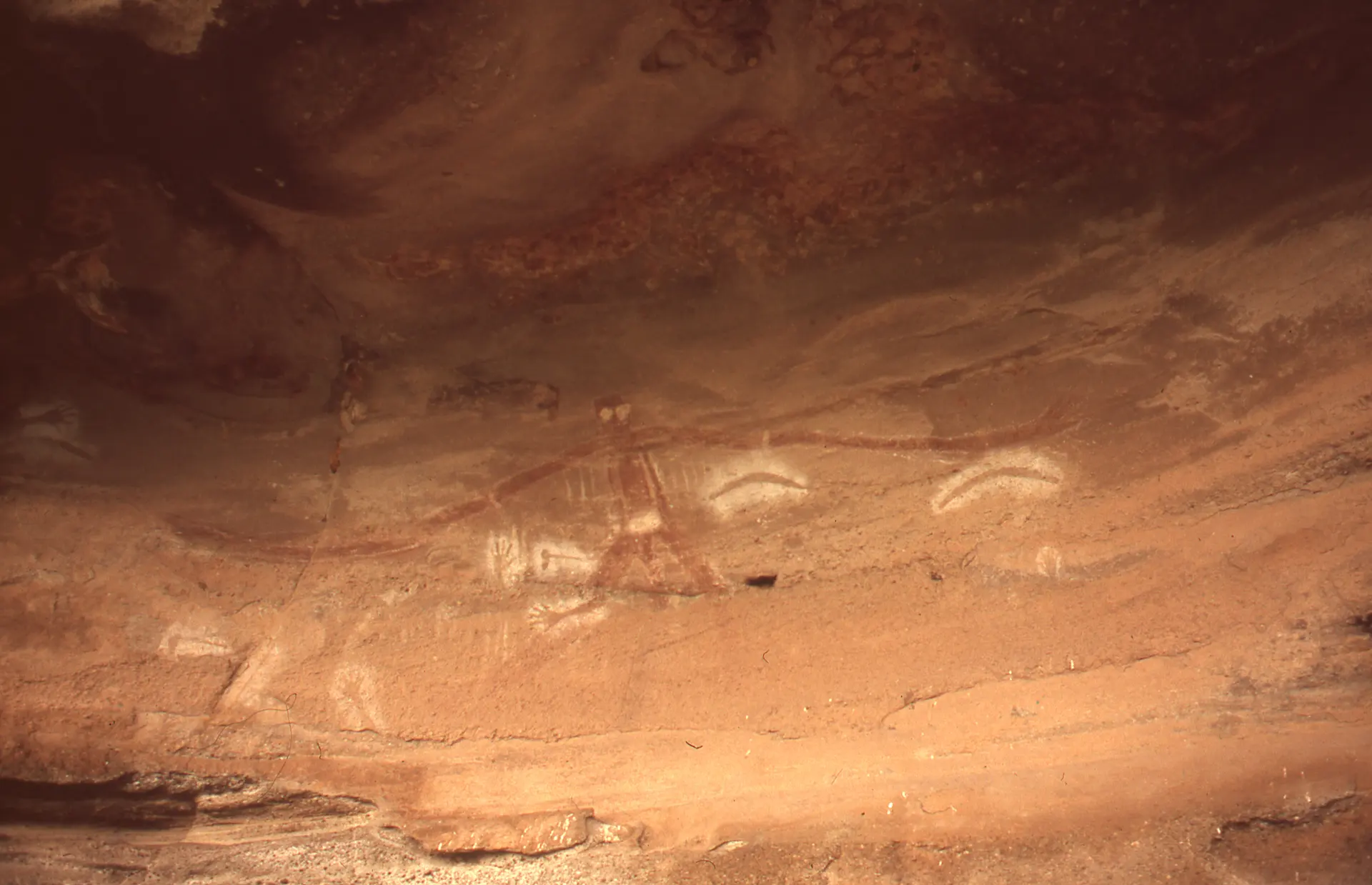
Baiame Cave
Milbrodale / Singleton, New South Wales, New South Wales, Australia
132.3 km away
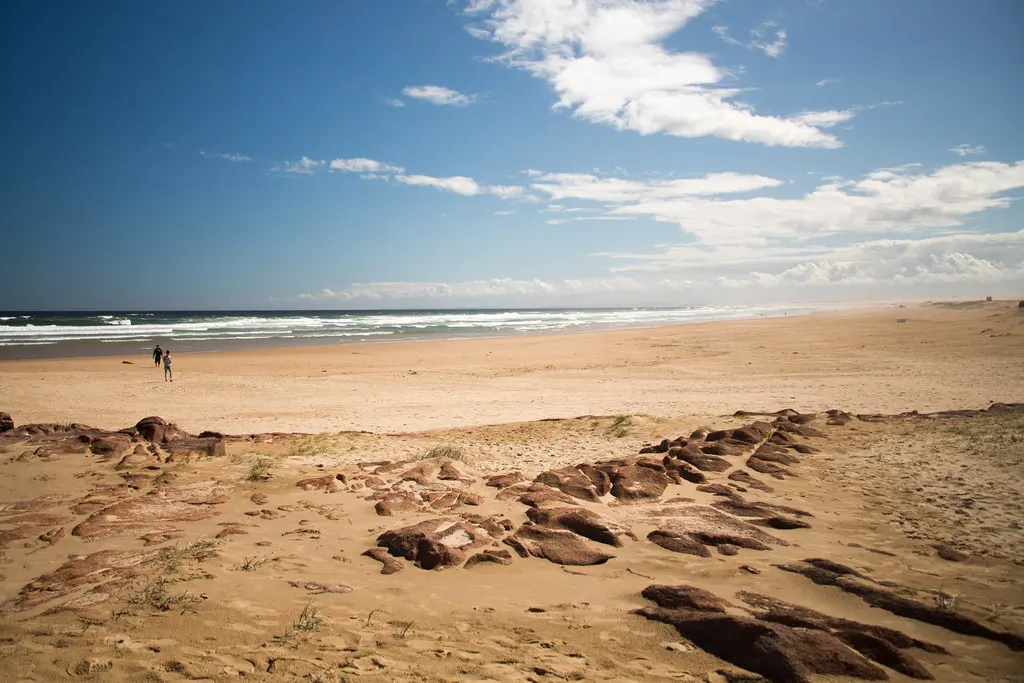
Worimi Conservation Lands
Nelson Bay, New South Wales, Australia
182.5 km away
References
Sources consulted for this page. Source categories describe the publication, not a guarantee that every claim is verified. Traditional accounts and outside interpretations may differ.
- 01Red Hands Cave | NSW National Parks — NSW National Parks and Wildlife ServiceofficialOfficial park authority page; visitor etiquette (no touching art, no flash photography), access, parking fee, gate hours.
- 02Red Hands Cave | Learn more | NSW National Parks — NSW National Parks and Wildlife ServiceofficialNames Country as Darug, Gundungurra, Wiradjuri, Darkinjung, Wanaruah and Dharawal peoples; notes Greater Blue Mountains World Heritage listing (UNESCO 2000).
- 03Red Hands Cave walking track - Blue Mountains National Park | NSW National Parks — NSW National Parks and Wildlife ServiceofficialPractical access details: 8km loop from Glenbrook causeway, or 1km return from Red Hands carpark via unsealed trail; no wheelchair access; dogs not permitted.
- 04Red Hands CaveacademicGeneral encyclopedic overview: dating (500-1,600 years BP), European encounter in 1913, 1930s protective fencing installed by Blue Mountains Shire Council.
- 05Red Hands Cave | NSW Holidays & Accommodation, Things to Do, Attractions and Events — Destination NSWSource contextState tourism body page; general visitor-facing description.
- 06Blue Mountains National Park – Accommodation, things to do & more | Visit NSW — Destination NSWSource contextRegional overview naming Darug and Gundungurra as traditional custodians of Blue Mountains Country (Ngurra).
- 07Darug Custodian Aboriginal Corporation — Darug Custodian Aboriginal CorporationSource contextOrganisation representing Darug custodianship and cultural protection in the region; no page found with a statement specific to Red Hands Cave, but confirms the corporation as a live traditional-owner body for this Country.
- 08We Represent the Will of the Gundungurra - Home Page — Gundungurra Tribal Council / community organisationSource contextGundungurra community representative body for the southern/western Blue Mountains; general confirmation of active traditional-owner presence, no site-specific statement located.
- 09Red Hands Cave in Glenbrook | Hiking the WorldSource contextTravel blog; descriptive detail on stencil technique and colours, approx. hand-stencil count (~70), left/right/children's hands.
- 10Visit these 4 Remarkable Blue Mountains Aboriginal Sites to Discover Ancient Indigenous Culture - Blue Mountains MumsSource contextFamily travel blog; supplementary description of site and access, describes cave functioning historically as a ceremonial shelter and site associated with initiation of young people; not independently corroborated by an official or traditional-owner source.
- 11Red Hands Cave Walking Track, New South Wales, Australia - Reviews, Map | AllTrailsSource contextCrowd-sourced trail info; used only for corroborating practical trail conditions.
Share a photo
Help visitors recognize Red Hands Cave. Every submission is reviewed before publication.