Baiame Cave
A five-metre painted creator figure above Bulga Creek, held by Wonnarua law
Understand sacred places, explore living traditions, and learn how to engage respectfully with Pilgrim Map.
Access has not been verified. Check current local guidance before planning a visit.
Milbrodale / Singleton, New South Wales, New South Wales, Australia
Read the sources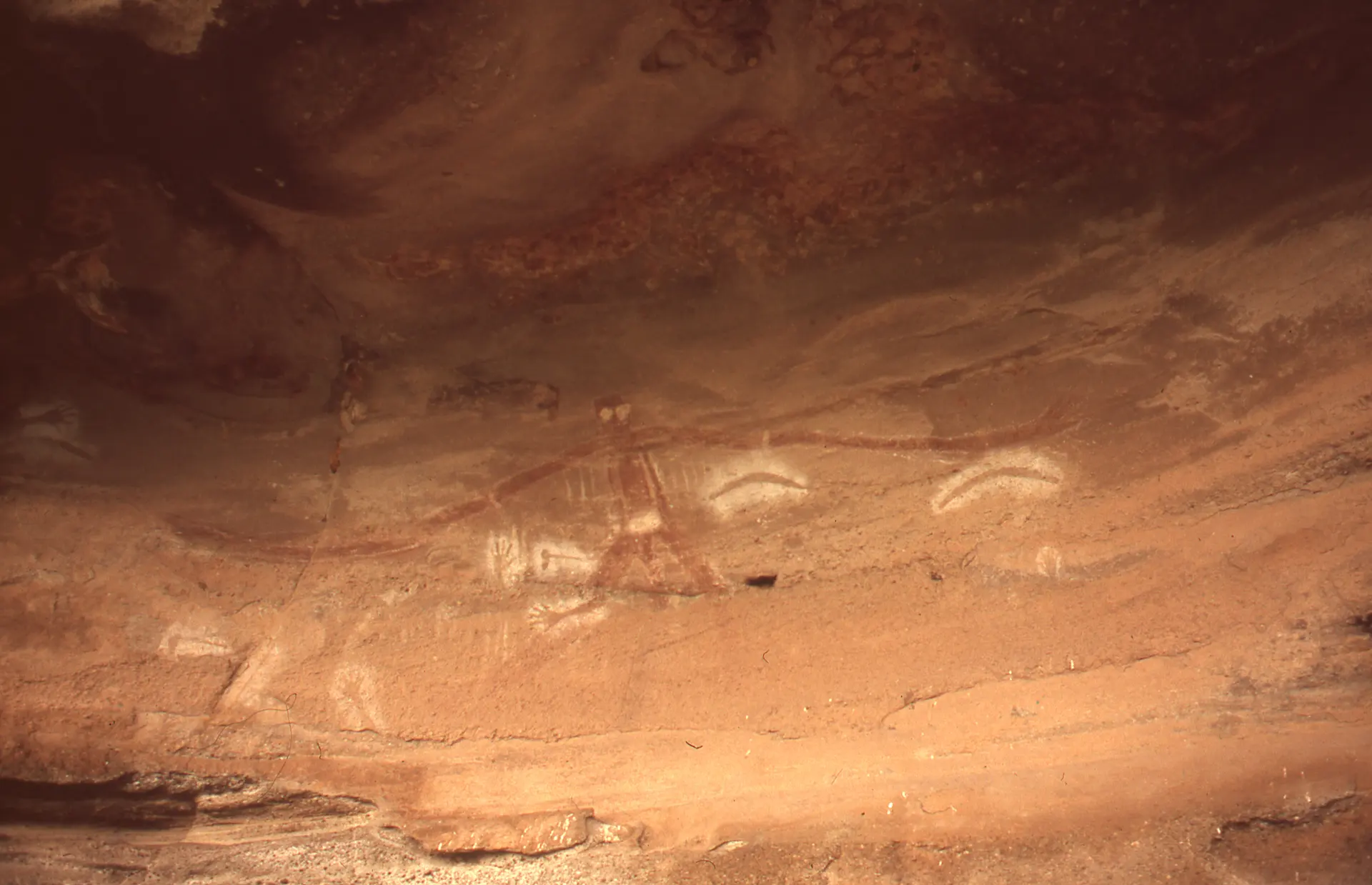
Visit essentials
A quick read before you go
- Duration
- A short visit; the track from the road to the viewing platform is flat and easy, though the…
- Access
- Located on private property approximately 20 km southwest of Singleton and 1 km southwest of…
Overview
On privately owned land near Milbrodale, Baiame Cave stands in a sandstone escarpment 24 metres above Bulga Creek at the centre of a Hunter Valley sacred landscape recognised beyond its boundaries. Its shelter holds the only known large-scale painted Baiame, whose outstretched arms span roughly five metres. Multiple South-East Australian Aboriginal nations understand him as Sky Father and supreme law-giver; according to Traditional Owner Victor Perry, his Wonnarua name is Goign.
Surveyor R.H. Mathews formally documented the site in 1892 and presented it to the Royal Society of New South Wales the following year, beginning his Aboriginal-anthropology career. The NSW State Heritage Register inscribed the cave in 2015 for its rarity and continuing Wonnarua cultural role. A 1993 wooden stairway and steel-mesh platform allow viewing without touching the rock.
Wonnarua tradition says Baiame descended from the sky, shaped regional rivers and mountains, gave law and custom, and returned above Mount Yengo within a wider Hunter Valley sacred network. Some knowledge at Baiame sites, including gender-restricted access, was traditionally reserved under law; this account acknowledges the restriction without describing what it withheld.
Why this place is sacred
Baiame Cave is unusual among sites associated with this creator figure in being a large-scale painting rather than an engraving, and unusual again in the scale of what is painted: a single figure with arms outstretched across roughly five metres of rock face, in a shelter positioned 24 metres above the creek below with sweeping views toward Singleton.
Heritage assessors consistently cite this combination — rarity of form, scale, and setting — as central to the site's aesthetic and spiritual weight, and it does not stand alone.
The cave is one node in a landscape that includes Mount Yengo, where Baiame is said to have ascended back into the sky, along with further rock art across Yengo and Wollemi National Parks that carries the same creation narrative forward across a much wider terrain than any single shelter could hold.
What gives the site its particular charge for a visitor from outside this tradition is the encounter with scale and restraint at once: a figure large enough to dominate the rock face, described by Wonnarua tradition as all-seeing and holding all knowledge, paired with a public account that is deliberately partial.
The full Dreaming narrative tied specifically to this cave is not set out in available sources, and this account does not attempt to fill that gap — the incompleteness is itself part of what the site asks a visitor to sit with.
The shelter was painted by Aboriginal artists of the Wonnarua people, or ancestral groups in the region, to depict the creator being recognized in Wonnarua language as Goign and known regionally as Baiame — understood as the figure who shaped the land, gave law and custom, and returned to the sky above Mount Yengo.
Surveyor R.H. Mathews documented the cave in 1892 and presented his findings in 1893, launching his career in Aboriginal anthropology; the site was listed on the NSW State Heritage Register in 2015, and a stairway and steel-mesh viewing platform built by the National Parks and Wildlife Service in 1993 now structure how visitors encounter the painting. The cave remains on privately owned land, with the Wonnarua Nation Aboriginal Corporation continuing cultural heritage protection work connected to it today.
Experience and orientation
Reaching Baiame Cave means leaving sealed roads behind: the approach follows Welshs Road off Milbrodale Road, near its junction with Putty Road, close to Milbrodale Public School, and crosses a broken river crossing that can be difficult for anyone with mobility concerns.
Once across, the track to the viewing platform is flat and easy, a short walk rather than a hike, ending at a wooden stairway and steel-mesh platform built in 1993 that holds visitors back from the rock face itself.
From the platform, the painted figure is immediately legible even at a distance — white-circle eyes set into an ochre form with arms stretched wide across the sandstone, the composition large enough that its scale registers before its detail does. Visitors describe a kind of quiet awe at standing before something this old and this deliberately unexplained: a figure whose full story is not on offer here, only its presence, and the valley opening out below toward Singleton.
The remoteness of the approach — unsealed roads, a river crossing, private land — asks something of a visitor before the site gives anything back, and that asking is part of what visitors report feeling once they arrive.
Treat this as a viewing rather than a wandering site: stay on the platform, take your time with the figure rather than photographing quickly and moving on, and arrive prepared for an unsealed, rural approach that may not suit all vehicles or all visitors.
Context and lineage
According to Wonnarua and neighboring Aboriginal traditions, Baiame descended from the sky to the land, shaped its rivers, mountains, and forests, and gave people their laws, traditions, songs, and culture before returning to the sky, traditionally said to be at Mount Yengo.
This account does not reproduce further narrative or ceremonial detail associated with Baiame, out of respect for cultural restrictions on sacred knowledge connected to this figure — restrictions that traditionally included limits on who could view his image and speak his name in public.
Custodianship rests with the Wonnarua (Wanaruah) people, whose creation story, country, and Eagle totem the cave is directly linked to; the Wonnarua Nation Aboriginal Corporation continues cultural heritage protection work connected to the site today, including heritage impact assessment for nearby development.
Baiame
Creator being / Sky Father
Recognized across the Wiradjuri, Kamilaroi, Darkinjung, Awabakal, Guringay, Eora, and Wonnarua nations as the creator and supreme law-giver; in Wonnarua language, according to Traditional Owner Victor Perry, the figure is known as Goign, with 'Baiame' used in other regional languages. Traditionally, knowledge of his image and name carried restrictions this account does not describe.
Victor Perry
Wonnarua Traditional Owner
Identified the figure at the cave using the Wonnarua-language term Goign, describing the creator being as all-seeing and possessing all knowledge, and clarifying that 'Baiame' is a name drawn from other regional Aboriginal languages rather than the Wonnarua term itself.
R.H. Mathews
Surveyor and anthropologist
First formally documented the cave in 1892 and presented his findings to the Royal Society of New South Wales in 1893, a paper that marked the beginning of his career studying Aboriginal culture.
Traditions and practice
Ethnographic sources on Baiame sites more broadly describe association with male initiation ceremonies (bora) and gender-specific restricted access; this account does not describe the content of that restricted tradition, and available sources do not confirm whether such ceremony continues at this specific cave today.
The Wonnarua Nation Aboriginal Corporation carries out ongoing cultural heritage protection work connected to the cave, including Aboriginal Heritage Impact Permit assessment for development near the site, and broader cultural reclamation and boundary-mapping projects across Wonnarua country.
A visitor without ceremonial standing engages appropriately by viewing the painted figure from the constructed platform without seeking further access, and, where possible, learning about the site's significance through Wonnarua Nation Aboriginal Corporation's own published material rather than speculative secondary accounts.
Wonnarua (Wanaruah) Aboriginal tradition
ActiveBaiame Cave is linked to the Wonnarua people's creation story, country, and Eagle totem; the NSW State Heritage Register describes it as enabling the Wonnarua to maintain traditional practices and customs, share oral histories and lore, and interconnect with other cultural sites across the Hunter Valley and NSW.
Oral history transmission, cultural education, and continued custodianship through the Wonnarua Nation Aboriginal Corporation; historically connected to male initiation ceremony traditions at Baiame-associated sites more broadly, though this is not confirmed as ongoing at this specific cave.
Pan-regional South-East Australian Aboriginal Dreaming (Baiame/Goign creator-being tradition)
ActiveBaiame is recognized as creator and Sky Father across the Wiradjuri, Kamilaroi, Darkinjung, Awabakal, Guringay, and Eora nations in addition to the Wonnarua; the cave is one node within a much larger sacred landscape network reaching to Mount Yengo across Yengo and Wollemi National Parks.
Historically embedded in ceremony, song, and law-giving traditions across the region; contemporary practice includes continued recognition of Baiame-linked landscape features, including Mount Yengo, as sacred.
Perspectives and open questions
Baiame Cave is read through heritage-scientific documentation, Wonnarua traditional authority, and a body of popular comparative-mythology framing that sits outside both — three lenses that agree on the site's significance while differing sharply on how much they claim to know.
Scholarly perspective
Heritage assessors and archaeologists, including the NSW Heritage Register, GML Heritage's conservation planning work, and the Australian Museum's 1966 excavation of nearby shelters, treat the cave as a rare and well-preserved example of large-scale figurative rock painting, significant both for the art itself and for its role in launching R.H. Mathews' anthropological career with his first public paper in 1893.
Precise dating of the painting remains unsettled: regional occupation evidence is cited in a range of roughly 1,400 to 2,000-plus years, while some secondary sources put the pigment's age at approximately 3,000 years, without a single authoritative peer-reviewed study directly confirming either figure.
Living and traditional perspectives
Wonnarua Traditional Owners, including Victor Perry, identify the figure using the Wonnarua-language term Goign — noting that 'Baiame' derives from other regional Aboriginal languages — and describe the being as all-seeing and holding all knowledge, tied to the Wonnarua creation story, country, and Eagle totem. The Wonnarua Nation Aboriginal Corporation treats the cave as a priority cultural heritage site, continuing protection work without disclosing restricted narrative content, consistent with the site's traditional status.
Alternative interpretations
Some independent travel and blog sources frame Baiame in broad comparative-mythology terms, placing the figure alongside other world 'sky father' or creator-god archetypes. These framings are not traditional-owner-endorsed and should be read as popular interpretation situated outside, rather than within, Wonnarua cultural authority.
Open questions
The precise age of the painting, the full content of the Dreaming narrative specific to this cave as distinct from the broader Baiame tradition, and the current status of any ceremonial use of the site remain incompletely documented in publicly available sources. Some of what remains unknown to outside researchers is understood to be intentionally undisclosed, held under Wonnarua law as restricted knowledge rather than simply unrecorded.
Plan your visit
Access and arrival
Located on private property approximately 20 km southwest of Singleton and 1 km southwest of Milbrodale, NSW, just north of the Yengo National Park boundary, reached via Welshs Road off Milbrodale Road near its junction with Putty Road. No formal government permit scheme is documented, but visitors should notify the landowner in advance and are encouraged to engage with Wonnarua Nation Aboriginal Corporation for cultural context.
Mobile phone signal in this rural part of the Hunter Valley should not be assumed reliable; Milbrodale and Singleton are the nearest points with dependable connectivity and services.
No specific accommodation information was available at time of writing; Singleton, the nearest regional town, is the practical base for visiting, and current lodging options should be checked with Singleton Council or Hunter Valley regional tourism resources.
Respectful visit
No specific dress code is documented; practical clothing suited to an unsealed rural approach and a river crossing is appropriate.
No explicit photography restriction or permission statement is documented, but given the site's cultural sensitivity and its restricted history, visitors should exercise caution and check current guidance from the Wonnarua Nation Aboriginal Corporation or the landowner before photographing or sharing images of the figure.
No offerings tradition is documented for this site.
The site is on private property; the landowner has stated visitors will not be turned away but should notify them in advance and be aware the property closes for a few weekends each year for safety reasons. Traditionally, women were not permitted to view depictions of Baiame or visit sites where he is painted, and it was traditionally forbidden to speak his name aloud in public.
No source consulted confirms an actively enforced gender-based restriction for present-day tourist visits, but current Wonnarua guidance should be treated as the deciding authority on appropriate conduct, and this account does not describe what the traditional restriction withheld.
This account deliberately does not describe restricted ceremonial content associated with Baiame or Goign; such knowledge is held under Wonnarua law and traditionally reserved, in the case of depictions of this figure, from women. Visitors should not seek out or ask local contacts to disclose this content.
Location
Map loads as you approach this section.
Pilgrim reflections
A portrait of encounter, not a score
Pilgrims describe what they felt, how present they could become, and whether the place would shape a journey. There are no stars and no ranking of traditions.
No reviewed reflections yet
The first pilgrims can help describe the character of being here.
Share a reflection
Available after an account-backed “Been there.” Every reflection is reviewed before publication.
Nearby sacred places
Explore other sacred places in the region. Proximity does not establish access or travel time; check each place’s guidance.
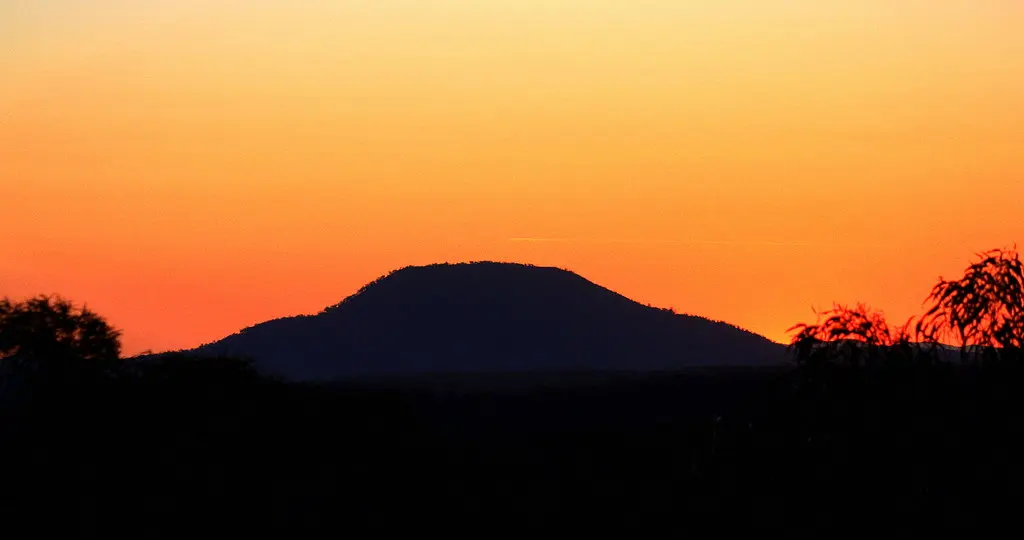
Mount Yengo
Wollombi / Yengo National Park, New South Wales, New South Wales, Australia
29.3 km away
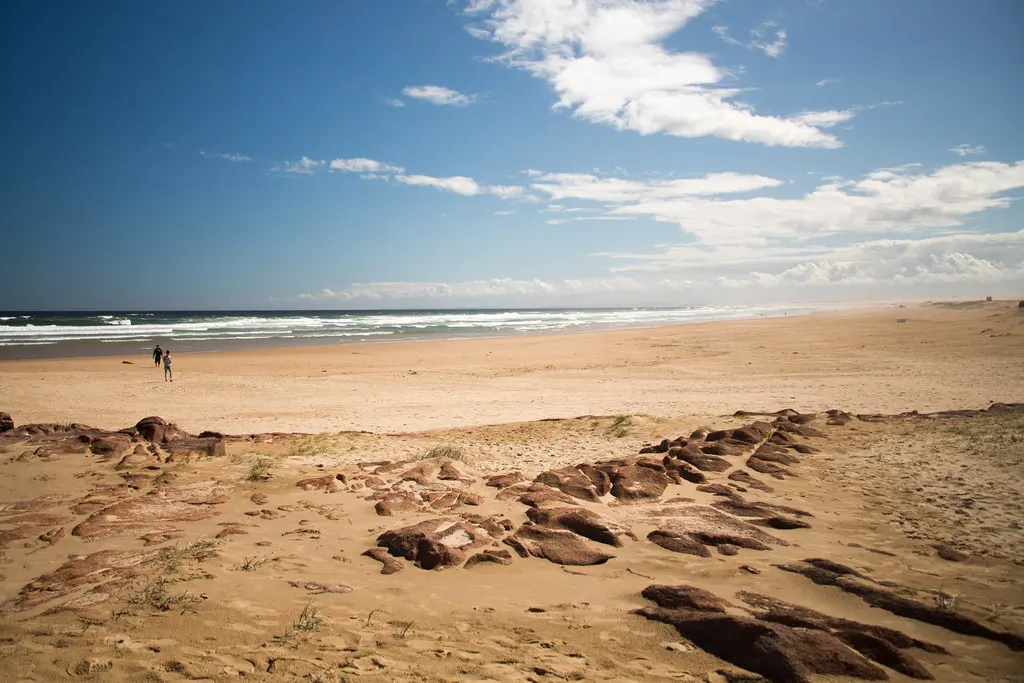
Worimi Conservation Lands
Nelson Bay, New South Wales, Australia
102.9 km away

Ku-ring-gai Chase Aboriginal Heritage Walk
Sydney / Ku-ring-gai Chase, New South Wales, New South Wales, Australia
114.1 km away

Red Hands Cave
Glenbrook / Blue Mountains, New South Wales, New South Wales, Australia
132.3 km away
References
Sources consulted for this page. Source categories describe the publication, not a guarantee that every claim is verified. Traditional accounts and outside interpretations may differ.
- 01Baiame Cave - NSW State Heritage Register listing (Item 1942 / ID 5061940) — NSW Department of Planning / Heritage NSWofficialPrimary government heritage record; statement of significance, physical description, heritage criteria assessment, condition notes. Listed 31 July 2015.
- 02Baiame's Cave and creation landscape, NSW, Australia (Conservation Management Plan / conference paper, ICBR Lisbon 2018) — GML Heritage (Tim Owen, principal)academicProfessional heritage conservation management plan; could only be partially accessed as readable text (PDF binary), so content captured via secondary summaries and citations in other sources rather than direct extraction.
- 03Culture & Heritage - Wonnarua Nation Aboriginal Corporation (WNAC) — Wonnarua Nation Aboriginal CorporationSource contextTraditional owner corporation's own site; confirms Baiame Cave is a heritage priority and describes AHIP protocols and cultural reclamation work, though does not detail Dreaming narrative content (appropriately, given cultural restriction).
- 04History of the Wanaruah Area — Wanaruah Local Aboriginal Land CouncilSource contextLocal Aboriginal Land Council historical account of the Wanaruah/Wonnarua area; traditional-owner-affiliated source.
- 05Baiame CaveacademicWell-referenced overview citing the NSW State Heritage Register listing and academic sources; good baseline for physical description and history.
- 06Baiame Cave - Singleton Council visitor page — Singleton Council (NSW local government)officialLocal government tourism page; page returned 403 on direct fetch attempt, information drawn from search-result snippets only.
- 07Owners of the property surrounding the Baiame Cave will not stop people visiting the important Aboriginal site — Newcastle HeraldSource contextRegional news article documenting 2014-era landowner/visitor access dispute; useful primary-adjacent account of practical access reality.
- 08Heritage listing for NSW Aboriginal cave — Australian GeographicSource contextNews coverage of the heritage nomination process, corroborates heritage listing timeline.
- 09BaiameacademicOverview of Baiame as pan-regional creator being; cites K. Langloh Parker's 19th-century ethnographic documentation and describes traditional restrictions on naming/depicting Baiame and gendered access to his sites.
- 10Modelling and Visualization of Aboriginal Rock Art in the Baiame CaveacademicAcademic paper referenced in search results (full text not directly fetched); indicates ongoing academic/technical documentation interest in the site.
- 11Risk and resilience: Baiame's Cave and creation landscape, NSW, Australia — GML Heritage / conference authorsacademicCompanion academic publication to the 2018 CMP; referenced but not directly fetched as full text.
- 12New Aboriginal art identified in Yengo and Wollemi national parks in bushfire surveys — Newcastle HeraldSource contextRegional news on the broader sacred landscape network connected to Baiame around Yengo/Wollemi; contextual, not site-specific.
- 13Baiame - The Maker of All Things — Country Life and Death (blog)Source contextPersonal blog; used only as corroborating secondary color on Mount Yengo / Baiame creation narrative, not as a primary factual anchor.
Share a photo
Help visitors recognize Baiame Cave. Every submission is reviewed before publication.