Worimi Conservation Lands
The largest moving coastal dunes in the Southern Hemisphere, owned by the Worimi people and holding their ancestors beneath the sand
Understand sacred places, explore living traditions, and learn how to engage respectfully with Pilgrim Map.
Access has not been verified. Check current local guidance before planning a visit.
Nelson Bay, New South Wales, Australia
Read the sources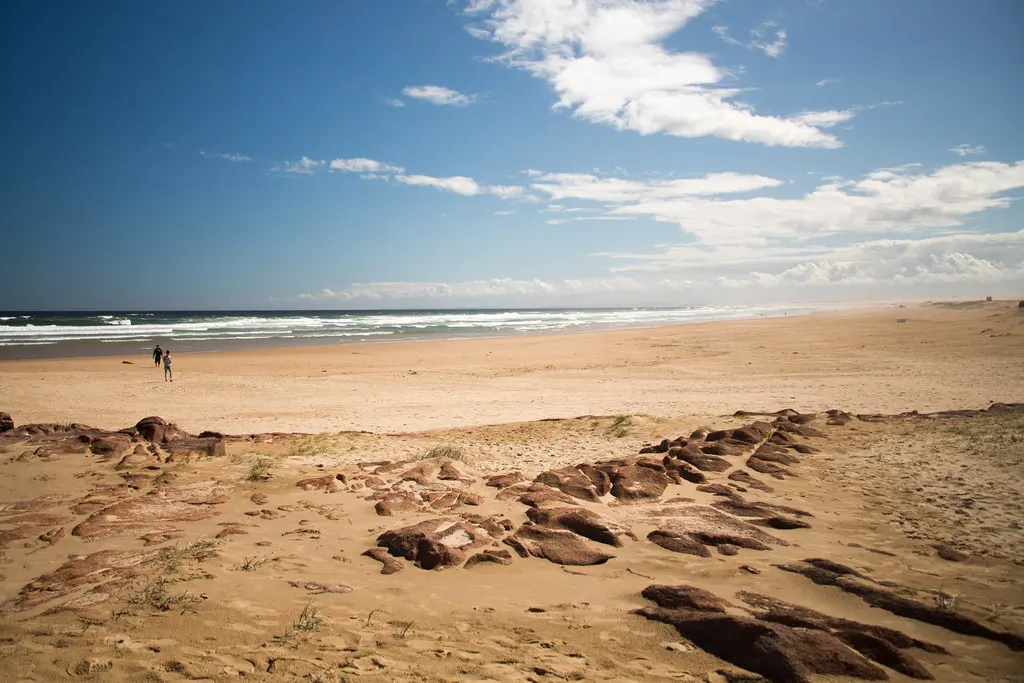
Image of Worimi Conservation Lands. Image source
Visit essentials
A quick read before you go
- Duration
- Half day to full day.
- Access
- Stockton Beach, near Port Stephens, NSW.
Overview
The Worimi Conservation Lands encompass 4,436 hectares at Stockton Bight, where shoreline dunes up to 30 metres high form a system visible from space. Wind and weather move the dunes, alternately exposing and burying pipi-shell middens, stone tool-making artifacts, bird and animal bones, and Worimi ancestral burials.
The Worimi are the Traditional Custodians of this Country. In February 2007, the Crown land was granted to the Worimi Local Aboriginal Land Council and leased back to the NSW Government as conservation reserves. Worimi ownership and joint state management express reconciliation through daily stewardship.
The Worimi's Maiangal clan used the dunes for centuries before European settlement. The middens are mounds capped with packed pipi shell that hold stone tools, fish and animal bones, and the residue of sustained habitation and meals shared across generations. Burial locations are protected and difficult to predict because moving dunes can reveal what was covered.
Sand Dune Adventures, owned and operated by the Worimi Local Aboriginal Land Council, offers cultural quad-bike tours presenting an Aboriginal perspective. A recreational outing becomes an encounter with Country: dunes shaped by ancestral spirits during the Dreaming and holding material evidence of ancestral lives.
Why this place is sacred
Sand dunes are among the most dynamic landscapes on Earth. At Stockton Bight, the dunes move continuously, and in their movement they perform an act of revelation and concealment that has no fixed state. A midden visible today may be buried by tomorrow's wind. A burial site covered for decades may be exposed by a storm. The landscape is not a stable container for cultural material but an active participant in determining what is seen and what remains hidden.
This dynamism gives the Worimi Conservation Lands a quality unlike any static sacred site. The cultural material is not in a museum case or behind a fence; it is in the sand, moving with the sand, emerging and disappearing according to forces that no one controls. Walking on the dunes, a visitor walks on a landscape that holds ancestors. This is not metaphorical. The burial sites are present.
Their locations are not always known because the dunes themselves decide what to show.
The Worimi ownership of the lands adds a layer of meaning. This is not Crown land with Aboriginal cultural associations. It is Aboriginal land, returned in 2007, co-managed with the state. The act of return acknowledged that the Worimi relationship to this Country was never broken — it was interrupted, and the interruption has been formally recognised as an injustice.
The dunes served the Maiangal clan of the Worimi as a place of habitation, food gathering (particularly pipi shellfish), tool-making, and ceremony. The middens represent sustained cultural use over centuries.
From Worimi Country to colonial dispossession to the 2007 return of the land to the Worimi Local Aboriginal Land Council. The joint management model represents a contemporary expression of custodianship.
Experience and orientation
The scale of Stockton Bight is the first thing the body registers — 32 kilometres of sand dunes stretching along the coast, some rising 30 metres above the beach. The sand is golden and fine, sculpted by wind into formations that change shape daily. The ocean lies on one side; behind the dunes, coastal forest and wetland extend inland.
Sand Dune Adventures, the Worimi-operated cultural tour, provides the context that transforms the landscape. On quad bikes, guides lead visitors across the dunes while sharing Worimi cultural knowledge — the Dreaming stories that explain the dunes' formation, the significance of the middens, the relationship between the Worimi people and this particular stretch of coast. Without this context, the dunes are spectacular scenery.
With it, they are Country — owned, known, and cared for by the people whose ancestors are part of the sand.
The middens, when visible, appear as mounds of packed shell — primarily pipi, with some mud whelk and cockle. They are not dramatic to look at, but knowing what they represent — meals shared over generations, lives lived on this sand — gives them a presence that exceeds their visual impact.
Book a Sand Dune Adventures cultural tour for the essential experience. If visiting independently, purchase a Beach Vehicle Permit and drive only in designated areas. Look for midden material but do not touch or disturb it. Walk on the dunes with the awareness that you are walking on Country.
Context and lineage
The Worimi maintain that the dunes were shaped by ancestral spirits during the Dreaming. Specific Dreaming narratives are held by the Worimi community.
The Worimi people maintain continuous custodianship. The 2007 land return formalised an authority that was never relinquished despite colonial dispossession.
Traditions and practice
The Maiangal clan used the dunes for habitation, food gathering, and ceremony. The middens are evidence of sustained cultural practice.
Sand Dune Adventures (Worimi-operated) cultural quad bike tours. Joint management with NSW National Parks. Ongoing cultural knowledge transmission.
Take a Sand Dune Adventures cultural tour for Aboriginal perspective. Walk the dunes with awareness of the cultural material within them. Observe the middens if visible but do not disturb.
Worimi
ActiveThe Worimi people are the Traditional Custodians and legal owners of the Stockton Bight landscape. The dunes hold extensive cultural heritage including middens, campsites, and burial sites. The Dreaming stories of the dunes' formation are maintained by the community.
Joint land management. Cultural tours through Sand Dune Adventures. Ongoing cultural connection to Country.
Perspectives and open questions
The Worimi Conservation Lands demonstrate what Aboriginal land return looks like in practice — a landscape owned by its Traditional Custodians, co-managed with the state, and open to visitors on terms that respect cultural values.
Scholarly perspective
The Stockton Bight dune system is one of the most significant coastal dune formations in Australia. Archaeological surveys have documented extensive cultural heritage throughout the dunes, including middens, campsites, and burial sites.
Living and traditional perspectives
For the Worimi people, these are not 'conservation lands' in the Western sense but Country — a living landscape shaped by ancestral spirits and containing the material evidence of continuous custodianship. The 2007 land return was an act of recognition, not a gift.
Alternative interpretations
The dynamic quality of the dunes — constantly moving, revealing and concealing — has been noted as a metaphor for the relationship between hidden and visible knowledge in Aboriginal culture.
Open questions
The full extent of cultural material within the dune system is unknown. The shifting sands constantly reveal and conceal sites, making comprehensive archaeological survey impossible.
Plan your visit
Access and arrival
Stockton Beach, near Port Stephens, NSW. Approximately 2.5 hours north of Sydney. Beach Vehicle Permit required (purchasable online). Sand Dune Adventures provides cultural tours.
Port Stephens and Newcastle offer extensive accommodation options.
Respectful visit
Beach/outdoor clothing. Sun protection essential.
Photography permitted.
None expected.
Beach Vehicle Permit required | Drive only in Recreational Vehicle Area | Do not disturb middens, artefacts, or cultural material | Removal of any artefact is prohibited (heavy fines) | Do not dig in or around midden sites
Beach Vehicle Permit required for driving on the beach. Drive only in designated areas. Do not disturb any cultural material.
Current practical details
Address
12B Teramby Rd, Nelson Bay NSW 2315, Australia
Phone
Hours
Hours, fees, and access can change — verify on the official source before you travel. Practical details last checked Jun 2026.
Location
Map loads as you approach this section.
Pilgrim reflections
A portrait of encounter, not a score
Pilgrims describe what they felt, how present they could become, and whether the place would shape a journey. There are no stars and no ranking of traditions.
No reviewed reflections yet
The first pilgrims can help describe the character of being here.
Share a reflection
Available after an account-backed “Been there.” Every reflection is reviewed before publication.
Nearby sacred places
Explore other sacred places in the region. Proximity does not establish access or travel time; check each place’s guidance.
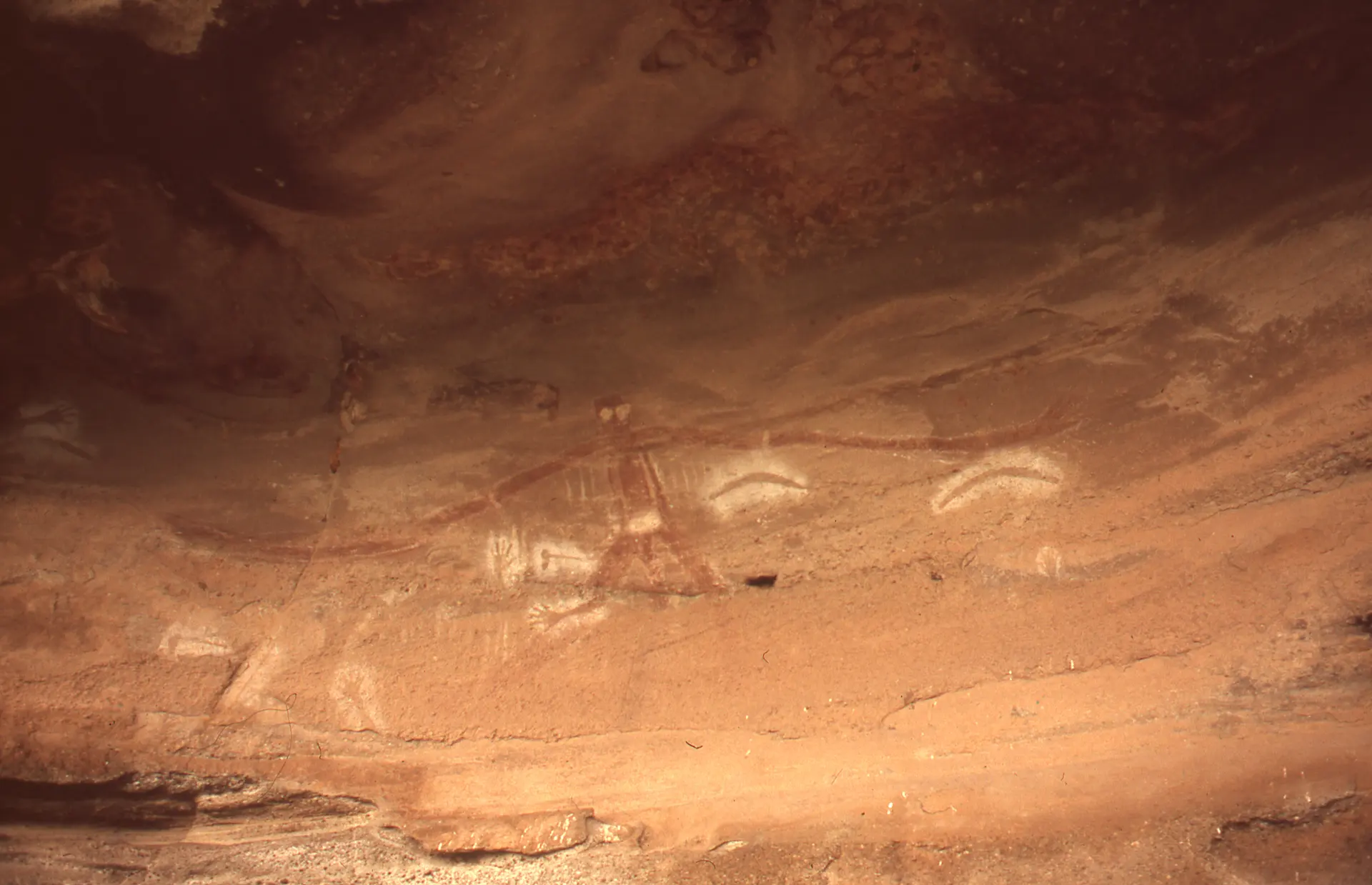
Baiame Cave
Milbrodale / Singleton, New South Wales, New South Wales, Australia
102.9 km away
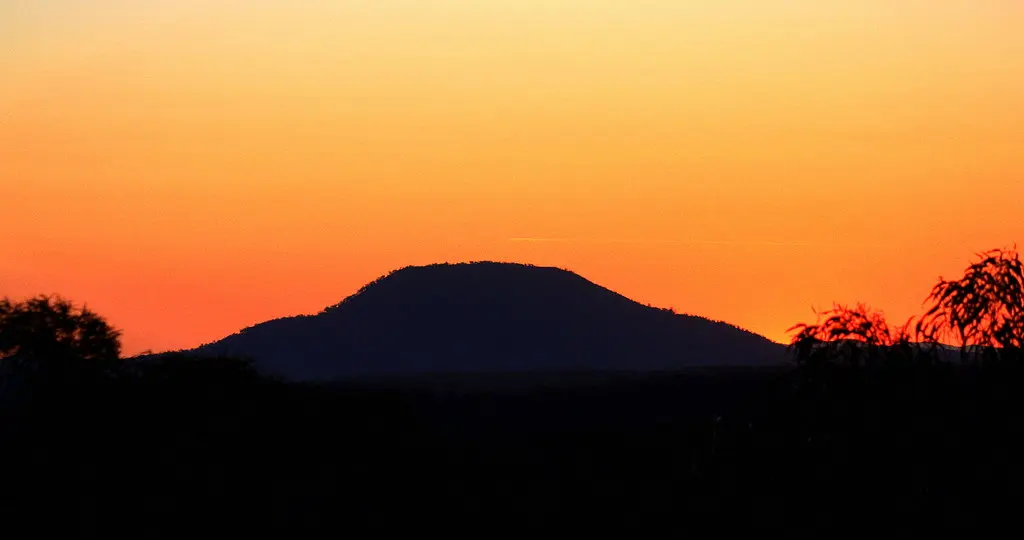
Mount Yengo
Wollombi / Yengo National Park, New South Wales, New South Wales, Australia
112.7 km away

Ku-ring-gai Chase Aboriginal Heritage Walk
Sydney / Ku-ring-gai Chase, New South Wales, New South Wales, Australia
133.3 km away

Red Hands Cave
Glenbrook / Blue Mountains, New South Wales, New South Wales, Australia
182.5 km away
References
Sources consulted for this page. Source categories describe the publication, not a guarantee that every claim is verified. Traditional accounts and outside interpretations may differ.
- 01Worimi Conservation Lands — Worimi Conservation LandsofficialOfficial Worimi-managed site
- 02Cultural Sites - Worimi Conservation Lands — Worimi Conservation LandsofficialCultural sites information
- 03Worimi National Park - NSW National Parks — NSW National ParksofficialOfficial park management
- 04Worimi conservation lands - Wikipedia — Wikipedia contributorsencyclopediaGeneral overview
- 05Worimi Conservation Lands - Visit NSW — Visit NSWSource contextTourism information
Share a photo
Help visitors recognize Worimi Conservation Lands. Every submission is reviewed before publication.