Ōyu Stone Circles
Japan's largest stone circles aligned to the summer solstice sunset, 4,000 years old
Understand sacred places, explore living traditions, and learn how to engage respectfully with Pilgrim Map.
Access has not been verified. Check current local guidance before planning a visit.
Kazuno, Akita Prefecture, Japan
Read the sources
Visit essentials
A quick read before you go
- Duration
- Allow 1-2 hours for a thorough visit including both stone circles and the museum.
- Access
- Located in Kazuno City, Akita Prefecture, northeastern Japan.
Overview
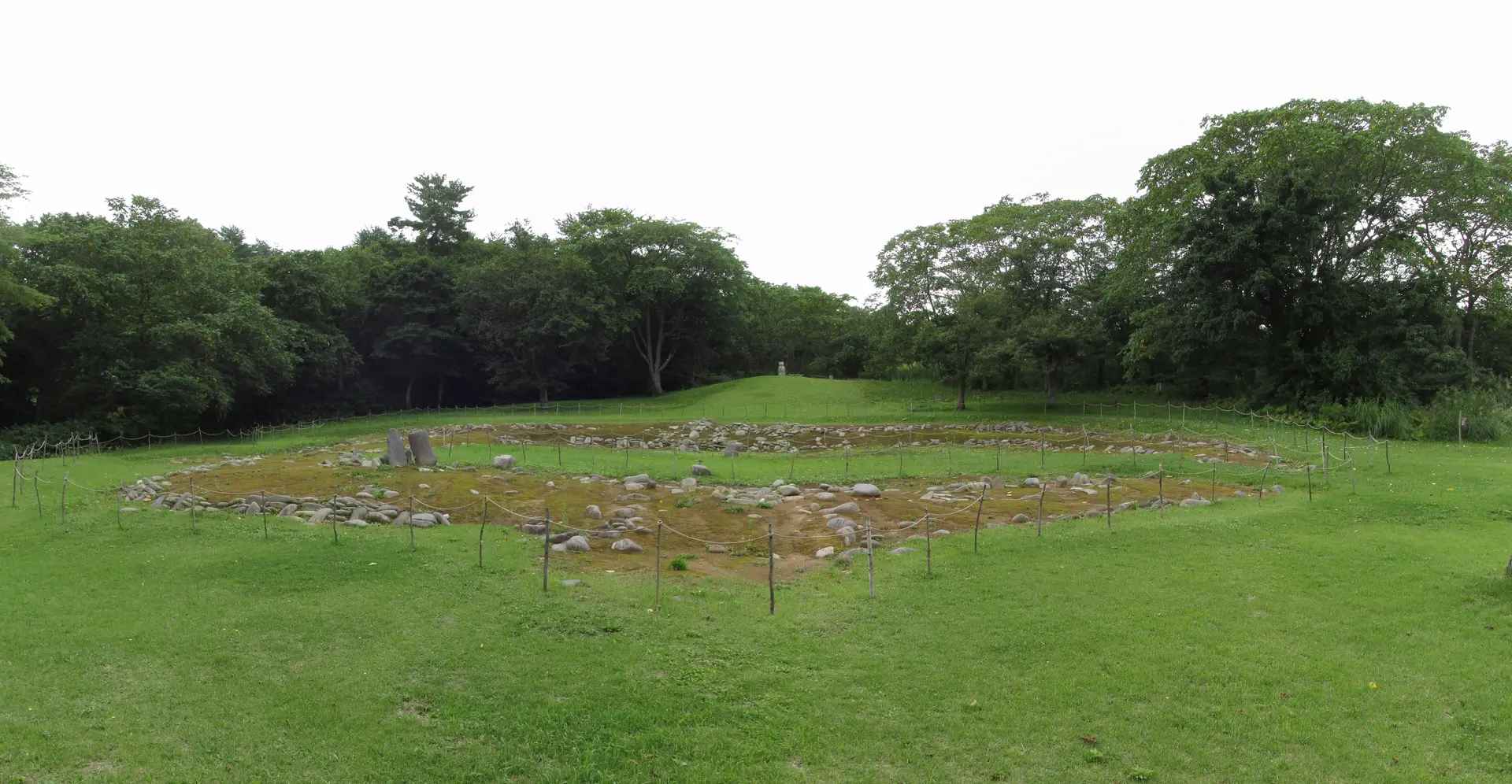
They have been called 'Japan's Stonehenge,' and the comparison, while imprecise, captures something true. The Oyu Stone Circles represent the largest and most sophisticated example of prehistoric stone circle construction in Japan. Two great circles—Manza and Nonakado—stand about 90 meters apart on an artificially flattened plateau above the Oyu River. Within each circle, a distinctive stonework arrangement radiates outward like a sundial.
And the line connecting both circles' centers and their sundial stones points directly to where the sun sets on the summer solstice.
This alignment is not coincidence. The Jomon people who built these circles 4,000 years ago tracked the sun's movements with sufficient precision to encode that knowledge in stone. They marked the moment when days began to shorten, when summer's peak gave way to the long decline toward winter. Whether this knowledge served agricultural timing, ceremonial calendars, or purposes we cannot guess, the astronomical sophistication is undeniable.
But the circles were more than observatories. They were cemeteries. Burial pits found throughout the circles confirm that the Jomon interred their dead within these sacred enclosures. The sundial stones stood amid the graves, connecting the ancestors to the turning of the year, the dead to the living, earth to sky.
The Manza circle alone contains over 100 stone arrangements within its 46-meter diameter. This scale of construction required sustained community effort across generations. The Jomon were not simply building monuments; they were creating places where the cosmic and the human could meet, where time could be marked and death could be contained within meaningful patterns.
Designated a Special National Historic Site in 1956 and inscribed as UNESCO World Heritage in 2021, Oyu offers contemporary visitors the opportunity to stand where the Jomon stood and watch the sun set along the axis they defined. The alignment still works. The stones still point. What the Jomon knew, the stones remember.
Why this place is sacred
Stand at the center of the Manza circle on the summer solstice. Look west along the axis that connects your position to the sundial-like stonework, then to the center of the Nonakado circle 90 meters distant. The sun descends toward the horizon along exactly this line. For a few minutes, you share something with the Jomon who built these circles: you are observing what they observed, standing where they stood, watching the same astronomical event they encoded in stone.
This is what makes Oyu a thin place: the collapse of temporal distance through shared observation. The solstice alignment is not a matter of interpretation or belief but of astronomy and geometry. The sun sets where it sets; the stones point where they point; the connection is as real as sunrise.
The burial dimension adds depth to this thinness. The Jomon who built the circles also buried their dead within them. The sundial stones rose amid the graves. Whatever ceremonies occurred here happened in the presence of the ancestors, whose bones lay beneath the feet of the living.
This integration of cemetery and observatory suggests that the Jomon understood no separation between cosmic time and human mortality—the turning of the year and the generations of the dead were part of one pattern.
The scale of the circles amplifies their power. Manza spans 46 meters in diameter, containing over 100 stone arrangements. Nonakado reaches 42 meters. These were not modest constructions but major undertakings requiring organized labor across generations. The effort invested speaks to the importance the Jomon placed on this ground.
That the circles were artificially flattened—the plateau was leveled to receive them—demonstrates that the site was chosen and prepared with intention. The Jomon selected this location, modified the landscape, and built structures that would align with celestial events. They were not merely responding to the environment but shaping it according to sacred geometry.
The paired nature of the circles invites speculation. Why two? What was the relationship between Manza and Nonakado? Some researchers suggest they represent complementary principles—sun and moon, male and female, different lineages or seasons. The truth is unknown, but the pairing itself suggests complexity of meaning beyond simple astronomical function.
The Oyu Stone Circles functioned as both astronomical observatory and communal cemetery. The summer solstice alignment indicates systematic observation of solar cycles, probably serving ceremonial calendars that organized the ritual year. The burial pits confirm the circles' role as sacred ground where the dead were interred within stone-marked enclosures. The sundial-like stonework at the center of each circle may have served timekeeping functions throughout the year, not only at the solstice.
The scale of construction—particularly the Manza circle with its 100+ stone arrangements—suggests the site served as a regional ceremonial center, drawing participants from surrounding communities.
The stone circles were constructed during the Late Jomon period, approximately 2000-1500 BCE. Construction likely occurred over generations, with the circles growing and developing as the community invested sustained effort in sacred architecture.
The site was discovered in 1931 and underwent detailed archaeological excavation in 1946 and 1951-1952. These investigations revealed the extent of the circles, the burial pits, and the sophistication of the construction.
In 1956, Oyu was designated a Special National Historic Site, recognizing its exceptional importance to Japanese cultural heritage. This designation brought protection and resources for preservation.
The Oyu Stone Circles Museum was established to provide interpretation and display artifacts from the site. The museum offers context for understanding Jomon culture and the astronomical dimensions of the stone circles.
In July 2021, the site was inscribed as part of the UNESCO World Heritage property 'Jomon Prehistoric Sites in Northern Japan,' joining sixteen other sites across Hokkaido and northern Tohoku. This recognition confirms the outstanding universal value of the Jomon achievement.
Experience and orientation
The first impression is scale. The Manza circle stretches 46 meters across, larger than many visitors expect for a prehistoric monument in Japan. Walking into it, you become aware of the stone arrangements surrounding you—over 100 distinct groupings within this single circle. The stones are not massive like Stonehenge's megaliths but are carefully placed, each contributing to a pattern that speaks of deliberate design.
At the center of each circle stands the sundial-like stonework: a standing stone surrounded by elongated stones radiating outward. These arrangements point toward the summer solstice sunset, and even on ordinary days, their orientation is apparent. You can sight along the axis connecting both sundials and imagine the sun descending to meet your gaze on the longest day of the year.
For those who visit during the summer solstice, the experience deepens. As the sun approaches the western horizon, it aligns with the axis the Jomon defined. You watch what they watched. The connection across 4,000 years becomes tangible, not through belief or imagination but through simple observation of the same astronomical event.
The circles' function as cemeteries adds weight to the experience. Burial pits were found throughout the site. When you walk within the circles, you walk on ground that holds the remains of the Jomon dead. The sundial stones rose amid graves. Whatever ceremonies occurred here happened in the presence of ancestors.
The 90-meter separation between the two circles creates interesting spatial dynamics. You can stand at one and view the other across the intervening ground. You can walk between them, crossing the axis of solstice alignment. The relationship between the paired circles invites contemplation—what did each mean to the Jomon who built and used them?
The Oyu Stone Circles Museum enhances the visit with artifacts and exhibits explaining Jomon culture, the construction of the circles, and their astronomical significance. The museum provides context that deepens appreciation for what the Jomon achieved.
The Oyu Stone Circles are located in Kazuno City, Akita Prefecture, in northeastern Japan. Begin at the Oyu Stone Circles Museum to orient yourself with exhibits on Jomon culture and the site's astronomical significance. From the museum, walk to the stone circles themselves. The Manza circle is the larger of the two, with the Nonakado circle about 90 meters distant. Allow time to explore both circles and to appreciate the axis connecting them.
If visiting near the summer solstice (around June 21), time your visit for sunset to witness the alignment the Jomon encoded 4,000 years ago.
Context and lineage
No written records exist from the Jomon period. What we know of Oyu comes from the stones and material culture preserved at the site, interpreted through archaeological methods.
The Jomon people lived in the Japanese archipelago for over 10,000 years, developing sophisticated cultures while maintaining a hunter-fisher-gatherer economy. The Late Jomon period, when the Oyu circles were built, saw increasing investment in ceremonial architecture, with stone circles appearing across Hokkaido and northern Tohoku.
The selection of this location—a plateau on the left bank of the Oyu River—was deliberate. The Jomon flattened the natural terrain to create the level surface required for the circles' precise geometry. They then brought stones from elsewhere, arranging them in the double-circle pattern with sundial-like central features oriented to the summer solstice.
The construction of the Manza circle, with its 46-meter diameter and over 100 stone arrangements, required sustained community effort. Generations participated in building, maintaining, and using this sacred space. The dead were buried within the circles, their graves marked by stones, their remains integrated into the pattern of the whole.
Oyu belongs to the Late Jomon tradition of stone circle construction that produced similar sites across Hokkaido and northern Tohoku. The Isedotai Stone Circle in the same region, the Komakino Stone Circle in Aomori, and other sites demonstrate shared practices for marking sacred ground and observing celestial events.
No continuous tradition connects to the Jomon practices at Oyu. The Jomon population gradually gave way to later peoples and cultures. Yet the patterns visible here—solar observation, ancestor veneration, the marking of sacred ground with stone—anticipate themes in later Japanese religious traditions.
The archaeological study of Oyu began with its discovery in 1931 and continues through its role in the UNESCO World Heritage property. The site contributes to scholarly understanding of Jomon astronomical knowledge and ceremonial practices.
Traditions and practice
The Jomon practiced solar observation at Oyu, tracking the summer solstice through architectural alignment. The sundial-like stonework at the center of each circle may have served year-round timekeeping functions, marking the position of the sun throughout the seasons. This astronomical knowledge likely informed ceremonial calendars, timing rituals to cosmic events.
Burial ceremonies brought the dead into the circles, interring them within the stone-marked sacred ground. The integration of cemetery and observatory suggests that ceremonies for the dead occurred in relation to celestial events—the ancestors resting beneath the stones that marked the turning of the year.
The scale of construction indicates communal gatherings that drew participants from across the region. Seasonal ceremonies at the solstice and perhaps at equinoxes may have brought people together for ritual observance, trade, and social connection.
No active religious practices occur at Oyu today. The site is managed for preservation and education as part of Japan's UNESCO World Heritage property.
The museum offers exhibits on Jomon culture, the circles' construction, and their astronomical significance. Educational programs provide context for understanding what the Jomon achieved.
Summer solstice events allow visitors to witness the alignment, standing where the Jomon stood and watching the sun set along the axis they defined. These events are educational rather than ceremonial, offering astronomical observation rather than religious practice.
If possible, visit near the summer solstice to watch the sun set along the axis the Jomon defined 4,000 years ago: the alignment works as they intended, letting visitors observe what they observed. At other times, sight along the sundial stones and imagine the solstice descent. Walk both circles—Manza is larger and more complex, while Nonakado has its own character—and contemplate their paired, aligned relationship across 90 meters.
Remember that Jomon dead were interred within circles their community built and maintained. Approach respectfully.
Jomon Spirituality
HistoricalThe Oyu Stone Circles represent the largest and most sophisticated stone circle complex discovered in Japan, demonstrating remarkable astronomical knowledge and ritual planning during the Late Jomon period (approximately 2000-1500 BCE). The two circles—Manza at 46 meters diameter and Nonakado at 42 meters—each contain distinctive sundial-like stonework. The line connecting both circles' centers and their sundial stones aligns precisely with the summer solstice sunset direction. This solar alignment indicates that the Jomon tracked celestial events for ceremonial timing. The circles functioned simultaneously as communal cemeteries, with extensive burial activity documented through archaeological excavation. The scale of construction required sustained community cooperation, suggesting the circles served as regional social and spiritual focal points.
Summer solstice ceremonies aligned with sunset marked the turning of the year, when the longest day gave way to shortening days. Burial rituals brought the dead into the stone circles, interring them within the consecrated ground marked by the astronomical alignments. Seasonal observances may have marked equinoxes and other significant moments in the solar cycle. Communal gatherings for ritual purposes drew participants from surrounding communities.
Perspectives and open questions
The Oyu Stone Circles reveal Jomon astronomical knowledge encoded in permanent architecture. Scholarly interpretation provides frameworks for understanding the solstice alignment and the circles' function as cemeteries, but the specific beliefs and ceremonies of the builders remain matters of inference. What is certain is the alignment itself—the sun sets where the stones point, as it has for 4,000 years.
Scholarly perspective
Archaeologists recognize Oyu as the premier example of Jomon stone circle construction and astronomical alignment in Japan. The summer solstice orientation is well-documented: the line connecting both circles' centers and their sundial-like stonework aligns with the sunset direction on the year's longest day. This precision indicates systematic observation of solar cycles.
The site's function as both cemetery and ceremonial space is confirmed through excavation. Burial pits throughout the circles demonstrate sustained use for interment of the dead. The integration of astronomical markers with burials suggests ceremonies that connected the ancestors to the turning of the year.
The scale of construction—the Manza circle with its 46-meter diameter and 100+ stone arrangements—indicates organized community effort across generations. The artificial leveling of the plateau demonstrates landscape modification for sacred purposes.
UNESCO inscription in 2021 acknowledges the outstanding universal value of the Jomon achievement. The Oyu Stone Circles demonstrate astronomical sophistication that challenges assumptions about 'primitive' prehistoric peoples.
Living and traditional perspectives
No continuous tradition connects to the Jomon practices at Oyu. The specific beliefs that motivated the builders—what the solstice meant to them, how they understood the relationship between the dead and the turning year—were not preserved in transmitted form.
Yet patterns visible at Oyu anticipate later Japanese religious traditions: observation of solar cycles, veneration of ancestors, the marking of sacred ground. These patterns suggest cultural continuities even where specific traditions were not maintained.
Alternative interpretations
Some visitors are drawn to Oyu by the 'Japan's Stonehenge' comparison, finding resonance with other prehistoric astronomical monuments worldwide. The solstice alignment places Oyu in a global context of Neolithic solar observation, suggesting shared human impulses to track celestial time and encode that knowledge in stone.
Some researchers explore possible connections between Jomon stone circles and astronomical sites in other cultures, though direct contact or influence has not been established.
Open questions
The specific meaning of the paired circles remains debated. Why two? What was the relationship between Manza and Nonakado? Some suggest complementary principles—sun and moon, different lineages, different seasons. The answer is not known.
The full ceremonial use of the sundial-like stonework is not understood. Did it function year-round, tracking the sun's position daily? Or was it primarily oriented to the solstice? What ceremonies occurred at these central features?
The specific beliefs and rituals of the Jomon builders are not recoverable. The stones show what they did; they do not explain what they believed. This gap between evidence and interpretation is permanent—the Jomon left no texts, and no oral tradition has preserved their knowledge.
Plan your visit
Access and arrival
Located in Kazuno City, Akita Prefecture, northeastern Japan. About 25 minutes by car from JR Kazuno Hanawa Station. Taxi or bus available from the station. The site is on an artificially flattened plateau on the left bank of the Oyu River, a tributary of the Yoneshiro River.
Accommodations available in Kazuno City and surrounding areas. Onsen (hot spring) resorts in the region offer traditional Japanese hospitality. The site is accessible as a day trip from larger cities in Akita or Aomori Prefectures.
Respectful visit
No specific dress code applies. Dress appropriately for the weather and for walking on outdoor terrain. Summer can be warm; winters are cold. Comfortable walking shoes are recommended.
Photography is permitted throughout the site. Capture the solstice alignment if visiting at that time. Respect other visitors and site staff.
Not applicable. This is an archaeological site, not an active place of worship.
Do not climb on, sit on, or touch the stones. Stay on designated paths. Follow all posted guidelines.
The circles are archaeological sites requiring careful preservation. Do not disturb or climb on the stones. Follow all site guidelines and stay on designated paths. Photography is permitted but respect for the site's character is expected.
Current practical details
Address
Manza-27 Towadaoyu, Kazuno, Akita 018-5421, Japan
Phone
Hours
Hours, fees, and access can change — verify on the official source before you travel. Practical details last checked Jun 2026.
Location
Map loads as you approach this section.
Pilgrim reflections
A portrait of encounter, not a score
Pilgrims describe what they felt, how present they could become, and whether the place would shape a journey. There are no stars and no ranking of traditions.
No reviewed reflections yet
The first pilgrims can help describe the character of being here.
Share a reflection
Available after an account-backed “Been there.” Every reflection is reviewed before publication.
Nearby sacred places
Explore other sacred places in the region. Proximity does not establish access or travel time; check each place’s guidance.


References
Sources consulted for this page. Source categories describe the publication, not a guarantee that every claim is verified. Traditional accounts and outside interpretations may differ.
- 01The Oyu Stone Circles - Official Site — Kazuno CityofficialOfficial site information
- 02Oyu Stone Circles - Jomon Prehistoric Sites — World Heritage Jomon Prehistoric SitesofficialOfficial World Heritage information
- 03Jomon Prehistoric Sites in Northern Japan - JNTO — Japan National Tourism OrganizationSource contextNational tourism authority
- 04Ōyu Stone Circles - Wikipedia — Wikipedia contributorsencyclopediaGeneral overview
- 05Japan's Ōyu Stone Circles Form an Ancient Sundial — Atlas ObscuraguideTravel publication
Share a photo
Help visitors recognize Ōyu Stone Circles. Every submission is reviewed before publication.