Our Lady of Šiluva (Our Lady of the Pine Woods), Šiluva, Lithuania
Where the Virgin wept over forgotten worship, and a nation's faith was restored from the earth
Understand sacred places, explore living traditions, and learn how to engage respectfully with Pilgrim Map.
Access has not been verified. Check current local guidance before planning a visit.
Šiluva, Raseiniai, Lithuania
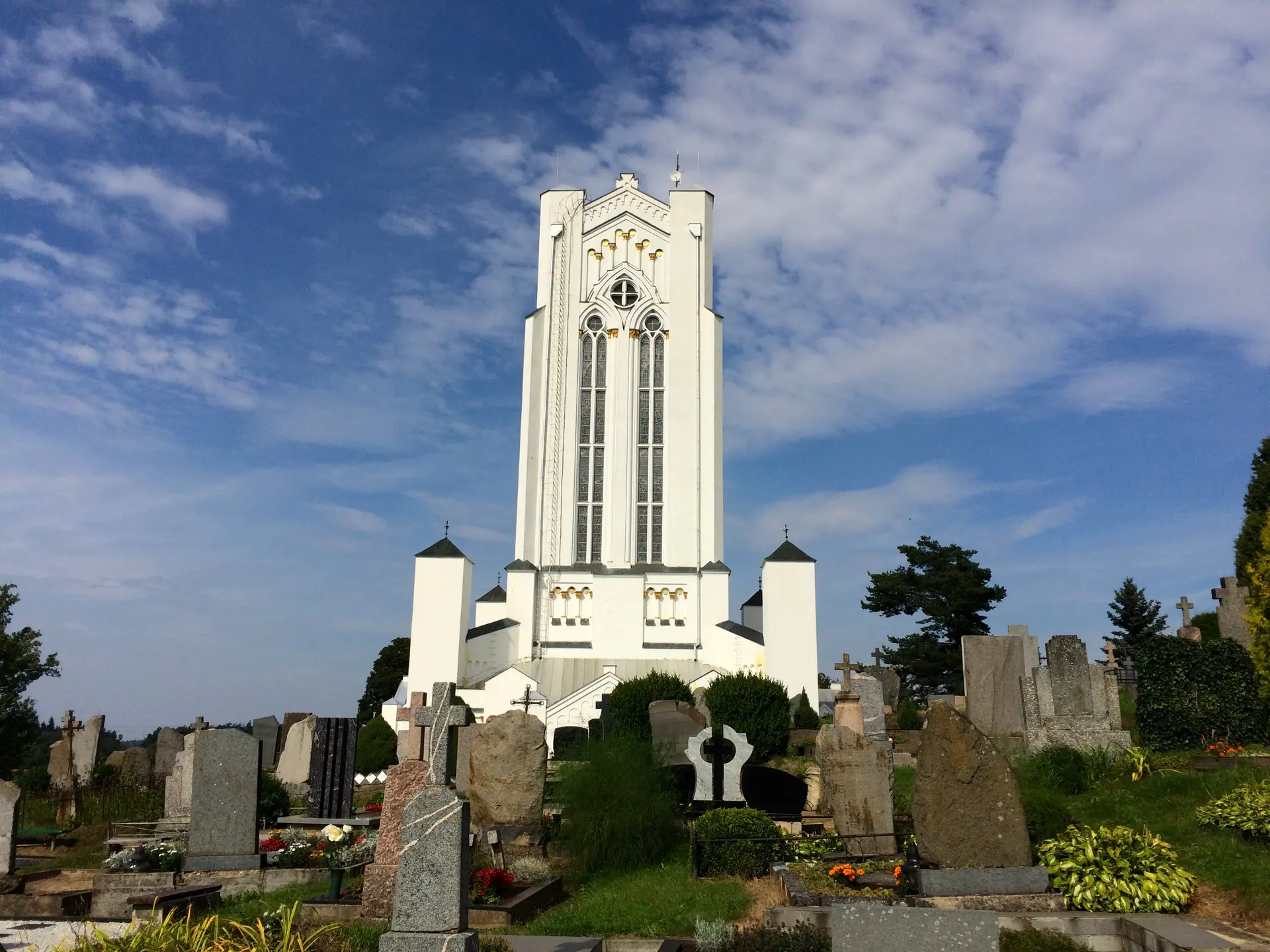
Image of Our Lady of Šiluva (Our Lady of the Pine Woods), Šiluva, Lithuania. Image source · CC-BY-3.0
Visit essentials
A quick read before you go
- Duration
- A focused visit to the Chapel of the Apparition takes 30 minutes to an hour.
- Access
- Siluva is located in Raseiniai district, Kaunas County, approximately 60 kilometers northwest of…
Overview
When Calvinism spread through sixteenth-century Lithuania, Siluva's last Catholic priest buried the church treasures in an iron chest. The altar was dismantled, the church given away, and within a generation Catholic worship there was nearly forgotten.
In 1608, shepherd children near a large rock saw a beautiful young woman holding a baby and weeping. Asked by a Calvinist minister why, she answered that this place had once adored her Son and was now plowed and sown. An elderly blind man who had helped bury the chest recalled its location; when it was unearthed, his sight returned. Its documents proved Catholic ownership, and Catholicism returned through a long legal process.
The Chapel of the Apparition rises 44 meters over the rock where Mary stood. Pilgrims kneel and press their lips to the stone beneath its altar, touching the same surface that held a weeping mother four centuries ago. During the eight-day Silines festival each September, tens of thousands converge on this Raseiniai-district town, walking from distant cities, carrying banners, and singing hymns that survived Soviet prohibition.
Antanas Vivulskis, whose Three Crosses monument in Vilnius also speaks of faith persisting through erasure, joined Egyptian Revival solemnity to Gothic aspiration in a chapel unlike any other Lithuanian church. The apparition rock anchors its interior and centuries of devotion. Siluva predates Lourdes and Fatima by centuries without their international fame; for Lithuanian Catholics it remembers faith buried alive, a weeping mother, and a community that dug it back from the earth.
Why this place is sacred
The rock beneath the altar is the anchor. It is not a relic in the conventional sense, not an object made sacred by human craft, but a piece of the earth itself, the stone where the Virgin stood and wept. Pilgrims approach it on their knees, and the practice of kissing the rock connects them physically to the apparition event in a way that icon veneration cannot quite replicate.
Above this rock rises a chapel of unusual architectural ambition, its 44-meter steeple the tallest in Lithuania at the time of construction. The verticality is intentional: the eye is drawn upward from the stone of grief to the sky of consolation. The tension between the two, between the earthbound rock and the soaring steeple, between sorrow and hope, gives the space its particular character.
The annual gathering during Silines amplifies these qualities. When tens of thousands of pilgrims fill Siluva's streets and churches, the concentration of devotion becomes palpable. The three-day pilgrimage walk from the Hill of Crosses, covering roughly 80 kilometers on foot, arrives carrying the accumulated intention of days of walking and prayer. For those who undertake it, the arrival at Siluva's chapel is not merely the end of a walk but a threshold crossing.
The memory of Soviet-era suppression adds another layer. For nearly five decades, pilgrimage to Siluva was forbidden, and those who came risked persecution. That the tradition survived at all is itself a kind of miracle, less dramatic than the 1608 apparition but equally persistent. The prayers offered in secret during those years have their own weight in the chapel's atmosphere.
The apparition itself defined the site's purpose: the Virgin Mary's tears were understood as a call to restore Catholic worship to a place where it had been erased. The chapel was built to preserve and honor the apparition rock, the physical evidence of that divine intervention. From the beginning, Siluva's purpose has been about recovery, about faith buried and brought back to light.
The earliest response to the apparition was the construction of a small chapel over the rock, followed by the legal recovery of church property using the documents found in the iron chest. The current Chapel of the Apparition, designed by Vivulskis and built between 1906 and 1924, elevated the site to architectural distinction. Papal recognition came in stages: Pius VI approved the feast in 1775, and the Marian image was canonically crowned in 1786.
Under the Soviet Union, pilgrimage was suppressed but never eradicated. Since Lithuanian independence, the shrine has expanded its role, becoming a stop on the John Paul II Pilgrim Route and hosting an increasingly structured eight-day festival. The chapel was declared a state-protected cultural object, recognizing its dual significance as both spiritual and architectural heritage.
Experience and orientation
The moment that visitors remember most is the approach to the rock. The chapel interior narrows your attention downward, toward the altar, toward the stone beneath it. Kneeling on the smooth floor, lowering your face to a surface that four centuries of pilgrims have kissed before you, the abstraction of the apparition story becomes physical. The rock is cool. It is real.
Whatever you believe about what happened here in 1608, the contact between your lips and this stone connects you to a chain of devotion that stretches back to shepherd children looking up in wonder.
The chapel's architecture supports this encounter. Vivulskis designed a space that channels both gravity and aspiration. The steeple draws the eye up, but the rock draws it down. Between these two poles, something opens. Pilgrims frequently describe an experience of being held, of the chapel functioning as a vessel that contains both their own grief and a larger consolation.
During Silines, the experience intensifies. The sheer volume of people, the processions, the rosary prayers echoing through the streets, the daily themed intentions that give each of the festival's eight days a particular character: all of this creates a communal container that individual visits cannot replicate. The closing Mass on September 15 carries a quality of culmination that many describe as one of the most powerful liturgical experiences in Lithuania.
For those who arrive outside the festival season, the experience is different but not lesser. The chapel in its quieter state allows a more intimate encounter with the rock, with the space, with whatever one brings to it. The small town of Siluva itself, surrounded by Lithuanian countryside, provides a setting of rural simplicity that strips away the noise of ordinary life.
If you come to Siluva seeking more than tourism, allow time. The chapel deserves at least an hour of unhurried presence. Approach the apparition rock with whatever reverence feels authentic to you, whether that is prayer, silence, or simply attention. After the chapel, walk to the nearby Basilica of the Nativity to see the broader context of Marian devotion at Siluva. If possible, time your visit to coincide with Silines, but know that the chapel serves seekers year-round.
Context and lineage
In 1457, Petras Gedgaudas, a nobleman in the service of Grand Duke Vytautas the Great, built a church at Siluva and brought a Marian icon from Rome to grace its altar. For roughly seventy years, the church served as a center of Catholic worship in the region.
The Reformation changed everything. Between the 1530s and 1560s, the population of the Siluva area converted to Calvinism. The Catholic church was seized, its altar stripped, its sacred objects scattered. The last Catholic priest, Father John Holubka, foresaw what was coming. Before he died, he sealed the church's most important documents and treasures in an iron chest and buried it in the earth near the church, enlisting a local boy to help him.
For decades, the buried chest lay forgotten. Then, on an evening in 1608, shepherd children tending their flocks saw a young woman of extraordinary beauty standing on a rock, holding a child, weeping. The local Calvinist minister came to investigate. The weeping woman told him that her Son had once been worshipped on this ground, and now it was plowed and sown.
The boy who had helped Father Holubka bury the chest was now an elderly, blind man. He remembered what he had done decades earlier, and he led people to the spot. When the iron chest was unearthed and opened, revealing the church documents and sacred objects, the old man's sight returned. The documents proved Catholic ownership of the church property, and through a prolonged legal process that concluded in 1622, Catholicism was restored to Siluva.
The devotion at Siluva has passed through distinct phases: the original Catholic foundation by Gedgaudas in the fifteenth century, the Reformation erasure, the 1608 apparition and gradual restoration, the construction of the current chapel in the early twentieth century, Soviet-era suppression and underground persistence, and the post-independence renewal. Each transition has added depth to the site's significance.
Pope Pius VI's approval in 1775, the canonical coronation of the Marian image in 1786, and the inclusion of Siluva on the John Paul II Pilgrim Route mark stages in the site's formal recognition by the wider Church.
Petras Gedgaudas
historical
Nobleman and servant of Grand Duke Vytautas the Great who built the original church at Siluva in 1457 and brought a Marian icon from Rome, establishing the Catholic presence that would later be buried and restored.
Father John Holubka
historical
The last Catholic priest at Siluva before the Reformation. His decision to bury the church's treasures and documents in an iron chest preserved the evidence that later enabled the legal restoration of Catholic property.
Antanas Vivulskis
historical
Lithuanian architect who designed the Chapel of the Apparition (1906-1924), creating a distinctive blend of Egyptian Revival and Gothic forms. He also designed the Three Crosses monument in Vilnius, another symbol of Lithuanian faith and resilience.
The Blessed Virgin Mary
deity
Appeared weeping with the Infant Jesus on a rock at Siluva in 1608, lamenting the loss of Catholic worship. The apparition, one of the earliest papally approved in Europe, led to the restoration of Catholicism in the region.
Traditions and practice
The oldest practice associated with Siluva is the pilgrimage procession, historically undertaken on foot from the Dubysa Valley and Tytuvėnai. Pilgrims carried church banners and sang hymns as they walked, arriving at the shrine for the Feast of the Nativity of the Blessed Virgin Mary on September 8. The tradition of kissing the apparition rock dates to the earliest period after the apparition. Indulgenced feasts were formally recognized, adding a layer of spiritual incentive to the physical pilgrimage.
Blessing of agricultural produce was also part of the traditional celebration, connecting the shrine to the rhythms of rural Lithuanian life.
The Silines festival now spans eight days, from September 8 to 15, with each day dedicated to a particular intention: families, youth, the sick, those who have suffered, members of the military, clergy, and the nation. Daily Masses are celebrated by bishops and priests from across Lithuania. Two pre-festival pilgrim processions depart on the last Sunday of August, one from the Dubysa Valley led by the Archbishop, another from Tytuvėnai.
A three-day pilgrimage walk from the Hill of Crosses, approximately 80 kilometers, has become a tradition particularly associated with youth and military personnel. Year-round, the chapel offers Mass, confession, Eucharistic adoration, and rosary devotions.
Whether you arrive during Silines or on a quiet afternoon in May, the chapel invites a particular kind of attention. Enter slowly. Allow the steeple's verticality to draw your gaze upward before you let it settle downward, toward the rock. When you approach the altar, kneel not from obligation but from the weight of four centuries of pilgrims who have done the same. If kissing the rock feels authentic to you, do so.
If not, a moment of silent attention at this place where grief became restoration is its own form of devotion.
After the chapel, walk to the Basilica of the Nativity nearby. The two buildings form a devotional pair, each deepening the experience of the other. If you can arrange it, attend the evening rosary procession during Silines. The experience of walking through Siluva's streets with thousands of other pilgrims, lanterns and candles flickering, is one that does not translate to description.
Roman Catholicism
ActiveSiluva is one of the most significant Catholic pilgrimage sites in Lithuania, centered on one of Europe's earliest papally approved Marian apparitions. The 1608 apparition directly led to the restoration of Catholicism in the region after the Reformation, and the shrine has served as a symbol of Catholic resilience through subsequent periods of Russian imperial and Soviet atheist oppression.
Mass, Eucharistic adoration, sacrament of confession, rosary processions, and the eight-day Silines festival with daily themed intentions. Year-round veneration of the apparition rock beneath the chapel altar. Two pre-festival pilgrim processions and a three-day youth and military pilgrimage from the Hill of Crosses.
Marian Devotion
ActiveOur Lady of Siluva, also known as Our Lady of the Pine Woods, holds a distinctive place among Marian apparitions because of the Virgin's weeping and her message of grief over abandoned worship. The apparition was witnessed by Calvinists as well as Catholics, a rare detail in Marian apparition history. Papal approval by Pius VI in 1775 and canonical coronation in 1786 formalized the devotion's significance.
Pilgrimage to the apparition rock, kissing the stone where Mary stood, prayer for the intentions of the weeping Mother, devotion under the title of Our Lady of Siluva, processions and hymns during Silines, and participation in the three-day walking pilgrimage from the Hill of Crosses.
Perspectives and open questions
Siluva sits at the intersection of Counter-Reformation history, Marian theology, Lithuanian national identity, and architectural innovation. Each of these lenses reveals something genuine about the site, and honest engagement means holding them together, recognizing that a place can be simultaneously a historical document, a living shrine, and a national symbol.
Scholarly perspective
Historians and religious scholars recognize the 1608 Siluva apparition as one of the earliest papally approved Marian apparitions in Europe, predating both Lourdes and Fatima by centuries. The apparition is understood within the context of the Counter-Reformation struggle between Catholicism and Calvinism in Lithuania. The recovery of the buried iron chest and its documents had immediate practical significance, enabling Catholics to reclaim church property through the courts by 1622.
The Chapel of the Apparition itself is studied as an example of early modernist architecture in Lithuania, with Vivulskis's eclectic design drawing from Egyptian Revival, Gothic, and early modernist vocabularies in a combination that has few parallels in European ecclesiastical architecture.
Living and traditional perspectives
Lithuanian Catholic tradition understands the Siluva apparition as Mary's personal intervention to save Catholic faith in Lithuania during the Reformation. The weeping Mother is seen as grieving for her Son's abandoned worship, and the restoration of Catholicism at Siluva is understood as a direct answer to that grief. The miraculous healing of the blind man symbolizes the restoration of spiritual sight to the community.
During the Soviet period, when pilgrimages were banned, the faithful continued to come in secret, transforming Siluva into a symbol of resistance against atheist oppression. The title 'the Lithuanian Fatima' reflects the site's centrality to Lithuanian Catholic identity.
Alternative interpretations
Some interpreters note that the original church was built in 1457 at a location that may have held pre-Christian significance. The name 'Our Lady of the Pine Woods' recalls Lithuanian sacred groves, places where pagan worship occurred before Christianization. The rock upon which Mary appeared carries echoes of sacred stones in Baltic pagan tradition, suggesting a possible continuity between older forms of veneration and the Marian apparition. Whether this continuity is coincidental or meaningful remains a matter of perspective.
Open questions
The exact identity of the shepherd children who first witnessed the apparition is not recorded. The precise circumstances of Father Holubka's decision to bury the church treasures, and the process by which he enlisted the boy's help, are not fully documented. The original Marian icon brought from Rome by Gedgaudas in 1457 has been lost, and its provenance and appearance remain unknown.
The architectural style of the chapel, sometimes described as Egyptian Revival and Gothic and sometimes as early modernist, continues to defy easy classification.
Plan your visit
Access and arrival
Siluva is located in Raseiniai district, Kaunas County, approximately 60 kilometers northwest of Kaunas and 200 kilometers northwest of Vilnius. Access is primarily by car. Limited public transport serves the area, though additional bus services may operate during Silines. The chapel is in the town center, a short walk from the Basilica of the Nativity. The shrine is part of the John Paul II Pilgrim Route in Lithuania.
Mobile phone signal is generally available in the town, though coverage may be inconsistent in the surrounding countryside.
Siluva has limited accommodation options outside the festival period. During Silines, additional lodging and hospitality services become available, but advance booking is essential. The city of Raseiniai, approximately 12 kilometers away, and Kaunas, approximately 60 kilometers southeast, offer a fuller range of hotels and guesthouses.
Respectful visit
Modest dress appropriate for a Catholic chapel is expected. Shoulders and knees should be covered. During Silines in September, the weather can be cool, so layers are advisable for outdoor processions and events.
Photography is generally permitted outside of services. Respectful photography of the chapel interior and apparition rock is customary, but flash should be avoided and silence maintained. No photography during Mass or other liturgical celebrations.
Candle offerings are traditional and can be made at designated areas. Flowers are often placed near the apparition rock. Monetary donations to the parish are welcome and support the shrine's upkeep.
Silence or quiet prayer is expected inside the chapel at all times. Food and drink are not permitted inside. During Mass and other services, visitors should either participate or wait outside. Respectful behavior near the apparition rock is essential, as pilgrims in prayer may be present at any time.
The apparition rock beneath the altar is touched and kissed by thousands of pilgrims. Those with concerns about hygiene should be aware of this. During Silines, the crowds can be very large, and the chapel interior becomes densely packed. Arriving early in the day provides a more contemplative experience. The three-day pilgrimage walk from the Hill of Crosses is physically demanding and should not be undertaken without preparation.
Current practical details
Address
Jono Pauliaus II g. 2, 60432 Šiluva, Lithuania
Phone
Hours
Hours, fees, and access can change — verify on the official source before you travel. Practical details last checked Jun 2026.
Location
Map loads as you approach this section.
Pilgrim reflections
A portrait of encounter, not a score
Pilgrims describe what they felt, how present they could become, and whether the place would shape a journey. There are no stars and no ranking of traditions.
No reviewed reflections yet
The first pilgrims can help describe the character of being here.
Share a reflection
Available after an account-backed “Been there.” Every reflection is reviewed before publication.
Nearby sacred places
Explore other sacred places in the region. Proximity does not establish access or travel time; check each place’s guidance.

Basilica of the Nativity of the Blessed Virgin Mary, Siluva
Šiluva, Raseiniai, Lithuania
0.3 km away
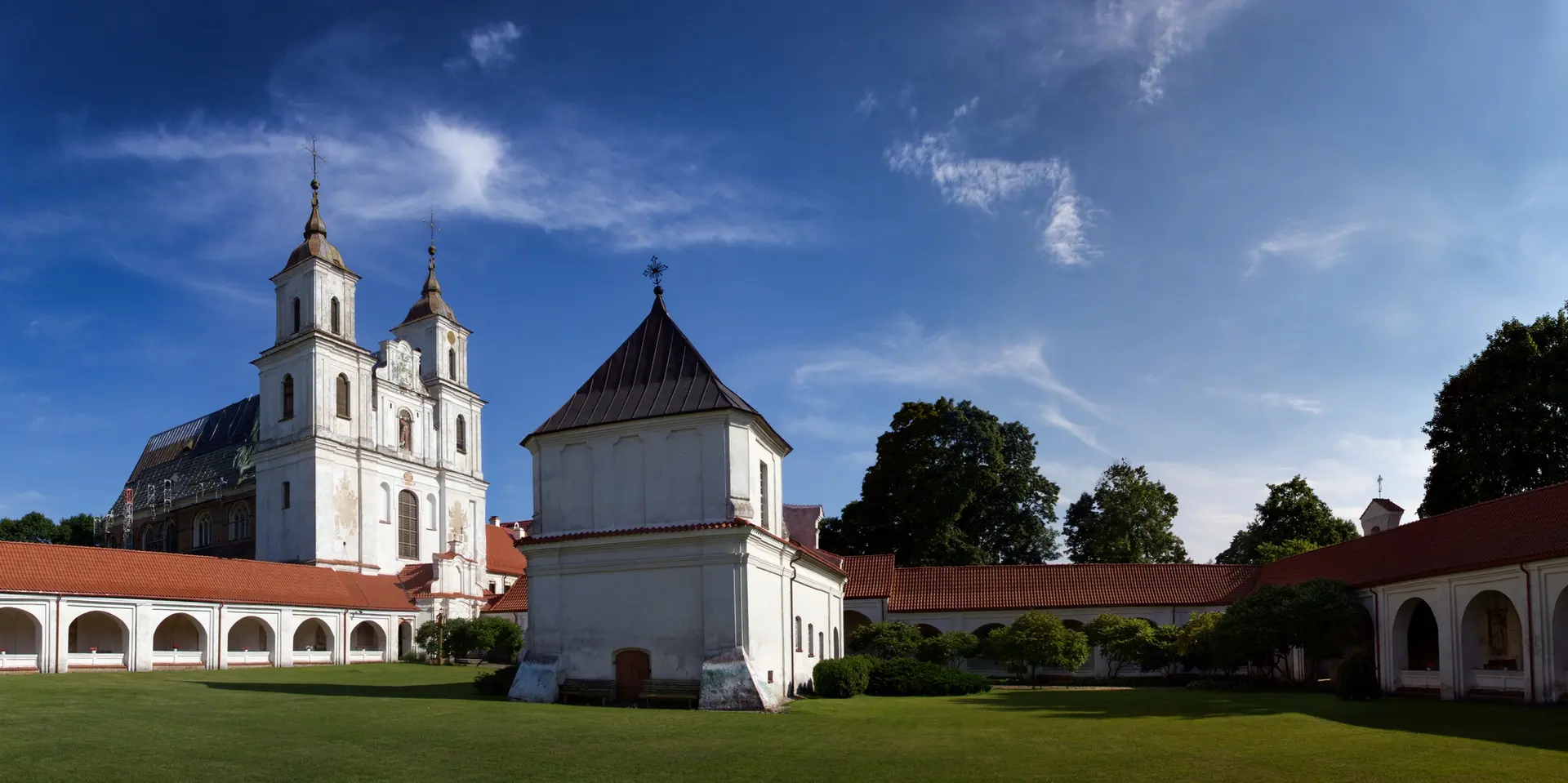
Tytuveṅai Church and Monastery, Lithuania
Tytuvėnai, Kelmė, Lithuania
7.4 km away
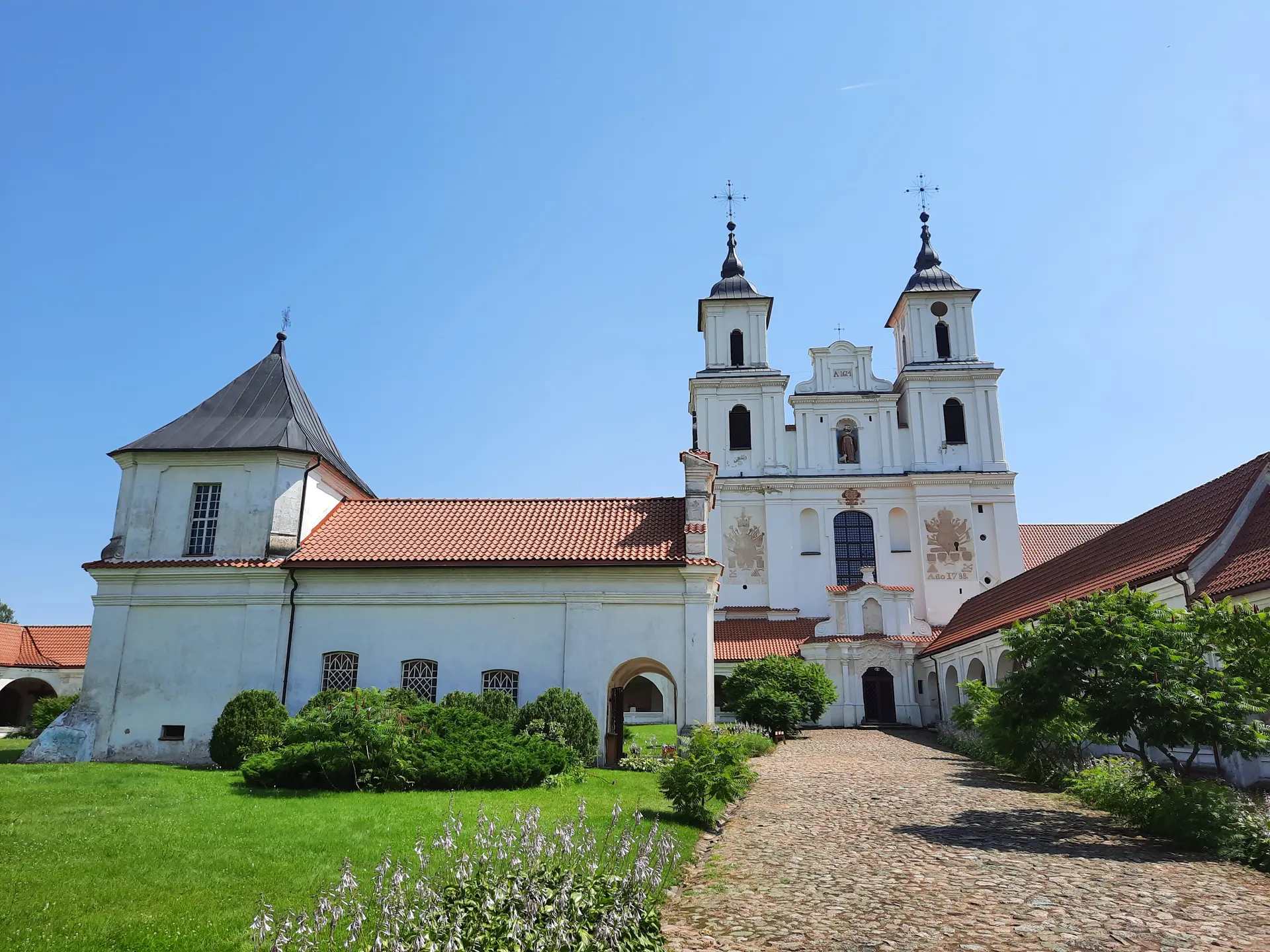
St. Mary Queen of Angels Church, Tytuvenai
Tytuvėnai, Kelmė, Lithuania
7.4 km away

Šiauliai Cathedral of St Peter and St Paul
Šiauliai, Šiauliai, Šiauliai County, Lithuania
45.1 km away
Share a photo
Help visitors recognize Our Lady of Šiluva (Our Lady of the Pine Woods), Šiluva, Lithuania. Every submission is reviewed before publication.