Basilica of the Assumption of the Virgin Mary, Krekenava
A miraculous painting that survived every fire, crowned Mother of Hope after nearly 500 years of answered prayers
Understand sacred places, explore living traditions, and learn how to engage respectfully with Pilgrim Map.
Access has not been verified. Check current local guidance before planning a visit.
Krekenava, Panevėžys District, Lithuania
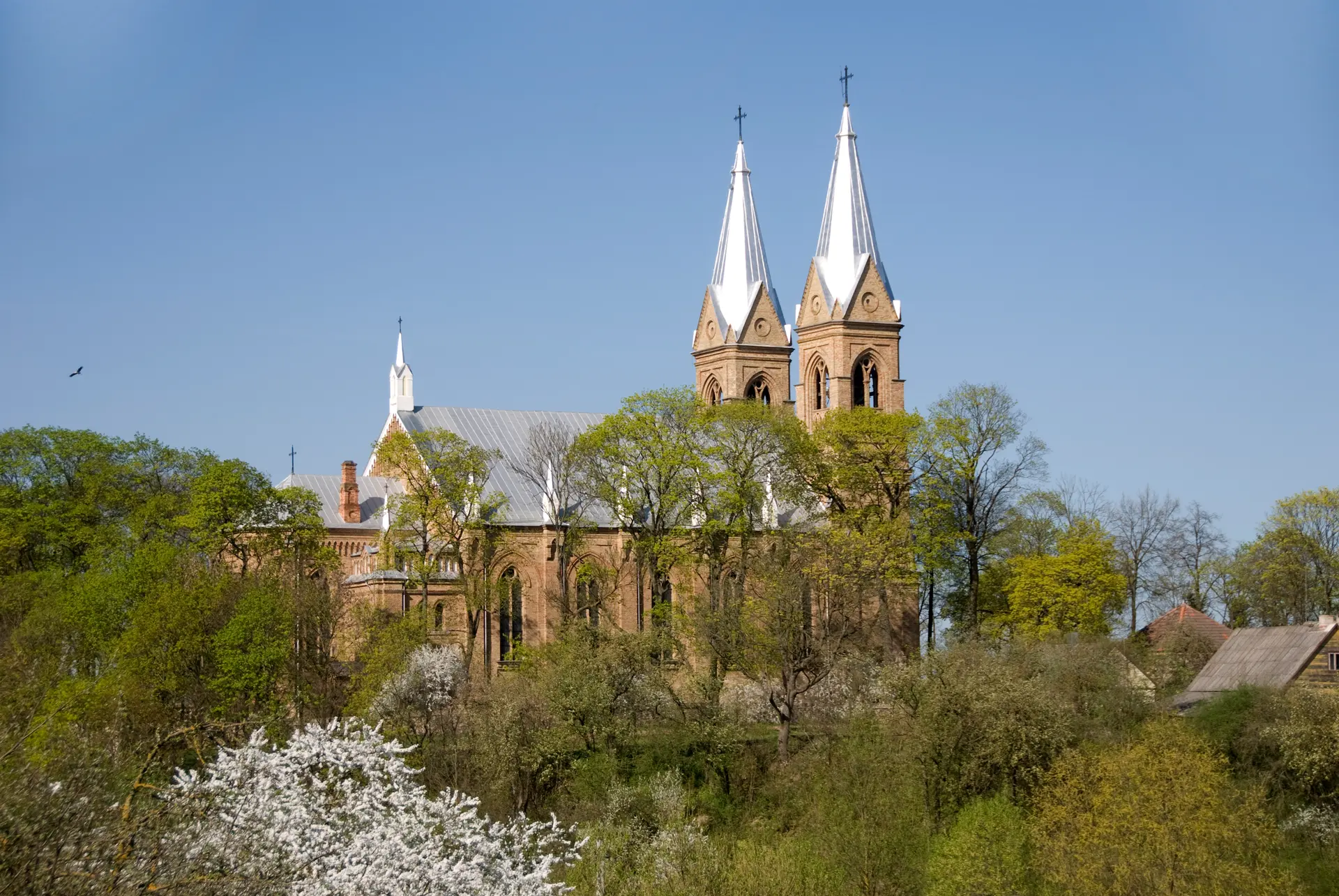
Image of Basilica of the Assumption of the Virgin Mary, Krekenava. Image source · CC-BY-SA-3.0
Visit essentials
A quick read before you go
- Duration
- 1-2 hours for a regular visit.
- Access
- Located in the town of Krekenava, Panevėžys District, Panevėžys County.
Overview
Five times fire consumed Krekenava's wooden churches; five times the painting of the Mother of God emerged from the ashes. This documented pattern has shaped the Lithuanian town's relationship with a sacred image that has defied destruction for nearly five hundred years.
Grand Duke Vytautas the Great built the first church in 1419. Parson Nicolao Povetrius donated the painting in the early seventeenth century, claiming he brought it from Rome; art historians instead consider it likely Lithuanian, based on Roman and Polish-Lithuanian prototypes. That disputed origin has not diminished accounts of answered prayer and healing. The current neo-Gothic basilica, built in 1901, displays the image in silver vestments and jeweled crowns amid votive offerings dating back nearly half a millennium.
In 2025, the painting received papal-blessed golden diadems and the title 'Mother of Hope,' the seventh such coronation in Lithuanian history. Krekenava is also one of Lithuania's few perpetual-indulgence sites, granted by Pope John Paul II in 1999. The basilica never closed during Soviet occupation, when attending the Assumption feast was punishable; thousands came anyway.
Why this place is sacred
Walk among the votive offerings at Krekenava and you walk among witnesses. These are not abstract expressions of piety — they are specific testimonies, each one recording a moment when someone knelt before this painting, asked for help, and believed they received it. The oldest offerings date back nearly five hundred years. The newest are from the present day. Between them stretches an unbroken chain of human need meeting what the faithful understand as divine response.
The painting itself carries the weight of survival. Each fire that consumed the wooden churches should have destroyed it. Each time, the image emerged intact — or so the tradition maintains. Whether one accepts a miraculous explanation or not, the effect on the community has been real: each survival deepened the conviction that this place, this image, held a particular relationship with the divine.
That conviction was tested again under Soviet occupation, when worship at Krekenava became an act of defiance and members of the parish died for the faith. To the faithful, the same force that carried the painting through fire carried its people through oppression — a thin place not only of answered prayer but of endurance.
The herb blessing during Žolinė adds another dimension. When pilgrims bring armfuls of herbs, flowers, and grain for blessing on August 15, they are participating in a practice that predates Christianity in Lithuania — a pre-Christian harvest thanksgiving absorbed into the Assumption feast, connecting Catholic devotion to something older and deeper in the Lithuanian relationship with the earth.
Church founded by Grand Duke Vytautas the Great in 1419 for the newly Christianized Lithuanian people
From one of Lithuania's earliest Christian foundations (1419) through the arrival of the miraculous painting (early 17th century), multiple fires and rebuildings, the current neo-Gothic basilica (1901), Soviet-era resistance, the perpetual plenary indulgence granted in 1999, and the 2025 coronation as 'Mother of Hope.'
Experience and orientation
Krekenava sits in the Aukštaitija countryside, surrounded by the gentle landscape of central Lithuania. The approach through the small town builds anticipation — this is not a city church competing with commercial architecture but a basilica that dominates its setting, its neo-Gothic spires rising above the rooftops with quiet authority.
The interior reveals itself in stages. The vertical reach of the Gothic arches draws the eye upward, creating a sense of aspiration that prepares the visitor for the painting. The miraculous image, in its silver garments and jeweled crowns, occupies its own visual and spiritual gravity, commanding attention without needing scale. The painting is not large. Its power lies in its age, its survival, and the centuries of devotion concentrated upon it.
The votive offerings arranged around the painting deserve unhurried attention. Each one represents a specific human story — a prayer offered, a petition answered. Reading them is an intimate experience, connecting the visitor to individuals across centuries who stood where you now stand and asked for help.
During the Žolinė feast in August, the experience transforms. Tens of thousands of pilgrims converge on this small town, filling the basilica and the grounds around it. The solemn Masses and processions carry the painting through streets thick with the scent of herbs brought for blessing — a living synthesis you can smell before you can name.
Outside of feast days, Krekenava offers a quieter encounter. The neo-Gothic interior, the silver-clad painting, and the accumulated votive offerings can be experienced in relative solitude, allowing the accumulated weight of nearly six centuries of devotion to register without distraction.
Whether you come during Žolinė's communal fervor or on a quiet Tuesday, let the votive offerings guide your visit. Each one is a story. Collectively, they map the terrain of human hope.
Context and lineage
Grand Duke Vytautas the Great built the first church at Krekenava in 1419, making it one of Lithuania's earliest Christian foundations. The miraculous painting was donated by parson Nicolao Povetrius in the early 17th century, who claimed he brought it from Rome. The painting survived multiple fires that destroyed successive wooden churches, each survival deepening the faithful's conviction of its miraculous character. The current neo-Gothic basilica was built in 1901.
Krekenava belongs to the tradition of Lithuanian Marian shrine devotion, alongside Šiluva and Pivašiūnai. It is the only daughter shrine of Rome's Basilica of Santa Maria Maggiore in Lithuania. The Žolinė herb-blessing tradition connects Catholic practice to pre-Christian Lithuanian earth spirituality.
Grand Duke Vytautas the Great
Built the first church at Krekenava in 1419, one of Lithuania's earliest Christian foundations
Parson Nicolao Povetrius (Mikalojus Povetrijus)
Donated the miraculous painting in the early 17th century, claiming Roman provenance
Pope John Paul II
Granted perpetual plenary indulgence in 1999; initiated the Martyrology honoring Krekenava's eight martyrs
Pope Francis
Blessed the golden diadems used in the 2025 coronation of the painting as 'Mother of Hope'
Eight martyrs of Krekenava
Vytautas Kadžys, Julionas Kisielius, Romualdas Klieris, Ignas Rutkauskas, Pranas Smailys, Simonas Rapšys, Antanas Kurieckis, and Juozas Jakaitis — gave their lives in defense of the faith during Soviet occupation
Traditions and practice
The Žolinė (Assumption) feast on August 15 is the principal celebration, with an octave of devotions extending through August 22. Solemn Masses, processions with the miraculous painting, and the traditional Lithuanian blessing of herbs, flowers, and grain — a practice with pre-Christian roots — mark the feast. The feast of Our Lady of the Snows and the feast of St. Anthony of Padua are also celebrated with special devotions.
Regular parish Masses, perpetual plenary indulgence pilgrimage visits, monthly devotions on the 15th of each month, and participation in the John Paul II Pilgrim Route. The 2025 coronation has added new annual commemorative celebrations. Novena prayers and healing petitions before the miraculous painting continue the centuries-old tradition.
If visiting during Žolinė, bring herbs and flowers for blessing — participating in this tradition is the most immediate way to enter the devotional life of the site. At any time, spend unhurried moments reading the votive offerings. For the plenary indulgence, visit during the Assumption octave (August 15-22), on the 15th of any month, on the feast of St. Anthony of Padua, or on a day of your choosing.
Roman Catholicism — Marian Devotion and Pilgrimage
ActiveKrekenava has been a centre of Marian devotion since at least the early 17th century, centred on its miraculous painting of the Mother of God with the Christ Child. The painting, adorned with silver garments and crowns with precious stones, has been credited with numerous healing miracles, with the oldest votive offerings dating back nearly 500 years. The basilica holds a perpetual plenary indulgence — one of very few in Lithuania. In 2025, the painting was crowned as 'Mother of Hope,' only the seventh such coronation in Lithuanian history.
Annual Žolinė feast pilgrimage on August 15 drawing tens of thousands, blessing of herbs and flowers blending Catholic and pre-Christian harvest customs, veneration of the miraculous painting, plenary indulgence visits, monthly devotions on the 15th, feasts of St. Anthony of Padua and Our Lady of the Snows.
Soviet-Era Catholic Resistance
HistoricalDuring Soviet occupation, the Assumption was declared a working day and pilgrims were punished for attending the indulgenced feast. Despite this, thousands continued to gather each year. Eight witnesses to the faith from Krekenava gave their lives in defense of the Church and are remembered in the Catholic Martyrology initiated by John Paul II. The church was never closed, repurposed, or given to another denomination during the entire Soviet period.
Clandestine pilgrimages during Soviet era, resistance through continued worship despite official prohibition.
Perspectives and open questions
Krekenava can be approached as a site of miraculous devotion, a monument to Lithuanian Catholic endurance, or an intersection of Christian and pre-Christian Lithuanian spirituality.
Scholarly perspective
Art historians have analyzed the miraculous painting's iconography and concluded it was painted by a Lithuanian artist based on prototypes from Roman churches and a Polish-Lithuanian model. The painting's silver garments and crowns were crafted by Vilnius goldsmiths. A 1960 restoration analysis confirmed the painting's antiquity and Italian-school stylistic influences. Historians view Krekenava as a key site for understanding Lithuanian Catholic resilience during periods of occupation.
Living and traditional perspectives
Catholic tradition holds the painting to be miraculous, its survival through fire understood as evidence of divine protection. The 2025 coronation as 'Mother of Hope' affirms the painting's continued significance in Lithuanian spiritual life.
Alternative interpretations
The Žolinė herb blessing tradition practiced at Krekenava blends Catholic Assumption devotion with pre-Christian Lithuanian earth spirituality and harvest customs. The site sits in the heartland of Aukštaitija, one of Lithuania's historical ethnographic regions with deep-rooted folk traditions that predate Christianization.
Open questions
The true origin of the miraculous painting remains debated despite scholarly analysis. The mechanism by which the painting survived multiple devastating church fires has never been fully explained. The nature and scope of the healing miracles attributed to the painting over nearly 500 years have been recorded but not systematically studied.
Plan your visit
Access and arrival
Located in the town of Krekenava, Panevėžys District, Panevėžys County. Approximately 30 km south of Panevėžys and 120 km north of Vilnius. Accessible by car; limited public transport to the town. Part of the John Paul II Pilgrim Route. Mobile phone signal is generally available in the town. No specific opening hours were confirmed in available sources — check the official basilica website (krekenavosbazilika.lt) for current details.
Limited accommodation in Krekenava itself. Panevėžys (30 km) offers a full range of hotels and guesthouses.
Respectful visit
Modest dress appropriate for a Catholic basilica — shoulders and knees covered.
Photography is generally permitted outside of services. Avoid flash when photographing the miraculous painting to protect the historic image.
Candle lighting and donations are customary. Votive offerings in gratitude for answered prayers are a centuries-old tradition at this shrine.
Respectful behavior during services. Quiet contemplation expected near the miraculous painting.
During Žolinė, tens of thousands of pilgrims converge on a small town with limited infrastructure. Expect crowds and limited parking. The neo-Gothic interior can feel overwhelming during major feasts. For a quieter experience, visit outside of August.
Current practical details
Address
Bažnyčios g. 18, 38306 Krekenava, Lithuania
Phone
Hours, fees, and access can change — verify on the official source before you travel. Practical details last checked Jun 2026.
Location
Map loads as you approach this section.
Pilgrim reflections
A portrait of encounter, not a score
Pilgrims describe what they felt, how present they could become, and whether the place would shape a journey. There are no stars and no ranking of traditions.
No reviewed reflections yet
The first pilgrims can help describe the character of being here.
Share a reflection
Available after an account-backed “Been there.” Every reflection is reviewed before publication.
Nearby sacred places
Explore other sacred places in the region. Proximity does not establish access or travel time; check each place’s guidance.

Church of the Visitation of the Blessed Virgin Mary, Paberžė
Paberžė, Paberžė, Kėdainiai District Municipality, Lithuania
9.6 km away

Basilica of the Nativity of the Blessed Virgin Mary, Siluva
Šiluva, Raseiniai, Lithuania
55.0 km away
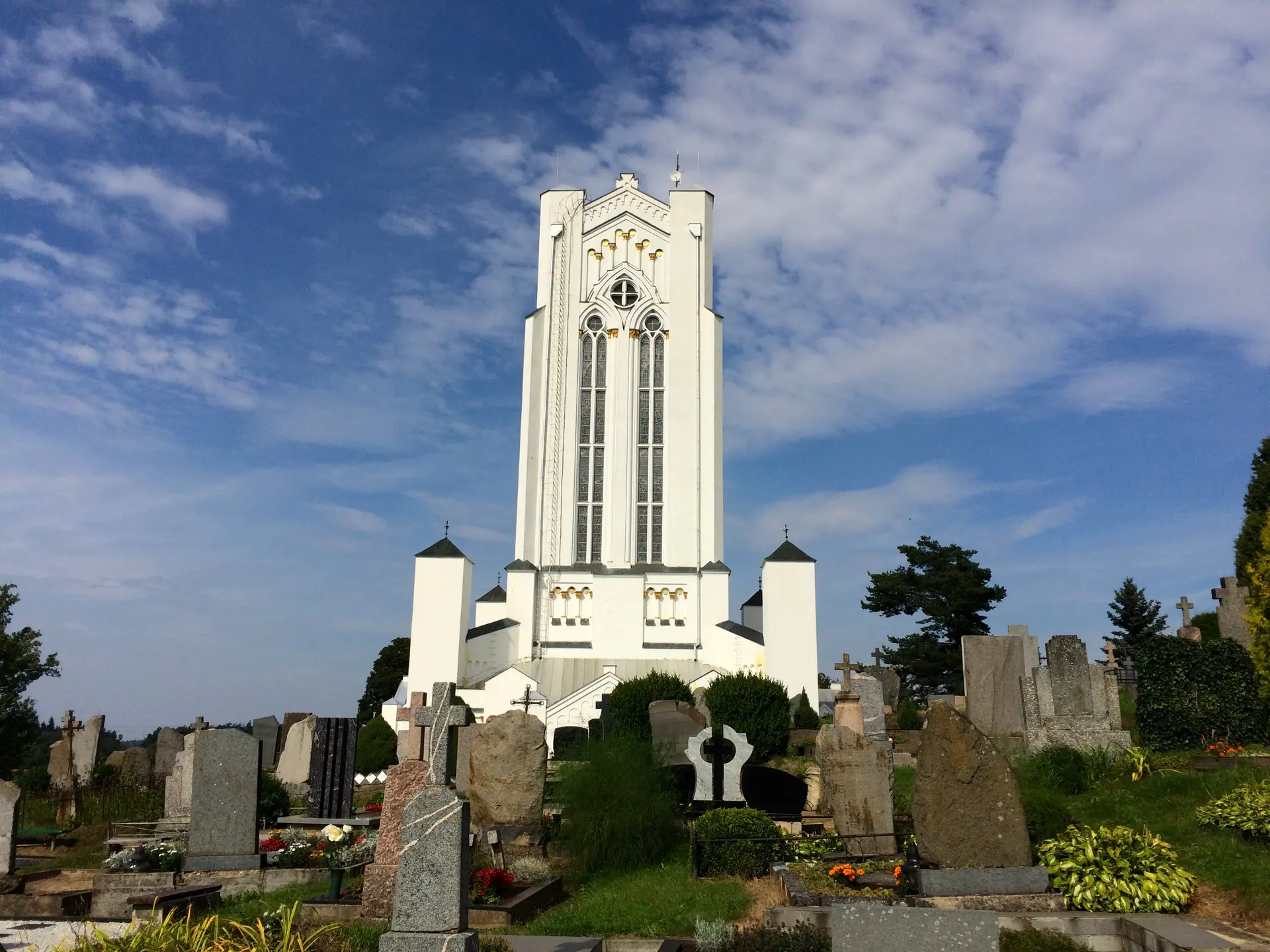
Our Lady of Šiluva (Our Lady of the Pine Woods), Šiluva, Lithuania
Šiluva, Raseiniai, Lithuania
55.3 km away
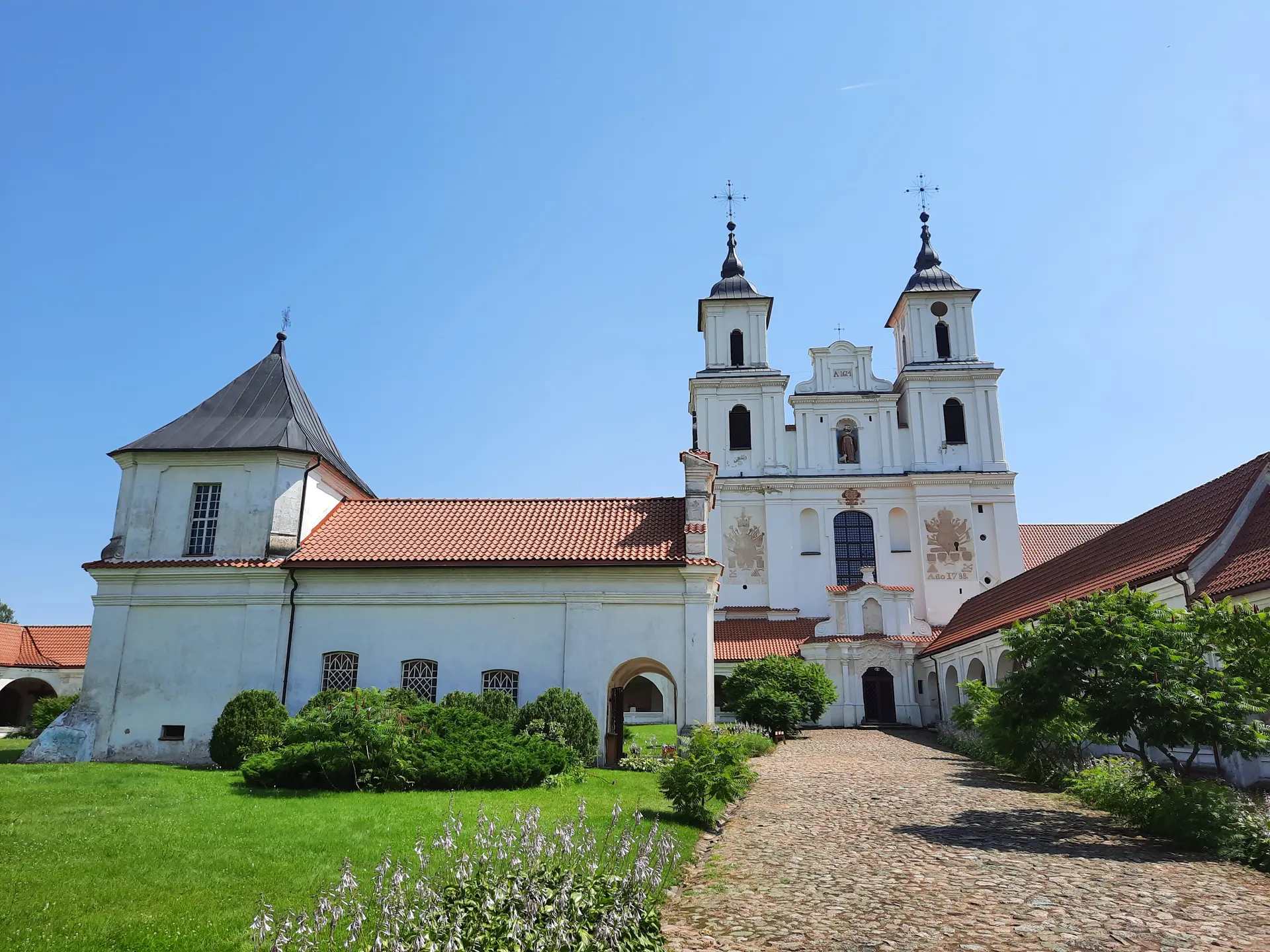
St. Mary Queen of Angels Church, Tytuvenai
Tytuvėnai, Kelmė, Lithuania
56.7 km away
Photo gallery
3 curated photos
Share a photo
Help visitors recognize Basilica of the Assumption of the Virgin Mary, Krekenava. Every submission is reviewed before publication.