Tytuveṅai Church and Monastery, Lithuania
A Baroque image of the New Jerusalem, where the Holy Stairs still draw pilgrims to their knees
Understand sacred places, explore living traditions, and learn how to engage respectfully with Pilgrim Map.
Access has not been verified. Check current local guidance before planning a visit.
Tytuvėnai, Kelmė, Lithuania
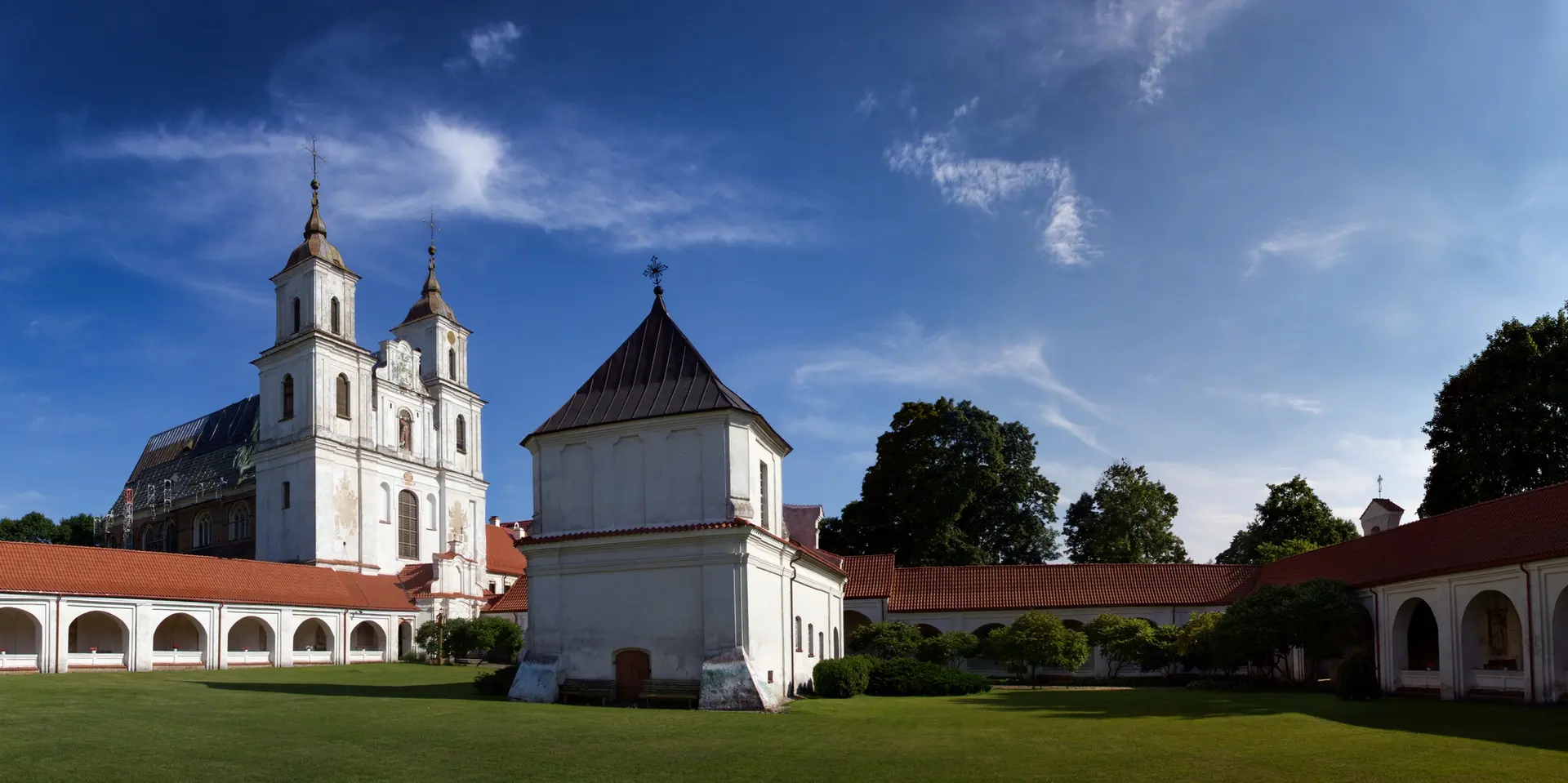
Image of Tytuveṅai Church and Monastery, Lithuania. Image source · CC-BY-SA-3.0
Visit essentials
A quick read before you go
- Duration
- 1.5 to 3 hours to explore the church, Holy Stairs Chapel, Way of the Cross, cloister, and…
- Access
- Located in the town of Tytuvenai, Siauliai County, approximately 30 km south of Siauliai.
Overview
At the center of Tytuvenai Monastery's courtyard, people still climb the Holy Stairs Chapel on their knees. Built in 1774-1775 from stone transported from Sweden, it seals relics beneath glass in each step. Pope Clement XIV granted a plenary indulgence to those ascending on four designated feast days, a practice continued for over two hundred and fifty years. Pilgrims press their knees against stone and touch their lips to glass over fragments held sacred.
The Bernardine Franciscans conceived Tytuvenai as a New Jerusalem for people unable to reach Palestine. Its 39-station Way of the Cross—with 14 gypsum high-reliefs and 25 wall paintings—maps Christ's trial and suffering onto the courtyard, turning movement through cloistered space into sacred time.
The monastery was founded in 1614 when nobleman Andriejus Valavicius invited five Bernardine monks from Vilnius and Kaunas to counter Catholicism's decline in Samogitia. Over two centuries they created one of the Grand Duchy of Lithuania's most elaborate Baroque religious ensembles. Tsarist authorities disbanded the community in 1832, but the church survived. Buildings restored since 1990 now house the Ecclesiastical Heritage Museum of the Siauliai Diocese.
Each September, a procession travels 14 km from Tytuvenai to the Marian shrine of Siluva. During Soviet occupation the underground 'Friends of the Eucharist' movement gathered here and walked to Siluva in spiritual resistance. The same tradition continues openly, led by the Bishop of Siauliai.
Places within this site
Why this place is sacred
The Bernardines designed the Tytuvenai complex as a microcosm of sacred geography. Within the enclosed courtyard, bounded by cloister galleries with ornate Late Baroque arcades and hexagonal corner chapels, the 39 stations of the Way of the Cross create a compressed version of Christ's path through Jerusalem. The distances were considered significant; the walk through the courtyard was meant to echo, in proportion, the actual Via Dolorosa.
At the center of this sacred landscape stands the Holy Stairs Chapel, a small, intense space that concentrates the devotional energy of the entire complex. The act of ascending on one's knees, touching relics through glass, praying at each step, transforms the body itself into an instrument of worship. This is not metaphorical pilgrimage but physical encounter with the sacred, made tangible through stone, glass, and bone.
The Baroque frescoes and stucco work, though damaged by time, fire, and neglect, retain their capacity to evoke the transcendent. The Late Baroque arcades of the cloister gallery, with their rhythmic arches, create a meditative walking space that frames the Way of the Cross stations. The hexagonal corner chapels provide intimate spaces for prayer within the larger ensemble.
The monastery's location as the departure point for the Siluva procession extends the thin place outward. For those who walk the 14 km path to Lithuania's most important Marian shrine, the monastery serves as a threshold between ordinary life and pilgrimage. The walk begins within these walls and ends at the feet of the Virgin. The trajectory from enclosed courtyard to open road to distant shrine creates a spatial narrative of spiritual transformation.
The monastery was founded as a Counter-Reformation mission to revive Catholicism in Samogitia. The Bernardine Franciscans understood their task not merely as preaching but as creating a complete sacred environment, a place where the mysteries of Christian faith could be physically experienced. The Way of the Cross and Holy Stairs Chapel represent the culmination of this vision, making Jerusalem present in a Lithuanian village.
The monastery reached its architectural fullness in the late 18th century, when the Vilnius Baroque reconstruction of 1764-1788 gave the complex its present appearance and the Way of the Cross was installed between 1770 and 1781. The disbandment of the Bernardine community in 1832 began a long decline. The monastery buildings were transferred to Orthodox ownership and parts were demolished in the late 19th century.
Restoration began after Lithuanian independence in 1990 and continues to the present. The Ecclesiastical Heritage Museum opened in 2011, and the Pilgrim Centre now offers interactive experiences. A fire of uncertain origin on January 26, 2012, caused significant water damage to recently restored frescoes on the second floor. The monastery exists today in a state of active recovery, its layers of damage and restoration mirroring the broader pattern of Lithuanian Catholic survival through persecution and neglect.
Experience and orientation
Enter the courtyard from the church and the monastery reveals itself as a world apart. The Late Baroque arcades of the cloister gallery frame the space with rhythmic arches, creating a sense of enclosure that separates the interior from the town outside. The scale is intimate compared to the church, more human, more conducive to private prayer.
The Holy Stairs Chapel stands at the center. Even for those who do not follow the traditional practice of ascending on their knees, the chapel's presence is powerful. The relics sealed beneath glass in each step, the worn surface of the stone from centuries of kneeling pilgrims, the small scale of the space itself, create an atmosphere of concentrated devotion.
Those who do climb on their knees describe the experience as profoundly physical and contemplative, the discomfort of stone against bone focusing attention in ways that comfortable worship spaces rarely achieve.
The Way of the Cross unfolds around the courtyard in 39 stations, a number significantly larger than the standard 14. The 14 gypsum high-reliefs depict the obligatory stations with sculptural force, while the 25 wall paintings expand the narrative to include Christ's trial before Pilate in multi-figure compositions. Walking the full circuit takes time, and the enclosed courtyard creates a sense of walking in circles that mirrors the meditative practice of circumambulation found in other traditions.
The Ecclesiastical Heritage Museum in the monastery buildings houses sacred art from across the Siauliai Diocese, providing context for the artistic and devotional traditions that produced the complex. The Pilgrim Centre offers interactive experiences, including writing with goose feathers, tasting kvass, and assembling rosaries, activities that ground the visit in physical engagement with monastic tradition.
Begin with the church, then move into the courtyard to encounter the monastery on its own terms. The transition from the soaring church interior to the enclosed courtyard creates a shift in scale and mood. Take the Way of the Cross slowly, pausing at each station. If you intend to climb the Holy Stairs on your knees, know that both ascent and descent are performed kneeling, following the traditional protocol.
The museum and Pilgrim Centre offer complementary perspectives after the devotional experience.
Context and lineage
Andriejus Valavicius, a powerful Lithuanian nobleman, acquired the Tytuvenai manor in 1609 and invited Bernardine monks to counter the decline of Catholicism in the Samogitian region. Five monks arrived from Vilnius and Kaunas, and on June 20, 1614, the cornerstone was consecrated. Valavicius donated 10,000 gold pieces for the construction.
The complex grew steadily over the following century and a half. Monastery buildings were completed by about 1633, and the church was consecrated in 1635. Frescoes and altars were completed by 1740. The Way of the Cross was installed between 1770 and 1781, and the Holy Stairs Chapel was built between 1774 and 1775 from stone specially transported from Sweden. Pope Clement XIV granted the plenary indulgence for the Holy Stairs in 1774.
The entire complex was reconstructed in the Vilnius Baroque style between 1764 and 1788, giving it the appearance that survives, in damaged but recognizable form, today.
The Bernardine Franciscans maintained continuous monastic life at Tytuvenai from 1614 until their disbandment by tsarist authorities in 1832. During those two centuries, the monastery was the spiritual, cultural, and commercial centre of the town. After the monks' expulsion, the church survived as a parish, but the monastery buildings suffered declining fortunes, with parts demolished in the late 19th century.
Restoration began after Lithuanian independence in 1990. The Ecclesiastical Heritage Museum of the Siauliai Diocese opened in the monastery buildings in 2011. The complex was designated a station on the John Paul II Pilgrim Way, connecting it to a national network of Lithuanian sacred sites. The annual procession to Siluva, which continued through Soviet persecution as an act of spiritual resistance, now proceeds openly each September.
Andriejus Valavicius
historical
Standard-bearer of the Grand Duchy of Lithuania who founded and funded the monastery and church. His concern for the state of Catholic faith in Samogitia drove the establishment of the Bernardine mission.
Pope Clement XIV
historical
Granted the plenary indulgence for pilgrims who climb the Holy Stairs on their knees on four designated feast days in 1774, establishing the chapel's devotional significance.
Bishop Motiejus Valancius
historical
Bishop of Samogitia who helped preserve the church after the dissolution of the Bernardine community in 1832, ensuring the survival of the worship space through tsarist repression.
Dalia Klajumiene
scholarly
Lithuanian art historian whose 2012 monograph in Lituanus journal provides the most detailed academic analysis of the Bernardine complex, its architecture, and its artworks.
Traditions and practice
The principal devotional practice is climbing the Holy Stairs on one's knees. Pope Clement XIV granted a plenary indulgence for pilgrims who do so on four designated feast days: Epiphany (January 6), Ascension (moveable feast), St. John the Baptist (June 24), and the octave of the Immaculate Conception (December 8-15). Pilgrims traditionally kiss the relics enclosed beneath glass in each step while praying.
The 39-station Way of the Cross provides a meditative walk through Christ's Passion that is considerably more elaborate than the standard 14 stations. The Bernardines designed it to express the monastery as an image of the New Jerusalem, making the Holy Land accessible to those who could not travel to Palestine.
Regular Masses continue in the church. The annual Tytuvenai-Siluva procession takes place on the last Sunday of August, led by the Bishop of Siauliai, inaugurating the eight-day Siline feast at Siluva. The complex is a station on the John Paul II Pilgrim Way.
The Ecclesiastical Heritage Museum houses sacred art from across the Siauliai Diocese. The Pilgrim Centre offers interactive experiences including writing with goose feathers, tasting kvass, and assembling rosaries, activities that engage visitors with aspects of monastic life in tangible ways.
The Holy Stairs merit the full traditional practice if you are physically able and willing. Ascending on your knees, pausing at each step to pray or simply to be present, transforms the climb from an act of observation into an act of devotion. The stone is hard. The pace is slow. Something shifts when the body commits to a practice that the mind alone cannot replicate.
Walk the Way of the Cross in the cloister courtyard at whatever pace feels right. The gypsum high-reliefs and wall paintings reward attention at each station. Notice how the enclosed courtyard creates a contained sacred space, how the circuit returns you to where you began, changed by the walking.
If the procession to Siluva falls during your visit, joining it connects you to a tradition that survived Soviet suppression. The 14 km walk from Tytuvenai to the Marian shrine follows a path that underground Catholics walked in defiance of the regime. Walking it today is an act of solidarity with their courage.
Bernardine (Franciscan Observant) Monastic Tradition
HistoricalThe Bernardines established the monastery in 1614 as a Counter-Reformation mission to revive Catholicism in Samogitia. For over two centuries, the monastery was the spiritual, cultural, and commercial centre of Tytuvenai. The monks created the Way of the Cross, built the Holy Stairs Chapel, and enriched the complex with the artworks that survive today. The community was disbanded in 1832 by tsarist authorities after the failed November Uprising.
Daily monastic offices and prayer, parish ministry and education, Counter-Reformation mission work in Samogitia, maintenance of the Way of the Cross and Holy Stairs devotions.
Way of the Cross and Holy Stairs Devotion
ActiveThe 39-station Way of the Cross (installed 1770-1781) and the Holy Stairs Chapel (built 1774-1775) form the devotional heart of the monastery. The Holy Stairs contain relics under glass in each step, and Pope Clement XIV granted a plenary indulgence for pilgrims who climb them on their knees on four feast days. The Way of the Cross, with its 14 gypsum high-reliefs and 25 wall paintings, is among the most elaborate in Lithuania.
Climbing the Holy Stairs on knees while praying, kissing the relics enclosed in each step, walking the 39 stations of the Way of the Cross, and plenary indulgence pilgrimage on four designated feast days (Epiphany, Ascension, St. John the Baptist, octave of the Immaculate Conception).
Tytuvenai-Siluva Pilgrimage Procession
ActiveEach year on the last Sunday of August, a pilgrimage procession departs from Tytuvenai to the Marian shrine of Siluva, approximately 14 km away, led by the Bishop of Siauliai. This procession inaugurates the eight-day Siline feast, one of Lithuania's greatest religious celebrations. During the Soviet era, starting in 1973, the underground 'Friends of the Eucharist' movement gathered in Tytuvenai and processed to Siluva as an act of spiritual resistance.
Walking procession from Tytuvenai to Siluva on the last Sunday of August, with prayers and singing during the walk. Participation in the Siline feast at Siluva shrine.
Heritage Conservation and Museum Stewardship
ActiveSince 1990, the monastery has been undergoing restoration, and the Ecclesiastical Heritage Museum of the Siauliai Diocese opened in 2011. The complex is a station on the John Paul II Pilgrim Way. The Pilgrim Centre offers interactive experiences that engage visitors with monastic tradition.
Ongoing conservation and restoration work, museum curation of sacred art from across the Siauliai Diocese, heritage tourism, Pilgrim Centre interactive experiences, and educational programs.
Perspectives and open questions
The Tytuvenai Monastery can be understood as Baroque sacred architecture, as a realized Franciscan vision of the New Jerusalem, as a site of Lithuanian Catholic resistance, and as a heritage monument in ongoing recovery. Each lens reveals a different dimension of what persists here.
Scholarly perspective
Art historians and architectural scholars regard the Tytuvenai ensemble as one of Lithuania's finest examples of Baroque sacred architecture, particularly the Vilnius Baroque style of the 1764-1788 reconstruction. Dalia Klajumiene's 2012 monograph provides the most detailed academic analysis. The Way of the Cross installation is studied as an expression of the Franciscan 'New Jerusalem' concept, the idea of making the Holy Land accessible to those who could not travel to Palestine.
The 39-station format, with its expansion beyond the standard 14 to include Christ's trial before Pilate, represents a distinctive devotional programme. The 2012 fire caused significant water damage to frescoes that had recently been restored, adding another chapter to the complex's history of destruction and recovery.
Living and traditional perspectives
For Lithuanian Catholics, the monastery is a place of proven devotion. The Holy Stairs, with their papal indulgence dating to 1774, offer a rare opportunity for embodied encounter with the sacred that connects directly to Rome and the Holy Land. The annual procession to Siluva carries particular emotional weight because it continued through Soviet persecution. The underground 'Friends of the Eucharist' movement, gathering here from 1973, represents one of Lithuanian Catholicism's most significant acts of spiritual resistance.
Open questions
The exact circumstances of the 2012 fire remain described as 'of uncertain origin.' The full extent of artistic losses from fire and water damage has not been publicly documented. Some of the monastery's original treasures, dispersed during the 19th-century disbandment of the Bernardines, may still exist in private or institutional collections. The extent of damage and recovery from the fire is not fully documented in available English-language sources.
Plan your visit
Access and arrival
Located in the town of Tytuvenai, Siauliai County, approximately 30 km south of Siauliai. Accessible by car; limited bus service from Siauliai. Approximately 14 km from the Siluva shrine. Mobile phone signal is generally available in Tytuvenai town. For current visiting hours and museum opening times, contact the complex through the official website or the Siauliai Tourism Information Centre.
Tytuvenai is a small town with limited accommodation. The Pilgrim Centre in the monastery may offer pilgrim hospitality. Siauliai, 30 km north, provides a full range of hotels and guesthouses. For current options, check visitsiauliai.lt or local tourism information.
Respectful visit
Modest dress appropriate for a Catholic church and monastery. Shoulders and knees should be covered, particularly in the church and Holy Stairs Chapel.
Photography is generally permitted in the courtyard and museum. Respectful photography inside the church and Holy Stairs Chapel. No flash near artworks or frescoes.
Candle lighting and donations are customary and support ongoing restoration.
Holy Stairs must be climbed and descended on knees following traditional protocol. Quiet and reverence in the church and chapel. Some areas may be restricted during restoration. Do not touch wall paintings, gypsum reliefs, or stucco work.
The Holy Stairs should be both ascended and descended on knees following the traditional protocol. This practice is physically demanding and may not be suitable for those with knee or mobility issues. Some areas of the monastery may be restricted during ongoing restoration work. The extent of damage from the 2012 fire and the current status of restoration are not fully documented in available sources.
Current practical details
Address
Maironio g. 2A, 86484 Tytuvėnai, Lithuania
Phone
Hours
Hours, fees, and access can change — verify on the official source before you travel. Practical details last checked Jun 2026.
Location
Map loads as you approach this section.
Pilgrim reflections
A portrait of encounter, not a score
Pilgrims describe what they felt, how present they could become, and whether the place would shape a journey. There are no stars and no ranking of traditions.
No reviewed reflections yet
The first pilgrims can help describe the character of being here.
Share a reflection
Available after an account-backed “Been there.” Every reflection is reviewed before publication.
Nearby sacred places
Explore other sacred places in the region. Proximity does not establish access or travel time; check each place’s guidance.
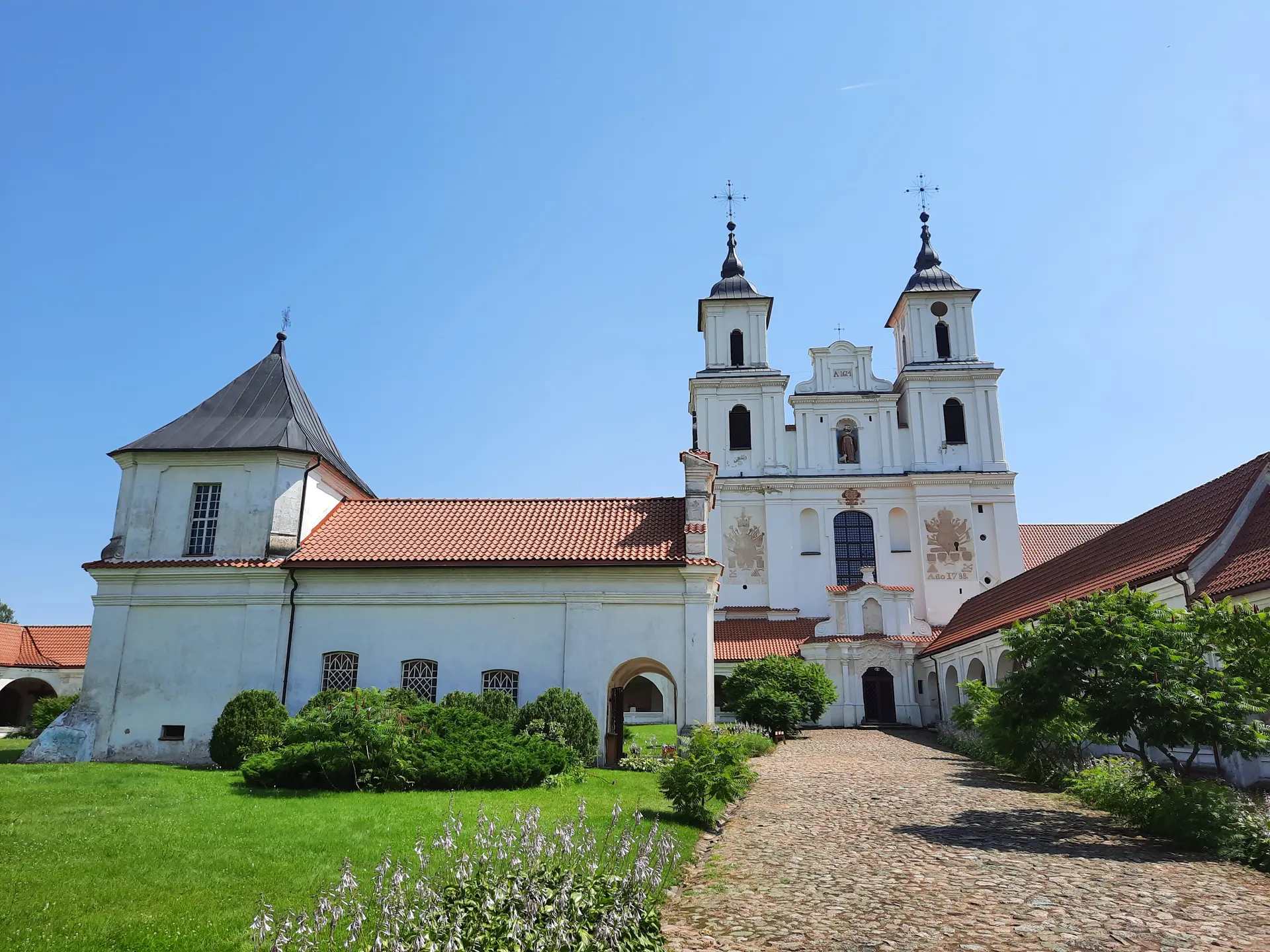
St. Mary Queen of Angels Church, Tytuvenai
Tytuvėnai, Kelmė, Lithuania
0.0 km away
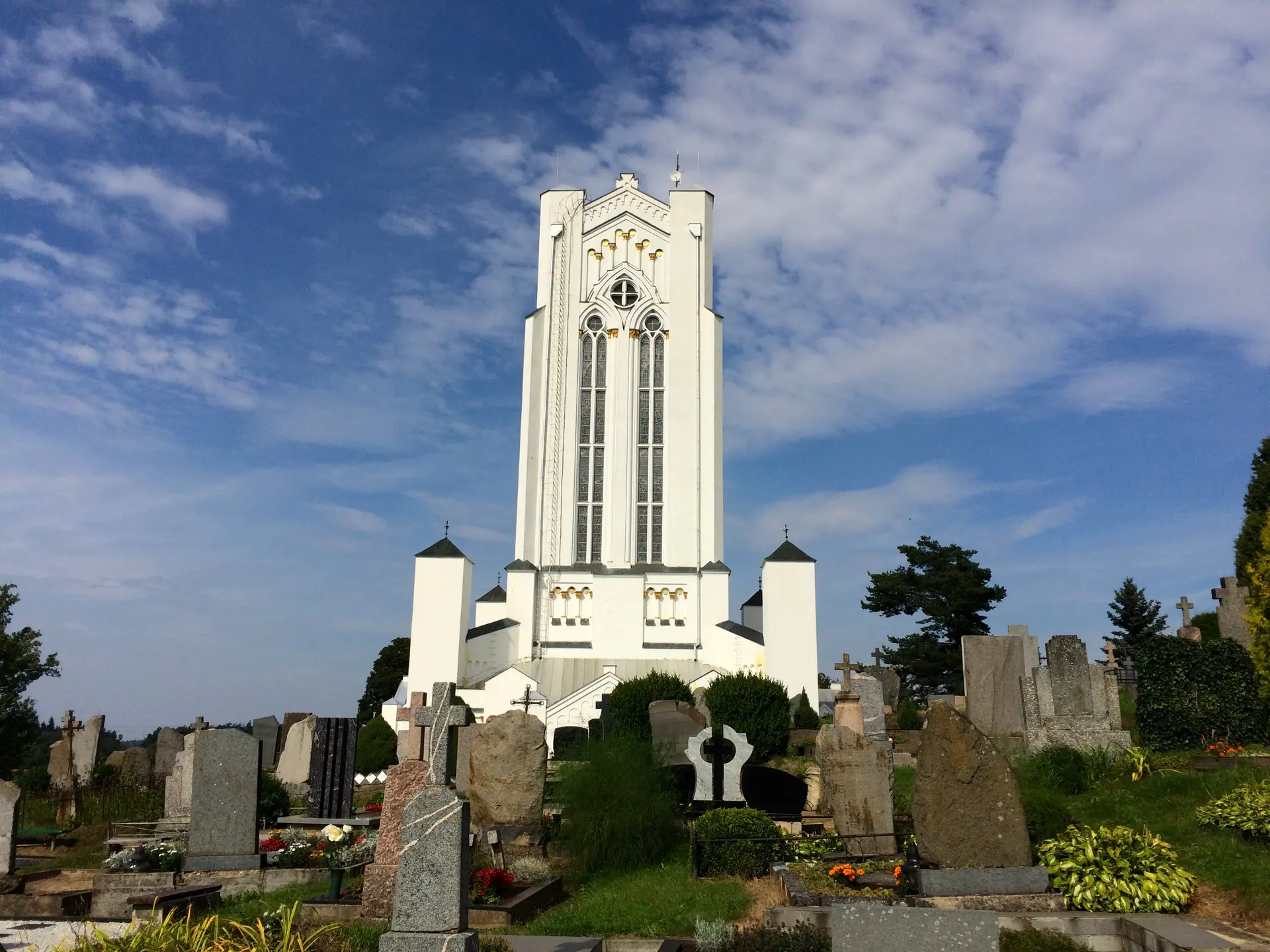
Our Lady of Šiluva (Our Lady of the Pine Woods), Šiluva, Lithuania
Šiluva, Raseiniai, Lithuania
7.4 km away

Basilica of the Nativity of the Blessed Virgin Mary, Siluva
Šiluva, Raseiniai, Lithuania
7.5 km away

Šiauliai Cathedral of St Peter and St Paul
Šiauliai, Šiauliai, Šiauliai County, Lithuania
38.1 km away
Share a photo
Help visitors recognize Tytuveṅai Church and Monastery, Lithuania. Every submission is reviewed before publication.