Basilica of the Nativity of the Blessed Virgin Mary, Siluva
Lithuania's greatest Marian treasure, crowned twice over two centuries, at the heart of a pilgrimage that fills a nation
Understand sacred places, explore living traditions, and learn how to engage respectfully with Pilgrim Map.
Access has not been verified. Check current local guidance before planning a visit.
Šiluva, Raseiniai, Lithuania

Visit essentials
A quick read before you go
- Duration
- 1-2 hours for the basilica alone.
- Access
- Located in the town of Šiluva, Raseiniai district, Kaunas County.
Overview
Six centuries of devotion converge at Šiluva. In 1457, nobleman Petras Gedgaudas placed in his church a Marian icon from Rome, a Hodegetria—'she who shows the way.' Generations came before the Reformation swept Lithuania and Calvinists took the church. In 1608, tradition says, a weeping Virgin appeared on a rock, shaking the investigating Calvinist professor so deeply that he later converted; the buried church and its painting were recovered in a defining moment of Lithuanian Catholicism.
After the faithful rebuilt, the painting's first canonical coronation in 1786 was witnessed by thirty thousand people and four presiding bishops; a second followed in 2006. It now presides over one of Lithuania's finest preserved late Baroque interiors: seven altars crafted over more than a decade by Tomas Podgaiskis and virtually unchanged for over two hundred years.
Each September, the eight-day Šilinės festival draws up to 100,000 pilgrims by bus and car, with some walking three days from the Hill of Crosses. The basilica becomes a nation's spiritual center, expressing what political history repeatedly tried to suppress.
Why this place is sacred
The late Baroque interior of the Basilica of the Nativity has been essentially unchanged since the 1780s. This is not a museum's preservation but a living church's continuity — the same altars, the same pulpit, the same organ loft serving the same purpose they were built for. Time has not stopped here; it has deepened. Two centuries of prayer have seeped into the walls, the wood, the gilding, until the building itself seems to carry the weight of accumulated devotion.
The crowned miraculous painting sits at the center of this weight. To stand before it is to stand at every turn of the place's history at once — its arrival, its loss during the Reformation, its recovery, and the day thirty thousand watched it receive its first papal crown. The painting does not merely depict the Mother and Child — it embodies the entire arc of Lithuanian Catholicism, from first conversion through persecution through renewal.
Podgaiskis's artistic programme amplifies this resonance. The seven altars are not random devotions but a structured theological meditation: Mary as Theotokos, Christ as founder of the Church, the Church itself as the community of the faithful. Moving through the basilica is, in a sense, moving through the entire story of Christian faith.
During Šilinės, the thinness extends beyond the basilica walls. The town square connecting the basilica to the adjacent Chapel of the Apparition becomes a sacred precinct, with the statue of John Paul II marking the path between the place of ongoing worship and the place of miraculous intervention. Pilgrims walking between the two buildings are walking between past and present, between event and response, between the weeping Virgin and the crowned Queen.
Church founded by nobleman Petras Gedgaudas in 1457 to house a Marian icon from Rome
From Gedgaudas's 1457 church through Reformation loss, 1608 apparition and recovery, 1641 wooden church, 1786 brick basilica and first coronation, 1988 elevation to Minor Basilica, 2006 second coronation with papal crowns. The site has been the largest pilgrimage destination in Lithuania for centuries.
Experience and orientation
Šiluva is a small town that becomes, for eight days each September, the spiritual capital of Lithuania. Approaching outside of festival time, the red brick basilica dominates the skyline with a warmth unusual in ecclesiastical architecture — not austere but welcoming, its material a quiet declaration that this is a place built from the earth it stands on.
The interior stops most visitors in their tracks. Podgaiskis's late Baroque ensemble is exceptionally well preserved and exceptionally coherent. Seven altars, each a distinct statement, create a visual theology that unfolds as you move through the space. Art historians study this as one of Lithuania's finest sacred interiors, but experiencing it directly is a different matter than analyzing it. The cumulative effect is of entering a space that has been thinking about the same things for a very long time.
The crowned miraculous painting draws the eye and the heart. In its Hodegetria pose — Mary pointing to the Child, showing the way — it has been doing exactly this for visitors since the fifteenth century. The silver and gold vestments and crowns accumulated over centuries speak of a devotion that has found no other adequate way to express itself.
After the basilica, walk to the Chapel of the Apparition, approximately 200 meters away across the town square — the site of the 1608 apparition. The path between the two buildings, past the statue of John Paul II, constitutes a miniature pilgrimage, connecting the site of miraculous intervention with the ongoing worship it inspired.
During Šilinės (September 8-15), everything intensifies. The festival's Masses, processions, and concerts create an environment of total immersion, and the walkers arriving on foot from the Hill of Crosses join a scale of communal devotion — tens of thousands united in prayer in a country of fewer than three million — that conveys something about the depth of Lithuania's spiritual life no text can fully capture.
Whether you come for the painting or the festival, give yourself time. This is a place that rewards patience — with its art, its history, and its living faith.
Context and lineage
In 1457, nobleman Petras Gedgaudas, a servant of Grand Duke Vytautas the Great, built a church and brought a Marian icon from Rome. During the Reformation (c. 1532-1569), the church was lost to Calvinists. In 1608, the Virgin appeared weeping to children and a Calvinist professor near the old church site, leading to the recovery of the buried church treasures and the restoration of Catholic worship. A wooden church was built in 1641.
The current brick basilica was consecrated on September 8, 1786 — the same day the painting received its first canonical coronation.
The basilica is the principal church of Lithuania's foremost Marian pilgrimage complex, complemented by the adjacent Chapel of the Apparition. The Šilinės festival connects to the Feast of the Nativity of the Blessed Virgin Mary celebrated here since 1457. The site is a designated station on the John Paul II Pilgrim Route.
Petras Gedgaudas
Nobleman who built the first church in 1457 and brought the Marian icon from Rome
Tomas Podgaiskis
Lithuanian artist who spent over a decade creating the basilica's late Baroque interior ensemble
Pope Pius VI
Authorized the first canonical coronation of the painting in 1786 — the first such coronation in Lithuania
Pope John Paul II
Elevated the church to Minor Basilica in 1988
Pope Benedict XVI
Blessed the golden crowns for the second coronation in 2006
Traditions and practice
The canonical coronation of the miraculous image (1786, renewed 2006). The annual Feast of the Nativity of the Blessed Virgin Mary celebrated since the 15th century. Pilgrim processions from the Dubysa Valley and Tytuvėnai. Indulgenced devotions. Veneration of the miraculous painting with prayer for graces and healing.
The eight-day Šilinės festival (September 8-15) with daily Masses organized around specific intentions — families, youth, the sick, missionaries, farmers, teachers, defense of life, and peace. A three-day youth and military pilgrimage from the Hill of Crosses (80 km on foot). Two pre-festival processions on the last Sunday of August. Veneration of the crowned painting year-round. Daily Mass and sacraments.
If possible, time your visit to coincide with Šilinės (September 8-15) for the full pilgrimage experience. Otherwise, the basilica rewards quiet visits at any time — the Baroque interior and crowned painting can be appreciated in solitude. Walk between the basilica and the Chapel of the Apparition as a miniature pilgrimage. If you have the endurance, the three-day walk from the Hill of Crosses is open to all participants.
Roman Catholicism
ActiveThe basilica is the principal church of Lithuania's most important Marian pilgrimage site. Elevated to Minor Basilica by Pope John Paul II in 1988. The annual Šilinės festival is the largest mass religious gathering in Lithuania, drawing up to 100,000 pilgrims. The late Baroque interior, preserved virtually unchanged for over 200 years, is considered one of the finest in the country.
Daily Mass, sacraments, eight-day Šilinės festival with Masses and processions, veneration of the crowned miraculous painting, pilgrimage processions, catechetical sessions during the festival, Eucharistic adoration.
Marian Devotion — Our Lady of Šiluva
ActiveThe basilica houses the crowned miraculous painting of Our Lady of Šiluva, a Hodegetria-style icon brought from Rome in 1457, canonically crowned in 1786 (the first such coronation in Lithuania) and re-crowned in 2006. Called 'Lithuania's greatest treasure,' it is among the most venerated sacred images in the country. The 1608 apparition of the weeping Virgin is one of the earliest approved Marian apparitions in Europe.
Veneration of the crowned painting, Marian hymns and prayers, rosary devotions, pilgrimage to seek Mary's intercession, celebration of the Nativity of the Blessed Virgin Mary.
Perspectives and open questions
Šiluva can be approached as Lithuania's foremost Marian pilgrimage site, as a masterpiece of late Baroque sacred art, or as a place where Catholic devotion intersects with deeper layers of Lithuanian spiritual identity.
Scholarly perspective
Art historians study the basilica as one of the finest preserved examples of late Baroque sacred architecture in Lithuania, with Podgaiskis's interior ensemble recognized as a coherent and exceptional artistic achievement. Academic analysis of its three-part iconographic programme reads it as a sophisticated theological statement. The 1786 canonical coronation — the first in Lithuania — is studied as marking Šiluva's formal elevation to national pilgrimage status.
Living and traditional perspectives
Lithuanian Catholic tradition considers the miraculous painting 'Lithuania's greatest treasure.' The painting is believed to possess miraculous healing powers, and the Šilinės festival is deeply embedded in Lithuanian cultural identity. During Soviet occupation, the festival continued despite official discouragement, serving as an act of cultural and spiritual resistance.
Alternative interpretations
Some note that the Šiluva site may occupy a location of pre-Christian spiritual significance, given its association with pine forests (sacred groves were central to Baltic paganism) and the apparition on a rock (stone veneration is an ancient Baltic tradition). The convergence of Marian devotion with these older landscape elements creates a layered spiritual geography.
Open questions
The exact origin and artist of the miraculous painting remain debated — whether it was truly brought from Rome in 1457 or is of later provenance. The full extent of miracles attributed to the painting has not been systematically catalogued. The relationship between Šiluva's devotion and pre-Christian Lithuanian sacred landscape traditions has not been thoroughly studied.
Plan your visit
Access and arrival
Located in the town of Šiluva, Raseiniai district, Kaunas County. Address: M. Jurgaičio a. 2, Šiluva. Approximately 55 km from Kaunas (about 1 hour by car) and about 200 km from Vilnius. By bus from Raseiniai (16 km). Raseiniai Bus Station: +370 428 51333. The basilica is in the town center, a short walk from the Chapel of the Apparition. Mobile phone signal is available in the town.
Limited accommodation in Šiluva itself — book well in advance for Šilinės. Raseiniai (16 km) and Kaunas (55 km) offer more options.
Respectful visit
Modest dress appropriate for a Catholic basilica — shoulders and knees covered.
Photography is generally permitted when services are not in progress. No flash to protect the historic artwork.
Candle offerings are traditional. Monetary donations to the parish are welcome. Votive offerings in gratitude for answered prayers continue a centuries-old tradition.
Silence or quiet prayer inside the basilica. Respectful behavior during services. No food or drink inside.
During Šilinės, Šiluva is extremely crowded relative to its size. Accommodation books up far in advance. Traffic congestion is common. For a quieter encounter with the basilica, visit outside of the September festival period.
Current practical details
Address
M. Jurgaičio g. 2, 60432 Šiluva, Lithuania
Phone
Hours
Hours, fees, and access can change — verify on the official source before you travel. Practical details last checked Jun 2026.
Location
Map loads as you approach this section.
Pilgrim reflections
A portrait of encounter, not a score
Pilgrims describe what they felt, how present they could become, and whether the place would shape a journey. There are no stars and no ranking of traditions.
No reviewed reflections yet
The first pilgrims can help describe the character of being here.
Share a reflection
Available after an account-backed “Been there.” Every reflection is reviewed before publication.
Nearby sacred places
Explore other sacred places in the region. Proximity does not establish access or travel time; check each place’s guidance.
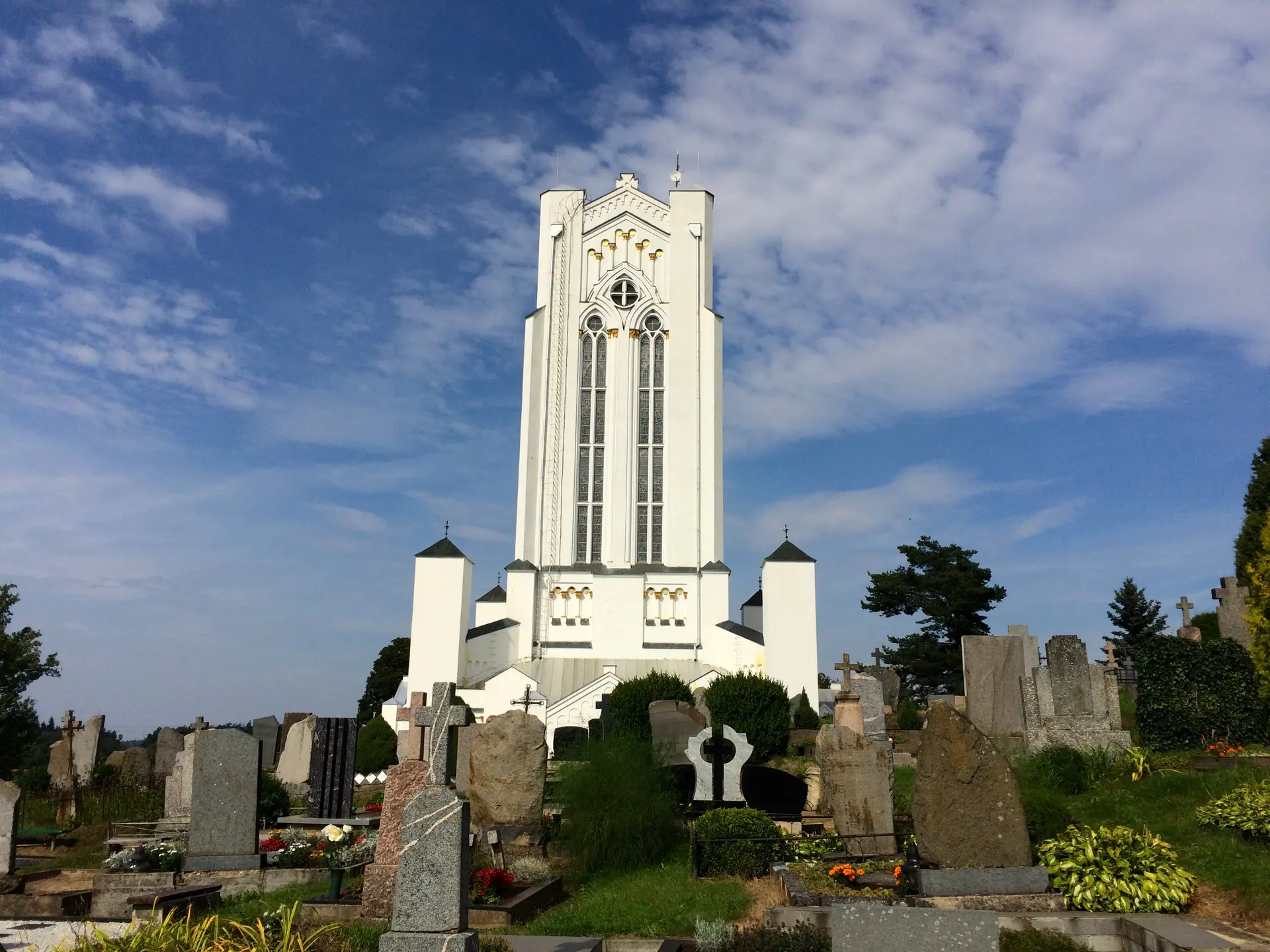
Our Lady of Šiluva (Our Lady of the Pine Woods), Šiluva, Lithuania
Šiluva, Raseiniai, Lithuania
0.3 km away
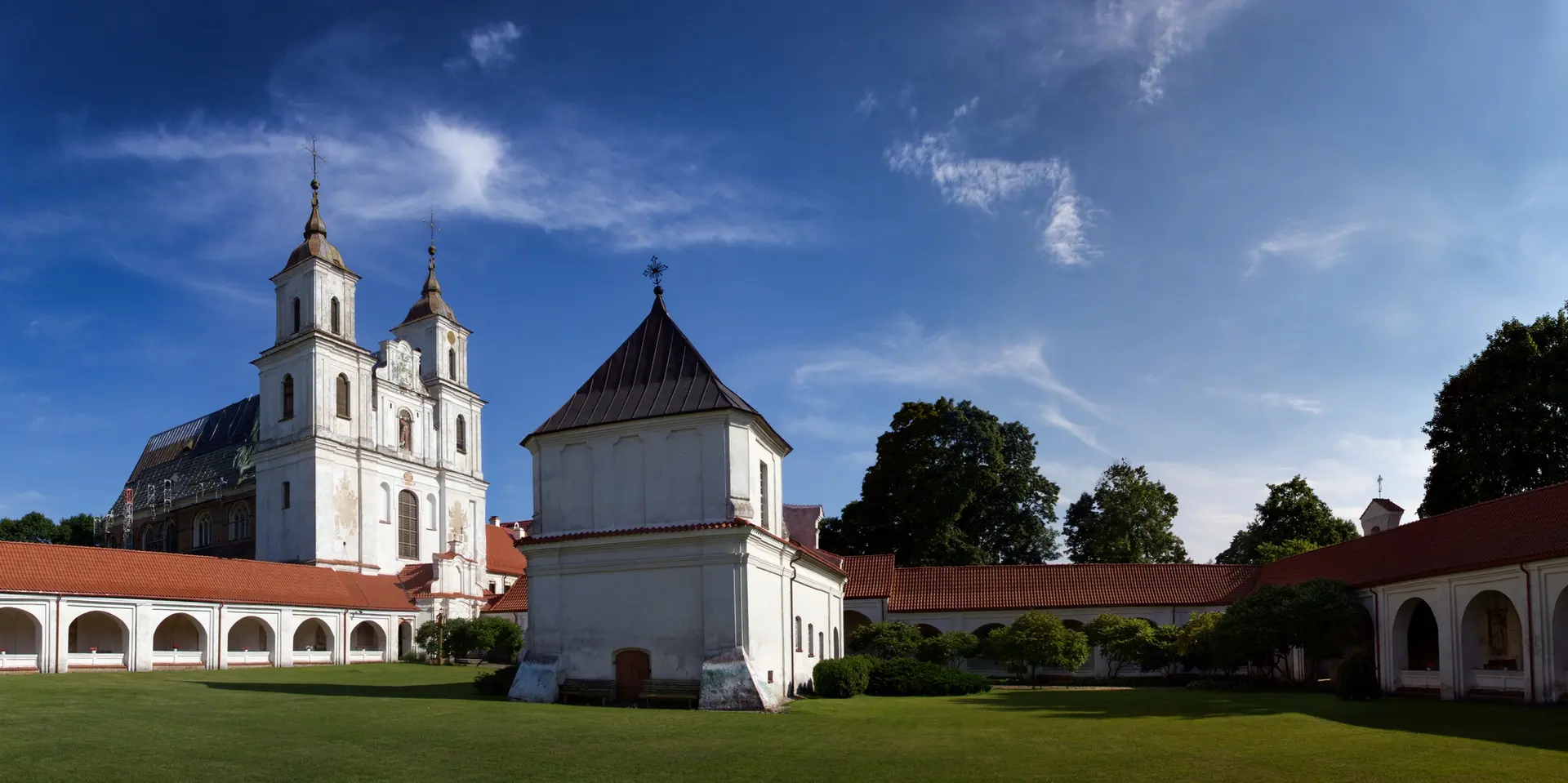
Tytuveṅai Church and Monastery, Lithuania
Tytuvėnai, Kelmė, Lithuania
7.5 km away
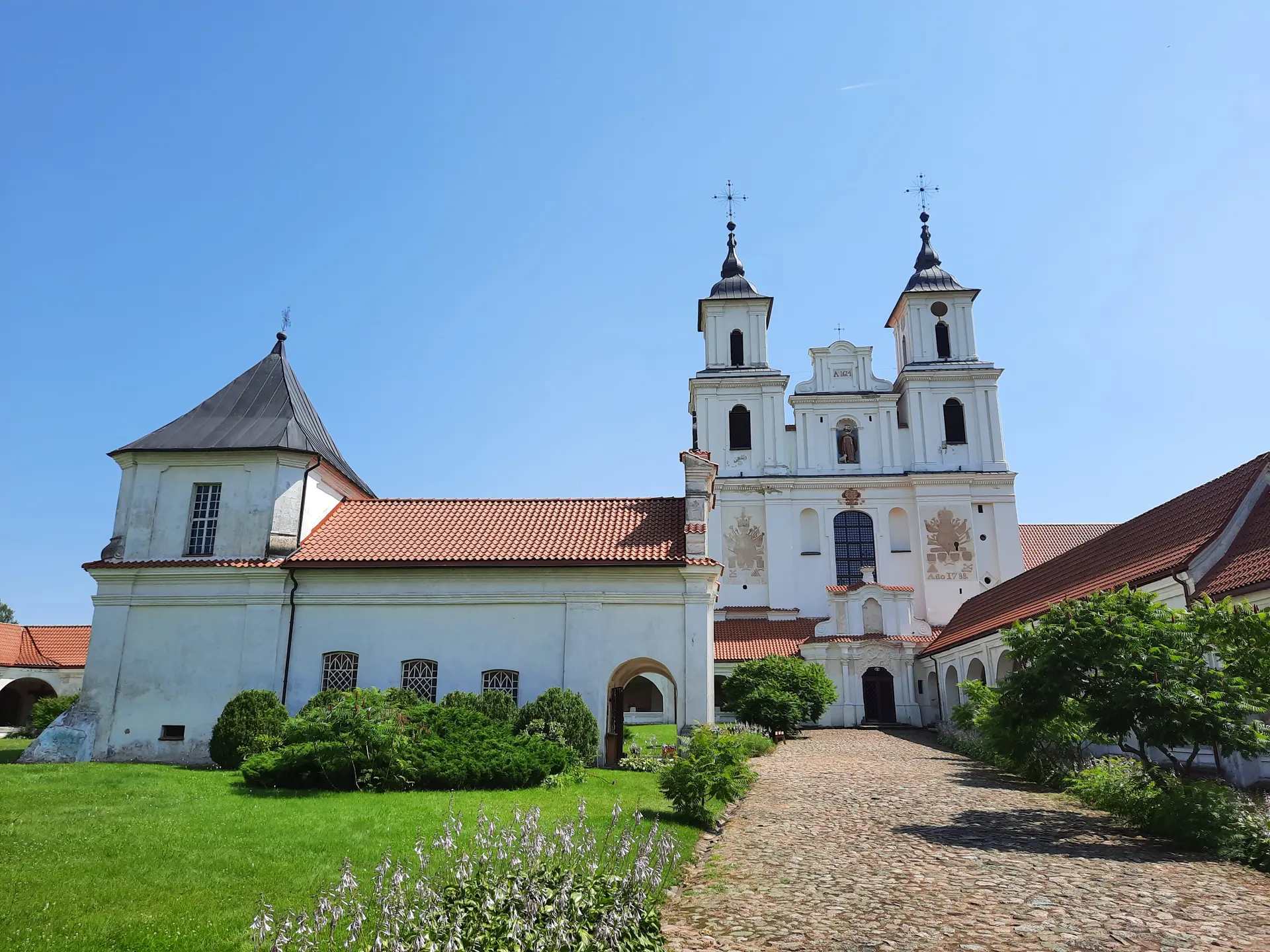
St. Mary Queen of Angels Church, Tytuvenai
Tytuvėnai, Kelmė, Lithuania
7.5 km away

Šiauliai Cathedral of St Peter and St Paul
Šiauliai, Šiauliai, Šiauliai County, Lithuania
45.2 km away
Photo gallery
6 curated photos
Share a photo
Help visitors recognize Basilica of the Nativity of the Blessed Virgin Mary, Siluva. Every submission is reviewed before publication.