St. Mary Queen of Angels Church, Tytuvenai
Part ofTytuveṅai Church and Monastery, Lithuania
Where Baroque altars rise toward the vault and four centuries of Marian devotion still hold
Understand sacred places, explore living traditions, and learn how to engage respectfully with Pilgrim Map.
Access has not been verified. Check current local guidance before planning a visit.
Tytuvėnai, Kelmė, Lithuania
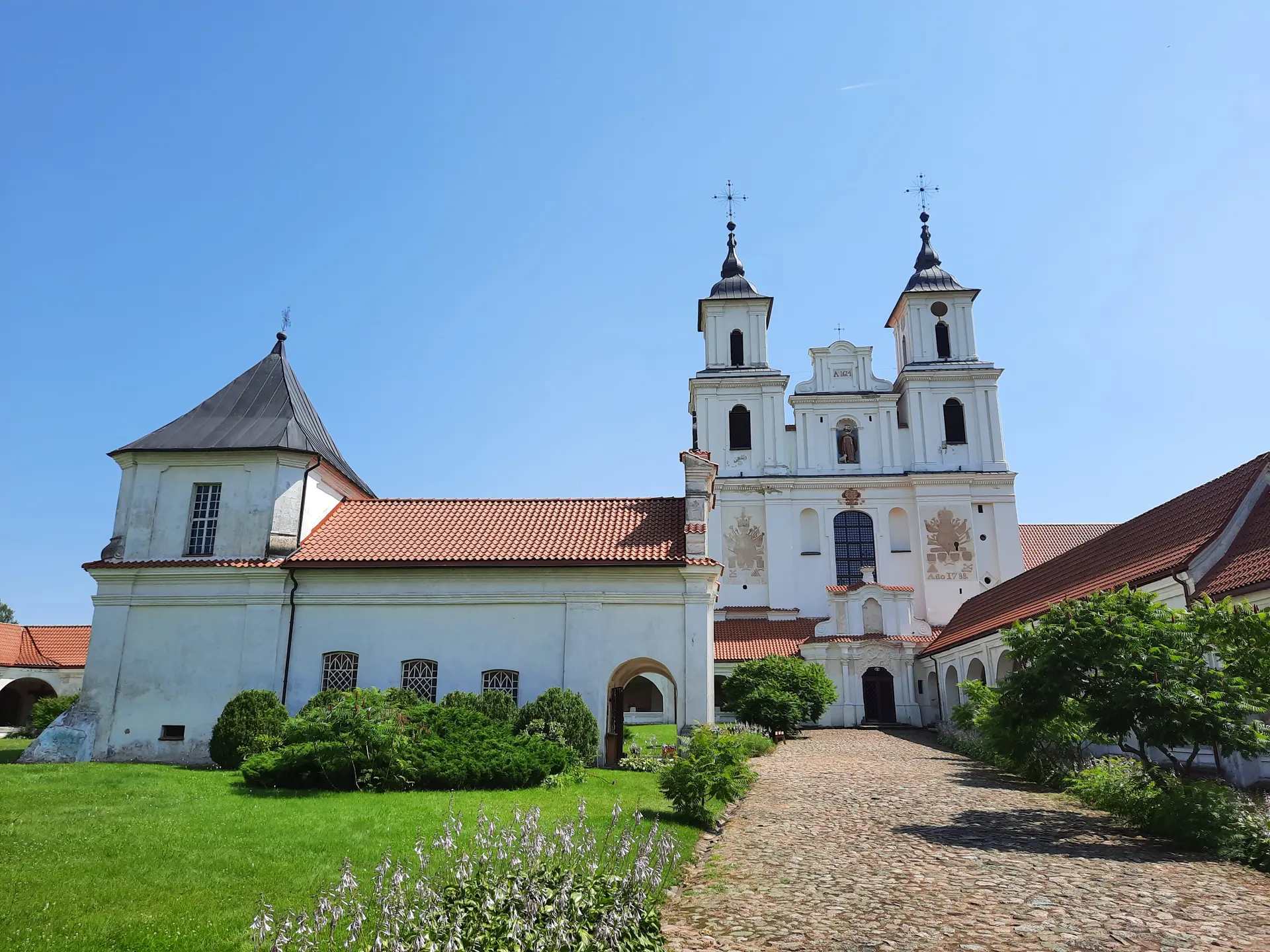
Image of St. Mary Queen of Angels Church, Tytuvenai. Image source · CC-BY-SA-4.0
Visit essentials
A quick read before you go
- Duration
- Allow 1 to 1.5 hours for the church itself.
- Access
- Located in the centre of Tytuvenai town, Siauliai County, approximately 30 km south of Siauliai.
Overview
Step through the doors of this red-brick church in the Samogitian heartland, and the world outside falls away. Nine Late Baroque altars rise almost to the vault, their gilded surfaces catching whatever light enters through the windows. Wall paintings cover nearly every surface, depicting Jerusalem, Biblical scenes, and the lives of saints in a continuous visual narrative that wraps around the nave like an illuminated manuscript opened to full span.
The Bernardine Franciscans who built this church beginning in 1614 intended exactly this effect. They came to Tytuvenai on a specific mission: to revive Catholic faith in a region where it had grown dormant. The church they created was not merely a place of worship but a teaching instrument, its painted walls serving as catechesis for a population that could not read Latin.
The dedication to Mary, Queen of Angels, reflects the deep Franciscan devotion to the Virgin that shaped everything here, from the main altar painting to the brass antependium depicting Bernardine saints.
That 1630s painting of the Mother of God still occupies the central altar, restored between 2002 and 2006 after centuries of veneration. Pilgrims have attributed merciful qualities to it for nearly four hundred years. The church survived tsarist suppression, Soviet atheism, and a damaging fire in 2012, each time returning to its essential purpose.
Today, the church serves as both an active parish and a cultural treasure. It stands on the John Paul II Pilgrim Way and serves as the departure point for the annual procession to the Marian shrine at Siluva. The accumulated weight of centuries of prayer, the sheer visual abundance of the interior, and the continuing vitality of the parish create a space where the sacred feels immediate rather than historical.
Why this place is sacred
Something happens to attention inside this church. The nine altars, arranged in carefully conceived pairs along the nave, create a theological dialogue that unfolds spatially. St. Francis faces St. Anne. Jesus of Nazareth faces Our Lady of Loreto. Each pairing invites contemplation of relationships within the Christian narrative that cannot be expressed in words alone.
The wall paintings contribute to this immersion. Rather than decorating the walls, they transform them into a continuous narrative environment. Scenes from Jerusalem, Stations of the Cross, and episodes from the lives of saints create a visual density that recalls medieval pilgrimage churches, where the inability to travel to the Holy Land was overcome by bringing the Holy Land to the worshipper. The 39-station Way of the Cross in the adjoining cloister courtyard extends this intention further.
At the center of it all stands the main altar, one of the tallest in Lithuania, with the 1630s painting of the Mother of God as its focal point. The painting has been venerated for nearly four centuries, its merciful qualities attributed to generations of prayer rather than any single miraculous event. The 1749 brass antependium below it, depicting four Bernardine saints and the Immaculate Conception, represents one of Lithuania's finest works of sacred metalcraft.
The multi-period architecture adds its own dimension. Gothic proportions hold Renaissance structure, which in turn hosts Late Baroque ornamentation. The effect is not of styles in conflict but of sacred time accumulated, each century adding its layer of devotion without erasing what came before.
The church was built as the spiritual anchor of a Counter-Reformation mission. Andriejus Valavicius, standard-bearer of the Grand Duchy of Lithuania, invited Bernardine Franciscans to Tytuvenai in 1609 specifically to counter the decline of Catholic practice in the Samogitian region. The five monks who arrived from Vilnius and Kaunas needed a church that could teach, inspire, and sustain faith in a population whose connection to Catholicism had grown tenuous.
The building they created, with its didactic wall paintings and its dedication to the Virgin Mary, was designed as an instrument of spiritual renewal.
The church was consecrated on November 1, 1635, by Bishop Jurgis Tiskevicius with six original altars. Over the following century and a half, the interior was enriched with additional artworks, culminating in the installation of the nine-altar Late Baroque ensemble with pulpit and baptismal font between 1777 and 1780. Baroque towers were added to the facade between 1759 and 1783, and a Rococo vestibule followed in 1773.
The dissolution of the Bernardine community by tsarist authorities in 1832 ended over two centuries of monastic life, but the church itself survived as a parish. It weathered Soviet-era restrictions and emerged into Lithuanian independence as both an active worship space and a recognized cultural monument.
The church's inclusion in the EU 'Baroque Road' cultural programme and the John Paul II Pilgrim Way has brought renewed attention, while the 2002-2006 restoration of the main altar painting and the recovery from the 2012 fire demonstrate ongoing commitment to preservation.
Experience and orientation
The approach matters less for its scenery than for its surprise. Tytuvenai is a small town in rural Samogitia, and nothing in the surrounding landscape prepares visitors for what lies inside. The red-brick exterior, handsome but restrained with its white decorative elements in the Renaissance style, gives only a partial hint.
Inside, the effect is immediate. The nine altars command the space, their gilded surfaces and carved figures rising to heights that create a sense of vertical aspiration. The main altar, with the venerated Mother of God painting at its center, draws the eye upward along its full height. For those unfamiliar with Late Baroque ensembles, the visual density can be overwhelming at first.
The richness is not ostentatious but purposeful, every surface working toward the same end: the dissolution of the boundary between the worshipper and the sacred narrative.
The wall paintings require time to absorb. They reveal themselves gradually, scene by scene, as the eye moves across surfaces that at first register only as decorated. Jerusalem appears. Biblical figures emerge. The Stations of the Cross unfold. This gradual revelation is part of the design; the Bernardines understood that sacred art works not through spectacle but through sustained attention.
The brass antependium on the main altar is worth particular study. Created in 1749, it depicts four Bernardine saints alongside the Immaculate Conception in metalwork of remarkable fineness. It is one of the most valuable artefacts in Lithuanian sacred art, and its presence at the foot of the altar, below the venerated painting, creates a layered devotional focus.
Those who visit during the annual pilgrimage procession to Siluva on the last Sunday of August experience the church as a threshold between ordinary life and the pilgrimage path. The church becomes the starting point of a journey that connects this site to Lithuania's most important Marian shrine, fourteen kilometres away.
Enter through the main doors and allow time for your eyes to adjust. The interior rewards slowness. Rather than moving immediately to the main altar, consider pausing in the nave to take in the paired altars along each side. Notice how each pair creates a relationship: theological, visual, spatial. Move forward gradually toward the main altar, letting the wall paintings reveal themselves as you walk.
If the cloister courtyard is accessible, the 39-station Way of the Cross offers a contemplative walk that complements the church interior. The Holy Stairs Chapel at the center of the courtyard is part of the wider monastery complex and deserves its own time.
Context and lineage
In 1609, the nobleman Andriejus Valavicius acquired the Tytuvenai manor and was troubled by the state of Catholic faith in the Samogitian region. He invited Bernardine Franciscan monks to establish a presence, and five arrived from Vilnius and Kaunas. Valavicius provided 10,000 gold pieces for the construction of both church and monastery. The foundation stone was consecrated on June 20, 1614.
The church rose in a style that blended Renaissance structure with Gothic elements, reflecting the transitional architectural moment of early 17th-century Lithuania. Construction dates vary slightly between sources, with the church taking shape between 1614 and 1635. The consecration on November 1, 1635, by Bishop Jurgis Tiskevicius, marked the beginning of over two centuries of continuous Bernardine monastic life at the site.
The Bernardine Franciscans maintained continuous monastic life at Tytuvenai from 1614 until their disbandment by tsarist authorities in 1832 following the failed November Uprising. During those two centuries, the monastery served as the spiritual, cultural, and commercial centre of the town. The monks built the Way of the Cross, the Holy Stairs Chapel, and enriched the church interior with the artworks that survive today.
After the monks' expulsion, the church continued as a parish through the efforts of Bishop Motiejus Valancius and the local faithful. It survived the Soviet period and emerged into Lithuanian independence as both an active parish and a protected cultural monument. The church's inclusion in the John Paul II Pilgrim Way (since 2009) and the EU 'Baroque Road' programme has connected it to wider European pilgrimage and heritage networks. International art festivals have been held in the complex since 2004.
Andriejus Valavicius
historical
Standard-bearer of the Grand Duchy of Lithuania who founded and funded the church and monastery. His concern for the state of Catholic faith in Samogitia drove the establishment of the Bernardine mission at Tytuvenai.
Bishop Jurgis Tiskevicius
historical
Bishop of Samogitia who consecrated the church on November 1, 1635, and who also established the Way of the Cross at Zemaiciu Kalvarija, linking two of Lithuania's most significant sacred sites.
Dalia Klajumiene
scholarly
Lithuanian art historian whose 2012 monograph provides the most detailed scholarly analysis of the Bernardine complex, its architecture, and its artworks.
The Blessed Virgin Mary
deity
The church is dedicated to Mary as Queen of Angels, reflecting the deep Franciscan tradition of Marian devotion. The 1630s main altar painting of the Mother of God has been venerated for nearly four centuries for its merciful qualities.
Traditions and practice
The Bernardine monks originally celebrated the full Divine Office and offered multiple daily Masses. The church hosted feast day celebrations, missions, and catechetical activities throughout the Samogitian region. The annual pilgrimage procession to Siluva has deep roots, with the underground Catholic movement 'Friends of the Eucharist' organizing processions from Tytuvenai to Siluva starting in 1973, during the Soviet era, as an act of spiritual resistance.
This tradition of walking from the church to the Marian shrine represents one of Lithuania's most enduring expressions of Catholic devotion.
Today, regular parish Masses continue in the church, along with feast day celebrations and Marian devotions. The annual Tytuvenai-Siluva procession takes place on the last Sunday of August, led by the Bishop of Siauliai, inaugurating the eight-day Siline feast at Siluva. Visitors may attend Mass, explore the monastery complex including the Holy Stairs Chapel and Way of the Cross, and visit the Pilgrim Centre in the monastery, which offers interactive experiences.
The church serves as a station on the John Paul II Pilgrim Way, connecting it to a network of Lithuanian sacred sites.
Spend time with the paired altars. Rather than passing through the church quickly, pause at each pair and consider the relationship between the facing figures. St. Francis and St. Anne. Jesus of Nazareth and Our Lady of Loreto. These pairings were not arbitrary; they reflect a theological architecture as deliberate as the physical one.
Stand before the main altar and look upward. The 1630s painting of the Mother of God occupies its center, surrounded by sculptures of Franciscan saints. Below it, the 1749 brass antependium rewards close examination. This vertical composition, from metalwork to painting to vault, represents the full aspiration of Bernardine devotion.
If time allows, walk the 39-station Way of the Cross in the cloister courtyard. The combination of gypsum high-reliefs and wall paintings was designed to make Jerusalem present in Samogitia. The walk takes on additional resonance when understood as the Franciscan ideal of bringing the Holy Land to those who could not travel there.
Roman Catholicism — Bernardine Franciscan Devotion
ActiveThe church was built by the Bernardine Franciscans, a branch of the Franciscan Observants, who held deep devotion to the Blessed Virgin Mary as Queen of Angels. The dedication reflects the Franciscan tradition of Marian piety. The main altar painting of the Mother of God, dating to the 1630s and restored between 2002 and 2006, has been venerated for its merciful qualities for nearly four centuries. The altar ensemble features sculptures of the most prominent Franciscan saints, and the 1749 brass antependium depicts four Bernardine saints and the Immaculate Conception.
Regular parish Mass, veneration of the Mother of God painting on the main altar, Marian devotions, and participation in the annual Tytuvenai-Siluva pilgrimage procession on the last Sunday of August. The church hosts feast day celebrations throughout the liturgical year.
Way of the Cross and Liturgical Art Tradition
ActiveThe church interior preserves an extraordinary cycle of wall paintings depicting scenes from Jerusalem, Biblical compositions, Stations of the Cross, and saints' lives. The 39-station Way of the Cross in the cloister courtyard, consisting of 14 gypsum high-reliefs and 25 wall paintings, represents the Franciscan ideal of making Jerusalem accessible to pilgrims who could not travel to the Holy Land. The Late Baroque ensemble of nine altars, pulpit, and baptismal font, installed between 1777 and 1780, forms one of the most complete surviving Baroque church interiors in Lithuania.
Walking the Way of the Cross in the cloister courtyard, contemplation of the wall paintings and Biblical scenes, and devotions at the paired altars. The Way of the Cross continues to draw pilgrims who engage with the gypsum reliefs and painted stations as a meditative journey through Christ's Passion.
Heritage Conservation and Scholarly Study
ActiveThe church is a protected cultural heritage monument, included in the EU 'Baroque Road' cultural programme and the John Paul II Pilgrim Way. Academic study, particularly Dalia Klajumiene's 2012 monograph, has established the complex's significance within Lithuanian and Baltic art history. International art festivals have been held in the complex since 2004, bringing contemporary cultural engagement to the historic site.
Ongoing scholarly research and documentation, conservation and restoration work (including the 2002-2006 restoration of the main altar painting and recovery from the 2012 fire), heritage tourism, and international art festivals.
Perspectives and open questions
The Church of St. Mary Queen of Angels sits at the intersection of art history, Counter-Reformation mission, Samogitian regional identity, and living Catholic devotion. Each perspective illuminates different aspects of the site, and none alone captures its full significance.
Scholarly perspective
Art historians classify the church as one of Lithuania's finest examples of multi-period sacred architecture. The Renaissance structure holds Gothic proportions and hosts a Late Baroque interior that forms a coherent ensemble. Dalia Klajumiene's 2012 scholarly monograph provides the most authoritative analysis, situating the complex within the broader context of Counter-Reformation architecture in the Grand Duchy of Lithuania.
The nine-altar Late Baroque ensemble, installed between 1777 and 1780, is regarded as one of the most complete surviving examples in the Baltic region. The 1749 brass antependium depicting four Bernardine saints and the Immaculate Conception is considered a masterpiece of Lithuanian metalwork.
Living and traditional perspectives
For the Catholic faithful of Samogitia, the church represents centuries of devotion sustained through adversity. The venerated Mother of God painting on the main altar, attributed with merciful qualities since the 1630s, embodies the Franciscan understanding of Mary as intercessor and protector. The church's role as the departure point for the annual procession to Siluva connects it to Lithuania's deepest Marian pilgrimage tradition.
The fact that the underground 'Friends of the Eucharist' movement chose this church as their starting point during Soviet persecution speaks to its centrality in Samogitian Catholic identity.
Open questions
The identity of the artists who created the wall paintings and frescoes remains largely unknown. They are attributed to artists influenced by Italian Baroque traditions, but individual names have not been documented. The full extent of the original fresco cycle before various restorations and the 2012 fire damage has not been completely recorded. Some of the monastery's original treasures, dispersed during the 19th-century disbandment of the Bernardines, may still exist in private or institutional collections.
Plan your visit
Access and arrival
Located in the centre of Tytuvenai town, Siauliai County, approximately 30 km south of Siauliai. Accessible by car. Limited bus service runs from Siauliai. Mobile phone signal is generally available in Tytuvenai town. For current visiting hours and access arrangements, contact the parish through the official website at tytuvenubaznycia.lt.
Tytuvenai is a small town with limited accommodation options. The Pilgrim Centre in the monastery complex may offer pilgrim hospitality. Siauliai, 30 km north, provides a full range of hotels and guesthouses. For current accommodation options, check local tourism information at visitsiauliai.lt.
Respectful visit
Modest dress appropriate for a Catholic church. Shoulders and knees should be covered.
Photography may be restricted to protect the wall paintings and art. Ask permission before photographing, particularly when using flash. No photography during services.
Candle lighting and donations are customary and support the maintenance of this extraordinary interior.
Maintain quiet and reverence during services. Do not touch wall paintings, altars, or the antependium. Follow guidance from museum staff regarding access to sensitive areas. Some areas of the monastery complex may be restricted during restoration work.
The wall paintings, altars, and brass antependium are nationally significant cultural treasures. Do not touch any of the artworks or surfaces. Follow guidance from parish or museum staff regarding access to sensitive areas. Some areas may be restricted during ongoing restoration work.
Current practical details
Address
Maironio g. 2A, 86484 Tytuvėnai, Lithuania
Phone
Hours
Hours, fees, and access can change — verify on the official source before you travel. Practical details last checked Jun 2026.
Location
Map loads as you approach this section.
Pilgrim reflections
A portrait of encounter, not a score
Pilgrims describe what they felt, how present they could become, and whether the place would shape a journey. There are no stars and no ranking of traditions.
No reviewed reflections yet
The first pilgrims can help describe the character of being here.
Share a reflection
Available after an account-backed “Been there.” Every reflection is reviewed before publication.
Nearby sacred places
Explore other sacred places in the region. Proximity does not establish access or travel time; check each place’s guidance.
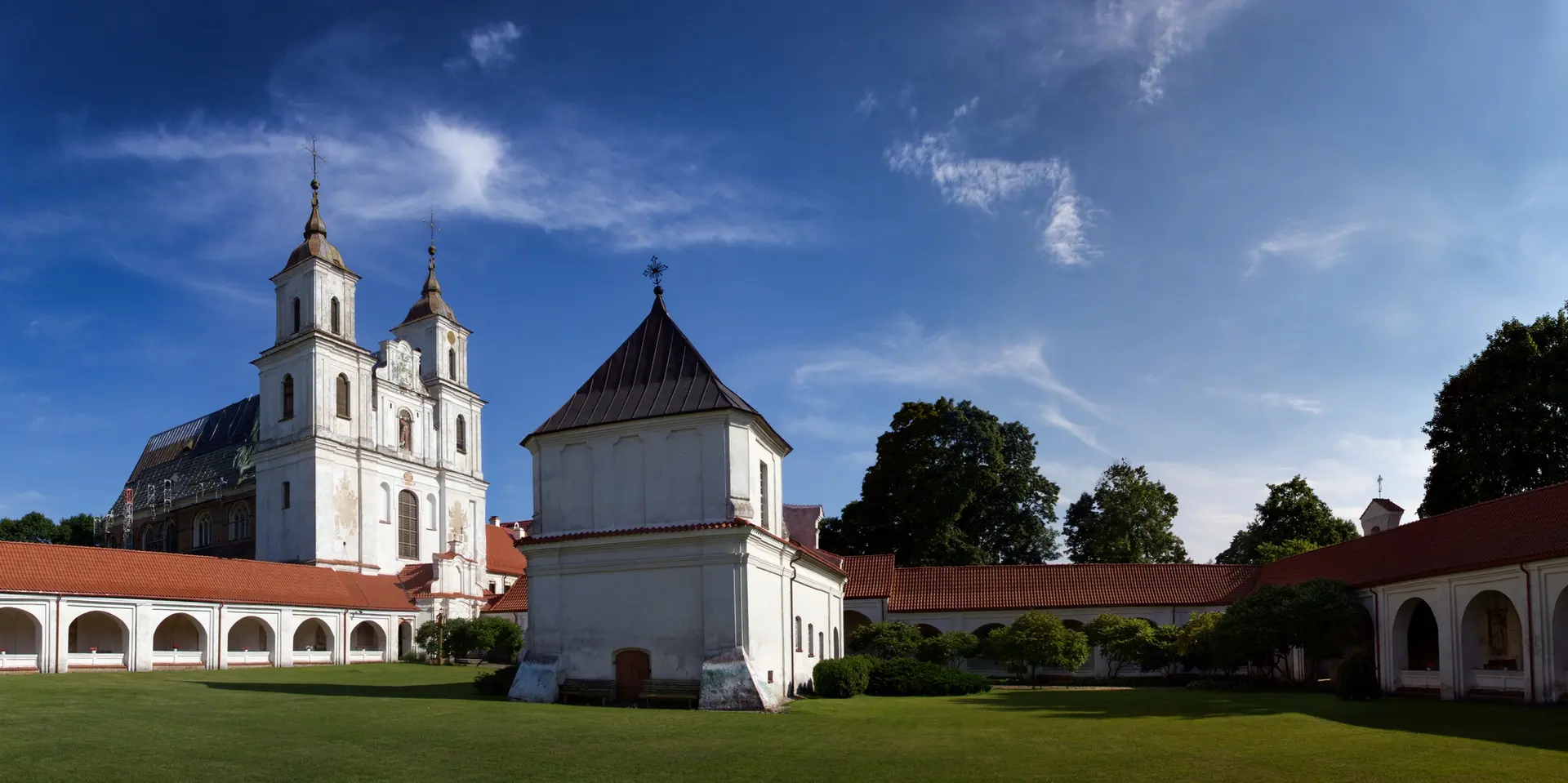
Tytuveṅai Church and Monastery, Lithuania
Tytuvėnai, Kelmė, Lithuania
0.0 km away
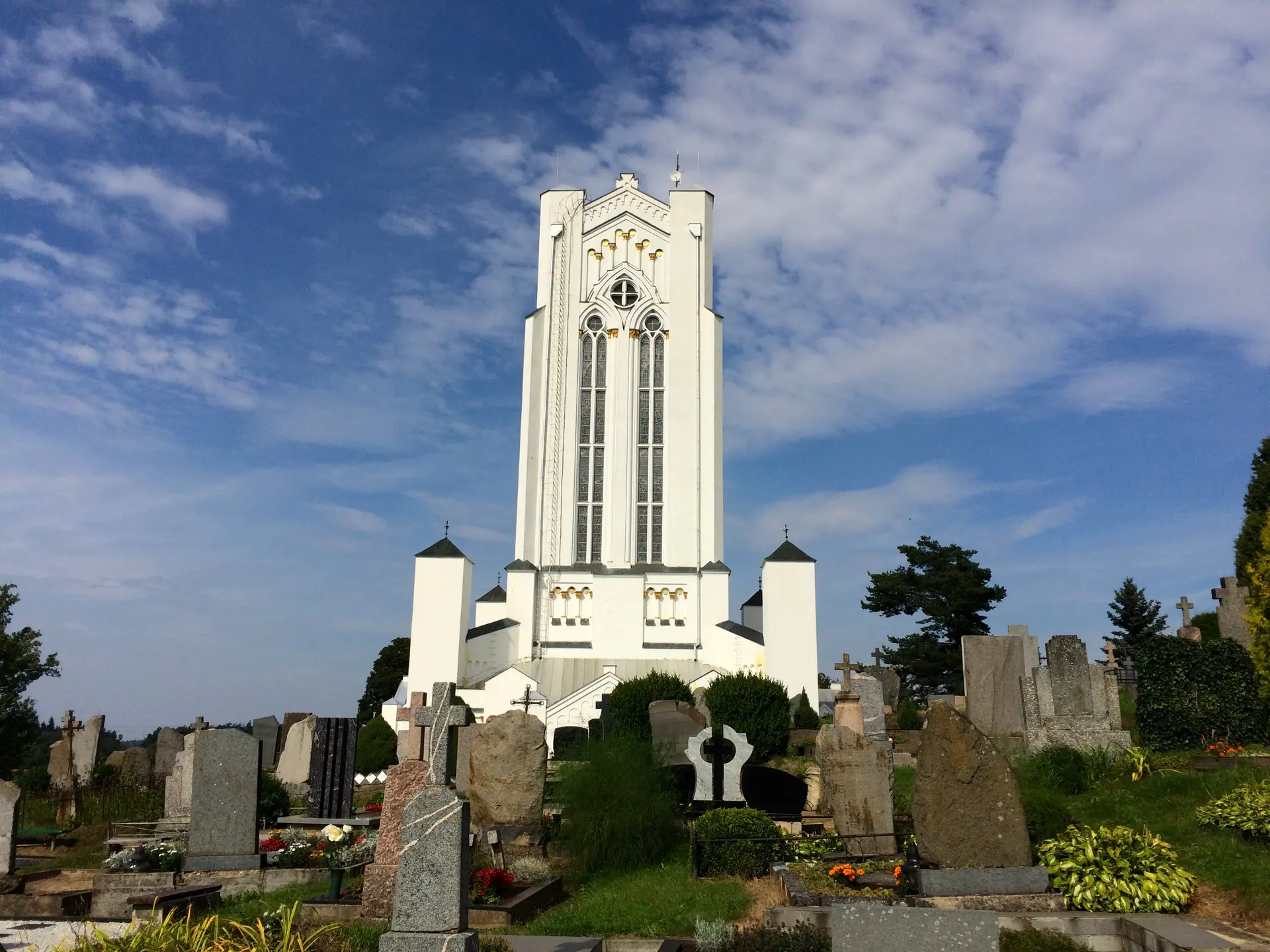
Our Lady of Šiluva (Our Lady of the Pine Woods), Šiluva, Lithuania
Šiluva, Raseiniai, Lithuania
7.4 km away

Basilica of the Nativity of the Blessed Virgin Mary, Siluva
Šiluva, Raseiniai, Lithuania
7.5 km away

Šiauliai Cathedral of St Peter and St Paul
Šiauliai, Šiauliai, Šiauliai County, Lithuania
38.1 km away
Share a photo
Help visitors recognize St. Mary Queen of Angels Church, Tytuvenai. Every submission is reviewed before publication.