Oshoro stone circle, Otaru, Hokkaido
Japan's ancient circle where Jomon ancestors observed the heavens 3,500 years ago
Understand sacred places, explore living traditions, and learn how to engage respectfully with Pilgrim Map.
Access has not been verified. Check current local guidance before planning a visit.
Otaru, Hokkaido, Japan
Read the sources
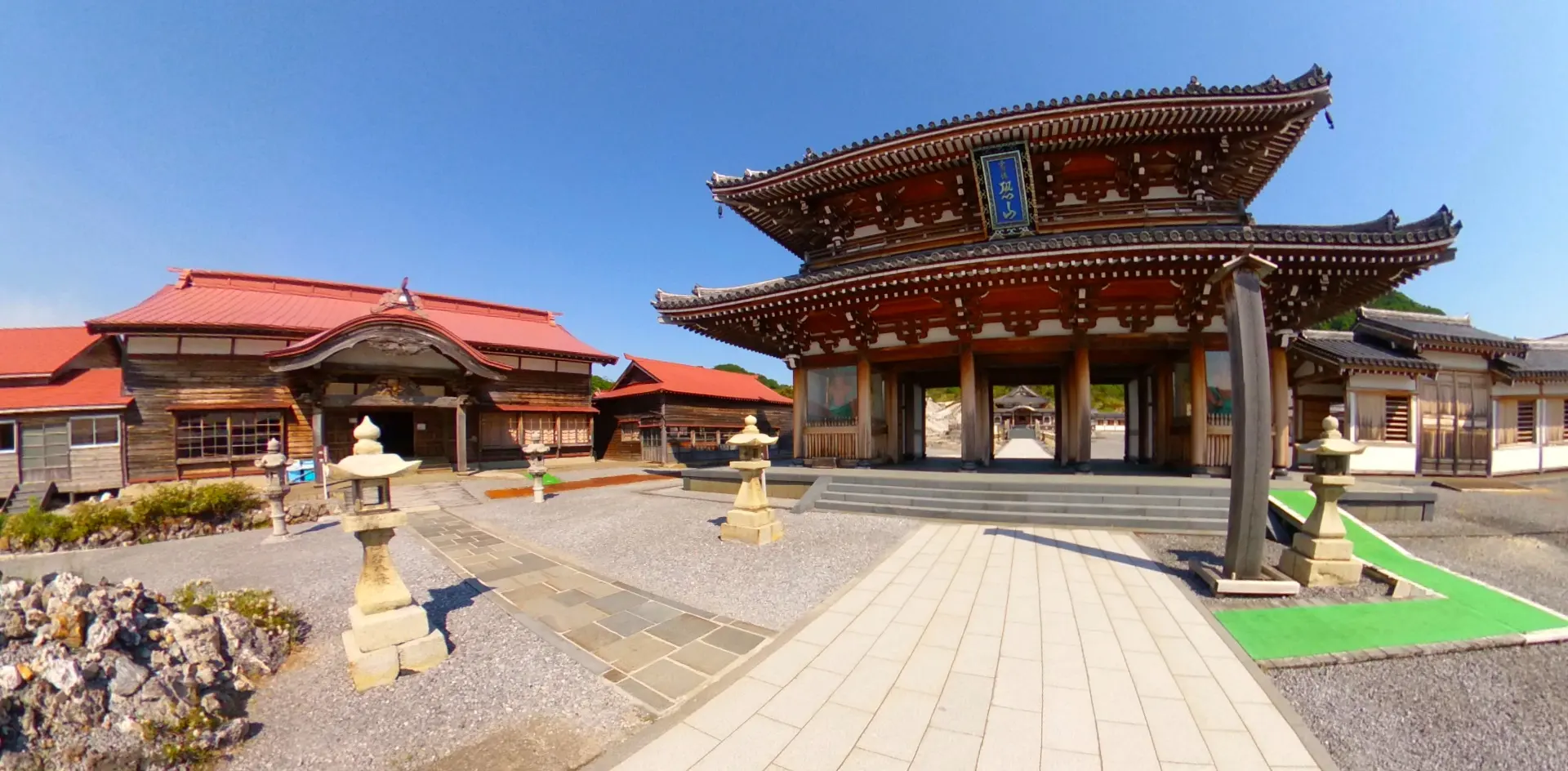
Image of Oshoro stone circle, Otaru, Hokkaido. Image source · Public Domain
Visit essentials
A quick read before you go
- Duration
- 30 minutes to 1 hour at the circle; combine with Otaru Museum for full understanding
- Access
- Open access (outdoor site), free admission.
Overview
Before Buddhism arrived from China, before Shinto had a name, or before rice cultivation reshaped Japan, Jomon people gathered at northern-island stone circles to honor their dead, mark seasons, and connect with forces they understood as spirits inhabiting all things, animate and inanimate. Built around 1500 BCE, Oshoro is one of Japan's most significant surviving monuments from that era.
Its oval, roughly 33-by-22-meter form encloses stones aligned to the cardinal directions. Investigating in 1902, archaeologist Neil Gordon Munro recognized the alignments as intentional, suggesting Jomon knowledge of cosmic cycles. The sun's path, the seasons' turning, and the stars' positions formed a stone calendar for those who could read it.
Excavation also revealed a cemetery where ancestors rested in communal sacred space. Roughly 400,000 tool fragments and pottery sherds may represent ritual disposal in which objects were ceremonially 'killed' to release spirits. Here the boundary between living and dead, human and spiritual worlds, was consciously thinned.
Designated a Historic Site of Japan in 1961, the circle overlooks the Hokkaido coast and connects visitors with the islands' oldest spiritual traditions.
Why this place is sacred
The Jomon people built their stone circles at places where boundaries could be crossed. The dead were buried here because burial within the circle connected them to continuing community. The celestial alignments marked because cycles visible in sky and stone united heaven and earth. The massive quantities of deliberately deposited artifacts suggest the circle served as a threshold where objects could transition from the living world to the spiritual realm.
This understanding of the circle as portal illuminates its function. Standing within the stones today, one occupies the same geography where Jomon people stood to bid farewell to their dead, to mark the solstices, to release spirits from worn-out tools. The stones have not moved. The cardinal directions remain. The sky turns overhead as it did when these rocks were first arranged.
The thinness here is not mystical atmosphere but historical fact. For centuries, perhaps millennia, human beings designated this specific ground as a crossing point. Their accumulated attention, their ceremonies, their dead, all concentrated here. Whether understood as residual spiritual presence or simply awareness of deep human continuity, something of that designation persists.
The Jomon constructed the circle as a multifunctional sacred center: cemetery connecting generations, ceremonial ground for community rituals, astronomical observatory marking time, and threshold where spirits could be honored and released.
The circle was used across many generations during the Late Jomon period. The Ainu people, considered descendants of the Jomon, may have modified the stones over subsequent millennia. Archaeological investigation began with Munro in 1902. Designation as a Historic Site in 1961 secured its protection. Related Jomon sites received UNESCO World Heritage status in 2021.
Experience and orientation
The Oshoro Stone Circle occupies a gentle rise near Hokkaido's western coast. Unlike European megalithic monuments with their massive uprights, this circle consists of thousands of smaller stones clustered in patterns that become visible as you approach. The overall form, an oval roughly 33 by 22 meters, is immediately comprehensible, though the inner arrangements require more careful attention.
The setting contributes to the experience. Away from urban Otaru, in countryside that has changed relatively little from the landscape the Jomon would have known, the circle feels appropriately remote from modern life. The quiet allows contemplation that busier sites cannot support.
What visitors report most consistently is a sense of connection across vast time. Standing where people gathered 3,500 years ago to bury their dead and mark the heavens, one recognizes these same human impulses in oneself. The desire to honor those who have died, to understand our place in cosmic cycles, to gather at significant places, these have not changed.
The Oshoro Stone Circle makes visible how old these spiritual needs are and how continuously humans have sought to address them.
The modest scale of the circle, compared to Stonehenge or Avebury, creates intimacy. One can walk among the stones, trace the patterns, imagine the ceremonies. The site asks for engagement rather than mere observation.
Approach slowly, allowing the overall form to become clear before examining details. Walk the perimeter to grasp the full oval. Notice the cardinal alignments Munro identified. Consider the ceremonies that brought communities here across centuries. The Otaru Museum displays artifacts recovered from the site, providing valuable context for your visit.
Context and lineage
The Jomon people constructed stone circles across northern Japan as sacred spaces connecting the living world with the realm of ancestors. These were places of burial, ceremony, and cosmic observation, built over many generations as expressions of an animistic worldview in which all things possessed spirit. The Oshoro Stone Circle represents this tradition at its fullest development.
The Jomon people inhabited Japan for over 14,000 years before rice cultivation arrived from the continent. Their animistic spirituality, believing that all things contained spirits, influenced later Japanese religious development. The Ainu people, whose ancestral connection to the Jomon is genetically confirmed, preserved aspects of this worldview into historical times.
Neil Gordon Munro
Archaeologist
Traditions and practice
The Jomon conducted burial ceremonies for ancestors within the circle's sacred space. Seasonal gatherings marked the turning of the year, calibrated through the stones' celestial alignments. Communal rituals brought scattered populations together. Ritual disposal of objects, the ceremonial 'death' of tools and pottery whose spirits needed release, accumulated over centuries into the vast artifact deposits recovered by archaeologists.
No traditional practices continue at the site. Archaeological study and preservation are the primary activities. Visitors come for educational purposes, heritage appreciation, and personal contemplation of the ancient past.
Approach the circle as you would a cemetery, with respect for those buried here. Stand within the stones and consider the ceremonies once held here. If you feel moved to leave a small offering, do so modestly. Consider visiting during solstice or equinox when the original astronomical alignments may have been most significant. Visit the Otaru Museum to see artifacts and deepen understanding.
Jomon Spirituality
HistoricalThe Jomon people's animistic worldview held that each object, animate and inanimate, housed a spirit. The stone circle functioned as cemetery, ceremonial center, trading ground, and portal for ritual disposal of objects whose spirits needed release.
Burial of ancestors within sacred space, seasonal ceremonies aligned with celestial cycles, communal gatherings, ritual disposal of spirit-inhabited objects through ceremonial deposition
Perspectives and open questions
The Oshoro Stone Circle can be understood through archaeological scholarship, Ainu traditional knowledge, and speculative interpretations of its spiritual function.
Scholarly perspective
Archaeological research confirms the Oshoro Stone Circle as a Late Jomon period ceremonial and burial site. The cardinal alignments observed by Munro in 1902 indicate astronomical knowledge. The massive quantity of artifacts suggests the site served multiple functions over extended use. The Jomon stone circles represent a unique prehistoric tradition comparable in significance to European megalithic monuments.
Living and traditional perspectives
The Ainu people, considered likely descendants of the Jomon, modified the stones over time. Early archaeologists noted connections between Jomon and Ainu spiritual traditions. The animistic worldview that all things contain spirit is reflected in both cultures. Ainu oral traditions may preserve echoes of Jomon understanding, though direct transmission is difficult to verify.
Alternative interpretations
Some researchers propose the stone circles served as 'portals to the spirit world,' places where the boundary between realms was consciously thinned. The circular form and cosmic alignments may have been designed to facilitate communication with ancestors and spirits dwelling beyond ordinary perception.
Open questions
The precise ritual practices conducted at the site remain unknown. The meaning of the cardinal alignments, beyond general astronomical significance, has not been recovered. The relationship between Jomon and later Ainu spiritual traditions awaits fuller understanding. Why 400,000 objects were deposited here, and what specific ceremonies attended their deposition, cannot be determined from archaeological evidence alone.
Plan your visit
Access and arrival
Open access (outdoor site), free admission. Located near Otaru city, accessible by car. Public transportation very limited. Check accessibility during winter months.
Otaru city offers various accommodations from hotels to guesthouses. Consider combining with visits to Otaru's canal district and historic buildings.
Respectful visit
Practical outdoor clothing appropriate for the season. Warm layers recommended in cooler months. Sturdy footwear for uneven ground.
Permitted. Documentary and artistic photography welcome.
Not traditional but small, respectful offerings are acceptable if discreetly placed without disturbing stones.
{"Do not disturb, move, or remove any stones","Do not dig or disturb the ground","Do not remove any materials from the site","Respect the site's status as protected heritage"}
This is a protected heritage site. Do not disturb, remove, or rearrange any stones. Do not dig or remove any materials. The site lacks facilities; prepare accordingly.
Current practical details
Address
2 Chome Oshoro, Otaru, Hokkaido 048-2561, Japan
Hours
Hours, fees, and access can change — verify on the official source before you travel. Practical details last checked Jun 2026.
Location
Map loads as you approach this section.
Pilgrim reflections
A portrait of encounter, not a score
Pilgrims describe what they felt, how present they could become, and whether the place would shape a journey. There are no stars and no ranking of traditions.
No reviewed reflections yet
The first pilgrims can help describe the character of being here.
Share a reflection
Available after an account-backed “Been there.” Every reflection is reviewed before publication.
Nearby sacred places
Explore other sacred places in the region. Proximity does not establish access or travel time; check each place’s guidance.


References
Sources consulted for this page. Source categories describe the publication, not a guarantee that every claim is verified. Traditional accounts and outside interpretations may differ.
- 01Circles of stone: exploring the monuments of Jomon Japan — The Past MagazineacademicArchaeological analysis
- 02Avebury and the Stone circles of Jomon Japan — Sainsbury Institute for Japanese Arts and CulturesacademicAcademic exhibition and research
- 03Secrets of the Stone Circles - Heritage of Japan — Heritage of JapanspiritualComprehensive cultural context
- 04Did Ancient Oshoro Stone Circle Serve As A Portal To The Spirit World? — Ancient PagesSource contextSpiritual interpretation
- 05Oshoro Stone Circle - The Megalithic Portal — The Megalithic PortalSource contextSite documentation
Share a photo
Help visitors recognize Oshoro stone circle, Otaru, Hokkaido. Every submission is reviewed before publication.