Nether Largie North Cairn
A Bronze Age burial cairn where forty carved symbols guard a single tooth across five millennia
Understand sacred places, explore living traditions, and learn how to engage respectfully with Pilgrim Map.
Access has not been verified. Check current local guidance before planning a visit.
Kilmartin, Scotland, United Kingdom
Read the sources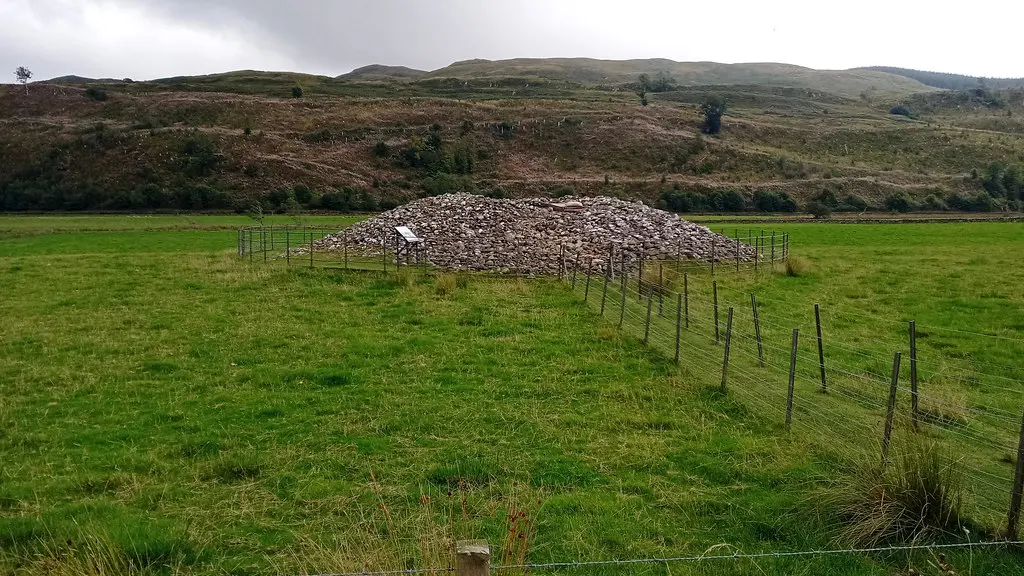
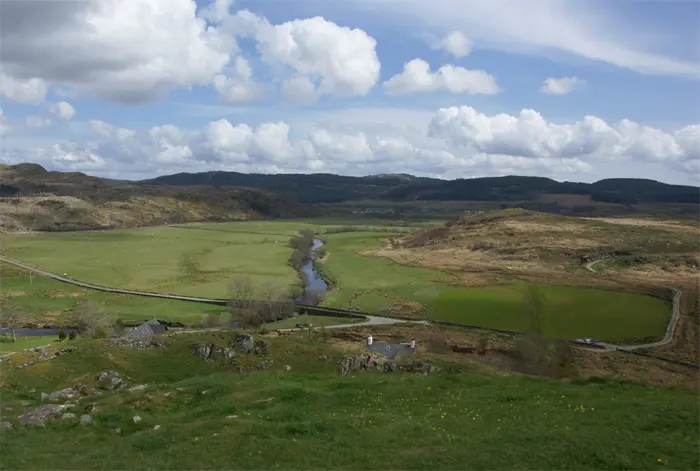
Image of Nether Largie North Cairn. Image source
Visit essentials
A quick read before you go
- Duration
- Allow 30 to 45 minutes for Nether Largie North Cairn and the walk to reach it.
- Access
- From the car park at the junction of the A816 and B8025 near Kilmartin, follow the signed path…
Overview
Five burial cairns run for over two kilometres along Kilmartin Glen, deliberately placed across perhaps fifteen centuries of construction. Second from the north, Nether Largie North was originally a broad mound twenty-one metres across and three metres tall, raised over a central stone coffin.
Its capstone bears approximately forty cup-and-ring marks, made without metal tools, and two still-legible axe-heads. Some archaeologists think it may be an older standing stone reused to seal the burial. If so, its carvings record two acts of consecration centuries apart, each generation recognizing the stone as ritually important.
When J.H. Craw excavated the cairn in 1930, the enormous capstone covered a carefully built cist containing one human molar—no skeleton, grave goods, or offerings. Community labor, forty sacred markings, and two carved weapons guarded the last physical trace of an unnamed person.
Reconstructed in the 1970s, the cairn now has a concrete inspection cell where visitors descend and view the carvings by torchlight. The modern threshold leads from the open glen into darkness and marks older than any European written language, then back into rain, cattle, and a valley that has watched these stones for five thousand years.
Why this place is sacred
What makes a place thin is not always architectural grandeur or dramatic geology. Sometimes it is accumulation. Kilmartin Glen holds more than 350 ancient monuments within six miles of the village, and the density alone alters perception. Walking through this landscape, you pass from cairn to standing stone to stone circle to rock art panel, each separated by green fields where Highland cattle graze, each marking a point where someone decided the boundary between worlds required attention.
Nether Largie North Cairn participates in this density but also possesses its own particular thinness. The inspection cell, added in the 1970s, is a concrete chamber sunk into the reconstructed cairn. You descend a short flight of steps, leave daylight behind, and stand in a small dark space looking at a stone slab carved five thousand years ago. The cup and ring marks are abstract, their meaning lost. The axe-head carvings are representational, recognisable, but their purpose is equally opaque.
You are looking at a communication you cannot decode, sent from a time that left no interpreters.
This encounter with illegibility is itself a form of thinning. The modern world saturates experience with explanation, context, narrative. Here, explanation runs out. The marks are clear. Their meaning is gone. You stand in that gap, and it is exactly the space where something other than understanding might enter.
The linear cemetery adds another dimension. Five cairns line the valley floor over two kilometres, their construction spanning perhaps fifteen hundred years. Generation after generation chose this same corridor of land for their most important dead. The commitment across centuries suggests not a single act of consecration but an ongoing recognition, a valley that kept revealing itself as the right place for the threshold between life and death.
The cairn was constructed as a burial monument, housing a stone cist beneath a mound of carefully placed stones. The elaborate carvings on the capstone indicate that the burial was ceremonial rather than merely practical. The position within a linear cemetery of five cairns suggests the burial site was chosen to connect the deceased with an established sacred geography, placing them in a lineage of honoured dead stretching back centuries.
The cairn's original construction dates to the late Neolithic or Bronze Age. The capstone may represent an even earlier phase of ritual use if, as some archaeologists suggest, it was a repurposed standing stone. The cairn remained visible in the landscape across millennia but was not formally studied until J.H. Craw's 1930 excavation. The 1970s reconstruction, including the concrete inspection cell, transformed the site from an inaccessible mound into an interpretive monument.
Kilmartin Museum, redesigned in 2023, now provides extensive context. The glen has become a destination for spiritual seekers and heritage tourists alike, with pilgrimage tours specifically incorporating the cairns as stations on a sacred landscape walk.
Experience and orientation
The approach to Nether Largie North Cairn begins at a car park near the junction of the A816 and B8025, from which a path leads through fields toward the linear cemetery. The walk itself is part of the experience. Highland cattle may be grazing in the pastures. The valley stretches ahead, its floor remarkably flat, the hills rising on either side to frame a corridor that funnels the eye along the line of cairns.
Temple Wood stone circle, if you begin from the south, stands among trees to your left, its stones leaning at angles that suggest immense age.
The cairns appear as large, rounded mounds of stone, their surfaces textured with lichen and small plants. Nether Largie North presents itself as a broad, low dome, clearly reconstructed but substantial enough to convey the scale of the original monument. A path leads to the entrance of the inspection cell.
Descending into the cell is the pivotal moment. The concrete steps take you below the surface of the cairn into a small, dim chamber. Through a viewing panel, the cist is visible, and there is the capstone with its cargo of marks. A torch is essential. As the beam moves across the stone surface, the cup and ring marks emerge from shadow, concentric circles pressed into rock by patient hands.
The two axe-head carvings appear among them, their outlines distinct, their blades pointing in recognisable directions. Forty marks on one stone. One tooth in one coffin. The arithmetic of what survives.
Climbing back out of the cell, the valley reasserts itself. Light, air, the sound of water somewhere, the call of a bird. The contrast between the enclosed darkness below and the open glen above enacts the very transition the cairn was built to house: from the world of the dead to the world of the living, from the sealed chamber to the breathing sky.
Walking onward to the other cairns extends the experience. Nether Largie Mid, Nether Largie South (which visitors can enter), Ri Cruin to the north, Glebe Cairn near the village. Each has its own character. But the inspection cell at Nether Largie North offers something none of the others do: a moment of enclosure, of proximity to marks no one can read, of darkness interrupting a landscape of open sky.
Begin at the car park at the A816/B8025 junction. Walk south to Temple Wood stone circle for context, then north through the linear cemetery. Arrive at Nether Largie South Cairn first, where you can enter the Neolithic chamber. Continue north to Nether Largie Mid, then Nether Largie North. Bring a torch for the inspection cell. After viewing the carvings, continue north to Ri Cruin if time allows, then return along the path.
Visit Kilmartin Museum either before or after the walk for interpretive depth.
Context and lineage
No founding myth survives for Nether Largie North Cairn. The monument belongs to a preliterate culture that left no written records, and whatever stories accompanied the burial have been lost across five millennia.
What the archaeological record reveals is a deliberate act of commemoration: a community that gathered stones into a mound twenty-one metres wide, that carved forty symbols and two axe-heads into the capstone of a burial cist, that placed this monument in precise alignment with others stretching through the valley floor.
The linear cemetery itself tells a story of sustained commitment to this landscape. The five cairns appear to have been built over approximately fifteen hundred years, from the late Neolithic Nether Largie South Cairn to the Bronze Age monuments further north. Each generation chose the same corridor of land for their most significant dead.
Whether this reflects a dynastic tradition, a religious conviction about the sanctity of this particular valley, or some other logic entirely, the result is a visible genealogy written in stone, a procession of monuments that mirrors and perhaps commemorates a procession of generations.
The spiritual lineage of Nether Largie North Cairn extends back to the Neolithic and Bronze Age communities who built the linear cemetery across perhaps fifteen hundred years. These peoples left no written record but created a material culture of extraordinary sophistication, including stone circles, standing stones with astronomical alignments, and thousands of cup and ring mark carvings across the glen.
The later Kingdom of Dalriada, centred on nearby Dunadd from roughly 500 to 900 CE, inherited this sacred landscape, and its kings were crowned on rock carvings that echo, in their own way, the marks on the cairn's capstone. No continuous spiritual tradition links the cairn builders to the present, but the recognition of Kilmartin Glen as consecrated ground has persisted, in various forms, for five thousand years.
J.H. Craw
historical
The archaeologist who excavated Nether Largie North Cairn in 1930, discovering the central cist with its carved capstone and the solitary human molar. His work provided the primary archaeological record of the monument before its 1970s reconstruction.
Traditions and practice
The specifics of Neolithic and Bronze Age funerary practice at Nether Largie North are lost. What survives is the physical evidence of the ritual itself: a carefully constructed stone cist, a capstone bearing approximately forty cup and ring marks and two axe-head carvings, a burial (of which only a single molar remained when excavated), and a cairn of stones raised over the whole.
The scale of the monument, requiring significant communal labour, indicates that the burial was an event of social importance. The cup and ring marks belong to a tradition found across Atlantic Scotland, Ireland, and northern England, suggesting participation in a wider cultural and possibly religious network. The axe-head carvings may represent a different tradition or period, raising the possibility that the capstone was repurposed from an earlier sacred context.
No formal religious or spiritual ceremonies are conducted at the cairn. The site is managed by Historic Environment Scotland as a heritage monument. Visitors engage with the site through walking the linear cemetery, descending into the inspection cell to view the carvings, and quiet contemplation. Some spiritual seekers and organised sacred landscape tours include the cairns as part of a meditative walk through Kilmartin Glen.
The solstices and equinoxes attract visitors to the wider landscape, drawn by the documented astronomical alignments at the nearby Nether Largie standing stones and Temple Wood stone circle.
Approach the cairn as part of a walk through the linear cemetery rather than in isolation. The cumulative effect of encountering multiple monuments along the valley floor builds a contemplative rhythm that a single-site visit cannot replicate. Bring a torch for the inspection cell and spend time with the carvings, letting your eyes adjust. Notice the difference between the abstract cup and ring marks and the representational axe-heads.
Consider what it means to stand before marks whose meaning has been entirely lost.
If the day allows, visit the Kilmartin Museum before walking the glen. The interpretive context transforms the experience from looking at old stones to participating in a conversation across millennia. Alternatively, walk first and visit the museum afterward, allowing your own responses to form before encountering scholarly interpretation.
Prehistoric / Neolithic-Bronze Age funerary tradition
HistoricalThe cairn was built as a monumental burial site by a community that invested significant labour and ritual attention in commemorating their dead. Its position within a linear cemetery spanning perhaps fifteen hundred years of construction indicates sustained recognition of Kilmartin Glen as consecrated ground for funerary practice.
Construction of stone cist burials beneath large cairns, with ritual carving of capstones (cup and ring marks, axe-head motifs). The linear arrangement of cairns through the valley suggests a deliberate sacred geography linking successive burials.
Contemporary spiritual seeking
ActiveKilmartin Glen has become a significant destination for modern spiritual seekers drawn to prehistoric sacred landscapes. The cairns are visited by individuals and groups approaching the monuments with meditative or devotional intent, often as part of 'thin places' or 'sacred Scotland' pilgrimage itineraries.
Contemplative walking through the linear cemetery, quiet meditation at individual cairns, visits timed to solstices or equinoxes to engage with the astronomical dimensions of the wider landscape.
Perspectives and open questions
Nether Largie North Cairn exists at the intersection of what can be known and what cannot. The physical evidence is substantial: a large stone cairn, a carefully constructed cist, a capstone bearing approximately forty cup and ring marks and two axe-head carvings, a single human molar. The questions it raises, however, outstrip the answers archaeology can provide. Who was buried here, and why did they warrant such monumental commemoration? What do the cup and ring marks mean?
Why were axe-heads carved alongside them? Different frameworks of interpretation offer different kinds of insight, none of them complete.
Scholarly perspective
Archaeological consensus places Nether Largie North Cairn in the late Neolithic to Bronze Age period, approximately 3500 to 5000 years ago. The cairn is classified as a round cairn, part of a linear cemetery of five monuments spanning perhaps fifteen hundred years of construction. Excavation by J.H. Craw in 1930 revealed the central cist, its carved capstone, and the solitary molar. The cairn was substantially reconstructed in the 1970s.
The cup and ring marks belong to a tradition found across Atlantic Scotland, Ireland, northern England, and parts of continental Europe. Despite decades of study and thousands of examples, their meaning remains unknown. Competing theories include territorial markers, maps, astronomical records, representations of cosmological concepts, and entoptic patterns produced during altered states of consciousness. None has achieved consensus.
The axe-head carvings raise additional questions. Their presence alongside cup and ring marks is unusual and may indicate that the capstone was a standing stone from an earlier period, incorporated into a later burial monument. This interpretation suggests ritual continuity across centuries, with successive communities recognising the same stone and the same landscape as sacred.
Recent research published in Antiquity Journal has documented sophisticated astronomical alignments at the nearby Nether Largie standing stones and Temple Wood stone circle, demonstrating that the builders of these monuments tracked both solar and lunar events with considerable precision. Whether the linear cemetery itself has astronomical significance remains under investigation.
Living and traditional perspectives
No continuous indigenous tradition connects to the cairn's original builders, and no specific folklore about Nether Largie North Cairn has been recorded. The name derives from Gaelic, with 'Nether Largie' meaning approximately 'lower slope,' a topographic description rather than a mythological one.
The broader Kilmartin area carries Gaelic cultural associations through the Kingdom of Dalriada, the Gaelic-speaking polity that controlled this region from roughly 500 to 900 CE. Dalriada's kings were crowned at nearby Dunadd fort, where they placed their foot in a carved footprint on the living rock, a ceremony that resonates across millennia with the carved marks on the cairn's capstone.
Whether the Dalriadic Scots recognised a connection to the much older monuments in the glen is unknown, but their choice of this landscape for their capital and coronation site suggests at minimum an awareness of its accumulated sanctity.
Alternative interpretations
The Kilmartin Glen landscape attracts practitioners of various alternative spiritual traditions. Some interpret the linear cemetery as a processional way connecting points of earth energy, a pathway of power running through the valley floor. The cup and ring marks are sometimes read as energy maps or diagrams of spiritual experience. The astronomical alignments at the nearby standing stones are cited as evidence of a sophisticated cosmological knowledge that mainstream archaeology has been slow to recognise.
The concept of Kilmartin Glen as a 'thin place,' where the boundary between the material world and some other reality grows permeable, draws visitors from diverse spiritual backgrounds. The density of monuments, the antiquity of the landscape, and the survival of marks whose meaning has been lost all contribute to a sense that this valley operates according to principles that rational inquiry cannot fully articulate.
Open questions
The central mystery of Nether Largie North Cairn is not archaeological but epistemological: what does it mean to stand before a communication you cannot decode? The cup and ring marks are clearly intentional, clearly significant to their makers, and clearly beyond the reach of modern interpretation. They represent a category of meaning that existed before writing, before recorded language, before any framework of understanding that has survived to the present.
The single molar compounds the mystery. A monument of this scale, with carvings of this elaboration, was built for a purpose that justified enormous communal effort. Yet all that remains of whoever was buried here is one tooth. Whether the rest of the burial was removed in antiquity, whether organic materials simply failed to survive, or whether the tooth itself was the intended deposit rather than the remnant of a larger burial, cannot be determined.
The cairn holds its secret, as it has held it for five thousand years.
Plan your visit
Access and arrival
From the car park at the junction of the A816 and B8025 near Kilmartin, follow the signed path through fields. The triangular walk connects Temple Wood stone circle and the Nether Largie cairns. Paths are unpaved and can be muddy. Some access points require crossing stiles, which limits wheelchair access. There is no public transport directly to the cairns. By car, Kilmartin is approximately 30 miles south of Oban on the A816, and about 90 miles northwest of Glasgow.
The nearest railway station is Oban. Limited accommodation is available in Kilmartin village, with more options in Oban and Lochgilphead.
Kilmartin village has limited accommodation including a small hotel and bed-and-breakfast options. The nearby town of Lochgilphead (10 km south) offers more choices. Oban (30 miles north) provides the widest range of accommodation and dining. Camping and caravan sites are available in the area. Booking ahead is advisable during summer months.
Respectful visit
No specific dress requirements. Sturdy footwear is essential as paths are often muddy and uneven. Waterproof clothing is advisable at any time of year in Argyll. Layers are recommended as weather in Kilmartin Glen can change rapidly.
Photography is permitted throughout the site. A torch is needed to photograph the carvings in the inspection cell. The low light conditions of the cell can produce evocative images but require patience and a steady hand or tripod.
Do not leave offerings, flowers, crystals, candles, or any objects at the site. This is both a legal requirement under the Scheduled Ancient Monument protections and a practical necessity for archaeological preservation.
Do not touch the carvings on the capstone. Do not remove or rearrange stones. Do not dig or probe the ground around the cairn. Some access points involve climbing stiles, which limits wheelchair access. The site is not suitable for pushchairs or mobility scooters due to uneven terrain.
The cairn is a Scheduled Ancient Monument protected by Scottish law. Do not remove, move, or place stones. Do not leave offerings or objects at the site. The inspection cell is dark and enclosed; those uncomfortable in confined spaces should be aware. Paths to the cairn can be muddy and uneven. The site is in open farmland with livestock; keep dogs under close control.
Current practical details
Address
Lochgilphead PA31 8QF, UK
Hours
Hours, fees, and access can change — verify on the official source before you travel. Practical details last checked Jun 2026.
Location
Map loads as you approach this section.
Pilgrim reflections
A portrait of encounter, not a score
Pilgrims describe what they felt, how present they could become, and whether the place would shape a journey. There are no stars and no ranking of traditions.
No reviewed reflections yet
The first pilgrims can help describe the character of being here.
Share a reflection
Available after an account-backed “Been there.” Every reflection is reviewed before publication.
Nearby sacred places
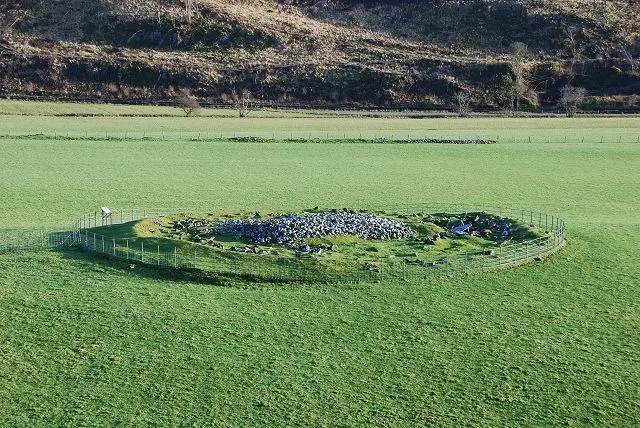
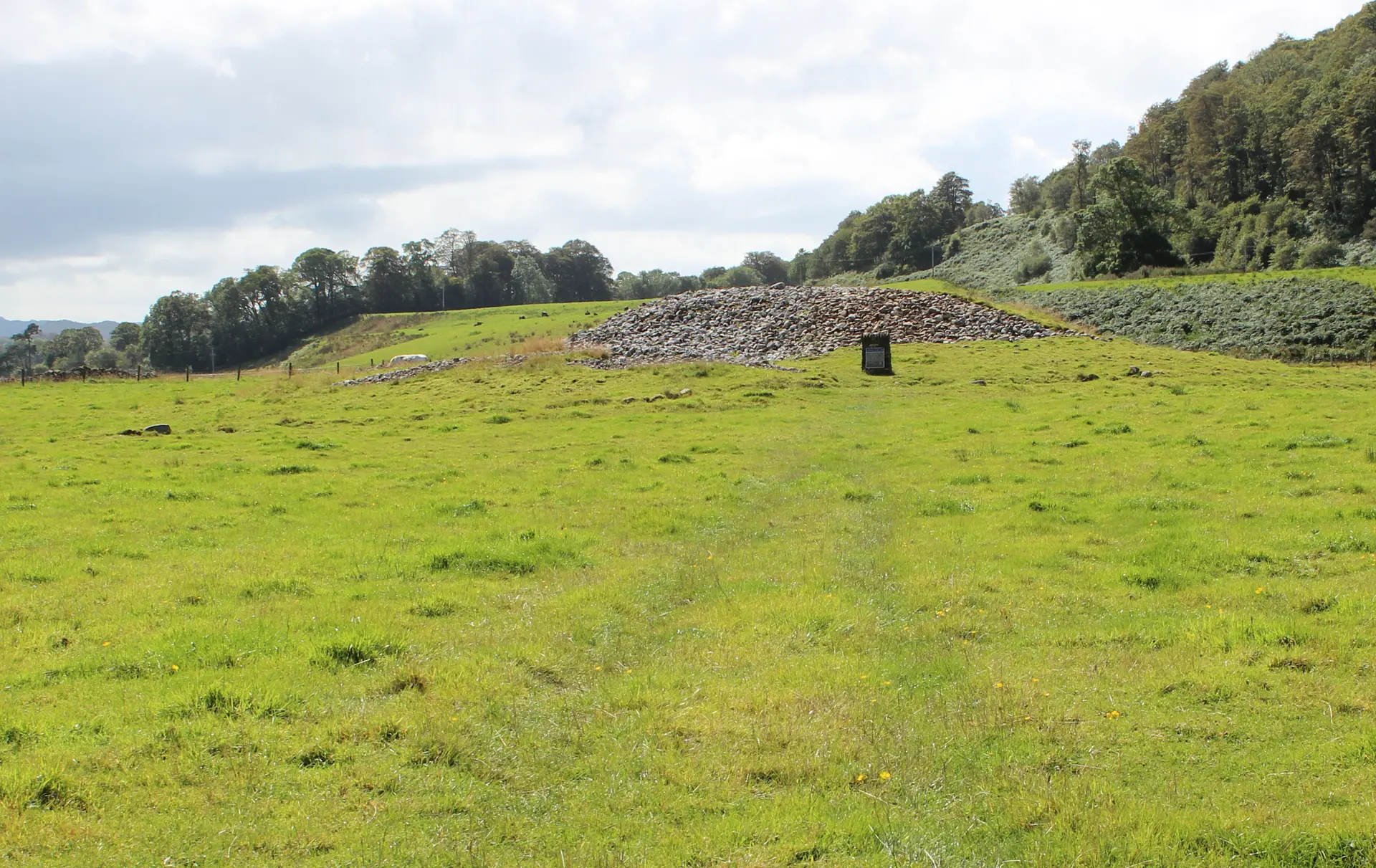
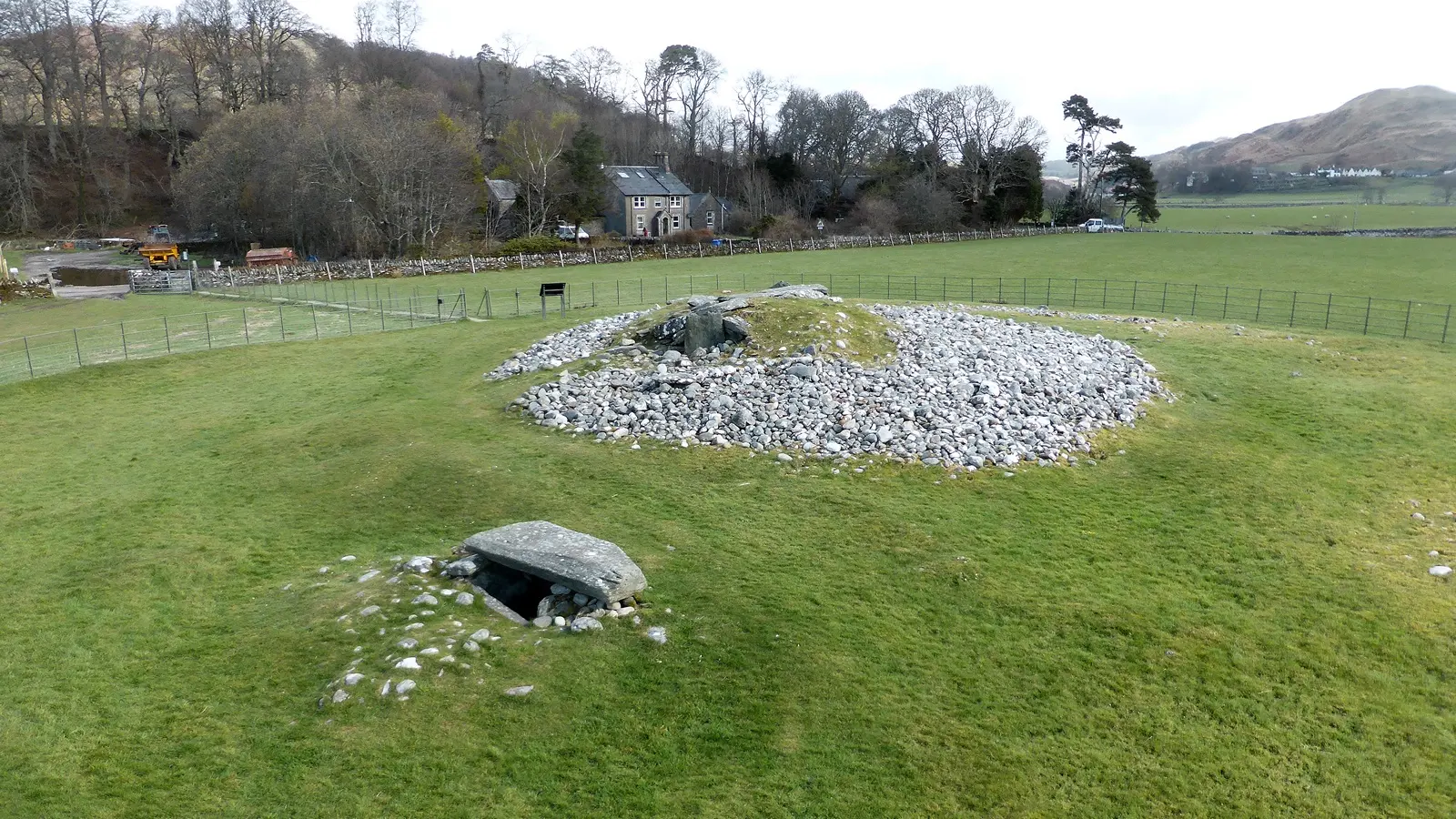
Explore other sacred places in the region. Proximity does not establish access or travel time; check each place’s guidance.
References
Sources consulted for this page. Source categories describe the publication, not a guarantee that every claim is verified. Traditional accounts and outside interpretations may differ.
- 01Kilmartin Glen: Nether Largie North Cairn — Historic Environment ScotlandofficialOfficial heritage body responsible for managing the site
- 02Nether Largie North Cairn: History — Historic Environment ScotlandofficialPrimary historical reference for the site, details on excavation and carvings
- 03Nether Largie North — Canmore / HESofficialScotland's national record of the historic environment
- 04Recent astronomical observations at Kilmartin Glen, Argyll, Scotland — Antiquity JournalacademicAcademic discussion of astronomical alignments at Nether Largie stones and Temple Wood
- 05Why Excavate Rock Art? — Kilmartin MuseumofficialMuseum context on rock art research in Kilmartin Glen
- 06Nether Largie North Cairn — The Megalithic PortalSource contextCommunity-sourced megalithic database with coordinates and measurements
- 07Nether Largie North Cairn — WikidataSource contextCoordinates verified: 56 deg 7 min 46.279 sec N, 5 deg 29 min 30.534 sec W
- 08Kilmartin Glen — WikipediaencyclopediaGeneral context on the linear cemetery and wider landscape
- 09Nether Largie North, cairn 480m NNE of Nether Largie — Ancient Monuments UKSource contextProvides OS grid references and scheduling details
- 10Nether Largie Cairns, Kilmartin Glen — Britain ExpressguideVisitor-oriented guide with practical details
- 11Kilmartin Glen - Sacred Scotland — Sacred ScotlandguideSpiritual tourism perspective on Kilmartin Glen
- 12Kilmartin Glen, Near Oban, Argyll, Scotland — Historic UKguideHistorical overview of Kilmartin Glen and Kingdom of Dalriada
- 13Nether Largie Cairn Cemetery — The Modern AntiquarianSource contextCommunity observations and photographs
Share a photo
Help visitors recognize Nether Largie North Cairn. Every submission is reviewed before publication.