Temple Wood Stone Circle
Where spirals carved in stone five thousand years ago still trace the paths of sun and moon across a sacred glen
Understand sacred places, explore living traditions, and learn how to engage respectfully with Pilgrim Map.
Access has not been verified. Check current local guidance before planning a visit.
Kilmartin, Scotland, United Kingdom
Read the sources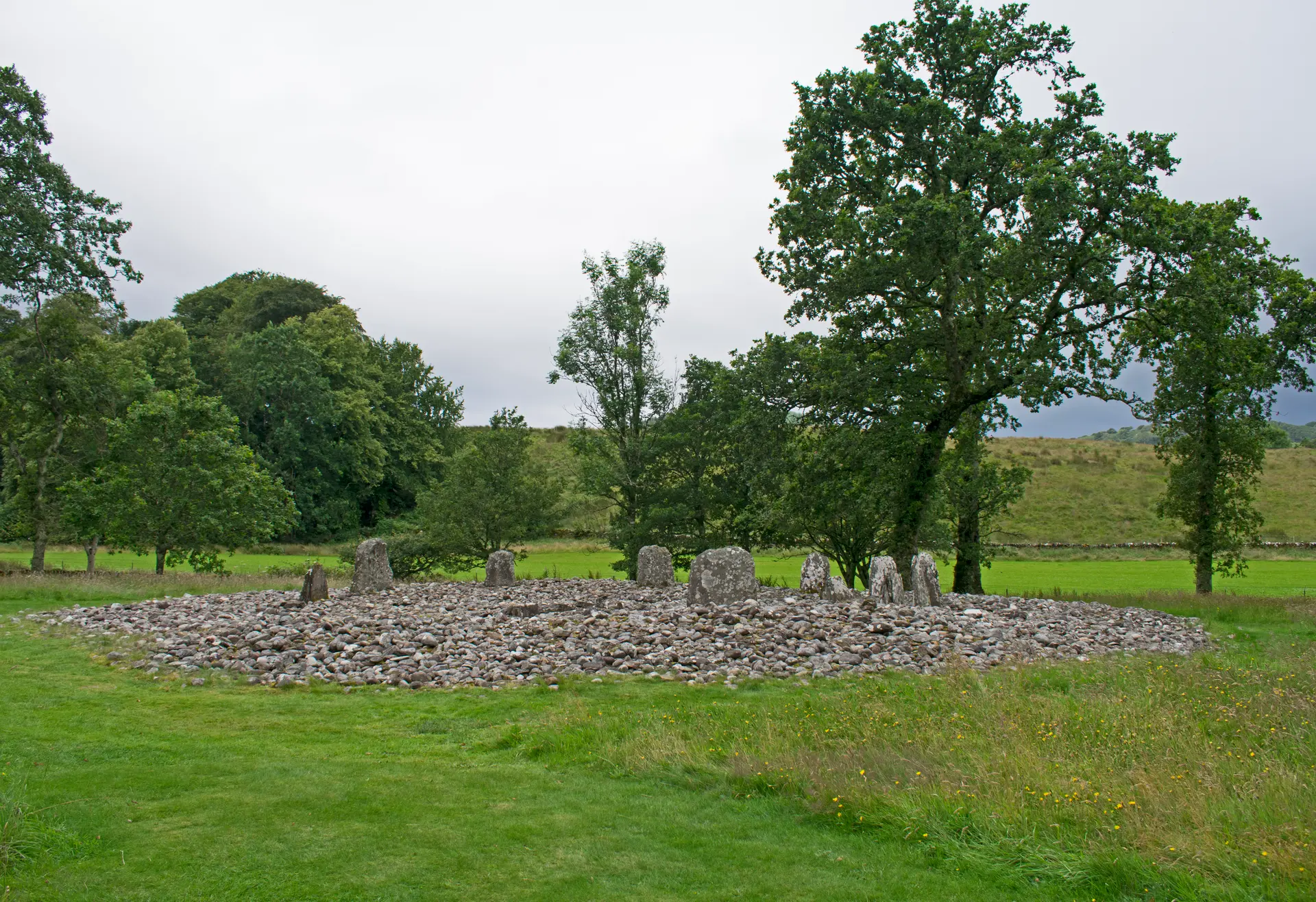
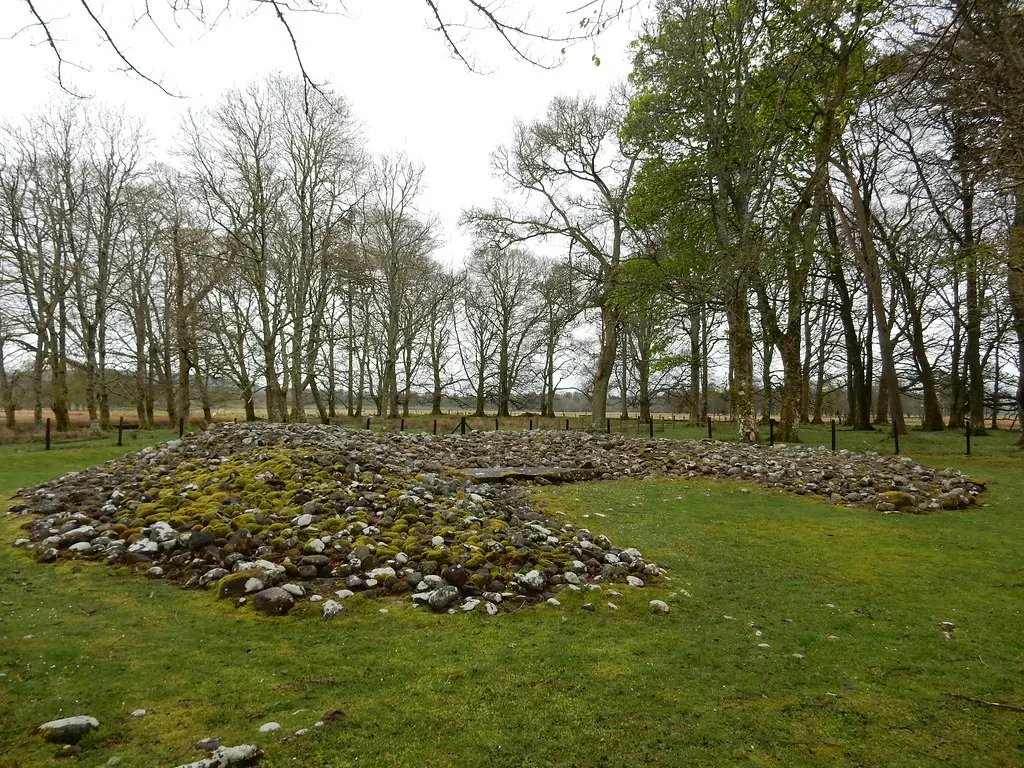
Image of Temple Wood Stone Circle. Image source · CC-BY-SA-4.0
Visit essentials
A quick read before you go
- Duration
- 1-2 hours including the walk from Nether Largie and time with the carved stones
- Etiquette
- These stones have stood for five thousand years.
Overview
Among 19th-century trees reached across the wet glen from Nether Largie car park, Temple Wood is intimate rather than imposing: thirteen stones no higher than 1.6 metres enclose a 12-metre ring. A central cist and inner stone setting occupy its heart. Low interval slabs restricted entry without blocking sight, making a space to witness rather than freely enter.
Stone 10 carries a double spiral across adjoining faces, meeting at the edge; stone 12 has faint concentric circles and stone 8 cup marks. These Irish passage-grave motifs show contact across the water. A timber circle stood here around 3500 BCE, replaced by stones by 3000 BCE. After a millennium of rituals now unknown, cist burials began around 2000 BCE and the ring was eventually filled with cairn material. Archaeologists debate decommissioning versus transformation, but the closure was deliberate.
Across the glen, the Nether Largie stones belong to a coordinated astronomical landscape: the midwinter sun sets in alignment with them, while the circles orient toward the rising major-standstill midwinter full moon. A millennium of coexistence allowed fifty major standstills and thousands of observations—patience measured across generations.
Why this place is sacred
Temple Wood pairs domestic scale with more than two thousand years of care. Timber posts rose before the Great Pyramid was imagined; stone, ritual, burial, and deliberate infilling followed. Each marked a community decision about this ground.
Interval slabs express threshold physically: entry is restricted but sight remains, suggesting proximity without possession and witnessing without transgression. Stone 10's double spiral crosses two faces and meets at their edge. Its five-thousand-year-old makers are unknown, but their intention to distinguish the stone remains legible.
Midwinter sun, major lunar standstill, and the Nether Largie relationship show sustained, multigenerational attention to the sky. At midwinter, the sun still sets where Neolithic observers watched it across five millennia.
Temple Wood originated as a timber circle around 3500-3000 BCE, transitioning to a stone circle around 3000 BCE. For its first millennium, the circle appears to have served exclusively ritual and ceremonial purposes, possibly connected to astronomical observation. The spiral and concentric circle carvings indicate connection to the wider Atlantic art tradition of Ireland and western Britain.
Around 2000 BCE, the site acquired funerary significance with the construction of burial cairns and cist burials within and around the stone ring. Low interval slabs were inserted between the uprights, restricting physical access. Eventually the circle interior was infilled with cairn material, possibly as an act of ritual decommissioning. The name 'Temple Wood' dates only to the 19th century, when trees were planted around the circles.
Kilmartin Museum, reopened after renovation, now provides interpretation and serves as a base for exploring the glen.
Experience and orientation
From Nether Largie car park, follow the sometimes wet, muddy trail southwest across Kilmartin Glen, where more than 800 ancient monuments lie within a six-mile radius. Pass the precisely aligned Nether Largie stones before the trees reveal Temple Wood's southern circle.
Walk first around its thirteen modest stones. Raking early- or late-day light reveals stone 10's edge-meeting double spiral, stone 12's faint concentric circles, and stone 8's cup marks. Interval slabs form a low barrier; enter with awareness. Within, the central cist is ringed by an inner setting about three metres across, where people were buried centuries after the circle began.
About 20 metres away, the smaller, less-preserved northern circle uses rounded river stones around one central stone. Its relationship to the southern circle remains unclear. Before leaving, face northeast toward the rising major-standstill midwinter full moon, then toward the Nether Largie stones and the midwinter sunset: the monument participates in celestial cycles spanning decades.
Temple Wood lies in Kilmartin Glen, approximately one mile southwest of Kilmartin village, Argyll and Bute, Scotland. The site consists of two stone circles roughly 20 metres apart, with the southern circle being the main monument. Access is via a footpath from the Nether Largie car park on the A816. The Nether Largie standing stones lie between the car park and Temple Wood.
Context and lineage
Around 3500 BCE, Neolithic communities in what is now Kilmartin Glen constructed a timber circle on this site. The glen was already becoming a focus for monument building, its flat floor and surrounding hills creating a natural amphitheatre for ceremonial activity. By 3000 BCE, the timber posts were replaced by an oval setting of approximately 22 standing stones. None was particularly tall; the tallest barely reaches shoulder height.
But at least three were carved with symbols that connect this place to a tradition extending across the Irish Sea: spirals, concentric circles, cup marks. The art of Irish passage graves, carved in stone, arrived in Argyll. For a thousand years, the stone circle served purposes that leave no direct archaeological trace beyond the monument itself. Whatever happened here happened in the bodies and voices of people rather than in material that survives.
Then, around 2000 BCE, the relationship between this place and death became explicit. Small burial cairns appeared outside the stone circle. Cist burials were placed within the ring. A central burial with its own inner stone setting occupied the heart of the monument. Interval slabs were inserted between the uprights, restricting entry. The circle was becoming an enclosure for the dead. Eventually, the interior was filled with cairn material, covering the burials and the inner setting.
Whether this was decommissioning or consecration, abandonment or transformation, the act was deliberate. By approximately 1000 BCE, active use of the site had ceased. Two thousand years of meaning, compressed into a ring of modest stones.
Temple Wood belongs to the Atlantic tradition of stone circle building that spread across western Britain, Ireland, and Brittany during the Neolithic and Bronze Age. The carved motifs connect it specifically to the passage-grave art of Ireland.
Within Kilmartin Glen, it forms part of a linear cemetery and ceremonial landscape that includes burial cairns (Nether Largie South, Nether Largie Mid, Nether Largie North, Glebe Cairn, Ri Cruin), standing stones (Nether Largie, Ballymeanoch), rock art (Achnabreck), and the remarkable concentration of cup-and-ring-marked outcrops for which the glen is renowned.
Jack Scott
Traditions and practice
Original Neolithic and Bronze Age practices are unknown. The astronomical alignments suggest observation of the midwinter sun and the major lunar standstill. The interval slabs between uprights indicate ceremonies that distinguished between those within the circle and those witnessing from outside. The transition to funerary use around 2000 BCE brought burial rites. The eventual infilling of the circle with cairn material represents a final ceremonial act.
Visitors walk the self-guided trail from Kilmartin Museum or the Nether Largie car park. Some time visits to astronomical events such as the winter solstice. The carved stones attract attention and contemplation. The intimate scale of the circle invites quiet presence rather than dramatic encounter. Photography under raking light reveals the carved symbols.
Begin at the Nether Largie car park and walk the trail to Temple Wood, allowing the landscape to unfold. Spend time with the carved stones, particularly the double spiral on stone 10 and the concentric circles on stone 12. Stand within the circle and face the directions of the astronomical alignments. Allow the modest scale of the monument to work on you; this is a place that rewards patience rather than spectacle.
Neolithic and Bronze Age ceremonial practice
HistoricalTemple Wood served as a ritual and funerary site for over 2,000 years, transitioning from timber circle to stone ring to burial ground.
Original practices unknown. Astronomical observation, ceremonial gathering, and burial of the dead are all evidenced or inferred from the archaeological record.
Archaeoastronomy and celestial observation
ActiveTemple Wood and the Nether Largie standing stones form a coordinated astronomical landscape oriented to solar and lunar events.
Observation of midwinter sunset alignment and major lunar standstill. The carved symbols may represent or commemorate celestial events. Contemporary visitors can still observe these alignments.
Atlantic megalithic art tradition
HistoricalThe spiral and concentric circle carvings at Temple Wood connect the site to the passage-grave art of Ireland and the wider Atlantic seaboard.
Carving of symbols on standing stones, possibly as markers of sacred significance, celestial events, or threshold between worlds.
Contemporary contemplative and heritage practice
ActiveTemple Wood draws visitors seeking connection with prehistory, landscape, and the contemplative qualities of the ancient circle.
Walking the glen trail, contemplation at the circle, photography of carved stones, seasonal visits aligned with astronomical events.
Perspectives and open questions
Temple Wood invites reading through archaeology, archaeoastronomy, art history, and personal encounter. Each lens reveals a different aspect of what the builders achieved and what the monument still holds.
Scholarly perspective
Archaeologists identify Temple Wood as a multi-phase monument spanning approximately 2,000-2,500 years. The sequence from timber circle (3500-3000 BCE) through stone circle (3000 BCE) to funerary site (2000 BCE onward) is well established through excavation. The carved spirals and concentric circles connect the site to Irish passage-grave art traditions, indicating significant cultural exchange across the Irish Sea.
The astronomical alignments linking Temple Wood to the Nether Largie standing stones, documented in the Antiquity Journal, suggest a designed observational landscape tracking both solar and lunar events. The infilling of the circle with cairn material represents a deliberate act of closure, though its meaning remains debated.
Living and traditional perspectives
No specific indigenous tradition, folklore, or mythology is associated with Temple Wood itself. The name dates only to the 19th century, applied when trees were planted around the circles. The alternative name 'Half Moon Wood' likewise derives from later tree planting. The absence of folklore may itself be significant: the stones had been largely forgotten or absorbed into the agricultural landscape before their archaeological significance was recognized.
Alternative interpretations
Some contemporary spiritual practitioners interpret Kilmartin Glen as a major energy landscape, with Temple Wood as a focal point for earth energies. The spiral carvings are sometimes read as representations of energy patterns, consciousness, or the movement between worlds. The astronomical alignments are seen as evidence of advanced spiritual knowledge among Neolithic peoples. The intimate scale of the circle is valued as creating concentrated sacred space.
Open questions
The precise nature of the rituals performed during the circle's first millennium of use remains unknown. The meaning of the carved spirals and concentric circles, while clearly significant, cannot be definitively interpreted. The reason for the eventual infilling of the circle with cairn material is debated. The functional relationship between the northern and southern circles has not been fully established. Whether the astronomical alignments represent intentional design or coincidence continues to be discussed, though the weight of evidence favors intention.
Plan your visit
Access and arrival
Limited accommodation in Kilmartin village (Kilmartin Hotel, B&Bs). More options in Lochgilphead (5 miles south) or Oban (25 miles north). The glen is accessible as a day trip from Glasgow (approximately 2.5 hours drive).
Respectful visit
Dress for western Scottish weather. Waterproofs, warm layers, and sturdy waterproof footwear are essential. The glen is exposed and conditions change rapidly.
Photography is permitted and encouraged. The carved stones are best captured in raking light, which typically occurs in early morning or late afternoon. A torch or flashlight held at an angle can reveal the carvings at other times. Do not use flash directly on the carved surfaces.
Not traditionally associated with offerings. Presence and respectful attention are appropriate.
Do not touch or rub the carved stones. Do not climb on the stones. Do not remove anything from the site. Leave no trace.
The path can be wet and muddy, particularly after rain. Sturdy footwear essential. Stones can be slippery when wet. No shelter or facilities at the site. Western Scottish weather is changeable; carry waterproofs.
Current practical details
Address
Lochgilphead PA31 8QG, UK
Phone
Hours
Hours, fees, and access can change — verify on the official source before you travel. Practical details last checked Jun 2026.
Location
Map loads as you approach this section.
Pilgrim reflections
A portrait of encounter, not a score
Pilgrims describe what they felt, how present they could become, and whether the place would shape a journey. There are no stars and no ranking of traditions.
No reviewed reflections yet
The first pilgrims can help describe the character of being here.
Share a reflection
Available after an account-backed “Been there.” Every reflection is reviewed before publication.
Nearby sacred places
Explore other sacred places in the region. Proximity does not establish access or travel time; check each place’s guidance.
References
Sources consulted for this page. Source categories describe the publication, not a guarantee that every claim is verified. Traditional accounts and outside interpretations may differ.
- 01Kilmartin Glen: Temple Wood Stone Circle — Historic Environment ScotlandofficialOfficial heritage body managing the site
- 02Temple Wood Stone Circle: History — Historic Environment ScotlandofficialDetailed historical account from official heritage body
- 03Recent astronomical observations at Kilmartin Glen, Argyll, Scotland — Antiquity JournalacademicAcademic journal article on astronomical alignments
- 04Self-Guided Trail — Kilmartin MuseumofficialOfficial museum trail guide for the glen
- 05Temple Wood Stone Circles Statement of Significance — Historic Environment ScotlandofficialOfficial statement of significance
- 06Temple Wood — WikipediaencyclopediaWell-referenced encyclopedia article
- 07Temple Wood S Stone Circle — The Megalithic PortalSource contextSpecialist megalithic database with coordinates and detailed measurements
- 08Stone Circle at Temple Wood — Undiscovered ScotlandguideRegional guide with visitor information
- 09Temple Wood Stone Circle — Britain ExpressguideHistorical and visitor guide
- 10Temple Wood stone circles, Kilmartin Glen — The Hazel TreeblogPersonal blog with detailed site description and photographs
Share a photo
Help visitors recognize Temple Wood Stone Circle. Every submission is reviewed before publication.