Nether Largie Mid Cairn
At the centre of a Bronze Age avenue of the dead, carved stone still holds the marks of four-thousand-year-old hands
Understand sacred places, explore living traditions, and learn how to engage respectfully with Pilgrim Map.
Access has not been verified. Check current local guidance before planning a visit.
Kilmartin, Scotland, United Kingdom
Read the sources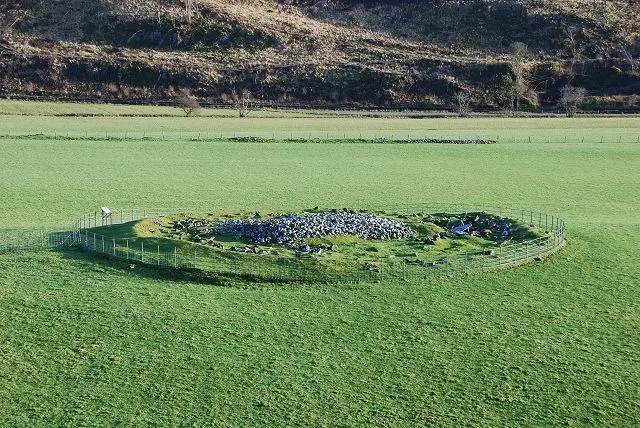
Image of Nether Largie Mid Cairn. Image source
Visit essentials
A quick read before you go
- Duration
- A focused visit to the Mid Cairn takes fifteen to thirty minutes.
- Access
- From the A816 between Oban and Lochgilphead, turn at the junction with the B8025 toward Lady…
Overview
Five burial cairns line Kilmartin Glen north to south, built across fifteen hundred years by communities that chose this valley for ceremony rather than settlement. Nether Largie Mid Cairn stands at their center.
Raised around four thousand years ago, it covered two stone-lined chambers, each sized for one body. One remains open to the sky. Its slabs bear pecked concentric rings, a central cup, and an axe-head outline. Because Bronze Age axes signaled wealth and authority, the tomb carving suggests a person whose status extended beyond death.
Axe-head carvings occur at only three Scottish sites, all in Kilmartin Glen. Their concentration suggests a local elite funerary art—a vocabulary of stone and symbol whose grammar is lost. Cup-and-ring marks connect the cairn to an Atlantic tradition from Iberia to Scandinavia, but their meaning still resists translation.
More than eight hundred ancient monuments lie within six miles of Kilmartin Glen, with little evidence of domestic settlement. The valley appears to have been a landscape set apart. At the center of this intentional geography, Nether Largie Mid honors the dead through carved stone and the living's careful labor.
Why this place is sacred
What makes a landscape sacred is not always a single monument but the accumulation of intention across time. Kilmartin Glen holds this quality in unusual density.
Over a span of nearly two thousand years, communities returned to this valley to build, to bury, to carve stone, and to arrange it in patterns whose logic we can only partially reconstruct. They erected stone circles at Temple Wood, aligned standing stones along sight lines, and built cairns over their dead in a processional line along the glen floor. They did not live here, or at least they left no evidence of habitation.
The glen was something else: a place set apart, a landscape whose purpose was not domestic but ceremonial.
Nether Largie Mid Cairn sits at the centre of this line of the dead. Its position is not accidental. From the cairn, you can see both north and south along the linear cemetery, toward the older Neolithic cairn at the southern end and the later Bronze Age monuments to the north. The placement suggests the builders understood the cairn as a focal point, a centre of gravity in a landscape already charged with meaning.
The carvings within the exposed cist deepen this impression. The axe-head motif is exceedingly rare—found at only three sites in all of Scotland, every one of them in Kilmartin Glen. The concentration suggests a localized tradition, an elite practice of marking burial stone with symbols of authority that was specific to this community and this place.
The cup and ring marks are more widespread, part of an Atlantic tradition spanning millennia, but their presence in a burial context gives them a specifically funerary resonance.
The cairn's stones were partially robbed in the nineteenth century for field walls and roads, yet the monument survived. Peat had covered it for centuries, preserving what lay beneath. The 1929 excavation revealed the cists and their carvings, but archaeologists note that undisturbed layers likely remain, holding botanical and environmental evidence that could further illuminate the world of the cairn's builders.
What persists here is the quality of a place that was never ordinary. The absence of settlement evidence across the entire glen suggests a collective understanding, maintained across generations, that this valley belonged to purposes larger than daily life.
Nether Largie Mid Cairn was constructed as a burial monument for a high-status individual during the Bronze Age, around 2000 BCE. The two stone-lined cists within the cairn were each designed for a single body, and the decorated slab surfaces bearing axe-head carvings and cup-and-ring marks indicate that burial here was not merely practical but ceremonial and symbolic.
The cairn's position at the centre of the linear cemetery suggests it may have been understood as the focal point of the glen's funerary landscape. The broader context of Kilmartin Glen, with its stone circles, standing stones, and rock art, indicates the cairn functioned within an extensive ritual geography.
The linear cemetery was built over approximately fifteen hundred years, from the Neolithic chambered cairn at Nether Largie South (c. 3000 BCE) through the Bronze Age cairns including the Mid Cairn (c. 2000 BCE). Each generation of builders added to the landscape their predecessors had established, extending the line of the dead northward along the glen floor.
In the centuries following its construction, the cairn's original cultural context was lost as the Bronze Age communities were succeeded by Iron Age peoples and eventually by the Scots of the Kingdom of Dal Riata, who established their capital at nearby Dunadd. The cairn became part of a landscape whose origins were no longer remembered but whose presence remained visible.
Peat accumulation eventually covered the cairns, hiding them from view until the nineteenth century, when peat removal for fuel revealed the monuments beneath. Stone robbing followed, diminishing some cairns, though the Mid Cairn largely survived. The 1929 excavation by archaeologists uncovered the cists and their carvings, bringing the Bronze Age burial practices to light after four millennia of concealment.
Today, the cairn is a Scheduled Ancient Monument under the care of Historic Environment Scotland, protected by law and accessible to all.
Experience and orientation
The approach to Nether Largie Mid Cairn is across open ground—the green floor of Kilmartin Glen, bounded by low hills and quiet under the wide Scottish sky. The cairn does not announce itself dramatically. It is a low, roughly circular mound of stone, perhaps a meter high where once it stood three, its surface weathered and settled. A railed fence marks its perimeter.
The encounter becomes intimate at the exposed cist. Looking down into the stone-lined chamber, you see surfaces that have not been altered since Bronze Age hands worked them. The concentric rings, the central cup, the outline of an axe-head—these marks were made with stone tools, pecked laboriously into hard rock, for purposes that accompanied a body into the earth. The scale is human. The chamber was sized for one person. The carvings are the work of individual hands.
From the cairn, the linear cemetery stretches north and south. Other cairns are visible along the glen floor, and the stones of Temple Wood stand to the west. The landscape is open enough that the arrangement reads clearly: this is a line, deliberate, extending across two kilometers, built over fifteen hundred years by successive generations who chose to place their dead in relationship to those who came before.
Visitors often describe the atmosphere as peaceful, atmospheric, and faintly eerie. The quiet here is not mere absence of noise. Kilmartin Glen receives fewer visitors than Scotland's more famous sites, and the monuments sit in the landscape without interpretation panels crowding their presence. The glen's quality of stillness has been noted consistently across accounts, and those who spend time here rather than passing quickly tend to find it deepening.
The rain may come. This is western Scotland, and the glen is open to the elements. But the carvings have survived four thousand years of this weather. Whatever meaning they held, the medium was chosen for permanence.
Begin at Lady Glassary car park, where the path leads toward Temple Wood Stone Circle and the southern end of the linear cemetery. Walking northward along the glen floor, you encounter the cairns in rough chronological order, from the Neolithic Nether Largie South to the Bronze Age monuments including the Mid Cairn.
At the Mid Cairn, take time with the exposed cist. The carvings are not immediately obvious; they require your eyes to adjust to the texture of the stone. The axe-head motif is the most striking, but the cup-and-ring marks are subtle and reward close attention. Light falling into the chamber at an angle—morning or late afternoon—reveals the pecked surfaces most clearly.
Consider the cairn's position. Stand at the fence and look north, then south. The linear arrangement is visible, and the sense of a deliberate processional geography becomes palpable. This is not accidental clustering. This is a line of the dead, extended generation by generation.
Kilmartin Museum in the village provides essential context. Visiting the museum before or after the monuments allows the archaeological findings to inform what you see, or allows what you have experienced in the glen to give the museum displays lived weight.
Context and lineage
The sacred landscape of Kilmartin Glen began taking shape around five thousand years ago, when Neolithic communities constructed the chambered cairn at Nether Largie South—a monument large enough to enter, built for collective burial. Over the following centuries, Temple Wood Stone Circles were erected nearby, and standing stones were aligned along sight lines through the glen.
By about 2000 BCE, burial practices had shifted. The Bronze Age communities who now inhabited Argyll constructed individual burial cists rather than communal chambers, marking a change in how death and status were understood. Nether Largie Mid Cairn belongs to this transition. Its two cists, each sized for a single body, represent a more individualized relationship between the dead and the monument built to contain them.
The builders chose the centre of the existing sacred landscape. Whether they understood the Neolithic cairn to the south as ancestral or simply recognized the glen as a place already set apart is unknown. What is clear is that they extended the line of monuments northward, adding their own dead to a geography of death that had been accumulating for a thousand years.
The axe-head carvings placed within the cists suggest the buried individual was connected to the authority and wealth signified by bronze axes. The rarity of such carvings—found at only three sites in Scotland, all within Kilmartin Glen—indicates this was a localized tradition, a specific cultural practice of this community in this place.
The lineage at Kilmartin Glen is one of landscape rather than institution. Over approximately fifteen hundred years, from the Neolithic through the Bronze Age, successive communities built, buried, and carved within the glen, each generation adding to the work of its predecessors. The linear cemetery grew northward over time, creating a physical timeline of the dead stretching across the valley floor.
After the Bronze Age, the cultural context shifted. Iron Age communities, the Scots of Dal Riata, and medieval and modern settlers all inhabited the surrounding area, but the cairns ceased to function as living monuments. They became features of an inherited landscape—present, visible, but no longer understood in their original terms.
Today, the cairn is interpreted by archaeologists and presented by Historic Environment Scotland. Kilmartin Museum provides the institutional context that connects the cairn to scholarship and public engagement. The lineage is now one of stewardship rather than veneration.
Unknown Bronze Age Elite
historical
The individuals buried within the Mid Cairn's two cists remain anonymous, but the axe-head carvings and elaborate burial construction indicate they were figures of significant status within their community. The effort invested in their interment suggests they were honored members of a ruling lineage or a chiefly class.
James Hewat Craw
historical
The archaeologist who excavated Nether Largie Mid Cairn in 1929, discovering the two burial cists and their decorated slabs. His work revealed the Bronze Age date of the monument and the presence of the rare axe-head carvings.
Traditions and practice
The original practices associated with the cairn are unknown in detail but can be inferred from the archaeological evidence. The construction of a substantial round cairn over individually carved cist burials suggests elaborate funerary ceremonies. The axe-head carvings indicate that symbols of authority and wealth were deliberately included in the burial context, implying a ritual relationship between the living and the dead that extended to the display of status markers.
The cup and ring marks may have held additional symbolic or spiritual significance within funerary practice.
The linear arrangement of the cemetery suggests processional practices—ceremonies that may have involved movement along the line of cairns, perhaps connecting the recently dead to their predecessors. The proximity to Temple Wood Stone Circles raises the possibility that burial ceremonies were linked to the rituals performed at the stone circles, though no direct evidence confirms this connection.
The cairn is visited primarily as a heritage site. Most visitors encounter it while walking the linear cemetery or exploring the broader Kilmartin Glen landscape. Kilmartin Museum offers volunteer-led guided glen walks that visit the cairn, lasting approximately two and a half to three hours. These walks are free, though donations are welcomed.
Some visitors approach the glen's monuments from a personal spiritual perspective, finding the concentration of ancient sacred sites and the landscape's contemplative atmosphere conducive to reflection and meditation. No organized spiritual practices have been documented at the Mid Cairn specifically.
Walk the linear cemetery slowly, from south to north if possible, beginning with the oldest monument—the Neolithic chambered cairn at Nether Largie South—and progressing through time toward the Bronze Age cairns. This order replicates the chronological development of the sacred landscape and gives the experience a quality of accumulation.
At Nether Largie Mid, give the exposed cist your full attention. The carvings are not museum objects behind glass. They remain in the place they were made, on the stone that received a body, open to the same sky that watched the burial. Let the scale register: one chamber, one person, marks made by individual hands. Whatever belief system produced this burial, the care is evident.
If you are carrying questions—about what endures, about how the dead are honored, about what it means to mark a place as sacred—this landscape holds space for them without offering answers.
Prehistoric Bronze Age
HistoricalNether Largie Mid Cairn was built as part of a Bronze Age funerary tradition that honoured high-status individuals with individually carved stone cist burials. The rare axe-head carvings and cup-and-ring marks within the cists indicate an elite burial practice specific to the Kilmartin Glen community. The cairn's position at the centre of a linear cemetery extending over two kilometres suggests it held particular importance within a landscape dedicated to the dead.
Specific practices are archaeologically inferred rather than known. The construction of a substantial round cairn over individually carved cist burials suggests ceremonial interment. The axe-head and cup-and-ring mark carvings indicate that the preparation of the burial chamber was itself a ritual act. The linear arrangement of cairns suggests processional practices linking successive burials across generations.
Heritage Conservation and Archaeological Study
ActiveSince its excavation in 1929 and subsequent designation as a Scheduled Ancient Monument, the cairn has been understood primarily through the lens of archaeological science and heritage management. Historic Environment Scotland maintains the site, and Kilmartin Museum provides interpretive programs that connect the cairn to the broader prehistoric landscape of the glen.
Heritage management includes maintaining the monument's integrity, providing public access, and supporting ongoing archaeological research. Kilmartin Museum offers guided glen walks, exhibitions, and educational programs that interpret the cairn and its landscape. The 2023 expansion of the museum has increased the interpretive resources available to visitors.
Contemporary Spiritual Engagement
ActiveSome visitors approach Kilmartin Glen's monuments from a personal spiritual perspective, drawn by the density of prehistoric sacred sites and the landscape's contemplative atmosphere. The glen's apparent dedication to ceremonial rather than domestic purposes resonates with those seeking places set apart from the everyday.
No organized spiritual practices are documented at the cairn. Individual visitors engage through quiet contemplation, walking the linear cemetery as a form of personal pilgrimage, and sitting with the landscape. The experience is typically solitary and reflective rather than communal or ceremonial.
Perspectives and open questions
Nether Largie Mid Cairn occupies a position that invites interpretation from multiple directions. Archaeologists, heritage professionals, spiritual seekers, and local communities each engage with the cairn differently, yet all respond to the same essential quality: a four-thousand-year-old burial, its carvings still visible, set at the centre of a landscape that was dedicated to purposes beyond the everyday.
Scholarly perspective
Archaeological understanding of Nether Largie Mid Cairn is grounded in the 1929 excavation and subsequent studies of the broader Kilmartin Glen landscape. The cairn is dated to the Bronze Age, approximately 2000 BCE, based on its form, construction technique, and relationship to datable monuments in the linear cemetery. The two individually carved cists represent the Bronze Age shift from communal Neolithic burial toward individual interment, reflecting changing social structures and attitudes toward death and status.
The axe-head carvings are the subject of particular scholarly interest. Their extreme rarity—only three sites in Scotland, all in Kilmartin Glen—suggests a localized elite tradition. Bronze flat-axes were markers of wealth and authority, and their depiction within burial cists may have served to preserve the social identity of the dead or to provide symbolic equipment for an afterlife.
The cup and ring marks connect the cairn to the wider Atlantic rock art tradition, but their specific meaning in a funerary context remains debated.
Historic Environment Scotland notes that despite the 1929 excavation, the cairn retains high potential for the survival of further buried remains, including undisturbed archaeological layers that could yield ancient botanical evidence and illuminate the prehistoric environment and funerary practices.
Living and traditional perspectives
No living tradition maintains continuity with the Bronze Age communities who built the cairn. The cultural context of the original burial practices has been lost entirely, and no oral traditions or folk practices have been documented in direct connection to Nether Largie Mid Cairn specifically.
The broader Kilmartin Glen landscape does carry associations with the Kingdom of Dal Riata, whose capital at nearby Dunadd dates to the early medieval period. The carved footprint and basin at Dunadd, associated with the inauguration of Scottish kings, represent a much later but nonetheless significant layer of sacred tradition in the glen. Whether the medieval Scots recognized the prehistoric cairns as ancestral monuments or simply as features of a landscape whose antiquity they acknowledged is unknown.
Alternative interpretations
Some visitors approach the Kilmartin Glen monuments from perspectives informed by contemporary earth-based spirituality, ley line theory, or the concept of power places. The density of prehistoric monuments in the glen, combined with its atmospheric quality and apparent absence of ancient domestic settlement, has led some to characterize it as a landscape of heightened spiritual energy.
These interpretations lack archaeological support but often emerge from genuine responses to the site's atmosphere—responses that are consistent enough across visitors to merit acknowledgment. The question of whether a place can accumulate sacred significance through sustained human intention over millennia is one that archaeology cannot fully answer, though the evidence at Kilmartin Glen suggests the question itself is not trivial.
Open questions
The fundamental questions about Nether Largie Mid Cairn remain open. Who was buried here, and what was their role in the community that built the cairn? What did the axe-head carving signify within the funerary context—a symbol of earthly authority carried into death, a provision for an afterlife, or something else entirely? What ceremonies accompanied the burial, and who participated?
The meaning of the cup and ring marks remains one of the great unsolved problems of British prehistory. Were they maps, spiritual symbols, clan markers, or expressions of a cosmology we cannot reconstruct? The concentration of such carvings in Kilmartin Glen, appearing on exposed rock faces, standing stones, and burial cists, suggests a unified symbolic system, but its grammar is lost.
Why Kilmartin Glen itself was set apart as a ceremonial landscape, while settlement evidence is absent, is perhaps the deepest mystery. What did these communities understand about this particular valley that compelled them to dedicate it to the dead and to ceremony for nearly two thousand years?
Plan your visit
Access and arrival
From the A816 between Oban and Lochgilphead, turn at the junction with the B8025 toward Lady Glassary car park. The walk to the cairn is approximately 1.5 miles across mostly flat ground. The path crosses grassy fields that can be muddy. It is possible to drive closer to the monuments on a minor road, which may assist those with limited mobility. Limited bus services along the A816 stop at or near Kilmartin village.
Kilmartin village has limited accommodation options including bed-and-breakfasts. The towns of Lochgilphead (approximately 10 km south) and Oban (approximately 35 km north) offer a wider range of hotels, guesthouses, and self-catering options. No retreat centers specifically associated with the site have been identified.
Respectful visit
No formal requirements. Practical outdoor clothing suited to Scottish highland weather is essential: waterproof jacket, sturdy footwear suitable for muddy paths, and layers for warmth. The glen is exposed with no shelter.
Photography is welcome and the exposed cist is a remarkable subject. Natural light falling into the chamber at morning or late afternoon angles reveals the carvings most clearly. Be considerate of other visitors and avoid monopolizing the viewing area for extended sessions.
Do not leave any objects at the cairn. Physical offerings are not appropriate at a heritage-managed archaeological site and must be removed by staff.
Do not climb on the cairn, enter the fenced area, or touch the exposed cist surfaces. Do not use metal detectors at or near the site. The cairn is legally protected, and disturbance constitutes a criminal offense.
Do not enter the fenced area around the cairn or attempt to touch the exposed cist and its carvings. The stone surfaces are four thousand years old, and contact accelerates erosion. The carvings are visible without touch.
Do not leave offerings, flowers, crystals, or any objects at the site. Items left behind must be removed by heritage staff and are considered inappropriate regardless of intention.
The glen floor can be very muddy, and western Scotland's weather is unpredictable. Come prepared for rain and wear appropriate footwear. Midges are severe in summer months—insect repellent is strongly recommended between June and August.
Current practical details
Address
Lochgilphead PA31 8QF, UK
Phone
Hours
Hours, fees, and access can change — verify on the official source before you travel. Practical details last checked Jun 2026.
Location
Map loads as you approach this section.
Pilgrim reflections
A portrait of encounter, not a score
Pilgrims describe what they felt, how present they could become, and whether the place would shape a journey. There are no stars and no ranking of traditions.
No reviewed reflections yet
The first pilgrims can help describe the character of being here.
Share a reflection
Available after an account-backed “Been there.” Every reflection is reviewed before publication.
Nearby sacred places
Explore other sacred places in the region. Proximity does not establish access or travel time; check each place’s guidance.
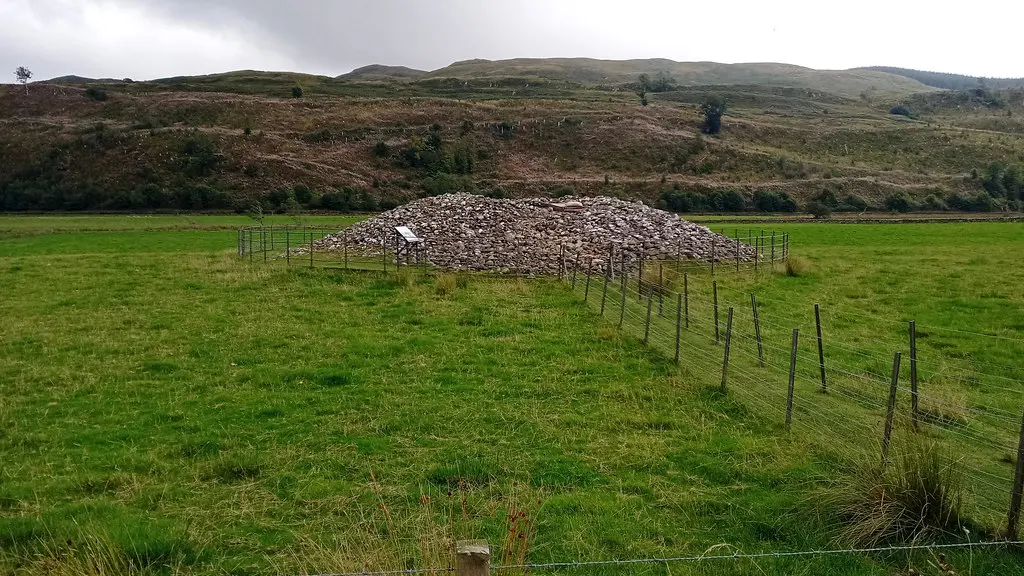
Nether Largie North Cairn
Kilmartin, Scotland, United Kingdom
0.2 km away
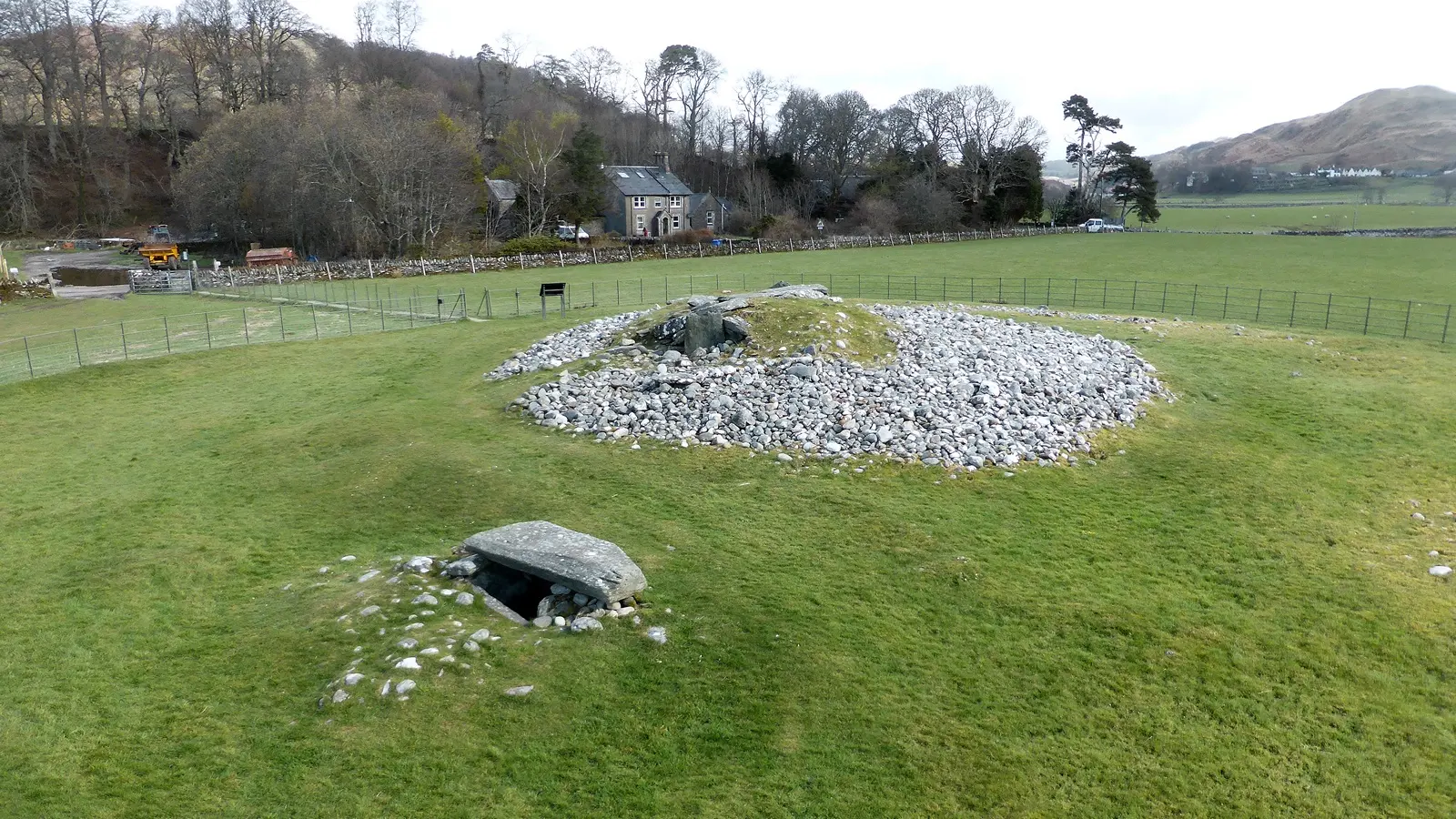
Nether Largie South Cairn
Kilmartin, Scotland, United Kingdom
0.4 km away
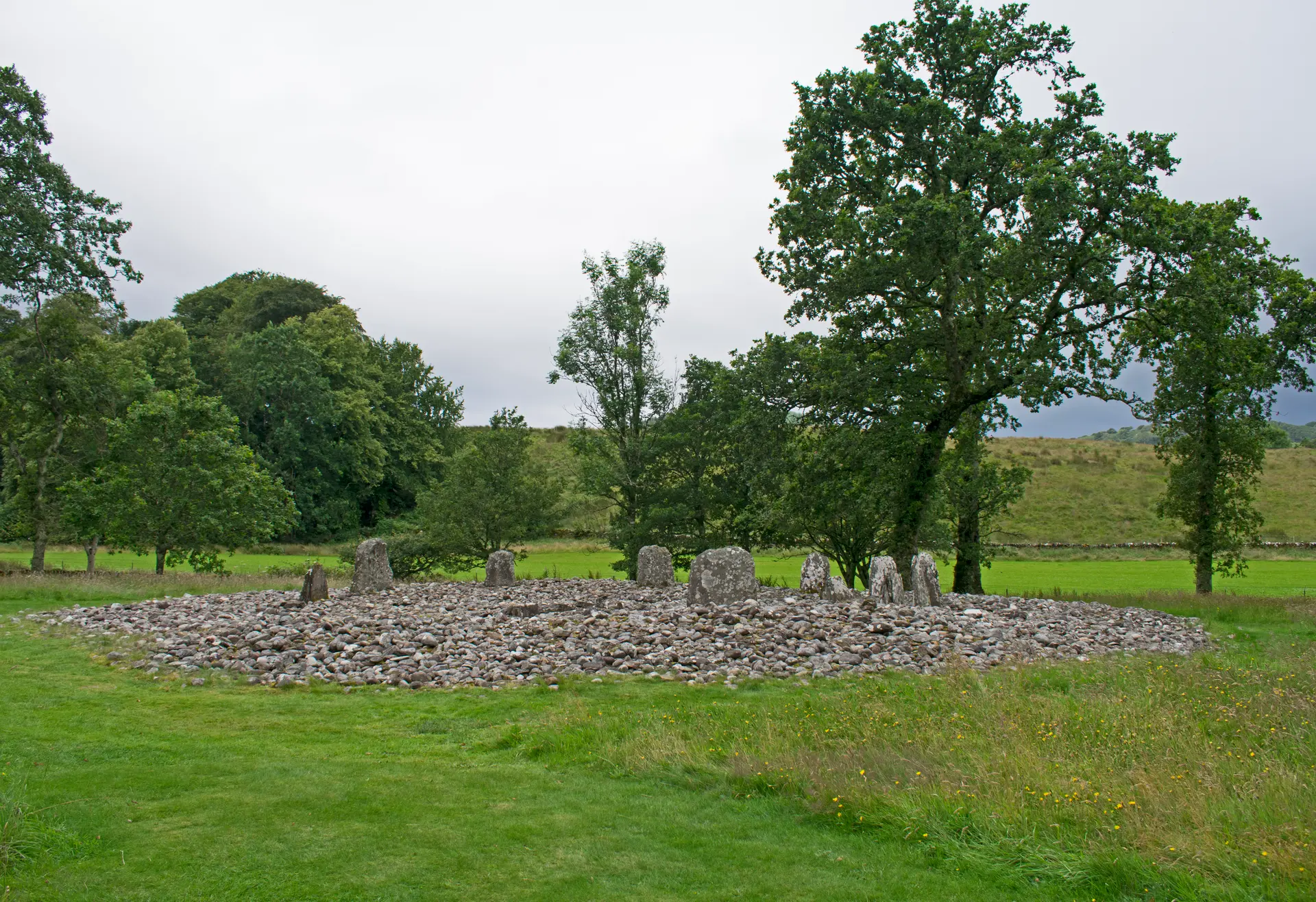
Temple Wood Stone Circle
Kilmartin, Scotland, United Kingdom
0.6 km away
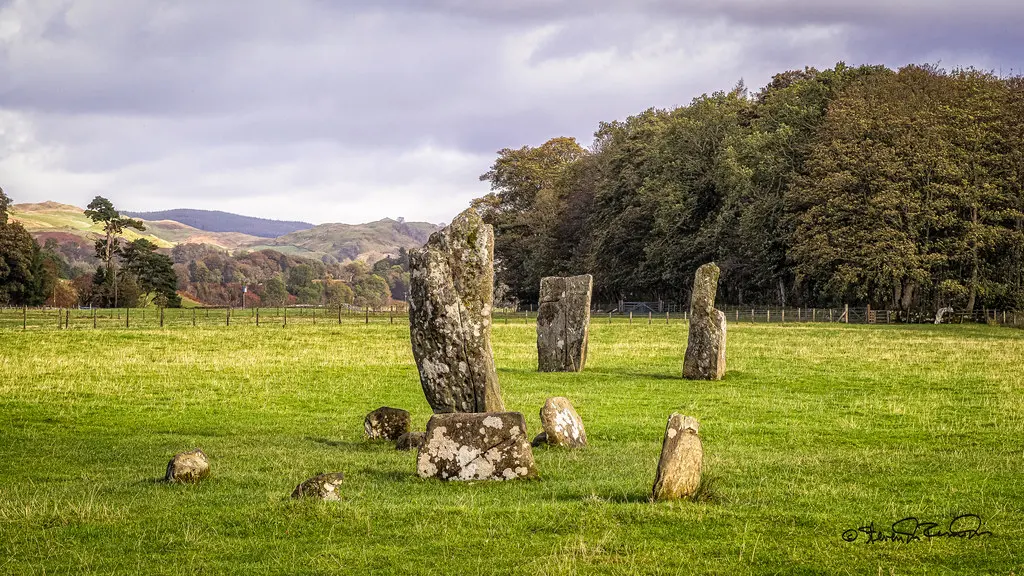
Nether Largie standing stones, Argyll, Scotland
Kilmartin, Scotland, United Kingdom
0.7 km away
References
Sources consulted for this page. Source categories describe the publication, not a guarantee that every claim is verified. Traditional accounts and outside interpretations may differ.
- 01Nether Largie Mid Cairn: History - Historic Environment Scotlandofficial
- 02Kilmartin Glen: Nether Largie Mid Cairn - Historic Environment Scotlandofficial
- 03Nether Largie Mid - Canmore (Historic Environment Scotland)official
- 04Nether Largie Mid - Trove Scotlandofficial
- 05Nether Largie Mid, cairn 305m NNE of Nether Largie - Ancient Monuments UKofficial
- 06Nether Largie Cairns, Kilmartin Glen - Britain Expressguide
- 07Nether Largie Mid Cairn - The Megalithic Portalofficial
- 08Nether Largie Cairn Cemetery - The Modern Antiquarianofficial
- 09Kilmartin Glen - Wikipediaencyclopedia
- 10Nether Largie Mid Cairn - Wikidataencyclopedia
- 11Nether Largie Cairns - Stones of Scotlandofficial
- 12Visit Us - Kilmartin Museumofficial
- 13Self-Guided Trail - Kilmartin Museumofficial
- 14Kilmartin Glen - Sacred Scotlandacademic
- 15Kilmartin Glen Prehistoric Monuments - Atlas Obscuraguide
- 16Kilmartin Glen, Near Oban, Argyll, Scotland - Historic UKguide
- 17Nether Largie Mid Cairn - TripAdvisorguide
Share a photo
Help visitors recognize Nether Largie Mid Cairn. Every submission is reviewed before publication.