Nan Madol
The stone city built between land and sea
Understand sacred places, explore living traditions, and learn how to engage respectfully with Pilgrim Map.
Access has not been verified. Check current local guidance before planning a visit.
Temwen Island, Pohnpei State, Pohnpei, Federated States of Micronesia
Read the sources
Visit essentials
A quick read before you go
- Duration
- A half-day outing, accounting for the 40-plus minute drive from Kolonia, tidal transit, and…
- Access
- Drive over 40 minutes from Kolonia to Temwen village, then boat or wading transit depending on…
Overview
No adjacent quarry explains how Nan Madol's builders assembled the Pacific's largest surviving prehistoric structure. Basalt columns weighing up to fifty tons form seawalls and royal precincts across more than ninety artificial islets built into a coral reef off Pohnpei's eastern coast, in centuries of construction beginning as early as the tenth century CE.
Pohnpeian tradition says twin sorcerers Olisihpa and Olosohpa raised the stones supernaturally after failed attempts elsewhere. Recent coral and radiocarbon dating clarifies but does not fully resolve an archaeological timeline spanning four hundred years. Both accounts make Nan Madol the seat of the Saudeleur dynasty, a centralized religious-political order that ruled Pohnpei from these canals for roughly five centuries before a violent end.
Nan Madol is both a UNESCO World Heritage Site and a site in danger, with silting canals and mangrove roots overtaking walls. Visitors travel by boat or wade at low tide past towers built in water—a setting reflected in the name's rough translation, 'the spaces between.' For many Pohnpeians, old authority remains and prompts genuine caution, not folklore performed for outsiders.
Why this place is sacred
Pohnpeian tradition holds that Olisihpa and Olosohpa, sorcerer-brothers from a mythical western land, arrived by canoe seeking a place to raise an altar to Nahnisohn Sahpw, the god of agriculture. Other locations failed them. Only the reef off Temwen Island accepted the work, and there — in some tellings with the aid of a flying dragon, in others by stones that moved as if guided by ghost hands — the basalt columns rose into place.
What makes the site's thinness distinctive is not a single ritual center but a whole civic order built on the premise that this particular stretch of water and reef was where divine sanction and human rule could be made visible in stone. The Saudeleur dynasty that followed governed through architecture as much as through force: walls, mortuary precincts, and priestly islets announced authority in a landscape where a king's legitimacy needed no words, only masonry. That legitimacy was renewed annually.
At the islet of Idehd, high priests performed the Pwung en Sapw, an atonement ceremony that ended with an offering to Nan Samol, a sacred eel understood to embody land-spirit judgment of the ruler's conduct. If the eel accepted the offering, the Saudeleur's rule stood confirmed for another year.
This ceremonial spine collapsed with the dynasty itself, overthrown by the warrior Isokelekel sometime between the fifteenth and seventeenth centuries — sources disagree by up to two centuries on the date — after which the site was gradually abandoned through the eighteenth century. What has not fully receded is the sense of the place as inhabited.
Pohnpeians today describe Nan Madol less as a museum of a vanished religion and more as ground where something still watches, and where careless behavior has been followed, in local telling, by illness. The engineering mystery compounds the spiritual one: no adjacent basalt source has been confirmed for some of the stone, and archaeologists, including the U.S. National Park Service, state plainly that the method of transporting and sinking these multi-ton columns into the lagoon is not resolved.
Founded, according to Pohnpeian tradition, as an altar and worship site for the god Nahnisohn Sahpw; it became the political and ceremonial capital from which the Saudeleur dynasty ruled the whole of Pohnpei, then estimated at 25,000 people, from a centralized religious authority expressed through architecture.
Human activity in the area dates to the first or second century CE, with islet construction beginning in the eighth or ninth century and the distinctive megalithic architecture rising from roughly 1180-1200 CE in an initial phase, followed by a documented later intensification phase running into the fifteenth century, partly driven by rising sea levels and increased need for seawall defense.
Ceremonial and political use ended with the Saudeleur dynasty's overthrow and the site's abandonment through the eighteenth century; it survives now as an archaeological site carrying continued, if transformed, spiritual weight.
Experience and orientation
The approach is dictated by water, not by will. At high tide a boat carries visitors through the canals in under ten minutes; at low tide the same crossing is made on foot, wading through channels that can reach chest height, over uneven coral and stone. There is no way to arrive at Nan Madol without your body registering the site's essential condition — that this is a place built in the water, not beside it.
Once inside, dense mangrove has partially reclaimed much of the architecture, roots threading through basalt joints that have held for eight centuries, so that walls emerge from green tangle rather than standing in open clearing. The overwhelming impression reported by visitors is isolation: near-total absence of other tourists, and an atmosphere many describe as eerie rather than simply impressive.
Guides — effectively required for safe navigation and for any real historical or cultural interpretation — tend to move between archaeological fact and local spirit-lore without treating either as more legitimate than the other, which shapes how visitors receive the site: less as a monument to be photographed and more as a place to be careful inside of.
The Nandauwas mortuary compound, with walls rising twenty-five feet, gives the clearest sense of the site's scale and its function as a royal burial ground; the islet of Idehd, associated with the sacred eel ceremony, carries a different, quieter charge.
Most visits run a half-day once travel time from Kolonia and the tidal crossing are factored in, which is enough to walk several islets slowly but not enough to exhaust the place's scale — over ninety islets spread across roughly seven square miles of reef and lagoon.
Reached via a 40-minute drive from Kolonia to Temwen village, followed by boat or wading transit timed to the tide; entrance fees are paid locally, and a guide is strongly recommended both for safe passage through the canals and for cultural interpretation.
Context and lineage
Pohnpeian tradition holds that Olisihpa and Olosohpa, twin sorcerers from the mythical land of Katau, arrived by canoe seeking to build an altar to the god Nahnisohn Sahpw. After failed attempts elsewhere, they succeeded off Temwen Island, raising the basalt columns by supernatural means — a flying dragon in some tellings, stones moved by unseen hands in others.
When Olisihpa died of old age, Olosohpa became the first Saudeleur, married locally, and fathered a line said to number sixteen further rulers across twelve generations of the Dipwilap clan. The dynasty's end is attributed to Isokelekel, a semi-divine figure whose conception is itself the subject of legend, who arrived with 333 followers and defeated the last Saudeleur lord, Saudemwohl — who fled upstream and, in Pohnpeian tradition, was transformed into a fish.
Isokelekel then took the title Nahnmwarki, instituting the decentralized chiefly system that persists in modified form in Pohnpeian society today. Archaeological dating of the Isokelekel conquest ranges across nearly two centuries between sources, from c. 1400 to c. 1628, and even the scholarship that favors the later date acknowledges oral tradition places it earlier.
Tradition holds that Olosohpa's line produced sixteen further Saudeleur rulers across twelve generations of the Dipwilap ('Great') clan before Isokelekel's conquest ended the dynasty and replaced it with the decentralized Nahnmwarki system that continues, in modified form, in Pohnpeian governance today.
Olisihpa and Olosohpa
Founding sorcerer-brothers
Twin sorcerers from the mythical land of Katau who, according to tradition, raised Nan Madol's basalt megaliths by supernatural means to build an altar to Nahnisohn Sahpw. Olosohpa became the first Saudeleur ruler.
Isokelekel
Warrior who overthrew the Saudeleur dynasty
Semi-divine warrior whose geographic origin is disputed even within scholarship — Kosrae, the Marshall Islands, Kiribati, and a purely mythological origin have all been proposed. He defeated the last Saudeleur lord and instituted the decentralized Nahnmwarki chiefly system.
Rufino Mauricio
Contemporary archaeologist
Pohnpeian archaeologist affiliated with FSM's national heritage authority; quoted in outside journalism regarding the site's history and stewardship, though no self-authored public account by him was located in this research.
Chuan-Chou Shen and colleagues
Lead researcher, 2024 dating study
Led the 2024 PNAS Nexus study using 171 coral and 18 charcoal samples to refine Nan Madol's construction chronology into two distinct phases, linking the later intensification phase to sea-level rise and ENSO-driven environmental stress.
Traditions and practice
The central historical rite was the Pwung en Sapw, an annual atonement ceremony performed by Saudeleur high priests at the islet of Idehd, culminating in an offering of cooked turtle to the sacred saltwater eel Nan Samol; the eel's acceptance was read as confirmation of the ruler's legitimacy for the coming year. Turtles used in the rite were caught and held in pools on the islets of Peikapw and Paseid.
The royal mortuary complex at Nandauwas hosted funerary rites for Saudeleur elites, and priests performed rituals of homage and supplication at Nan Douwas on behalf of the ruling lineage.
No organized ceremony has taken place at Nan Madol since the Saudeleur collapse and the subsequent Christianization of Pohnpei. What continues is informal: widespread avoidance of the site, especially after dark, and oral tradition warning that disrespectful behavior toward the site's resident spirits has been followed by illness. Eels remain broadly sacred across Pohnpeian culture beyond this specific location.
Time your visit to the tide rather than the clock, and let the crossing itself — by boat or by wading — be part of how you arrive, not an obstacle to arriving. Move slowly through the canals; the mangrove overgrowth rewards attention rather than a quick circuit. At Nandauwas, look up along the twenty-five-foot walls before looking for a photograph.
At Idehd, where the eel ceremony once confirmed a ruler's legitimacy, consider sitting for a few minutes rather than moving straight through — this was, for centuries, the place where judgment was rendered. Let your guide's spirit-lore stand alongside the archaeological facts rather than asking which one is true; both are how this place is understood by the people who live nearest it.
Pohnpeian indigenous religion / Saudeleur ceremonial-political religion
HistoricalNan Madol was the ceremonial and political capital where Nahnisohn Sahpw, god of agriculture, was worshipped, and where Saudeleur rulers derived and demonstrated authority through architecture and ritual, mediated by the sacred eel Nan Samol.
Annual atonement ceremonies at Idehd culminating in a turtle offering to Nan Samol; mortuary rites at Nandauwas; chiefly prayer at Nan Douwas.
Contemporary Pohnpeian folk belief and spirit veneration
ActiveMany Pohnpeians today continue to regard Nan Madol as inhabited by spirits and treat the site with caution and active avoidance, a living continuation of its sacred status even after the formal religion and the dynasty it served ended.
Avoidance of the site, especially at night; oral warnings about consequences for disrespectful behavior; general reverence for eels across Pohnpeian culture.
Perspectives and open questions
Nan Madol holds distinct meaning depending on who is describing it — archaeologists reading it through coral dating and climate stress, Pohnpeians for whom the site's spirits remain a live concern, and outside observers drawn to the unresolved mystery of how the stones were moved at all.
Scholarly perspective
Archaeologists and heritage bodies agree Nan Madol was the ceremonial and political capital of the Saudeleur dynasty, constructed from basalt and coral over several centuries.
The most rigorous recent dating, a 2024 study using 171 coral and 18 charcoal samples, identifies two distinct building phases across the tenth through fifteenth centuries and links construction intensity — particularly a later surge in seawall reinforcement — to sea-level rise and ENSO-driven environmental stress, offering a climate-science account that complements rather than replaces the oral historical narrative.
Living and traditional perspectives
Pohnpeian oral tradition attributes the site's founding to Olisihpa and Olosohpa, who raised the stones by supernatural means to worship Nahnisohn Sahpw, and frames the Saudeleur dynasty's rise and fall as a moral drama of legitimate versus oppressive rule, resolved through Isokelekel's semi-divine intervention. Many Pohnpeians today continue to regard Nan Madol as inhabited by spirits, a living, if diminished, continuation of its sacred status rather than a closed historical chapter.
Alternative interpretations
Some popular and esoteric sources, outside mainstream archaeology, speculate about connections between Nan Madol and lost continents or advanced lost technology, drawn from the genuine scale of the engineering puzzle. These claims are not supported by academic or official heritage sources and are noted here only as part of the range of interpretation the site has attracted, not as credible explanation.
Open questions
The precise method used to quarry, transport, and stack basalt columns weighing up to an estimated fifty tons across open water and reef remains unresolved — the U.S. National Park Service states outright that the transport method is unknown. The exact date of the Saudeleur dynasty's collapse also remains disputed, with oral tradition and archaeological dating disagreeing by as much as two centuries.
Plan your visit
Access and arrival
Drive over 40 minutes from Kolonia to Temwen village, then boat or wading transit depending on tide. Self-drive car hire runs approximately $55-65 plus entrance fees (roughly $1-3 with possible additional local charges), or transport can be arranged through hotels or tour operators. A local guide is strongly recommended.
No specific on-site or immediately adjacent accommodations are documented in research; visitors typically base themselves in Kolonia and travel to the site by arranged transport.
Respectful visit
No formal dress code is documented; practical clothing suited to wading through tidal water and walking over uneven coral and stone is expected, along with sturdy, water-ready footwear.
No explicit photography restrictions apply, though general heritage-site courtesy — deferring to guide instructions, especially near mortuary or priestly islets such as Nandauwas or Idehd — is expected.
No contemporary offering practice exists for visitors. The historic offering, cooked turtle presented to the eel Nan Samol, was the exclusive province of Saudeleur priests and is not reenacted or invited today.
Visitors should confirm tidal timing before arriving, as a boat is required at high tide and wading — sometimes chest-deep — is the only option at low tide. Entrance fees are paid to local landowners and village authorities near Temwen Island. No rule bars casual conduct, but local custom treats respectful behavior as expected given the site's continuing spiritual significance to Pohnpeians.
Access is tide-dependent and can involve chest-deep wading; a local guide is strongly advised for both safety and interpretation. Many Pohnpeians regard the site as spiritually dangerous and treat it, and its resident spirits, with genuine deference. Visitors should avoid boisterous, dismissive, or careless conduct — not because a rule requires it, but because local custom treats disrespect here as consequential.
Location
Map loads as you approach this section.
Pilgrim reflections
A portrait of encounter, not a score
Pilgrims describe what they felt, how present they could become, and whether the place would shape a journey. There are no stars and no ranking of traditions.
No reviewed reflections yet
The first pilgrims can help describe the character of being here.
Share a reflection
Available after an account-backed “Been there.” Every reflection is reviewed before publication.
Nearby sacred places
Explore other sacred places in the region. Proximity does not establish access or travel time; check each place’s guidance.
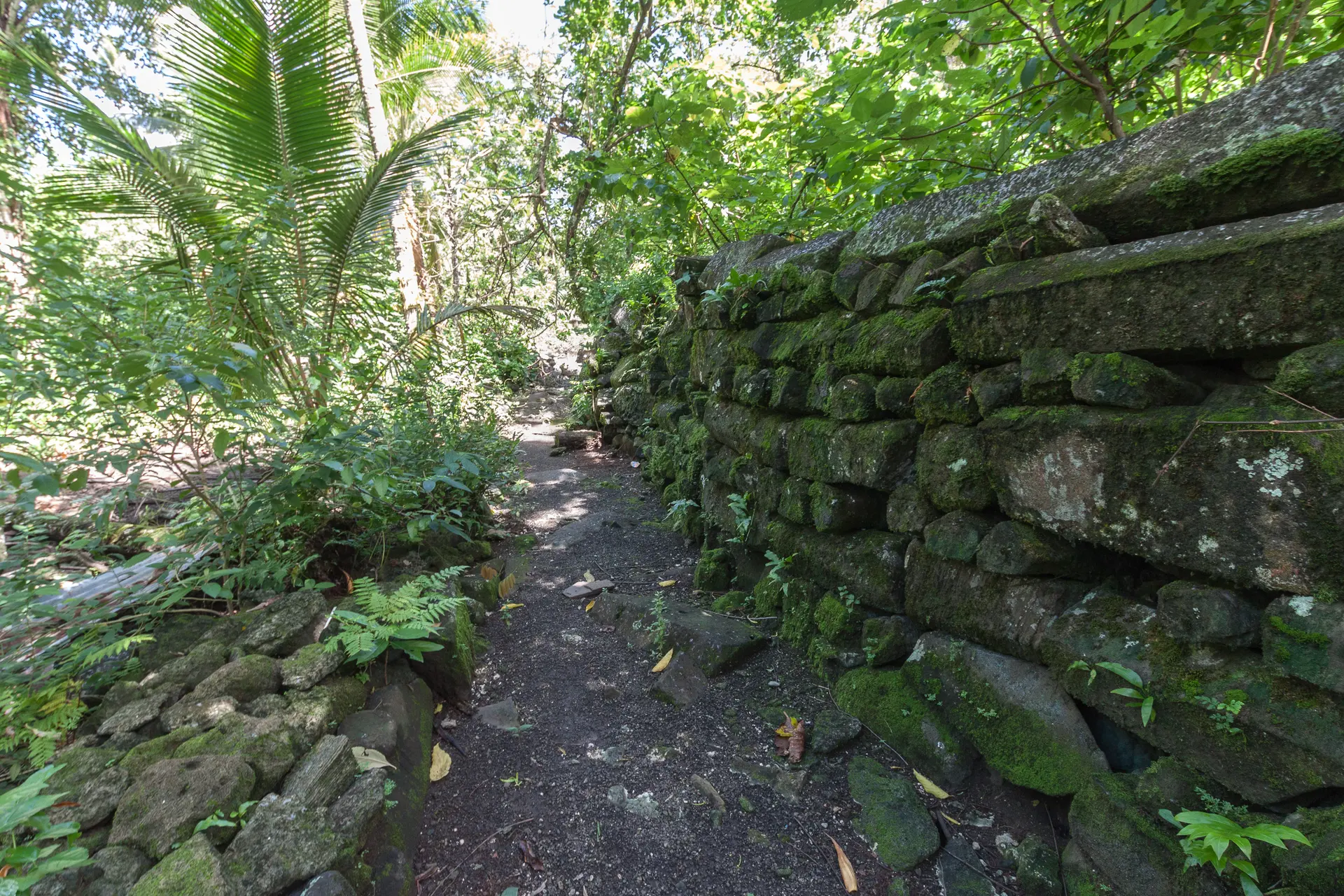
Leluh Ruins
Lelu, Kosrae State, Kosrae, Federated States of Micronesia
540.5 km away

As Nieves Latte Stone Quarry
Songsong / Sinapalo area, Rota, Northern Mariana Islands, Northern Mariana Islands, United States
1650.6 km away
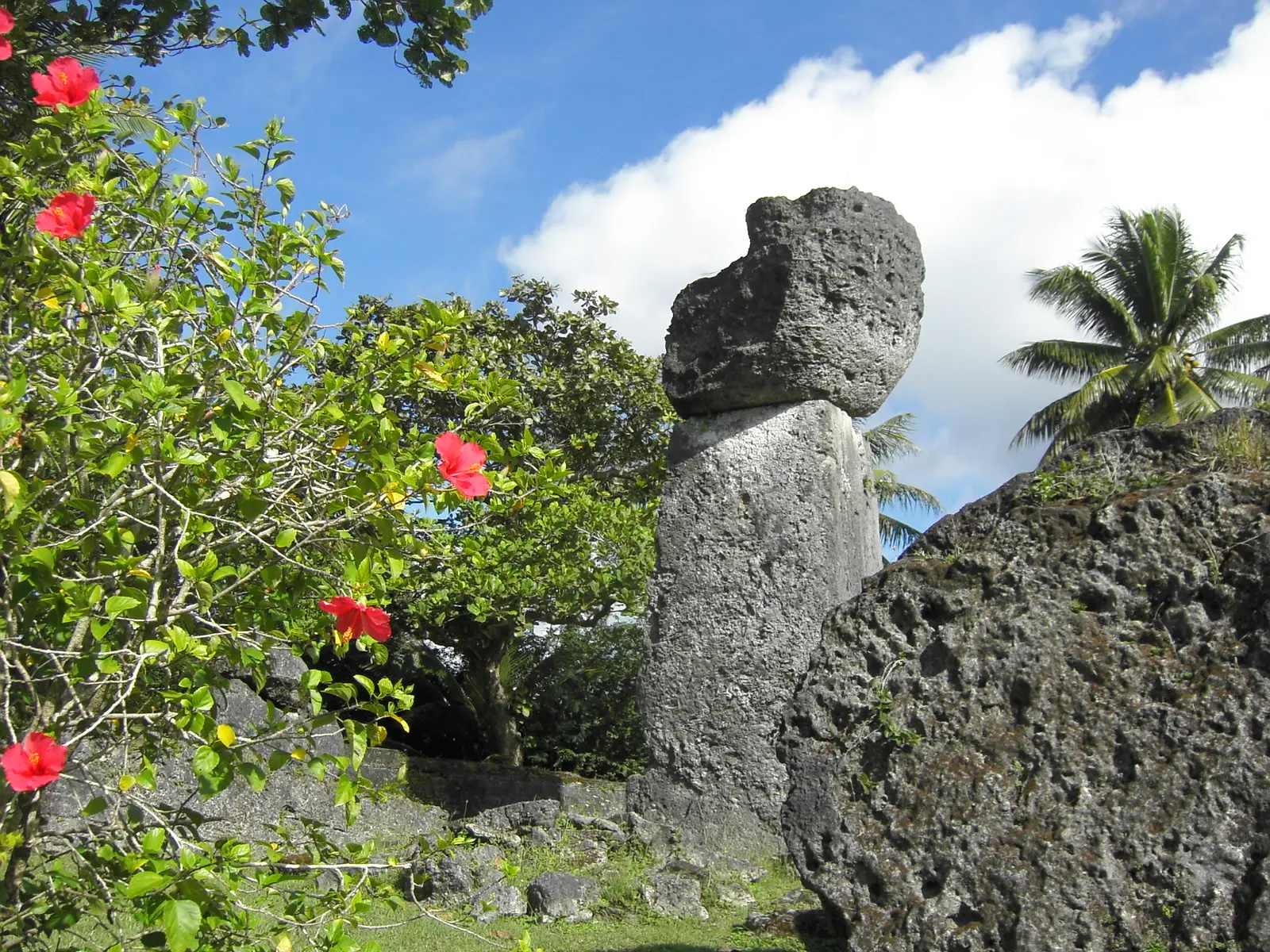
House of Taga
San Jose, Tinian, Northern Mariana Islands, Northern Mariana Islands, United States
1653.7 km away

Mangyol Stone Money Bank
Makiy, Gagil, Yap State, Yap, Federated States of Micronesia
2241.2 km away
References
Sources consulted for this page. Source categories describe the publication, not a guarantee that every claim is verified. Traditional accounts and outside interpretations may differ.
- 01Nan Madol: Ceremonial Centre of Eastern Micronesia — UNESCO World Heritage Centre — UNESCO World Heritage CentreofficialOfficial inscription listing; confirms 2016 inscription, description of site as ceremonial centre of Saudeleur dynasty, construction dates 1200-1500 CE range, and World Heritage in Danger status due to siltation/mangrove growth.
- 02Nan Madol — FSM Office of National Archives, Culture & Historic Preservation — Federated States of Micronesia National GovernmentofficialIndigenous/national-government heritage authority source. Covers historical documentation (1910 Hambruch study, 1963 Smithsonian research), Carolinian navigation/wayfinding context, 1992 preservation and management plan, and environmental threats (sea level rise, storm surge, mangrove degradation, sediment erosion).
- 03Nan Madol Site — Pohnpei State Historic Preservation Office — Pohnpei State GovernmentofficialPohnpei state-level heritage authority; page could not be directly fetched (server error) but is indexed and referenced consistently across searches as the primary state-government source for site history and the Olisihpa/Olosohpa origin legend.
- 04Nan Madol — Wikipedia — Wikipedia contributorsacademicConfirms name meaning ('within the intervals'), earlier name 'Soun Nan-leng', construction chronology (1st-2nd century activity, 8th-9th century islet construction, 1180-1200 CE megalithic architecture), 2016 UNESCO inscription, and notes the conflict between legendary (1500s) and archaeological (c. 1628) dating of the Saudeleur dynasty's fall.
- 05Nan Madol — U.S. National Park Service — U.S. National Park ServiceofficialConfirms National Historic Landmark designation, occupation timeline (c.1200-1700), Saudeleur arrival c.1100, population estimate (~1,000 residents at peak, nobility isolated from commoners), architectural details (90+ islets, 130 structures, Nandauwas walls 25 ft high), and 1628 Isokelekel conquest/gradual 18th-century abandonment.
- 06Nan Madol — Description & Facts — Britannica — Encyclopaedia Britannica editorsacademicConfirms 'Venice of the Pacific' framing, Saudeleur dynasty beginning c.1100, mortuary sector across 58 islets in the northeast, royal mortuary walls 16-26 feet high, site area of ~7 square miles (18 sq km), and 2016 UNESCO inscription.
- 07Links between climatic histories and the rise and fall of a Pacific chiefdom (PNAS Nexus, Oct 2024) — Chuan-Chou Shen et al., National Taiwan UniversityacademicPeer-reviewed 2024 study using 171 coral (230Th dating) and 18 charcoal (radiocarbon) samples. Identifies two major construction phases (10th-12th century establishment; late 12th-early 15th century intensification) and links sea-level rise/ENSO variability to construction intensity (up to 37% of dated corals from the second phase used in seawall/defensive reinforcement) and eventual site abandonment. Most rigorous chronological source found.
- 08Earliest direct evidence of monument building at Nan Madol identified using 230Th/U coral dating and geochemical sourcing — Not individually confirmed (ScienceDirect/Quaternary Research journal)academicPeer-reviewed geochemical/dating study of megalithic basalt stone sourcing; referenced via University of Guam MARC search results as part of the broader academic dating literature on the site.
- 09Micronesian Area Research Center (MARC) — University of Guam — University of GuamacademicRegional academic institution whose archaeology program, alongside Historic Preservation Programs of Micronesian states (supported by the Sasakawa Pacific Island Nations Fund and University of Oregon), has contributed to recording, maintenance planning, and interpretation of Nan Madol and other Micronesian cultural sites — closest available institutional bridge between Western academic archaeology and regional/Pacific Islander research capacity.
- 10Nan Madol Sustainable Conservation Plan — Cultural Site Research and Management Foundation — Cultural Site Research and Management Foundation, in partnership with FSM/Pohnpei State Historic Preservation Office and the US Embassy in FSMofficialDocuments a US Ambassadors Fund for Cultural Preservation grant (reported at approximately $375,000, 2018) supporting a conservation plan aimed at eventual removal of the site from the UNESCO List of World Heritage in Danger; names FSM HPO, the US Embassy, and UNESCO's Asia-Pacific Unit as partners.
- 11The Sacred Eels and Turtles of Nan Madol — Cultural Site Research and Management Foundation — Joe MazzarielloacademicDetailed account of the Pwung en Sapw annual atonement ceremony, the sacred saltwater eel Nan Samol at the islet of Idehd, turtle sacrifice ritual, the three 'turtle states' (weis) political division, and the mythological figure Liahnensokole. Independent cultural-heritage research organization, not a primary indigenous voice but draws on ethnographic and oral-tradition sources.
- 12Nan Madol: Sacred City of Micronesia — Sacred Sites (sacred-sites.org) — Carol NervigspiritualAuthor is a former Peace Corps volunteer who served on Pohnpei, giving direct field experience. Confirms founding legend (Olisihpa/Olosohpa), the islet of Idehd as main religious center with high-priest rituals of homage/supplication/atonement, Nan Douwas as a chiefly prayer site, Peikapw's sacred pools, and Kohnderek as primary burial-ritual location.
- 13Nan Madol Pohnpei — Ancient Stone City & Visitor Guide — Visit Pohnpei (destination tourism site)Source contextLocal Pohnpei tourism authority source; used for visitor practicalities (car hire cost, drive time from Kolonia, guide arrangement).
- 14Nan Madol — Wikivoyage travel guide — Wikivoyage contributorsSource contextCommunity travel guide; corroborates tide-dependent access (boat at high tide, wading at low tide) and entrance fee structure.
- 15Isokelekel — Wikipedia — Wikipedia contributors (citing Petersen 1990, Hanlon 1988)academicHeavily referenced (31 citations) article on the semi-mythical warrior who overthrew the Saudeleur dynasty; documents multiple coexisting and sometimes contradictory oral-tradition versions of his origin, motivation, and the conquest itself, and explicitly treats his geographic origin (Kosrae vs. Marshall Islands/Kiribati vs. mythological 'sky world') as scholarly-contested.
- 16Rediscovering Nan Madol, the 'Venice of the Pacific' — Kaselehlie Press (republished via postguam.com) — Bill JaynesSource contextMost locally-grounded non-academic source identified: a Micronesia-region newspaper editor's firsthand account, including granular detail on the informal landowner fee structure (paid to two families and a Nahnmwarki representative), local anecdotes of illness following disrespectful behavior at the site, and dates the Isokelekel conquest to c. 1400 CE — notably earlier than most other sources' c. 1628 date.
- 17UNESCO World Heritage Committee document on Nan Madol's continued Danger List status and Desired State of Conservation for Removal (DSOCR) — UNESCO World Heritage Committee (47th session)officialReferenced via search-snippet synthesis (direct fetch blocked); indicates that as of a June 2025 committee document, Nan Madol remains on the List of World Heritage in Danger, with a formal corrective-measures roadmap (DSOCR) begun in November 2024 and a five-year implementation timeframe, though some corrective measures had reportedly not yet begun as of the document date. Treated as moderate-confidence given inability to verify against full primary text.
Share a photo
Help visitors recognize Nan Madol. Every submission is reviewed before publication.