Mystery Hill, New Hampshire (America’s Stonehenge)
An unsolved riddle in New Hampshire granite, where stones mark the sun and origins remain disputed
Understand sacred places, explore living traditions, and learn how to engage respectfully with Pilgrim Map.
Access has not been verified. Check current local guidance before planning a visit.
Salem, New Hampshire, United States
Read the sources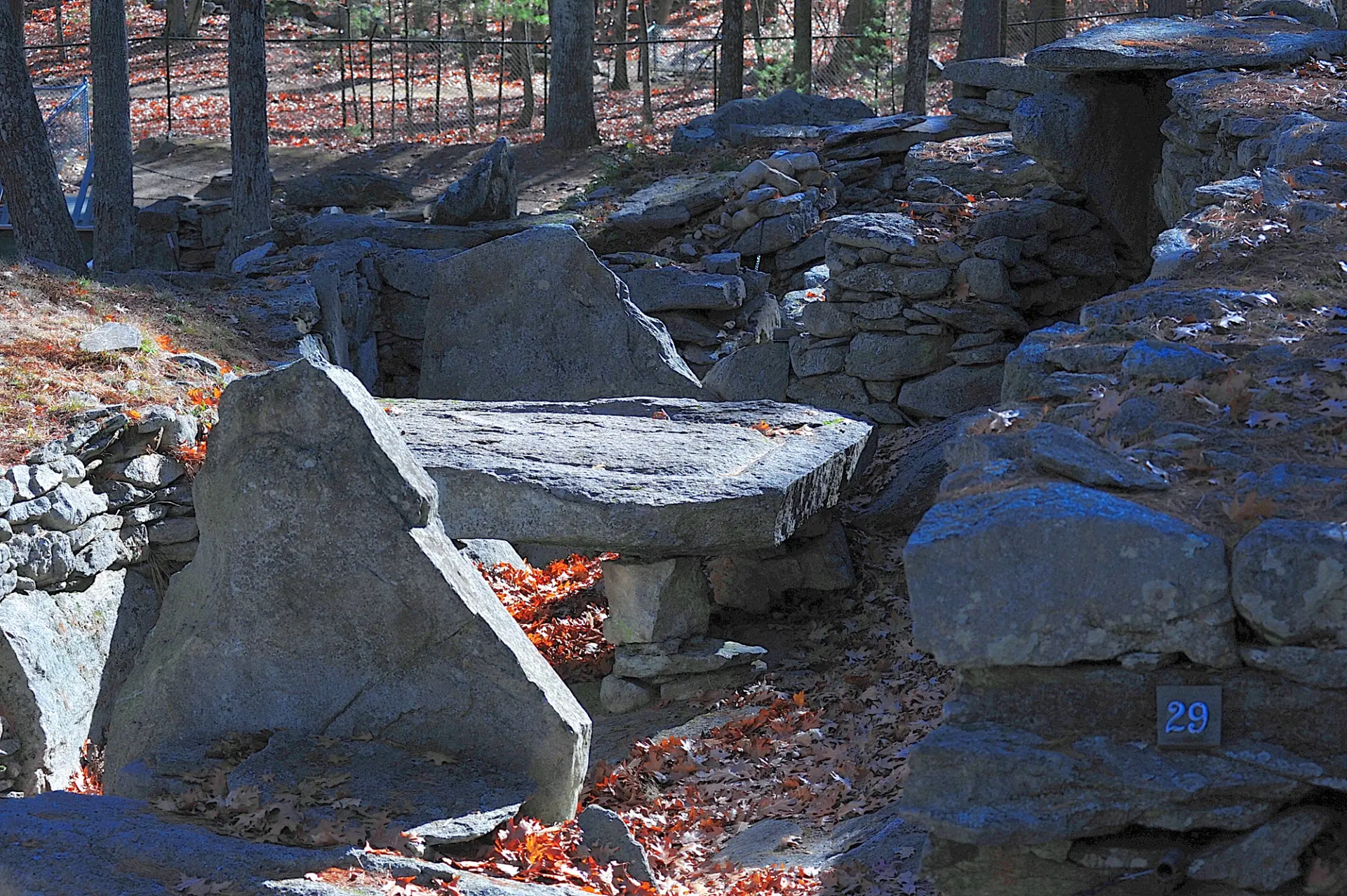
Visit essentials
A quick read before you go
- Duration
- One to two hours for a self-guided tour is typical.
- Etiquette
- America's Stonehenge is a privately owned archaeological site with commercial operations, but…
Overview
Mystery is this place's design, though the nature of that design is the central question. Across thirty acres of New Hampshire woodland, stone chambers burrow underground, speaking tubes connect rooms, and a four-and-a-half-ton channeled granite slab awaits an explanation. America's Stonehenge has been attributed to colonial farmers, Native American ceremonial builders, Irish Culdee monks, Phoenician traders, and Celtic astronomers.
Professional archaeologists generally favor agriculture, citing nineteenth-century quarry marks and records of Jonathan Pattee's homestead; yet charcoal dates extend to 2000 BCE, and a 1982 state excavation found Native American lithic techniques among the stones. Standing stones mark solstices, equinoxes, and cross-quarter days with an impressive consistency, although their intentionality and origin remain debated.
At winter solstice, seekers gather to trust a sunset alignment: whether their tradition is four millennia old or began in the 1970s, the sun finds its mark. Controversy is therefore part of the encounter. Walking through the Oracle Chamber, studying the grooved Sacrificial Table, and considering the builders' intent offers not an answer but an invitation to wonder—frustrating to some and exactly what others seek.
Why this place is sacred
The Oracle Chamber draws visitors underground into a stone enclosure where a speaking tube once allowed a voice from within to project outward, heard but unseen. Whatever purpose this served, the effect remains atmospheric. The acoustics of stone chambers differ from open air. Sound behaves differently. Perception shifts.
Above ground, the standing stones create a different kind of encounter. These monoliths, some weighing tons, have been positioned to mark celestial events. Stand at the right stone on June 21st and watch the sun set at the precise point that someone, at some time, intended. The experience does not depend on resolving who that someone was. The alignment simply occurs, as it has occurred for however long the stones have stood where they stand.
Researcher Mary Gage, who has studied the site for decades, proposes that ancient Native Americans, particularly the Abenaki, used this place for seasonal ceremonies over twenty-five centuries. Sherry Gould, tribal genealogist for the Nulhegan Band of the Coosuk Abenaki Nation, has stated that the scientific evidence points to construction consistent with Native American stone work.
For those who accept this interpretation, the site resonates with the presence of ancestors who understood the cosmos well enough to build in stone a map of its cycles.
For those who remain skeptical, the site still offers something. The woods are quiet. The stone chambers are cool and dim. The unsolved question of origins creates its own contemplative space, a place where certainty dissolves and attention sharpens. H.P. Lovecraft visited in the late 1920s, and some scholars see traces of the site in the cosmic dread of his fiction. Mystery has its own power, independent of resolution.
The original purpose of America's Stonehenge cannot be stated with certainty because the original builders cannot be identified. If the Native American theory is correct, the site served as a ceremonial and astronomical center for seasonal observances, the Oracle Chamber facilitating ritual communication with spiritual realms. If the colonial theory is correct, the structures were root cellars, lye-leaching stones for soap-making, and other practical farm features.
If William Goodwin's Irish monk theory were somehow vindicated, the site was a medieval monastery. Each interpretation projects a different purpose onto the same stones.
The documented history of the site begins in 1825 when Jonathan Pattee established a homestead on the property. The 1907 History of Salem describes the caves as used for storage. In 1937, William Goodwin purchased the property, renamed it Mystery Hill, and began significantly rearranging stones to support his theory of Irish monastic origins. This intervention complicates all subsequent interpretation, as the original configuration is now unknowable.
Robert Stone acquired the property in 1956, opened it to the public in 1958, and began documenting astronomical alignments in the 1970s. His photograph of the winter solstice sunset aligning with a standing stone intensified research into the celestial dimensions of the site. In 1982, the site was renamed America's Stonehenge. The Stone family continues to own and operate the site, welcoming scientific investigation including lidar mapping, DNA testing, and ground-penetrating radar.
In 2019, the site was vandalized with QAnon-related graffiti carved into the Sacrificial Table with a power tool, resulting in an arrest in 2021. This incident highlighted both the site's cultural visibility and its vulnerability.
Experience and orientation
The drive to Salem, New Hampshire, takes you into the woods of southern New Hampshire, convenient to the Massachusetts border but removed from urban density. The visitor center provides orientation, a small museum explaining the various theories about the site's origins. This context matters; without it, the stones are merely stones.
The trail through the site takes one to two hours at a contemplative pace. Stone walls line the paths. Chambers open into the hillside, their entrances low enough to require stooping. The Oracle Chamber is the most developed, an underground room with a speaking tube that connects to the surface. Visitors report different responses, some feeling atmospheric charge, others seeing only colonial masonry.
The Sacrificial Table dominates one area, a massive granite slab with grooves that some interpret as channels for ritual blood, others as practical features for lye-making or cider pressing. The vandalism of 2019 left visible damage, now repaired as much as possible. The stone's presence is undeniable regardless of interpretation.
The standing stones require more attention. They are not obvious at first, scattered through the woods rather than gathered in a circle. But as you learn where to look, their positions begin to make sense. This stone marks summer solstice sunset. That one marks winter solstice sunrise. The pattern is too consistent to ignore, whatever its origin.
At solstice and equinox events, the site takes on a different character. Seekers gather, some returning year after year, to watch the sun align with ancient or possibly not-so-ancient stones. Katja Esser leads winter solstice rituals, inviting participants to prepare through introspection and to receive the moment of alignment as a spiritual gift. Photography is discouraged during ceremonies, a recognition that some things belong to the spirit world.
Beyond organized events, the site offers quiet encounter. The alpaca farm adds an unexpected element, drawing families who may find the archaeology secondary to the animals. But for those who come seeking something harder to name, the woods and stones provide space for whatever question they bring.
The site spreads across thirty acres of woodland, with the main archaeological features concentrated in the central area. The Oracle Chamber lies underground, accessible through a low entrance. The Sacrificial Table occupies a prominent position, visible and imposing. Standing stones are positioned throughout, marking sightlines to celestial events at various times of year. An observation platform provides overview. The trails are generally accessible, though some areas require careful footing.
Context and lineage
No founding narrative exists in the conventional sense. The stories told about America's Stonehenge are competing origin theories rather than transmitted traditions.
Researcher Mary Gage and some Abenaki representatives propose that ancient Native Americans, particularly the Abenaki, built the site as a ceremonial and astronomical center approximately three to four thousand years ago. In this view, the stone chambers, standing stones, and Oracle Chamber served as a gathering place where the people came annually to hold ceremonies with the spirits and mark the turning of the seasons.
The astronomical alignments would have enabled precise tracking of solstices, equinoxes, and cross-quarter days for ceremonial and agricultural purposes.
William Goodwin, who purchased the site in 1937, promoted the theory that Irish Culdee monks built it around 1000 CE as a monastery. He compiled his arguments in his 1946 book, The Ruins of Great Ireland in New England. Goodwin significantly rearranged stones to fit his theory, compromising the archaeological record. This theory is considered pseudoarchaeological.
Barry Fell, in his 1976 book America BC, claimed to identify Phoenician inscriptions in Ogham script at the site, suggesting Mediterranean visitors in antiquity. Professional archaeologists have rejected this theory entirely, identifying the supposed inscriptions as natural marks or modern scratchings.
Mainstream archaeologists generally attribute the structures to colonial farmers, with Jonathan Pattee's homestead the best documented. In this view, the chambers are root cellars, the Sacrificial Table is a lye-leaching stone for soap-making, and the alignments are coincidental or modern constructions.
The lineage of America's Stonehenge is the central question the site poses. If built by Native Americans, it connects to broader traditions of stone construction and astronomical observation documented at sites like Serpent Mound and the medicine wheels of the Plains. If built by colonial farmers, it represents practical Yankee ingenuity rather than spiritual heritage. If neither theory is fully correct, the site may represent multiple layers of construction and use over centuries or millennia.
What can be said is that radiocarbon dating from charcoal deposits at the site has yielded dates from approximately 2000 BCE to 173 BCE, confirming human presence in deep antiquity. The 1982 excavation supervised by the New Hampshire state archaeologist found evidence of Native American lithic techniques. These findings do not prove indigenous construction of the visible structures, but they establish that the site was not a pristine wilderness when colonial farmers arrived.
The contemporary spiritual use of the site connects it to a broader movement of earth-based spirituality, solstice observance, and pilgrimage to places perceived as energetically significant. Whether this contemporary practice continues an ancient tradition or invents one, it has become part of the site's living meaning.
Jonathan Pattee
Colonial-era homesteader
William Goodwin
Property owner and promoter of Irish monk theory
Robert Stone
Property owner and researcher
Mary Gage
Independent researcher
H.P. Lovecraft
Author who visited the site
Traditions and practice
If the Native American origin theory is accepted, the site may have served for seasonal ceremonies marking solstices, equinoxes, and cross-quarter days. The Oracle Chamber, with its speaking tube allowing a voice from within to project outward, suggests possible use for ritual communication, oracular pronouncement, or initiation. The astronomical alignments would have enabled precise ceremonial timing. However, no continuous tradition has been transmitted, and specific rituals cannot be reconstructed.
If the colonial origin theory is accepted, the structures served practical agricultural purposes. The chambers were root cellars for food storage. The Sacrificial Table was a lye-leaching stone for soap-making, or a cider press bed, or a surface for butchering. The alignments were coincidental or created in the twentieth century.
Contemporary spiritual practice at America's Stonehenge centers on solstice and equinox observances. The Winter Solstice Ritual led by Katja Esser invites participants to prepare through introspection in the days before the event, to gather in a spirit of reverence, and to receive the moment of sunset alignment as a spiritual gift. Photography is discouraged during ceremonies, reflecting an understanding that some experiences belong to the spirit world rather than social media.
Summer solstice also draws gatherings, as do the equinoxes and cross-quarter days. These are contemporary practices drawing on various earth-based spiritual traditions rather than reconstructions of ancient Abenaki ceremony. Some Abenaki representatives have expressed spiritual connection to the site, but specific tribal ceremonies are not publicly conducted here.
The Stone family continues to welcome scientific investigation, including lidar mapping, DNA testing, ground-penetrating radar, and carbon dating. This openness to inquiry is itself a kind of practice, a commitment to letting the site reveal what it will.
Visitors can explore the site at their own pace during regular hours. The self-guided tour with app provides interpretation. VIP guided tours offer access to areas not on the standard tour and deeper engagement with the site's mysteries. Those seeking spiritual experience may find it in quiet attention to the stones and chambers, in noticing how light falls through the trees, in sitting with the question of origins rather than needing an answer.
To attend a seasonal ceremony, contact the organizers in advance; registration is typically required. Prepare as invited, with introspection and openness. Arrive ready to participate rather than observe. Leave devices in the car if possible.
At any time of year, the Oracle Chamber invites contemplation. Enter slowly. Let your eyes adjust to the dim. Consider what purposes this space might have served, and which of those purposes might still be available to you.
Native American Ceremonial Use (Disputed)
HistoricalResearcher Mary Gage and some Abenaki representatives propose that America's Stonehenge served as a major ceremonial and astronomical center for Native Americans, particularly the Abenaki, for approximately 2,500 years beginning around 3,000 years ago. Sherry Gould of the Nulhegan Band of the Coosuk Abenaki Nation has supported this interpretation, citing construction methods consistent with Native American stone work. However, this interpretation is disputed by mainstream archaeologists who attribute the structures to colonial-era construction.
If the Native American theory is accepted: seasonal ceremonies aligned with solstices and equinoxes, ritual use of stone chambers for spiritual purposes, possible use of the Oracle Chamber for oracular communication. Specific practices are speculative as no continuous tradition exists.
Contemporary Solstice and Equinox Observances
ActiveAmerica's Stonehenge hosts seasonal ceremonies, particularly at the winter and summer solstices. These are contemporary spiritual observances led by practitioners like Katja Esser, drawing on various earth-based spiritual traditions. The astronomical alignments of the standing stones create a natural gathering point for those who wish to mark the turning of the seasons. These observances represent modern spiritual use of the site regardless of its disputed ancient origins.
Winter Solstice Ritual led by Katja Esser; participants prepare through introspection, photography is discouraged during ceremonies, and a suggested donation supports the continuation of the spiritual work. Summer solstice, equinox, and cross-quarter day observances also occur.
Colonial Agricultural Heritage
HistoricalMainstream archaeologists propose that the stone structures were built by colonial farmers, most notably Jonathan Pattee, who lived on the property from 1825 to 1849. The Sacrificial Table is interpreted as a lye-leaching stone for soap making, a cider press bed, or a hog butchering table. The underground chambers likely served as root cellars for food storage.
Agricultural and domestic uses including root cellars, lye extraction for soap making, food storage, and animal processing.
Pre-Columbian European Theories (Pseudoarchaeological)
HistoricalWilliam Goodwin believed the site was built by Irish Culdee monks around 1000 CE. Barry Fell claimed Phoenician origins with Ogham inscriptions. These theories are considered pseudoarchaeological by professional archaeologists. No European artifacts from any claimed period have been found. Importantly, Goodwin significantly altered the site by moving stones, compromising the archaeological record.
Speculative; if the Irish monk theory were accepted, the site would have served as a medieval monastery for prayer and contemplation. These theories lack archaeological support.
Perspectives and open questions
America's Stonehenge invites competing interpretations, none of which has achieved scholarly consensus. Archaeological, indigenous, and alternative perspectives offer different frameworks, each with evidence and gaps. The site may be most valuable as an example of how we construct knowledge about the past from fragmentary evidence.
Scholarly perspective
Mainstream archaeologists generally attribute the stone structures to colonial-era farmers, with Jonathan Pattee's homestead (1825-1849) as the best documented use. Curtis Runnels of Boston University has stated: 'No Bronze Age artifacts have been found there... no one has found a single artifact of European origin from that period anywhere in the New World.' David Starbuck of Plymouth State University has noted the nineteenth-century quarrying marks visible on many stones.
Critically, William Goodwin's rearrangement of stones after 1937 makes the original configuration unknowable. In Starbuck's words: 'It is widely believed that Goodwin may have created much of what is visible at the site today.'
However, radiocarbon dating from charcoal deposits has yielded dates extending to 2000 BCE, and a 1982 excavation found evidence of Native American lithic techniques. The current scholarly view holds that the site has 'at minimum... both Native American and Colonial American components.' The relationship between documented ancient presence and visible stone structures remains unresolved.
The astronomical alignments are acknowledged but their intentionality debated. Some researchers claim over 200 alignments; skeptics argue that with a large number of stones, chance alignments are inevitable. The dramatic solstice alignments are harder to dismiss as coincidental.
Living and traditional perspectives
Some Abenaki representatives have claimed spiritual connection to the site. Sherry Gould, tribal genealogist for the Nulhegan Band of the Coosuk Abenaki Nation, has stated that 'the scientific evidence clearly shows portions of the site in Salem to date back to 2,000-plus years and to be constructed using methods that are consistent with Native American stone work done by our Abenaki ancestors.'
Researcher Mary Gage, though not herself Abenaki, has championed the Native American theory through decades of study, proposing that the site was built as a ceremonial and astronomical center where ancient peoples gathered annually to hold ceremonies with the spirits. Her work has been influential in alternative interpretations of the site.
No continuous indigenous ceremonial tradition specifically tied to this site has been documented. This does not disprove Native American origins, as forced removals and cultural suppression disrupted many traditions. But it does mean that contemporary claims of sacred significance cannot appeal to unbroken practice.
Alternative interpretations
Various alternative theories have been proposed, none with archaeological support. William Goodwin's Irish Culdee monk theory (1937) envisioned medieval monastics fleeing Vikings and establishing a monastery in New Hampshire. Barry Fell's Phoenician theory (1976) claimed to identify Ogham inscriptions indicating Mediterranean visitors. Celtic astronomer theories propose Iberian visitors around 800-400 BCE.
Professional archaeologists reject all pre-Columbian European theories. No European artifacts from any claimed period have been found at the site or anywhere in the New World. The supposed inscriptions are considered natural marks, plow scratchings, or modern additions.
The site has also attracted New Age interest and, in 2019, conspiracy theorist attention, when a QAnon adherent vandalized the Sacrificial Table. These alternative engagements, whatever their intent, can distract from serious inquiry into the site's actual history.
Open questions
Genuine mysteries remain at America's Stonehenge that deserve acknowledgment rather than premature resolution. The definitive cultural attribution of the stone structures cannot be established with current evidence. The original configuration before Goodwin's alterations is permanently lost. The purpose of the Oracle Chamber and speaking tube, if pre-colonial, remains speculative. Whether the astronomical alignments are intentional ancient design or coincidental remains debated.
The relationship between documented Native American presence (radiocarbon dating, lithic techniques) and the visible stone structures has not been clarified. Ancient peoples were here; whether they built what we now see is uncertain.
Perhaps most significantly, what the site meant to its builders, whoever they were, they did not record in any language we can read. The stones keep their counsel. Visitors can sit with this uncertainty and find meaning in the sitting.
Plan your visit
Access and arrival
Numerous options in Salem, New Hampshire, and surrounding area. The site is approximately 15 minutes from the Massachusetts/New Hampshire border on Route 93, convenient to the Boston metro area (approximately 40 miles).
Respectful visit
No specific dress code applies. Wear comfortable walking shoes suitable for forest trails. Dress for weather; much of the site is outdoors and can be hot in summer, cold in winter. If attending a solstice ceremony, dress warmly and in layers; you may be standing still in cold conditions.
Photography is permitted throughout the site during regular visits. Professional or commercial photography requires permission from the site owners. During spiritual ceremonies, photography is discouraged as some participants believe certain moments belong to the spirit world. Follow any specific guidance from ceremony leaders.
Do not leave offerings. The site is not a personal altar. Well-meaning gifts can accumulate into litter and can complicate archaeological interpretation of the site.
{"Do not climb on or touch stone structures","Do not carve, scratch, or mark any surfaces","Stay on marked trails","Do not remove any materials from the site","Do not leave offerings or personal items","No pets due to the alpaca farm","Do not enter closed areas or visit outside posted hours"}
Do not carve, scratch, or mark any stones. The 2019 vandalism demonstrated how easily the site can be damaged. Do not climb on structures. Do not remove any materials from the site. Do not conduct personal ceremonies that might damage the site or disturb other visitors. Treat the site with the same care you would show any place of uncertain but possible sacred significance.
Current practical details
Address
105 Haverhill Rd, Salem, NH 03079, USA
Phone
Hours
Hours, fees, and access can change — verify on the official source before you travel. Practical details last checked Jun 2026.
Location
Map loads as you approach this section.
Pilgrim reflections
A portrait of encounter, not a score
Pilgrims describe what they felt, how present they could become, and whether the place would shape a journey. There are no stars and no ranking of traditions.
No reviewed reflections yet
The first pilgrims can help describe the character of being here.
Share a reflection
Available after an account-backed “Been there.” Every reflection is reviewed before publication.
Nearby sacred places
Explore other sacred places in the region. Proximity does not establish access or travel time; check each place’s guidance.
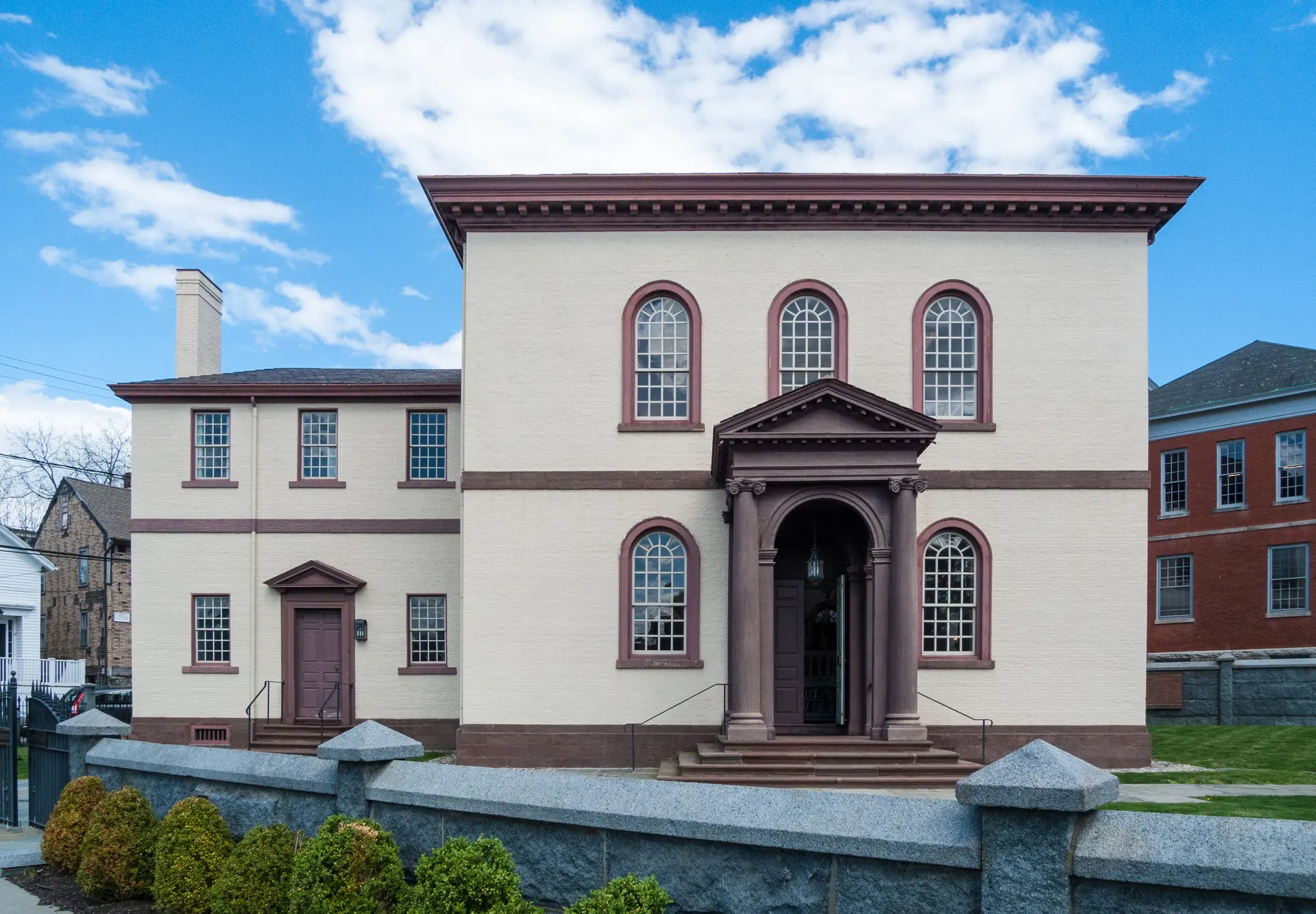
Touro Synagogue
Newport, Rhode Island, United States
150.8 km away
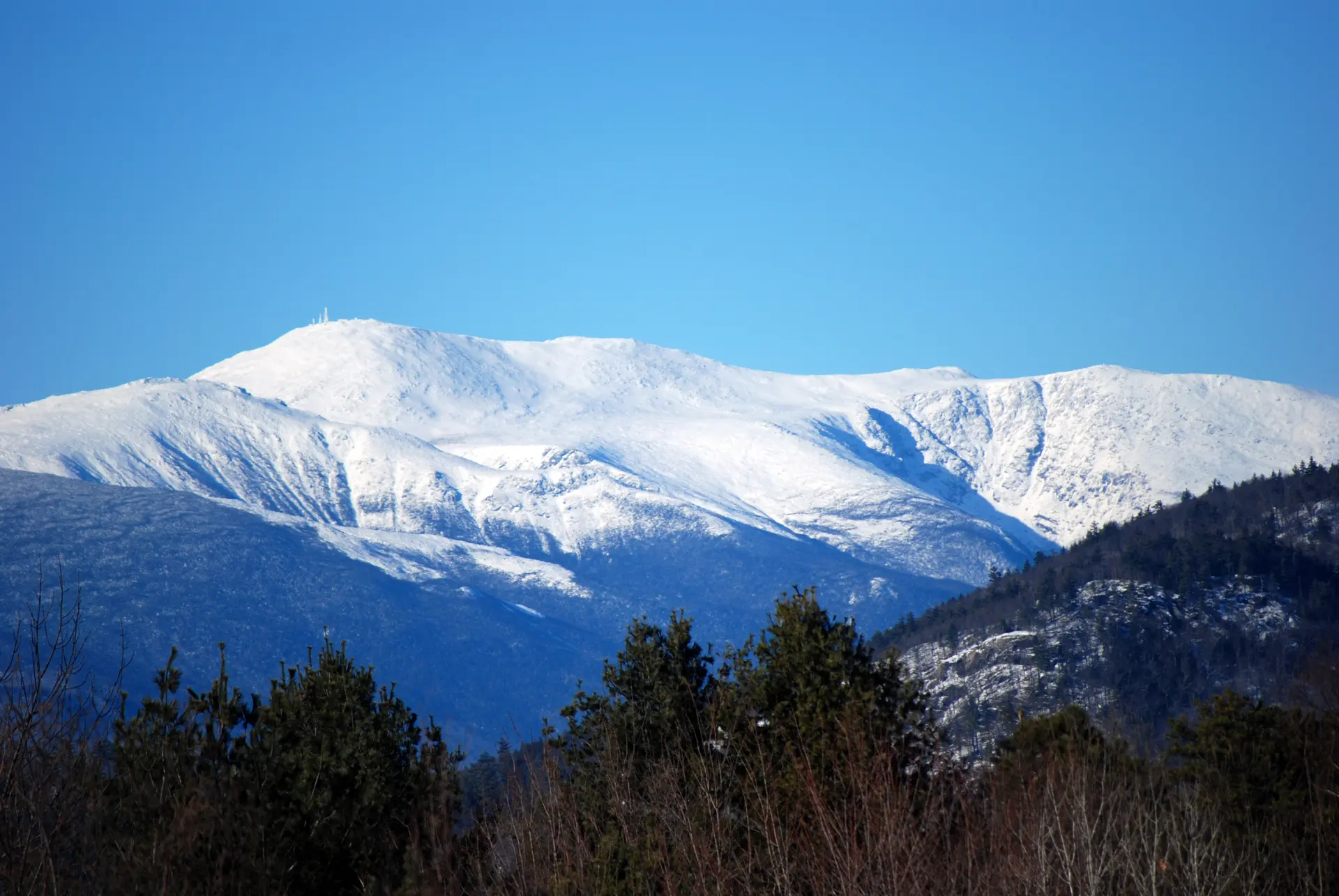
Mt. Washington, New Hampshire
Gorham, New Hampshire, United States
158.9 km away
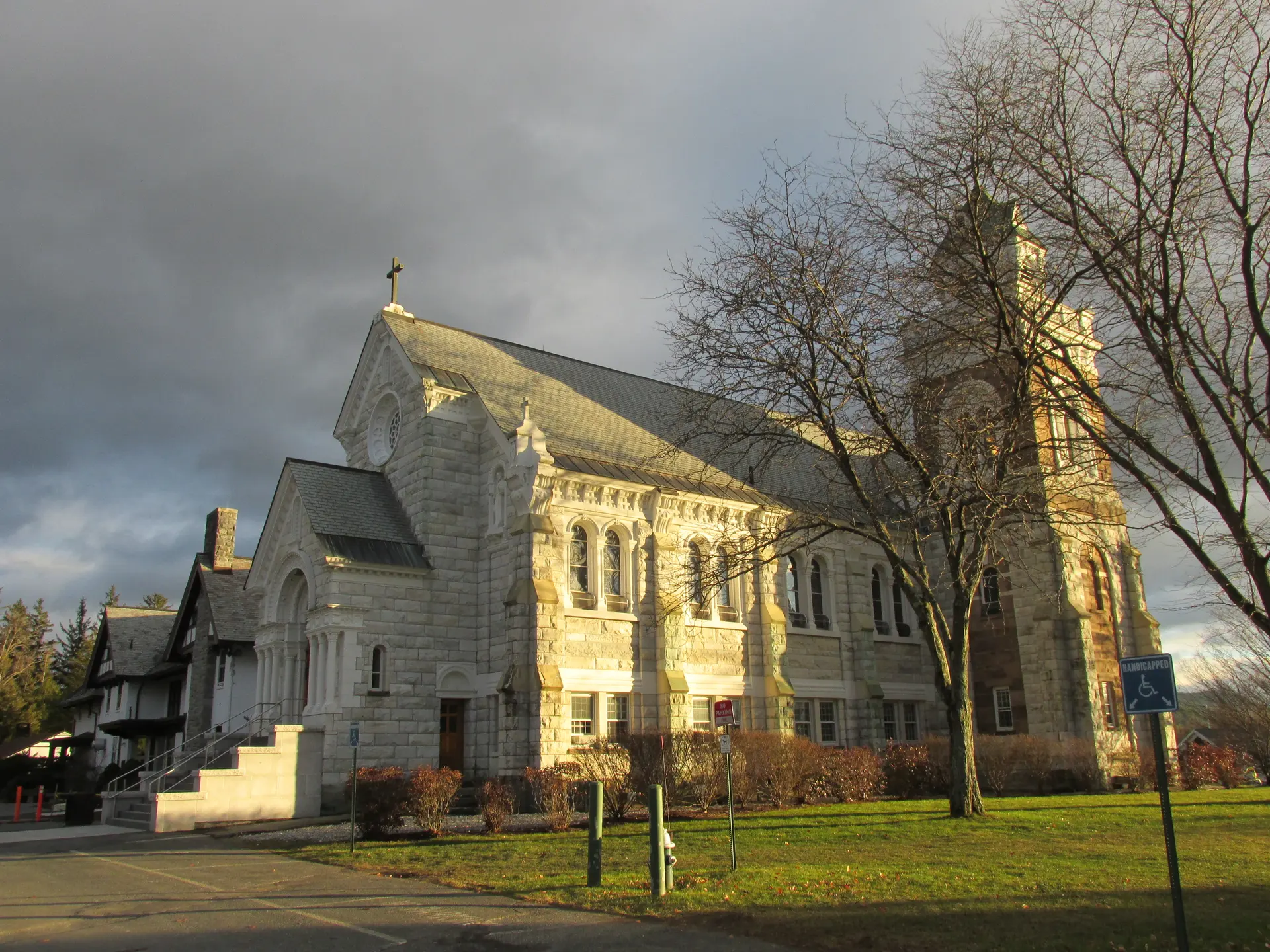
National Shrine of The Divine Mercy
Stockbridge, Massachusetts, United States
183.0 km away
National Shrine of Our Lady of Martyrs
Auriesville, New York, United States
252.3 km away
References
Sources consulted for this page. Source categories describe the publication, not a guarantee that every claim is verified. Traditional accounts and outside interpretations may differ.
- 01America's Stonehenge: Inside the Rocky History of New Hampshire's Mystery Hill — Discover MagazineacademicScience journalism with balanced coverage of archaeological debates
- 02America's Stonehenge: New Hampshire rocks history or hoax? — Phys.orgacademicBalanced science journalism with quotes from archaeologists
- 03Man arrested after allegedly defacing 'America's Stonehenge' with suspected Q-Anon-related graffiti — CNNacademicNews coverage of 2019 vandalism incident
- 04Visit NH | America's Stonehenge — Visit New HampshireofficialOfficial state tourism resource
- 05America's Stonehenge - WikipediaencyclopediaGood overview of controversies; presents multiple viewpoints
- 06America's Stonehenge - Official Website — America's StonehengeofficialOwner's perspective; promotional but authoritative for visitor information
- 07Mystery Hill: America's Stonehenge in Salem — Atlas ObscuraSource contextGood visitor perspective and historical context
- 08Surveying the Mystery of NH's 'Stonehenge' — New Hampshire MagazineacademicLocal journalism with owner interviews
- 09Mystery Hill (America's Stonehenge) New Hampshire — Mary GageacademicIndependent researcher Mary Gage's comprehensive site; advocates Native American theory
- 10Native American Theory - Mystery Hill — Mary GageacademicDetailed argument for Abenaki construction
- 11America's Stonehenge: A Historical Site Shrouded in Mystery — New England.comacademicRegional tourism and history perspective
- 12The Mystery of America's Stonehenge — MeatEater Conservation NewsacademicBalanced overview with archaeological context
- 13Sacred site: Shining a light on America's Stonehenge — Eagle TribuneacademicIncludes Abenaki tribal perspective from Sherry Gould
- 14Lovecraft, Shatner, & America's Stonehenge — Jamie Poole BooksacademicDiscussion of H.P. Lovecraft's connection to the site
- 15America's Stonehenge, Salem, New Hampshire — Roadside AmericaSource contextQuirky tourism perspective with practical information
Share a photo
Help visitors recognize Mystery Hill, New Hampshire (America’s Stonehenge). Every submission is reviewed before publication.