Mt. Canigou
Sacred mountain of Catalonia, where the solstice fire unites a nation
Understand sacred places, explore living traditions, and learn how to engage respectfully with Pilgrim Map.
Access has not been verified. Check current local guidance before planning a visit.
Casteil, Pyrénées-Orientales, France
Read the sources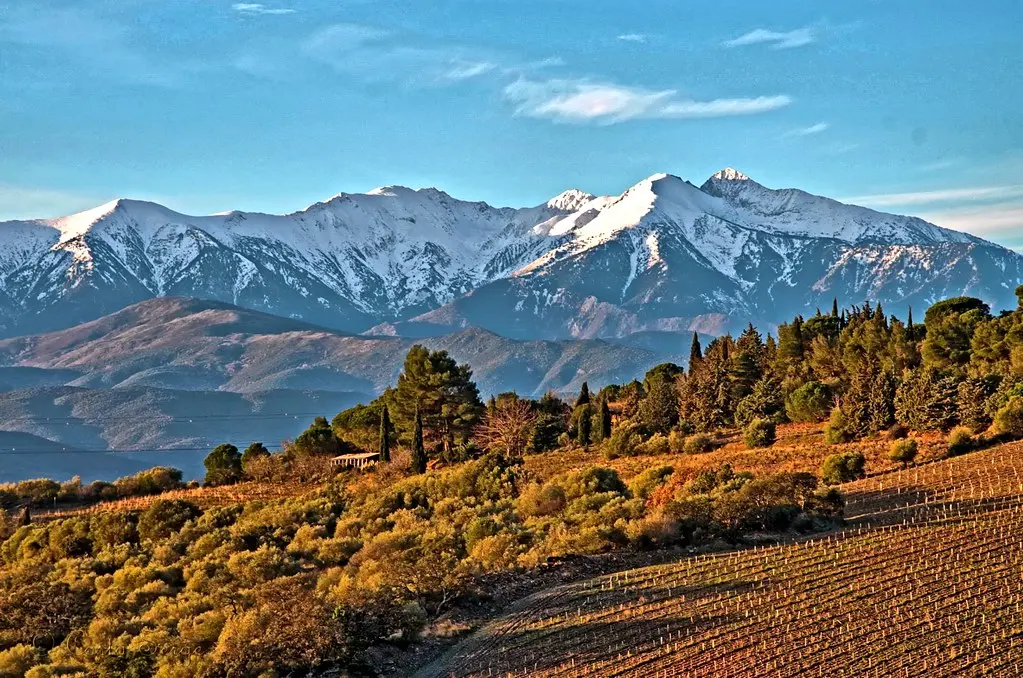
Image of Mt. Canigou. Image source
Visit essentials
A quick read before you go
- Duration
- Full day to two days for summit climb depending on route and fitness.
- Etiquette
- Respect the mountain's sacredness to Catalan culture.
Overview
Le Canigó rises 2,784 meters from the Pyrenean foothills and is visible across vast distances. Ancient Greek and Phoenician Mediterranean navigators used it to find their way; it has long been landmark, beacon, and sacred presence. For Catalans it is the spiritual center of a nation divided between France and Spain but united around the peak. A traditional saying denies true Catalan identity to anyone who has not climbed it, and the summit cross often bears the red-and-yellow Catalan flag.
Each year on Saint John's Eve, June 23, the Flama del Canigó begins with fire kindled at the summit. Torches carry this sacred flame down to bonfires throughout Catalonia and beyond, linking mountain to village and summit to home in a ritual of unity.
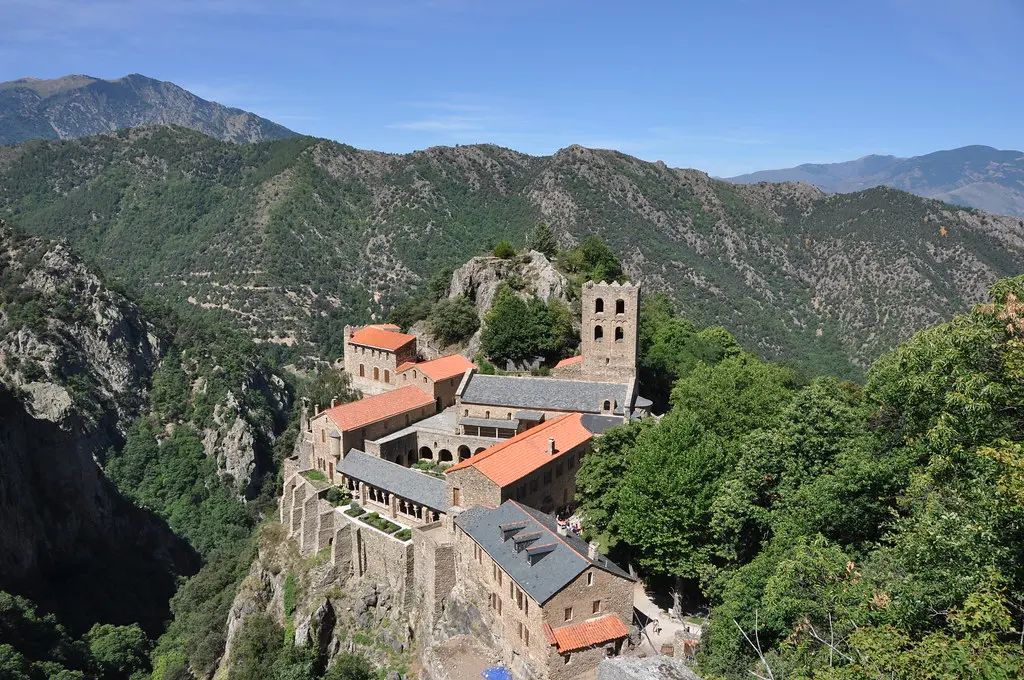
Two Benedictine monasteries anchor the flanks: Saint-Martin-du-Canigou, on its cliff since the eleventh century, and Saint-Michel-de-Cuxa, whose carved capitals now appear in museums worldwide. They added Christian sacred geography to a landscape holy long before Christianity. Climbing Canigou joins a tradition stretching back millennia; from the summit, the Mediterranean lies east and the Pyrenees extend west across the geography of Catalan identity.
Why this place is sacred
Mountains have always drawn human reverence. Their height suggests transcendence; their difficulty of access mirrors the spiritual path; their permanence offers a fixed point in a changing world. Canigou exemplifies this universal pattern while adding specific Catalan meaning.
The mountain's visibility is central to its power. From Barcelona, from the Mediterranean, from villages throughout the Pyrenees-Orientales, Canigou is present. Its presence shapes the landscape and, over millennia, has shaped the people who live within sight of it. The mountain watches; the people look up.
The Flame ceremony crystallizes this relationship into ritual. Fire is transformation—the element that converts matter into light and heat. A fire lit at the mountain's summit and carried outward becomes a blessing radiating from the sacred center. Those who participate in the torch processions, who light their local bonfires from the sacred flame, connect their homes to the mountain, their ordinary lives to the transcendent.
The monasteries deepen the site's layers. Saint-Martin-du-Canigou, built into a cliff face in the early eleventh century, represents the Christian impulse to find God in mountain solitude. Saint-Michel-de-Cuxa, lower on the mountain, became a center of learning and art whose influence spread throughout the medieval world. Both monasteries continue to function, adding living prayer to ancient stone.
To climb Canigou is to participate in all these layers. The body's effort becomes offering; the breath at altitude becomes prayer; the view from the summit becomes vision. Catalans describe the experience as baptism into their identity. Visitors from elsewhere may find something universal: the human need for sacred ground, and the way mountains meet that need.
The mountain has been sacred since ancient times—recognized by Mediterranean seafarers as divine or at least numinous. The monasteries were founded in the medieval period to harness this sacredness for Christian purposes.
The Flama del Canigó ceremony was revived in its modern form in 1955 by poet François Rouch, though similar traditions existed earlier. The ceremony has grown to become a major expression of Catalan cultural identity.
Experience and orientation
The climb begins from several possible starting points—Vernet-les-Bains, Prades, Casteil. The routes vary in difficulty and duration, but all involve significant elevation gain. The most traditional approach takes a full day: ascending to one of the mountain refuges, resting, and completing the summit push the next morning.
The refuges on Canigou are essential infrastructure for the pilgrimage. Les Cortalets is the highest, closest to the summit. Mariailles, les Conques, Batère, and Sant Guillem provide alternatives at various approaches. These simple shelters have housed generations of pilgrims, their guest books filled with testimony to what the mountain means.
The final approach to the summit steepens. The summit cross comes into view, often flying the Catalan flag. Arrive and the reward is immediate: a view that encompasses the Mediterranean to the east, the Pyrenean chain to the west and south, and the plains of Roussillon and Catalonia below. On clear days, you can see both sea and snowy peaks.
If your visit coincides with Saint John's Eve, the experience transforms. Thousands gather on the mountain for the kindling of the sacred flame. As darkness falls, the fire is lit. Torches are lit from it, and the carriers begin their descent, spreading the flame to the villages below. From the summit, you can watch the lights multiply across the landscape—a constellation of fires connecting mountain to plain, sacred center to ordinary home.
The monasteries offer different but complementary experiences. Saint-Martin-du-Canigou requires its own climb to reach—a fitting approach to a community devoted to mountain solitude. Saint-Michel-de-Cuxa is more accessible, its Romanesque architecture and famous carved capitals rewarding careful attention.
Approach from Vernet-les-Bains, Prades, or other base villages. Multiple routes and refuges support the climb. The summit is at 2,784 meters. The monasteries (Saint-Martin-du-Canigou and Saint-Michel-de-Cuxa) are on the mountain's flanks, accessible by shorter walks or drives.
Context and lineage
Ancient peoples of the Mediterranean—Greeks, Phoenicians, Romans—used Canigou as a navigation landmark. A mountain so visible from so far must have seemed divine or at least significant. Until the eighteenth century, Canigou was believed to be the highest peak in the Pyrenees.
The monasteries were founded in the early medieval period. Saint-Michel-de-Cuxa dates to the ninth century and became a major center of Romanesque art. Saint-Martin-du-Canigou was built between 1001 and 1009, clinging to a cliff face in dramatic witness to monastic devotion.
The division of Catalonia between France and Spain (Treaty of the Pyrenees, 1659) made the mountain a symbol of unity across political boundaries. Canigou lies in the French department of Pyrénées-Orientales but is spiritually claimed by Catalans on both sides.
The modern Flama del Canigó was organized in 1955 by poet François Rouch, reviving earlier traditions of solstice fires. The ceremony has grown to become one of the most important expressions of Catalan cultural identity, with the flame carried to villages, cities, and even to distant Catalan communities worldwide.
The monasteries maintain Benedictine (or Benedictine-affiliated) communities. The Flame ceremony is organized by Catalan cultural associations. The mountain itself belongs to no single tradition but holds meaning for all who come.
François Rouch
Flame ceremony organizer
Count Guifré II of Cerdanya
Monastery founder
Traditions and practice
Catalan tradition holds that climbing Canigou completes one's identity as a Catalan. The summit has been a pilgrimage destination for centuries. Solstice fires predate the modern revival.
The Flama del Canigó ceremony (June 23) is the mountain's most important annual event. Torches lit from the summit fire are carried throughout the Catalan lands. The mountain race (Course du Canigou, first Sunday of August) adds athletic pilgrimage. Monasteries offer retreat experiences.
If possible, time your visit for the Flame ceremony—participation in this living tradition is unforgettable. Otherwise, climb to the summit on any reasonable day; the view and the accomplishment carry meaning regardless of occasion. Visit the monasteries for contemplation and connection to Christian tradition on the mountain.
Catalan Cultural Tradition
ActiveCanigou is the national symbol and spiritual home of the Catalan people. Climbing the mountain is considered essential to Catalan identity. The Flame of Canigou ceremony connects the peak to every Catalan community.
Pilgrimage to the summit, participation in the Flama del Canigó ceremony, flying Catalan flags from the summit cross.
Roman Catholicism
ActiveThe monasteries of Saint-Martin-du-Canigou and Saint-Michel-de-Cuxa have maintained Christian presence on the mountain for over a thousand years.
Monastic worship, pilgrimage to the monasteries, retreat and contemplation.
Perspectives and open questions
Canigou can be understood as natural sacred site, as national symbol, as Christian holy mountain, or as site of living cultural practice. All these dimensions coexist.
Scholarly perspective
Anthropologists and historians recognize Canigou's importance to Catalan identity, particularly given the divided political situation. The Flame ceremony is studied as an example of invented tradition that has become authentically meaningful.
Living and traditional perspectives
Within Catalan tradition, Canigou is the spiritual center of the nation—a place where identity is forged through physical encounter with sacred landscape. The monasteries add Christian tradition to cultural identity.
Alternative interpretations
Some researchers explore connections between Canigou and earth energies, ley lines, or sacred geography traditions. Pre-Christian worship at the mountain has attracted esoteric interest.
Open questions
The specific nature of ancient worship at the mountain. The full history of fire ceremonies before the modern revival. The extent to which the mountain shaped Catalan identity versus the extent to which that identity was consciously constructed.
Plan your visit
Access and arrival
Five mountain refuges provide high-altitude accommodation. Villages below offer full range of options.
Respectful visit
Proper hiking gear essential. Conditions can be severe at altitude even in summer.
Permitted. The summit cross with Catalan flag is iconic.
None specific to the mountain. Monasteries may accept donations.
Refuges have capacity limits. Some routes require experience. Be prepared for mountain conditions.
The climb is demanding; proper preparation essential. Weather can change rapidly at altitude. Refuges have limited capacity; check availability.
Current practical details
Address
Canigó, 66500 Vernet-les-Bains, France
Hours, fees, and access can change — verify on the official source before you travel. Practical details last checked Jun 2026.
Location
Map loads as you approach this section.
Pilgrim reflections
A portrait of encounter, not a score
Pilgrims describe what they felt, how present they could become, and whether the place would shape a journey. There are no stars and no ranking of traditions.
No reviewed reflections yet
The first pilgrims can help describe the character of being here.
Share a reflection
Available after an account-backed “Been there.” Every reflection is reviewed before publication.
Nearby sacred places
Explore other sacred places in the region. Proximity does not establish access or travel time; check each place’s guidance.

References
Sources consulted for this page. Source categories describe the publication, not a guarantee that every claim is verified. Traditional accounts and outside interpretations may differ.
- 01Mount Canigou - Conflent Canigo Tourisme — Conflent Canigo TourismeofficialOfficial regional tourism
- 02Massif du Canigó - Pays Catalan — Visit OccitanieofficialOfficial tourism site
- 03Canigou - Wikipedia — Wikipedia contributorsencyclopediaComprehensive overview
Share a photo
Help visitors recognize Mt. Canigou. Every submission is reviewed before publication.