Mausoleums of 7th Imam Musa Alkadhim and 9th Imam Muhammad Aljawad, Baghdad
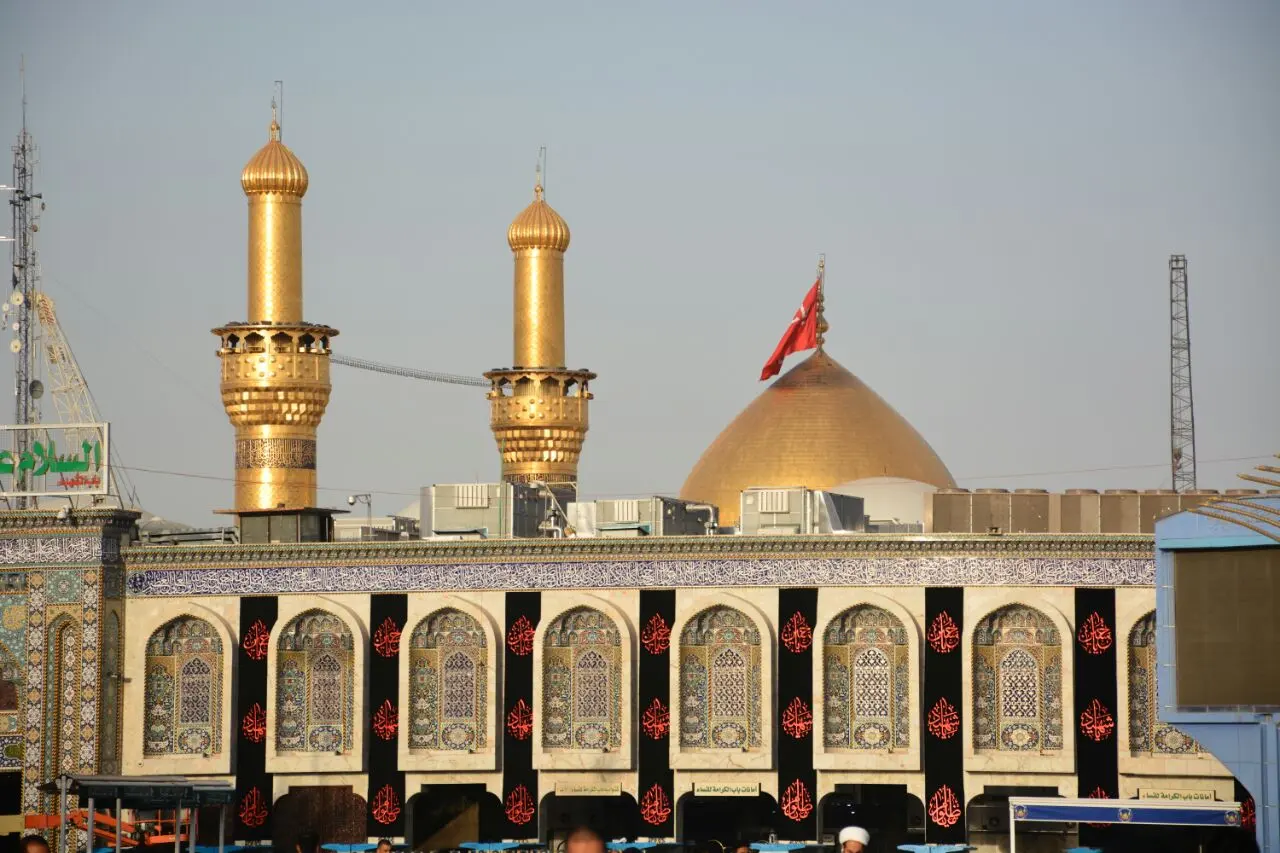
Baghdad's shrine of two Imams, al-Kazimayn, beneath twin golden domes and four gilded minarets
Understand sacred places, explore living traditions, and learn how to engage respectfully with Pilgrim Map.
Access has not been verified. Check current local guidance before planning a visit.
Baghdad, Baghdad, Iraq
Read the sources
Visit essentials
A quick read before you go
- Duration
- 1-2 hours; far longer during commemorations.
- Access
- In the Kadhimiya (al-Kazimiyya) district on the west bank of the Tigris in northern Baghdad;…
Overview
Al-Kazimayn is one of the holiest Twelver Shia shrines, holding two Imams of the Prophet's house. Imam Musa al-Kadhim, the seventh Imam, is remembered for forbearance and gentleness; he died in Abbasid captivity in 799 CE, reportedly poisoned on 25 Rajab. His grandson Imam Muhammad al-Jawad, the ninth Imam, was buried beside him in 834 CE, giving al-Kazimayn its name: 'the two who restrain their anger.' The scholars Shaykh al-Mufid and Nasir al-Din al-Tusi also rest here.
Successive Safavid, Ottoman, and Qajar work transformed the old Quraysh cemetery into a roughly 26,000-square-metre complex crowned by twin golden domes and four gilded minarets. Pilgrims seek healing, forgiveness, and the Imams' intercession at this traditional gateway to accepted prayer. Tens of thousands visit daily and millions gather in black for the 25 Rajab martyrdom commemoration and foot-pilgrimages.
This entry describes Baghdad's Al-Kazimiyya Mosque. It is distinct from the shrine of al-Qasim ibn Musa al-Kadhim in al-Qasim, Babylon, with which it is sometimes confused.
Why this place is sacred
The thinness of al-Kazimayn rests on the presence of two Imams of the Ahl al-Bayt and on centuries of continuous devotion. Musa al-Kadhim is remembered for patience and gentleness under Abbasid persecution, and his shrine, joined with that of his grandson al-Jawad and the graves of major scholars, has long been a place where pilgrims come for healing, forgiveness and intercession — a gateway, in tradition, to the acceptance of prayers.
Beneath the twin golden domes and four gilded minarets, vast mirror-worked halls gather the weight of that devotion, and the scale of collective prayer is moving even to those outside the tradition.
The burial place and shrine of Imams Musa al-Kadhim and Muhammad al-Jawad, on the site of the old Quraysh cemetery of Baghdad's Round City.
Built over the Quraysh cemetery of al-Mansur's Round City (founded 762 CE), with Musa al-Kadhim buried in 799 CE and Muhammad al-Jawad in 834 CE. The current building derives from the Safavid restoration of Shah Ismail I (1502-1524), ornamented by the Ottoman Suleiman the Magnificent after 1534 and later embellished under the Qajars. It remains a paramount active Shia pilgrimage shrine.
Experience and orientation
The shrine stands in the Kadhimiya (al-Kazimiyya) district on the west bank of the Tigris in northern Baghdad, reached by car or taxi within the city. Visitors describe luminous golden domes, vast mirror-worked halls, and crowds of devout pilgrims. The atmosphere is intensely devotional, and during the 25 Rajab commemoration it is marked by black-clad mourners, elegies and processions.
For Shia pilgrims the shrine offers healing, forgiveness and closeness to the Imams; the scale of collective devotion is moving even to outside observers. Inner-shrine access and photography are regulated, and respectful non-Muslim visitors are generally welcomed, ideally with a guide. Prayer is offered at the darih, the lattice screen enclosing the tombs.
Remove shoes before entering the holy areas and cover appropriately; women must cover their hair. Prayer is offered at the darih (lattice tomb-screen). Inner-shrine access and photography are regulated — follow shrine staff guidance, especially during the heavily attended 25 Rajab commemoration.
Context and lineage
The site was the Quraysh cemetery of al-Mansur's Round City of Baghdad. Musa al-Kadhim, the seventh Imam, was buried there in 799 CE after dying in Abbasid captivity, reportedly poisoned on 25 Rajab 183 AH. His grandson Muhammad al-Jawad, the ninth Imam, was interred beside him in 834 CE, giving the shrine the dual name al-Kazimayn. Over the centuries successive dynasties built and embellished the shrine over the tombs.
Twelver Shia Islam, centered on the Imams of the Ahl al-Bayt and the great scholars buried in the complex.
Imam Musa al-Kadhim
Seventh Twelver Imam
Imam Muhammad al-Jawad
Ninth Twelver Imam
Shaykh al-Mufid
Major Shia scholar
Nasir al-Din al-Tusi
Polymath and theologian
Shah Ismail I and later patrons
Safavid, Ottoman and Qajar builders
Traditions and practice
Ziyarat and prayer at the darih (lattice tomb-screen), recitation of ziyarat texts, mourning processions, multi-day foot-pilgrimages from other Iraqi cities, and vows and petitions.
Year-round pilgrimage, peaking on 25 Rajab (the martyrdom of al-Kadhim), when millions visit in black mourning attire.
Approach the darih with quiet attentiveness, mindful of the patience and gentleness al-Kadhim is remembered for. If you are a visitor rather than a pilgrim, observe the recitation and mourning respectfully. Reflect on forbearance under persecution and on the long devotion that has gathered here.
Shia Islam (Twelver)
ActiveThe shrine of al-Kazimayn ('the two who restrain their anger') holds the tombs of the seventh Imam, Musa al-Kadhim (d. 799 CE), known for patience and gentleness, and his grandson the ninth Imam, Muhammad al-Jawad (d. 834 CE). Pilgrims seek healing, forgiveness and the Imams' intercession. The great scholars Shaykh al-Mufid and Nasir al-Din al-Tusi are also buried in the complex.
Ziyarat, prayer at the darih (lattice tomb-screen), mourning processions and foot-pilgrimage especially on 25 Rajab (martyrdom of al-Kadhim), recitation of ziyarat texts, and vows and petitions.
Perspectives and open questions
The shrine is read by historians as a Safavid-Ottoman foundation over an Abbasid cemetery and by Shia tradition as a gateway for the acceptance of prayers.
Scholarly perspective
Historically the Twelver Shia shrine of Imams Musa al-Kadhim and Muhammad al-Jawad, built over the Abbasid-era Quraysh cemetery; the present structure derives from Safavid and Ottoman rebuilding in the 16th century with later Qajar embellishment. The death of al-Kadhim is dated to 25 Rajab 183 AH (799 CE).
Living and traditional perspectives
For Twelver Shia, al-Kazimayn is a place of healing, forgiveness and the Imams' intercession — a gateway to the acceptance of prayers and a focus of mourning for al-Kadhim's martyrdom.
Open questions
There is an unresolved metadata question of whether the platform record intends this Baghdad shrine or the separate al-Qasim shrine in Babylon; this entry treats the named Baghdad site as primary.
Plan your visit
Access and arrival
In the Kadhimiya (al-Kazimiyya) district on the west bank of the Tigris in northern Baghdad; reached by car or taxi within the city. Exact GPS coordinates were not pulled.
The Kadhimiya district and central Baghdad offer pilgrim lodging and hotels within reach of the shrine; availability tightens around 25 Rajab.
Respectful visit
Strict modest dress: cover arms and legs; women must cover their hair; shoes removed before entering holy areas.
Phones and cameras restricted inside the inner shrine; avoid intrusive photography, especially during prayer and processions.
Votive offerings and donations are customary; intercessory vows to the Imams are common.
Maintain quiet, respectful behavior; follow shrine staff and crowd-control directions, especially during 25 Rajab commemorations.
Phones and cameras are restricted inside the inner shrine. The 25 Rajab commemoration brings enormous crowds and heavy security; follow shrine staff and crowd-control directions. Maintain quiet and respectful behavior near the tombs.
Current practical details
Address
Baghdad, Baghdad Governorate, Iraq
Phone
Hours
Hours, fees, and access can change — verify on the official source before you travel. Practical details last checked Jun 2026.
Location
Map loads as you approach this section.
Pilgrim reflections
A portrait of encounter, not a score
Pilgrims describe what they felt, how present they could become, and whether the place would shape a journey. There are no stars and no ranking of traditions.
No reviewed reflections yet
The first pilgrims can help describe the character of being here.
Share a reflection
Available after an account-backed “Been there.” Every reflection is reviewed before publication.
Nearby sacred places
Explore other sacred places in the region. Proximity does not establish access or travel time; check each place’s guidance.

Mausoleum of Abd Alqadir Gilani, Baghdad
Baghdad, Baghdad, Iraq
8.1 km away

Mausoleum of Abbas (brother of Imam Hussein), Karbala
Karbala, Karbala, Iraq
89.4 km away
Mausoleum of Imam Hussein, Karbala
Karbala, Karbala, Iraq
89.6 km away

Mausoleums of 10th Imam Ali Alhadi and 11th Imam Hasan Alaskari, Samarra
Samarra, Saladin Governorate, Iraq
100.7 km away
References
Sources consulted for this page. Source categories describe the publication, not a guarantee that every claim is verified. Traditional accounts and outside interpretations may differ.
- 01Mashhad al-Kazimiyya — Archnet — Archnet (MIT/Aga Khan)academicArchitectural documentation of the shrine complex.
- 02Al-Kazimiyya Mosque — Wikipedia — Wikipedia contributorsacademicTwelver Shia mosque/shrine in Kadhimiya, Baghdad; tombs of Imams Musa al-Kadhim (d. 799) and Muhammad al-Jawad (d. 834); built on the Quraysh cemetery of the Round City (762 CE); Safavid (1502-1524) and Ottoman restorations; also burial of Shaykh al-Mufid and Nasir al-Din al-Tusi.
- 03Holy Shrine of al-Kazimayn — WikiShia — WikiShiaacademicShia scholarly encyclopedia; architecture (twin golden domes, four gilded minarets), ritual significance, history of the shrine of the two Imams.
- 04History of the Shrine of Imam Musa Al-Kadhim & Imam Muhammad Al-Jawad — Al-Islam.org — Al-Islam.orgspiritualShia devotional history of the two Imams and their shrine; martyrdom of al-Kadhim on 25 Rajab 183 AH.
- 05Iraq's Rajab pilgrimage peaks as visitors head to Kadhimiya — Shafaq News — Shafaq NewsSource context25 Rajab pilgrimage; millions of pilgrims, foot marches, mourning processions.
- 06Imam Qasim Shrine — Wikipedia — Wikipedia contributorsacademicDISAMBIGUATION: the separate shrine of al-Qasim ibn Musa al-Kadhim at al-Qasim, Babylon (matching the batch db_slug/region); included to flag the metadata mismatch.
Share a photo
Help visitors recognize Mausoleums of 7th Imam Musa Alkadhim and 9th Imam Muhammad Aljawad, Baghdad. Every submission is reviewed before publication.