Mausoleums of 10th Imam Ali Alhadi and 11th Imam Hasan Alaskari, Samarra
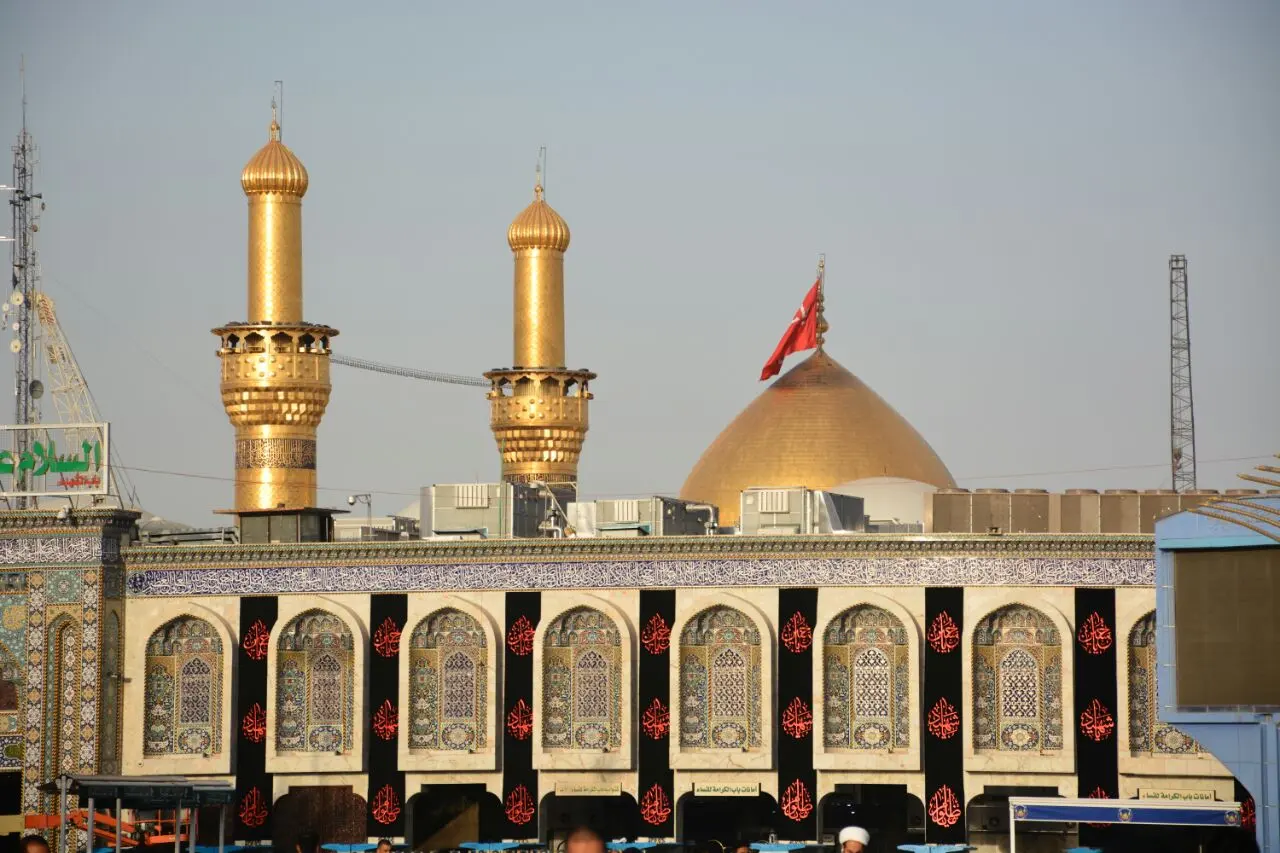
Samarra's shrine of two Imams and the cellar from which the Hidden Imam is believed to have vanished
Understand sacred places, explore living traditions, and learn how to engage respectfully with Pilgrim Map.
Access has not been verified. Check current local guidance before planning a visit.
Samarra, Saladin Governorate, Iraq
Read the sources
Visit essentials
A quick read before you go
- Duration
- 1-2 hours; often part of a broader Iraq ziyarat itinerary.
- Access
- In Samarra, about 120 km north of Baghdad in Saladin Governorate.
Overview
The al-Askari Shrine is among Twelver Shia Islam's holiest places and a center of messianic hope. It holds the tombs of the tenth Imam, Ali al-Hadi (al-Naqi), and eleventh Imam, Hasan al-Askari, as well as Hakima Khatun and Narjis Khatun, mother of the twelfth Imam. Beside them is the sardab, the cellar from which Twelver belief holds that the young Muhammad al-Mahdi entered the Minor Occultation and will return at the end of time.
This makes Samarra central to Twelver eschatology. Rebuilt after the 2006–07 attacks that helped trigger sectarian civil war, the golden “defiant dome” also carries a narrative of communal resilience. The shrine lies within the Samarra Archaeological City UNESCO World Heritage Site; current security and access must be verified before travel.
Why this place is sacred
The thinness of the al-Askari Shrine rests on the tombs of two of the Twelve Imams and on the sardab linked to the occultation of the twelfth. It holds not only the graves of al-Hadi and al-Askari but also revered women of the Ahl al-Bayt, and the cellar from which, in Twelver belief, the Hidden Imam entered occultation — a place saturated with eschatological hope and the awaiting (intizar) of his return.
After the 2006 destruction and the rebuilding that followed, the dome has also become a symbol of communal resilience. Pilgrims describe an overwhelming, emotionally intense atmosphere, especially at the sardab.
The burial place and shrine of the two 'Askari Imams in their Samarra residence, and a focus of devotion tied to the Hidden Imam's occultation.
The Imams were buried in their Samarra dwelling in 868 (al-Hadi) and 874 CE (al-Askari). A first dome rose around 939–940 CE; repeated renovation culminated in Qajar ruler Nasir al-Din Shah's 1868–69 gilding. A bombing destroyed the golden dome on 22 February 2006, and the minarets fell in June 2007. With Iraqi government and UNESCO assistance, the dome was rebuilt by 2009. The site remains a major active Shia pilgrimage shrine.
Experience and orientation
Pilgrims describe an overwhelming, emotionally intense atmosphere, especially at the sardab associated with the Hidden Imam's occultation. Above, the rebuilt golden dome embodies resilience after the 2006 bombing. A visit can hold patience under the Imams' house arrest, intizar—the awaiting of the Mahdi—and communal endurance after violence together. Foreign and non-Muslim access may be restricted or require permission as conditions change; where access is granted, respectful observation is welcome and prayer participation optional.
Pass through security screening and observe strict dress requirements. Ziyarat is offered at the tombs and supplications at the sardab. Photography is often restricted inside — follow signage and staff instructions. Confirm current access and security conditions before planning a visit to Samarra.
Context and lineage
The Imams al-Hadi and al-Askari lived under house arrest in the Abbasid garrison quarter of Samarra, Askar al-Mu'tasim, from which they take the name al-Askari, and were buried in their dwelling in 868 and 874 CE. According to Shia tradition, the young twelfth Imam, Muhammad al-Mahdi, descended into the cellar (sardab) beneath the shrine and entered occultation, to return at the end of time.
A first dome was raised over the graves around 939-940 CE, and the shrine was repeatedly rebuilt.
Twelver Shia Islam, central to the eschatology of the Hidden Imam and held in esteem by Samarra's Sunnis as well.
Imam Ali al-Hadi (al-Naqi)
Tenth Twelver Imam
Imam Hasan al-Askari
Eleventh Twelver Imam
Muhammad al-Mahdi
Twelfth (Hidden) Imam
Narjis Khatun and Hakima Khatun
Revered women of the Ahl al-Bayt
Nasir al-Din Shah
Qajar ruler
Traditions and practice
Ziyarat prayers at the tombs and at the sardab, supplications for the Hidden Imam, and mourning rituals on the Imams' martyrdom anniversaries.
Daily pilgrimage, with major gatherings on the death anniversaries of the two Imams and during Shia mourning seasons.
Approach the tombs and the sardab with attentiveness to the hope and patience they hold — the awaiting of the Mahdi, and the endurance of the Imams under house arrest. The rebuilt dome offers a separate kind of reflection, on resilience after the violence of 2006. Observe respectfully where access permits.
Twelver Shia Islam
ActiveBurial place of the tenth Imam Ali al-Hadi (al-Naqi) and the eleventh Imam Hasan al-Askari, along with Hakima Khatun and Narjis Khatun (mother of the twelfth Imam). Adjacent is the sardab from which the twelfth Imam, Muhammad al-Mahdi, is believed to have entered the Minor Occultation, making Samarra central to Twelver eschatology.
Ziyarat at the tombs, prayers at the sardab of the Hidden Imam, recitation and supplication, and mourning commemorations on the Imams' martyrdom anniversaries.
Perspectives and open questions
The shrine is read by historians as a major medieval Shia shrine within a UNESCO zone and by tradition as the seat of messianic hope.
Scholarly perspective
Historically the burial site of the tenth and eleventh Imams; a major medieval Shia shrine repeatedly rebuilt, within the Samarra UNESCO archaeological zone, catastrophically damaged in 2006-07 and reconstructed. The first dome is dated variously to 328 AH (939-40 CE) and the broader shrine to 944 CE; the Imams' deaths are given as al-Hadi 254/868 and al-Askari 260/874.
Living and traditional perspectives
Twelver Shia tradition venerates it as the home and tomb of the 'Askariyyayn and the site of the Hidden Imam's occultation, a focus of messianic devotion; Samarra's Sunnis also hold the site in esteem.
Alternative interpretations
Esoteric and devotional currents emphasize the living presence of the Hidden Imam connected to the sardab.
Open questions
The occultation of the twelfth Imam is, by definition, a matter of faith beyond historical verification; the exact original form of the early shrine is not fully documented. Current security and access for foreign visitors fluctuate.
Plan your visit
Access and arrival
In Samarra, about 120 km north of Baghdad in Saladin Governorate. Access is subject to checkpoints and security conditions; foreign visitors should arrange travel carefully. Approximate coordinates ~34.1986 N, 43.8742 E.
Lodging in Samarra exists for pilgrims; many visitors base in Baghdad and travel up for the day, subject to security conditions.
Respectful visit
Strict modest dress; women wear hijab and abaya, men cover legs and shoulders.
Often restricted inside; follow signage and staff instructions; security may limit cameras.
Donations to the shrine endowment; no required material offering.
Security screening; behave with reverence near the tombs and sardab; remove shoes where required.
Access is subject to security screening and may be restricted for foreign and non-Muslim visitors; verify conditions before traveling. Photography is often restricted inside — follow signage and staff. Behave with reverence near the tombs and sardab, and remove shoes where required. The 2006 destruction makes this a politically and religiously charged site.
Current practical details
Address
Samarra Al Kaber Mosque, Samarra, Saladin Governorate, Iraq
Hours
Hours, fees, and access can change — verify on the official source before you travel. Practical details last checked Jun 2026.
Location
Map loads as you approach this section.
Pilgrim reflections
A portrait of encounter, not a score
Pilgrims describe what they felt, how present they could become, and whether the place would shape a journey. There are no stars and no ranking of traditions.
No reviewed reflections yet
The first pilgrims can help describe the character of being here.
Share a reflection
Available after an account-backed “Been there.” Every reflection is reviewed before publication.
Nearby sacred places
Explore other sacred places in the region. Proximity does not establish access or travel time; check each place’s guidance.

Mausoleums of 7th Imam Musa Alkadhim and 9th Imam Muhammad Aljawad, Baghdad
Baghdad, Baghdad, Iraq
100.7 km away

Mausoleum of Abd Alqadir Gilani, Baghdad
Baghdad, Baghdad, Iraq
107.9 km away

Mausoleum of Abbas (brother of Imam Hussein), Karbala
Karbala, Karbala, Iraq
176.5 km away
Mausoleum of Imam Hussein, Karbala
Karbala, Karbala, Iraq
176.6 km away
References
Sources consulted for this page. Source categories describe the publication, not a guarantee that every claim is verified. Traditional accounts and outside interpretations may differ.
- 01UNESCO to help Iraq reconstruct revered Al-Askari shrine in Samarra — UN News — United Nations / UNESCOofficialUNESCO involvement in reconstruction; Samarra heritage context.
- 02Iraqis rebuild al-Askari mosque — Al Jazeera — Al JazeeraofficialReconstruction reporting; dome repaired by April 2009, shrine reopened; Mahdi disappearance association.
- 03Marqad al-Imamayn, Samarra — Archnet — Archnet (MIT/Aga Khan)academicArchitectural documentation of the shrine.
- 04Al-Askari Shrine — Wikipedia — Wikipedia contributorsacademicComprehensive: burials of the two Imams plus Hakima Khatun and Narjis Khatun, dome dimensions (~20m diameter, 68m high, 72,000 gold pieces), 2006 bombing, location in Samarra Archaeological City UNESCO site.
- 05Shrine of al-Askariyyayn — WikiShia — WikiShiaacademicTwelver Shia reference; Imams under house arrest in Askar al-Mu'tasim camp; burials 254/868 and 260/874; first dome 328/939-40.
- 06History of the Shrine of Imam Ali al-Naqi and Imam Hasan al-Askari — Al-Islam.org — Al-Islam.orgspiritualDevotional history of the shrine and its development.
- 072006 al-Askari mosque bombing — Wikipedia — Wikipedia contributorsacademicDestruction of golden dome on 22 Feb 2006, minarets destroyed 13 June 2007, role in triggering sectarian civil war.
Share a photo
Help visitors recognize Mausoleums of 10th Imam Ali Alhadi and 11th Imam Hasan Alaskari, Samarra. Every submission is reviewed before publication.