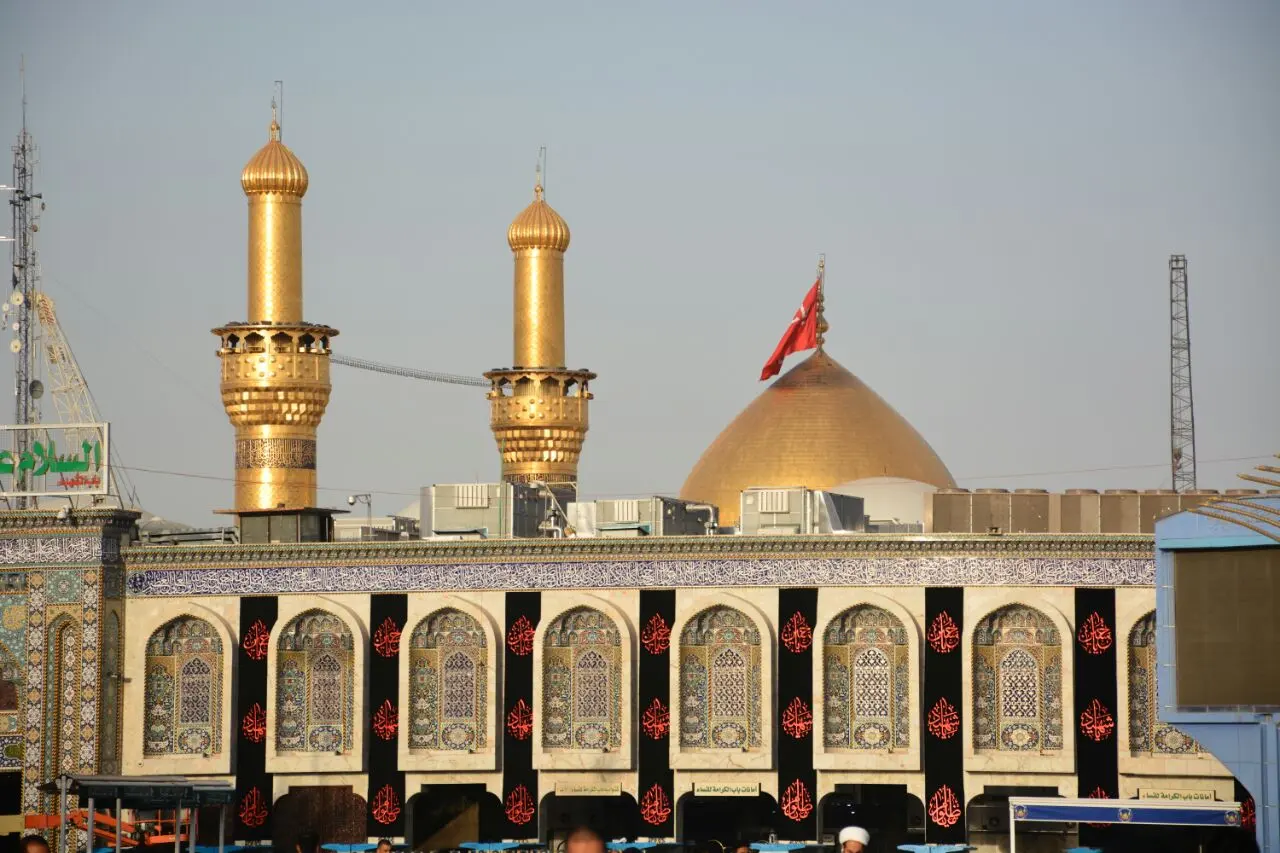
Mausoleum of Abd Alqadir Gilani, Baghdad
The Baghdad mother-shrine of the Qadiriyya, tomb of the saint called Ghawth al-Azam
Understand sacred places, explore living traditions, and learn how to engage respectfully with Pilgrim Map.
Access has not been verified. Check current local guidance before planning a visit.
Baghdad, Baghdad, Iraq
Read the sources
Visit essentials
A quick read before you go
- Duration
- 1-2 hours; longer during the urs or to visit the library.
- Access
- In the Bab al-Sheikh area of Al-Rusafa, on the east bank of the Tigris in central Baghdad;…
Overview
Abd al-Qadir al-Jilani, the beloved Hanbali jurist, preacher, and Sufi honored as Ghawth al-Azam ('Greatest Helper') and Pir-e Piran, is the eponymous founder of the global Qadiriyya order. His Baghdad grave became a pilgrimage site after his death in 1166. The present Ottoman complex was raised by Suleiman the Magnificent in 1535 over an earlier shrine reportedly destroyed under Shah Ismail I; its minaret dates to 1498.
The Qadiriyya mother-shrine combines a working mosque, mausoleum, madrasa, and historic library of some eighty thousand or more Islamic-studies volumes. Pilgrims from Indonesia, Pakistan, India, and beyond—some combining the visit with Hajj—seek baraka, intercession, and connection to the worldwide lineage amid dhikr, prayer, robes, abayas, and perfumed grave cloths. The annual urs falls on 11 Rabi al-Thani.
Why this place is sacred
Al-Jilani's shrine is the source-point of one of Islam's largest Sufi orders, linking pilgrims from West Africa to South Asia around the saint called Ghawth al-Azam. The Ottoman mosque, tomb, madrasa, and vast historic library place devotion and scholarship side by side. Pilgrims describe dhikr, prayer, and perfumed offerings as a fragrant, fervent experience of blessing and worldwide mystical lineage.
The grave and pilgrimage shrine of Abd al-Qadir al-Jilani, founder-saint of the Qadiriyya, around which grew a mosque, madrasa and library complex.
Al-Jilani was buried in Baghdad in 1166, and his grave became a pilgrimage site soon after. The present grand complex was built by Suleiman the Magnificent in 1535 over an earlier shrine reportedly destroyed under Shah Ismail I; the minaret dates to 1498. Successive Ottoman and later patrons expanded the mosque, madrasa and library. It remains an active mosque, shrine and library, with a major annual urs.
Experience and orientation
In Baghdad's Bab al-Sheikh area of Al-Rusafa, east of the Tigris, the complex joins a working mosque, al-Jilani's tomb, the Qadiriyya madrasa, and its renowned library. Visitors describe robes and abayas, perfumed chaadars on the grave, and the sound of dhikr and prayer. For Qadiri and other Muslims, the shrine offers baraka, connection to Ghawth al-Azam, and a tangible global lineage.
Inner-grave access may be regulated: certain groups can receive priority, women may be given priority for inner rooms, and unaccompanied young men are sometimes restricted during busy periods. The annual urs is the year's most fervent occasion.
Enter respectfully, remove shoes in prayer areas, and cover appropriately. Observe the gender arrangements and any access controls at the inner grave room, especially at busy times. Perfumed chaadars are the traditional offering on the grave; the adjacent library and madrasa are part of the complex's character.
Context and lineage
Al-Jilani came to Baghdad from Gilan at about eighteen to study, becoming a renowned Hanbali preacher and Sufi who drew followers from many backgrounds, including, by tradition, Jews and Christians. After his death in 1166 his grave became a pilgrimage site. The present grand complex was raised by Suleiman the Magnificent in 1535, over an earlier shrine reportedly destroyed under the Safavid Shah Ismail I. His birth year is given variously as around 1077 or 1078.
Sufism in the Qadiriyya order, within Sunni (Hanbali) Islam; the Baghdad tomb is the mother-shrine of a tradition spread across the Muslim world.
Abd al-Qadir al-Jilani
Saint, jurist and founder of the Qadiriyya
Suleiman the Magnificent
Ottoman sultan
Shah Ismail I
Safavid ruler
Qadiriyya custodians and patrons
Successive Ottoman and later patrons
Traditions and practice
Ziyarat (visitation), dhikr (remembrance, silent or vocal), recitation of al-Jilani's discourses such as Futuh al-Ghayb and al-Ghunya, the offering of perfumed chaadars on the grave, and vows and petitions for intercession.
Daily prayer and pilgrimage, with the annual urs on 11 Rabi al-Thani bringing followers together for special commemorations; the mosque, madrasa and library continue in use.
Move through the complex quietly and attentively. If you are a visitor rather than a devotee, observe the dhikr and the offering of chaadars respectfully rather than imitating them. The pairing of shrine and library invites reflection on a tradition that has held devotion and learning together for centuries.
Sufism (Qadiriyya order)
ActiveThe tomb of Abd al-Qadir al-Jilani (c. 1077/8-1166), Hanbali jurist, preacher and Sufi, eponymous founder of the Qadiriyya — one of the oldest and most widespread Sufi orders. Honored as Ghawth al-Azam (the Greatest Helper) and Pir-e Piran, his shrine is a center of devotion across the Muslim world from West Africa to South Asia.
Ziyarat, dhikr (silent or vocal), recitation of his works (Futuh al-Ghayb, al-Ghunya), offering of perfumed chaadars on the grave, and the annual urs.
Sunni Islam (Hanbali)
ActiveAl-Jilani was a respected Hanbali scholar and teacher; the complex includes a mosque, the Qadiriyya madrasa and the historic Qadiriyya Library of some 80,000+ volumes of Islamic studies, making it a center of learning as well as devotion.
Congregational prayer, teaching and study, and the preservation of manuscripts.
Perspectives and open questions
The shrine is read by historians as a 16th-century Ottoman foundation and by Sufis as the living seat of the Ghawth al-Azam.
Scholarly perspective
Historically the tomb of the 12th-century Hanbali scholar and Sufi Abd al-Qadir al-Jilani, founder of the Qadiriyya order; the present complex is a 16th-century Ottoman foundation (Suleiman the Magnificent, 1535) repeatedly maintained, incorporating a notable historic library. His birth year is given as around 1077 or 1078, and an earlier shrine was reportedly destroyed under Shah Ismail I before the Ottoman rebuilding.
Living and traditional perspectives
For Qadiri Sufis and many Sunni Muslims, al-Jilani is the Ghawth al-Azam, a living spiritual intercessor whose shrine confers baraka; veneration spans the Muslim world.
Alternative interpretations
Sufi tradition surrounds al-Jilani with numerous miracle accounts (karamat) and a high esoteric spiritual rank; some strict Salafi and Wahhabi currents reject the grave-veneration practices observed here.
Open questions
The precise form of the earliest pre-Ottoman shrine and the full provenance of the Qadiriyya Library's rarest manuscripts are incompletely documented.
Plan your visit
Access and arrival
In the Bab al-Sheikh area of Al-Rusafa, on the east bank of the Tigris in central Baghdad; reachable by car or taxi within the city. Exact GPS coordinates were not pulled.
Central Baghdad offers a range of hotels within reach of the shrine; arrangements are best made with awareness of current local conditions.
Respectful visit
Modest dress required; women cover the hair (head coverings/chaadars used inside) and wear loose covering clothing (abayas common); men avoid shorts.
Be discreet; avoid photographing worshippers, especially in the inner shrine.
Perfumed chaadars (cloth coverings) are traditionally offered on the grave; donations to the shrine and library are welcomed.
Remove shoes in prayer areas; observe gender arrangements and any access controls at busy times; maintain quiet and reverence.
Remove shoes in prayer areas; observe gender arrangements and any access controls at busy times; maintain quiet and reverence. Sufi shrines have at times been targets of sectarian hostility in the region; be aware of local conditions.
Current practical details
Address
8CP5+P83, Baghdad, Baghdad Governorate, Iraq
Hours
Hours, fees, and access can change — verify on the official source before you travel. Practical details last checked Jun 2026.
Location
Map loads as you approach this section.
Pilgrim reflections
A portrait of encounter, not a score
Pilgrims describe what they felt, how present they could become, and whether the place would shape a journey. There are no stars and no ranking of traditions.
No reviewed reflections yet
The first pilgrims can help describe the character of being here.
Share a reflection
Available after an account-backed “Been there.” Every reflection is reviewed before publication.
Nearby sacred places
Explore other sacred places in the region. Proximity does not establish access or travel time; check each place’s guidance.

Mausoleums of 7th Imam Musa Alkadhim and 9th Imam Muhammad Aljawad, Baghdad
Baghdad, Baghdad, Iraq
8.1 km away

Mausoleum of Abbas (brother of Imam Hussein), Karbala
Karbala, Karbala, Iraq
87.2 km away
Mausoleum of Imam Hussein, Karbala
Karbala, Karbala, Iraq
87.4 km away

Mausoleums of 10th Imam Ali Alhadi and 11th Imam Hasan Alaskari, Samarra
Samarra, Saladin Governorate, Iraq
107.9 km away
References
Sources consulted for this page. Source categories describe the publication, not a guarantee that every claim is verified. Traditional accounts and outside interpretations may differ.
- 01ʿABD-AL-QĀDER JĪLĀNĪ — Encyclopaedia Iranica — Encyclopaedia IranicaacademicPeer-reviewed scholarly entry; 'Ghawth al-Azam' epithet, urs on 11 Rabi II, pilgrims from Indonesia/Pakistan/India combining the visit with Hajj.
- 02ʿAbd al-Qādir al-Jīlānī — Encyclopaedia Britannica — Encyclopaedia BritannicaacademicFounder of the Qadiriyya; biographical and doctrinal overview.
- 03Mausoleum of Abdul-Qadir Gilani — Wikipedia — Wikipedia contributorsacademicSufi mausoleum, mosque, shrine and library complex; Suleiman the Magnificent's 1535 complex; Seljuk-style 1498 minaret; Qadiriyya Library of ~80,000-85,000 volumes.
- 04Abdul Qadir Gilani — Wikipedia — Wikipedia contributorsacademicBiography: Hanbali scholar and Sufi, eponym of the Qadiriyya, b. c. 1077/8 Gilan, d. 1166 Baghdad; urs on 11 Rabi al-Thani.
- 05Jilani shrine: The Sufi heart of Baghdad — The Express Tribune — The Express TribuneSource contextEyewitness reportage; chaadar offerings on the grave, women's prayer arrangements, devotional atmosphere.
- 06Abdul Qadir al-Jilani — the Qadiriyya Order — Ghayb.com — Ghayb.comspiritualSufi devotional source; khalwa retreat, dhikr practices, Futuh al-Ghayb and al-Ghunya texts, global spread of the order.
Share a photo
Help visitors recognize Mausoleum of Abd Alqadir Gilani, Baghdad. Every submission is reviewed before publication.