Luttra passage grave
A five-thousand-year-old communal tomb holding one hundred ancestors beneath a thirteen-ton roof
Understand sacred places, explore living traditions, and learn how to engage respectfully with Pilgrim Map.
Access has not been verified. Check current local guidance before planning a visit.
Falköpings kommun, Västra Götaland, Sweden

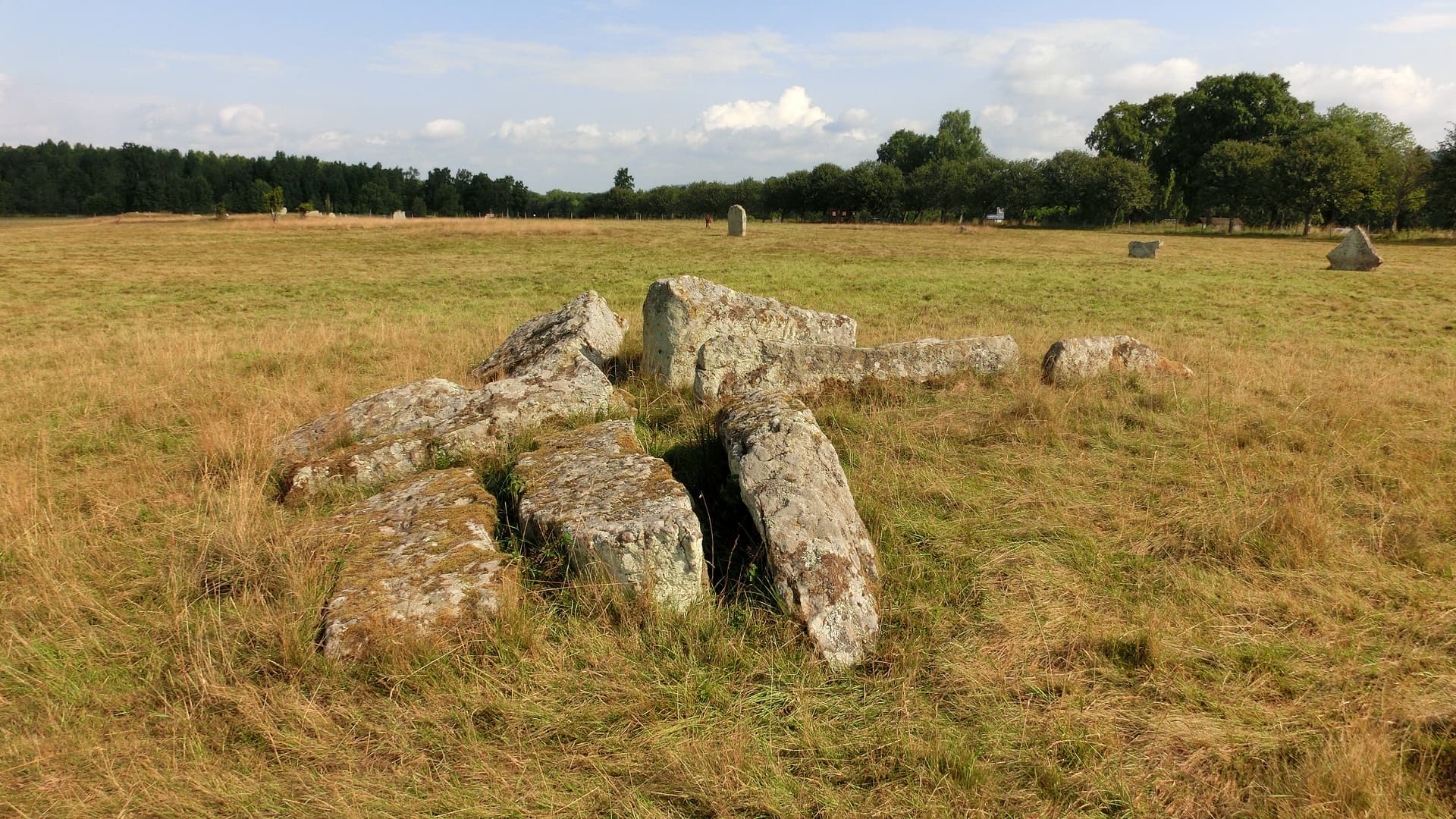
Image of Luttra passage grave. Image source · CC-BY-SA-3.0
Visit essentials
A quick read before you go
- Duration
- Twenty to forty minutes for the Luttra passage grave itself.
- Access
- Located on the left side of the road, just over 350 meters after Luttra church, south of…
Overview
A thirteen-ton roof slab has not moved since Neolithic hands placed it approximately five thousand years ago. Beneath it, a chamber held around one hundred people deposited across generations: not celebrated leaders but an anonymous community whose passage-grave tradition memorialized belonging.
Falbygden is among northern Europe's most concentrated megalithic landscapes. Approximately 253 passage graves arose within forty by thirty kilometers during roughly three hundred years, between 3300 and 3000 BCE. Luttra is one of the best preserved, with roofed chamber, southeast-oriented passage, and a position just south of the later small church.
Flat-topped table mountains, the platabergen, dominate Falbygden's horizon. Scholars note that passage graves appear deliberately sited in relation to them, as though they formed a sacred geography for the dead. Tombs were also separated from settlements, indicating a conceptual divide between living and dead.
DNA research shows male-line kinship within Falbygden graves and women incorporated from other groups. Neolithic plague evidence among the remains dates thousands of years earlier than previously known. Beneath the thirteen-ton slab, five thousand years leave unresolved what it means to belong so completely that individual identity becomes collective memory.
Why this place is sacred
What makes a place thin is sometimes the weight of the dead.
Approximately one hundred people were placed inside the Luttra passage grave over multiple generations. Their bones accumulated in the stone chamber, the remains of earlier burials disturbed by later additions, individual identities gradually merging into a collective mass. The practice was not careless. It was deliberate. The passage grave tradition did not seek to preserve individual distinction; it sought to create community among the dead.
The concentration of passage graves across Falbygden amplifies this communal quality. Roughly two-thirds of all Sweden's passage graves lie within this single landscape, built during approximately three hundred years of intense megalithic construction. The builders were not isolated communities working independently. They were participants in a shared tradition so powerful that it covered the landscape with monumental tombs in a geological instant.
The relationship between the passage graves and the platabergen, the flat-topped table mountains of the region, adds a geological dimension to the sacred geography. These mountains, remnants of ancient seabeds lifted and eroded into distinctive profiles, dominate the Falbygden horizon. The passage graves appear to have been sited in relationship to them, suggesting that the builders understood the natural landscape as a framework within which human monuments should be placed.
The spatial separation between passage graves and settlement areas reinforces the interpretation that the burial landscape was conceptually distinct from the living landscape. The dead occupied their own territory, visited by the living for burial ceremonies and perhaps for seasonal commemorations, but not overlapping with the spaces of daily life.
The Luttra passage grave, with its original thirteen-ton roof slab still in place, preserves the enclosed quality that the builders intended. The chamber is dark. The passage is narrow. To enter is to leave daylight behind and enter a space designed to hold the dead. The darkness itself is part of the architecture.
The passage grave was constructed between approximately 3300 and 3000 BCE as a communal burial chamber by Funnel Beaker Culture farming communities. The chamber, accessed through a passage oriented east or southeast, received successive burials over multiple generations. Grave goods including flint arrowheads, bone needles, and pendants of bone and animal teeth accompanied the dead.
The passage grave tradition in Falbygden ended after roughly three hundred years of intensive construction, for reasons that remain debated. The tombs were not destroyed but fell out of active use, their chambers gradually becoming sealed by earth and vegetation. The Luttra passage grave retained its structural integrity through the millennia, with the thirteen-ton roof slab remaining in its original position.
The establishment of Luttra church nearby suggests that the area retained some form of significance, or at least recognition, into the Christian period. The Platabergens UNESCO Global Geopark, designated in 2022 as Sweden's first, now provides a framework for understanding and visiting the region's geological and megalithic heritage.
Experience and orientation
The road south of Luttra church passes through the quiet Vastergotland countryside, flat agricultural land beneath the horizontal profiles of the platabergen on the horizon. The passage grave appears on the left side of the road, approximately 350 meters past the church, modest in profile but unmistakable once recognized.
The thirteen-ton roof slab is the first thing the eye registers. It sits atop the supporting stones with a solidity that five thousand years have not diminished. The weight is visible, the mass of stone asserting itself through sheer presence. Whatever force placed this slab had to be communal; no individual could have accomplished it, and the collaborative effort required speaks to the same communal values that governed the burial practice within.
The passage, oriented east or southeast, provides the approach. Crouching to look through it into the chamber, the darkness beyond the entrance is total or nearly so. The contrast between the open, light-filled Falbygden landscape and the enclosed darkness of the chamber creates a threshold experience that the builders clearly intended. To enter is to cross from the world of the living into the world of the dead.
The chamber held approximately one hundred individuals over multiple generations. The bones are no longer there, removed during archaeological investigation, but the space they occupied remains. The chamber's dimensions are calibrated to the human body multiplied, a room for a community of the dead.
The landscape context enriches the experience considerably. Falbygden's table mountains, visible from the passage grave, create a distinctive skyline that frames the site within a geological context millions of years older than the tomb itself. Other passage graves are scattered across the landscape, each one containing its own community of anonymous dead. The visitor at Luttra is standing within a sacred landscape of extraordinary density, where every few kilometers another stone chamber marks another gathering of Neolithic ancestors.
Falbygdens Museum in Falkoping provides maps and context for self-guided tours of the megalithic landscape. A full day of driving and walking between passage graves transforms individual sites into a comprehensible pattern, the scope of the Neolithic building project becoming apparent through accumulated experience.
Drive south from Luttra church and look for the passage grave on the left side of the road, approximately 350 meters past the church. The site is freely accessible and requires no advance booking.
Approach the passage grave from the entrance side, where the passage provides access to the chamber. Crouch and look through the passage into the darkness beneath the roof slab. Allow your eyes to adjust. The builders designed this transition from light to dark as part of the ritual experience.
Step back and observe the roof slab from outside. Consider that this single stone weighs thirteen tons and was placed by a community working without metal tools or wheeled vehicles. The collaborative effort required mirrors the communal burial practice within.
Look toward the horizon and identify the platabergen, the flat-topped table mountains. The passage graves of Falbygden were sited in relationship to these geological formations, creating a sacred geography that linked human monuments to natural landmarks.
For a broader exploration, visit Falbygdens Museum in Falkoping first, then follow the museum's megalithic route to visit multiple passage graves. Ekornavallen, Karleby, and Girommen are among the most notable sites nearby.
Context and lineage
The passage grave tradition arrived in Falbygden around 3400-3300 BCE, brought by or adopted from Funnel Beaker Culture communities who were transforming southern Scandinavia through the introduction of agriculture and megalithic architecture. The construction boom that followed was remarkable: within roughly three hundred years, over 250 passage graves were built, covering the landscape with monumental stone tombs.
The Luttra passage grave dates to this concentrated building period. Its construction required quarrying or gathering suitable stone slabs, transporting the thirteen-ton roof slab to the site, and raising it onto the supporting walls, a project demanding organized communal labor and sophisticated engineering knowledge passed between generations.
The passage grave tradition connects Falbygden to the broader European megalithic phenomenon that produced Newgrange in Ireland, the stone rows of Carnac in Brittany, and the passage graves of Denmark. Within Sweden, Falbygden represents the heartland of passage grave construction, with roughly two-thirds of all known Swedish passage graves concentrated in this single region.
The tradition ended around 3000 BCE, replaced by new burial practices including gallery graves (hallkistor) during the Late Neolithic. The passage graves themselves were not destroyed but gradually fell out of use, their entrances becoming sealed by soil and vegetation. The Platabergens UNESCO Global Geopark now provides a framework for understanding the relationship between the region's distinctive geology and its extraordinary concentration of Neolithic monuments.
Funnel Beaker Culture Communities
Neolithic farming communities who constructed the passage graves and practiced communal burial across the Falbygden landscape
University of Gothenburg Researchers
Scientists who conducted DNA and isotope analyses on Falbygden passage grave populations, revealing kinship patterns and evidence of Neolithic plague
Platabergens UNESCO Global Geopark
Sweden's first UNESCO Global Geopark (designated 2022), which highlights the region's geological and megalithic heritage
Traditions and practice
Communal burial ceremonies involved reopening the passage to access the chamber, placing the newly dead alongside the accumulated remains of earlier burials. Grave goods including flint arrowheads, bone needles, and pendants made from bone and animal teeth were deposited with the deceased. The passage orientation, typically east or southeast, suggests that the direction of sunrise may have governed the timing or symbolism of burial ceremonies.
The construction of the passage grave itself was a ceremonial act requiring the organized labor of the entire community. The thirteen-ton roof slab at Luttra represents a feat of engineering that demanded coordination, strength, and probably ritual accompaniment.
The Platabergens Geopark organizes guided geological and archaeological tours that include the Luttra passage grave. Falbygdens Museum in Falkoping provides maps, brochures, and exhibitions for self-guided megalithic tours. The region attracts visitors interested in Neolithic culture, megalithic architecture, and the intersection of geology and human heritage.
Approach the passage grave as the Neolithic builders may have intended: from the direction of the passage entrance. Crouch at the passage opening and look into the chamber. The transition from open landscape to enclosed darkness was designed to mark a crossing from one world to another.
Place your hand near the roof slab without touching it. Feel the density of the stone through proximity. Thirteen tons of rock, quarried and transported and raised by human hands, resting here for five thousand years. The weight is not just physical.
Turn from the passage grave and look at the landscape. The platabergen on the horizon, the fields stretching between them, and somewhere in almost every direction another passage grave holding its own community of the dead. Allow the landscape to convey the scale of the Neolithic enterprise: hundreds of tombs built within three hundred years by communities who understood death as an occasion for monumental collective effort.
If time allows, drive to Ekornavallen, where passage graves, gallery graves, and Iron Age burials span five thousand years on a single site. The continuity of sacred use across such time is itself worth contemplating.
Funnel Beaker Culture (TRB) Communal Burial Tradition
HistoricalThe Luttra passage grave exemplifies the Funnel Beaker Culture practice of communal megalithic burial in Falbygden. Approximately one hundred individuals were interred over multiple generations, their remains accumulating in a shared chamber beneath a thirteen-ton roof slab. This practice expressed a view of death as communal rather than individual, with the identity of the group taking precedence over the identity of any member.
Successive burial of the dead within the stone chamber, accessed through a passage oriented east or southeast. Grave goods including flint arrowheads, bone needles, and pendants accompanied the deceased. The chamber was reopened for each new burial, with earlier remains disturbed to make room for later additions.
Megalithic Landscape Construction
HistoricalThe construction of approximately 253 passage graves within a forty-by-thirty-kilometer area during roughly three hundred years represents one of the most concentrated episodes of monumental building in northern European prehistory. The Luttra passage grave is part of this collective landscape project, which transformed Falbygden from agricultural terrain into a cemetery of extraordinary density.
Collaborative construction of massive stone tombs, deliberate siting in relation to the platabergen (table mountains), and spatial separation from settlement areas. The consistency of construction techniques and passage orientations across the landscape suggests shared knowledge and coordinated cultural practice.
Platabergens UNESCO Global Geopark Stewardship
ActiveThe Platabergens UNESCO Global Geopark, designated in 2022 as Sweden's first, encompasses the Falbygden megalithic landscape and provides a framework for understanding the relationship between the region's distinctive geology and its extraordinary concentration of Neolithic monuments.
Geopark interpretation and guided tours, partnership with Falbygdens Museum, educational programs linking geological heritage to cultural heritage, and promotion of sustainable tourism within the megalithic landscape.
Perspectives and open questions
The Luttra passage grave belongs to a landscape so dense with Neolithic monuments that it redefines expectations about the scale of prehistoric communal enterprise. Understanding the site requires holding together the individual monument and the broader landscape of which it is part.
Scholarly perspective
The Luttra passage grave belongs to the dense Falbygden megalithic landscape studied extensively by researchers at the University of Gothenburg and Lund University. The communal burial of approximately one hundred individuals represents the Funnel Beaker Culture's practice of collective ancestor veneration, where community identity was expressed through shared burial space. Recent DNA and isotope analyses have revealed patrilineal kinship patterns and evidence of plague among the buried populations, pushing the known history of the disease back thousands of years.
The passage graves were deliberately sited in relation to the table mountains and kept separate from settlements, indicating a conceptual division between the worlds of the living and the dead.
Living and traditional perspectives
No specific folk narratives are documented for the Luttra passage grave. The broader Falbygden landscape was later incorporated into Swedish cultural memory, but passage grave-specific folklore is limited. The proximity of Luttra church suggests some continuity of sacred landscape recognition, though the connection is speculative.
Alternative interpretations
Some visitors and spiritual seekers interpret the passage grave as a symbolic womb of the earth, where the dead were returned to the body of the land for rebirth. The passage itself is sometimes understood as representing a birth canal for transition into the next world. The extraordinary concentration of passage graves in Falbygden is occasionally interpreted as evidence of a powerful earth energy grid concentrated in this particular landscape.
Open questions
Why the Falbygden region attracted such an extraordinary concentration of passage grave construction within roughly three hundred years remains debated. Why the Luttra grave specifically held around one hundred individuals while other graves held fewer is unclear. The spatial separation between settlements and passage graves suggests a conceptual division between the world of the living and the dead, but the specific rituals that mediated this boundary are not documented.
The role of the table mountains in the symbolic landscape remains a subject of ongoing research.
Plan your visit
Access and arrival
Located on the left side of the road, just over 350 meters after Luttra church, south of Falkoping, Vastra Gotaland. Falkoping is accessible by train (on the Stockholm-Gothenburg line) and is at the intersection of roads 46 and 47. Falbygdens Museum in central Falkoping serves as a starting point for megalithic site visits. No mobile phone signal information was available at time of writing; the proximity to Falkoping suggests standard network coverage.
Falkoping provides hotels, guesthouses, and camping. The town is a convenient base for exploring the Falbygden megalithic landscape. The broader Vastra Gotaland region offers extensive accommodation options.
Respectful visit
No specific requirements. Comfortable outdoor walking shoes suitable for rural terrain.
Photography is permitted and encouraged. The passage entrance and the roof slab photograph well from multiple angles. Low-angle light emphasizes the stone's texture and mass.
Do not leave objects at the site. The passage grave is a protected monument, not an active shrine.
The passage grave and all associated stones are legally protected under Swedish heritage law. Do not disturb, climb on, or alter any features. The site is located within the Platabergens UNESCO Global Geopark.
Do not climb on or disturb the stones. The passage grave is a legally protected archaeological monument. The roof slab is original and irreplaceable. Treat the site with the respect due to a communal burial place that held one hundred individuals.
Current practical details
Address
521 93 Falköping, Sweden
Hours
Hours, fees, and access can change — verify on the official source before you travel. Practical details last checked Jun 2026.
Location
Map loads as you approach this section.
Pilgrim reflections
A portrait of encounter, not a score
Pilgrims describe what they felt, how present they could become, and whether the place would shape a journey. There are no stars and no ranking of traditions.
No reviewed reflections yet
The first pilgrims can help describe the character of being here.
Share a reflection
Available after an account-backed “Been there.” Every reflection is reviewed before publication.
Nearby sacred places
Explore other sacred places in the region. Proximity does not establish access or travel time; check each place’s guidance.


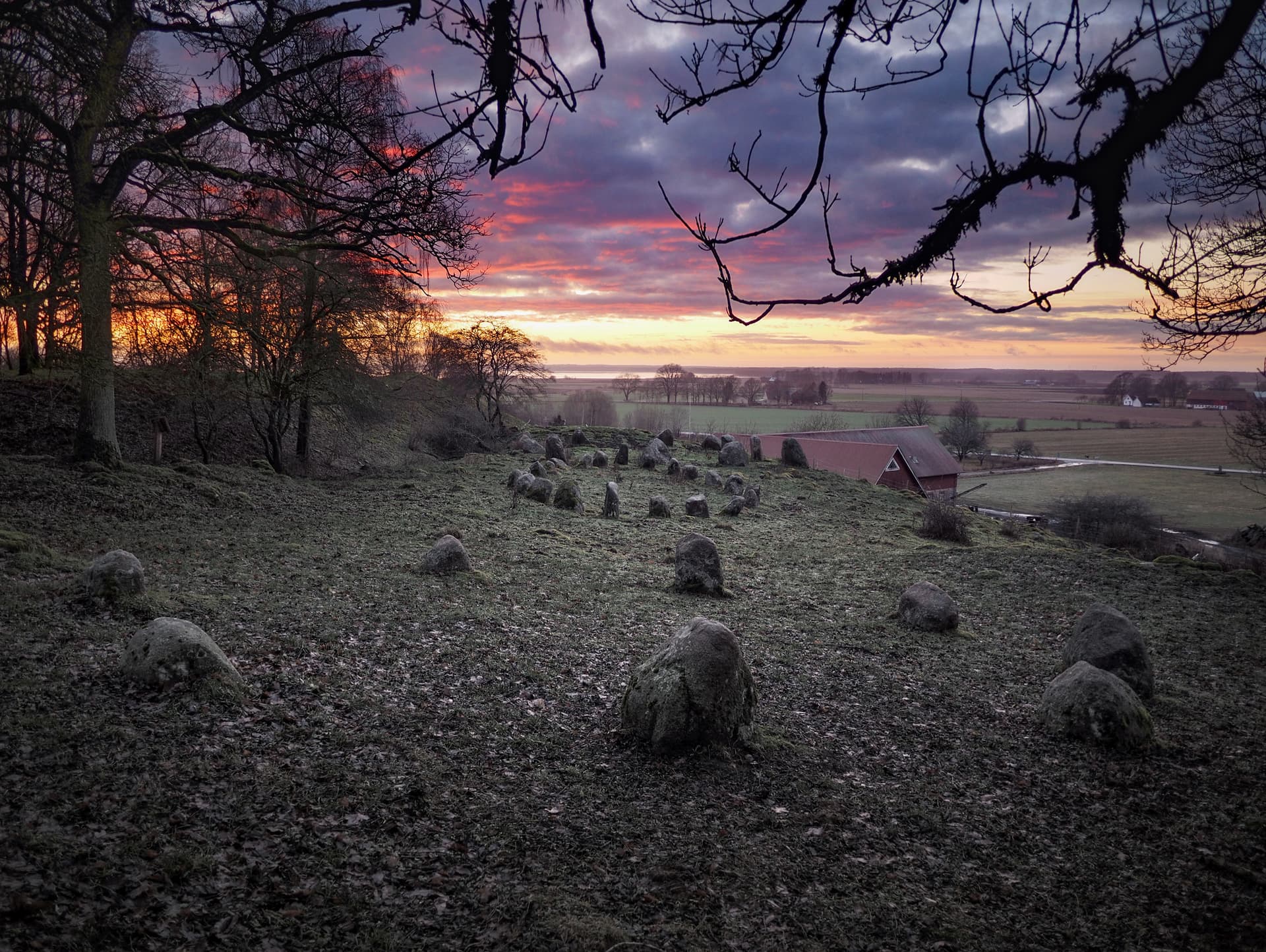
Share a photo
Help visitors recognize Luttra passage grave. Every submission is reviewed before publication.