Amundtorp Grave Field
A Migration Period cemetery of forty-two stone formations on a hillside overlooking Lake Hornborga
Understand sacred places, explore living traditions, and learn how to engage respectfully with Pilgrim Map.
Access has not been verified. Check current local guidance before planning a visit.
Varnhem, Västra Götaland, Sweden
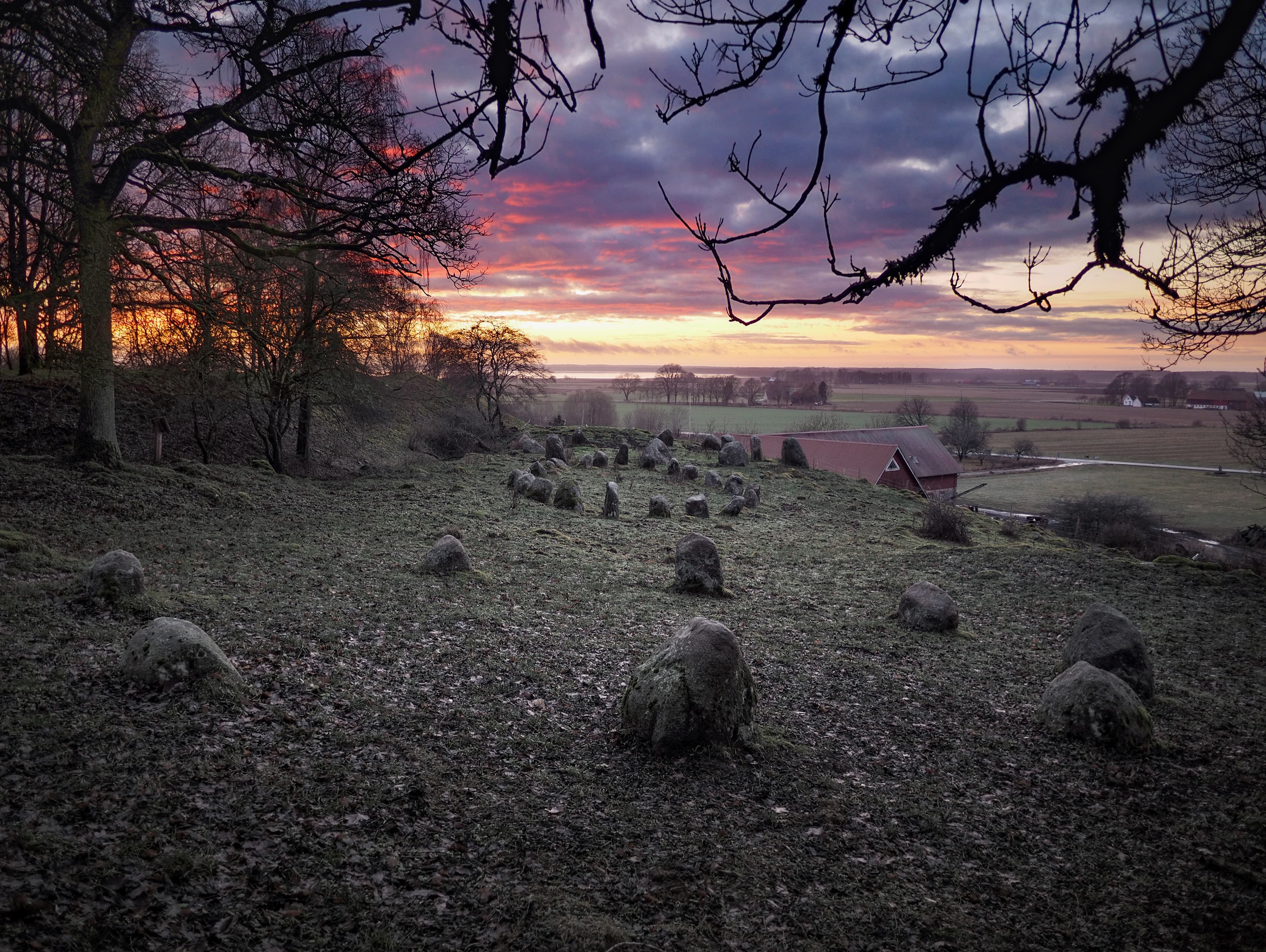
Image of Amundtorp Grave Field. Image source · CC-BY-SA-4.0
Visit essentials
A quick read before you go
- Duration
- Thirty minutes to one hour to explore the full grave field at a contemplative pace.
- Access
- Located a few kilometres south of Varnhem on the western slope of Billingen, Skara Municipality.
Overview
Amundtorp grave field occupies the western slope of Billingen, one of Vastergotland's table mountains, where an open meadow descends toward the broad expanse of Lake Hornborga. Forty-two stone formations from the Iron Age Migration Period, roughly 400-550 AD, are gathered here in a concentration that speaks to sustained communal investment in honoring the dead.
The stone ship is the most immediately recognizable feature, its carefully spaced stones outlining a vessel in the grass, a shape that in Norse tradition carried the dead on their journey to the afterlife. Surrounding it, twenty-five domarringar, literally 'judge circles,' form smaller stone enclosures whose evocative folk name belies their nature as burial formations.
Each circle held cremated remains, the burnt bones of community members placed in clay urns with personal grave goods that a 1938 excavation by Karl Esaias Sahlstrom brought to light.
The most enigmatic feature is a three-armed barrow with an altar at its center, a formation without clear parallel in the region. Another circle is uniquely composed of six tiny dolmens called 'lying hens,' a descriptive name whose origin is obscure. A Bronze Age cairn predating the Migration Period graves by over a thousand years suggests the hillside may have drawn sacred attention long before the main cemetery was established.
From the grave field, the view extends west and south toward Lake Hornborga and the Falbygden landscape, a panorama that places the dead within a vast visual context.
Why this place is sacred
The thinness at Amundtorp is gentle and cumulative. The site lacks the monumental scale of the great mounds or the dramatic coastal positions of other Scandinavian burial grounds. Its power lies in variety and setting, in the quiet concentration of forty-two distinct stone formations on a meadow slope where the view opens west toward Lake Hornborga and the horizon.
Walk among the formations and the diversity registers: the ship with its evenly spaced stones, the circles of varying diameter, the rectangular setting, the square formation, the three-armed barrow with its unexplained altar. Each form represents a different approach to containing and honoring cremated remains. Were these differences matters of period, of family tradition, of social status, of individual preference? The site does not answer. It presents the variety and leaves interpretation open.
The three-armed barrow with altar is the formation that lingers longest in the mind. Its shape has no consensus explanation. The altar at the center, a raised stone feature, suggests ritual activity beyond simple burial, a place where something was done rather than merely deposited.
Whether offerings were made, prayers spoken, or ceremonies conducted at this altar is unknown, but its presence implies that at least some of the activity at Amundtorp went beyond the practical work of interring the dead.
The 'lying hens,' six tiny dolmens forming a circle, add another note of mystery. The descriptive name comes from the stones' resemblance to nesting birds, but their function is unclear. Are they miniature burial chambers? Symbolic offerings? A form of monument unique to this community?
The Billingen slope itself contributes to the atmosphere. The open meadow, exposed to the sky and overlooking the broad landscape below, creates a sense of expansiveness that contrasts with the intimate scale of the individual graves. The dead here are not enclosed in a valley or hidden in a forest. They are placed on a hillside where the world is visible in every direction, as if the community wanted its dead to face the widest possible horizon.
A communal burial ground for an Iron Age community during the Migration Period, approximately 400-550 AD. The stone ship, domarringar, and other formations served as enclosures for cremation burials with personal grave goods.
The Bronze Age cairn on the hillside predates the main cemetery by over a thousand years, suggesting earlier sacred use of the slope. The Migration Period community established the main burial ground. The 1938 excavation by Karl Esaias Sahlstrom documented the grave types and artifacts. The site is now part of the Platabergens UNESCO Global Geopark and is freely accessible as a cultural heritage monument.
Experience and orientation
Amundtorp grave field lies a few kilometres south of Varnhem on the western slope of Billingen. The approach follows rural roads through agricultural landscape, and parking is available near the site. The transition from road to grave field is brief: within moments of leaving the car, you stand among the stone formations.
The stone ship draws the eye first, its outline clear against the meadow grass. Walk along its length, noting the careful spacing of the stones.
Move from the ship to the domarringar. These stone circles, numbering twenty-five, vary in size and stone count. Some are tight enclosures barely three metres across. Others are more expansive. Walk into one, if the stones are low enough to step over comfortably, and stand in the space that once held a cremation burial. The enclosure is modest but real: the stones define an interior that feels distinct from the open meadow outside.
Locate the three-armed barrow with its central altar, the site's most enigmatic feature. Sit near it and consider what rituals might have been conducted here, what the three-armed form might have meant to its builders.
The panoramic view from the hillside is integral to the experience. Lake Hornborga stretches to the west, and the Falbygden landscape extends in all directions. In the evening, when the sun drops toward the western horizon, the stone formations cast long shadows across the meadow, and the relationship between the burial ground and the broader landscape becomes most visible.
Combine Amundtorp with visits to nearby Varnhem Abbey and Ekornavallen for a comprehensive tour of the Falbygden's layered heritage, spanning Neolithic passage graves, Iron Age burial fields, and medieval monastic architecture.
Approach across the rural Billingen slope; from the nearby parking area, the transition from road to grave field is brief. Let the stone ship orient the visit before moving among the circles and the three-armed barrow.
Context and lineage
During the Migration Period, roughly 400-550 AD, an Iron Age community on the western slope of Billingen established a burial ground where the dead were cremated and interred beneath stone formations of varied design. The stone ship provided the central monument, its outline representing the vessel for the afterlife journey. The twenty-five domarringar and other formations surrounded it, each enclosing the remains of individual community members.
The folk tradition that named the stone circles domarringar, judge circles, reflects a later interpretation. Subsequent generations, encountering the circles without knowledge of their original purpose, assumed they were gathering places for legal proceedings, assemblies where elders sat on the stones to adjudicate disputes. Modern archaeology has established them as burial formations, but the folk name preserves the interpretive imagination of communities separated from the builders by centuries.
Amundtorp belongs to the Iron Age burial tradition of Vastergotland, within the broader Falbygden archaeological landscape. The presence of a Bronze Age cairn on the hillside connects the site to an earlier period of sacred use. The proximity to Varnhem Abbey, where Viking Age graves lie beneath a medieval Cistercian monastery, extends the lineage of sacred landscape use into the Christian period.
The region's designation as part of the Platabergens UNESCO Global Geopark recognizes the interweaving of geological and cultural heritage across millennia.
Karl Esaias Sahlstrom
Archaeologist who excavated and restored the grave field in 1938, revealing grave goods and burial practices
Traditions and practice
Cremation burial with scattered burnt bones placed in clay urns. Personal grave goods including bronze pins, glass beads, metal fittings, and bone combs. Construction of stone ship settings to symbolize the afterlife journey. Construction of domarringar as burial enclosures. Possible ritual use of the three-armed barrow with altar, the specific nature of which is unknown.
No formal religious or ceremonial practices take place at the site. Amundtorp is visited as an archaeological monument within the Platabergens Geopark. The site can be combined with nearby Varnhem Abbey and Ekornavallen for a broader tour of the Falbygden's heritage.
Begin at the stone ship and trace its outline, noting the craftsmanship of the stone placement. The even spacing and consistent proportions reflect a community that took care with its monuments.
Walk among the domarringar at your own pace. Each circle is a burial, each one enclosing the cremated remains of a person whose name is lost. The variety of circle sizes and stone counts suggests individual treatment rather than standardized practice.
Spend time at the three-armed barrow with altar. Sitting with its unresolved purpose, allowing the monument to remain unexplained rather than forcing an interpretation, is a practice in intellectual humility that the site rewards.
Before leaving, walk to the edge of the grave field where the Billingen slope opens toward Lake Hornborga. The panoramic view places the burial ground within a vast landscape, and the relationship between the intimate scale of the graves and the expansive horizon beyond them becomes the site's final meditation.
Iron Age Stone Ship Burial Tradition
HistoricalThe Amundtorp stone ship is one of the best-preserved stone ship settings in the Falbygden area of Vastergotland. Stone ships symbolized the vessel carrying the dead to the afterlife, reflecting the central importance of ships in Norse cosmology. The carefully and evenly spaced stones demonstrate skilled craftsmanship and deep cultural investment in honoring the dead.
Cremation of the deceased followed by burial within or near the stone ship formation. The 1938 excavation found scattered burnt bones and pieces of clay urns, confirming cremation burial. Grave goods including bronze pins, glass beads, fittings, and combs indicated social status and trade connections.
Domarringar Burial and Assembly Tradition
HistoricalAmundtorp contains twenty-five domarringar, stone circles whose name means 'judge circles,' reflecting a folk tradition that interpreted them as assembly places for legal proceedings. Modern archaeology has established them as primarily burial formations, though the dual naming preserves a cultural memory of how later generations understood the relationship between the dead and the administration of justice.
Cremation burial within stone circle enclosures. The variety of grave types at Amundtorp, including round circles, rectangular settings, square formations, and the three-armed barrow, may reflect social distinctions, clan affiliations, or evolving burial customs across the site's period of use.
Perspectives and open questions
Amundtorp invites interpretation through archaeology, folk tradition, and the direct experience of walking among varied stone formations whose diversity resists simple explanation.
Scholarly perspective
Archaeologists classify Amundtorp as an Iron Age grave field dating primarily to the Migration Period, excavated and restored by Karl Esaias Sahlstrom in 1938. The site's forty-two stone formations in varied shapes demonstrate the diversity of Iron Age burial customs in western Sweden. The domarringar are understood as burial formations rather than assembly places. The grave goods indicate trade connections and gendered burial practices.
Living and traditional perspectives
The name domarringar, judge circles, reflects a Scandinavian folk tradition that interpreted the stone formations as assembly places where elders or judges gathered to settle disputes and administer law. While archaeology has shown them to be burial sites, the folk interpretation may preserve a memory of their secondary use as gathering places, or may reflect the broader tradition of holding assemblies at ancestral burial sites to invoke the authority of the dead.
Alternative interpretations
The variety of formation shapes at Amundtorp is sometimes interpreted as reflecting different cosmological or spiritual functions rather than simple burial variation. The three-armed barrow with altar suggests ritual practices beyond funerary customs. The site's position on the Billingen slope overlooking Lake Hornborga is viewed by some as a deliberate placement connecting earth, water, and sky in a landscape of spiritual alignment.
Open questions
The purpose of the three-armed barrow with altar remains unexplained. The meaning of the unique circle formed from six tiny dolmens, the 'lying hens,' has not been determined. Why forty-two stone formations of such varied types were constructed in this relatively compact area, and whether this reflects different time periods, social groups, or ritual purposes, is not fully understood. The relationship between the Bronze Age cairn and the later Iron Age formations is unclear.
Plan your visit
Access and arrival
Located a few kilometres south of Varnhem on the western slope of Billingen, Skara Municipality. Close to road 49 between Skara and Skovde. Closest train station is in Skovde. Regional and local buses connect the area. Parking available. Freely accessible at all times. No admission charge. Nearby cafes include Alekarr farm and Mellomgarden's cafe and farm shop.
Skara and Skovde offer hotels and guesthouses. Rural accommodation in the Falbygden area. Nearby cafes at Varnhem and Alekarr.
Respectful visit
No specific dress requirements. Sturdy footwear recommended for the sloping meadow terrain.
Photography is permitted throughout the site.
Do not leave objects at the site.
Do not climb on or disturb the stone formations. No digging. Protected under Swedish cultural heritage law (Kulturmiljolagen). Part of the Platabergens UNESCO Global Geopark.
The meadow slope can be uneven and muddy in wet conditions. The site is rural and has no facilities. Sturdy footwear recommended.
Current practical details
Address
Skara Ö, 532 93 Axvall, Sweden
Hours
Hours, fees, and access can change — verify on the official source before you travel. Practical details last checked Jun 2026.
Location
Map loads as you approach this section.
Pilgrim reflections
A portrait of encounter, not a score
Pilgrims describe what they felt, how present they could become, and whether the place would shape a journey. There are no stars and no ranking of traditions.
No reviewed reflections yet
The first pilgrims can help describe the character of being here.
Share a reflection
Available after an account-backed “Been there.” Every reflection is reviewed before publication.
Nearby sacred places
Explore other sacred places in the region. Proximity does not establish access or travel time; check each place’s guidance.

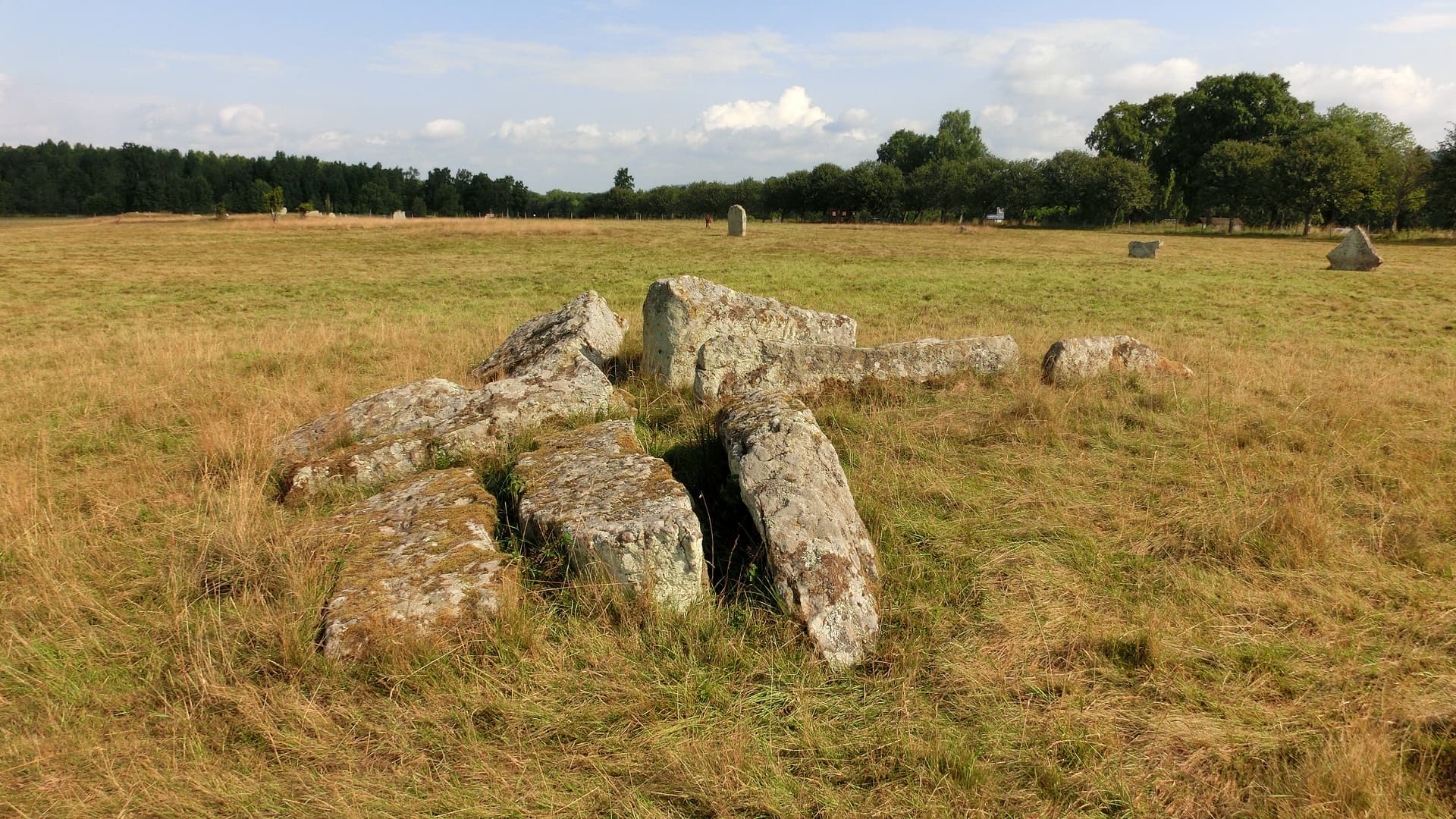


Share a photo
Help visitors recognize Amundtorp Grave Field. Every submission is reviewed before publication.