Ekornavallen
Four thousand years of burial in one field, from Neolithic passage graves to Viking Age stones
Understand sacred places, explore living traditions, and learn how to engage respectfully with Pilgrim Map.
Access has not been verified. Check current local guidance before planning a visit.
Falköpings kommun, Västra Götaland, Sweden
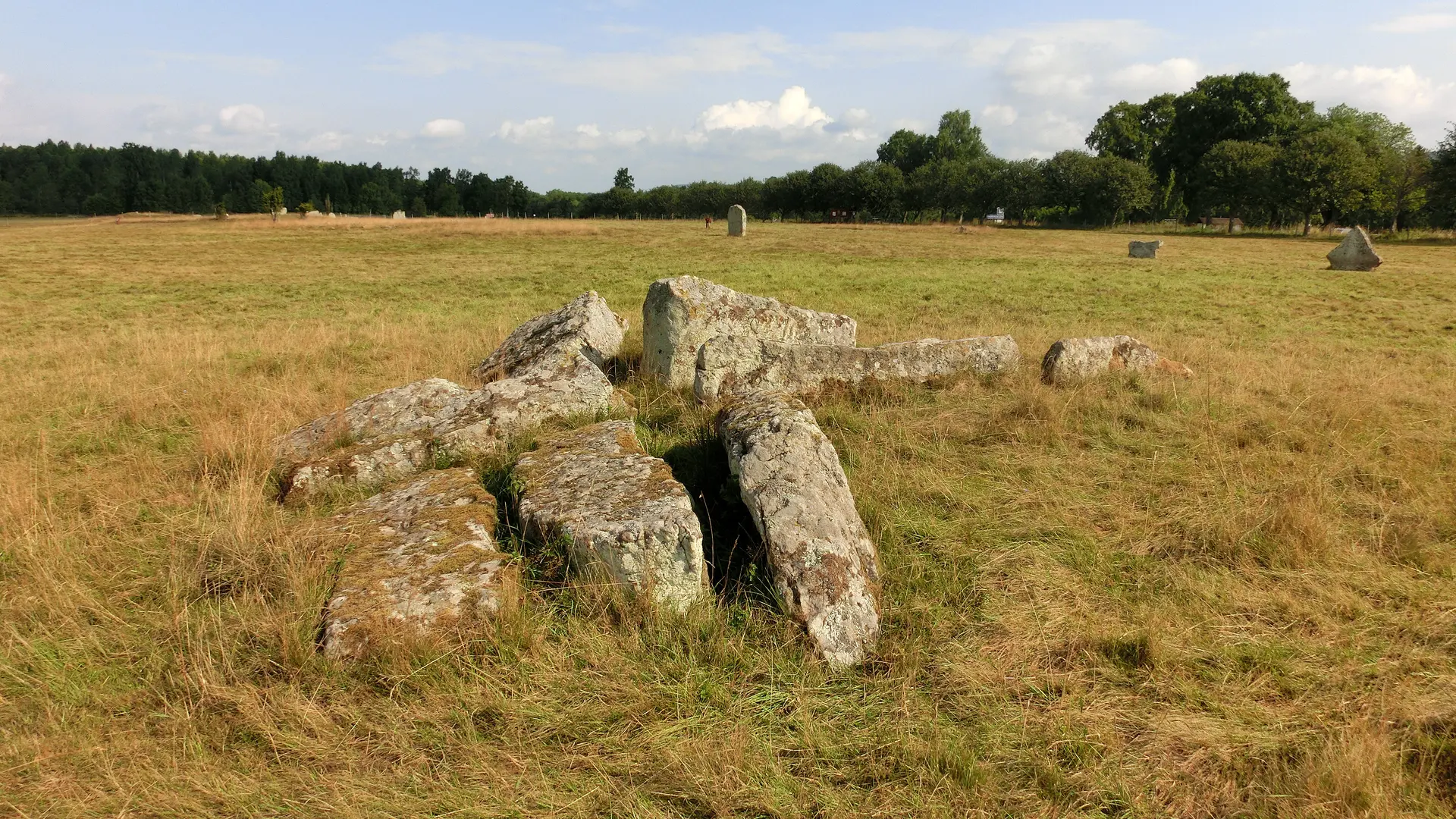
Image of Ekornavallen. Image source · CC-BY-SA-3.0
Visit essentials
A quick read before you go
- Duration
- One to two hours to explore the full burial ground and all monument types at a contemplative…
- Access
- Located fifteen kilometres north of Falköping, between Gudhem and Varnhem, east of Lake…
Overview
Ekornavallen rises in western Sweden's Falbygden, one of northern Europe's densest megalithic regions. One field holds Middle Neolithic passage graves from about 3300 BC, a later gallery grave, Bronze Age cairns, Iron Age circles and standing stones, and Viking Age markers: four thousand years of sacred funerary use within a fifteen-minute walk.
The dominant Girommen—its old Swedish name means “the giant oven”—is a Funnel Beaker passage grave built by Scandinavia's first farming communities. Its massive chamber served as a communal ossuary reopened across generations.
Falbygden's chalky soil preserves Neolithic skeletons exceptionally well. University of Gothenburg ancient-DNA research on passage-grave remains, including Ekornavallen, has reshaped accounts of early Scandinavian origins, kinship, migration, and population change.
Later monuments include Bronze Age cairns, twelve standing stones, round settings, and a unique triangular setting. Successive communities kept choosing this ground for their dead. Ekornavallen now lies within Platåbergens UNESCO Global Geopark, Sweden's first, joining geological and human heritage.
Why this place is sacred
Ekornavallen's meaning accumulates across eras. Girommen's heavy walls, capstone, and once-crawling-height passage form a durable house for the dead, built by communal effort five thousand years ago. Funnel Beaker communities gathered neonates and elders, women and men, in shared ossuaries rather than isolated graves.
A few steps cross millennia: passage grave, Bronze Age cairn, Iron Age circle and standing stone, then the unique and unexplained triangular setting. Different cosmologies reused the same hallowed field without erasing earlier monuments.
An invisible layer survives in the chalk-preserved bones. University of Gothenburg DNA work reveals kinship, migration, and population change, reconnecting named biological relationships to people long treated as anonymous. Scientific interpretation adds knowledge without fully recovering the communities' own funerary meanings.
The earliest passage graves were built around 3300 BC by the Funnel Beaker culture as communal ossuaries for the community's dead, receiving multiple burials across generations. The graves were part of the broader Falbygden megalithic tradition, one of northern Europe's most concentrated burial landscapes.
Following the Neolithic passage grave period, the site continued to receive burials through the Bronze Age (cairns), Iron Age (stone circles, standing stones, unique triangular setting), and Viking Age. Each successive culture added its own monument types while preserving the earlier structures. The Girommen passage grave was restored in the 1940s. The site is now part of the Platabergens UNESCO Global Geopark, designated in 2022.
Experience and orientation
Ekornavallen sits in open countryside between Gudhem and Varnhem, reached by a rural road that winds through the Falbygden landscape. Parking is available at the site, and you step directly from the car into a field that contains four thousand years of funeral architecture.
The Girommen passage grave commands attention first. Its stone chamber, restored in the 1940s, rises from the grass with the blunt authority of Neolithic construction. The massive capstone rests on supporting wall slabs, and the low entrance passage extends outward from the chamber.
Stand at the entrance and look inward: you are looking into a space where Funnel Beaker communities placed their dead five thousand years ago, returning to the same chamber across generations to add new burials to the collective gathering of ancestors.
Move from the Girommen to the other passage graves in the field. Some are less well preserved, their stones displaced or partially buried, but their fundamental character remains readable. These were all communal tombs, built with the same architectural principles, serving the same purpose: to house the dead in permanent stone structures that declared the community's investment in its ancestors.
The gallery grave, from a slightly later Neolithic period, represents a different architectural tradition. Compare its form to the passage graves and you can see the evolution of megalithic building practice, the shift in how communities conceived of and constructed their houses of the dead.
The Bronze Age cairns, Iron Age stone circles, and twelve standing stones occupy the spaces between and around the Neolithic monuments. Each represents a different era's approach to death and memorial. The standing stones rise vertically from the ground, contrasting with the horizontal profile of the passage graves. The triangular stone setting, unusual and unparalleled in the immediate area, poses questions that the information boards acknowledge but cannot answer.
Allow the variety to register. In a single field, you can trace the entire trajectory of Scandinavian burial practice from the first farming communities through the Viking Age. Few sites in northern Europe offer this kind of temporal compression.
The surrounding Falbygden landscape extends the experience. This region contains at least 255 passage graves, making it one of the densest megalithic landscapes in Europe. Ekornavallen is a concentrated expression of a phenomenon that covers the entire plateau.
Ekornavallen is located fifteen kilometres north of Falköping, between the villages of Gudhem and Varnhem, east of Lake Hornborga in the Slafsan Valley. The site is accessible by car with parking available. Public transport reaches Falköping, from which local transport or taxi is needed.
Context and lineage
Around 3300 BC, the Funnel Beaker people of the Falbygden plateau began building passage graves at Ekornavallen. These first farming communities of Scandinavia invested enormous communal labor in constructing massive stone chambers that would serve as collective tombs for generations. The dead were not buried once and sealed away but returned to repeatedly, the chamber reopened each time a new community member died, the bones of earlier burials pushed aside to make room for the latest addition.
The name Girommen, attached to the largest passage grave, comes from an older Swedish word meaning 'the giant oven,' a folk interpretation that attributed the massive stone chamber to the work of supernatural beings rather than human builders. This naming pattern is common across Scandinavia, where megalithic monuments inspired stories of giants, trolls, and other beings whose strength exceeded human capacity.
The passage graves of Falbygden are part of a broader European megalithic tradition stretching from the Mediterranean to Scandinavia, representing one of the earliest forms of monumental architecture in human history.
Ekornavallen belongs to the Falbygden megalithic tradition, which produced at least 255 passage graves and 135 gallery graves across the plateau. This tradition is connected to the broader European megalithic phenomenon that produced monuments from Portugal and Brittany to the British Isles and Scandinavia between roughly 4500 and 2500 BC.
The continuous use of Ekornavallen through the Bronze, Iron, and Viking Ages reflects a pattern common in Scandinavian sacred landscapes, where successive cultures built upon the accumulated sanctity of places consecrated by their predecessors.
Funnel Beaker (TRB) Culture
Scandinavia's first farming communities, who built the passage graves at Ekornavallen as communal ossuaries
University of Gothenburg researchers
Scientists extracting and analyzing ancient DNA from skeletal remains in Falbygden passage graves, reconstructing the genetic history of Neolithic Scandinavia
Traditions and practice
The Neolithic Funnel Beaker communities practiced communal inhumation burial in the passage graves, placing multiple individuals from neonates to elderly within the same stone chamber over extended periods. Grave goods included chisels, amber ornaments, and decorated pottery. The construction of the massive stone tombs required significant communal labor, reflecting a society organized around shared ancestor veneration. Later cultures added their own burial forms: Bronze Age cairns, Iron Age stone circles and standing stones, and the enigmatic triangular stone setting.
No formal religious or ceremonial practices take place at the site. Ekornavallen is visited as an archaeological and educational site within the Platabergens Geopark. Ongoing archaeological research, including ancient DNA analysis of skeletal remains, continues to generate new understanding of the site's Neolithic communities.
Begin at the Girommen passage grave and spend several minutes observing its construction. Note the weight and scale of the individual stones, and consider the communal effort required to quarry, transport, and position them. These were not the work of a single family but of a community united by shared obligation to its dead.
Walk systematically through the site, moving chronologically if possible: from the Neolithic passage graves to the gallery grave to the Bronze Age cairns to the Iron Age stone circles and standing stones. Each transition represents a shift in how people understood and practiced death, and moving through these transitions on foot makes the evolution tangible.
Pause at the triangular stone setting. Its form has no consensus explanation, and sitting with this uncertainty is itself a practice worth cultivating. Not everything in the deep past can be interpreted, and accepting the limits of knowledge is part of engaging honestly with ancient sites.
If time allows, extend your visit to nearby Varnhem Abbey, where Viking Age graves lie beneath a medieval Cistercian monastery. The juxtaposition of Neolithic passage graves at Ekornavallen with Viking and medieval burials at Varnhem creates a temporal arc spanning five thousand years of death and memorial in a single afternoon's drive.
Neolithic Funnel Beaker Megalithic Burial Culture
HistoricalEkornavallen is part of the Falbygden region containing one of the largest concentrations of megalithic tombs in northern Europe. The passage graves were constructed during the Middle Neolithic period by the Funnel Beaker culture as communal ossuaries where generation after generation of community members were laid to rest together. The chalky soil preserved skeletal remains exceptionally well, enabling modern DNA research that is rewriting the genetic history of Scandinavia.
Communal inhumation burial in stone-chambered passage graves, with multiple individuals from neonates to elderly buried within the same chamber over extended periods. Grave goods included stone tools, amber, and decorated pottery. The massive stone construction required significant communal labor, reflecting a society organized around shared ancestor veneration.
Bronze and Iron Age Burial Traditions
HistoricalFollowing the Neolithic period, Ekornavallen continued as a sacred burial landscape through the Bronze and Iron Ages and into the Viking period. The addition of cairns, stone circles, twelve standing stones, and a unique triangular stone setting demonstrates how successive cultures recognized and built upon the accumulated sacred significance of a place already consecrated by their predecessors.
Construction of cairns, stone circles, and standing stones over burials. The transition from communal passage grave burial to individual or smaller-group interments reflects changing social structures and cosmological beliefs across the millennia.
Perspectives and open questions
Ekornavallen draws interpretation from archaeological science, megalithic studies, modern genetic research, and contemporary spiritual engagement. The site's four-thousand-year span of use makes it a lens through which the entire trajectory of Scandinavian funerary practice becomes visible.
Scholarly perspective
Archaeologists recognize Ekornavallen as one of Sweden's most significant prehistoric burial grounds, notable for its continuous use spanning the Neolithic through Viking periods. The passage graves belong to the Falbygden megalithic tradition, part of the Funnel Beaker culture that built at least 255 passage graves in this region between 3400 and 3000 BC.
The chalky soil's exceptional preservation of skeletal remains has made the site important for ancient DNA research by the University of Gothenburg, helping to reconstruct the genetic origins and family relationships of Neolithic Scandinavians. The Girommen passage grave was restored in the 1940s.
Living and traditional perspectives
Local folklore named the largest passage grave Girommen, 'the giant oven,' reflecting a common pattern across Scandinavia where megalithic monuments were attributed to giants, trolls, or other supernatural beings. These explanations reflect pre-scientific attempts to account for the construction of massive stone chambers that seemed to exceed normal human capacity. The naming preserves a folk memory of awe at the scale of Neolithic engineering.
Alternative interpretations
Modern earth-spirituality practitioners view Ekornavallen as a powerful energy point within the broader megalithic landscape of Falbygden. The passage graves are sometimes interpreted as symbolic wombs of the earth, places of rebirth and transformation connecting the living to ancestral wisdom. The site's continuous use across four millennia is read as evidence of an inherent spiritual quality recognized by successive cultures regardless of their specific beliefs.
Open questions
The specific religious beliefs and cosmological understanding of the Funnel Beaker people who built the passage graves remain largely unknown. The purpose of the unique triangular stone setting has not been conclusively explained. The social organization that enabled the construction of these massive communal tombs, and the criteria for who was buried within them, are still subjects of active research.
Why successive cultures over four thousand years continued to select this same site for burial, building beside rather than over the existing monuments, remains an open question.
Plan your visit
Access and arrival
Located fifteen kilometres north of Falköping, between Gudhem and Varnhem, east of Lake Hornborga in the Slafsan Valley. Accessible by car with parking available at the site. Public transport to Falköping, then local transport or taxi needed. Freely accessible at all times. No admission charge.
Falköping and Skövde offer hotels and guesthouses. Rural accommodation options exist in the Falbygden area. Nearby cafes at Varnhem and in the Hornborga area.
Respectful visit
No specific dress requirements. Sturdy footwear recommended for the uneven grassland terrain. Weather-appropriate clothing for the open Falbygden landscape.
Photography is permitted throughout the site.
Do not leave objects at the site.
Do not enter or climb on the passage graves. No digging or disturbing the archaeological remains. Protected under Swedish cultural heritage law (Kulturmiljolagen). Part of the Platabergens UNESCO Global Geopark.
Do not enter or climb on the passage graves. The terrain is uneven grassland. The site is rural and has no facilities. Weather-appropriate clothing and sturdy footwear recommended.
Current practical details
Address
521 98 Broddetorp, Sweden
Hours
Hours, fees, and access can change — verify on the official source before you travel. Practical details last checked Jun 2026.
Location
Map loads as you approach this section.
Pilgrim reflections
A portrait of encounter, not a score
Pilgrims describe what they felt, how present they could become, and whether the place would shape a journey. There are no stars and no ranking of traditions.
No reviewed reflections yet
The first pilgrims can help describe the character of being here.
Share a reflection
Available after an account-backed “Been there.” Every reflection is reviewed before publication.
Nearby sacred places
Explore other sacred places in the region. Proximity does not establish access or travel time; check each place’s guidance.

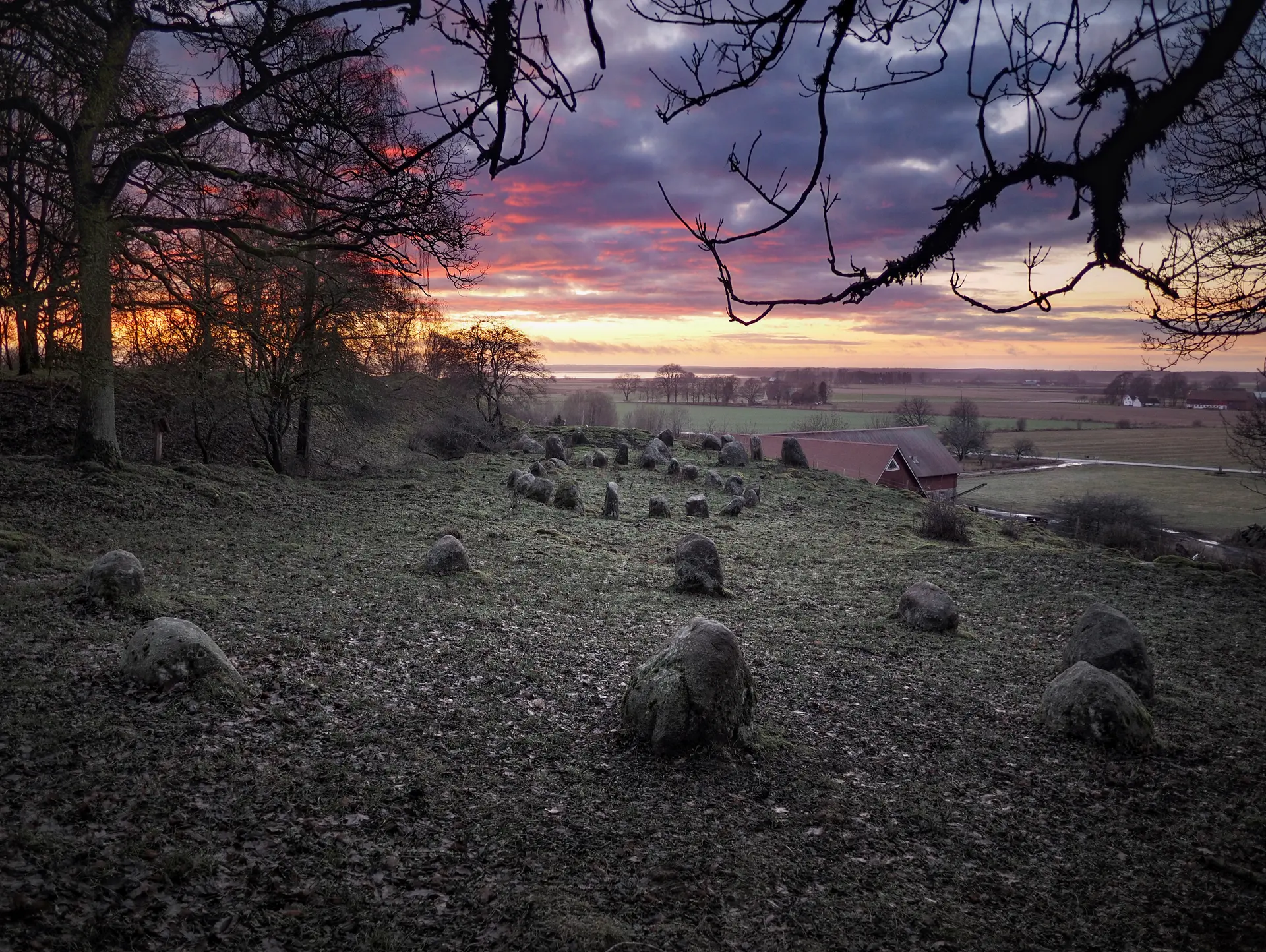


Share a photo
Help visitors recognize Ekornavallen. Every submission is reviewed before publication.