Kanshin-ji
A Heian Shingon temple where Kūkai introduced Big-Dipper worship and carved a National Treasure Nyoirin Kannon
Understand sacred places, explore living traditions, and learn how to engage respectfully with Pilgrim Map.
Access has not been verified. Check current local guidance before planning a visit.
Osaka Prefecture, Japan
Read the sources
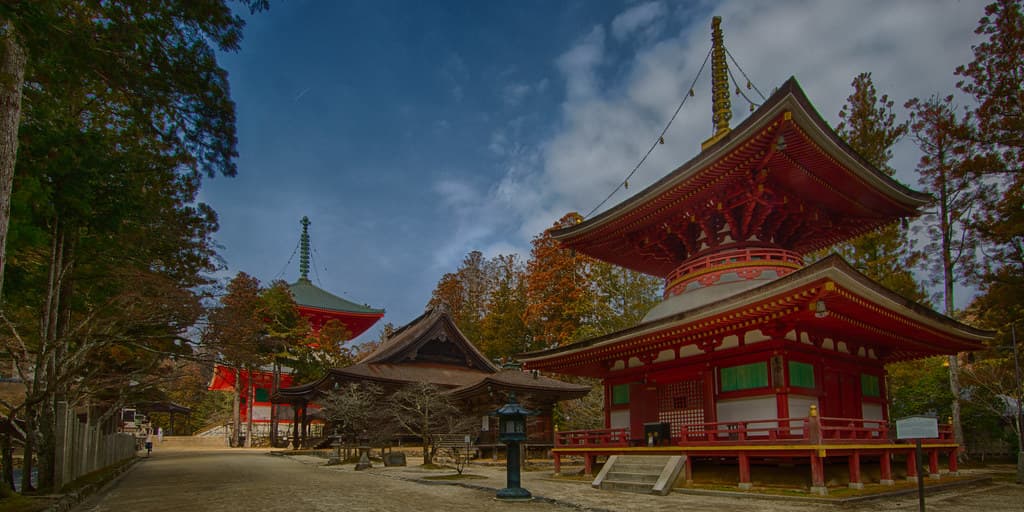
Image of Kanshin-ji. Image source · CC-BY-SA-3.0
Visit essentials
A quick read before you go
- Duration
- 1 to 1.5 hours; longer if attending the unveiling or a meditation program.
- Access
- From Nankai Kawachinagano Station, take a Nankai bus to Kanshinji-mae (about 15 minutes).
Overview
Kanshin-ji concentrates Heian-period Shingon devotion in western Japan. Tradition says En no Gyōja founded Unshin-ji around 701 CE. Kūkai (Kōbō Daishi) inaugurated worship of the seven Big Dipper stars (Hokuto) here in 808, then returned in 815, carved a Nyoirin Kannon from one block of fragrant Kyara wood, and renamed the temple Kanshin-ji, 'Temple of Mind-Contemplation.' The hidden image is unveiled only on April 17 and 18.
The seated Nyoirin Kannon, regarded as a supreme work of Heian esoteric sculpture, is a National Treasure. Art historians instead place it in the Jōwa era (834–848), a generation after Kūkai, with documentary and stylistic links to an imperial atelier patronized by Empress Tachibana no Kachiko; the devotional attribution to Kūkai remains. Its Kondō, Osaka's oldest wooden building, and the 883 CE Kanshinji engi shizaichō document are also National Treasures.
Kusunoki Masashige made Kanshin-ji his clan's bodaiji and began a Kondō for the Kenmu Restoration, but died at the Battle of Minatogawa in 1336 before finishing it; his head is buried here. Emperor Go-Murakami's tomb is also on the grounds. The temple is New Saigoku Kannon Pilgrimage bangai-2 and, in 2026, joins Kongō-ji and another Kannon temple in the inaugural Osaka National Treasure Three Kannon Pilgrimage during the April 17–18 unveiling.
Why this place is sacred
Kanshin-ji's density joins three National Treasures: Osaka's oldest wooden building, its Kondō; the 109.4 cm Nyoirin Kannon carved from one fragrant Kyara block and linked to Empress Tachibana no Kachiko's imperial atelier (834–848); and the 883 CE Kanshinji engi shizaichō. The hibutsu appears only on April 17 and 18, dates temple tradition associates with Kūkai's completion of the carving and inauguration of its Big Dipper rite.
Kūkai's 808 introduction of Hokuto worship to Japan happened here, and the rite continues. Kusunoki Masashige's tomb and burial of his head give the temple a 14th-century loyalist, martyrological dimension; Emperor Go-Murakami's tomb is also here. The precinct is a National Historic Site (1972) and Japan Heritage site.
Originally founded by En no Gyōja as Unshin-ji; refounded by Kūkai in 815 as Kanshin-ji ('Temple of Mind-Contemplation') for the Nyoirin Kannon and Big Dipper rite.
Tradition traces the site from En no Gyōja's Unshin-ji around 701 to Kūkai's 815 renaming and Nyoirin Kannon honzon, then to Kusunoki Masashige's unfinished 14th-century Kondō patronage. Its Kondō, Nyoirin Kannon, and 883 CE engi document are National Treasures; the precinct is a National Historic Site (1972) and Japan Heritage site.
Experience and orientation
Visitors describe the April 17–18 unveiling as profoundly moving: pilgrims line up before opening for a brief view of the hidden Nyoirin Kannon, filling the precincts with devotional concentration. Some describe heightened fortune and clarity afterward, reflecting the Kannon's role as bestower of wishes and the wisdom-jewel. Outside the unveiling, the National Treasure Kondō—Osaka's oldest wooden building—stands in a quiet wooded valley. Kusunoki Masashige's tomb and Emperor Go-Murakami's burial site add a sober dimension.
Priest-guided meditation and matcha experiences in the Kondō form part of today's visitor program.
From Nankai Kawachinagano Station, take a Nankai bus to Kanshinji-mae (about 15 minutes); the Kondō is the central destination with the Mieidō and tombs nearby.
Context and lineage
Tradition holds that En no Gyōja, the legendary mountain ascetic, founded a temple here called Unshin-ji around 701 CE. Kūkai visited in 808 to inaugurate worship of the seven stars of the Big Dipper, returned in 815, carved the Nyoirin Kannon image, and renamed the temple Kanshin-ji — Temple of Mind-Contemplation.
In the 14th century, the loyalist samurai Kusunoki Masashige used the temple as his clan's bodaiji and tried to build a new Kondō for the Kenmu Restoration; he died at the Battle of Minatogawa in 1336 before completing it. His head was buried at the temple after his death. The tomb of Emperor Go-Murakami of the Southern Court is also located on the temple grounds.
Art-historical scholarship places the Nyoirin Kannon stylistically in the Jōwa era (834–848) under the imperial atelier patronage of Empress Tachibana no Kachiko, generally a generation later than Kūkai's own carving — though the devotional attribution to Kūkai's hand remains traditional.
Kōyasan Shingon-shū — esoteric Shingon Buddhism with continuous institutional presence at this site since the 9th century; star/Big Dipper devotion (Hokuto/Myōken) introduced by Kūkai here in 808.
Traditions and practice
The annual Nyoirin Kannon unveiling on April 17–18 is the single most significant pilgrimage window — pilgrims line up before opening to glimpse the hibutsu. Hokuto Mandala star-deity rites, descending from Kūkai's 808 introduction of Big Dipper worship to Japan, continue. Goma fire ceremonies are held on calendar dates. Kusunoki Masashige memorial services honor the temple's connection to the loyalist samurai exemplar.
Daily monastic services continue. The pilgrim stamp office issues stamps for the New Saigoku Kannon (bangai-2), Kōyasan, and Kawachi pilgrimages. Meditation and matcha experiences are hosted in the Kondō with priest guidance. In 2026 the temple participates in the inaugural Osaka National Treasure Three Kannon Pilgrimage (April 17–18) joining Kongō-ji and another Kannon temple. Pilgrims may attend the unveiling without prior booking — admission only is required.
If possible, visit on April 17 or 18 for the hidden image's unveiling. At other times, visit the Kondō, Kusunoki Masashige's tomb, and Emperor Go-Murakami's burial site. New Saigoku walkers can pair Kanshin-ji with Kongō-ji, station 7, in one Kawachinagano day.
Buddhism (Kōyasan Shingon-shū)
ActiveA primary Heian-period Shingon temple in Kawachi tied directly to Kūkai. Kūkai is said to have introduced Big Dipper (Hokuto) worship to Japan here in 808 and personally renamed the temple Kanshin-ji ('Temple of Mind-Contemplation') in 815, carving its principal Nyoirin Kannon. The Kondō, the Nyoirin Kannon, and the 883 CE Kanshinji engi shizaichō document are all designated National Treasures. The Nyoirin Kannon is a hibutsu, unveiled only on April 17 and 18 each year.
Perspectives and open questions
Kanshin-ji can be read as an art-historical treasury of three National Treasures—the Kondō, Nyoirin Kannon, and 883 CE engi document—as the place where Kūkai transmitted Hokuto worship to Japan, as a Kusunoki Masashige loyalist site, and as New Saigoku Kannon Pilgrimage bangai-2.
Scholarly perspective
Art historians treat the Nyoirin Kannon as a masterwork of early-Heian esoteric sculpture, with documentary and stylistic links to the imperial atelier patronized by Empress Tachibana no Kachiko. They place it in the Jōwa era, a generation after Kūkai, contesting the tradition that he carved it. The Kondō is Osaka's oldest wooden building and a National Treasure; the 883 CE Kanshinji engi shizaichō is another National Treasure.
Living and traditional perspectives
Within Shingon tradition, Kanshin-ji is venerated as a direct seat of Kūkai's transmission and as the place where Hokuto (Big Dipper) worship entered the Japanese ritual canon. The Nyoirin Kannon's attribution to Kūkai's own hand remains a defining devotional claim regardless of art-historical chronology.
Alternative interpretations
Some practitioners visit specifically for the Big-Dipper and wish-fulfilling jewel symbolism, regarding the unveiling days as windows of unusually accessible blessing.
Open questions
The exact authorship of the Nyoirin Kannon — Kūkai personally or his Jōwa-era successors — cannot be settled. The bangai (extra) station's specific ritual texture within the New Saigoku route is less documented than #7 Kongō-ji.
Plan your visit
Access and arrival
From Nankai Kawachinagano Station, take a Nankai bus to Kanshinji-mae (about 15 minutes). Parking available for drivers.
No on-site lodging at Kanshin-ji; nearby Kawachinagano and Mt. Kōya shukubo are options for pilgrims continuing on the New Saigoku route.
Respectful visit
Modest dress; shoes off inside halls.
Permitted outdoors; prohibited inside the Kondō and near the Nyoirin Kannon during unveiling.
Incense, saisen, and osamefuda standard.
Hibutsu viewable only April 17–18; quiet near the Kusunoki tomb and imperial burial site.
Hibutsu viewable only April 17–18. Quiet expected near the Kusunoki tomb and the imperial burial site.
Current practical details
Address
475 Teramoto, Kawachinagano, Osaka 586-0053, Japan
Phone
Hours
Hours, fees, and access can change — verify on the official source before you travel. Practical details last checked Jun 2026.
Location
Map loads as you approach this section.
Pilgrim reflections
A portrait of encounter, not a score
Pilgrims describe what they felt, how present they could become, and whether the place would shape a journey. There are no stars and no ranking of traditions.
No reviewed reflections yet
The first pilgrims can help describe the character of being here.
Share a reflection
Available after an account-backed “Been there.” Every reflection is reviewed before publication.
Nearby sacred places
Explore other sacred places in the region. Proximity does not establish access or travel time; check each place’s guidance.


References
Sources consulted for this page. Source categories describe the publication, not a guarantee that every claim is verified. Traditional accounts and outside interpretations may differ.
- 01Kanshin-ji — Wikipedia (English) — Wikipedia contributorsofficialCoordinates 34.4373417°N 135.5985944°E; Kōyasan Shingon-shū; National Treasure Nyoirin Kannon and Kondō; founded by En no Gyōja, renamed by Kūkai 815.
- 02Seated Image of Nyoirin Kannon (Kanshinji, Osaka) — Nippon.comacademicDetailed scholarly description of the National Treasure statue: 109.4 cm, single Kyara block, Jōwa era (834–848), sponsored by Empress Tachibana no Kachiko.
- 03Kanshin-ji and Kongō-ji, Two Temples of Kawachinagano — Exhibition Guide — Kyoto National MuseumacademicAuthoritative on Heian sculpture, Southern Court history, and the Kondō architecture.
- 04Kanshinji Temple — Osaka Tourism — Osaka Convention & Tourism BureauofficialConfirms April 17–18 hibutsu unveiling, Kusunoki Masashige bodaiji status, three-temple Kannon pilgrimage 2026 program.
Pilgrim glossary
- Honzon
- The principal Buddhist deity enshrined as a temple's central object of worship.
- Kannon
- The bodhisattva of compassion, central to many East Asian pilgrimage routes.
- Mandala
- A symbolic diagram of the cosmos used in meditation and ritual.
- Shingon
- An esoteric Japanese Buddhist school emphasizing ritual, mantra, and mandala practice.
Share a photo
Help visitors recognize Kanshin-ji. Every submission is reviewed before publication.