Kakurin-ji
A working museum of Japanese Buddhist architecture in continuous Tendai use
Understand sacred places, explore living traditions, and learn how to engage respectfully with Pilgrim Map.
Access has not been verified. Check current local guidance before planning a visit.
Hyogo Prefecture, Japan
Read the sources
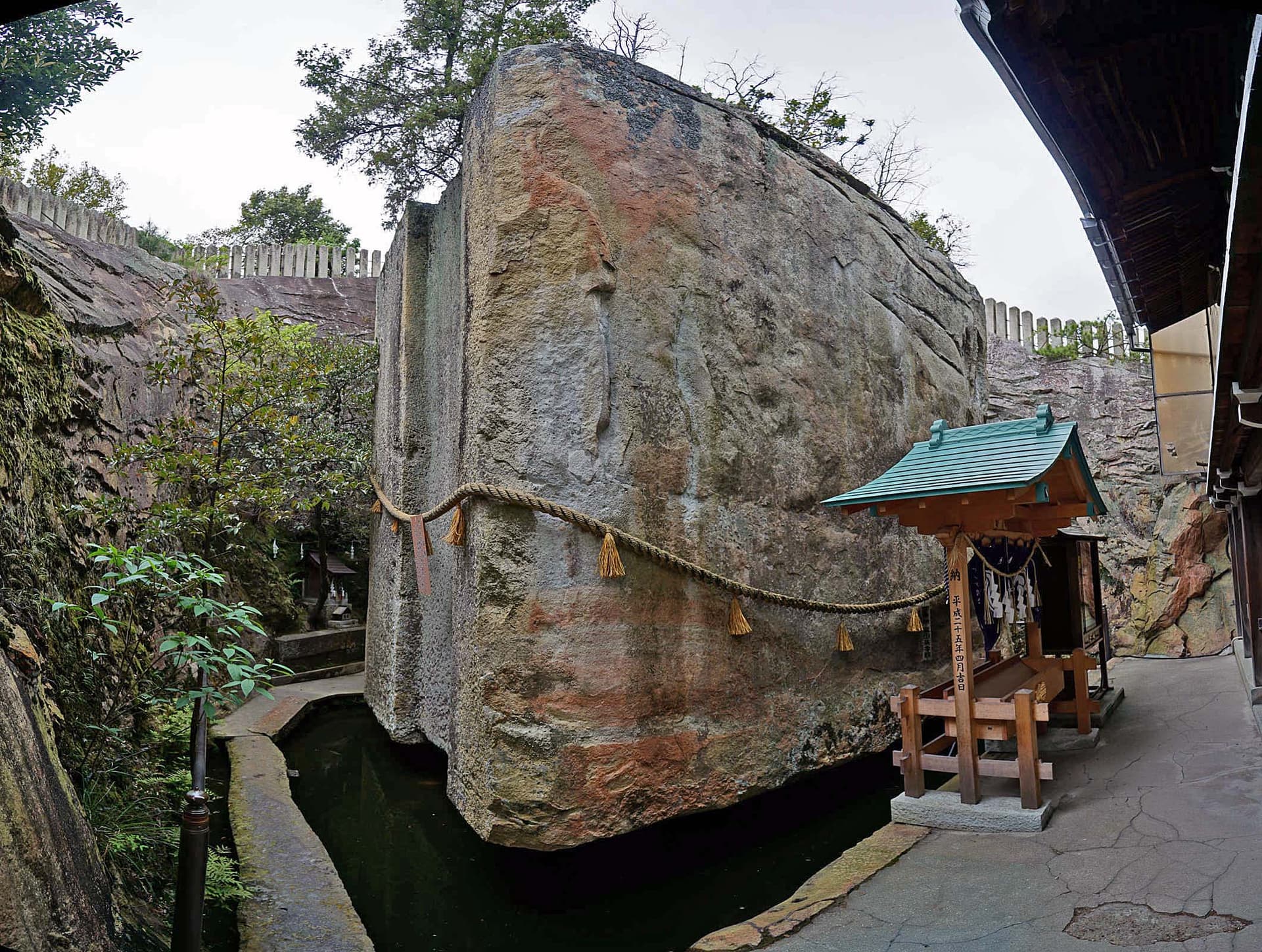
Image of Kakurin-ji. Image source · CC-BY-2.5
Station 27 of 33
New Saigoku Kannon PilgrimageVisit essentials
A quick read before you go
- Duration
- 2–3 hours for the precinct including the Main Hall, Taishi-dō, and the museum.
- Access
- From JR Kakogawa Station (JR Kobe Line / San'yō Main Line): approximately 25 minutes on foot, or…
Overview
Tucked into a quiet Kakogawa neighborhood about ten minutes east of Himeji, Totasan Kakurin-ji holds an architectural concentration that is unusual even by Japanese standards: two National Treasure structures, multiple Important Cultural Properties, and an unbroken Tendai liturgical practice running back through the medieval centuries. The 1397 Main Hall is widely cited by architectural historians as a successful synthesis of three otherwise distinct medieval traditions — wayō, Daibutsu-yō, and zenshū-yō — fused under a single roof.
The Taishi-dō, completed in 1112, is among the older surviving wooden buildings in Japan, predating the Main Hall by nearly three centuries. Tradition attributes the temple's founding in 589 CE to Prince Shōtoku himself, and the precinct remains one of the principal Shōtoku-memorial sites in western Japan, with annual spring ceremonies that include a public fire-walking ritual.
The honzon is a Yakushi Nyorai triad attributed to early-Heian artisans; for pilgrims walking the New Saigoku Kannon circuit, the Kannon image enshrined within the precinct receives the temple stamp. Note: this is the Kakogawa Kakurin-ji in Hyōgo Prefecture, founded by Shōtoku in the Asuka period and aligned with Tendai. It is entirely unrelated to the Tokushima Kakurin-ji on Mount Kakurin in Shikoku, which is Shingon, station 20 on the Shikoku 88 pilgrimage, and a much later Heian foundation.
Same kanji, same romanization, different temple, different tradition, different region. Visitors who arrive without expectation are often startled by what stands here: a living Tendai temple in which time itself has accumulated as texture in the wood, the joinery, and the smoke-darkened beams of two halls that have been continuously prayed in for six and nine centuries respectively.
Why this place is sacred
Few Japanese temples offer this density of architectural history at this depth in a working ritual context. The Taishi-dō (1112) and the Main Hall (1397) bracket nearly three centuries of medieval Buddhist building, and both remain in active liturgical use rather than serving as preserved monuments.
The eclectic 1397 Main Hall is occasionally read by interpretive writers as a built mandala — the architectural counterpart to Tendai's doctrinal synthesis — though the more sober scholarly view is simply that the structure represents an unusually skilled fusion of three contemporary architectural idioms. The annual three-day Prince Shōtoku memorial ceremony in spring brings a public fire-walking ritual that draws devotees and curious visitors alike, and autumn moon-viewing events return the precinct to a contemplative register.
The combined effect is of a temple where seasonal practice, ancient timber, and continuous Tendai chant accumulate over centuries into a recognizable atmospheric weight.
Founded by tradition in 589 CE at Prince Shōtoku's direction as part of the early establishment of Buddhism in the Harima region, the temple functioned simultaneously as a Yakushi healing site, a Prince Shōtoku memorial center, and a regional Tendai liturgical seat after later sectarian alignment.
The Taishi-dō was completed in 1112, the Main Hall in 1397 in its distinctive eclectic style, and the Gyōja-dō, Shōrō bell tower, and Goma-dō across subsequent centuries up to 1563. Each building added a layer rather than replacing what came before, leaving the modern visitor with a precinct that reads as a chronological cross-section of medieval Japanese Buddhist architecture in active ritual use.
Experience and orientation
Allow the Taishi-dō to register first. Its scale is modest, its proportions intimate, and its age accumulates only as you stand near it: the smoke-darkened wood, the simple wayō (Japanese-style) bracketing, the way the eaves sit low to the ground. Then turn to the Main Hall. The 1397 structure announces itself differently — larger, brighter, with the bolder bracketing of zenshū-yō and the heavy structural members of Daibutsu-yō visible at the lower roofline.
The two halls together teach more about Japanese Buddhist architectural history than most museums. Inside the Main Hall, when liturgy is being performed, Tendai chant fills the space with a steady tonal weight; when the hall is quiet, the smell of incense and old timber dominates. The temple museum, accessible for an additional fee, holds important Buddhist statuary and painting from the precinct's collection — many visitors find this the most concentrated encounter with the temple's sculptural history.
Spring brings the Prince Shōtoku memorial ceremony with its public fire-walking; autumn brings moon-viewing events that draw the precinct's contemplative aspect back to the foreground.
Allow at least two hours, three if you intend to spend time in the museum. Mornings before 10 a.m. tend to be quietest. The temple is on the standard Kakogawa walking circuit but rarely crowded outside ceremony days.
Context and lineage
Local Harima tradition links the temple's establishment to the Korean monks who accompanied Prince Shōtoku's missions, placing Kakurin-ji at one of the points where continental Buddhist learning first entered the Japanese provinces. The 589 date is traditional and cannot be archaeologically verified, but the temple's institutional continuity is well documented from at least the late Heian period, and the 1112 Taishi-dō supplies the earliest surviving physical evidence of an established religious community on this site.
Tendai school of Japanese Buddhism, headquartered on Mt. Hiei. The temple's specific Tendai alignment was consolidated during the Heian period; the broader Shōtoku Taishi memorial tradition predates the school and continues as a parallel devotional current within it.
Prince Shōtoku Taishi (574–622)
Traditional founder; regent and principal patron of Buddhism's establishment in Japan.
Tendai community at Kakurin-ji
Continuous liturgical custodianship from at least the late Heian period through the present, including direction of the 1112 Taishi-dō and 1397 Main Hall building campaigns.
Anonymous Muromachi master carpenters of 1397
Designers of the Main Hall's three-style synthesis combining wayō, Daibutsu-yō, and zenshū-yō architectural traditions.
Heian-period sculptors of the Yakushi triad
Created the temple's principal honzon — Yakushi flanked by Nikkō and Gakkō Bosatsu — in the early-Heian style.
Traditions and practice
Tendai chanting in the National Treasure Main Hall; Prince Shōtoku memorial rites including the public fire-walking (hiwatari) ritual; goma fire ceremonies on selected days; memorial services and seasonal observances tied to the Tendai liturgical calendar.
Daily morning liturgy; the spring three-day Shōtoku memorial with its public fire-walking; autumn moon-viewing events; pilgrim reception and goshuin issuance for the New Saigoku Kannon Pilgrimage and related Harima-area pilgrim routes.
Time a visit to the spring Shōtoku memorial if the public fire-walking interests you — the ritual is open to lay participants. Otherwise, arrive early enough to spend unhurried time with both the Taishi-dō and the Main Hall before any group tours appear, and allow extra time for the museum, which holds important pieces that most visitors miss.
Tendai Buddhism
ActiveTotasan Kakurin-ji is among the most architecturally significant Tendai temples in western Japan and one of the principal Prince-Shōtoku-associated sites (Shōtoku Taishi yukari no tera) in the Harima region. Two National Treasure structures and multiple Important Cultural Properties place it in the first rank of Japanese medieval Buddhist architecture, while continuous Tendai liturgy keeps the precinct in active ritual use rather than museum status.
Prince Shōtoku memorial veneration
ActiveLocal Harima tradition treats Kakurin-ji as the most important Shōtoku memorial site in western Japan, with the spring three-day ceremony — including public fire-walking — drawing devotees from across the region. Shōtoku is venerated within Tendai as a bodhisattva-like figure who established Buddhism in Japan.
New Saigoku Kannon Pilgrimage
ActiveStation #27 of the modern New Saigoku Kannon Pilgrimage, established in 1932 to complement the older Saigoku 33. Pilgrims receive the temple stamp before the Kannon image enshrined within the precinct.
Perspectives and open questions
Kakurin-ji invites multiple readings: as architectural history in active liturgical use, as a Prince Shōtoku memorial center, and as a Tendai temple holding a continuous community of practice. Each frame yields a different precinct.
Scholarly perspective
Architectural historians regard the 1397 Main Hall and the 1112 Taishi-dō as among the most important medieval Buddhist structures in Japan. The Main Hall is widely cited as a successful synthesis of three otherwise distinct architectural traditions of the period — wayō, Daibutsu-yō, and zenshū-yō. The 589 founding date is traditional; the institutional continuity of the temple is well documented from at least the late Heian period.
The continuity between Shōtoku's reputed 589 foundation and the surviving Heian-period structures is not well documented in surviving records.
Living and traditional perspectives
Tendai tradition embeds Kakurin-ji in the lineage of Prince Shōtoku's earliest Buddhist foundations. Local Harima devotees treat it as the most important Prince Shōtoku memorial site in western Japan, and the spring three-day memorial draws devotees who maintain this regional identity across generations.
Alternative interpretations
Some interpretive frames read the Main Hall's fusion of three architectural styles as a built mandala — a structural diagram of the integration of multiple Buddhist traditions under a single roof, an architectural counterpart to Tendai's doctrinal synthesis. This reading is suggestive rather than scholarly, but the building rewards it.
Open questions
Specific medieval transmission history between the Heian-period and 1397 Main Hall reconstruction is incompletely documented; the precise events that shaped the precinct between major construction campaigns remain a gap in the record.
Plan your visit
Access and arrival
From JR Kakogawa Station (JR Kobe Line / San'yō Main Line): approximately 25 minutes on foot, or a short bus ride toward Kakurin-ji-mae. Kakogawa is about 30 minutes from Sannomiya (Kobe) and 10 minutes from Himeji on the Special Rapid (Shin-kaisoku). Free parking for drivers. Admission ¥500 for the precinct; additional ¥300 for the museum/treasure hall.
Business hotels cluster around JR Kakogawa Station. Himeji, ten minutes west, offers a wider range of accommodation and is the more common base for pilgrims walking the western Hyōgo cluster of New Saigoku stations.
Respectful visit
Smart casual; modest dress. Layers in winter (the halls are unheated).
Exterior photography generally permitted. Interior altar photography in National Treasure halls is restricted — observe signage carefully.
Coins (saisen) at the main hall. Incense at the burner. Goshuin available for pilgrims at the temple office.
Do not touch wooden architectural elements. Quiet voices during services. Respect cordoned conservation areas.
Interior altar photography in the National Treasure halls is restricted; observe signage. Conservation areas are cordoned and should be respected. Voices remain quiet during services.
Current practical details
Address
Kitazaike-424 Kakogawachō, Kakogawa, Hyogo 675-0031, Japan
Phone
Hours
Hours, fees, and access can change — verify on the official source before you travel. Practical details last checked Jun 2026.
Location
Map loads as you approach this section.
Pilgrim reflections
A portrait of encounter, not a score
Pilgrims describe what they felt, how present they could become, and whether the place would shape a journey. There are no stars and no ranking of traditions.
No reviewed reflections yet
The first pilgrims can help describe the character of being here.
Share a reflection
Available after an account-backed “Been there.” Every reflection is reviewed before publication.
Nearby sacred places
Explore other sacred places in the region. Proximity does not establish access or travel time; check each place’s guidance.


References
Sources consulted for this page. Source categories describe the publication, not a guarantee that every claim is verified. Traditional accounts and outside interpretations may differ.
- 01Kakurin-ji (Kakogawa) — WikipediaofficialCoordinates 34°45'08"N 134°49'59"E, founding 589 by Prince Shōtoku, Tendai sect, National Treasure Main Hall (1397) and Taishi-dō (1112), Important Cultural Properties
- 02List of National Treasures of Japan (temples) — WikipediaofficialConfirms two National Treasure structures at Kakurin-ji: Main Hall (1397) and Taishi-dō (1112)
- 03Kakurin-ji Temple — Wikidata — Wikidata Q3192056officialConfirmed coordinates and founding details
- 04Kakurin-ji Temple — A Pleasant Surprise in Kakogawa — HyogoJapan.comguideVisitor info, admission fees (¥500 + ¥300 museum), access from JR Kakogawa Station
- 05Kakurin Temple — Treasure of Kakogawa — Cool Japan VideosguideSpring fire-walking ceremony, Prince Shōtoku memorial rites, autumn moon-viewing
- 06Kakurin-ji Temple, Kakogawa — TripadvisorguideVisitor reviews; corroboration of access and visitor experience
Pilgrim glossary
- Honzon
- The principal Buddhist deity enshrined as a temple's central object of worship.
- Kannon
- The bodhisattva of compassion, central to many East Asian pilgrimage routes.
- Mandala
- A symbolic diagram of the cosmos used in meditation and ritual.
- Shingon
- An esoteric Japanese Buddhist school emphasizing ritual, mantra, and mandala practice.
- Tendai
- A Japanese Buddhist school based on the Lotus Sutra, foundational to many later traditions.
Share a photo
Help visitors recognize Kakurin-ji. Every submission is reviewed before publication.