Hêtre de Ponthus
A three-hundred-year-old link to Arthurian legend, felled by storm in 2023
Understand sacred places, explore living traditions, and learn how to engage respectfully with Pilgrim Map.
Access has not been verified. Check current local guidance before planning a visit.
Concoret, Ille-et-Vilaine, France
Read the sources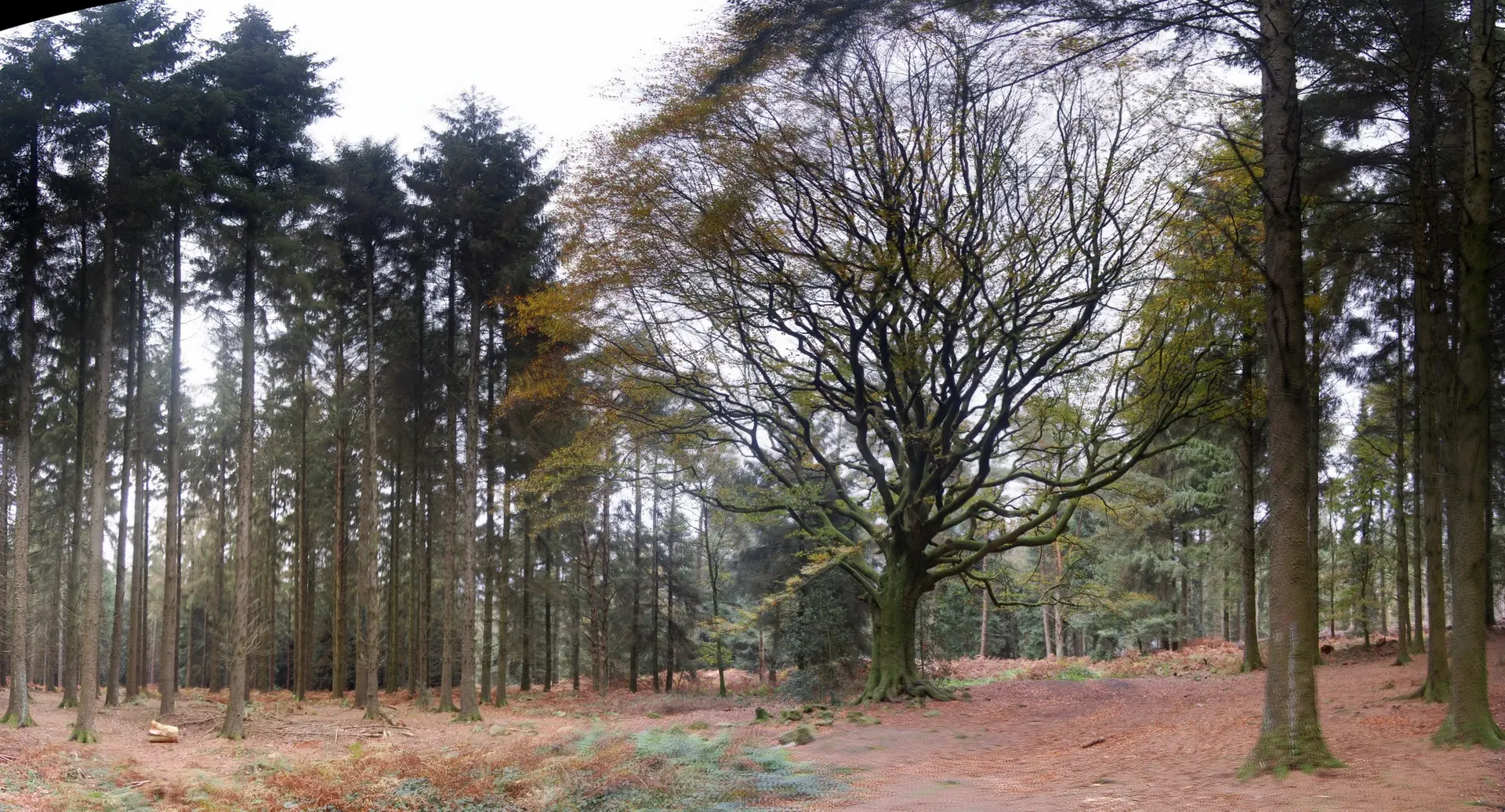
Visit essentials
A quick read before you go
- Duration
- Thirty minutes to an hour allows time for contemplation.
- Access
- Located in Broceliande forest near the Fountain of Barenton, in the area where the communes of…
Overview
Storm Ciaran felled the three-hundred-year-old Hêtre de Ponthus on November 1–2, 2023; Brocéliande's only remarkable tree directly tied to Arthurian legend now lies near the Fountain of Barenton. Tradition says it grew from Ponthus's ruined castle after the childless knight cursed God and divine retribution destroyed his home in a storm, making the beech a monument to pride and divine will.
Its twisted branches once added wonder and unease near the fountain where Merlin met Viviane and storm-summoning rites were said to work. Pilgrims now visit the standing-place and fallen remains. The new storm echoes the legendary one, turning presence into meaningful absence; some visitors find the parallel poignant, others appropriate.
Why this place is sacred
The tree's thinness operated through story. Unlike Merlin's Tomb or the Fountain of Barenton, which possess their own independent sacred significance, the Hetre de Ponthus was remarkable primarily because of what it represented: a living link to Arthurian romance, a monument to divine retribution, a guardian of legendary ruins.
The legend of Ponthus provided the frame. A knight of the Round Table, childless and despairing, cursed God. The storm that followed destroyed his castle. The beech that grew from the rubble served as permanent reminder that divine patience has limits. Visitors approaching the tree knew this story; the story shaped what they saw.
Proximity to Barenton intensified the effect. The fountain where Merlin met Viviane, where water poured on stone could summon storms, lay nearby. The landscape itself seemed to comment: here is where storms are called; there is what storms destroy. The connection was poetic rather than causal, but poetry is often more powerful than cause.
Since the destruction, the site offers a different thinness. Where the tree stood, something is now absent. The absence has its own quality—visitors report a kind of shock, a confrontation with impermanence that presence could not provide. The storm that felled the tree resonates with the storm of Ponthus's legend. What was implicit has become explicit: nothing endures. Not castles, not curses, not even the monuments that mark them.
This may prove the site's most profound teaching. The tree taught by standing. Its remains teach by falling.
The tree had no original human purpose; it grew naturally, approximately three hundred years ago, in a location already freighted with legend. Its sacred significance accrued through association with the Ponthus story and its proximity to Barenton's fountain. The ruins scattered at its base—said to be vestiges of Ponthus's castle—may or may not have been genuine architectural remains.
For most of its three-century life, the beech accumulated legend without much documentation. The story of Ponthus and the divine storm attached to it; visitors incorporated it into their pilgrimages through Broceliande's legendary landscape. In 2015, a regional inventory recorded its measurements: 4.1 meters in circumference, 22 meters of crown span. These numbers now serve as memorial statistics.
The 2023 destruction altered the site's character entirely. Where visitors once came to see a living relic, they now come to witness its remains. The shift from presence to absence has not diminished visitation; if anything, it has given the site a new kind of significance. The fallen tree teaches about loss, impermanence, and the insubstantiality of what we think will endure.
Experience and orientation
Those who visited before November 2023 remember the tree's presence. The branches twisted in ways that seemed almost intentional, as if shaped by some force beyond ordinary growth. Standing near the Fountain of Barenton, the tree anchored a landscape dense with legend. Visitors often photographed it obsessively, trying to capture something that cameras seemed unable to hold.
The connection to medieval romance gave the tree a quality beyond its botanical interest. This was not merely an old beech; this was Ponthus's beech, grown from the ruins of a cursed castle, witness to divine retribution. The story informed perception; perception confirmed the story.
Since the storm, experience has fundamentally changed. Visitors now encounter absence where presence stood. The tree lies as it fell, a monument to impermanence. Some report grief, genuine mourning for something they never knew alive. Others describe a kind of clarity—the storm stripped away pretense, revealing what was always true: that everything falls, everything ends, nothing persists.
The resonance with Ponthus's legend has deepened. A storm destroyed his castle as punishment for blasphemy. A storm destroyed the tree that marked that destruction. The pattern completes itself. Whether this represents cosmic justice, meaningful coincidence, or merely weather, visitors find themselves contemplating questions that the living tree did not pose.
Contemplative time at the site now carries different weight. Sitting with what was, rather than what is, invites reflection on attachment and loss. The forest continues; Barenton still bubbles nearby; life goes on around the fallen giant. The tree's death becomes a teaching about the backdrop against which all loss occurs.
Approach the site knowing what you will find: absence, not presence. The tree that drew pilgrims for centuries lies where Storm Ciaran felled it. If you seek what the living tree offered, you will be disappointed. If you can receive what the fallen tree teaches, you may find something unexpected.
Consider visiting Barenton's fountain first, experiencing the legendary landscape as it continues. Then walk to the fallen beech. The contrast between living fountain and dead tree has its own instruction.
Allow time for whatever arises. Grief, if it comes, deserves space. So does the particular clarity that contemplating ruins can provide. The tree no longer offers shade or awe, but it offers something else—a reminder that the sacred is not the same as the permanent.
Context and lineage
According to tradition, Ponthus was a knight of the Round Table who lived in a castle at this site around the tenth century. Despairing of ever having a child, he blasphemed against God. In retribution, God destroyed his castle in a terrible storm. The beech tree grew from the ruins, marking the place where divine judgment had fallen.
An alternative version connects the site to the destruction of the castle by the military commander du Guesclin in 1372. In this account, the stones at the tree's foot are genuine architectural remains, and the tree grew not from divine intervention but from the gradual reclamation of ruined structures by forest.
Both versions share the essential element: the tree marked a place of destruction, growing from ruins to become a living monument to what was lost.
The tree participated in Broceliande's legendary lineage without formal institutional connection. No religious order maintained it; no church claimed it. Its significance developed organically, as visitors incorporated it into their understanding of the forest's Arthurian landscape.
The 2023 destruction ended this lineage in its previous form. What continues is memory, documentation, and the practice of visiting the site to contemplate what was. Whether a new monument will grow from these remains—physical or metaphorical—remains to be seen.
Ponthus
legendary
A knight of the Round Table associated with this site through local Breton tradition. His story—childlessness, blasphemy, divine punishment—frames the tree's legendary significance. Whether Ponthus was a historical figure cannot be determined.
Traditions and practice
No documented traditional rituals were specific to the Hetre de Ponthus. The tree was incorporated into broader pilgrimage through Broceliande rather than serving as independent ceremonial focus. Visitors who walked from Barenton's fountain often paused at the tree, connecting the two sites in their personal practice.
Since the destruction, visiting the site has become a practice of mourning and remembrance. Some visitors leave flowers or other biodegradable offerings. Others simply stand or sit with the fallen tree, contemplating what it represented and what its fall means.
The practice of documenting loss has also emerged. Visitors photograph the remains, creating records of what the site now looks like in contrast to what it was. This documentation serves both personal and collective memory.
If you visit the site, allow the absence to speak. Do not rush past the fallen tree to the fountain; let the fall teach what it teaches.
Consider bringing something to leave—a flower, a leaf from elsewhere, some small token of acknowledgment. The gesture need not be elaborate; it need only be sincere.
After time with the remains, continue to Barenton's fountain. Notice the contrast: living water, dead wood. The juxtaposition has its own instruction about what persists and what does not.
Arthurian Legend (Ponthus and Sidonia)
HistoricalThe tree was associated with the medieval romance of Ponthus and Sidonia. According to tradition, Ponthus was a knight of the Round Table who organized tournaments at this site. His blasphemy against God brought divine punishment in the form of a castle-destroying storm. The beech grew from the ruins, marking the place of judgment.
Pilgrimage to the tree; contemplation of the legend; visiting in combination with the nearby Fountain of Barenton. These practices were informal, without institutional structure.
Perspectives and open questions
The Hetre de Ponthus invites reflection on the relationship between legend and landscape, permanence and loss. Scholarly views focus on the tree's age and ecological significance. Traditional perspectives emphasize its Arthurian connection. The destruction opens new questions about how sacred sites persist when their physical anchors fail.
Scholarly perspective
Regional inventories documented the tree as approximately three hundred years old, with a circumference of 4.1 meters and crown span of 22 meters. Its association with the Ponthus legend is traditional attribution without historical documentation of an actual castle at the site. The stones identified as castle ruins may be natural formations or remains of other structures.
From an ecological perspective, the tree's fall represents natural succession. Old trees die; storms accelerate the process. The fallen tree will provide habitat and nutrients as it decomposes, contributing to the forest in new forms.
Living and traditional perspectives
The legend of divine punishment frames the tree's significance. Ponthus's blasphemy brought destruction; from destruction, the tree grew; now the tree itself has been destroyed. The narrative arc completes itself.
Some who hold traditional perspectives see the storm as meaningful rather than random—another iteration of the divine judgment that created the original ruins. Others see it as reminder that even monuments to divine power do not escape impermanence.
Alternative interpretations
Those who experienced the living tree as spiritually significant sometimes describe its loss as death of a sacred being. The tree was not merely vegetation but presence, consciousness, guardian. Its destruction removes not just wood but awareness from the landscape.
Others suggest that the tree's spirit persists in some form, perhaps transferring to the surrounding forest or to a successor that may eventually grow from the remains.
Open questions
Whether any actual castle existed at the site remains uncertain. The historical Ponthus, if any, is undocumented beyond legend. The tree's exact age was estimated rather than precisely determined.
What will happen to the site over time—whether new sacred significance will develop around the remains, whether a successor tree will be recognized, how the legend will adapt—is also unknown. Sacred sites evolve; this one is evolving now.
Plan your visit
Access and arrival
Located in Broceliande forest near the Fountain of Barenton, in the area where the communes of Paimpont and Concoret meet. Follow forest paths from parking areas serving Barenton. Current condition of paths near the fallen tree should be verified before visiting.
Hotels and guesthouses in Paimpont village serve visitors to the forest. No accommodation exists at the site itself.
Respectful visit
Forest walking attire with sturdy shoes. The path to the site follows forest terrain.
Permitted. Be mindful of others who may be in mourning or contemplation. Consider whether your documentation serves memory or merely interrupts presence.
If moved to leave something, ensure it is biodegradable. Flowers, leaves, or other natural materials are appropriate. Avoid items that will need eventual removal.
Do not remove pieces of the tree as souvenirs. Do not climb on the remains. Stay clear of areas that appear unstable.
The site of a fallen tree presents physical hazards. Stay clear of unstable areas. Do not climb on the remains. Respect the natural process of decay while honoring what was.
Current practical details
Address
35380 Paimpont, France
Phone
Hours
Hours, fees, and access can change — verify on the official source before you travel. Practical details last checked Jun 2026.
Location
Map loads as you approach this section.
Pilgrim reflections
A portrait of encounter, not a score
Pilgrims describe what they felt, how present they could become, and whether the place would shape a journey. There are no stars and no ranking of traditions.
No reviewed reflections yet
The first pilgrims can help describe the character of being here.
Share a reflection
Available after an account-backed “Been there.” Every reflection is reviewed before publication.
Nearby sacred places
Explore other sacred places in the region. Proximity does not establish access or travel time; check each place’s guidance.



References
Sources consulted for this page. Source categories describe the publication, not a guarantee that every claim is verified. Traditional accounts and outside interpretations may differ.
- 01Le hêtre de Ponthus - Encyclopédie de Brocéliande — Encyclopédie de BrocéliandeencyclopediaDetailed local documentation
- 02Remarkable trees of Broceliande - Destination Brocéliande — Destination BrocéliandeofficialRegional tourism authority
- 03Paimpont forest - Wikipedia — Wikipedia contributorsencyclopediaOverview with Arthurian context
- 04Storm Ciaran: a 300-year-old tree uprooted — Amsterdam Nieuws / JellypagesnewsReports tree's destruction in November 2023
Share a photo
Help visitors recognize Hêtre de Ponthus. Every submission is reviewed before publication.