Forest of Paimpont (Broceliande Forest)
The enchanted forest where Arthurian legend lives in stone, water, and ancient oak
Understand sacred places, explore living traditions, and learn how to engage respectfully with Pilgrim Map.
Access has not been verified. Check current local guidance before planning a visit.
Paimpont, Ille-et-Vilaine, France
Read the sources
Visit essentials
A quick read before you go
- Duration
- A single day allows visits to three or four legendary sites with adequate time at each.
- Access
- The village of Paimpont serves as the primary base for visiting the forest.
Overview
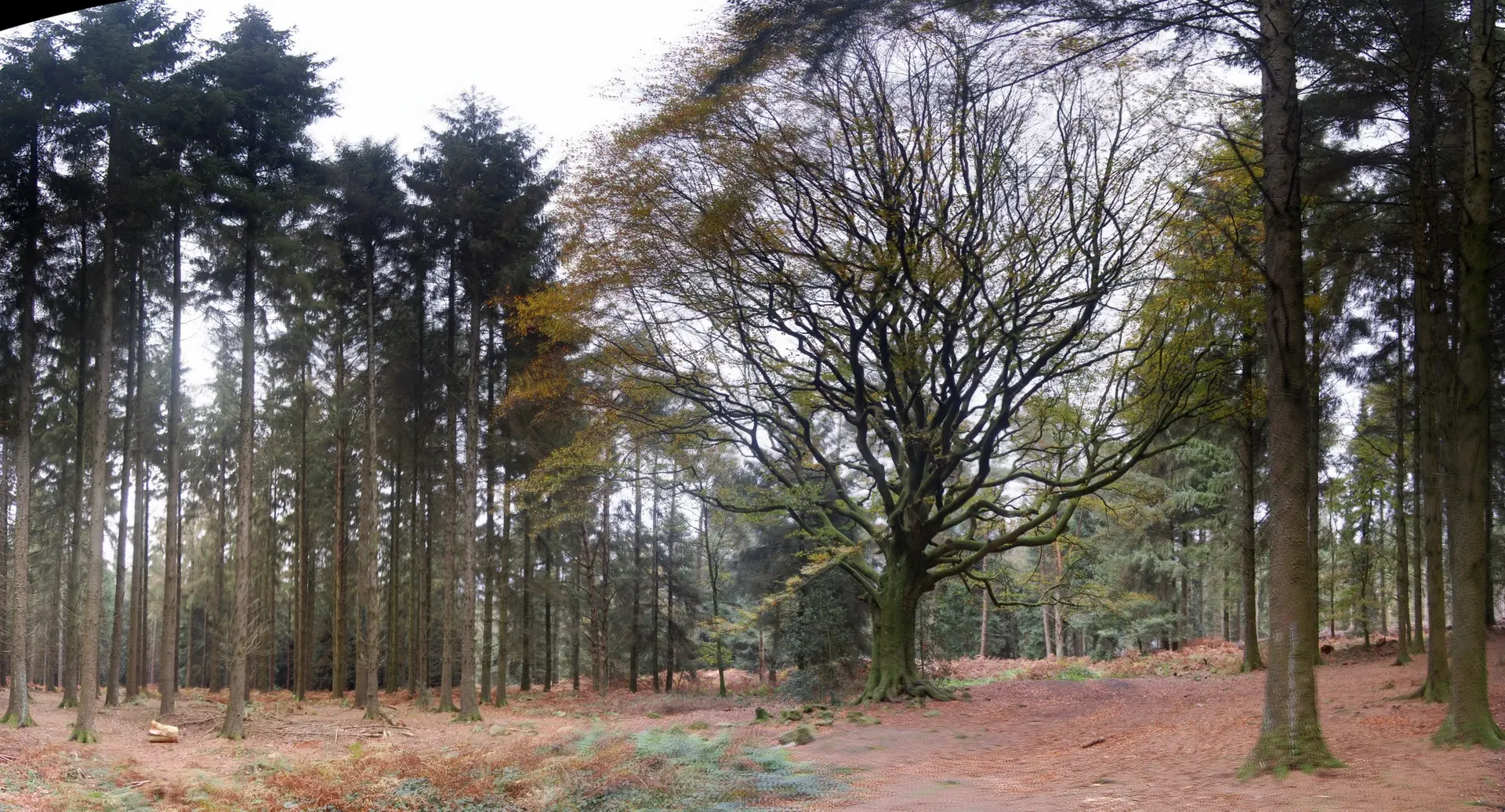
Across Paimpont's nine thousand hectares of oak and beech, the line between event and dream is offered as invitation, not doctrine. Medieval poets named it Broceliande and placed Arthurian tales among its springs and stones: Merlin met Viviane at Barenton, Morgan le Fay trapped unfaithful lovers in the Val sans Retour, and the Lady of the Lake kept a crystal palace beneath Comper.
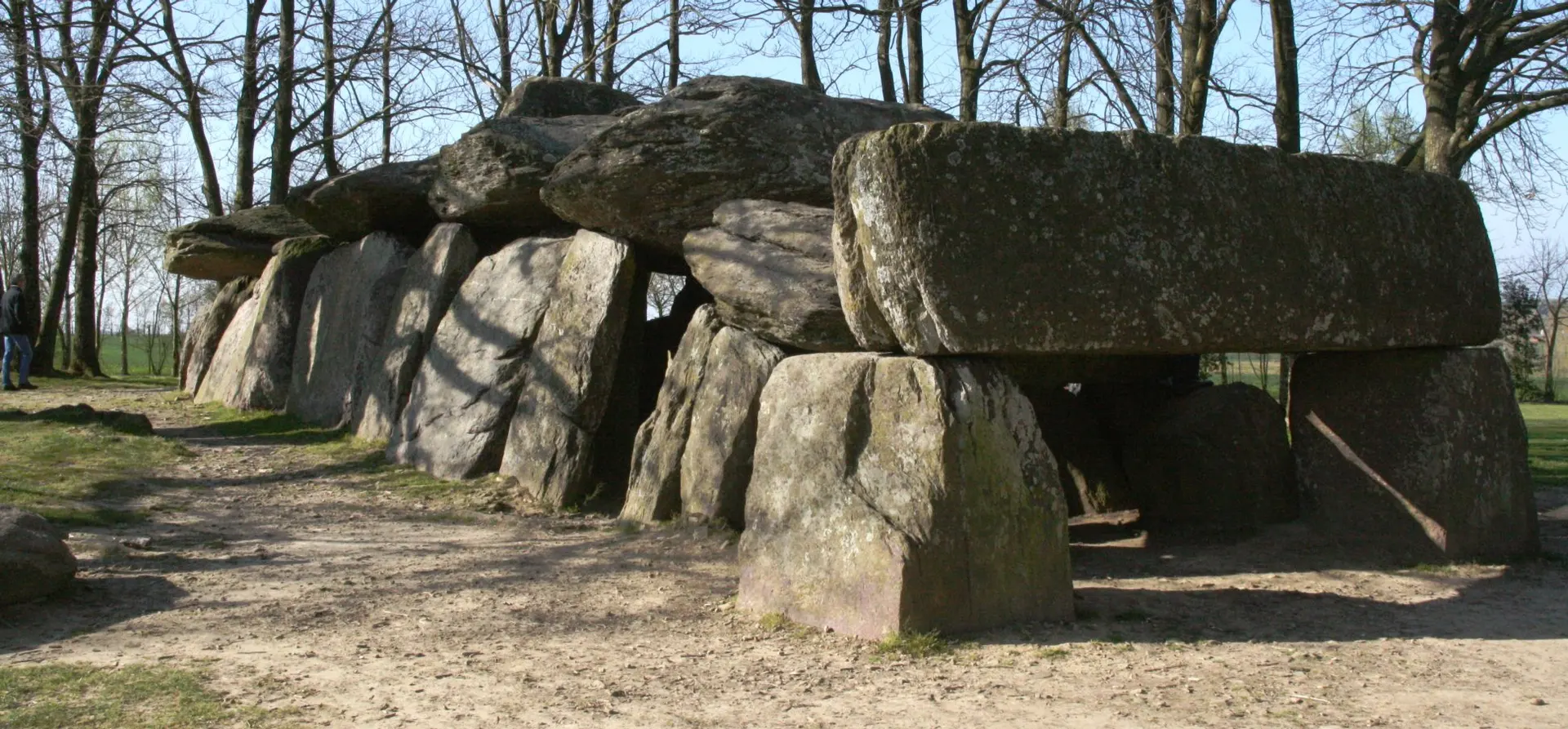
Most scholars treat these as literature, though visitors report experiences that make the poets' choice of these features feel non-arbitrary. Sacred marking predates Arthur: the Hotie de Viviane is a Neolithic burial chamber over four thousand years old, three millennia before the legends. Today neo-Druids hold ceremony, pilgrims leave wishes at Merlin's Tomb, and children drink Barenton's water as families wonder.
Why this place is sacred
Three qualities converge to make this forest thin. First, time collapses here. The Hotie de Viviane, built around 2500 BCE for purposes we can only guess, sits within walking distance of Merlin's Tomb, where visitors today leave wishes as pilgrims have for centuries. Neolithic burial practice and contemporary wish-making ritual share the same woods, separated by millennia but united in approach to a common threshold.
Second, the forest itself works on perception. Dense oak and beech filter light into shifting patterns. Mist rises unpredictably. Springs emerge where you do not expect them. Paths that seem clear become ambiguous. The ordinary markers by which we orient ourselves—consistent light, predictable terrain, reliable direction—soften. This is not supernatural; it is the natural result of spending time in genuine old forest. But the softening creates space for different modes of attention.
Third, human intention accumulates. Since at least the twelfth century, people have come to this forest seeking contact with something beyond ordinary life—the magic of Merlin, the wisdom of the druids, transformation through pilgrimage. Since 1951, organized neo-Druidic ceremonies have added another layer of deliberate practice. The wishes left at Merlin's Tomb number in tens of thousands. Whatever one believes about whether such intentions leave traces, the fact of so much concentrated seeking shapes the atmosphere a visitor encounters.
The thin place is not located at any single spot but distributed through the forest. Certain sites intensify the effect—Merlin's Tomb, the Fountain of Barenton, the Val sans Retour. But the forest as a whole participates. To walk from one legendary site to another is to move through a landscape that has been imagined and reimagined, visited and revisited, for longer than history records.
No single original purpose can be assigned to a natural forest that humans have used for over four millennia. The Neolithic builders of the Hotie de Viviane likely understood the site as a threshold between worlds of living and dead—a place where ancestors could be contacted and honored. Medieval tradition saw the forest as a boundary zone where the mortal and fairy realms intersected, where enchanters lived and transformation was possible.
Contemporary practitioners blend these understandings with modern nature spirituality and neo-Druidism. The forest's purpose, if it can be said to have one, is to serve as a container for human encounter with mystery.
The forest has been many things across its long history. During the Neolithic period, it contained burial sites still visible today. In Celtic times, it may have served Druidic practice, though evidence is thin. By the twelfth century, poets had identified it with the enchanted Broceliande of Arthurian romance, and pilgrims began seeking the places the stories described.
In the nineteenth century, modern tourism discovered the forest. Visitors came to see Merlin's Tomb and Barenton's fountain, transforming legendary pilgrimage into cultural excursion. The twentieth century brought neo-Druidic revival, organized ceremony, and the Centre de l'Imaginaire Arthurien at Chateau de Comper, which now offers exhibitions and events keeping the Arthurian tradition vital.
Through all these changes, the forest has retained its essential quality: a place where the boundary between the real and the imagined becomes permeable, where stories feel less like fiction and more like something half-remembered.
Experience and orientation
The most common initial experience is disorientation. Not the disorientation of being lost, but of the categories by which you normally organize experience becoming less certain. You know, intellectually, that Merlin's Tomb is a Neolithic burial site retrofitted with medieval legend. Yet standing before those two stones, reading the wishes others have left, that knowledge matters less than you expected. Something else is present.
At the Fountain of Barenton, after the twenty-minute walk through the forest, visitors often describe unusual peace. The spring bubbles in ways that do appear almost magical. Medieval tradition held that its waters could cure madness and summon storms. You are unlikely to test the storm theory, but the peace is real enough.
The Val sans Retour works differently. Morgan's valley traps with beauty rather than force. Those who walk its paths frequently report that time passes strangely—what felt like an hour was actually three. The lake at its heart, the Miroir aux Fees, reflects sky and forest in ways that visitors photograph obsessively, trying to capture something that keeps slipping away.
Those who spend multiple days in the forest—returning to sites at different hours, allowing the initial excitement to settle—often describe subtler experiences. Dreams become vivid. Insights about personal situations arise without being sought. A quality of listening develops. Not everyone reports such things. But enough do that dismissing the reports as mere projection becomes difficult.
The forest offers no guarantees. Some visitors feel nothing but pleasant walking in pretty woods. This is perfectly valid; not every sacred site speaks to every person. But for those it does speak to, Broceliande can feel less like a place you visit and more like a place that visits you.
Approach the forest as you might approach a conversation you have been waiting years to have. Come with genuine questions—not what you think you should ask, but what actually troubles or calls to you. Leave technology in the car if you can; the forest rewards presence more than documentation.
Begin at the Centre de l'Imaginaire Arthurien at Chateau de Comper if you want context, or go directly into the forest if context feels like interference. Either works. The legendary sites can be visited in any order. Allow travel time between them—most require driving to different parking areas, then walking.
If you visit only one site, make it Merlin's Tomb. If you visit two, add the Fountain of Barenton. If you have a full day, include the Val sans Retour. But the sites are not checkboxes. Better to sit for an hour at Merlin's Tomb than to rush through five locations.
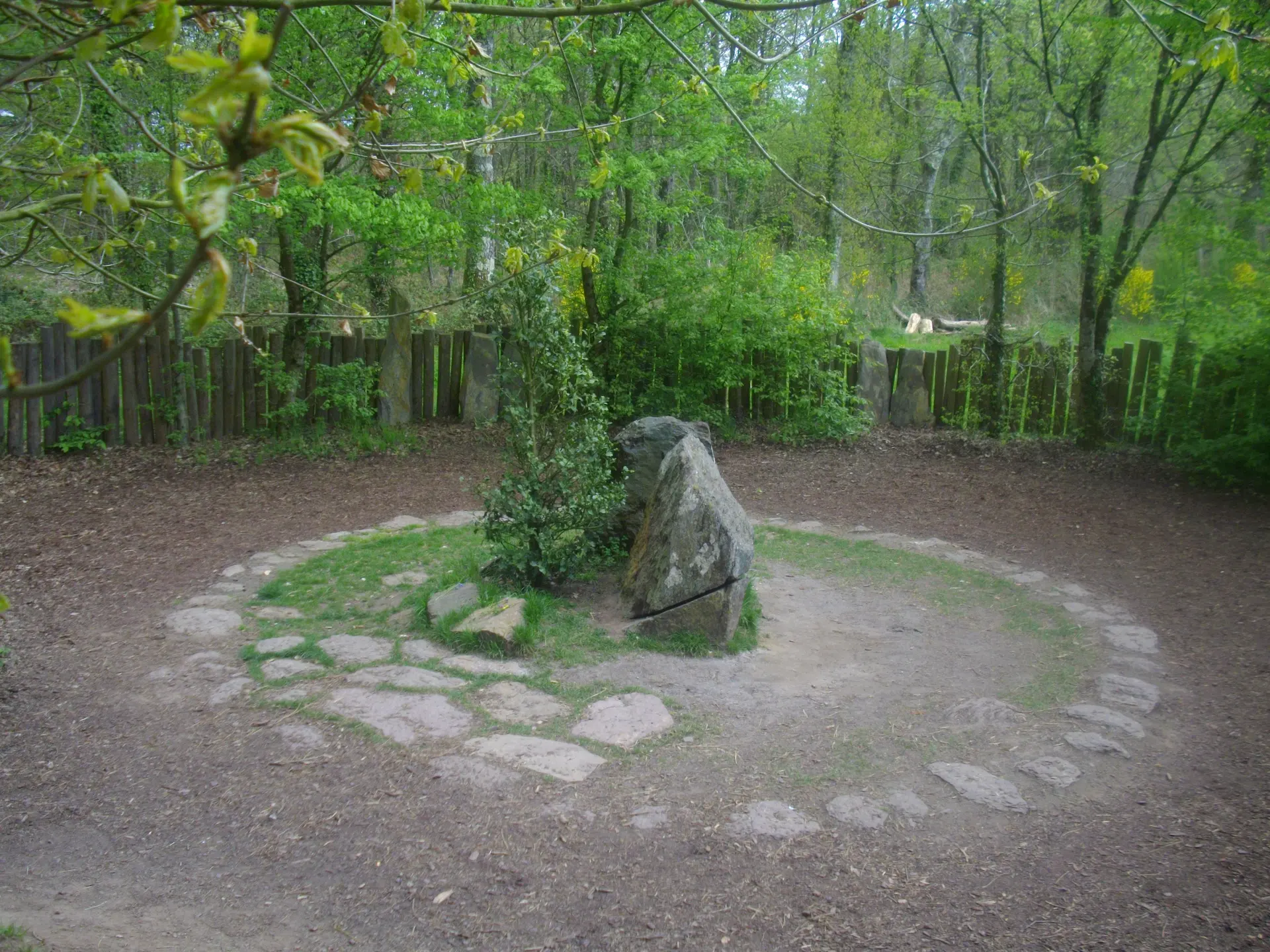
Bring paper and pen. The tradition of leaving wishes at Merlin's Tomb is open to all. Write something genuine, fold it, place it in the stones. You need not believe Merlin will read it. The act of articulating a wish, in a place where thousands have done the same, has its own power.
Context and lineage
The earliest documented mention of Broceliande appears in Wace's Roman de Rou, composed in 1160. Wace describes a forest in Brittany known for its marvels—particularly a fountain capable of producing storms when water is poured on a nearby stone. Later in the twelfth and thirteenth centuries, Robert de Boron and the anonymous authors of the Vulgate Cycle set their Merlin stories in this enchanted wood.
According to the tales, it was in Broceliande that Merlin met Viviane, the Lady of the Lake. He fell in love with her; she, desiring his knowledge, seduced him into teaching her his arts. When she had learned all she wished, she turned his own magic against him, sealing him in a prison of air from which he has never escaped. His spirit, tradition holds, still wanders the ancient groves.
Viviane herself dwelt beneath the pond at Comper, in a crystal palace invisible to mortal eyes. There she raised the young Lancelot, preparing him for his destiny at Arthur's court. Morgan le Fay, Arthur's half-sister, claimed the Val sans Retour as her domain, trapping faithless lovers in an enchantment none could break until a truly faithful knight appeared.
These are stories. They circulated across medieval Europe, adapted and embroidered by countless poets. But stories attach to places, and these stories attached to this forest—not arbitrarily, but because something in the landscape seemed to confirm them. The mists, the springs, the ancient stones, the quality of light: all suggested that if an enchanted forest existed anywhere, it existed here.
The lineage at Broceliande is literary rather than monastic, imaginative rather than institutional. From Wace and Robert de Boron through the Vulgate Cycle and Malory, each generation of storytellers added to the accumulated legend. In the nineteenth century, tourists began treating the stories as guides to the physical forest, seeking the fountain and the tomb and the valley. By the twentieth century, neo-Druidic practitioners had claimed the forest as ceremonial ground.
Today the Centre de l'Imaginaire Arthurien maintains the tradition through exhibitions, guided walks, and theatrical events. The wish-leaving practice at Merlin's Tomb continues without formal organization—a folk tradition perpetuated by each visitor who participates. The forest holds all these threads: medieval romance, tourist curiosity, contemporary spirituality, and the older presence that the Neolithic builders first recognized.
Merlin
legendary
The enchanter of Arthurian legend, depicted as bridging mortal and supernatural realms. In Broceliande tradition, he was imprisoned by Viviane and his spirit remains in the forest. Neo-Druidic practitioners understand him as inheritor of Druidic wisdom.
Viviane
legendary
Sometimes called the Lady of the Lake, she seduced Merlin and imprisoned him, then raised Lancelot in her palace beneath Comper's waters. She represents both dangerous enchantment and nurturing wisdom.
Morgan le Fay
legendary
Arthur's half-sister and a powerful sorceress. She created the Val sans Retour to trap unfaithful men, holding them until a faithful knight could break the spell.
Traditions and practice
Medieval tradition held specific rituals for Broceliande's sites. At the Fountain of Barenton, pouring water on the adjacent stone was said to summon storms—a practice recorded since the twelfth century. Whether anyone actually performed this ritual, or it existed only in literature, remains uncertain.
Pilgrimage to Merlin's Tomb appears to have been established by the nineteenth century, when tourists began seeking out the sites from the legends. The tradition of leaving written wishes developed organically, without institutional guidance, and continues today.
Before the medieval period, the Neolithic monument builders likely performed ancestor rituals at the Hotie de Viviane and similar sites. Celtic druids may have used the forest, but evidence is speculative.
Since 1951, neo-Druidic groups have gathered in the forest for organized ceremony, particularly at seasonal turning points. These ceremonies typically involve invocation, meditation, and group ritual at sites like Merlin's Tomb. They are not public events, but some groups welcome sincere inquiries.
For individual visitors, the most common practice is pilgrimage through the legendary sites: Merlin's Tomb, the Fountain of Barenton, the Val sans Retour, and Chateau de Comper. At Merlin's Tomb, the established practice is to write a wish on paper and place it in the cracks between the two remaining stones. The wishes are not collected or read; they accumulate and weather.
Contemplative practice in the forest's quieter areas—sitting in silence, walking slowly, attending to the forest rather than thinking about it—represents another form of engagement. The forest's size (nine thousand hectares) means that solitude is available for those who seek it.
If you seek meaningful engagement rather than tourism, consider these approaches.
At Merlin's Tomb, take your time. Sit with the stones before writing your wish. Let the wish be genuine, something that matters. The act of writing it, in this place where so many have done the same, can clarify what you actually want.
At the Fountain of Barenton, drink from the spring if you wish (it is safe). Sit beside the water and listen. The bubbling has a quality that visitors describe as both random and rhythmic, like language just below the threshold of comprehension.
In the Val sans Retour, walk slowly. Let the valley work on you rather than rushing through to photograph the lake. If you have time, sit by the Miroir aux Fees and watch the reflections shift. Many visitors report unusual experiences of time here.
Throughout, practice presence over documentation. The forest reveals itself to those who attend to it. Constant photography can become a way of not seeing.
Arthurian Legend
ActiveBroceliande first appeared in literature in Wace's 1160 Roman de Rou. Robert de Boron subsequently set his Merlin narratives in the forest. The legends identify this as the home of Merlin, Viviane, and Morgan le Fay, and locate key episodes of Arthurian romance here: Merlin's imprisonment, Lancelot's upbringing, Morgan's enchanted valley. The forest contains physical sites corresponding to the stories—Merlin's Tomb, Barenton Fountain, Val sans Retour—which continue to draw visitors seeking contact with the legend.
Pilgrimage to legendary sites remains the central practice. At Merlin's Tomb, visitors leave written wishes in the cracks between the stones. At Barenton Fountain, some drink the water, as medieval texts describe. The Centre de l'Imaginaire Arthurien organizes guided walks, exhibitions, and theatrical events keeping the tradition accessible to contemporary visitors.
Neo-Druidism
ActiveSince 1951, neo-Druidic practitioners have gathered in Broceliande for organized ceremony. The forest serves as sacred ground for connecting with Celtic heritage, honoring ancestors, and practicing rituals aligned with seasonal cycles. Merlin functions within this tradition as inheritor and transmitter of Druidic wisdom, bridging the pre-Christian and medieval worlds.
Neo-Druidic ceremonies typically occur at seasonal turning points (solstices, equinoxes, Celtic fire festivals) and take place at various sites within the forest, including Merlin's Tomb. Practices may include invocation, meditation, offerings, and group ritual. These gatherings are generally not public but organized through Druidic networks.
Neolithic Burial Practice
HistoricalThe Hotie de Viviane, also called Tombeau des Druides, is a Neolithic gallery grave dating to approximately 2500 BCE. This predates the Arthurian legends by over three millennia but establishes the forest as sacred ground from deep prehistory. The presence of such monuments suggests that whatever qualities draw seekers today were recognized long before written history.
The original practices associated with the Neolithic monuments are unknown. They likely involved ancestor veneration and burial ritual. Later periods may have repurposed the sites for different practices; Celtic druids possibly used them, though evidence is speculative.
Perspectives and open questions
Broceliande invites multiple readings, and honest engagement requires holding them together. Scholars see medieval literature materialized in landscape. Neo-Druidic practitioners experience active sacred space. Tourists encounter pleasant forest with colorful stories attached. The forest is large enough to accommodate all of these—and the question of which reading is 'true' may be less important than what each opens.
Scholarly perspective
Academic consensus holds that the identification of the Forest of Paimpont with legendary Broceliande developed in the nineteenth century as part of Romantic-era interest in Arthurian material. The medieval texts that mention Broceliande do not provide enough geographic detail to establish its location definitively, and other forests in Brittany have also claimed the name.
The Arthurian legends themselves are literary creations, not historical records. Merlin first appears in twelfth-century texts, drawing on earlier Welsh traditions but transformed through medieval French romance. The specific associations with this forest—Merlin's Tomb, Viviane's fountain, Morgan's valley—are traditional rather than ancient.
The Neolithic monuments within the forest (particularly the Hotie de Viviane) are genuine archaeological sites, approximately 4,500 years old. They long predate any Arthurian association and represent authentic sacred use of the landscape in prehistory.
Living and traditional perspectives
Medieval tradition understood Broceliande as a boundary zone between the mortal world and the realm of fairy, where ordinary rules did not apply. The forest sheltered creatures of power—Merlin, Viviane, Morgan—who operated by laws unknown to ordinary humans. To enter was to risk enchantment, transformation, or loss; to emerge was to return changed.
Neo-Druidic practitioners, since their ceremonies began in the forest in 1951, have understood it as sacred ground for connecting with Celtic heritage and ancestral wisdom. Merlin, in this reading, represents the Druidic tradition carried into and through the Christian era. The forest is not merely legendary but actively powerful, a place where practice can achieve effects unavailable elsewhere.
Alternative interpretations
Contemporary esoteric interpretations describe the forest as a major earth-energy site, located on ley lines that connect sacred places across Europe. Some practitioners identify specific spots within the forest as energetic vortices or portals. The Fountain of Barenton is sometimes used for water magic, and the tradition of storm-summoning—literary in origin—is taken seriously by some as description of real capability.
Some alternative historians suggest that Merlin was a real figure, a Druid whose memory was preserved through legend even as Christianity displaced the old religion. In this view, the tomb is not metaphor but marker of an actual burial.
Open questions
Genuine mysteries attend the forest. Why did medieval poets choose this particular forest for their tales when others were available? Was there already local tradition associating the area with enchantment, and if so, how old was it? What rituals, if any, took place at the Neolithic sites during their original use?
The relationship between literary Broceliande and physical Paimpont remains uncertain. The forest may have been identified with the legends because it genuinely possesses qualities that suggest enchantment, or the identification may be convenient invention that the forest's atmosphere subsequently confirmed. The truth may lie somewhere between: a forest already perceived as unusual, then named and storied, then experienced through the lens of those stories, in a spiral of mutual reinforcement.
Plan your visit
Access and arrival
The village of Paimpont serves as the primary base for visiting the forest. It lies approximately 40 kilometers southwest of Rennes, which has TGV rail connections to Paris (about 2 hours). A car is effectively necessary; while some sites can be reached by taxi, public transport does not serve the forest interior. Key starting points include Chateau de Comper (Centre de l'Imaginaire Arthurien) and La Porte des Secrets in Paimpont village.
For the Fountain of Barenton, park at La Folle Pensee and walk twenty minutes through the forest.
Paimpont village offers hotels and guesthouses suitable for forest exploration. Camping is available at designated sites. No accommodation exists within the forest proper. For those seeking extended stays with spiritual programming, retreat centers in Brittany occasionally offer Broceliande-focused programs.
Respectful visit
Sturdy walking shoes are essential. Many sites require hiking through uneven terrain, and the forest floor can be muddy even in dry seasons. Layered clothing accommodates the variable temperatures within the forest. No formal dress requirements apply at any site.
Photography is permitted throughout the forest and at all sites. Be mindful of others when photographing at legendary sites. Some visitors find constant camera activity disruptive to their experience. Consider whether you need the photograph or whether seeing without a lens might serve you better.
At Merlin's Tomb, the established offering is a written wish on paper. Other offerings are not traditional but some visitors leave biodegradable items (flowers, fruit). Non-biodegradable items are inappropriate and will eventually need removal. At other sites, no specific offering traditions exist. If you feel moved to leave something, keep it small and natural.
No formal restrictions govern visitor behavior beyond standard forest regulations. The legendary sites are in public space and open at all hours. Some sites are on or near private land; respect property boundaries. The Hotie de Viviane is a protected archaeological site; do not disturb the stones.
Some visitors arrive expecting the forest to deliver dramatic spiritual experiences on demand. Broceliande does not work this way. The forest is subtle; its effects often emerge only in retrospect, in dreams that night or shifts in perspective days later. Approaching with excessive expectation can obstruct rather than enable encounter.
Be skeptical of commercial operators promising 'authentic Druidic initiation' or similar claims. Legitimate practitioners do not typically advertise such things. The forest offers what it offers; intermediaries are rarely necessary.
The forest is large and some areas are remote. Basic hiking precautions apply: proper footwear, water, awareness of weather, letting someone know your plans. Mobile phone coverage is inconsistent.
Current practical details
Address
35380 Paimpont, France
Phone
Hours, fees, and access can change — verify on the official source before you travel. Practical details last checked Jun 2026.
Location
Map loads as you approach this section.
Pilgrim reflections
A portrait of encounter, not a score
Pilgrims describe what they felt, how present they could become, and whether the place would shape a journey. There are no stars and no ranking of traditions.
No reviewed reflections yet
The first pilgrims can help describe the character of being here.
Share a reflection
Available after an account-backed “Been there.” Every reflection is reviewed before publication.
Nearby sacred places
Explore other sacred places in the region. Proximity does not establish access or travel time; check each place’s guidance.

References
Sources consulted for this page. Source categories describe the publication, not a guarantee that every claim is verified. Traditional accounts and outside interpretations may differ.
- 01Brocéliande Forest - Brittany Tourism — Brittany TourismofficialOfficial regional tourism
- 02Brocéliande, land of legends - Ille-et-Vilaine Tourism — Ille-et-Vilaine TourismofficialVisitor information and coordinates
- 03Forests: Brocéliande and Huelgoat - France.fr — France.frofficialNational tourism perspective
- 04Brocéliande - Wikipedia — Wikipedia contributorsencyclopediaOverview of legendary and historical aspects
- 05Paimpont forest - Wikipedia — Wikipedia contributorsencyclopediaGeographic and practical information
- 06King Arthur's forest of Broceliande - The Good Life France — The Good Life FranceguideArthurian legend context
Share a photo
Help visitors recognize Forest of Paimpont (Broceliande Forest). Every submission is reviewed before publication.