Helgøya Island
Norway's holy island, where a Norse temple gave way to a pilgrim trail across millennia of sacred ground
Understand sacred places, explore living traditions, and learn how to engage respectfully with Pilgrim Map.
Access has not been verified. Check current local guidance before planning a visit.
Ringsaker, Innlandet, Norway
Read the sources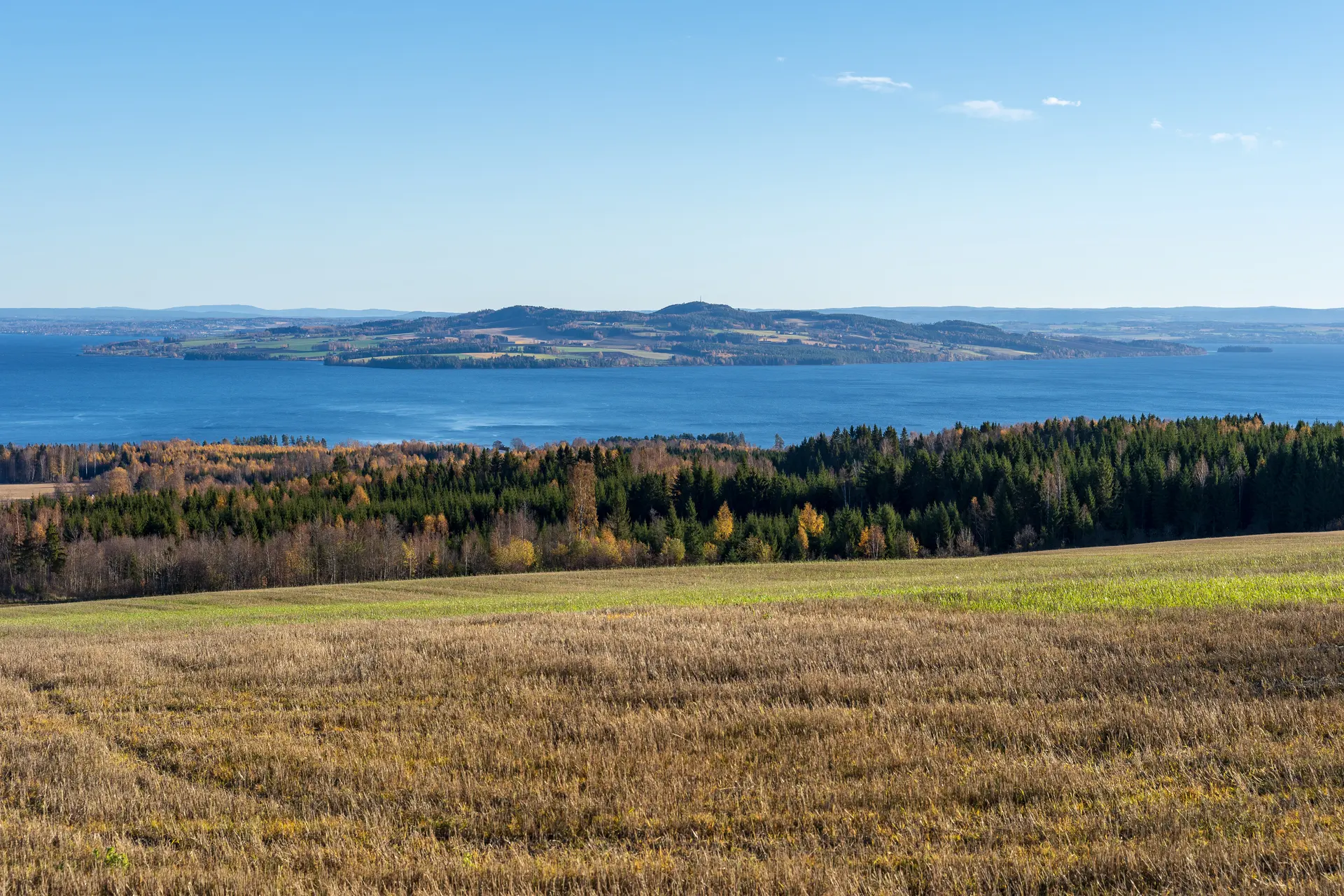
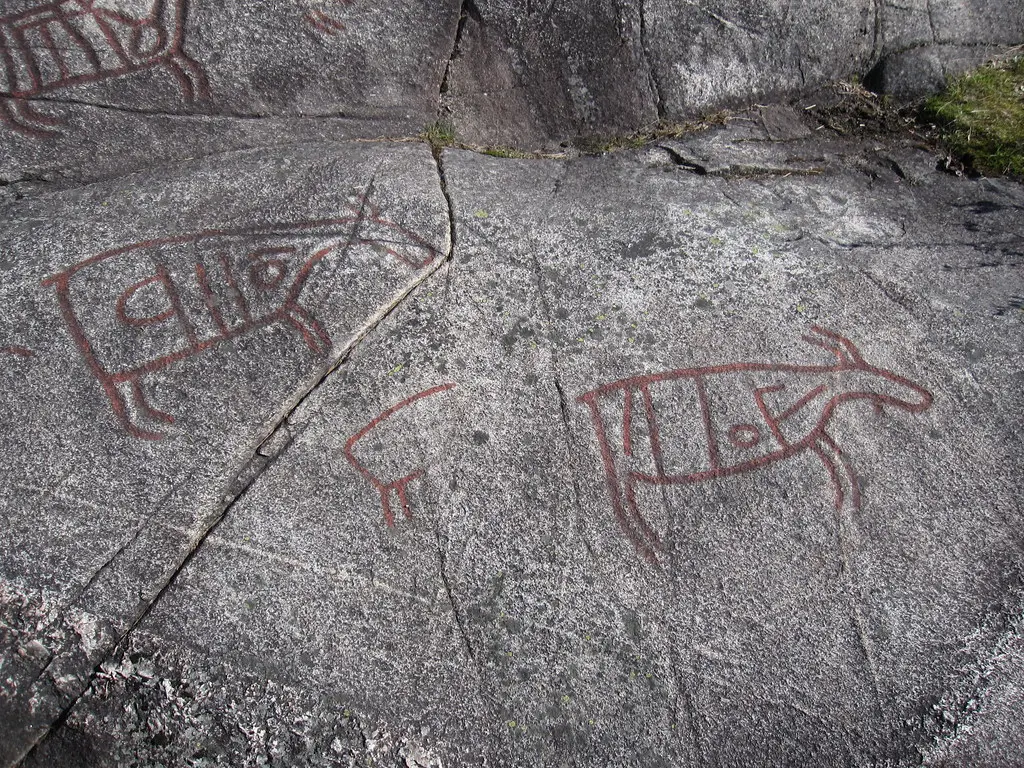
Image of Helgøya Island. Image source · CC-BY-SA-4.0
Visit essentials
A quick read before you go
- Duration
- A full day permits a complete circuit of the island by car or bicycle, with time for walking,…
- Access
- Helgøya lies in Ringsaker Municipality, Innlandet county, Norway, at coordinates 60.7363 degrees…
Overview
Helgøya's Old Norse name, Øyin helga, means “the holy island.” Why Lake Mjøsa communities regarded it as sacred is only partly recoverable, but Hovinsholm at its southern tip preserves hof, a Norse pagan temple, in its place-name. No temple stones, postholes, or altar survive; the name alone records holiness as the island's defining trait. Christianity inherited the ground: a medieval church at Hovinsholm stood until 1612, and Jacob Wilhelm Nordan's white Gothic Revival Helgøya Church has served since 1870.
The Pilegrimsleden to Nidaros Cathedral in Trondheim now crosses the island. In Norway's largest lake, bridged to the mainland since 1957, about six hundred people live among thirty-two farms where grain has grown for over four thousand years—ordinary life continuing on a landscape long marked as holy.
Why this place is sacred
Islands occupy a particular place in Norse cosmology. Separated from the mainland by water, they exist in a liminal space, neither wholly of the everyday world nor entirely apart from it. The crossing required to reach them, even when bridged by modern engineering, carries an echo of threshold. Helgøya amplifies this quality through scale.
At roughly twenty-eight kilometres in circumference, it is Norway's largest inland island, substantial enough to feel like its own world yet enclosed enough that the lake remains visible from most vantage points.
The name itself functions as a kind of persistent testimony. Place names in Scandinavia are conservative, surviving long after the conditions that created them have changed. When an island acquires the designation helga, holy, it means that holiness was its most notable characteristic, more defining than its size, its fertility, or its position in the lake. The name has endured through the transition from paganism to Christianity, through the Reformation, through modernity.
Whatever made the island holy in pre-Christian understanding proved durable enough to outlast the tradition that first recognised it.
The continuity of sacred use reinforces the thinness. A Norse pagan temple stood at Hovinsholm. A medieval Christian church replaced it. The present church continues the pattern. The Pilegrimsleden pilgrim trail now threads through the landscape. Each tradition brought its own understanding of what made the ground sacred, yet each chose the same ground. This convergence across traditions and centuries suggests something about the place itself rather than any single belief system imposed upon it.
The island's exceptional fertility adds a dimension that earlier cultures would have read as numinous. Sydhellinga, on Helgøya, is described as one of the most fertile areas in inland Norway. For agricultural communities, land that yielded abundantly was not merely productive but blessed. The connection between sacred ground and generous harvest runs deep in Norse and broader Indo-European tradition. At Helgøya, the two have been intertwined for millennia.
Toponymic evidence indicates that Helgøya served as a centre of Norse pagan worship for the communities surrounding Lake Mjøsa. The farm name Hovinsholm derives from Old Norse Hofvin, a compound of hof (pagan temple) and vin (meadow), establishing that a temple once stood on the island's southern tip. The island name itself, from Øyin helga, designates the entire landmass as holy ground.
The large number of ancient monuments and high-status Viking-era burials on the island confirm its importance as both a religious and political centre in pre-Christian Scandinavia.
The transition from Norse paganism to Christianity on Helgøya likely occurred during the broader Christianisation of Norway in the eleventh century, though the specific process on the island is not documented in surviving sources. A medieval church was established at Hovinsholm, possibly on or near the site of the former hof, a pattern common throughout Scandinavia where Christian churches were deliberately built on pagan sacred sites.
This church stood until 1612, after which the island was without a dedicated place of worship until the current Helgøya Church was built in 1870. The island's sacred identity has continued to evolve through its inclusion on the Pilegrimsleden pilgrim route and through heritage conservation efforts, particularly the Europa Nostra award-winning restoration of Hovelsrud farm.
Experience and orientation
Crossing the Nessundet Bridge onto Helgøya, the first impression is of gentle pastoral landscape, a quality unexpected in a country known for dramatic fjords and mountain terrain. The island's terrain rolls rather than climbs, its fields reaching down to the lakeshore. In summer, the farmland is green and productive. In autumn, harvest colours fill the fields.
The lake, visible from most points on the island, provides a constant frame of reference, a reminder of the water that separates this ground from the ordinary world.
The road that circles the island covers roughly twenty-eight kilometres, passing through farmsteads that have worked this soil for generations. Many of the thirty-two farms occupy sites with deep historical roots. Hovinsholm, at the island's southern tip, is where the layers of sacred history concentrate most densely. The name itself tells the story: Hofvin, the temple meadow. Nothing visible remains of the Norse pagan hof that once stood here.
The medieval church that replaced it is also gone, demolished or abandoned in 1612. What visitors encounter today is productive farmland and the knowledge, carried in the place name, of what once occupied this ground.
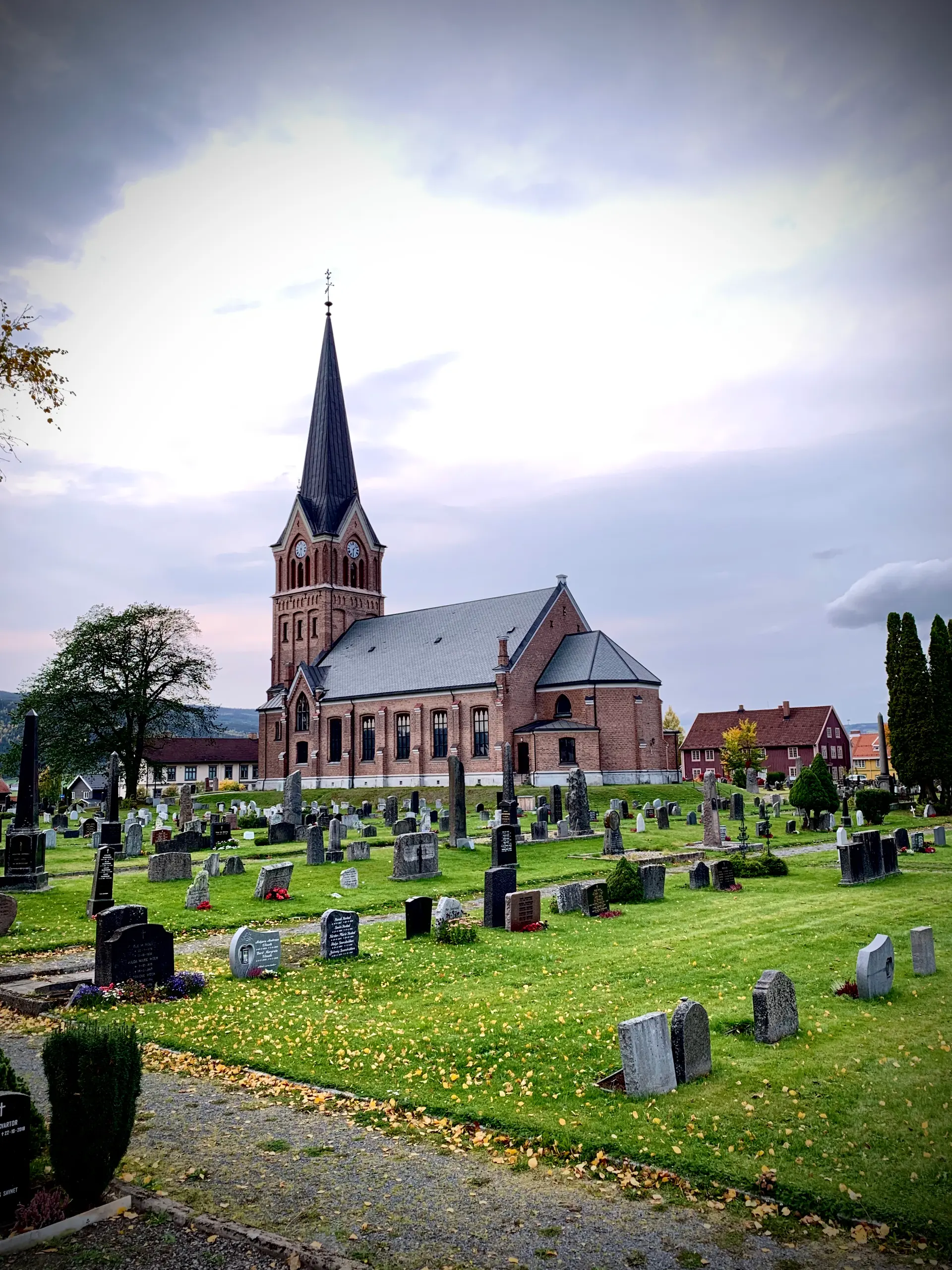
Helgøya Church stands as the island's visible centre of worship. Built in 1870 in white-painted timber, its Gothic Revival form is characteristic of rural Norwegian churches of the period. The interior seats approximately two hundred. For a community of six hundred, it remains a proportionate gathering place. The church occupies a different location from the earlier sacred sites, but its presence on the island continues the thread of sanctified ground that gives Helgøya its name.
The Pilegrimsleden, Norway's pilgrim trail to Nidaros Cathedral, passes through the island. Walking this route connects the visitor to a tradition of sacred travel that predates tourism by centuries. The trail follows paths through agricultural landscape, past farms where families have lived for generations, beside the lake that has shaped island life since the earliest settlements.
Hovelsrud farm offers a different kind of encounter. The estate garden, created by politician Nils Hoel around 1840 and restored to its original character, received a Europa Nostra heritage conservation award in 2014. The garden and organic farm provide a tangible connection to the island's agricultural heritage, the abundance that pre-Christian communities may have understood as evidence of divine favour.
Visitors who arrive by the Skibladner, the world's oldest paddle steamer still in regular service, experience a crossing that carries its own resonance. The vessel has plied Lake Mjøsa since 1856, and approaching Helgøya by water echoes the mode of arrival that would have been universal before the bridge was built in 1957. From the water, the island rises gradually from the lake, its fertile profile distinct from the more rugged mainland shores.
Helgøya lies in Ringsaker Municipality, Innlandet county, approximately ninety minutes north of Oslo by car along the E6 motorway. The Nessundet Bridge connects the island to the Nes peninsula on the mainland. A circumference road of roughly twenty-eight kilometres serves the island, suitable for driving or cycling. Key sites are distributed across the island: Hovinsholm at the southern tip, Helgøya Church in the central area, and Hovelsrud farm on the western shore.
In summer, the Skibladner paddle steamer provides an alternative approach by water.
Context and lineage
The earliest evidence of human activity on Helgøya comes from grain finds dated to more than four thousand years ago, placing agricultural settlement firmly in the Bronze Age or possibly earlier. The island's exceptional fertility, particularly in the area known as Sydhellinga, would have drawn farming communities to a landscape that rewarded cultivation. Settlement intensified through the Iron Age and Viking period, when the island accumulated a significant number of ancient monuments and high-status burials.
The sacred dimension of this settlement crystallised in the establishment of a hof, a Norse pagan temple, at the site later known as Hovinsholm. The hof tradition represented the most formal expression of Norse worship, a dedicated structure for communal religious activity including the blot, the sacrificial feast honouring the gods. That such a temple was built on Helgøya indicates the island held regional religious significance for the communities around Lake Mjøsa.
The specific deities worshipped at the Hovinsholm hof are not documented in surviving sources.
The Christianisation of Norway, traditionally dated to the reign of Olav Tryggvason and Olav Haraldsson in the late tenth and early eleventh centuries, brought a new sacred framework to the island. A Christian church was established at Hovinsholm, maintaining the site's religious function under a different theology. This church served the island community until 1612, after which more than two and a half centuries passed before the present Helgøya Church was built in 1870.
The lineage of sacred practice on Helgøya is not continuous in the sense of an unbroken tradition but rather successive. Norse paganism gave way to medieval Catholicism, which yielded to Lutheran Protestantism following the Reformation. Each transition involved both rupture and inheritance. The Christian church at Hovinsholm was built on or near the site of the pagan temple, a common Scandinavian pattern suggesting deliberate appropriation of sacred ground. The present church occupies a different site but continues the function.
The Pilegrimsleden pilgrim trail adds a contemporary layer, connecting the island to the wider tradition of sacred travel to Nidaros Cathedral. Throughout these transitions, the island's name, the holy island, has persisted as testimony to a sacredness that predates and outlasts any single tradition.
Duke Skule Bardsson
Jens Agessøn Bjelke
Nils Hoel
Peder Balke
Jacob Wilhelm Nordan
Traditions and practice
The Norse pagan practices once conducted at the hof at Hovinsholm are not documented in their specifics. Comparative evidence from other Norse temple sites suggests the blot, a communal sacrificial feast, was the central ceremony. These gatherings typically involved animal sacrifice, communal eating and drinking, and invocations to the Aesir and Vanir gods at seasonal turning points. The hof would have served as the ritual centre for a wider community, drawing worshippers from around Lake Mjøsa to the holy island.
The specific deities honoured at Hovinsholm remain unknown, though the regional importance suggested by the island's name implies worship of major figures in the Norse pantheon.
Medieval Christian worship at the Hovinsholm church would have followed Catholic liturgical practice until the Reformation reached Norway in 1537, after which Lutheran forms prevailed. The church served the island until 1612. Records of specific medieval practices on the island have not survived in available sources.
Helgøya Church holds regular Lutheran worship services as part of the Nes parish within the Diocese of Hamar, Church of Norway. The church is open for services and accessible to visitors. The Pilegrimsleden pilgrim trail passes through the island, connecting Helgøya to the ancient tradition of walking to Nidaros Cathedral in Trondheim.
Pilgrims and walkers who follow the trail across the island participate in a practice of sacred movement that, while Christian in its current framing, echoes older patterns of intentional approach to holy ground.
Cultural heritage activities at Hovelsrud farm, including the restored 1840s gardens and organic farming operation, maintain a connection to the land-based traditions that have sustained the island for millennia. No organised neo-pagan or Asatru activities are documented at the site.
Walk the circumference road slowly, whether on foot or by bicycle. The twenty-eight-kilometre circuit passes through the full range of the island's landscape, from fertile farmland to lakeshore, from church to the southern tip where the hof once stood. At Hovinsholm, pause and attend to the place name. The meadow where the Norse temple stood is now agricultural land, but the ground remembers in the way that ground does, through the words people use for it.
At Helgøya Church, step inside if the building is open. The white timber interior holds the particular quality of Scandinavian sacred spaces, a clarity of light and form that invites stillness. Whether or not you share the Lutheran tradition, the space offers what all well-built places of worship offer: a container for quiet attention.
If visiting in summer, consider arriving by the Skibladner paddle steamer. The approach by water returns you to the mode of arrival that was universal before the bridge. Watch the island rise from the lake as you cross. Notice how the water creates separation, how arrival on the island carries the quality of crossing over.
At Hovelsrud farm, walk the restored gardens. The 1840s planting scheme reflects a Romantic-era understanding of landscape as both aesthetic and spiritual. The organic farming connects present practice to the agricultural heritage that stretches back four thousand years on this soil.
Norse Paganism
HistoricalThe name Helgøya, from Old Norse Øyin helga meaning the holy island, provides the foundational evidence that this island was a major centre of Norse pagan worship. The farm name Hovinsholm, from Hofvin combining hof (pagan temple) and vin (meadow), establishes that a dedicated Norse temple once stood on the island's southern tip. The island's large number of ancient monuments and high-status Viking-era burials further attest to its religious and political importance in pre-Christian Scandinavia. The hof at Hovinsholm would have served the communities around Lake Mjøsa as a centre for communal worship, seasonal festivals, and sacrificial feasting.
The specific practices conducted at the Hovinsholm hof are not documented in surviving sources. Comparative evidence from other Norse temple sites indicates that the blot, a communal sacrificial feast, was the central ceremony. These gatherings typically involved animal sacrifice, ritual toasting, seasonal celebrations at solstices and equinoxes, and invocations to the Norse gods. The hof tradition represented the most formal expression of Norse worship, distinguished from smaller household shrines and outdoor ritual sites.
Christianity (Lutheran / Church of Norway)
ActiveChristianity supplanted Norse paganism on Helgøya during the Christianisation of Norway, likely in the eleventh century. A medieval church was established at Hovinsholm, maintaining the site's religious function under Christian theology. This church stood until 1612. The current Helgøya Church, built in 1870 in Gothic Revival style and designed by architect Jacob Wilhelm Nordan, serves the Nes parish within the Diocese of Hamar. The church seats approximately two hundred and holds regular Lutheran worship services for the island's community of around six hundred residents.
Regular Lutheran worship services at Helgøya Church follow the liturgical calendar of the Church of Norway. The island is an official point of interest on the Pilegrimsleden, the historic pilgrim route leading to Nidaros Cathedral in Trondheim, connecting the local church to Norway's broader tradition of sacred travel. Baptisms, confirmations, weddings, and funerals mark the life cycle of the island community within the church's walls.
Pilgrimage (Pilegrimsleden / St. Olav's Way)
ActiveHelgøya is designated as a point of interest on the Pilegrimsleden, Norway's network of pilgrim trails leading to Nidaros Cathedral in Trondheim. The trail passes along both sides of Lake Mjøsa, with the island serving as a destination for pilgrims walking the eastern route. This inclusion connects the island's local sacred history to the national tradition of pilgrimage to the shrine of St. Olav, Norway's patron saint.
Walking the pilgrim trail through or near Helgøya is the primary practice. The Pilegrimsleden has experienced renewed interest in recent decades, with walkers motivated by spiritual seeking, cultural heritage, physical challenge, or contemplative practice. The trail provides a framework for experiencing the island's landscape as sacred geography rather than simple countryside.
Heritage Conservation
ActiveThe conservation and interpretation of Helgøya's layered heritage has become a tradition in its own right. Hovelsrud farm's restoration of its 1840s gardens received a national cultural landscape prize in 2012 and a Europa Nostra heritage conservation award in 2014. These recognitions affirm the island's significance within European heritage frameworks and ensure that the physical and cultural landscape continues to be maintained and interpreted.
Active stewardship of the island's agricultural heritage, including organic farming and garden restoration at Hovelsrud. Educational and cultural programming for visitors during the summer season. Ongoing care of Helgøya Church and its churchyard. Interpretation of the island's multi-layered history through heritage tourism and pilgrim trail infrastructure.
Perspectives and open questions
Helgøya presents an interpretive challenge common to sites where sacred history is carried more in names and patterns than in surviving structures. The Norse temple has vanished. The medieval church is gone. What remains is the island itself, its name, and the documented pattern of sacred use spanning more than a millennium. Scholars, practitioners, and visitors each approach this inheritance differently.
Scholarly perspective
Scandinavian place-name research provides the strongest evidence for Helgøya's pre-Christian sacred status. The element helga in the island's name is a well-established indicator of perceived holiness in Old Norse toponymy. The compound Hofvin (hof plus vin) in the Hovinsholm farm name is similarly recognised as evidence for a pagan temple site. These place-name indicators are considered reliable by scholars because they are conservative, surviving long after the conditions that created them have changed.
The island's archaeological record, including ancient monuments and high-status Viking-era burials, supports the interpretation of Helgøya as a site of regional importance. However, no extensive archaeological excavation of the temple site at Hovinsholm has been published, leaving the physical form and specific practices of worship inferred from comparative evidence rather than direct finds.
The relationship between the island's agricultural fertility and its sacred status has not been the subject of dedicated scholarly study, though the connection between productive land and cultic sites is well-documented elsewhere in Scandinavia.
Settlement dates present some ambiguity. Sources variously cite approximately 2000 BCE for established settlement, while grain finds exceeding four thousand years in age suggest even earlier agricultural activity. A published archaeological synthesis of the island's full settlement history would clarify this chronology.
Living and traditional perspectives
Within the Norse pagan tradition, islands held particular significance as liminal spaces, places where the boundary between the human world and the realm of gods and spirits was understood to be more permeable. The designation of an entire island as helga, holy, suggests it was experienced as set apart from ordinary ground.
The hof at Hovinsholm would have served as the architectural focus for this understanding, providing a built space for the rituals through which the community maintained relationship with divine powers.
The Christian tradition on Helgøya inherited and transformed this understanding. The construction of a church at or near the former temple site follows a well-documented pattern in Scandinavian Christianisation, where missionaries and early bishops deliberately consecrated pagan sacred sites for Christian worship. The island's holiness was not denied but reinterpreted, its source attributed to the Christian God rather than the Norse gods.
The present Helgøya Church and the island's place on the Pilegrimsleden continue this tradition of sacred purpose, now expressed through Lutheran worship and the practice of pilgrimage.
Open questions
Several significant questions about Helgøya's sacred history remain unanswered. Which specific Norse deities were worshipped at the hof on Hovinsholm? The sources are silent, and no surviving saga or historical text documents the cult practices on the island. What was the nature of the transition from pagan to Christian worship? Whether the change was gradual or sudden, negotiated or imposed, remains unknown. Did the medieval church literally replace the hof building, or was there a gap between the two?
Broader questions also persist. Were there additional sacred sites or cult places on the island beyond the hof at Hovinsholm? The name designates the entire island as holy, not just a single location, which may indicate a more distributed sacred geography. How extensive was Bronze Age and Iron Age settlement, and what was the relationship between the island's agricultural prosperity and its sacred reputation?
The grain finds dated to more than four thousand years ago suggest deep human engagement with this landscape, but the archaeological details remain unpublished in available English-language sources.
Plan your visit
Access and arrival
Helgøya lies in Ringsaker Municipality, Innlandet county, Norway, at coordinates 60.7363 degrees north, 10.9798 degrees east. The island is connected to the mainland by the Nessundet Bridge, built in 1957. By car, the island is approximately ninety minutes north of Oslo along the E6 motorway. The nearest towns are Hamar, roughly twenty kilometres to the south, and Moelv, approximately fifteen kilometres to the north. The Skibladner paddle steamer stops at points around Lake Mjøsa during the summer season.
The island's circumference road of twenty-eight kilometres is suitable for cycling. Public transport options are limited; having a car is advisable.
Accommodation on Helgøya itself is limited. Hovelsrud farm may offer seasonal hospitality. The nearby towns of Hamar and Moelv provide a full range of hotels, guesthouses, and camping options. Booking in advance is advisable during the summer season.
Respectful visit
No specific dress requirements. Modest clothing is appropriate when attending services at Helgøya Church. For walking and exploring the island, comfortable outdoor clothing and sturdy footwear are advisable. Weather on Lake Mjøsa can change quickly; layers and rain protection are recommended.
Photography is welcome throughout the island's public spaces and landscape. Standard courtesy applies inside Helgøya Church, particularly during services. Respect the privacy of residents and avoid photographing private property without permission.
No traditional offerings are expected or practiced at the site today. The Norse blot tradition of sacrificial offering ceased with Christianisation. Christian worship at Helgøya Church follows standard Lutheran practice.
Respect private farmland and residential properties. Hovelsrud farm gardens have seasonal opening hours, typically June through September. The Norwegian right of access applies to uncultivated land but requires responsible behaviour. Dogs should be kept under control near livestock. No camping within one hundred and fifty metres of inhabited buildings without permission.
Helgøya is a residential community with approximately six hundred permanent residents and thirty-two working farms. Respect private property and agricultural operations. Stay on public roads and paths unless given permission to enter private land. The Norwegian right of access (allemannsretten) applies but carries responsibilities, particularly regarding cultivated land and proximity to dwellings. Hovelsrud farm has seasonal opening hours and may require an entry fee.
Current practical details
Address
Helgøya, Ringsaker, Norway
Hours, fees, and access can change — verify on the official source before you travel. Practical details last checked Jun 2026.
Location
Map loads as you approach this section.
Pilgrim reflections
A portrait of encounter, not a score
Pilgrims describe what they felt, how present they could become, and whether the place would shape a journey. There are no stars and no ranking of traditions.
No reviewed reflections yet
The first pilgrims can help describe the character of being here.
Share a reflection
Available after an account-backed “Been there.” Every reflection is reviewed before publication.
Nearby sacred places
Explore other sacred places in the region. Proximity does not establish access or travel time; check each place’s guidance.
References
Sources consulted for this page. Source categories describe the publication, not a guarantee that every claim is verified. Traditional accounts and outside interpretations may differ.
- 01Pilegrimsleden - Helgøya — Pilegrimsleden (Norwegian pilgrim trail organisation)guideOfficial pilgrim trail listing with historical context, religious significance, and visitor information
- 02Hovinsholm - Store norske leksikon — Store norske leksikon (Great Norwegian Encyclopedia)encyclopediaAuthoritative Norwegian encyclopedia entry on Hovinsholm estate, its pagan temple origins, and ownership history
- 03Hovinsholm (Ringsaker gnr. 535/1) - lokalhistoriewiki.no — Lokalhistoriewiki contributorsSource contextDetailed local history wiki entry with genealogical and ownership details of the Hovinsholm estate
- 04Hovelsrud Villa in Helgøya Island - European Heritage Awards / Europa Nostra Awards — Europa NostraSource contextEuropa Nostra 2014 award for garden restoration at Hovelsrud farm; includes historical context
- 05Hovelsrud farm - Historic garden - Visit Norway — Visit NorwayofficialOfficial Norwegian tourism listing for Hovelsrud farm on Helgøya
- 06Hovelsrud farm at Helgøya — Hovelsrud GårdofficialOfficial farm website with historical information about the 1840s garden, Peder Balke connection, and agricultural heritage
- 07GPS coordinates of Helgøya, Hedmark, Norway — Latitude.toSource contextCoordinates: 60.7363°N, 10.9798°E
- 08Helgøya, Innlandet - Wikipedia — Wikipedia contributorsencyclopediaMain English Wikipedia article with etymology, geography, history, and key facts about the island
- 09In the Heart of Norway's Largest Lake - Daily Scandinavian — Daily ScandinavianacademicTravel article with details on activities, attractions, and seasonal tourism on Helgøya
- 10Heathen hof - Wikipedia — Wikipedia contributorsencyclopediaContext on Norse pagan temple terminology; mentions hof at Hov in Vingrom near Mjøsa with archaeological finds (gullgubber)
- 11Helgøya Church - Wikipedia — Wikipedia contributorsencyclopediaDetails on the 1870 church: architect Jacob Wilhelm Nordan, Gothic Revival style, seating capacity 200
- 12In the Middle of Lake Mjøsa: Picture Perfect Helgøya — With Norwegian EyesguideTravel blog with cultural and historical context about Helgøya
- 13Jens Bjelke - Wikipedia — Wikipedia contributorsencyclopediaBackground on Chancellor Jens Bjelke who consolidated Hovinsholm into the largest noble estate in Norway
- 14Peder Balke - Wikipedia — Wikipedia contributorsencyclopediaBackground on the renowned Norwegian Romantic landscape painter born on Helgøya in 1804
- 15Ringsaker Church - Wikipedia — Wikipedia contributorsencyclopedia12th-century medieval stone church near Helgøya, one of the best-preserved in Norway
- 16Cathedral Ruins in Hamar - Wikipedia — Wikipedia contributorsencyclopediaMedieval cathedral ruins at Hamar, nearby sacred site connected to the Diocese of Hamar
- 17Pilgrim's Route (Pilegrimsleden) - Wikipedia — Wikipedia contributorsencyclopediaSt. Olav's Way pilgrim route passes along both sides of Lake Mjøsa; Helgøya is listed as a point of interest
- 18Skibladner - Wikipedia — Wikipedia contributorsencyclopediaWorld's oldest paddle steamer still in regular service, operating on Lake Mjøsa since 1856
Share a photo
Help visitors recognize Helgøya Island. Every submission is reviewed before publication.