Gordion
Where a knot decided the fate of Asia and kings were buried beneath earth-shaped monuments
Understand sacred places, explore living traditions, and learn how to engage respectfully with Pilgrim Map.
Access has not been verified. Check current local guidance before planning a visit.
Eskişehir, Turkey
Read the sources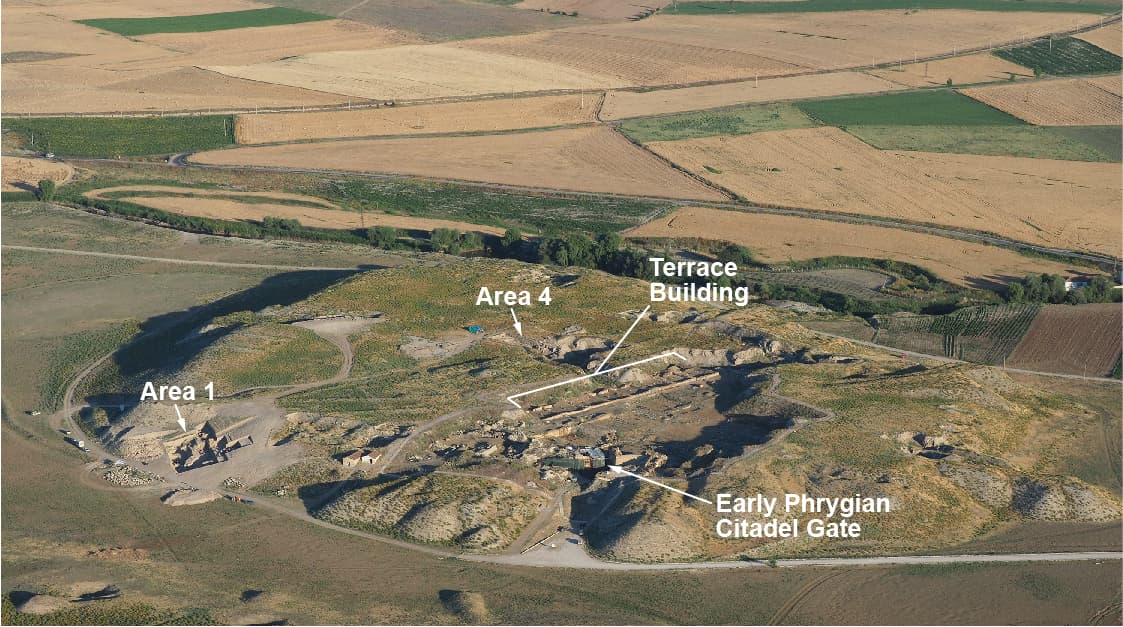
Image of Gordion. Image source
Visit essentials
A quick read before you go
- Duration
- A minimum half-day allows for Tumulus MM, the Gordion Museum, and a walk of the citadel mound.
- Access
- Gordion is in Yassıhöyük village, Polatlı district, Ankara Province, approximately 94 km west of…
Overview
Across Gordion’s Anatolian plateau rise grass-covered mounds, the largest nearly as high as a seventeen-story building. Beneath it, a chamber—the world’s oldest known standing wooden structure—remained sealed for 2,800 years until University of Pennsylvania archaeologists entered in 1957. Bronze cauldrons, inlaid wooden furniture, and remnants of a funerary banquet formed an eternal feast for a Phrygian king, though whether Midas or his father Gordias remains debated.
Gordion was the capital of a kingdom whose founder was chosen by divine oracle and whose sacred ox-cart bore an unyielding knot until Alexander the Great arrived in 333 BCE. Accounts say he cut it, pulled out the pole, or found a hidden end. The enduring lesson lies less in the method than in recognizing that the problem required different thinking.
Why this place is sacred
The Phrygians understood kingship as a divine appointment, and Gordion's founding myth encodes that understanding with unusual clarity. A farmer named Gordias was told by oracle that the next man to enter the city with an ox-cart would become king. He did, and he dedicated that cart — the instrument of his impossible elevation — to Sabazios, the Phrygian sky god, tying it with a knot no one could undo.
The oracle attached to the knot promised world dominion to whoever untied it. The cart sat in the palace precinct for four centuries, accumulating mythological gravity, until the Macedonian king arrived. When Alexander cut or untied it, he was not simply solving a puzzle. He was appropriating the sacred legitimacy of a civilization, claiming Phrygian divine favor for his conquest of Asia.
Three generations after his visit, the Phrygian kingdom had been absorbed by Persia; Persia had been absorbed by Alexander. The knot and the land that held it became a symbol of how the old world yields to the new — not through gradual erosion but through a single decisive act that reframes everything that came before.
Today the tumuli — more than a hundred of them — still rise across the plateau like frozen waves, each one the deliberate sculpting of land into an act of sacred remembrance. Standing before Tumulus MM, whose grass-covered bulk is visible from far across the plain, something of that original gravity persists.
Capital of the Phrygian kingdom; seat of royal power and divine legitimacy; sacred burial ground of the Phrygian royal dynasty; cult center for Sabazios and Cybele/Matar Kubileya
Phrygian capital from c. 9th century BCE through the Cimmerian destruction (c. 696 BCE); resettled under Persian influence; visited by Alexander the Great in 333 BCE; Hellenistic and Roman occupations followed; near-continuous archaeological site since Penn Museum excavations began in 1950; UNESCO World Heritage Site since 2023
Experience and orientation
Gordion asks you to read a landscape before you read a museum. The approach along the road from Polatlı gives you the first orientation: the massive bulk of Tumulus MM emerging from flat farmland, its scale incongruous with everything around it. The mound is 53 meters high and 300 meters in diameter — built of clay, stone, and earth by workers who understood that a king's afterlife required a mountain.
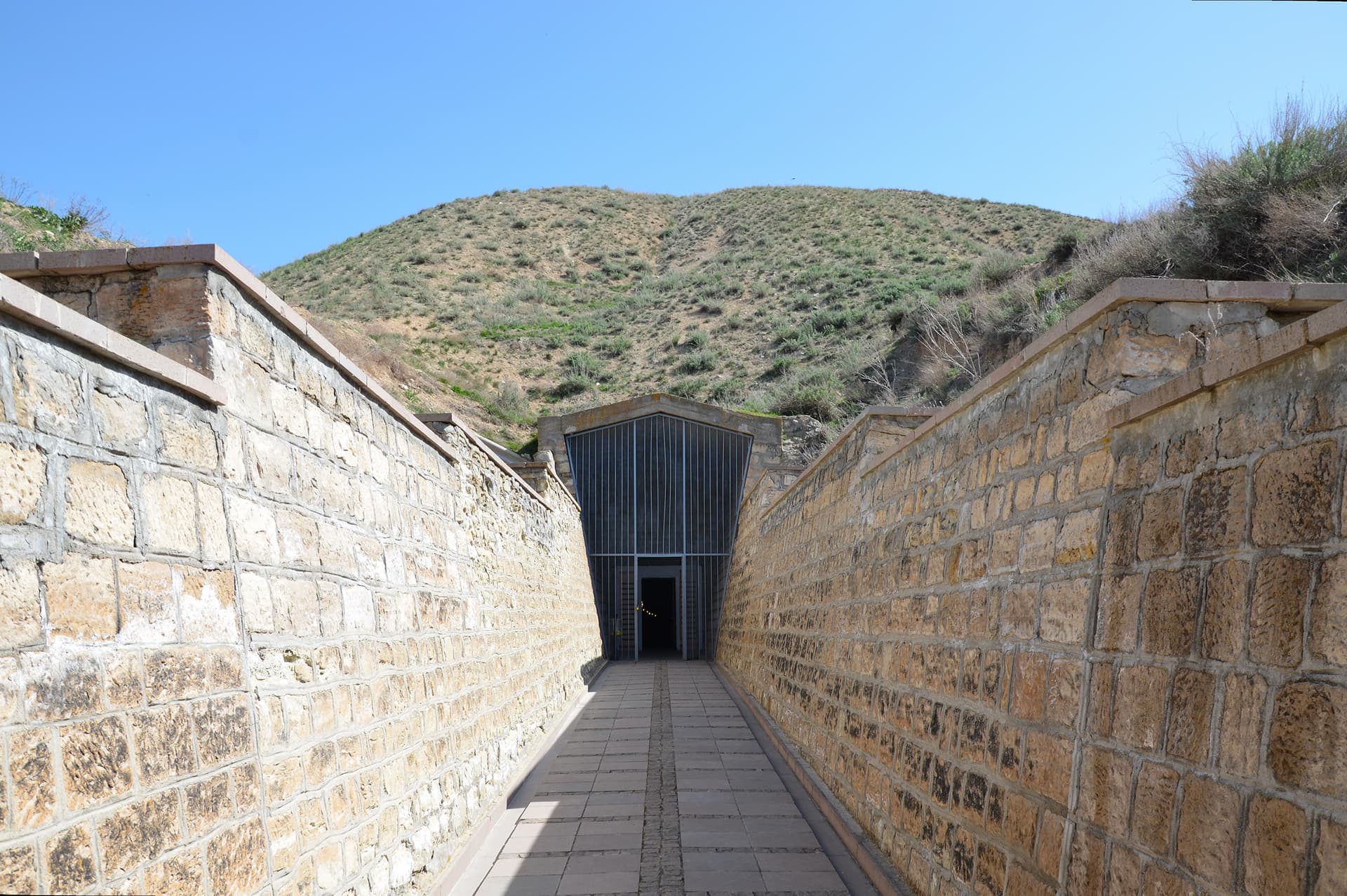
You enter it through a modern tunnel that curves through the fill, and when you arrive at the ancient chamber, the shift in atmosphere is immediate. The space is entirely built of juniper logs — hand-hewn, fitted without nails or mortar — and they have held for nearly three millennia.
The finds from the chamber (bronze vessels, decorated wooden furniture, the remnants of a funerary feast) are in the Gordion Museum across the road, so what you encounter in the chamber itself is absence arranged with extraordinary care: the geometry of a room that was not meant to be seen again. After the tumulus, cross to the Gordion Museum, which contains some of the most extraordinary objects from the early Iron Age world.
The bronze cauldrons — decorated with griffin protomes — sit in cases alongside inlaid wooden tables and the textile remains of garments 2,800 years old. Allow time to look at these slowly; their craft is not secondary to their power. Then drive or walk to the citadel mound, where the Iron Age gate complex rises in massive ashlar blocks — the best-preserved Iron Age gatehouse known, with walls still standing ten meters high.
Walk through it and understand what it felt like to enter a city that was, for its time, one of the most powerful in the ancient world.
Begin with the Midas Mound tunnel walk; cross to the Gordion Museum; finish at the citadel mound and gate complex. The site is spread across several kilometers — a car or bicycle is useful. Allow at minimum half a day; a full day if you want to walk the outer landscape and feel the scale of the tumulus field.
Context and lineage
Phrygian tradition held that a farmer named Gordias received an oracle that the man who entered the city with an ox-cart would become king. Gordias fulfilled this and was made ruler of Phrygia. He dedicated his cart — the agent of his divine election — to Sabazios with a knot whose purpose was to bind the instrument of succession to the god. His son Midas gave the dynasty its name in legend.
The oracle associated with the knot promised world dominion to whoever untied it; for four centuries the cart sat in the palace, accumulating its mythological charge. When Alexander arrived in 333 BCE on his way to Persia, he recognized immediately what the knot meant. The means of resolution — sword, or finger finding the pin — mattered less than the act's symbolic finality: the successor had been designated, and the world could proceed accordingly.
Bronze Age Anatolian occupation from c. 2400 BCE; Phrygian royal capital from c. 9th century BCE; Cimmerian destruction c. 696 BCE; Persian period; Hellenistic and Macedonian appropriation from 333 BCE; Roman and Byzantine occupation; Ottoman and modern agricultural use; Penn Museum excavations 1950–present; UNESCO World Heritage Site 2023
Traditions and practice
The Phrygians practiced elaborate royal funerary rites that culminated in the construction of tumulus burial mounds. Tumulus MM contained a burial feast — bronze cauldrons with drinking vessels, wooden furniture inlaid with geometric patterns, textiles — suggesting that the funerary banquet was a ritual means of sustaining the king's power in the afterlife. The sacred ox-cart in the palace precinct was dedicated to Sabazios (the Phrygian sky god) with the intricate knot, and was maintained as an oracle object.
Cybele (Matar Kubileya, the Great Mother Goddess) was venerated in the Phrygian highlands, and her cult presence at Gordion — though less documented than at Yazılıkaya — was part of the city's religious life.
No active religious practices. The Gordion Archaeological Project (Penn Museum) has maintained continuous excavation since 1950. Annual fieldwork seasons continue to reveal new aspects of the site. Recent excavations have uncovered a royal tomb contemporaneous with Midas's reign, adding to the scholarly understanding of Phrygian funerary practice.
Approach Tumulus MM slowly, on foot if possible, walking the perimeter before entering. Notice the scale of the mound against the flat plateau — it was built to be visible from great distances, and the approach walk primes the sensory encounter before the tunnel. Inside the chamber, remain with the space long enough for the eye to adjust and the architecture to register: the age and craftsmanship of the juniper logs are best perceived after several minutes of stillness.
At the Iron Age gate complex, stand in the gate threshold and face inward — you are standing in the exact place where entry into the capital was controlled for five centuries. At the museum, give unhurried attention to the bronze cauldrons and wooden furniture, which represent the finest metalwork and woodcraft of their time and place.
Phrygian Royal Religion
HistoricalGordion was the sacred capital of Phrygia. Phrygian religion centered on the Great Mother Goddess (Cybele/Matar Kubileya) and the sky god Sabazios. Royal legitimacy was derived from divine election — enacted through the founding oracle — and royal burials at Gordion were sacred acts embedding the kings in a landscape of divine power.
Royal tomb construction and funerary feasting; dedication of sacred objects (the ox-cart and knot) to Sabazios; oracle practices associated with the knot; possible Cybele cult rituals in the palace precinct
Gordian Knot / Mythological Legacy
HistoricalThe Gordian Knot legend has carried Gordion's name across every subsequent civilization as a symbol of transformative problem-solving, imperial destiny, and the difference between conventional and creative action. Alexander's resolution of the knot was understood in antiquity as divine confirmation of his world-conquering mission.
The ox-cart was maintained in the palace precinct as a sacred object accessible to all; the oracle attached to it made it a destination for ambitious rulers over four centuries
Archaeological and Heritage Scholarship
ActiveThe Gordion Archaeological Project (Penn Museum) is one of the longest continuously running excavations in Turkey, active since 1950. UNESCO inscription in 2023 reflects global consensus on outstanding universal value. The site anchors scholarly understanding of Phrygian, Lydian, Persian, and Hellenistic interactions in Anatolia.
Annual excavation seasons; museum programming; UNESCO conservation; international scholarly conferences on Phrygian archaeology
Perspectives and open questions
Gordion is read differently depending on whether you come to it through archaeology, mythology, or the philosophy of historical turning points.
Scholarly perspective
Gordion is universally accepted as the capital of ancient Phrygia and among the most important Iron Age sites in Anatolia. The Penn Museum excavations have confirmed the historical reality of King Midas as a powerful 8th-century BCE ruler. Tumulus MM, excavated in 1957, is one of the best-preserved royal tombs in the ancient world and contains the oldest known standing wooden structure. UNESCO inscription in 2023 reflects global consensus on Gordion's outstanding universal value.
Recent excavations have identified a royal tomb contemporaneous with Midas's reign, adding further to the scholarly record. The precise identity of the Tumulus MM occupant — long attributed to Midas, now thought to be his father — remains actively debated.
Living and traditional perspectives
No living Phrygian religious tradition survives; the Phrygians were absorbed into successive empires over the course of the first millennium BCE. The one Phrygian cult that did survive and flourish was that of Cybele (Matar Kubileya), the Great Mother, which spread from Phrygia throughout the Greek and Roman worlds.
Gordion itself is remembered in historical tradition primarily through the Gordian Knot legend, which has been retold by every subsequent civilization as a lesson about the difference between conventional problem-solving and transformative action.
Alternative interpretations
The geometry of the tumulus field has attracted speculation about whether the mounds were arranged according to a sacred landscape cosmogram — a map of divine power inscribed on the plateau. This remains unverified but reflects a genuine and recurring intuition about how ancient cultures organized sacred space across large landscapes. The Gordian Knot has attracted philosophical attention in every generation: Nietzsche, among others, saw it as a parable about the limits of reason and the necessity of creative destruction.
Open questions
The identity of the Tumulus MM occupant remains disputed. The precise nature of Phrygian oracle practices at Gordion — how the knot was consulted, what ritual framed its maintenance — is not documented in surviving sources. The Cimmerian destruction of Gordion (c. 696 BCE) and the city's subsequent recovery and decline are still being excavated. How Alexander's visit was perceived at the time by the Phrygian population — if there was still a significant one — is unknown.
Plan your visit
Access and arrival
Gordion is in Yassıhöyük village, Polatlı district, Ankara Province, approximately 94 km west of Ankara. Take the E90/D200 highway toward Polatlı, then follow signs to Gordion/Yassıhöyük. Polatlı is accessible by high-speed train from Ankara (36 minutes); taxis from Polatlı to the site cover the remaining 16 km. Day trips from Ankara are common.
Polatlı town (16 km away) has modest hotels and guesthouses suitable for a night before or after visiting Gordion. Ankara (94 km) offers the full range of accommodation options and is the base for most visitors on day trips.
Respectful visit
No formal dress code. Comfortable walking shoes with ankle support are strongly recommended; the citadel mound involves uneven terrain. The tunnel into Tumulus MM is cool even in summer — a light layer is useful.
Permitted throughout the outdoor site. Inside the Gordion Museum, check posted rules before photographing exhibits; flash photography is typically prohibited near the wooden and textile finds.
Not applicable. The site is an archaeological monument, not an active religious space.
Do not climb or walk on the tumuli. Stay within marked paths in the citadel excavation area. Do not touch the ancient wooden chamber's logs. Respect any active excavation zone closures during the summer fieldwork season.
Do not attempt to climb the tumuli — the slopes are unstable and UNESCO regulations prohibit it. The citadel excavation areas are fenced; observe boundaries.
Location
Map loads as you approach this section.
Pilgrim reflections
A portrait of encounter, not a score
Pilgrims describe what they felt, how present they could become, and whether the place would shape a journey. There are no stars and no ranking of traditions.
No reviewed reflections yet
The first pilgrims can help describe the character of being here.
Share a reflection
Available after an account-backed “Been there.” Every reflection is reviewed before publication.
Nearby sacred places
Explore other sacred places in the region. Proximity does not establish access or travel time; check each place’s guidance.


References
Sources consulted for this page. Source categories describe the publication, not a guarantee that every claim is verified. Traditional accounts and outside interpretations may differ.
- 01Gordion - UNESCO World Heritage Centre — UNESCOofficialOfficial UNESCO inscription (2023), list #1669
- 02Gordion in History - Expedition Magazine, Penn Museum — University of Pennsylvania MuseumofficialPrimary excavating institution; extensive scholarly documentation
- 03Digital Gordion - The Gordian Knot — University of Pennsylvania MuseumofficialScholarly analysis of the Gordian Knot myth and its historical context
- 04Gordion - Wikipedia — Wikipedia contributorsencyclopediaGood overview of site history, excavations, and mythology
- 05Gordion (Yassıhöyük) - Phrygian Monuments — phrygianmonuments.comSource contextSpecialist site on Phrygian archaeology including Gordion
- 06Royal Tomb Discovered in Ancient Gordion: Monumental Find Sheds New Light on King Midas Legacy — Anatolian ArchaeologySource contextRecent tomb discovery (post-2020) findings
- 07King Midas Era Royal Tomb Excavated at Gordion, Turkey — Ancient OriginsSource contextCoverage of Tumulus MM excavation findings
- 08Ancient city Gordion sheds light on Anatolian history — Daily SabahSource contextOverview article on Gordion's historical significance
- 09Gordion Turkey: Visiting The Fascinating City Of King Midas — Passport and PixelsguideVisitor guide with practical information
Share a photo
Help visitors recognize Gordion. Every submission is reviewed before publication.