La Roche aux Fées
Where fairies labored in a single night, and lovers still count stones to test their fate
Understand sacred places, explore living traditions, and learn how to engage respectfully with Pilgrim Map.
Access has not been verified. Check current local guidance before planning a visit.
Essé, Ille-et-Vilaine, France
Read the sources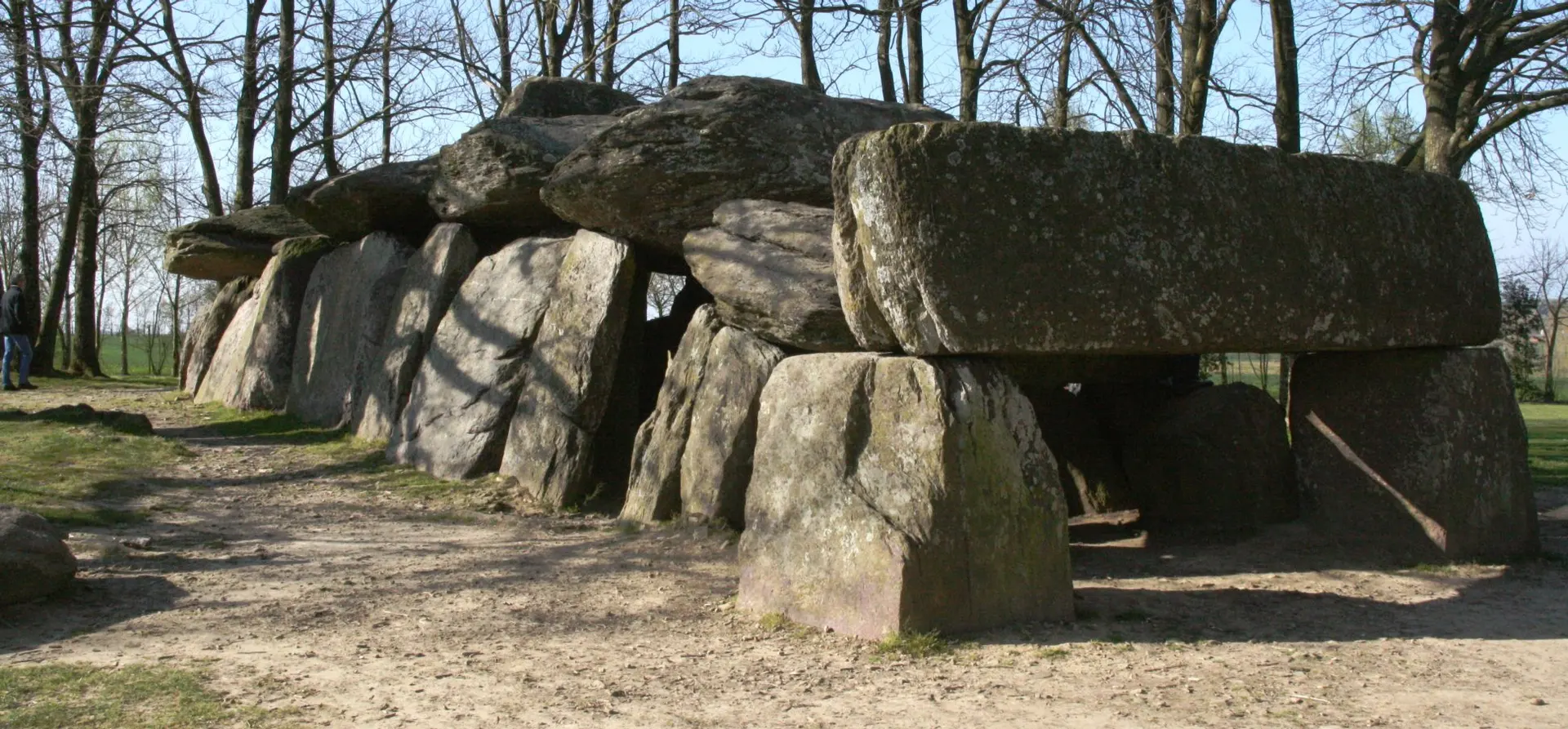
Image of La Roche aux Fées. Image source · CC-BY-SA-4.0
Visit essentials
A quick read before you go
- Duration
- Thirty to sixty minutes allows for exterior exploration, entry into the chambers, and…
- Access
- Located at Esse, thirty kilometers south of Rennes.
Overview
Stand before La Roche aux Fees and the first question is not historical but visceral: how? Forty-one massive schist slabs, the heaviest exceeding forty tonnes, transported from a forest four kilometers away. Stacked into a passage grave twenty meters long, six meters wide, four meters high. All of this five millennia ago, without metal, without wheels, without any of the technologies we assume necessary for such work.
The fairy legend is not escapism. It is honest awe wearing mythological clothing. When medieval Bretons looked upon this monument and attributed it to supernatural construction, they were acknowledging something still true: the scale of human intention here exceeds what we expect from ancient hands.
The dolmen aligns with winter solstice sunrise. On the shortest day, light enters the passage in a way that cannot be accidental. Whatever rites Neolithic communities performed here, they wove earthly burial into cosmic pattern.
But it is the lovers' counting tradition that keeps the site alive. Couples still come, walking in opposite directions, fingers tracking each stone. The numbers should match. They do not always. Whether the stones truly shift, or attention falters, or the monument simply refuses to be pinned down, the ritual persists because something about this place invites encounter with the unmeasurable.
Why this place is sacred
The Neolithic builders of La Roche aux Fees understood something about thresholds. This was not simply a grave but a portal. The passage leading to the interior chambers creates a journey from outer world to inner sanctum, from life to death, from the ordinary to whatever lies beyond.
The winter solstice alignment deepens this threshold quality. On the darkest morning of the year, when light itself seems most fragile, the sun enters this passage. The Neolithic mind would have understood this as renewal, as promise that darkness does not have the final word. To bury the dead in alignment with the sun's return is to weave individual mortality into cosmic rhythm.
Breton folklore adds another layer of liminality. Fairies in Celtic tradition are not the diminutive creatures of Victorian imagination but powerful beings dwelling just beyond human perception. The story of fairy construction acknowledges the monument as a place where that parallel world touched this one. The fay Viviane, Lady of the Lake, appears in some versions. Arthurian magic bleeds into megalithic prehistory.
The lovers' counting tradition maintains active engagement with this threshold quality. When couples walk opposite directions and compare their stone counts, they are asking: can we agree on what is real? The ritual works precisely because the answer is uncertain. The stones seem to shift. Attention wavers. The boundary between what is counted and what counts remains permeable.
Archaeological evidence indicates La Roche aux Fees was constructed as a collective burial monument around 3000 BCE. The interior contains four chambers, suggesting organized space for multiple interments across generations. The effort required to transport stones weighing up to forty tonnes across four kilometers implies that this was not merely utilitarian grave-making but a project of profound communal significance. The astronomical alignment with winter solstice further suggests calendrical and ceremonial functions intertwined with burial practices.
For most of its five-thousand-year existence, La Roche aux Fees stood outside recorded history. When medieval Bretons encountered the monument, they lacked the concept of prehistory. The only available explanation for such massive construction was supernatural agency. The fairy legends emerged not from ignorance but from honest confrontation with the inexplicable.
In the 1840s, La Roche aux Fees became one of the first thousand historic monuments to receive protected status in France. This recognition transformed it from local curiosity to national heritage. The lovers' counting tradition likely predates formal protection, though its origins remain undocumented.
Today the site welcomes visitors who come for reasons ranging from archaeological interest to romantic ritual to solstice observation to something harder to name. The accumulated centuries of attention have added their own weight to whatever the Neolithic builders intended.
Experience and orientation
The approach matters. From a distance, the dolmen appears as a low mound on the landscape, unassuming. Only as you draw closer does the scale become apparent. The entrance stones rise above human height. The passage extends into darkness. The weight of five hundred tonnes of schist becomes tangible.
Entering the passage involves a physical threshold crossing. The exterior world, with its sky and sound and movement, gives way to contained stillness. The four chambers invite pause. Some describe a temperature drop that feels greater than the shade would account for. Others notice how sound changes, how their own breath becomes audible, how the stone walls seem to press inward without threatening.
The counting tradition adds a dimension of play that cuts against the solemnity of a burial site. There is something delightfully absurd about testing romantic compatibility against megalithic arithmetic. Couples laughing as they compare mismatched totals introduce levity into sacred space. This tension is part of the site's character. It refuses to take itself entirely seriously, even as it demands to be taken seriously.
Winter solstice visitors report the most profound experiences. To watch dawn light enter a passage designed five thousand years ago for precisely this moment is to feel time collapse. The Neolithic builders who aligned these stones intended you to be here, watching what they watched. The message, whatever it was, continues to be sent.
Context and lineage
According to Breton legend, fairies built La Roche aux Fees in a single night. They carried the massive stones in their aprons, dropping them into place to prove to doubting humans that fairy folk truly existed. One version credits the fay Viviane, the Lady of the Lake known from Arthurian legend, with organizing this supernatural construction crew.
The archaeological origin is equally remarkable in its way. Around 3000 BCE, Neolithic communities organized the transport of forty-one massive schist slabs from the Forest of Theil-de-Bretagne, four kilometers away. The heaviest stones exceed forty tonnes. Without metal tools, without draft animals capable of such loads, without even the wheel, they moved five hundred tonnes of stone and assembled it into a structure that has stood for five millennia.
Whatever methods they used, the effort required implies social organization and shared purpose on a scale that challenges assumptions about prehistoric life.
We do not know the names or beliefs of the Neolithic builders. Their purpose can only be inferred from the structure itself and from comparison with similar monuments across Atlantic Europe. The passage grave tradition connects La Roche aux Fees to sites in Ireland, Britain, and Iberia, suggesting shared cosmology across vast distances.
The fairy legends represent a Celtic layer of meaning, arriving perhaps two thousand years after construction. When Breton speakers encountered the monument, they integrated it into their own understanding of the world, where fairy folk and human folk share the land.
Modern visitors add yet another layer. Archaeologists seeking to understand Neolithic society, couples performing the counting ritual, solstice watchers, and seekers of something harder to define all contribute to the site's ongoing life. The stones remain, holding all these meanings without resolving them into a single story.
Traditions and practice
The Neolithic rituals performed here have not survived. Archaeological evidence indicates collective burial, suggesting ceremonies of interment and possibly ongoing veneration of ancestors. The winter solstice alignment implies calendrical observance, though the specific form these ceremonies took remains unknown.
The fairy legends do not describe rituals so much as origin narratives. There is no tradition of offering to the fairies at this particular site, though such practices exist elsewhere in Breton folklore.
The lovers' counting tradition is the primary active practice at La Roche aux Fees. Couples walk around the dolmen in opposite directions, each counting the stone slabs. When they meet again, they compare totals. Matching numbers predict lasting love; mismatched counts suggest uncertainty ahead. The tradition has no documented origin but persists through repetition.
Winter solstice gatherings draw visitors who wish to witness sunrise through the aligned passage. These are not organized ceremonies but informal gatherings of those drawn to mark the turning of the year in a place designed for exactly this observation.
Many visitors engage in personal contemplation, entering the chambers to sit in silence or walking the perimeter in slow meditation. The absence of formal religious programming creates space for individual practice.
If you come with a partner, participate in the counting tradition. Walk in opposite directions, counting seriously. Accept whatever result you find without trying to reconcile the numbers. The ritual is not about arithmetic accuracy but about willingness to accept uncertainty together.
If you come alone, enter the chambers and sit for at least fifteen minutes in silence. Let your eyes adjust to the dim light. Notice what thoughts arise when surrounded by five-thousand-year-old stone.
If you visit at winter solstice, arrive before dawn. Position yourself to see the sun enter the passage. This is what the builders intended. Let yourself be their audience across millennia.
Neolithic Burial Practice
HistoricalLa Roche aux Fees was constructed as a collective burial monument, its four interior chambers designed to receive the dead of a community across generations. The passage grave tradition connected Brittany to similar sites across Atlantic Europe, suggesting shared cosmology despite vast distances. The winter solstice alignment wove individual death into cosmic renewal, burial into the sun's return.
The specific rituals performed here are unknown. Archaeological parallels suggest ceremonies of interment, possible ancestor veneration, and calendrical observances tied to the solstice alignment. The bodies themselves have not survived, only the stone container.
Breton Fairy Tradition
HistoricalThe fairy construction legend represents Breton culture's encounter with a monument older than memory. Unable to explain such massive construction through ordinary human effort, folklore attributed it to the fay. This is not primitive misunderstanding but honest awe. The legend honors both the monument's strangeness and the Celtic understanding of reality as layered with unseen beings.
The tradition is narrative rather than ritual. Storytelling transmits the legend across generations. The site itself is a testament to fairy power, requiring no additional ceremony to maintain its status.
Lovers' Counting Tradition
ActiveThis living tradition tests romantic compatibility against the monument's mysterious mathematics. Couples walk opposite directions, each counting stones. Matching totals predict lasting love. The tradition maintains active ritual engagement with a five-thousand-year-old structure, transforming archaeology into augury.
Partners agree to start at the same point and walk in opposite directions around the dolmen. Each counts the stone slabs independently. When they meet again, they compare their totals. The numbers should match but frequently do not. Interpretations vary, but the mismatch often generates laughter rather than concern, the ritual's gift being permission to acknowledge uncertainty together.
Winter Solstice Observation
ActiveThe dolmen's alignment with winter solstice sunrise is not accidental. Neolithic builders oriented the passage to receive the returning sun on the darkest morning of the year. Contemporary observers who gather to witness this alignment are participating in something intended five thousand years ago.
Informal gatherings form before dawn on or near December 21. Observers position themselves to see sunlight enter the passage. No formal ceremony is organized; the practice is witnessing rather than ritual.
Perspectives and open questions
La Roche aux Fees invites multiple readings: the archaeological interpretation of Neolithic burial practice, the folkloric understanding of fairy construction, and the romantic tradition of testing love against shifting stone counts. These perspectives need not be reconciled. The monument is old enough and strange enough to hold them all.
Scholarly perspective
Archaeological consensus identifies La Roche aux Fees as a Neolithic passage grave constructed around 3000 BCE. The forty-one schist slabs were transported from the Forest of Theil-de-Bretagne, four kilometers distant. The heaviest stones exceed forty tonnes. The winter solstice alignment is documented and intentional. The interior chambers suggest collective burial over generations.
Scholars continue to debate the methods of construction. Wooden rollers, sledges, and massive labor forces are proposed. Some experiments have attempted to replicate the movement of such stones with Neolithic-era technologies. The results suggest it was possible, though barely, requiring sustained communal effort that implies significant social organization.
Living and traditional perspectives
Breton folklore understands La Roche aux Fees as fairy construction. The fay built the monument in a single night, carrying stones in their aprons, demonstrating their power to humans who doubted their existence. Some versions connect the site to the fay Viviane, Lady of the Lake, placing it within Arthurian geography.
This perspective does not conflict with archaeological understanding so much as overlay it. The folklore acknowledges that something about this construction exceeds ordinary human capacity. Whether that excess is attributed to fairies or to the remarkable capabilities of Neolithic communities, the awe is the same.
Alternative interpretations
Some contemporary practitioners view the site through the lens of earth energy traditions, identifying La Roche aux Fees as a node on telluric networks. The winter solstice alignment is interpreted as evidence of advanced astronomical and geomantic knowledge among Neolithic peoples.
Neo-pagan groups occasionally observe solstice at the site, though without formal organization or regular programming. The fairy legends provide obvious resonance for those who work with the fay as spiritual beings rather than legendary figures.
Open questions
Mysteries persist. How exactly were forty-tonne stones moved four kilometers without wheels or draft animals? What rituals were performed in the chambers? Who was buried here, and why here specifically? What was the relationship between this monument and other passage graves across Atlantic Europe?
The counting tradition presents its own puzzle. Do the stones actually seem to shift, or does attention simply fail to hold consistent count? Why has this particular ritual attached to this particular monument? The answer remains unmeasured.
Plan your visit
Access and arrival
Located at Esse, thirty kilometers south of Rennes. Well-signposted from main roads. Free parking available. The site is open and freely accessible at all hours. No admission fee.
Hotels in Vitre (20 km) or Rennes (30 km). The site is easily visited as a day trip from either city.
Respectful visit
Comfortable walking shoes are the only practical requirement. The ground is uneven and can be muddy after rain. Layers are advisable, as Breton weather is changeable.
Freely permitted throughout the site. The interior chambers present low-light challenges. Respectful photographers do not intrude upon couples engaged in the counting ritual.
Not traditional at this site. Do not leave objects, as they will be removed as litter.
Do not climb on the stones. Do not remove anything from the site. The monument is open and freely accessible at all hours.
Respect other visitors engaged in the counting tradition by keeping a reasonable distance from couples in the midst of their ritual.
Current practical details
Address
La Roche aux Fées, 35150 Essé, France
Hours, fees, and access can change — verify on the official source before you travel. Practical details last checked Jun 2026.
Location
Map loads as you approach this section.
Pilgrim reflections
A portrait of encounter, not a score
Pilgrims describe what they felt, how present they could become, and whether the place would shape a journey. There are no stars and no ranking of traditions.
No reviewed reflections yet
The first pilgrims can help describe the character of being here.
Share a reflection
Available after an account-backed “Been there.” Every reflection is reviewed before publication.
Nearby sacred places
Explore other sacred places in the region. Proximity does not establish access or travel time; check each place’s guidance.


References
Sources consulted for this page. Source categories describe the publication, not a guarantee that every claim is verified. Traditional accounts and outside interpretations may differ.
- 01La Roche-aux-Fées - Ille-et-Vilaine Tourism — Ille-et-Vilaine TourismofficialOfficial regional tourism
- 02Essé, La Roche aux fées - Brittany Tourism — Brittany TourismofficialRegional tourism authority
- 03La Roche-aux-Fées - Wikipedia — Wikipedia contributorsencyclopediaOverview with dimensions and astronomical alignment
- 04Roche-aux-Fées - The Megalithic Portal — Megalithic PortalofficialSpecialized megalithic information
Share a photo
Help visitors recognize La Roche aux Fées. Every submission is reviewed before publication.