Complesso Nuragico Romanzesu
Where Bronze Age pilgrims gathered to worship sacred waters
Understand sacred places, explore living traditions, and learn how to engage respectfully with Pilgrim Map.
Access has not been verified. Check current local guidance before planning a visit.
Bitzi/Bitti, Nuoro, Italy
Read the sources
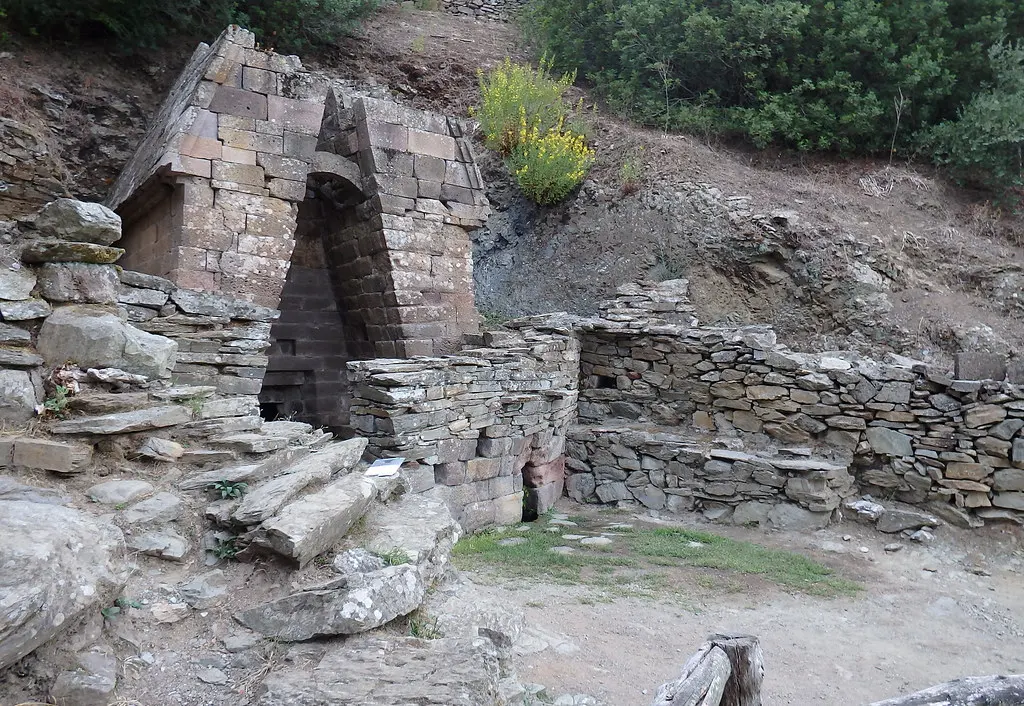
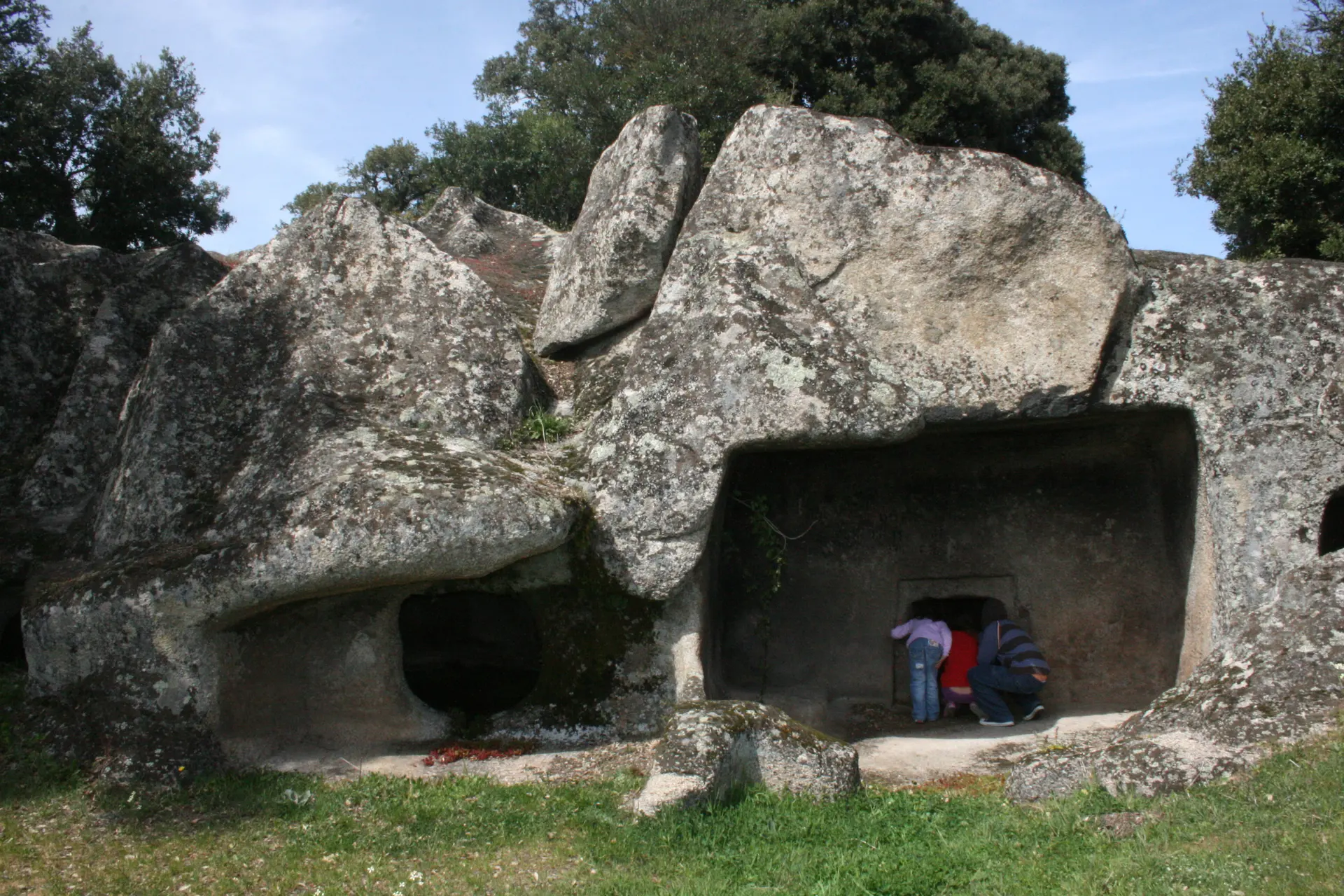
Stone remains at the Nuragic sanctuary of Romanzesu, Sardinia.. Image source · CC BY-SA 3.0
Visit essentials
A quick read before you go
- Duration
- 1.5-2 hours for 7-hectare complex
- Access
- By car from Nuoro via SS 389 towards Buddusò.
Overview
Romanzesu spans seven sanctuary hectares: one hundred huts, four megaron temples, five worship buildings, a ceremonial enclosure, and a rock-fed sacred well beneath a beehive dome. A 42-meter stepped passage joins the well to a 14-meter ablution basin. This was a destination rather than a village. From around the 15th century BCE until the 7th century, regional pilgrims gathered periodically, stayed in the huts, used varied temples, and purified themselves by the hundreds in the great basin.
The well's circular chamber, 3.4 meters across and 3.6 meters high, is cut into the spring-bearing rock beneath a Nuragic tholos. Its floor is paved, a perimeter bench enables seated contemplation of the water, and menhirs mark the corridor toward the basin.
Why this place is sacred
The Nuragic people of Sardinia worshipped water. Sacred wells—temples built around springs—are found across the island, testimony to the centrality of water in Bronze Age religion. But Romanzesu stands apart in scale. This was not a local shrine but a regional destination, a place where communities gathered from across the landscape for ceremonies at prescribed times.
The well temple is the heart. Spring water flows from the rock into a chamber carved and constructed to honor it. The tholos dome—a beehive-shaped covering of carefully fitted stones—creates a space both enclosed and open to the sacred. The paved floor and bench seating indicate extended presence; worshippers stayed with the water, contemplating its flow, its source, its meaning.
From this inner sanctum, a stepped passage of 42 meters leads to the great basin. Fourteen meters in diameter, this amphitheater-like structure could accommodate hundreds of worshippers for ritual ablutions. The water from the sacred spring would flow here, filling the basin, purifying those who entered. Scholars believe these ablutions were performed at specific times of year when pilgrims gathered from across the region.
The hundred huts provided accommodation. Pilgrimage requires hospitality. The Nuragic builders understood that worshippers traveling from distant communities would need shelter, and they built accordingly. The scale suggests major gatherings—festivals, perhaps, timed to seasonal or astronomical events, bringing together populations that otherwise lived in scattered settlements.
The four megaron temples offered additional sacred spaces. These apsidal structures—similar to the Malchittu temple near Arzachena—provided enclosed spaces for rituals beyond the open-air well and basin. The ceremonial enclosure added yet another dimension to the religious architecture. Romanzesu offered multiple forms of worship within a single integrated complex.
Eight centuries of use left material evidence. Ceramics, bronzes, and other artifacts from the Late and Final Bronze Age (13th-9th century BCE) have been recovered from the well area. Generation after generation came here, performed their ablutions, honored the sacred spring, and returned to their communities. The tradition was not personal but collective, not spontaneous but calendrical.
The water pipeline systems demonstrate Nuragic engineering. Managing the flow of sacred water from spring to temple to basin required hydraulic understanding. The preserved pipes show how the Nuragic builders channeled and controlled water while maintaining its sacred character. Technology served religion.
When Antonio Taramelli discovered the site in 1919, he found a complex that had been forgotten for over two millennia but never entirely erased. The Romans who occupied the area in the 2nd-3rd centuries CE had already recognized its antiquity. The forest that grew over the ruins preserved them for modern archaeology. Now on the UNESCO tentative list, Romanzesu takes its place among Sardinia's most significant Nuragic monuments.
Major Nuragic pilgrimage sanctuary for water worship. Sacred well temple with tholos dome. 14-meter ablution basin. Multiple megaron temples. Accommodation for pilgrims in 100 huts. Ceremonial gatherings at prescribed times.
15th century BCE: Sanctuary established. 13th-9th century BCE: Main period of use (materials from well area). 7th century BCE: Apparent abandonment. 2nd-3rd century CE: Roman occupation. 1919: Discovered by Antonio Taramelli. Modern era: UNESCO tentative list.
Experience and orientation
The approach to Romanzesu leads through the forests of inner Sardinia, climbing to a plateau near the source of the river Tirso. The setting is peaceful, removed from urban centers—13 kilometers from the town of Bitti, deep in the Barbagia region. The isolation that made this a suitable pilgrimage destination in the Bronze Age persists today.
The complex spreads across seven hectares, and exploring it requires time. The well temple commands attention first—the circular chamber with its tholos dome, carved and constructed around the spring that was the reason for everything else. Standing before the entrance, you face what Bronze Age pilgrims faced: the threshold of the sacred, the place where water emerged from rock.
The bench seating within the chamber indicates that worshippers stayed with the water. This was not a site for brief acknowledgment but for extended presence. The paved floor, the careful stonework, the play of light through the dome—all suggest contemplation as much as ceremony.
The stepped passage leading to the great basin covers 42 meters, marked by menhirs that guided processional movement. The basin itself—14 meters in diameter—is scaled for crowds. Hundreds could have gathered here for ritual ablutions, immersing in waters that flowed from the sacred spring. The amphitheater form provided seating for those waiting or witnessing.
The huts scattered across the complex number approximately one hundred. These were not permanent residences but pilgrim accommodations—housing for those who had traveled from distant settlements to participate in ceremonies at prescribed times. Walking among them, you sense the scale of gatherings that once occurred here.
The four megaron temples provide additional focal points for exploration. These apsidal structures offered enclosed ritual spaces distinct from the open-air basin. The ceremonial enclosure adds another dimension. The complexity of the religious architecture reflects the complexity of Nuragic spirituality—multiple forms of worship, multiple sacred spaces, unified by the central veneration of water.
The Romanzesu complex is located on the Poddi Arvu plateau, 13km from Bitti and 7km from the SS 389 road towards Buddusò. The site covers 7 hectares near the source of the river Tirso, in a forested setting.
Context and lineage
Sometime around the 15th century BCE, the Nuragic people of Bronze Age Sardinia began constructing a sanctuary complex on a forested plateau near the source of the river Tirso. The site was chosen for its sacred spring—water flowing from the rock that would become the focus of worship. Over centuries, they built a well temple with a tholos dome to honor the spring, a 42-meter stepped passage, and a 14-meter amphitheater basin for ritual ablutions.
They constructed approximately one hundred huts to house pilgrims, four megaron temples for varied ceremonies, and a ceremonial enclosure for gatherings. For eight centuries, until the site was abandoned around the 7th century BCE, Romanzesu served as one of Sardinia's great pilgrimage destinations.
Built by the Nuragic civilization of Bronze Age Sardinia. One of the most important water worship sanctuaries on the island. Now part of the UNESCO tentative list for Nuragic monuments.
Antonio Taramelli
Traditions and practice
Pilgrimage to the sanctuary at prescribed times. Water worship at the sacred well temple. Ritual ablutions in the 14-meter basin. Ceremonies at megaron temples. Gatherings in ceremonial enclosure.
Archaeological site visitation. Guided tours through Cooperativa Istelai.
Begin at the well temple and contemplate the sacred spring under its tholos dome. Walk the 42-meter stepped passage to the ablution basin. Explore the huts that once housed pilgrims. Visit the megaron temples. Allow 1.5-2 hours for the seven-hectare complex.
Nuragic Water Worship
HistoricalRomanzesu is one of the most important Nuragic sanctuary complexes in Sardinia, centered on water worship. The sacred well temple with tholos dome, 14-meter ablution basin, 100 huts, and multiple temples indicate a major pilgrimage destination used for approximately 800 years (15th-7th century BCE).
No longer practiced. Archaeological evidence suggests pilgrimage gatherings, water veneration at the well temple, and ritual ablutions in the amphitheater basin.
Perspectives and open questions
Romanzesu offers encounter with one of the great Nuragic pilgrimage centers—a seven-hectare complex where Bronze Age Sardinians gathered for water worship over eight centuries.
Scholarly perspective
The site is recognized as one of the most important Nuragic sanctuary complexes in Sardinia. The scale indicates a major pilgrimage destination. Materials from the Late and Final Bronze Age (13th-9th century BCE) date the main period of use. The water pipeline systems are noted for their preservation. UNESCO tentative list status.
Living and traditional perspectives
No living tradition preserves Nuragic water worship practices. The religion that animated eight centuries of pilgrimage here is lost.
Alternative interpretations
The water worship tradition has attracted interest from those studying ancient religions. The scale of the ablution facilities suggests elaborate purification rituals. The connection to spring water sources reflects universal patterns of sacred water veneration.
Open questions
The specific ceremonies performed. The calendar of pilgrimage gatherings. The beliefs about sacred water. The deities or spirits venerated.
Plan your visit
Access and arrival
By car from Nuoro via SS 389 towards Buddusò. Turn right at km 54.2, continue 1.9km to parking. Contact Cooperativa Istelai for arrangements.
Accommodations in Bitti. Agriturismos in the Barbagia region.
Respectful visit
No dress code. Comfortable walking shoes recommended.
Photography permitted throughout the site.
None; archaeological site.
Contact cooperative for visiting arrangements | Respect archaeological structures | Stay on paths
Contact Cooperativa Istelai in advance for visiting arrangements. Wear comfortable walking shoes for the large site.
Location
Map loads as you approach this section.
Pilgrim reflections
A portrait of encounter, not a score
Pilgrims describe what they felt, how present they could become, and whether the place would shape a journey. There are no stars and no ranking of traditions.
No reviewed reflections yet
The first pilgrims can help describe the character of being here.
Share a reflection
Available after an account-backed “Been there.” Every reflection is reviewed before publication.
Nearby sacred places
Explore other sacred places in the region. Proximity does not establish access or travel time; check each place’s guidance.

References
Sources consulted for this page. Source categories describe the publication, not a guarantee that every claim is verified. Traditional accounts and outside interpretations may differ.
- 01Romanzesu | SardegnaTurismo — Regione Sardegna TourismofficialOfficial Sardinia tourism information
- 02The archaeological complex of Romanzesu - Bitti — Sardegna Verso UNESCOSource contextUNESCO candidacy documentation
- 03Nuragic monuments of Sardinia - UNESCO World Heritage Centre — UNESCOofficialUNESCO tentative list documentation
- 04Su Romanzesu - Wikipedia — Wikipedia contributorsencyclopediaArchaeological overview
- 05Complesso Nuragico Romanzesu | Lonely Planet — Lonely PlanetguideTravel guide information
Share a photo
Help visitors recognize Complesso Nuragico Romanzesu. Every submission is reviewed before publication.