Dolmen di Billella o Bilella
A Neolithic tomb rising among Sardinian vineyards
Understand sacred places, explore living traditions, and learn how to engage respectfully with Pilgrim Map.
Access has not been verified. Check current local guidance before planning a visit.
Luras, Sassari, Italy
Read the sourcesVisit essentials
A quick read before you go
- Duration
- 20-30 minutes; combine with other Luras dolmens for 1.5-2 hours
- Access
- From Luras, follow signs to dolmen circuit.
Overview
Dolmen Billella rises among Vermentino and nebiolo grapevines—varieties that have made Gallura wine famous—growing in soil that received collective burials 5,000 years ago. This meeting of ancient death and living cultivation shapes the place.
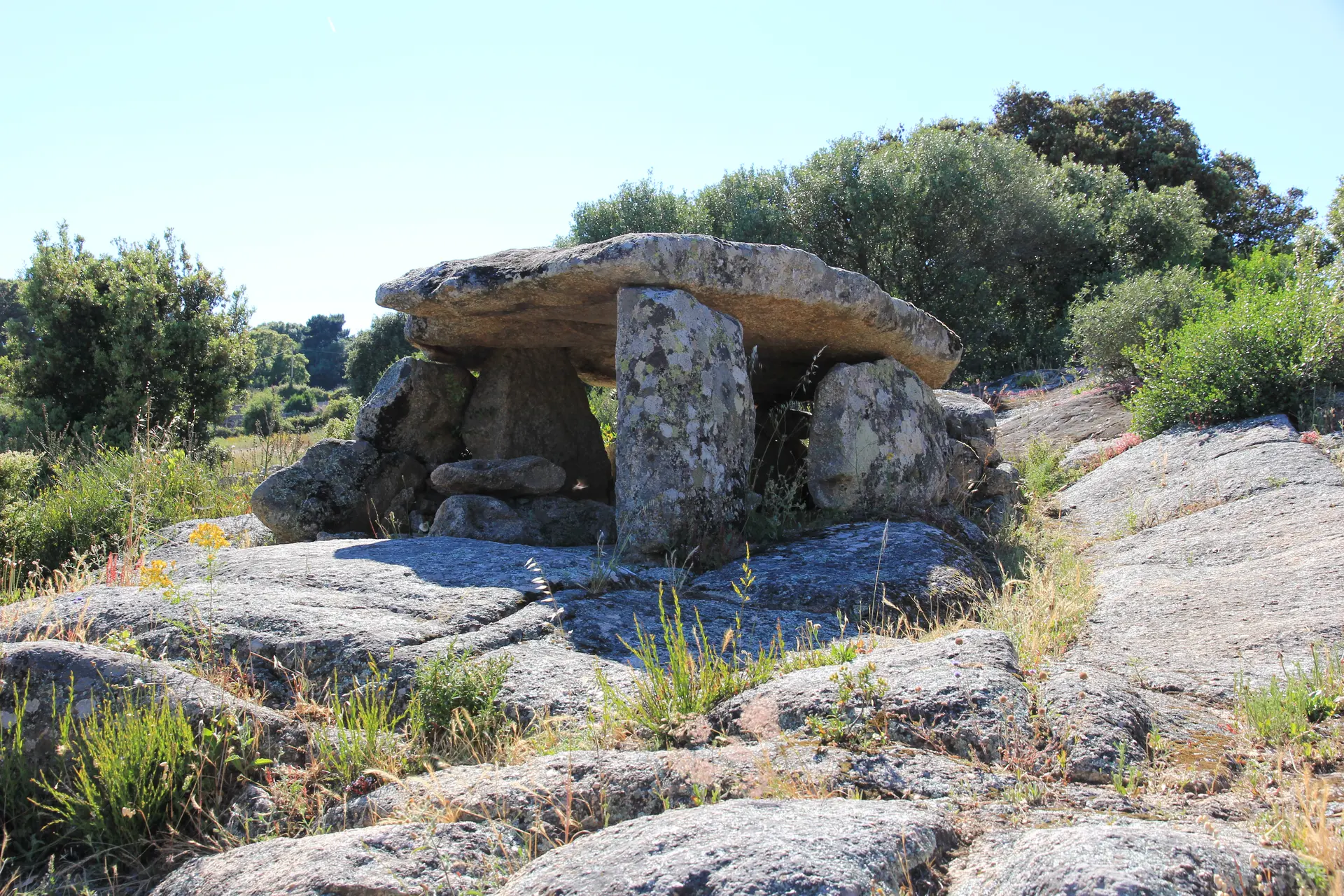
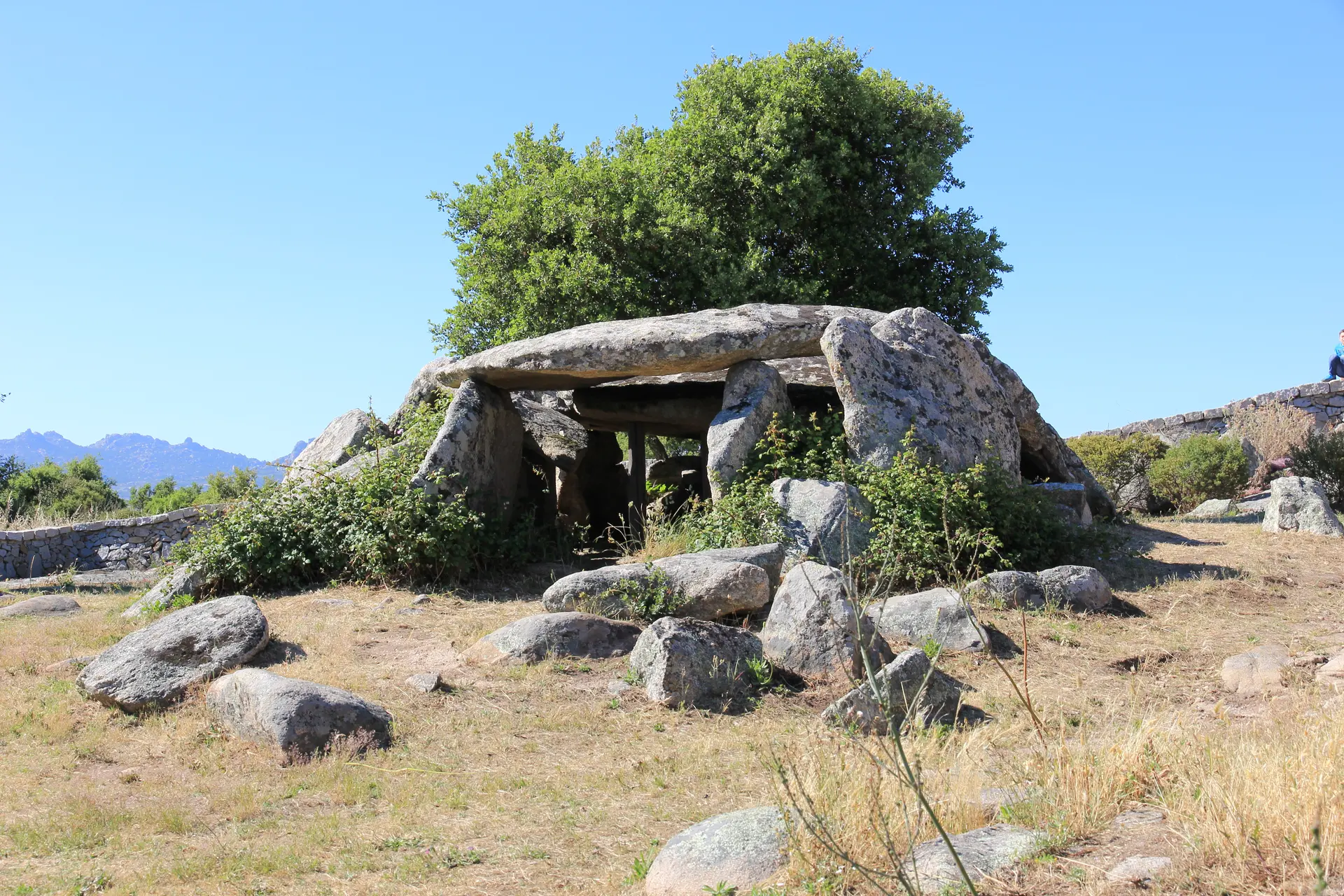
The structure is two and a half meters long and eighty centimeters high. A rectangular slab forms the right wall; two worked boulders on bedrock form the left, adapted to receive a roof slab flattened underneath. Its precision reflects Neolithic builders working within available materials. Unlike most dolmens' roughly eastern alignment, Billella faces North-North-West. Whether astronomical observation, symbolic direction, or terrain dictated that choice is unknown, but it has endured for five millennia.
Why this place is sacred
The trilithic construction is simple: vertical supports carrying a horizontal slab. This arrangement appears across the Western Mediterranean, from the Basque region to Menorca, suggesting shared understanding of how to house the dead. The Neolithic communities who built Billella participated in something larger than local tradition.
The unusual North-North-West orientation sets Billella apart from other dolmens. Most face roughly eastward, toward the rising sun and its associations with rebirth. Billella's builders chose differently. Whether they tracked a particular star, marked a seasonal event, or followed symbolic logic that we cannot reconstruct, their choice was deliberate.
The vineyard setting creates a dialogue across time. The grapes that grow here require tending, pruning, harvesting—an annual cycle of care that binds the living to the land. Beneath the same soil that nourishes the vines, the Neolithic dead received their collective burial. Agriculture and death share this ground.
Luras holds four dolmens within its boundaries—Billella, Ladas, Ciuledda, and Alzoledda—the highest concentration in Sardinia. This clustering is not accident. Whatever logic governed dolmen placement, Luras mattered. Perhaps it was a regional burial ground, a sacred landscape where communities from across Gallura brought their dead. Perhaps some quality of the terrain or the view made it propitious.
The local name 'Sepultura de Zigantes' preserves folk memory of the dolmens' strangeness. Ordinary humans, the reasoning went, could not have lifted such stones. Only giants—beings of another order—could have created these monuments. The name is not explanation but acknowledgment: something happened here that exceeds ordinary understanding.
Collective burial chamber and place of worship. Trilithic construction for Neolithic dead. Part of Western Mediterranean dolmen tradition.
3500-2700 BCE: Dolmen constructed during Late Neolithic. Modern era: Agricultural use of surrounding land; archaeological preservation of monument.
Experience and orientation
The approach to Billella leads through working vineyard. Vermentino and nebiolo vines—the grapes of Gallura—cover the hillsides around Luras. Walking among them toward the dolmen, you pass through living agriculture to reach ancient death.
The structure appears among the vines: two and a half meters long, less than a meter high. The scale is intimate rather than monumental. You can approach closely, examine the fitted stones, appreciate the skill that adapted irregular boulders into stable construction.
The right wall is a rectangular slab, cleanly cut. The left wall shows different technique: two worked boulders rest on the bedrock, modified to receive the roof slab. The cover has been flattened on its lower surface, creating a level ceiling for the burial chamber within. This is not crude work but considered construction.
The North-North-West orientation becomes apparent when you trace the dolmen's axis. This is not the eastern alignment common to most megalithic tombs. The builders chose a different direction for reasons we cannot recover.
From Billella, the other Luras dolmens are accessible. Ladas, the largest, is the most impressive. Ciuledda and Alzoledda complete the circuit. Taken together, these four monuments create a landscape of prehistoric burial unique in Sardinian concentration.
Dolmen di Billella is located about 1km from Luras on a rocky plateau among vineyards. The structure aligns North-North-West.
Context and lineage
Between 3500 and 2700 BCE, Neolithic communities near what is now Luras constructed a series of dolmens for their collective dead. Billella was built among them—a trilithic tomb with rectangular layout and unusual North-North-West orientation. The surrounding land would eventually become vineyard, but then it was burial ground, part of a sacred landscape that concentrated more dolmens than any other area in Sardinia.
Built by Neolithic communities of Sardinia. Part of Western Mediterranean dolmen tradition. No descendant tradition preserves original practices.
Traditions and practice
Collective burials in the sepulchral chamber. Worship at the tomb site.
Archaeological site visitation. Part of Luras dolmen circuit.
Approach through the vineyard to appreciate the setting. Examine the construction—the rectangular right wall, the worked boulders of the left. Note the unusual orientation. Continue to the other Luras dolmens for full context.
Neolithic Burial Tradition
HistoricalDolmen di Billella exemplifies the Late Neolithic (3500-2700 BCE) burial tradition. One of four dolmens in Luras, Sardinia's highest concentration. Unusual North-North-West orientation suggests intentional alignment.
No longer practiced. Archaeological evidence indicates collective burials.
Perspectives and open questions
Dolmen di Billella offers encounter with Neolithic burial practices in a living agricultural landscape—death and cultivation intertwined across 5,000 years.
Scholarly perspective
Dated to Late Neolithic (3500-2700 BCE). Trilithic construction with rectangular layout. Unusual North-North-West orientation. Part of Luras four-dolmen concentration—Sardinia's highest. Served collective burial and worship functions.
Living and traditional perspectives
Local tradition names dolmens 'Sepulturas de Zigantes' (Tombs of Giants).
Alternative interpretations
The unusual orientation has attracted interest in possible astronomical alignments or symbolic directions.
Open questions
The specific burial practices. The significance of the orientation. The identity of those interred. The ceremonies that accompanied burial.
Plan your visit
Access and arrival
From Luras, follow signs to dolmen circuit. Car recommended.
Accommodations in Luras, Tempio Pausania, Olbia.
Respectful visit
No dress code. Comfortable walking shoes.
Photography permitted.
None; archaeological site.
Respect archaeological structure | Respect vineyard property
Respect vineyard property. Summer can be hot.
Current practical details
Address
07025 Luras, Province of Gallura North-East Sardinia, Italy
Hours
Hours, fees, and access can change — verify on the official source before you travel. Practical details last checked Jun 2026.
Location
Map loads as you approach this section.
Pilgrim reflections
A portrait of encounter, not a score
Pilgrims describe what they felt, how present they could become, and whether the place would shape a journey. There are no stars and no ranking of traditions.
No reviewed reflections yet
The first pilgrims can help describe the character of being here.
Share a reflection
Available after an account-backed “Been there.” Every reflection is reviewed before publication.
Nearby sacred places
Explore other sacred places in the region. Proximity does not establish access or travel time; check each place’s guidance.

References
Sources consulted for this page. Source categories describe the publication, not a guarantee that every claim is verified. Traditional accounts and outside interpretations may differ.
- 01Dolmen di Luras | SardegnaTurismo — Regione Sardegna TourismofficialOfficial tourism information
- 02Dolmen Ladas, Alzoledda, Ciuledda and Billella - Luras — Sardegna verso UNESCOSource contextUNESCO candidacy documentation
- 03Dolmen di Billella - Wikipedia — Wikipedia contributorsencyclopediaItalian Wikipedia entry
Share a photo
Help visitors recognize Dolmen di Billella o Bilella. Every submission is reviewed before publication.