Dolmen Ciuledda
A 4,800-year-old tomb in Sardinia's richest dolmen landscape
Understand sacred places, explore living traditions, and learn how to engage respectfully with Pilgrim Map.
Access has not been verified. Check current local guidance before planning a visit.
Luras, Sassari, Italy
Read the sources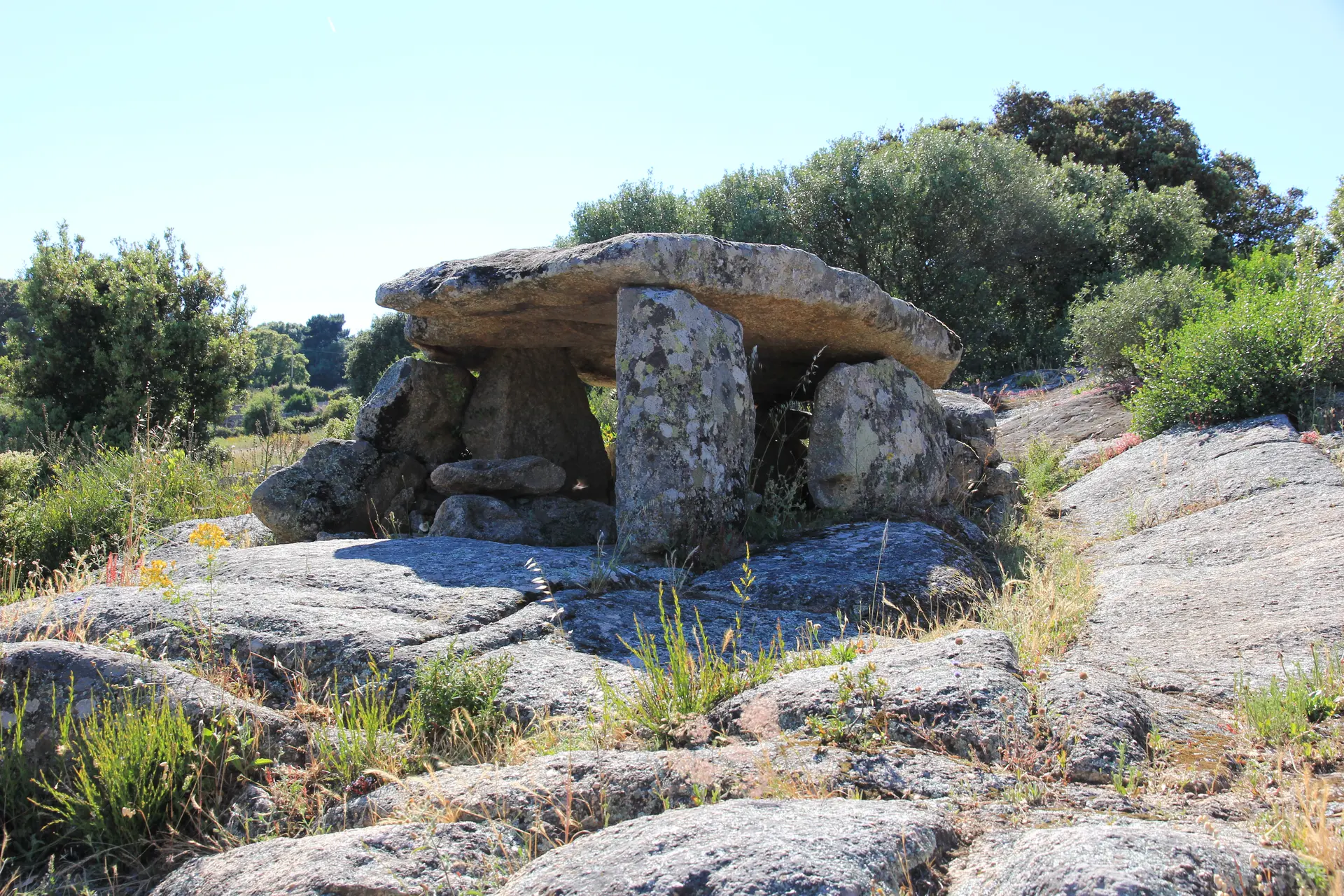
Image of Dolmen Ciuledda. Image source · CC-BY-SA-3.0
Visit essentials
A quick read before you go
- Duration
- 30-45 minutes for Ciuledda; 1.5-2 hours for all four Luras dolmens
- Access
- From Luras, exit via SP 10 toward Luogosanto.
Overview
Less than a meter high, Dolmen Ciuledda sets two vertical stones beneath a polygon-shaped cover slab. This trilithic structure has endured for 4,800 years, and drainage channels carved by its builders still keep the sepulchral chamber dry through seasonal rain.
Ciuledda is one of four dolmens in Luras among 78 identified across Sardinia. Locals called them Sepulturas de Zigantes—Tombs of Giants—recognizing a scale measured in time rather than size. Related monuments span the Western Mediterranean from the Basque region through Catalonia, southern France, Corsica, and Menorca. Some scholars propose stations on an ancient pilgrimage route, a sacred geography predating recorded history by millennia; though speculative, that reading connects this small Sardinian valley to something larger.
Why this place is sacred
The dolmen tradition required commitment. Quarrying slabs, transporting them, fitting them with precision sufficient to endure millennia—this was not casual effort. The communities who built Ciuledda and its companion monuments in Luras invested labor that speaks of shared belief.
The trilithic structure—two vertical stones supporting a horizontal slab—appears across the Western Mediterranean. Basque builders used it. Catalan, French, Corsican, and Menorcan communities adopted similar forms. This was not coincidence but connection, a shared understanding of how to house the dead and honor them.
Luras holds four of Sardinia's 78 known dolmens, the island's highest concentration. This clustering suggests particular significance—not a random distribution but a deliberate focus. Whether the concentration marks a population center, a sacred landscape, or a node on a pilgrimage route, Luras mattered to the dolmen builders.
The sepulchral chamber served collective burial. Multiple bodies, perhaps deposited over generations, shared this small space. Ceramic fragments from the 3rd millennium BCE indicate offerings—vessels that may have held food, drink, or symbolic substances for the journey beyond life.
But the dolmen was also a place of worship. The living came here not only to deposit the dead but to commune with them. Whatever beliefs animated these practices—ancestor veneration, spirit propitiation, requests for blessing—the dolmen was where the two worlds touched.
The name 'Sepulturas de Zigantes' preserves popular memory of the dolmens' strangeness. The ordinary villagers who coined this term recognized that such structures demanded explanation beyond normal human activity. Giants, paladins, beings of another order—only such figures could account for monuments that survived when everything else from their era had disappeared.
Some scholars propose that Sardinian dolmens form stations on an ancient pilgrimage route, a sacred geography passing through the Strait of Bonifacio and connecting communities across the Mediterranean. Luras, with its exceptional concentration, would represent a major destination on this route. The interpretation remains speculative, but it captures something true about the dolmens: they were not isolated but connected, not local but regional, not random but purposeful.
Collective burial chamber and place of worship. Trilithic construction for the dead and the living who honored them. Part of Western Mediterranean dolmen tradition spanning Basque, Catalan, French, Corsican, and Menorcan territories.
2800-2500 BCE: Dolmen constructed. 3rd millennium BCE: Ceramic offerings deposited. Modern era: Archaeological preservation and Italian national heritage designation.
Experience and orientation
The approach to Dolmen Ciuledda follows Via Ariosto to its end, then continues on foot through the Sardinian countryside. The path leads to a small valley plain where the dolmen has stood for nearly five millennia.
The structure's modesty is part of its power. Less than a meter high, it invites close engagement rather than distant awe. You can approach the trilithic arrangement—two vertical stones, one horizontal cover—and appreciate the precision of its construction. The polygon-shaped cap stone fits with care that has proven sufficient across 4,800 years.
The chamber remains dry. Natural drainage channels carved by the original builders continue to function, directing rainwater away from the sepulchral space. This practical genius—engineering in service of the sacred—speaks to the builders' understanding of their task's temporal scale.
Dolmen Ladas stands a few hundred meters away, part of the same landscape of prehistoric burial and worship. Walking between the two monuments, you trace a path that others walked millennia before recorded history began. The valley is quiet, rural, largely unchanged. Cork oaks and Mediterranean scrub create a setting that the dolmen builders would recognize.
The concentration of four dolmens in Luras—Ciuledda, Ladas, Alzoledda, and Billella—transforms individual monuments into a sacred landscape. This is not a single site but a territory of the dead, a geography shaped by beliefs we can no longer recover.
Dolmen Ciuledda is located in a small valley plain northeast of Luras, at 471 meters elevation. Accessible by walking trail from Via Ariosto. Dolmen Ladas is nearby.
Context and lineage
Between 2800 and 2500 BCE, communities in what is now Luras constructed megalithic tombs for their dead. They used the trilithic technique—two vertical stones supporting a horizontal slab—that appears across the Western Mediterranean from the Basque region to Menorca. The dolmens served as collective burial chambers and places of worship where the living encountered the departed. Ceramic offerings from the 3rd millennium BCE testify to the rites performed here.
Of Sardinia's 78 known dolmens, four stand in Luras, suggesting this landscape held particular sacred significance.
Built by Neolithic/Chalcolithic communities of Sardinia. Part of Western Mediterranean dolmen tradition. No descendant tradition preserves the original practices.
Traditions and practice
Collective burials in the sepulchral chamber. Worship at the tomb site. Ceramic offerings deposited with the dead.
Archaeological site visitation. Walking trail connecting Luras dolmens.
Visit Ciuledda as part of the Luras dolmen trail. Begin here, then walk to nearby Dolmen Ladas. Consider visiting all four Luras dolmens for full context. Allow 30-45 minutes for Ciuledda alone, 1.5-2 hours for all four dolmens.
Neolithic/Chalcolithic Burial Tradition
HistoricalDolmen Ciuledda exemplifies the Western Mediterranean dolmen tradition (2800-2500 BCE). Luras has Sardinia's highest concentration of dolmens. Structures served as collective tombs and worship sites, connecting Sardinia to similar practices in the Basque region, Catalonia, France, Corsica, and Menorca.
No longer practiced. Archaeological evidence indicates collective burials with ceramic offerings.
Perspectives and open questions
Dolmen Ciuledda offers encounter with prehistoric burial and worship practices—a small structure that has endured for 4,800 years in Sardinia's richest dolmen landscape.
Scholarly perspective
Dated to 2800-2500 BCE. Trilithic construction with polygon-shaped cover slab. Served collective burial and worship functions. Ceramic fragments from 3rd millennium BCE found in sepulchres. Part of Western Mediterranean dolmen tradition. Luras has highest concentration of dolmens in Sardinia (4 of 78). Italian national heritage designation.
Living and traditional perspectives
Local tradition names these structures 'Sepulturas de Zigantes' (Tombs of Giants), attributing them to mythical beings of superhuman power.
Alternative interpretations
Some scholars propose Sardinian dolmens as stations on an ancient pilgrimage route through the Mediterranean. The concentration in Luras suggests special sacred significance.
Open questions
The specific burial and worship practices. The identity of those interred. The ceremonies that accompanied burial. The relationship between the four Luras dolmens.
Plan your visit
Access and arrival
From Luras, exit via SP 10 toward Luogosanto. Turn right onto Via Ariosto and follow to end. Walking trail to dolmen. Car recommended.
Accommodations in Luras, Tempio Pausania, and Olbia. Agriturismos in Gallura countryside.
Respectful visit
No dress code. Comfortable walking shoes for trail.
Photography permitted.
None; archaeological site.
Respect archaeological structure | Do not climb on stonework | Do not remove materials
Uneven terrain; comfortable walking shoes recommended. Summer can be hot.
Current practical details
Address
Via Tirso, 07025 Luras OT, Italy
Hours
Hours, fees, and access can change — verify on the official source before you travel. Practical details last checked Jun 2026.
Location
Map loads as you approach this section.
Pilgrim reflections
A portrait of encounter, not a score
Pilgrims describe what they felt, how present they could become, and whether the place would shape a journey. There are no stars and no ranking of traditions.
No reviewed reflections yet
The first pilgrims can help describe the character of being here.
Share a reflection
Available after an account-backed “Been there.” Every reflection is reviewed before publication.
Nearby sacred places
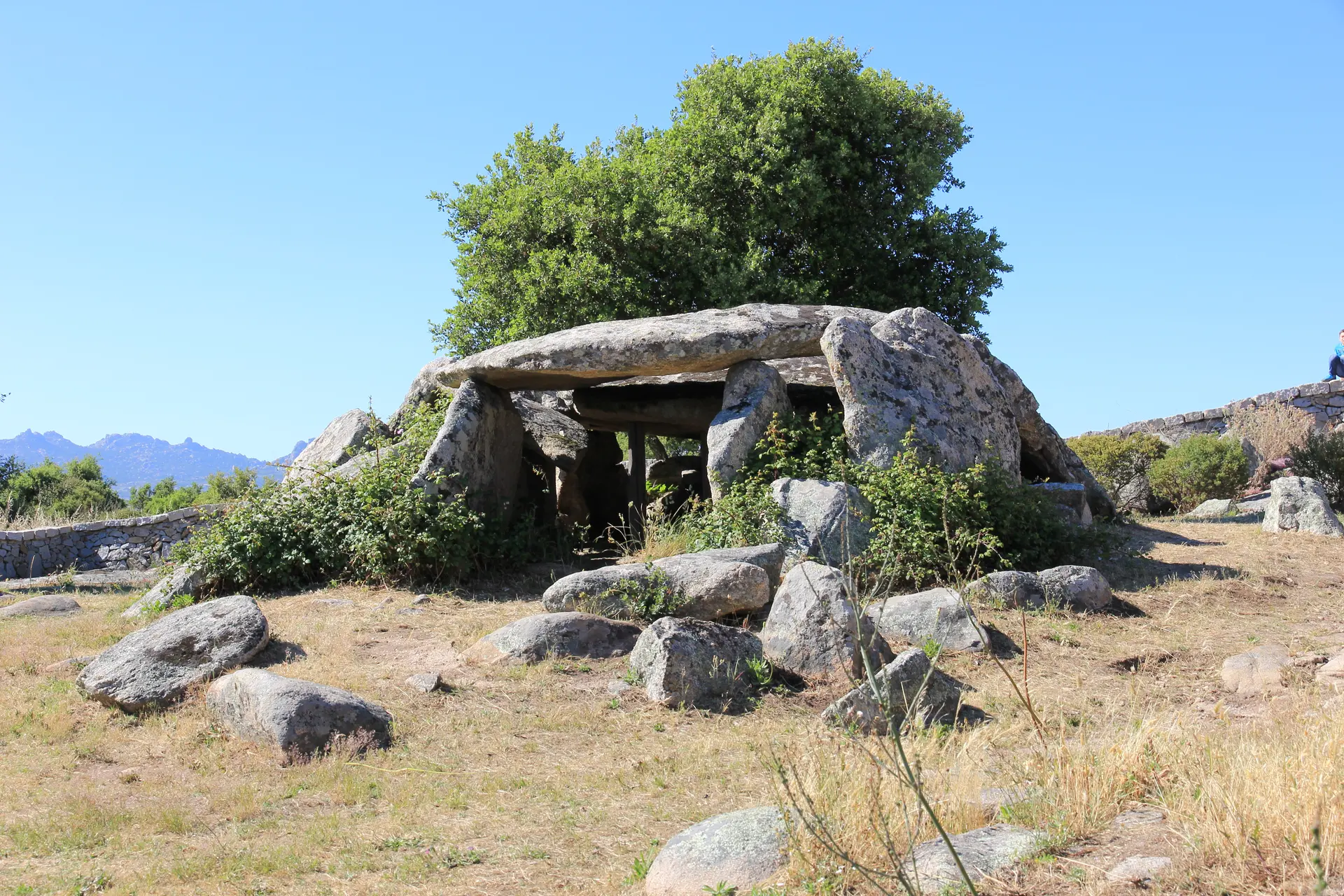
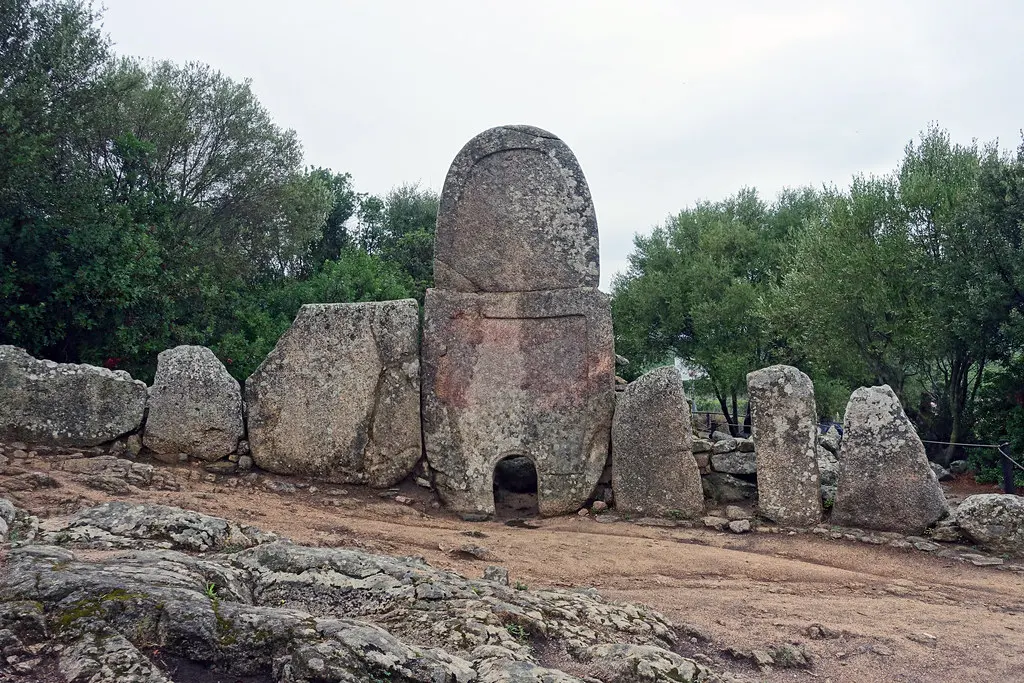
Explore other sacred places in the region. Proximity does not establish access or travel time; check each place’s guidance.


References
Sources consulted for this page. Source categories describe the publication, not a guarantee that every claim is verified. Traditional accounts and outside interpretations may differ.
- 01Dolmen di Luras | SardegnaTurismo — Regione Sardegna TourismofficialOfficial tourism information
- 02Luras, Dolmen di Ciuledda | SardegnaCultura — Regione SardegnaofficialOfficial cultural heritage
- 03Dolmen Ciuledda | GalluraGo — GalluraGoSource contextRegional tourism portal
- 04Dolmen di Ciuledda - Wikidata — WikidataencyclopediaGPS coordinates
Share a photo
Help visitors recognize Dolmen Ciuledda. Every submission is reviewed before publication.