Necropoli a Domus de Jana's di Ludurru
Six fairy houses carved from granite by Neolithic hands in the heart of Sardinia's cork oak country
Understand sacred places, explore living traditions, and learn how to engage respectfully with Pilgrim Map.
Access has not been verified. Check current local guidance before planning a visit.
Budduso, Sassari, Italy
Read the sources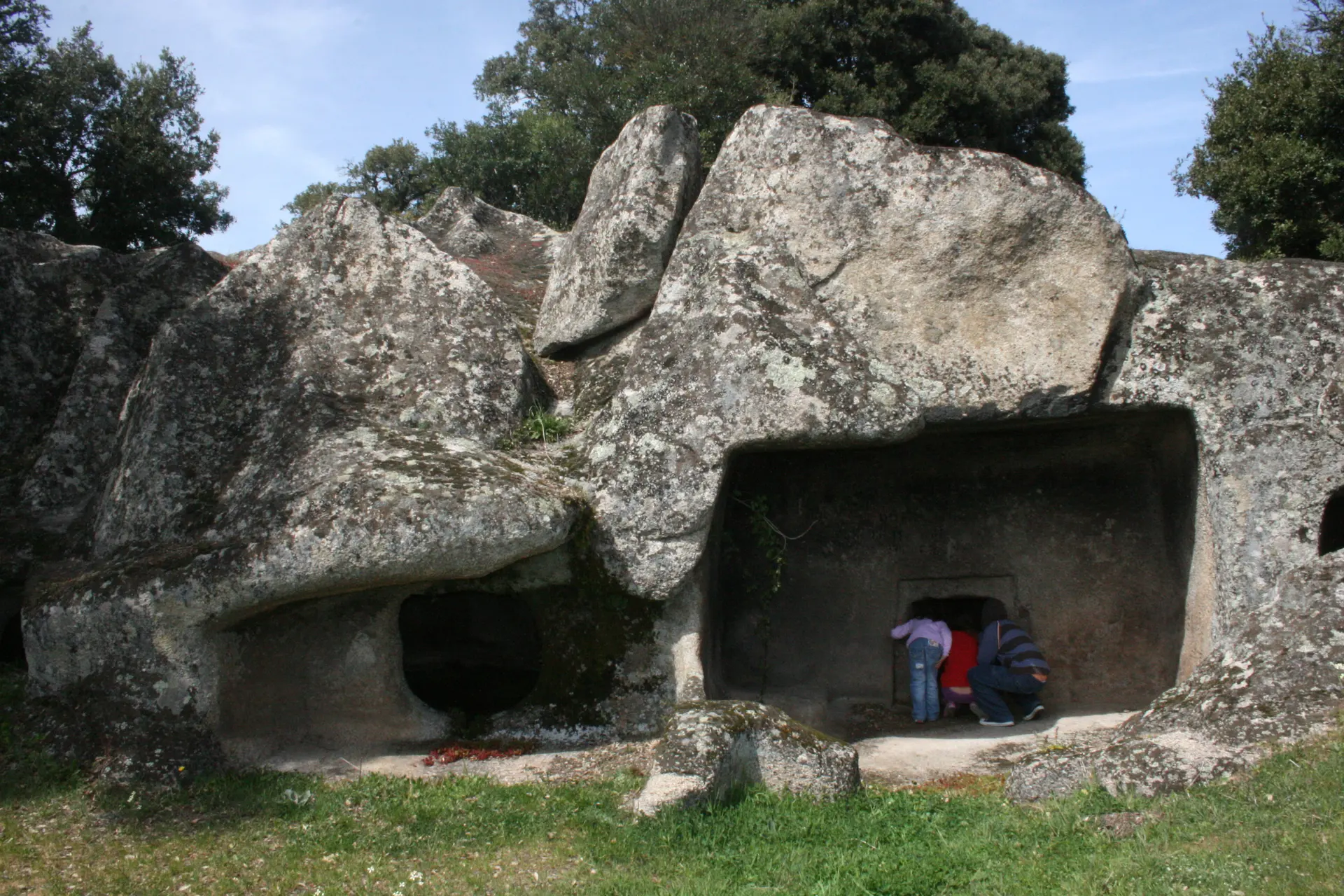
Image of Necropoli a Domus de Jana's di Ludurru. Image source · CC-BY-SA-3.0
Visit essentials
A quick read before you go
- Duration
- 45-60 minutes on site
- Access
- A short walk from Budduso.
Overview
A short walk from Budduso in northeastern Sardinia, Ludurru comprises six hypogea—underground tombs carved into the region's famously hard granite. Final Neolithic communities created them roughly between 3200 and 2800 BC, choosing one of their most resistant available materials.
Their varied designs may reflect chronological development or social differentiation. Some are simple monocellular chambers with curving contours; others are rectangular. The most elaborate have multiple interconnected rooms entered through vestibules, translating domestic architecture into the language of death.
Ludurru belongs to Sardinia's vast domus de janas tradition: more than three thousand five hundred are known across the island and approximately sixty around Budduso. The folk name 'fairy houses' recalls a belief that diminutive supernatural beings, different from present inhabitants and blurred over millennia into legend, made the tombs.
In July 2025, the domus de janas tradition became a UNESCO World Heritage Site as one of European prehistory's most significant funerary phenomena. Ludurru's granite chambers testify to the intensity of these ancient communities' relationship with their dead.
Why this place is sacred
Granite is not a forgiving material. It does not yield easily to tools, and the tools available to the people who carved the Ludurru tombs were themselves made of stone, bone, and perhaps obsidian. The decision to carve burial chambers from granite — when softer rock exists elsewhere in Sardinia — implies either that this was the available material or that the hardness itself held meaning. Perhaps both.
To house the dead in the most enduring stone is to make a statement about permanence that words cannot improve upon.
The domestic layout of the tombs adds a dimension that goes beyond mere preservation. These are not storage spaces. They are houses — with rooms, thresholds, and passages. The implication is clear, though its theological content is lost: death was understood as a form of dwelling, and the dead required architecture appropriate to their condition.
The landscape around Ludurru has likely not changed dramatically in five thousand years. Cork oaks and granite outcrops define the terrain. The tombs sit within this landscape without asserting themselves — they do not rise above the ground but sink into it, their entrances opening like doorways into the earth. The experience of approaching them is one of finding thresholds where the surface world gives way to something older and deeper.
Burial chambers for Final Neolithic communities of the Budduso area, carved c. 3200-2800 BC.
From active burial site through abandonment to folk memory ('fairy houses') to recognition as part of a UNESCO World Heritage tradition.
Experience and orientation
The necropolis is reached from the village of Budduso along a short path through characteristic Sardinian terrain: cork oaks with their stripped bark, scattered granite boulders, and the quiet that comes from being slightly removed from habitation. The tombs appear as openings in the granite — some small enough to require ducking, others slightly more generous.
The variety of chamber designs rewards attention. The simpler tombs offer a single curved space — a stone womb, essentially — while the more elaborate ones unfold through vestibules into multiple rooms. In the larger tombs, the sense of moving through a house is unmistakable, and the realization that this house was built for the dead shifts the experience from architectural appreciation to something more unsettling and profound.
The granite walls are smooth where the original carving remains visible. The precision of the work — achieved without metal tools — is remarkable. Running your flashlight beam across the surfaces reveals the marks of ancient labor: the patient removal of stone, handful by handful, to create a space that would endure for millennia.
Approach from Budduso with sturdy footwear and a flashlight. Explore each tomb individually, noting the differences in design. The multi-chambered tombs reward the longest attention. Visit in conjunction with the nearby Borucca domus de janas for comparison.
Context and lineage
The communities who inhabited the Budduso area during the Final Neolithic chose to house their dead in chambers carved from the region's granite. The choice of granite — far harder than the limestone and sandstone used in other parts of Sardinia — implies exceptional commitment. The domestic layout of the tombs suggests beliefs about death as a form of continued dwelling.
Part of a tradition encompassing over 3,500 tombs across Sardinia, inscribed as UNESCO World Heritage in 2025. The Ludurru necropolis represents the tradition's expression in the granite regions of northeastern Sardinia.
Traditions and practice
Original funerary rituals involved the deposition of the dead in rock-cut chambers, likely with grave goods. Red ochre painting of bodies and tomb walls is documented at other domus de janas sites.
No formal interpretation or guided visits at Ludurru. The site is freely accessible.
Visit as part of a broader exploration of Budduso area archaeology, combining Ludurru with the Borucca tomb and any locally arranged heritage walks.
Pre-Nuragic funerary tradition
HistoricalPart of Sardinia's UNESCO-inscribed domus de janas tradition
Rock-cut burial in chambers modeled on domestic architecture
Perspectives and open questions
A small but significant necropolis that illuminates the funerary practices and material culture of Neolithic Sardinia.
Scholarly perspective
The variety of tomb designs within a single small necropolis has been noted as evidence of either chronological development or social differentiation. The use of granite distinguishes this site from domus de janas carved in softer rock elsewhere in Sardinia.
Living and traditional perspectives
The folk tradition of fairy houses — inhabited by diminutive supernatural beings — preserves an ancestral memory of the tombs' ancient and non-human origins.
Alternative interpretations
The extraordinary labor of carving granite with stone tools raises questions about the intensity of Neolithic communities' relationship with their dead and the beliefs that motivated such sustained effort.
Open questions
The specific funerary beliefs of Ludurru's builders remain unrecoverable. The domestic layout of the tombs suggests sophisticated ideas about death and continuity, but the content of those ideas — the prayers, the myths, the understanding of what happens after death — is entirely lost.
Plan your visit
Access and arrival
A short walk from Budduso. Accessible by car from Olbia (about 80 km) or Nuoro (about 60 km). Limited or no signage.
Limited in Budduso; more options in Olbia or Nuoro.
Respectful visit
Practical outdoor clothing and sturdy footwear.
Permitted.
Not applicable.
Do not touch, mark, or remove stone | Do not enter chambers that appear unstable | Treat as a burial ground
No visitor infrastructure. The tombs may be difficult to find without local guidance or GPS coordinates.
Current practical details
Address
Via Giovanna D'Arco, 07020 Buddusò OT, Italy
Hours
Hours, fees, and access can change — verify on the official source before you travel. Practical details last checked Jun 2026.
Location
Map loads as you approach this section.
Pilgrim reflections
A portrait of encounter, not a score
Pilgrims describe what they felt, how present they could become, and whether the place would shape a journey. There are no stars and no ranking of traditions.
No reviewed reflections yet
The first pilgrims can help describe the character of being here.
Share a reflection
Available after an account-backed “Been there.” Every reflection is reviewed before publication.
Nearby sacred places
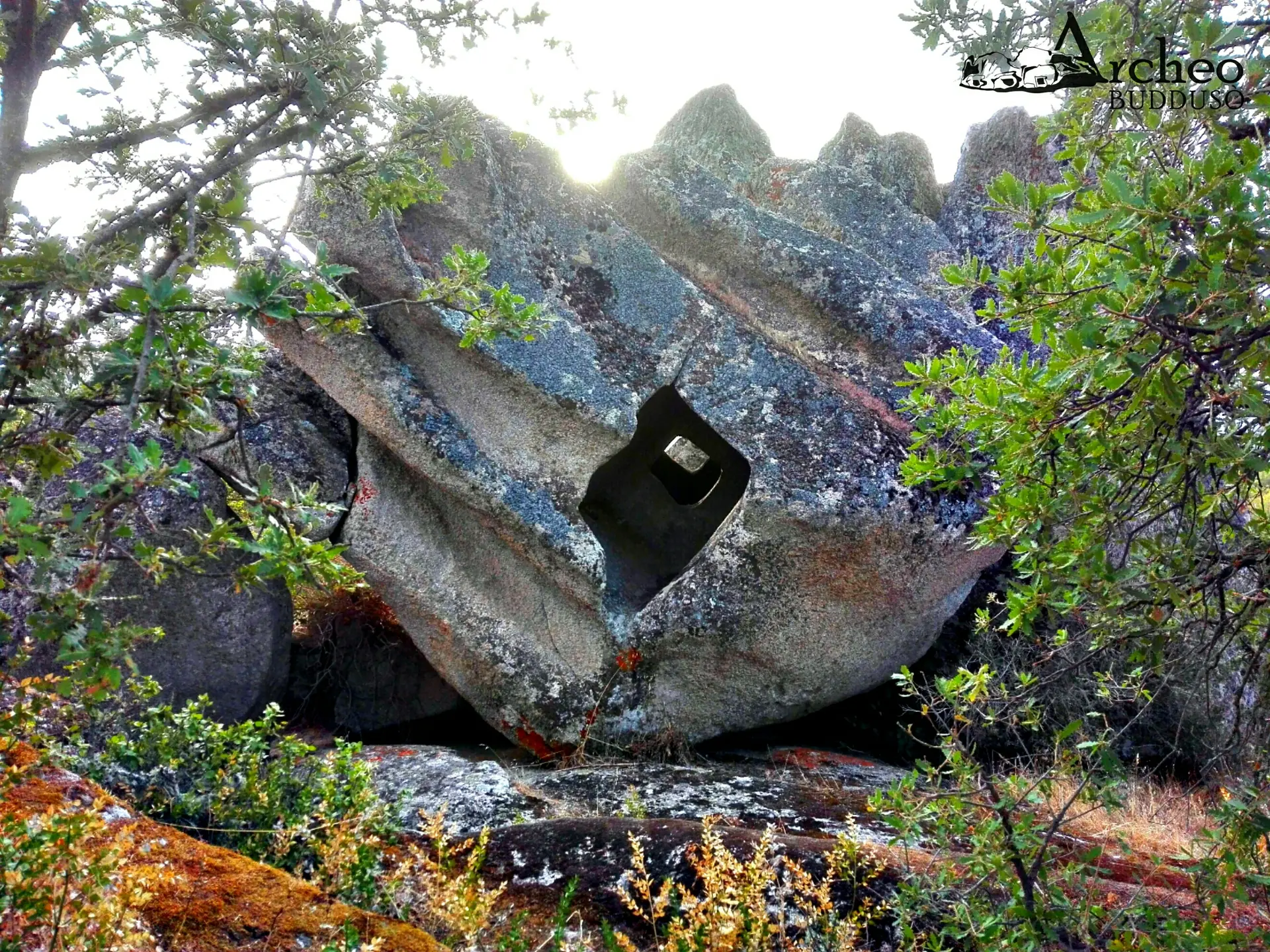
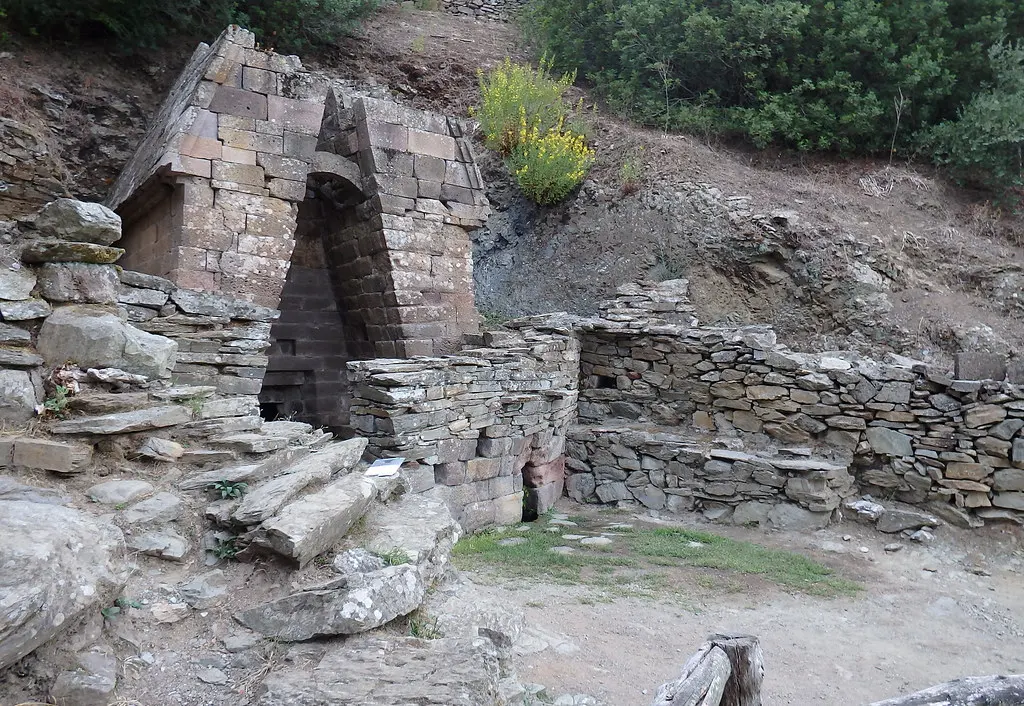
Explore other sacred places in the region. Proximity does not establish access or travel time; check each place’s guidance.


References
Sources consulted for this page. Source categories describe the publication, not a guarantee that every claim is verified. Traditional accounts and outside interpretations may differ.
- 01Necropoli di Ludurru - Sardegna Turismo — Regione SardegnaofficialOfficial Sardinia tourism portal with description and context
- 02Funerary Tradition in the Prehistory of Sardinia - UNESCO — UNESCO World Heritage CentreofficialUNESCO listing for domus de janas
- 03Domus de Janas: fairy houses in Sardinia - Italia.it — Italia.itofficialGeneral context with UNESCO recognition
- 04Domus De Janas Di Ludurru, Buddusò - Donna Nuragica — Donna Nuragica / Archeologia in SardegnaSource contextDetailed archaeological description of the necropolis
- 05The necropolis of Ludurru in Buddusò - Salute Trigu — Salute TriguguideDescriptive article with geological and archaeological context
- 06Domus de Janas - Wikipedia — Wikipedia contributorsencyclopediaGeneral context for the domus de janas tradition
Share a photo
Help visitors recognize Necropoli a Domus de Jana's di Ludurru. Every submission is reviewed before publication.