Chūzen-ji
Lakeside seat of the Tachiki Kannon — a 4.8-meter Standing Tree Kannon carved from a still-rooted katsura in 784
Understand sacred places, explore living traditions, and learn how to engage respectfully with Pilgrim Map.
Access has not been verified. Check current local guidance before planning a visit.
Nikkō, Tochigi Prefecture, Japan
Read the sources
Station 18 of 33
Bandō Sanjūsankasho PilgrimageVisit essentials
A quick read before you go
- Duration
- One to two hours for the Tachiki Kannon hall and precinct; 30+ minutes for juzu or shakyō…
- Access
- From Nikkō Station or Tobu-Nikkō Station, take a Tōbu Bus bound for Chūzenji Onsen or Yumoto…
Overview
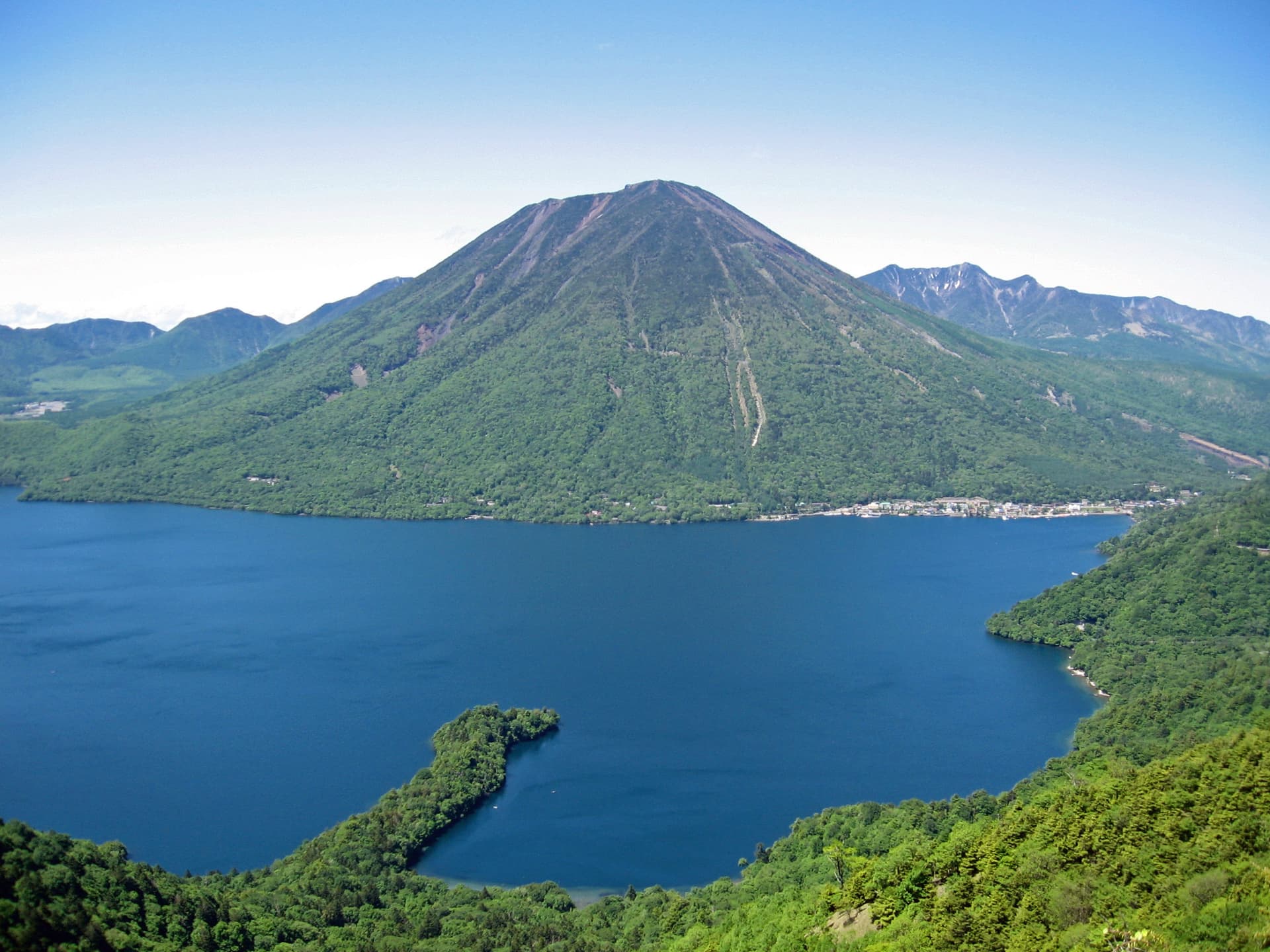
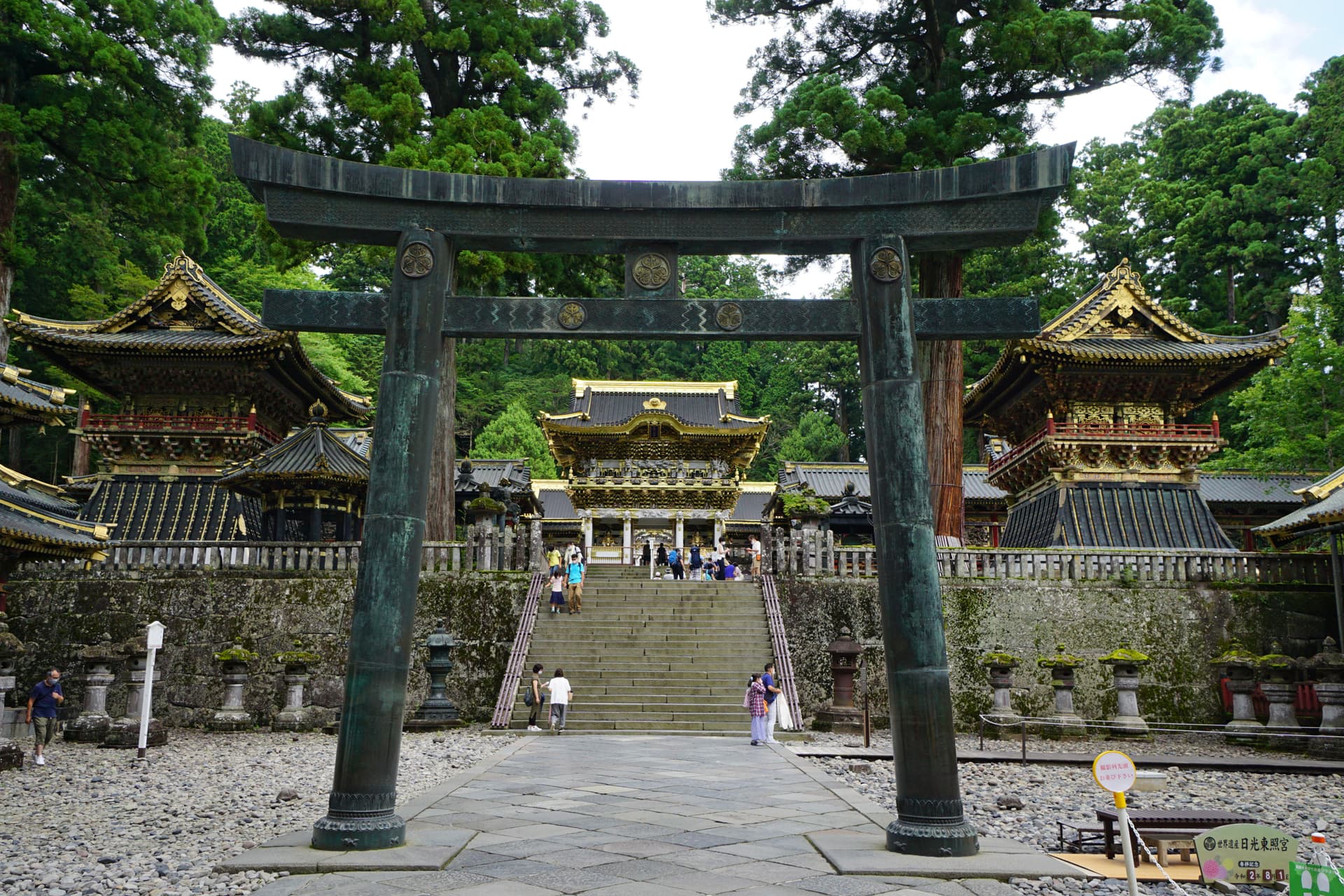
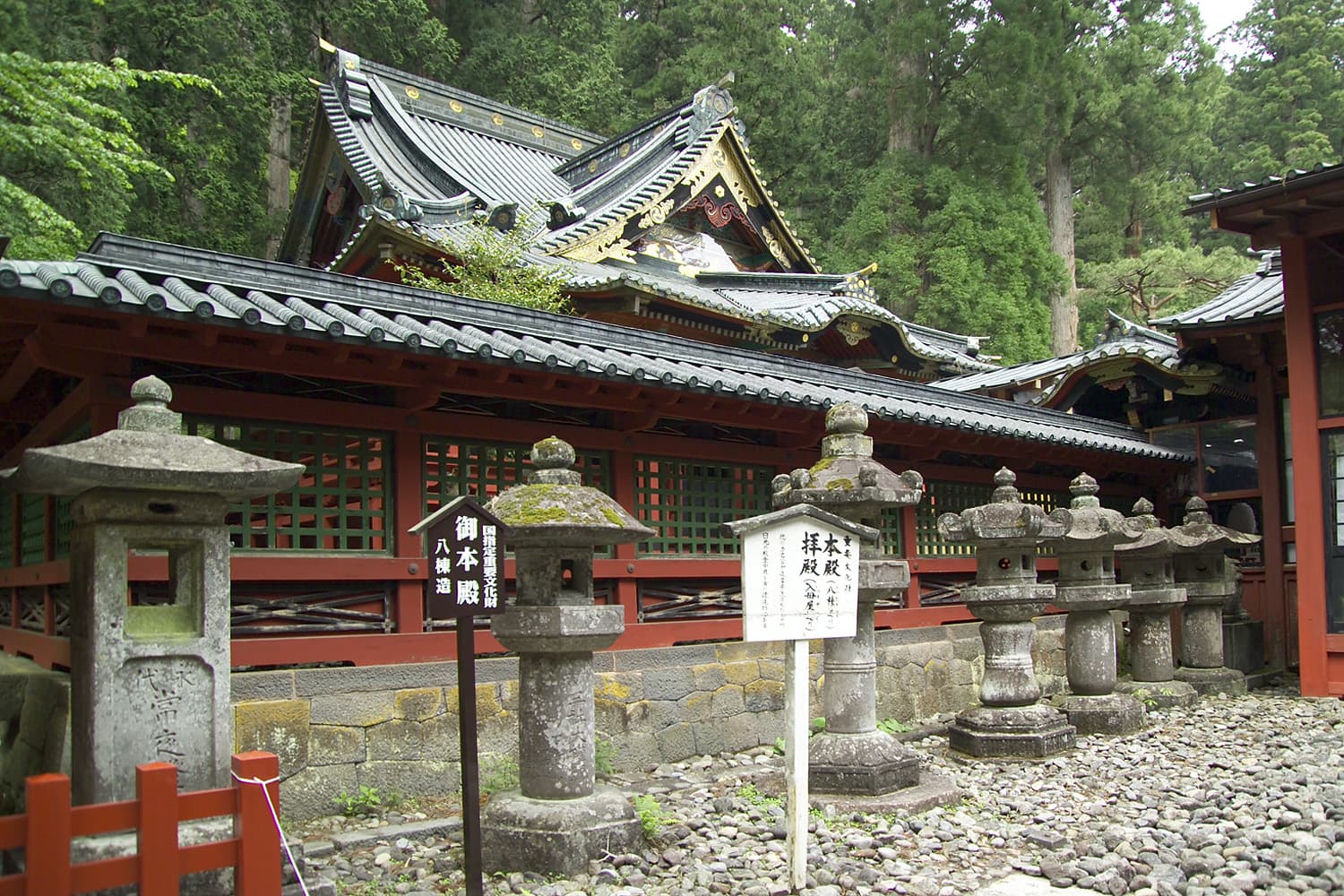
Chūzen-ji stands on Lake Chūzenji's eastern shore in the Nikkō uplands at 1,269 meters, where maples blaze in late October. Founded in 784 by Shōdō Shōnin—the Nara-period mountain ascetic who also established Mangan-ji and Nikkō's temples—it remains an active Nikkō-zan Rinnoji branch within the UNESCO World Heritage 'Shrines and Temples of Nikkō' complex.
Its honzon is the Tachiki Kannon, or Standing Tree Kannon. Tradition says Shōdō crossed the lake in 784, perceived Senjū Kannon near a rooted katsura tree, and carved the standing figure from its living trunk without felling it, preserving vegetative continuity between earth and image. The 4.8-meter figure, with eleven heads above a Thousand-Armed Kannon body, is Nikkō's oldest statue, an Important Cultural Property stylistically dated to the late Heian period.
Whether it is the original 784 carving or a faithful Heian replacement remains uncertain, but the tachiki form has continued.
In 1902, a typhoon-driven Mount Nantai landslide destroyed the buildings and swept the statue into Lake Chūzenji; it floated intact for three days before recovery, and the temple was rebuilt at its present eastern-shore site. Pilgrims understand this survival as Kannon's continuing protective vow against hardship and disaster.
Chūzen-ji is also a heart-station of Nikkō Shugendō. Shōdō identified Mount Nantai with Fudaraku-san, the Japanese Mount Potalaka and Avalokiteśvara's mythical Pure Land. His summer ascent initiated a pilgrimage still maintained by Futarasan Shrine and Nikkō Shugendō devotee groups, making lake, mountain, and lakeside Kannon one mandala of compassion.
Why this place is sacred
Chūzen-ji layers natural and devotional geography. Lake Chūzenji formed through an ancient eruption of Mount Nantai, the volcanic peak across the water that Shōdō Shōnin identified as Fudaraku-san, or Mount Potalaka, making the lake an entry to Avalokiteśvara's Pure Land. Between Nantai and the enshrined Tachiki Kannon, the eastern shore occupies the center of a mandala read continuously by Tendai-Shugendō tradition for twelve centuries.
At 4.8 meters, the Tachiki Kannon is taller than most surviving wooden Heian statues. Pilgrims describe its standing-tree form as 'living rather than made.' Tendai esoteric, or taimitsu, doctrine reads this through hongaku—original enlightenment within trees and earth: the bodhisattva does not enter the wood; the wood is recognized as already the bodhisattva. Its 1902 typhoon survival keeps that devotional power present.
Five Myō-ō and a white-dragon ceiling intensify the second-floor hall, while the clear high-altitude lake, sacred mountains, blazing autumn maples, and Nantai's reflection extend contemplation outdoors.
Founded in 784 by Shōdō Shōnin as Fudaraku-san Chūzen-ji, the original jingūji (shrine-temple) for Futarasan Shrine and the sacred Mount Nantai. From its founding the temple integrated Tendai Buddhism and pre-Buddhist mountain worship into a single Shugendō landscape with Mount Nantai as Mount Potalaka.
Originally established adjacent to Mount Nantai. Destroyed by a typhoon-driven landslide in 1902, with the Tachiki Kannon washed into Lake Chūzenji and recovered intact three days later. The temple was rebuilt at its present location on the eastern shore. It remains a branch of Nikkō-zan Rinnoji and an active Tendai temple within the broader UNESCO World Heritage 'Shrines and Temples of Nikkō' complex.
Experience and orientation
Most visitors reach Chūzenji Onsen from Nikkō by the Iroha-zaka road, climbing roughly 800 meters through forty-eight curves named for the Japanese syllabary. From the bus stop, walk approximately twenty-five minutes along the eastern lakeshore, with Mount Nantai visible across the water.
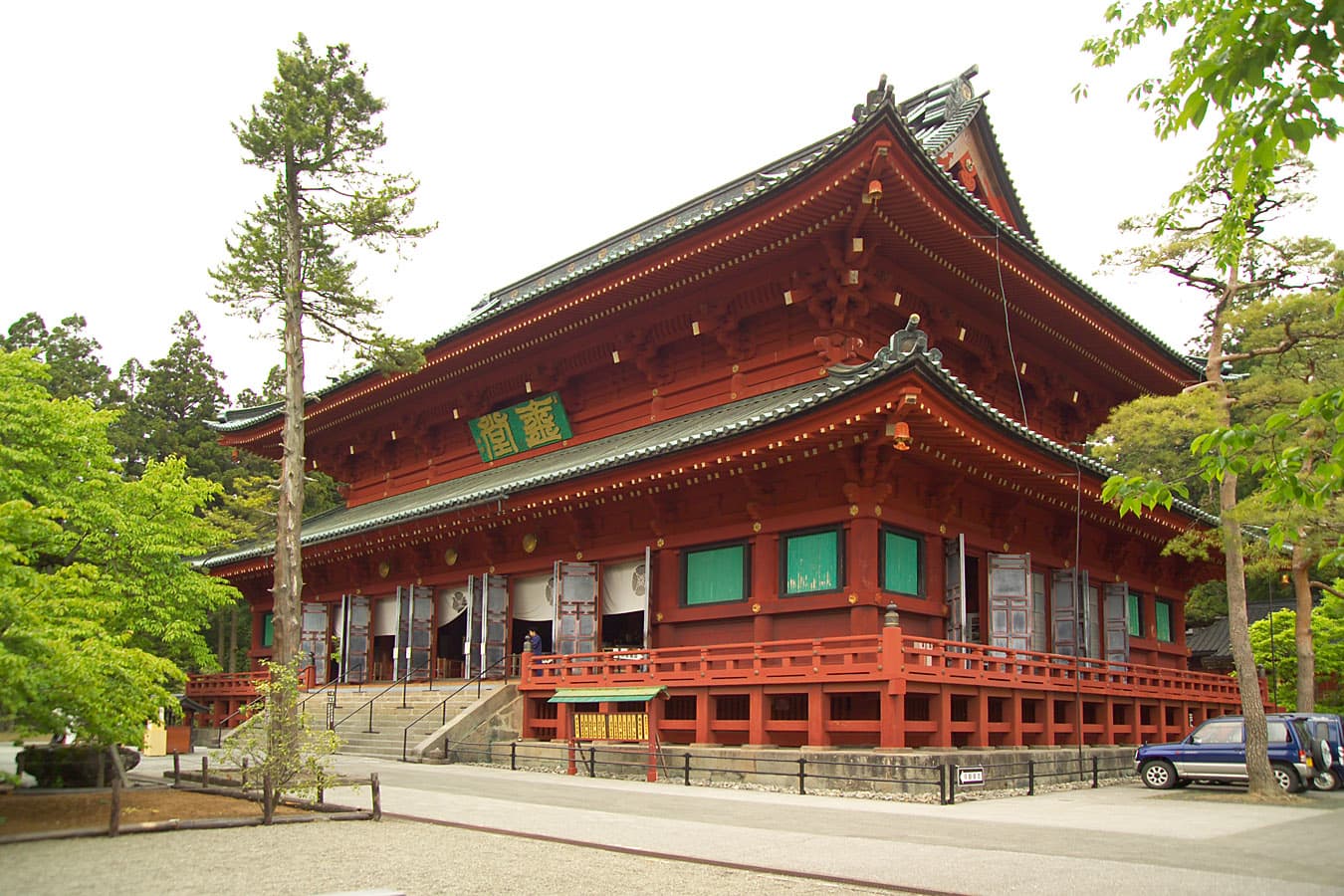
At the compact lakeside precinct, pay admission (~¥300, or ~¥450 combined with the nearby British Embassy Villa) and remove shoes for the Tachiki Kannon hall. The 4.8-meter rooted Senjū Kannon raises eleven heads into the hall; its scale, age, and tachiki form often hold even non-Buddhist visitors longer than expected. Offer coin, candle, and incense with palms together. Bandō pilgrims present their nōkyōchō for the eighteenth temple's red seal.
A narrow stair reaches the second-floor hall, where five Myō-ō, the wrathful Buddhist Wisdom Kings, sit beneath a coiled white-dragon ceiling as a compact esoteric mandala. Afterward, the lakeshore frames Mount Nantai, autumn maples, and winter ice formations on the western shore. For a small additional fee, visitors may craft juzu prayer beads with intentional wish-setting, copy an abbreviated sixteen-character shakyō, or trace a Buddha image in shabutsu.
These practices extend the visit rather than rushing onward to Kegon Falls or the Iroha-zaka return.
From Nikkō Station or Tobu-Nikkō Station, take a Tōbu Bus bound for Chūzenji Onsen or Yumoto Onsen (~40 min) to Chūzenji Onsen bus stop, then approximately 25 minutes on foot along the eastern lakeshore. Buses run year-round but reduce frequency in winter; the Iroha-zaka switchback can close briefly during heavy snow. Plan one to two hours for the temple and 30+ minutes for a workshop.
Context and lineage
In 784 (Enryaku 3), Shōdō Shōnin crossed Lake Chūzenji by boat as part of his project of opening the Nikkō mountains to Buddhist practice. The legend records that he perceived the image of Senjū Kannon on the lake near a rooted katsura tree on the eastern shore, and recognized this as the place where the bodhisattva had chosen to manifest.
Rather than felling the tree, he carved the standing Kannon statue directly from the living trunk, leaving the roots in the earth so the bodhisattva would remain an unbroken vegetative continuity between ground and figure. He named the temple Fudaraku-san Chūzen-ji — Fudaraku-san being the Japanese rendering of Mount Potalaka, Avalokiteśvara's mythical Pure Land — and identified Mount Nantai across the lake with the same Pure Land.
The temple was originally built adjacent to Nantai and served as the jingūji (shrine-temple) of Futarasan Shrine. In 1902, a typhoon-driven landslide off Nantai destroyed the temple buildings and washed the Tachiki Kannon into the lake; after three days the statue resurfaced intact and was reinstalled in a new hall on the eastern shore. The miracle has been understood since as a continuing demonstration of Kannon's protective vow.
Tendai-shū, Sanmon branch, administered as a branch of Nikkō-zan Rinnoji. Chūzen-ji is also one of the foundational sites of Nikkō Shugendō, the syncretic mountain-ascetic tradition combining Tendai Buddhism, Shinto, and pre-Buddhist mountain worship around Mount Nantai and Futarasan Shrine.
Shōdō Shōnin
Founder; sculptor of the Tachiki Kannon
Saichō (Dengyō Daishi)
Founder of Tendai in Japan
Tenkai
Tendai monk and Tokugawa-era abbot of Nikkō-zan
The anonymous Heian carver
Sculptor of the surviving Tachiki Kannon (per scholarly consensus)
Traditions and practice
The principal devotion is veneration of the Tachiki Kannon in the main hall — coin offering, candle, incense, palms together, brief silence. Bandō pilgrims present their nōkyōchō at the office for the eighteenth temple's stamp. The second-floor hall holds the five Myō-ō (Buddhist Wisdom Kings) — Fudō, Gōzanze, Gundari, Daiitoku, and Kongōyasha — with the white-dragon ceiling painting overhead; pilgrims often pause here for a separate brief veneration. Shakyō (sutra copying) is offered in a sixteen-character abbreviated form for visitors.
Juzu (prayer-bead) crafting is offered as a workshop in which the visitor chooses beads, sets an intention, and assembles a personal mala. Shabutsu (Buddha-image tracing) is also available. Shōdō-Shōnin commemorative observances are held within the broader Rinnoji calendar. The Mount Nantai summer ascent (typically May 5 – October 25 via Futarasan Shrine) is a Shugendō pilgrimage practice still maintained by devotee groups.
The temple receives Bandō pilgrims and general visitors daily within seasonal hours. Autumn foliage (mid-to-late October) brings the highest visitation; summer offers cool relief from lowland heat (lake elevation 1,269 m); winter brings ice formations on the lake's western shore and the Chūzenji Snow & Ice Festival in February. Juzu and shakyō workshops are offered year-round on a walk-in basis; group reservations are recommended.
Approach the Tachiki Kannon hall slowly. The first sight of the statue is the contemplative core of the visit — allow it to register at scale before any photography or commentary. Climb to the second-floor Myō-ō hall and look up to the white-dragon ceiling. Then exit the precinct and walk along the eastern lakeshore for at least ten minutes; Mount Nantai across the water is the silent context that the temple has always been read against.
If you have time and inclination, sit for a juzu or shakyō session — both are designed to extend the visit's contemplative reach.
Buddhism
ActiveChūzen-ji belongs to the Tendai school of Mahayana Buddhism and is one of the oldest temples founded in Nikkō by Shōdō Shōnin (735–817), pioneer of mountain Buddhism in Japan. Originally established as a jingūji for Futarasan Shrine and the sacred Mount Nantai, the temple was named Fudaraku-san Chūzen-ji — Fudaraku-san being the Japanese rendering of Mount Potalaka, Avalokiteśvara's mythical Pure Land. Its principal image, the 4.8-meter Tachiki Kannon, is the oldest surviving statue at Nikkō and is designated an Important Cultural Property; it remains the focal devotional object of the Bandō #18 station.
Shugendō
ActiveChūzen-ji's founding by Shōdō Shōnin and its origin as a jingūji to Futarasan Shrine and Mount Nantai place it at the heart of Nikkō's Shugendō tradition — a syncretic mountain ascetic tradition blending Shinto, esoteric Buddhism, and pre-Buddhist mountain worship. Shōdō Shōnin likened Mount Nantai to Mount Potalaka (Fudaraku-san), the Pure Land of Avalokiteśvara, and his summer climb of Nantai initiated a pilgrimage practice that continues today, formally maintained by Nikkō Shugendō and devotee groups associated with Futarasan Shrine.
Perspectives and open questions
Chūzen-ji's record holds three converging interpretations: the temple legend of Shōdō Shōnin's lakeside vision, the Tendai esoteric reading of the Tachiki Kannon as living wood already enlightened, and the modern scholarly dating of the surviving statue to the late Heian period.
Scholarly perspective
The 4.8-meter Tachiki Kannon dates stylistically to the late Heian period, supporting the temple's claim of an early Heian carving by Shōdō Shōnin or his immediate successors; whether the present image is the original 784 carving or a faithful Heian replacement preserving the tachiki form cannot be securely established. The temple's role as jingūji to Futarasan Shrine and its administrative absorption into Nikkō-zan Rinnoji are well-documented historically.
The 1902 typhoon destruction and miraculous recovery of the statue are documented in the temple's modern records.
Living and traditional perspectives
Nikkō Shugendō and Tendai tradition both hold that Mount Nantai is Fudaraku-san — Mount Potalaka, the Pure Land of Avalokiteśvara — and that Shōdō Shōnin's recognition of Kannon's image on Lake Chūzenji is a foundational moment of Japanese mountain Buddhism. The Tachiki Kannon's 1902 survival is regarded as a continuing demonstration of the bodhisattva's protective vow against hardship and disaster.
Alternative interpretations
Within Tendai esoteric (taimitsu) reading, the Tachiki Kannon embodies the doctrine of hongaku — original enlightenment present in trees and earth — by being literally carved from a living rooted tree. The bodhisattva does not enter the wood; the wood is recognized as already the bodhisattva. The 1902 lake survival can be read in the same key: the statue's continuity with the rooted earth meant the lake could not consume what the lake had already received as part of itself.
Open questions
{"Whether the present Tachiki Kannon is the original 784 carving or a Heian-period replacement faithfully retaining the tachiki form","The pre-Buddhist religious associations of Mount Nantai prior to Shōdō Shōnin's identification with Fudaraku-san","The exact pre-1902 architectural form of the temple and its precise original location"}
Plan your visit
Access and arrival
From Nikkō Station or Tobu-Nikkō Station, take a Tōbu Bus bound for Chūzenji Onsen or Yumoto Onsen (~40 min) to Chūzenji Onsen bus stop, then approximately 25 minutes on foot along the eastern lakeshore. Admission ~¥300 (~¥450 combined with the British Embassy Villa). Buses run year-round but reduce frequency in winter; the Iroha-zaka switchback road can close briefly during heavy snow — confirm conditions in winter via Nikkō Tourism.
Mobile phone signal is generally good around Chūzenji Onsen and the temple precinct.
Chūzenji Onsen offers a wide range of ryokan and hot-spring inns along the lake's eastern shore — the traditional pilgrim accommodation. The British Embassy Villa Memorial Park nearby provides historical context. Nikkō city below the Iroha-zaka offers further options.
Respectful visit
Modest, warm clothing — Lake Chūzenji is cold even in summer due to elevation. Bandō pilgrims often wear traditional white hakui. For the Mount Nantai summer ascent, full mountain hiking gear is required.
Permitted in outdoor precincts and certain interiors; the Tachiki Kannon hall typically restricts photography of the honzon. No flash photography near the Important Cultural Property statue.
Standard saisen, incense, candles. Donations for stamp service and visitor workshop fees (juzu, shakyō, shabutsu).
Remove hats and lower voices in the Tachiki Kannon hall | No flash photography near the Important Cultural Property honzon | Lake area conduct: do not litter; protect the watershed of the sacred lake | Mount Nantai climbing season is May 5 – October 25 via Futarasan Shrine registration
The Tachiki Kannon hall typically restricts photography of the honzon. No flash photography near the Important Cultural Property statue. The lake area is genuinely cold even in summer due to elevation; bring a layer. Mount Nantai climbing is restricted to the summer season by Futarasan Shrine and is a serious mountain ascent, not a stroll.
Current practical details
Address
2578 Chūgūshi, Nikko, Tochigi 321-1661, Japan
Phone
Hours
Hours, fees, and access can change — verify on the official source before you travel. Practical details last checked Jun 2026.
Location
Map loads as you approach this section.
Pilgrim reflections
A portrait of encounter, not a score
Pilgrims describe what they felt, how present they could become, and whether the place would shape a journey. There are no stars and no ranking of traditions.
No reviewed reflections yet
The first pilgrims can help describe the character of being here.
Share a reflection
Available after an account-backed “Been there.” Every reflection is reviewed before publication.
Nearby sacred places
Explore other sacred places in the region. Proximity does not establish access or travel time; check each place’s guidance.
References
Sources consulted for this page. Source categories describe the publication, not a guarantee that every claim is verified. Traditional accounts and outside interpretations may differ.
- 01Chuzenji Temple — Nikko-zan Rinnoji Official Site — Nikko-zan Rinnoji TempleofficialAuthoritative parent-temple description. Confirms 4.8 m wooden Standing Senjū Kannon (Jūichimen Senjū Kannon), late Heian production estimate.
- 02Chuzenji Temple — Japan Tourism Agency multilingual database — Japan Tourism Agency / MLITofficialGovernment-vetted English description of the temple and Tachiki Kannon.
- 03Tachiki Kannon, Nikkozan Chuzenji Temple — Visit TochigiofficialTochigi tourism authority. Provides seasonal hours and lake context.
- 04Connect with Nikko's Beautiful Nature through Shugendo — Visit Nikko (Official Guide)officialDescribes Shōdō Shōnin's role in Nikkō Shugendō and the founding mythology of Mount Nantai climb.
- 05Chūzen-ji — Wikipedia contributorsencyclopediaConfirms Tendai school, Senjū Kannon honzon, founding by Shōdō Shōnin in 784, original jingūji of Futarasan, Bandō #18, 1902 typhoon and statue's miraculous survival.
- 06Chuzenji Temple — Nikko Travel — Japan-guide.comguideReputable Japan travel resource. Notes ¥300 admission, second-floor five Myō-ō hall, white-dragon ceiling.
- 07Lake Chūzenji — Wikipedia contributorsencyclopediaGeographical and cultural context for the lake; supports thin-place description.
- 08Chūzenji Tachiki-dō: Sacred Lakefront Temple & Juzu Ritual in Nikko — Japan Deluxe ToursguideDescribes juzu (prayer-bead) crafting visitor experience at the temple.
Pilgrim glossary
- Honzon
- The principal Buddhist deity enshrined as a temple's central object of worship.
- Kannon
- The bodhisattva of compassion, central to many East Asian pilgrimage routes.
- Bodhisattva
- An enlightened being who postpones full nirvana to help others toward awakening.
- Mandala
- A symbolic diagram of the cosmos used in meditation and ritual.
- Sutra
- A canonical Buddhist scripture, often chanted as part of practice.
- Tendai
- A Japanese Buddhist school based on the Lotus Sutra, foundational to many later traditions.
- Pure Land
- A Buddhist tradition focused on rebirth in Amida Buddha's western paradise through devotional practice.
- Zen
- A Japanese Buddhist school emphasizing seated meditation and direct insight.
Share a photo
Help visitors recognize Chūzen-ji. Every submission is reviewed before publication.