Mt. Nantai
The sacred peak where a visionary monk first heard the gods, and pilgrims still climb to meet them
Understand sacred places, explore living traditions, and learn how to engage respectfully with Pilgrim Map.
Access has not been verified. Check current local guidance before planning a visit.
Nikko, Tochigi Prefecture, Japan
Read the sources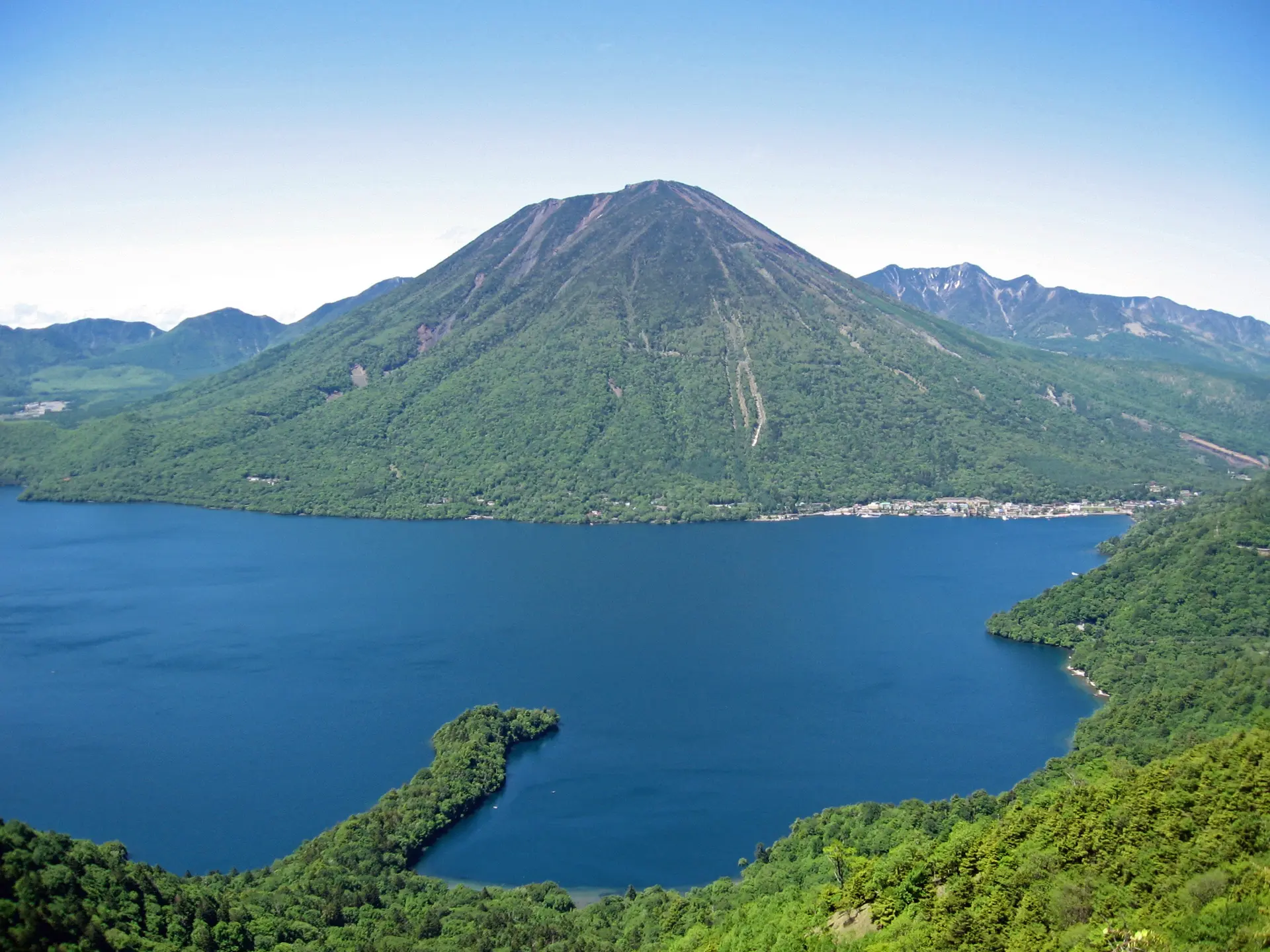
Visit essentials
A quick read before you go
- Duration
- 6-8 hours round trip.
- Etiquette
- Mount Nantai requires registration at Futarasan Shrine before climbing, appropriate hiking…
Overview
In Japan's ancient religion, certain mountains are not merely sacred places but divine beings themselves. Mount Nantai is such a mountain. Rising above Lake Chuzenji in volcanic symmetry, its form speaks of something beyond geology. The name means Male-body Mountain, paired with nearby Mount Nyotai, Female-body Mountain, in the cosmic duality that pervades Japanese sacred geography.
For millennia before Buddhism arrived, people worshipped this mountain as go-shintai, the actual physical body housing a kami. The mountain provides water to the plains below, and what provides life is divine. This is the oldest stratum of Japanese spirituality, older than temples, older than organized religion.
In 767 CE, a young Buddhist monk named Shodo Shonin did something unprecedented: guided by a vision from the deity Myojo Tenshi, he climbed to the summit. What had been forbidden became possible. Shodo established shrines at the base, by Lake Chuzenji, and on the summit itself, creating a vertical axis of sacred space connecting earth and heaven. He founded Futarasan Shrine and laid the foundation for everything Nikko would become.
Today, approximately 35,000 people climb Mount Nantai each year during the open season from May 5 to October 25. They register at Futarasan Shrine, receive a protective charm, and make the challenging 3-4 hour ascent through volcanic terrain to the Okumiya, the summit shrine. At night during the August festival, pilgrims climb in darkness to witness sunrise from the sacred peak, enacting in their bodies what Shodo Shonin first accomplished over 1,250 years ago.
The mountain remains classified as an active volcano. Something still stirs beneath the surface.
Why this place is sacred
The Japanese understanding of sacred mountains differs fundamentally from Western concepts. The mountain is not a place where the divine is encountered; the mountain is divine. Go-shintai worship recognizes that certain natural formations house kami, divine spirits. Mount Nantai does not represent a god; Mount Nantai is one.
This understanding arose from observation. The mountain catches rain and snow, filtering it through volcanic stone, releasing it in streams that water the plains below. What gives life is worshipped as divine. This is not primitive nature worship but sophisticated recognition of the sacred dimension of ecological relationship.
The mountain's form contributes to its power. The near-perfect volcanic cone, rising alone above the surrounding terrain, suggests cosmic order made visible. Like Mount Fuji on a smaller scale, Mount Nantai's shape speaks of intention, as though the mountain was built rather than accumulated. The Japanese aesthetic sensibility perceives such forms as expressions of divine will.
Shodo Shonin's visionary ascent in 767 CE added a human dimension to the mountain's inherent sacredness. Guided by the deity Myojo Tenshi, he became the first to summit what had been considered unreachable. In doing so, he established that humans could approach the divine through physical effort. This is the essence of Shugendo, the path of mountain asceticism: the body's struggle up the mountain parallels the soul's ascent toward enlightenment.
Local legends speak of a mountain spirit who assisted hermits and monks in achieving spiritual realization. Whether understood as literal presence or metaphor for the mountain's effect on consciousness, the reports are consistent: something about climbing Mount Nantai transforms those who make the effort.
The mountain's classification as an active volcano adds geological to spiritual power. The last eruption occurred approximately 7,000 years ago, but in 2017 the Japan Meteorological Agency confirmed ongoing activity. The mountain literally contains fire.
Mount Nantai has served as go-shintai, the physical body of a kami, since the Yayoi period. The mountain was worshipped because it provides water to the surrounding plains, sustaining life through its streams. Shodo Shonin's establishment of shrines at the base, lakeside, and summit created a pilgrimage structure that channels human devotion toward the divine presence the mountain embodies.
Experience and orientation
The experience of Mount Nantai begins before you start climbing. At Futarasan Shrine Chuguji, you register for the ascent, pay the modest fee, and receive an omamori, a protective charm. This is not bureaucracy but ritual: you are formally acknowledging your intention to approach the sacred, and the shrine acknowledges you in return.
The climb itself takes 3-4 hours and is genuinely challenging. The trail ascends 1,200 meters through volcanic terrain, with sections of loose rock and steep grades. This is not a leisurely hike but an effort that demands attention. In Shugendo understanding, this difficulty is the point. The body's struggle mirrors the soul's journey. Ease would defeat the purpose.
As you climb, the landscape transforms. Lake Chuzenji appears below, its waters reflecting the sky. The forest gives way to volcanic stone. The air thins. Each stage of the ascent feels like transition, like passing through gates.
The summit holds the Okumiya, the inner shrine of Futarasan. To pray here, where Shodo Shonin first stood in 767 CE, is to participate in a tradition older than most of what humans have built. The views are spectacular: mountains in all directions, the sacred lake below, the valleys stretching toward distant plains. But the views are secondary to the presence.
Pilgrims describe various experiences at the summit: a sense of arrival that transcends physical accomplishment, unexpected emotional release, clarity about matters that had seemed confused, the feeling of being seen by the mountain itself. These reports are consistent enough across diverse visitors to take seriously.
The night climbing festival (Nantaisan Tohai Koshi) from July 31 to August 7 offers a different dimension. Pilgrims climb in darkness to reach the summit before dawn, then witness sunrise from the sacred peak. Like the Shodo Shonin who first stood here, they see the light break over the world.
The descent, often overlooked, has its own quality. Coming down from the sacred, re-entering ordinary space, the world looks different than it did that morning.
Register at Futarasan Shrine Chuguji before climbing. This is not optional but part of the pilgrimage practice. The registration fee includes a protective charm.
Approach the climb as pilgrimage, not hiking. The physical challenge is part of the spiritual practice. Shugendo teaches that what the body does, the soul experiences. Climb mindfully, attending to each step.
At the summit shrine, take time for stillness. You have arrived where Shodo Shonin first stood over 1,250 years ago. Whatever prayer or intention you carry, offer it here.
If you can climb during the August festival and witness sunrise from the summit, this is the fullest form of the practice. Arrange accommodations in advance as this is a popular pilgrimage time.
Context and lineage
In 767 CE, a young Buddhist monk named Shodo Shonin received a message from the deity Myojo Tenshi guiding him to Mount Nantai. Following this divine instruction, he became the first person to summit the sacred peak. During his ascent, he discovered Lake Chuzenji and Kegon Falls. On the summit, he established a shrine. In 782 CE, he founded Futarasan Shrine, creating the institutional framework for the mountain's worship that continues today.
Local legends add that a powerful mountain spirit dwelling on Mount Nantai assisted hermits and monks in achieving spiritual realization. The mountain was believed to be alive with divine presence. Approaching it required purification and reverence.
Mount Nantai's worship lineage spans multiple traditions. Pre-Buddhist go-shintai worship recognized the mountain as kami. Shugendo, the syncretic path of mountain asceticism combining Shinto and Buddhist elements, developed through Shodo Shonin's practice. Buddhist temple worship at Rinnoji and Chuzenji Temple added another dimension. The mountain's inclusion in the Tokugawa shoguns' sacred precinct from the 17th century connected it to state religion. Today, Futarasan Shrine maintains the Shinto tradition while the mountain draws practitioners of various paths.
Okuninushi
deity
The kami enshrined at Futarasan Shrine and embodied in Mount Nantai. Okuninushi is one of the major Shinto deities, associated with the land, agriculture, and nation-building.
Shodo Shonin
founder
The Buddhist monk (735-817) who made the first recorded ascent of Mount Nantai in 767 CE, guided by divine vision. He founded Futarasan Shrine and Rinnoji Temple, establishing Nikko as a sacred center.
Myojo Tenshi
deity
The divine being who sent Shodo Shonin the message guiding him to Mount Nantai. The name means 'Bright Star Heavenly Child.'
Traditions and practice
Traditional practices include registration at Futarasan Shrine before climbing, receiving an omamori (protective charm), purification before ascent, prayers and offerings at the summit Okumiya shrine, and night climbing during the festival period. Shugendo practitioners engage in more intensive ascetic practices including waterfall meditation and extended retreats.
Modern pilgrims follow the traditional pattern: register at Futarasan Shrine Chuguji near the trailhead, pay the registration fee (currently 1,000 yen), receive a protective charm, and make the climb during the open season. The summit shrine receives prayers and offerings. Photography is permitted.
The Nantaisan Tohai Koshi festival draws pilgrims for the night climbing experience. Climbing in darkness to reach the summit before dawn, then witnessing sunrise from the sacred peak, enacts the mythological dimension of the site.
For those unable to make the physical climb, worship at Futarasan Shrine's main hall and Chuguji connect to the mountain's power without requiring the ascent. The shrine network extends the mountain's accessibility.
If you are physically capable and visiting during the climbing season, make the ascent. The embodied practice of climbing is central to this site's meaning. Register at Futarasan Shrine Chuguji and receive the protective charm as a formal acknowledgment of your pilgrimage intention.
Climb mindfully. This is not a race or a fitness challenge but a spiritual practice. Let your body's effort become a form of prayer.
At the summit, spend time at the Okumiya shrine. Whatever intention brought you here, offer it. Then simply be present on the peak where Shodo Shonin first stood.
If you can arrange to climb during the August festival and witness sunrise, this is the fullest expression of the practice.
For those who cannot climb, worship at Futarasan Shrine's main hall and Chuguji still connects you to the mountain's power. The shrine exists to make the mountain's presence accessible.
Shinto
ActiveMount Nantai is the go-shintai (sacred body housing a kami) of Futarasan Shrine, representing one of Japan's oldest forms of mountain worship. The summit shrine (Okumiya) is part of the UNESCO World Heritage site. The mountain is dedicated to Okuninushi (Onamuchi-no-mikoto), a major Shinto deity.
Registration at Futarasan Shrine before climbing, receiving protective charm, prayers at summit shrine, participation in Nantaisan Tohai Koshi festival.
Shugendo
ActiveNikko's Shugendo tradition began with Shodo Shonin's pioneering ascent in 767 CE. The mountain became a center for mountain asceticism combining Shinto and Buddhist elements. The climb itself is understood as spiritual practice.
Mountain climbing as spiritual training, waterfall meditation, ascetic practices in nature, reverence for mountain spirits.
Japanese Buddhism
ActiveMount Nantai has been sacred to Buddhist practitioners since Shodo Shonin's ascent. He founded major temples in the area including Rinnoji and Chuzenji. The mountain represents the Buddhist understanding that enlightenment can be sought through engagement with the natural world.
Pilgrimage, meditation retreats, temple worship at associated sites.
Perspectives and open questions
Mount Nantai can be understood through multiple lenses: as exemplar of Japan's ancient mountain cult, as the founding site of Nikko's sacred landscape, and as living pilgrimage destination. Each perspective reveals dimensions of this UNESCO World Heritage sacred mountain.
Scholarly perspective
Archaeological and religious studies confirm Mount Nantai as one of the best-preserved examples of Japan's ancient mountain cult tradition. During the Yayoi period, mountains providing water to settlements were commonly worshipped as go-shintai, objects housing kami. The syncretic tradition combining Shinto mountain worship with Buddhist asceticism (Shugendo) exemplifies Japanese religious synthesis.
The UNESCO World Heritage designation recognizes the site's outstanding universal value as part of the 'Shrines and Temples of Nikko.' The nomination notes the harmonious integration of religious architecture with the natural landscape, a relationship that the mountain pilgrimage embodies.
Recent geological classification of the mountain as an active volcano adds a scientific dimension to its sacred status.
Living and traditional perspectives
In Shinto tradition, Mount Nantai is the living body of the kami enshrined at Futarasan Shrine. The mountain is not merely a symbol but the actual physical presence of divinity. Climbing is an act of approaching and communing with the sacred.
Shugendo practitioners understand the mountain as a realm where spiritual power can be accessed through physical discipline. The body's struggle up the slope parallels the soul's ascent toward enlightenment. What is merely hiked is not truly known; what is struggled for becomes part of the practitioner.
Alternative interpretations
Some view Mount Nantai as part of a sacred energy network in Japan, with the male/female pairing of Nantai and Nyotai mountains representing cosmic balance and energy polarity.
Open questions
The full details of Shodo Shonin's visionary experience remain undocumented beyond brief accounts. The nature of the 'mountain spirit' reported to assist practitioners has not been systematically studied. Pre-Shodo religious practices on the mountain are largely unknown, inferred from general patterns rather than specific evidence.
Plan your visit
Access and arrival
Accommodations available in Chuzenji Onsen area near the trailhead, and in Nikko town. Staying overnight allows for early starts and, during festival period, night climbing. Hot springs in the area offer recovery after the climb.
Respectful visit
Appropriate hiking gear: sturdy boots, weather-appropriate layers, sun protection. No special religious attire required.
Permitted throughout. Be respectful at shrine areas.
Coins and prayers at the summit shrine. The protective charm received at registration is itself a form of offering acknowledged.
{"Registration required at Futarasan Shrine before climbing","Mountain closed October 26 - May 4","Do not disturb natural features or wildlife","Carry out all trash"}
The mountain is closed during winter (October 26 - May 4). Do not attempt to climb outside the designated season. The volcanic terrain and weather conditions make winter climbing dangerous.
The climb is genuinely strenuous. Assess your physical condition honestly. Bring appropriate hiking gear, water, food, and layers for changing conditions.
Register at the shrine before climbing. This is both traditional practice and practical safety measure.
Current practical details
Address
Mount Nantai, Chugushi, Nikko, Tochigi 321-1661, Japan
Hours, fees, and access can change — verify on the official source before you travel. Practical details last checked Jun 2026.
Location
Map loads as you approach this section.
Pilgrim reflections
A portrait of encounter, not a score
Pilgrims describe what they felt, how present they could become, and whether the place would shape a journey. There are no stars and no ranking of traditions.
No reviewed reflections yet
The first pilgrims can help describe the character of being here.
Share a reflection
Available after an account-backed “Been there.” Every reflection is reviewed before publication.
Nearby sacred places
Explore other sacred places in the region. Proximity does not establish access or travel time; check each place’s guidance.

References
Sources consulted for this page. Source categories describe the publication, not a guarantee that every claim is verified. Traditional accounts and outside interpretations may differ.
- 01Mt. Nantai - Nikko Official Guide — Visit NikkoSource contextOfficial tourism information
- 02Mount Nantai - Wikipedia — Wikipedia contributorsencyclopediaComprehensive overview with geological and religious context
- 03Nantai San - World Pilgrimage Guide — SacredSites.comguideSpiritual and pilgrimage context
- 04The mountain faith of Nikko - Tobu Railway — Tobu RailwaySource contextCultural and spiritual context
- 05Hike of a Sacred Mountain, Mt. Nantai — Hikes in JapanguidePractical hiking information
Share a photo
Help visitors recognize Mt. Nantai. Every submission is reviewed before publication.