Church of St. Stanislaus, Berzoras
A painting chose this place — an 18th-century wooden church where Samogitian craft meets sacred landscape
Understand sacred places, explore living traditions, and learn how to engage respectfully with Pilgrim Map.
Access has not been verified. Check current local guidance before planning a visit.
Beržoras, Plungė, Lithuania
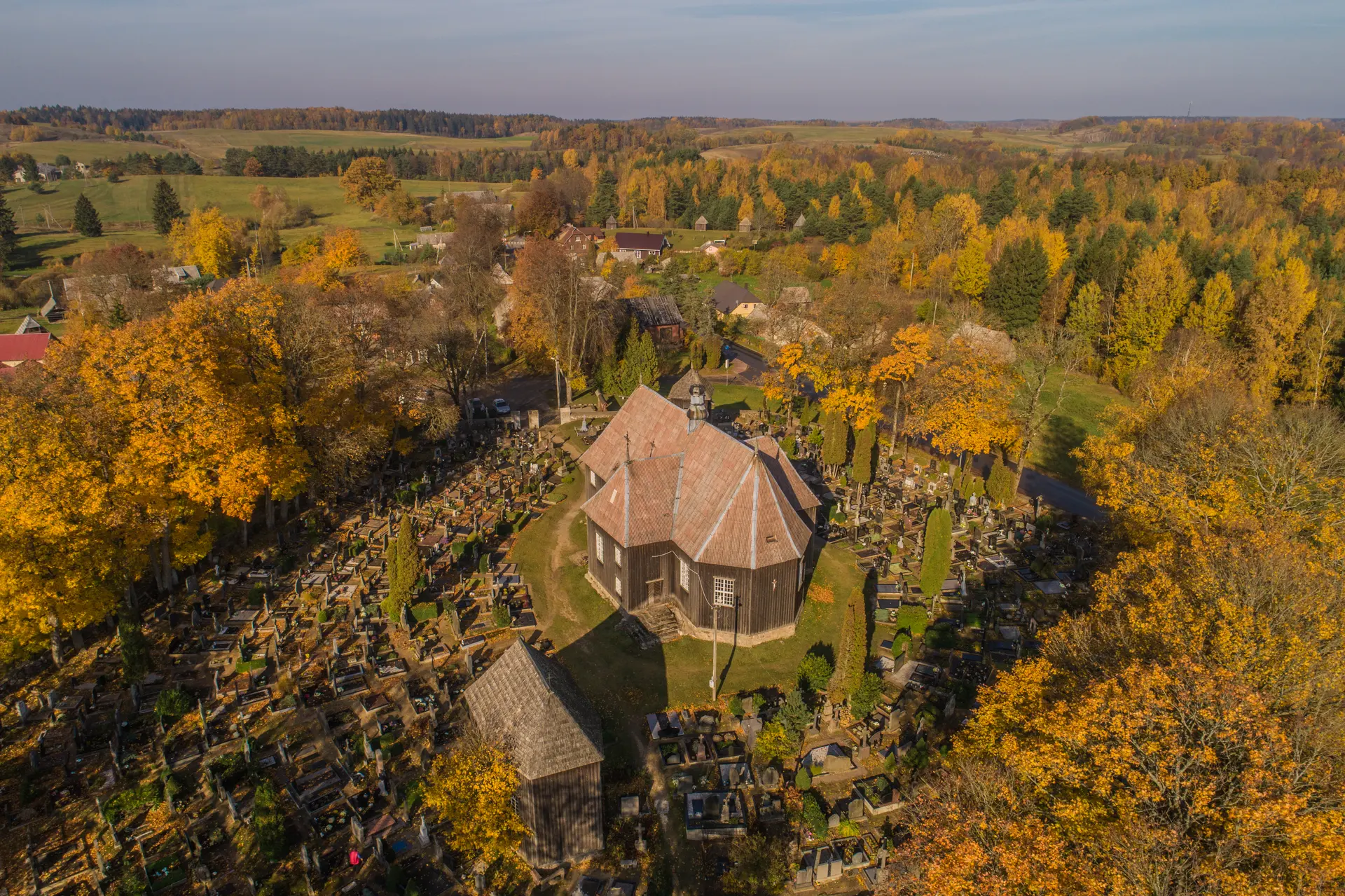
Image of Church of St. Stanislaus, Berzoras. Image source · CC-BY-SA-4.0
Visit essentials
A quick read before you go
- Duration
- 20-30 minutes for the church interior.
- Access
- Located in Beržoras village, Plungė district, within Žemaitija National Park, approximately 5 km…
Overview
According to the people of Beržoras, a shepherd found a painting of the Holy Virgin Mary in a treetop; priests carried it to Plateliai for safekeeping, but it vanished and reappeared in the same tree, understood as the Virgin's choice to be venerated between lake and forest. The community built a small St. John of Nepomuk chapel, then the larger Church of St. Stanislaus as the congregation grew.
Dean of Plateliai Juozapas Vaitkevičius built the church in 1746 entirely from axe-hewn spruce logs without saws, enclosing a refined European rococo interior. In 1759–1760 he established 14 Stations of the Cross through the landscape, Lithuania's only eighteenth-century Calvary complex outside Žemaičių Kalvarija, passing an ancient cemetery among the country's oldest. Protected within Žemaitija National Park, the church remains an active parish.
Why this place is sacred
The founding legend of Beržoras carries a distinctive message: the sacred cannot be relocated according to human convenience. The painting did not simply appear; it appeared, was moved, and returned. The implication — that certain places possess an innate sacred character that even the clergy must respect — runs deep in Samogitian spirituality and may echo older, pre-Christian understandings of landscape and the holy.
The church itself embodies this rootedness. Built from trees that grew in the surrounding forest, shaped by the hands of local craftsmen using the oldest available techniques, it belongs to this place in a way that transported stone or imported materials cannot. The spruce logs carry the memory of the forest they came from. The axe marks that shaped them are the signatures of the men who built them. There is nothing anonymous about this building.
The Stations of the Cross extend the sacred space beyond the church walls, distributing devotion across the landscape. Walking them is walking through the village itself — past houses, through clearings, beside the ancient cemetery where generations of the faithful rest. The boundary between sacred and secular dissolves. In Beržoras, the entire landscape participates in worship.
The lakeside setting adds a contemplative dimension that photographs cannot fully convey. Light off the water enters the church grounds at certain angles. The quiet of the lake meets the quiet of the church. For those attuned to it, there is a quality of stillness here that speaks of centuries of unhurried devotion in a landscape that has not been hurried.
Chapel built in response to the miraculous apparition of a painting of the Virgin Mary in a treetop; church built 1746 to serve the growing Beržoras congregation
From miraculous treetop apparition through wooden chapel (pre-1746) to Church of St. Stanislaus (1746) and establishment of the 14 Stations of the Cross (1759-1760). Soviet-era destruction of the chapels followed by restoration. Now protected within Žemaitija National Park as both active parish and cultural heritage site.
Experience and orientation
The road to Beržoras winds through Žemaitija National Park, past Lake Plateliai and through the gentle Samogitian landscape of low hills and mixed forest. The village announces itself quietly — a few houses, the ancient cemetery, and then the church, its wooden form so much a part of the landscape that it might be mistaken, at first glance, for a particularly well-proportioned barn.
Approaching closer dispels any such confusion. The proportions are deliberate, the craftsmanship evident even from outside. The spruce logs, shaped by axe alone, fit together with a precision that speaks of deep familiarity with the material. The separate belfry stands nearby, similarly constructed — a modest tower that nonetheless anchors the spiritual geography of the village.
The interior reversal is the church's signature moment. Passing through the doorway, the visitor moves from the rough texture of hand-hewn wood into a space of European rococo refinement — ornamental altars, painted surfaces, the accumulated decorative effort of a community that clearly understood this interior as a different kind of space. The miraculous painting of the Virgin Mary, whose insistence on this location founded the church, occupies its place of honor.
The three-nave layout with columns creates a sense of ordered space within the wooden shell. The folk carvings of saints and the Crucifix, dating from the 18th and 19th centuries, represent a tradition of sacred art that is distinctly Samogitian — formal enough to serve liturgical purposes, handcrafted enough to retain the maker's personality.
After the interior, walk the Stations of the Cross. The fourteen restored chapels are distributed through the village landscape, and walking among them takes perhaps thirty to forty-five minutes at a contemplative pace. The path passes the ancient cemetery, one of the oldest in Lithuania, where the faithful of Beržoras have been buried for centuries. The connection between the living parish and its dead is tangible here in a way that urban churches rarely achieve.
Allow time afterward to simply be in the landscape. The proximity of Beržoras Lake, the surrounding parkland, and the quiet of the village itself create a natural container for reflection that the church initiates but the landscape completes.
Come prepared for a place that works at the scale of a village. The experience is intimate, not monumental. Let the walk from church to chapels to lake unfold at its own pace.
Context and lineage
A shepherd discovered a painting of the Holy Virgin Mary in a treetop near Beržoras. When priests carried it to the church in Plateliai, the painting vanished and reappeared in the same tree. The community built a chapel, then a larger church on the spot in 1746. Dean Juozapas Vaitkevičius of Plateliai funded the construction and in 1759-1760 established the 14 Stations of the Cross — the only 18th-century Calvary complex in Lithuania outside Žemaičių Kalvarija.
The church belongs to the tradition of Samogitian folk Catholicism, in which formal Catholic practice blends with local customs, dialect, and craft traditions. Its status as a filial of Plateliai parish (since 1747) connects it to the broader ecclesiastical structure of the Samogitian bishopric.
Dean Juozapas Vaitkevičius
Dean of Plateliai who funded the church's construction in 1746 and established the Stations of the Cross in 1759-1760
Samogitian axe-craftsmen
Unknown by name, the builders who constructed the entire church from hand-hewn spruce logs without saws, preserving a vanishing Samogitian building tradition
Traditions and practice
Devotion to the miraculous painting of the Virgin Mary that chose this location. Walking the 14 Stations of the Cross through the chapel complex. Traditional Samogitian Catholic worship practices rooted in local dialect and custom.
Regular Catholic Mass and parish services. The restored Stations of the Cross chapels are used for devotional walking. The church is maintained as both an active parish and a cultural heritage monument within Žemaitija National Park.
Begin inside the church, noting the contrast between exterior and interior. Spend time with the miraculous painting and the folk carvings. Then walk the Stations of the Cross through the village — this meditative walk is the heart of the Beržoras experience. Visit the ancient cemetery to connect with the generations who worshipped here. If time allows, walk to the lakeside for the full landscape experience.
Roman Catholicism
ActiveThe church was established because of a miraculous apparition of a painting of the Virgin Mary in a treetop, making it a site of Marian devotion since its founding. As a filial of Plateliai parish since 1747, it has served the Samogitian Catholic community for nearly three centuries. The 14 Stations of the Cross represent the only 18th-century Calvary complex in Lithuania outside of Žemaičių Kalvarija.
Regular Catholic worship, devotion to the miraculous painting of the Virgin Mary, walking the 14 Stations of the Cross, veneration of St. Stanislaus the Bishop.
Samogitian Folk Catholic Tradition
ActiveBeržoras preserves elements of the distinctive Samogitian approach to Catholic worship that blends formal practice with local folk traditions, dialect, and small-scale religious folk art. The church, built entirely with axe-hewn logs without saws, embodies the Samogitian craft tradition applied to sacred architecture.
Folk-style devotional practices, preservation of Samogitian dialect in worship, maintenance of traditional wooden sacred architecture and small-scale religious folk art.
Heritage Conservation
ActiveThe church and its Stations of the Cross are protected cultural heritage within Žemaitija National Park. The site represents an irreplaceable example of 18th-century wooden sacred architecture and Samogitian cultural landscape.
Heritage monitoring, restoration of Stations of the Cross chapels, integration into national park cultural heritage routes, documentation of traditional building techniques.
Perspectives and open questions
Beržoras can be approached as a masterpiece of Lithuanian wooden sacred architecture, as a site of miraculous founding, or as a window into Samogitian folk Catholic culture that has persisted for centuries.
Scholarly perspective
Architectural scholars recognize the Church of St. Stanislaus as one of the most important surviving examples of 18th-century Lithuanian wooden sacred architecture. The axe-hewn construction without saws represents a traditional Samogitian building method already becoming rare when the church was built. The 14 Stations of the Cross complex is recognized as the only Calvary established in 18th-century Lithuania outside Žemaičių Kalvarija, giving it significance beyond its local context.
Living and traditional perspectives
For the Samogitian community, the church embodies a specifically local form of Catholic devotion rooted in the miraculous apparition of the Virgin Mary's painting. The legend of the painting choosing its own location reflects a deep Samogitian understanding of places as having their own sacred character that even the clergy must respect. The axe-hewn construction connects the church to a Samogitian craft tradition that understood sacred buildings as shaped by direct human relationship with the material.
Alternative interpretations
The apparition of a sacred image in a treetop recalls pre-Christian Baltic traditions of tree veneration, suggesting possible continuity between pagan sacred grove practices and the Christian founding legend. The lakeside setting between two bodies of water resonates with widespread cross-cultural beliefs about water as a liminal, spiritually charged element.
Open questions
The origin and age of the miraculous painting are unknown — whether it was placed in the treetop by human hands and its provenance remain undocumented. The circumstances of the painting's disappearance from Plateliai and reappearance in Beržoras have never been investigated. The pre-Christian significance of the Beržoras landscape, situated between lakes in a region of strong pagan traditions, has not been archaeologically explored.
Plan your visit
Access and arrival
Located in Beržoras village, Plungė district, within Žemaitija National Park, approximately 5 km south of Žemaičių Kalvarija and 7 km from Plateliai. Accessible by car on local roads. No public transport directly to the village. Parking available in the village. The church and Stations of the Cross are on flat to gently rolling terrain. Mobile phone signal may be unreliable in this rural national park location — no specific signal information was available at time of writing.
Check with Žemaitija National Park (zemaitijosnp.lt) for current access details.
No accommodation in Beržoras village. Plateliai (7 km) offers guesthouses and holiday rentals oriented toward lake tourism. Žemaičių Kalvarija (5 km) has limited options.
Respectful visit
Modest dress appropriate for a Catholic church.
Photography is generally permitted but avoid flash to protect the historic interior. Discretion during services.
Donations appreciated for the maintenance of this historic wooden structure.
Do not touch or lean on the historic wooden structure. No open flames near the wooden building. Respect the adjacent historic cemetery. Quiet behavior appropriate for both a place of worship and a heritage site.
The wooden structure is irreplaceable. Do not lean on or touch the historic walls. No open flames near the building. The church may not be open outside of service times — no contact information for a keyholder was available at time of writing. Check with the Žemaitija National Park administration for current access arrangements.
Current practical details
Address
90419 Beržoras, Lithuania
Phone
Hours, fees, and access can change — verify on the official source before you travel. Practical details last checked Jun 2026.
Location
Map loads as you approach this section.
Pilgrim reflections
A portrait of encounter, not a score
Pilgrims describe what they felt, how present they could become, and whether the place would shape a journey. There are no stars and no ranking of traditions.
No reviewed reflections yet
The first pilgrims can help describe the character of being here.
Share a reflection
Available after an account-backed “Been there.” Every reflection is reviewed before publication.
Nearby sacred places
Explore other sacred places in the region. Proximity does not establish access or travel time; check each place’s guidance.

Church of the Immaculate Conception, Alsėdžiai
Alsėdžiai, Alsėdžiai, Plungė District Municipality, Lithuania
14.5 km away
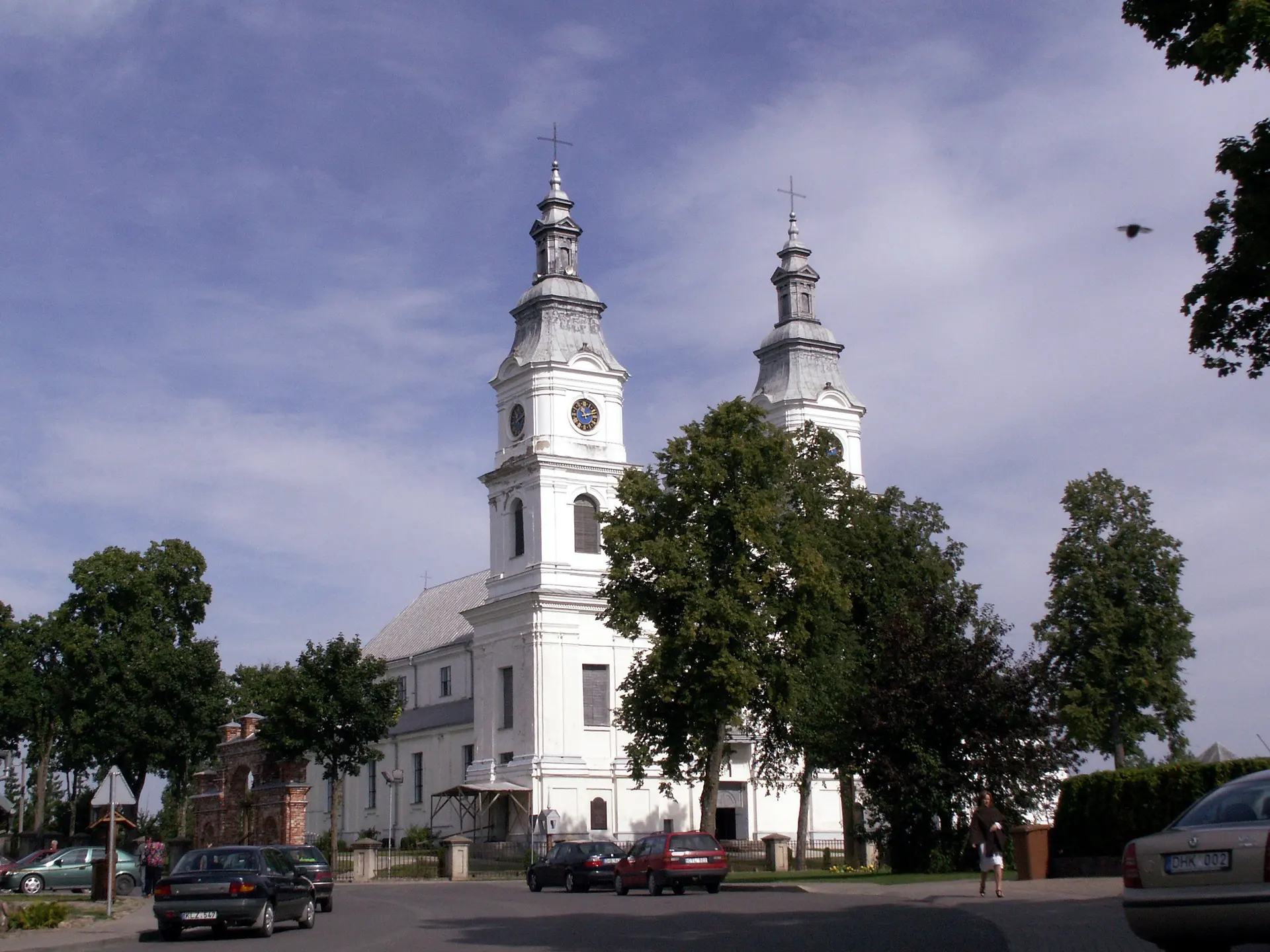
Žemaičių Kalvarija Basilica (Samogitian Calvary)
Žemaičių Kalvarija, Plungė, Lithuania
15.5 km away

Telsiai Cathedral
Telšiai, Telšiai, Lithuania
27.4 km away

Samogitian Alka
Šventoji, Šventoji, Palanga City Municipality, Lithuania
45.9 km away
Photo gallery
3 curated photos
Share a photo
Help visitors recognize Church of St. Stanislaus, Berzoras. Every submission is reviewed before publication.