Telsiai Cathedral
Samogitia's spiritual seat on the highest hill, where Lithuania's last pagans became its most devoted Catholics
Understand sacred places, explore living traditions, and learn how to engage respectfully with Pilgrim Map.
Access has not been verified. Check current local guidance before planning a visit.
Telšiai, Telšiai, Lithuania

Visit essentials
A quick read before you go
- Duration
- A visit to the cathedral interior takes 30 to 45 minutes.
- Access
- Located on Insulos hill in the center of Telsiai, approximately 300 km from Vilnius and 175 km…
Overview
Climb Insulos hill in Telsiai and you ascend to the spiritual center of Samogitia. The cathedral crowns the highest point in a city built across seven hills, its towers visible from Lake Mastis below and from the surrounding Samogitian landscape. The approach is itself a kind of pilgrimage, each step upward separating the visitor from the everyday town below.
Inside, the Baroque-Classicist interior holds a feature found nowhere else in Lithuania: a two-storey altar that creates worship space on multiple levels, offering different perspectives on the same devotion. The frescoed ceilings, gilded altars designed by Jurgis Mazeika, and ornate decoration speak to centuries of accumulated care. Beneath the floor, the bishops' crypt holds the remains of three men whose lives chart the arc of modern Lithuanian Catholic history.
One of those buried here, Justinas Staugaitis, signed the 1918 Act of Independence of Lithuania before becoming the diocese's first bishop. Another, Vincentas Borisevicius, was executed by Soviet authorities in 1946 for refusing to collaborate, and his cause for beatification as a martyr is under consideration. Their presence beneath the cathedral floor gives concrete weight to the Samogitian Catholic tradition of faith sustained through persecution.
The bronze doors at the entrance, created by sculptor Romualdas Incirauskas to commemorate the 600th anniversary of Samogitian baptism, depict the story of how Europe's last pagan region embraced Christianity. To pass through them is to cross a threshold layered with meaning, entering a space where the conversion of an entire people still resonates in stone and ceremony.
Why this place is sacred
Insulos hill has been a sacred precinct since at least 1624, when Pawel Stefan Sapieha chose this prominent hilltop overlooking Lake Mastis for a Franciscan monastery and wooden church. The choice was deliberate: the highest hill in a city of seven, visible from the surrounding countryside, closer to the sky.
The two-storey altar, found nowhere else in Lithuanian church architecture, creates an interior geography unlike any other. Worship and contemplation happen on multiple planes simultaneously, producing a spatial experience that conventional church layouts do not offer. The gallery level provides a vantage point from which the Baroque interior reveals itself differently, the gilded altars and painted ceiling composing into patterns invisible from below.
The crypt adds depth in both senses. Walking above the remains of bishops who served through Lithuanian independence, wartime occupation, and Soviet terror creates an awareness of the cathedral as more than architecture. Bishop Borisevicius, executed for his refusal to betray priests to the Soviet secret police, lies beneath a floor that people still cross to receive Communion. The proximity of his bones to the Eucharist above mirrors the Catholic understanding that martyrdom and sacrament are intimately connected.
Outside, Lake Mastis provides a contemplative counterpoint. The water below and the cathedral above create a vertical axis that visitors often note without quite articulating why it moves them. The seminary and bishop's palace flanking the cathedral complete the sacred precinct, giving Insulos hill the density of a campus dedicated entirely to spiritual formation.
The original wooden church was built in 1624 as part of a Franciscan monastery, establishing the hilltop as a sacred site. The current brick church, built between 1762 and 1794, replaced the wooden structure while maintaining the hilltop's function as a place of worship. Its elevation to cathedral status in 1926, when the Diocese of Telsiai was established, confirmed Insulos hill as the spiritual center of Samogitia.
The transformation from a Franciscan monastery church to a diocesan cathedral marks the most significant shift in the site's identity. The establishment of the Diocese of Telsiai in 1926 reflected the consolidation of Lithuanian national and religious identity following independence. The cathedral became not merely a parish church but the seat of authority for all of Samogitian Catholicism. The commissioning of commemorative bronze doors for the 600th anniversary of Samogitian baptism further layered the site with national and regional meaning.
Experience and orientation
The first impression is the climb. Insulos hill rises 156 meters above sea level, and the approach from the town below turns the visit into an ascent. Whether on foot or by car, the sense of rising toward something sets the cathedral apart from churches that simply open onto a street.
The bronze doors demand pause. Sculptor Romualdas Incirauskas depicted the baptism of Samogitia across their surface, and to enter is to pass through a compressed version of the event that defined this region's identity. The doors serve as both art and threshold, preparing the visitor for what lies beyond.
Inside, the two-storey altar immediately draws attention. Its design creates a layered interior space that invites exploration from different vantage points, offering perspectives on worship that conventional church layouts cannot provide. The seven altars designed by Jurgis Mazeika, together with the frescoed ceilings, create a Baroque-Classicist ensemble that combines warmth with grandeur.
The bishops' crypt is a quieter encounter. The remains of three bishops, particularly those of the independence signatory Staugaitis and the Soviet-era martyr Borisevicius, ground the cathedral in lived history. Standing before their tombs, the abstract concept of faith under persecution becomes concrete.
The bell tower, accessible for a modest fee, rewards the additional climb of 80 steps with panoramic views over Lake Mastis and the city of seven hills. The vista connects the cathedral to its landscape, making visible the relationship between sacred height and the surrounding world that the original builders intended.
Begin by standing before the bronze doors before entering. Read the baptism narrative depicted there. Inside, take time with the two-storey altar before exploring the side altars. If the crypt is accessible, descend to pay respects to the bishops. The bell tower climb is recommended for those physically able, as the views over Lake Mastis provide context for the cathedral's elevated position.
Context and lineage
The sacred history of Insulos hill began in 1624 when Pawel Stefan Sapieha, Deputy Chancellor of the Grand Duchy of Lithuania, chose this prominent hilltop overlooking Lake Mastis for a Franciscan monastery and wooden church. The choice of the highest hill in the city of seven hills reflected both practical visibility and the older Baltic tradition of sacred high places.
The wooden church served the Samogitian community for over a century before being replaced by the current brick structure, built between 1762 and 1794. The architect of this reconstruction is not well documented, though the resulting Baroque-Classicist design represents a confident expression of Lithuanian Catholic architecture. The church was consecrated by suffragan bishop Fr. Tadeusz Jozef Bukaty.
When Lithuania achieved independence and reorganized its Catholic diocesan structure in 1926, Telsiai, as the unofficial capital of Samogitia, was the natural choice for the seat of the new diocese. Justinas Staugaitis, already a national figure for having signed the Act of Independence, became the first bishop. The church was elevated to cathedral status, confirming Insulos hill as the spiritual apex of Samogitian Catholicism.
The line of bishops at Telsiai charts the history of Lithuanian Catholicism through the 20th century's convulsions. Staugaitis, the independence signatory, served until 1943. Borisevicius was executed in 1946. The diocese endured Soviet suppression, with the seminary closed for decades before reopening. The seminary's survival and continued operation represent the resilience of Catholic formation in the Samogitian tradition.
Today, the diocese covers the Samogitia region, and the cathedral continues to serve as its ceremonial center. The seminary adjacent to the cathedral, named after the martyred Bishop Borisevicius, trains priests for service throughout western Lithuania.
Pawel Stefan Sapieha
historical
Deputy Chancellor of the Grand Duchy of Lithuania who founded the original wooden church and Franciscan monastery on Insulos hill in 1624, establishing the site as a sacred precinct.
Bishop Justinas Staugaitis
historical
Signatory of the 1918 Act of Independence of Lithuania and first Bishop of Telsiai (1926-1943). His dual role as national independence figure and diocesan founder embodies the intertwining of Lithuanian Catholic and national identity.
Bishop Vincentas Borisevicius
historical
Bishop of Telsiai executed by Soviet authorities in 1946 for refusing to betray members of the Catholic resistance. His cause for beatification as a martyr is under consideration, and he is buried in the cathedral crypt.
Romualdas Incirauskas
artistic
Sculptor who created the commemorative bronze doors depicting the baptism of Samogitia for the 600th anniversary, adding a powerful narrative threshold to the cathedral entrance.
St. Anthony of Padua
patron_saint
Patron saint of the cathedral and one of the most venerated saints in Samogitia. His feast day on June 13 is the cathedral's patronal celebration.
Traditions and practice
The cathedral's liturgical life follows the full Catholic calendar, with particular emphasis on the Feast of St. Anthony of Padua, the cathedral's patron saint. As the seat of the diocese, the cathedral hosts episcopal ordinations, diocesan gatherings, and major liturgical celebrations that draw faithful from across Samogitia. Commemorative services for the bishops buried in the crypt, particularly for the martyred Bishop Borisevicius, form part of the cathedral's devotional life.
Daily Mass is celebrated in the cathedral, and it serves as the venue for confirmations, ordinations, and pastoral gatherings. The seminary adjacent to the cathedral maintains an active formation programme. The 600th anniversary commemorations of Samogitian baptism have brought renewed attention to the cathedral's significance as the spiritual heart of the last region of Europe to embrace Christianity. English-language brochures are available for visitors.
Attend Mass if your timing allows. The cathedral's liturgy, celebrated in the context of its Baroque interior and bishops' crypt, carries a weight that comes from centuries of accumulated devotion. Even for those unfamiliar with Catholic worship, the ritual provides a window into the living tradition.
If you climb the bell tower, stand at the top and look out over Lake Mastis. The panoramic view places the cathedral in its landscape, making visible why this hilltop was chosen and what it means to hold the highest ground. The seminary and bishop's palace flanking the cathedral complete a sacred precinct whose coherence is best appreciated from elevation.
In the crypt, stand quietly before the tomb of Bishop Borisevicius. The story of his execution by Soviet authorities, for refusing to betray those who served under him, gives weight to the question of what faithfulness demands. His possible beatification as a martyr is a living process, not a settled conclusion.
Roman Catholicism — Diocese of Telsiai
ActiveAs the seat of the Diocese of Telsiai, established in 1926, the cathedral is the primary Catholic church in the Samogitia region of western Lithuania. It is dedicated to St. Anthony of Padua, one of the most venerated saints in Samogitia. The cathedral serves as the symbolic center of Samogitian Catholic identity and was the site of solemn commemorations for the 600th anniversary of the baptism of Samogitia.
Daily Mass, diocesan ceremonies, episcopal ordinations, Feast of St. Anthony of Padua (June 13), commemoration of the baptism of Samogitia, burial and remembrance of the diocesan bishops in the cathedral crypt.
Franciscan (Bernardine) Foundation
HistoricalThe original wooden church on Insulos hill was built in 1624 by Pawel Stefan Sapieha as part of a Franciscan Bernardine monastery. The Franciscan presence established the hill as a sacred precinct and laid the foundations for the later cathedral.
Franciscan monastic life and liturgical traditions at the original wooden church and monastery.
Heritage and Resistance History
ActiveThe cathedral serves as a site of Lithuanian national memory through its bishops' crypt. Bishop Staugaitis's role in Lithuanian independence and Bishop Borisevicius's martyrdom under Soviet occupation make the cathedral a place where faith and national freedom are inextricably linked. The bronze doors depicting the baptism of Samogitia reinforce this connection between Catholic and national identity.
Commemoration of the bishops' lives and sacrifices, guided visits to the crypt, pilgrimage within the context of Lithuanian Catholic heritage tourism, and ongoing research into the beatification cause of Bishop Borisevicius.
Perspectives and open questions
Telsiai Cathedral invites interpretation through multiple lenses: as Baroque-Classicist architecture, as the seat of Samogitian Catholic identity, as a site of resistance history, and as a place where pre-Christian and Christian sacred landscape traditions may overlap. Each perspective reveals something the others miss.
Scholarly perspective
Historians recognize Telsiai Cathedral as a significant example of late Baroque-Classicist architecture in Lithuania, notable for its two-storey altar design found nowhere else in the country. Academic studies, particularly Adomas Butrimas's work on the sacred complex of Insulos hill, place the cathedral within the broader context of Catholic sacred landscape development in Samogitia. The cathedral's elevation to diocesan seat in 1926 is understood as part of the consolidation of Lithuanian national and religious identity following independence.
The 1762-1794 construction represents a confident period of Lithuanian Catholic architecture.
Living and traditional perspectives
For Samogitians, the cathedral represents the spiritual heart of their cultural region. The prominence of St. Anthony of Padua as patron reflects deep Samogitian devotion to this saint. The commemorative doors depicting the baptism of Samogitia serve as a visual narrative, reminding visitors of the relatively recent 15th-century Christianization of the last pagan region in Europe. The cathedral's hilltop position echoes older Baltic sacred landscape traditions of worshipping on high places, suggesting continuity even across the rupture of conversion.
Alternative interpretations
The city of seven hills, with the cathedral on the highest, invites comparison to other sacred seven-hill cities. Some observers note that the hilltop location may reflect continuity with pre-Christian Baltic sacred high places, where elevated sites were considered closer to the divine. The proximity to Lake Mastis adds a water element to the sacred geography, creating a vertical axis between lake and summit that may have resonated with earlier Baltic cosmological understanding.
Open questions
The pre-Christian sacred significance of Insulos hill, if any, remains archaeologically unexplored in publicly available literature. The original architect of the 1762-1794 brick church is not well documented. The full circumstances of Bishop Borisevicius's martyrdom and the ongoing beatification process involve aspects of Soviet persecution that are still being researched and documented.
Plan your visit
Access and arrival
Located on Insulos hill in the center of Telsiai, approximately 300 km from Vilnius and 175 km from Klaipeda. Accessible by car and bus. Free entry to the cathedral; bell tower admission approximately 2 EUR. Open approximately 7 AM to 7 PM daily. Mobile phone signal is available in Telsiai town. No keyholder or advance booking required for general visits.
Telsiai offers several hotels and guesthouses. As the largest town in western Lithuania's Samogitian region, it has adequate visitor infrastructure. For current accommodation options, check visittelšiai.lt or local tourism information.
Respectful visit
Modest dress required inside the cathedral. Covered shoulders and knees expected. No hats for men inside.
Photography generally permitted but discretion required during services. No flash photography near altars and sacred artwork. Respectful behavior in the bishops' crypt area when photographing.
Candles may be lit. Donations accepted for cathedral maintenance.
Quiet and respectful behavior at all times, especially during services. Respectful behavior in the bishops' crypt area. Bell tower may be closed in inclement weather. Bell tower admission is approximately 2 EUR.
The cathedral is an active place of worship. Respectful behavior is expected at all times, especially during services. The bishops' crypt is a place of particular reverence. The bell tower may be closed in inclement weather.
Current practical details
Address
Katedros a. 2, 87130 Telšiai, Lithuania
Phone
Hours, fees, and access can change — verify on the official source before you travel. Practical details last checked Jun 2026.
Location
Map loads as you approach this section.
Pilgrim reflections
A portrait of encounter, not a score
Pilgrims describe what they felt, how present they could become, and whether the place would shape a journey. There are no stars and no ranking of traditions.
No reviewed reflections yet
The first pilgrims can help describe the character of being here.
Share a reflection
Available after an account-backed “Been there.” Every reflection is reviewed before publication.
Nearby sacred places
Explore other sacred places in the region. Proximity does not establish access or travel time; check each place’s guidance.

Church of the Immaculate Conception, Alsėdžiai
Alsėdžiai, Alsėdžiai, Plungė District Municipality, Lithuania
13.5 km away
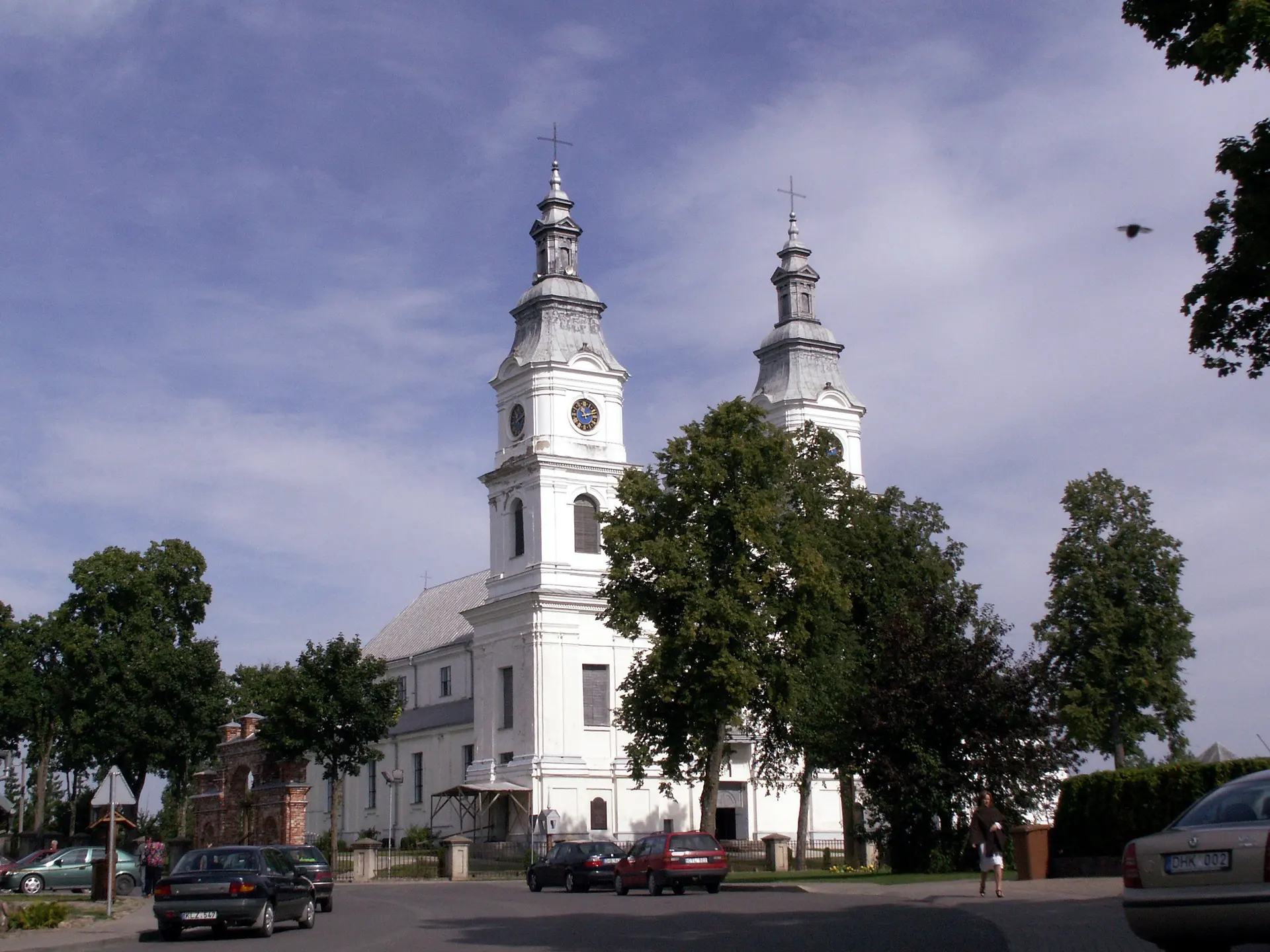
Žemaičių Kalvarija Basilica (Samogitian Calvary)
Žemaičių Kalvarija, Plungė, Lithuania
20.4 km away

Šatrija Hill
Pašatrija, Pašatrija, Telšiai District Municipality, Lithuania
22.9 km away
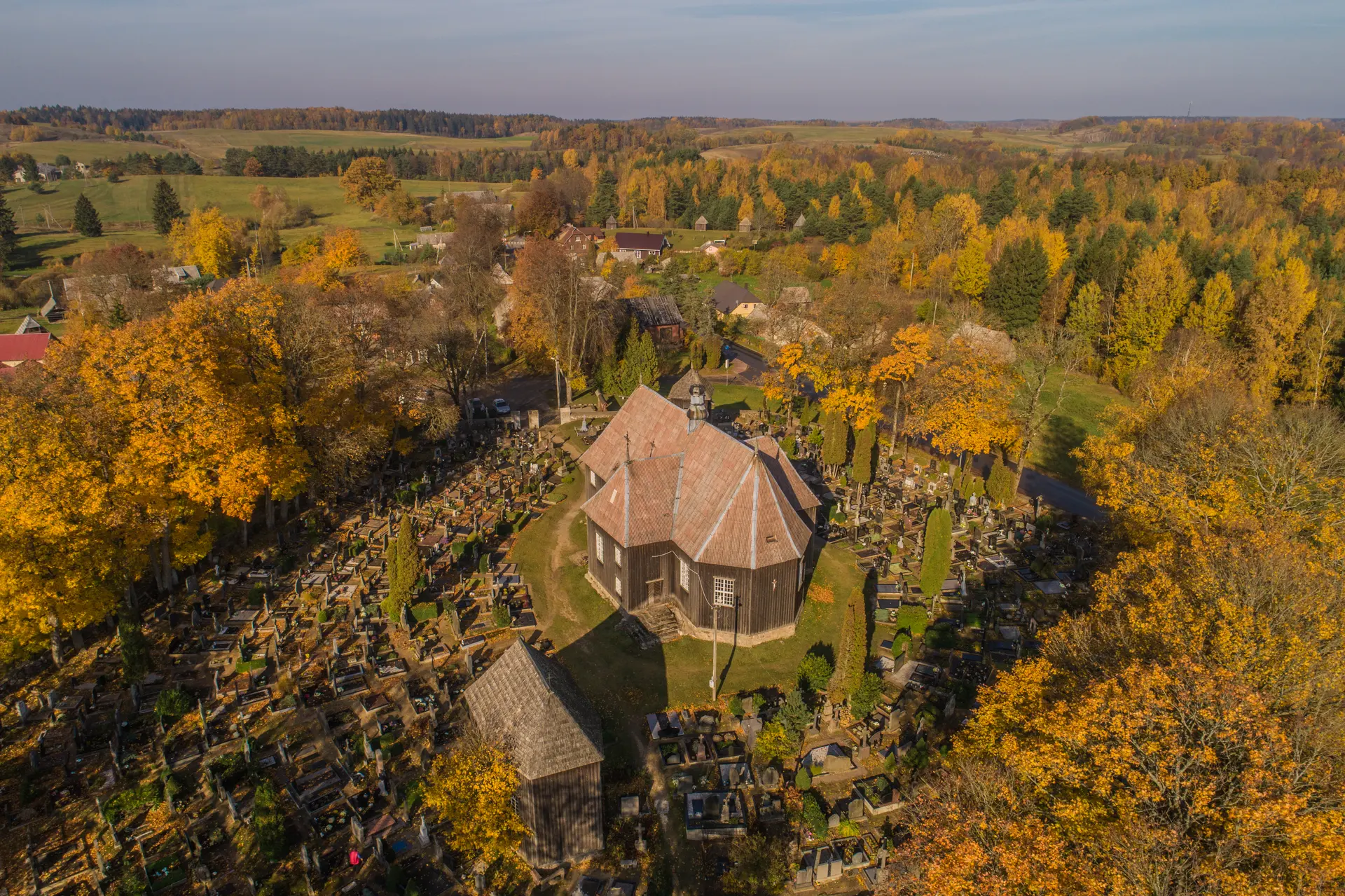
Church of St. Stanislaus, Berzoras
Beržoras, Plungė, Lithuania
27.4 km away
Share a photo
Help visitors recognize Telsiai Cathedral. Every submission is reviewed before publication.